Key Takeaways
- Hyundai Australia completed the country's first ISO 15118-20 V2G discharge on 18 June 2026
- Vehicle: Hyundai Ioniq 9 Calligraphy AWD, from $119,750 before on-roads
- Bidirectional charger: StarCharge Halo 7.4kW DC, CEC approved in March 2026
- Same protocol stack will roll across the Ioniq 5, Ioniq 6 and future Ioniq models
- 800V E-GMP platform, 110.3kWh battery, up to 600km WLTP, 350kW peak DC
- ANCAP not yet rated
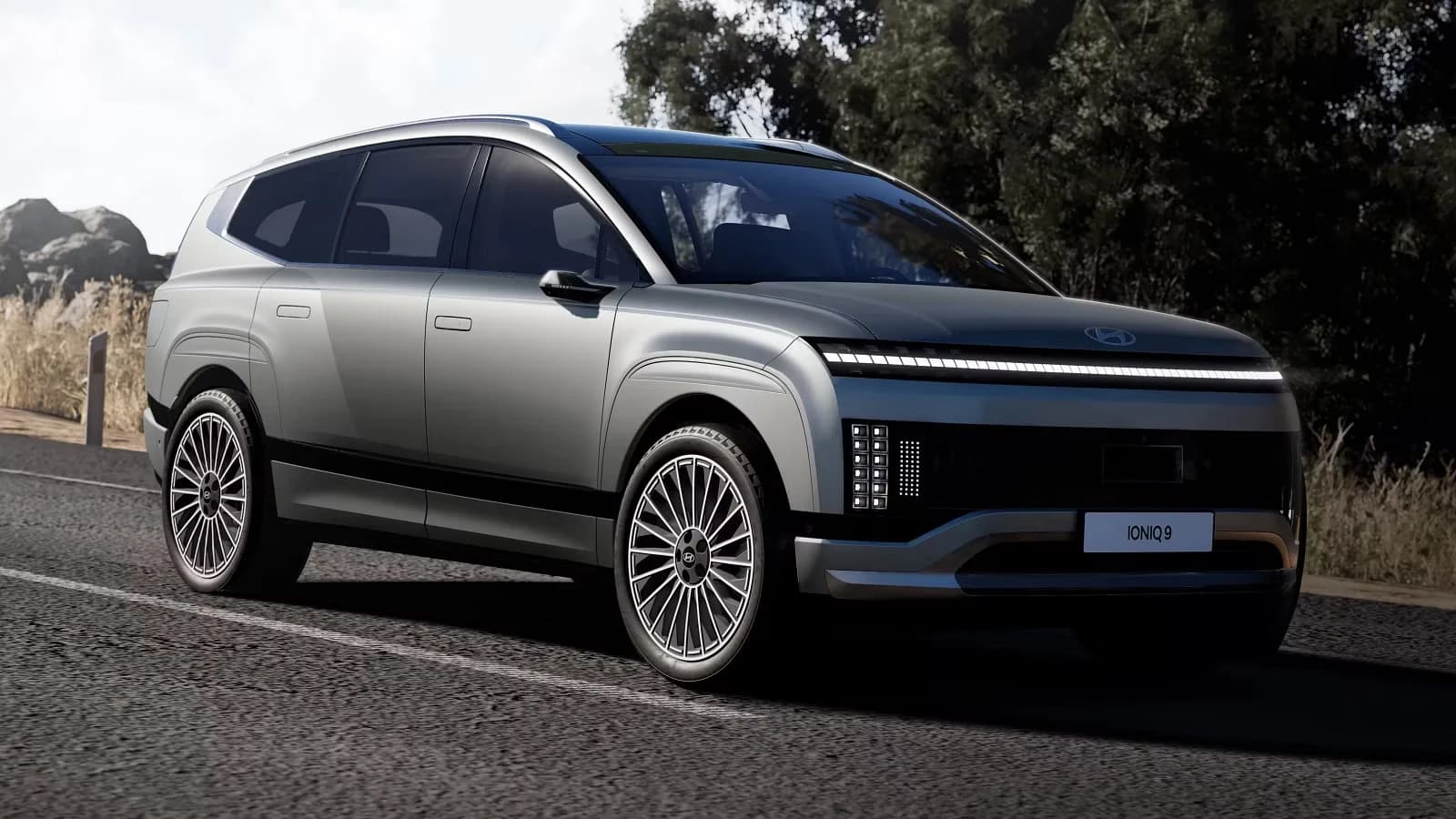
Image credit: Hyundai Australia
If you own a Hyundai EV, or you're cross-shopping one against a home battery, this week mattered. On 18 June 2026, Hyundai Motor Company Australia confirmed it had pushed energy back into the local grid from an Ioniq 9 using a 7.4kW StarCharge Halo bidirectional DC charger, all of it certified against ISO 15118-20. It's the first time that's happened under our new standards on a passenger EV that an actual retail customer could one day buy and plug in at home. The headline is not really the kilowatts. It's the fact that the regulatory and software path is now traceable end-to-end on a $119,750 car you can walk into a dealer and drive away in today.
What Hyundai Actually Did
The demonstration paired a production-spec Ioniq 9 Calligraphy with the StarCharge Halo, a small wall-mounted DC unit rated at 7.4kW for both directions of power flow. Communication between the car and the charger followed ISO 15118-20, the second-generation Plug & Charge standard that adds support for bidirectional energy transfer, more granular authentication and reverse power. The Halo cleared its Clean Energy Council approval in March 2026 and is built to comply with AS/NZS 4777.2, the Australian rule set that any inverter has to pass before a sparky will sign the connection off.
Don Romano, Hyundai Australia's chief executive, framed it as the payoff for joint engineering work between Korean R&D and the local team. The wording on the day was deliberately conservative: it's a successful discharge, not a customer-ready product launch. But every retail V2G program in this country has been waiting on exactly this checkpoint, because without standards-compliant bidirectional kit on at least one mainstream Australian-delivered EV, retailers like AGL had nothing to plug their customers into.
The Car Behind the Headline
The Ioniq 9 is Hyundai's three-row electric flagship. It rides on the same E-GMP architecture as the Ioniq 5, Ioniq 6 and Kia EV6, but with a longer wheelbase, an 800V electrical system and an upsized 110.3kWh nickel-rich battery. Australia gets a single Calligraphy AWD grade for now, dual-motor, 314kW and 700Nm combined, with up to about 600km of WLTP range when the standard 21-inch wheels are fitted. Peak DC charging is 350kW, with 10 to 80 per cent rated at roughly 24 minutes when you can find a plug that can actually hit that speed. Braked towing is 2,500kg.
Pricing (Australia)
| Variant | Seats | Price (before on-roads) |
|---|---|---|
| Ioniq 9 Calligraphy AWD | 7-seat bench | $119,750 |
| Ioniq 9 Calligraphy AWD | 6-seat captain's chairs | +$2,000 |
Drive-away will vary by state and dealer. The car sits above the fuel-efficient Luxury Car Tax threshold, so don't expect a clean novated lease saving until on-road delivered pricing is run against the new 2026-27 LCT brackets.
Spec Sheet
| Item | Ioniq 9 Calligraphy AWD |
|---|---|
| Platform | E-GMP, 800V |
| Battery | 110.3 kWh NMC |
| Combined output | 314 kW / 700 Nm |
| Drive | AWD (dual-motor) |
| WLTP range | up to 600 km |
| Peak DC charging | 350 kW |
| 10 to 80 per cent | about 24 minutes |
| Bidirectional support | V2L standard, V2G via ISO 15118-20 (pilot) |
| Braked towing | 2,500 kg |
| Seating | 6 or 7 |
| Warranty (vehicle) | 5 yr / unlimited km |
| High-voltage battery warranty | 8 yr / 160,000 km |
Equipment
Because Hyundai has stuck with a single high-spec grade for Australia, the kit list reads more like a luxury SUV than a mass-market three-row EV. Twin 12-inch displays, head-up display, ventilated and heated first and second-row seats on the captain's chair build, surround-view camera, blind-spot camera projected into the cluster, Bose premium audio, panoramic sunroof, and Digital Key 2.0 that supports near-field and ultra-wideband phone-as-key unlocking. V2L is standard, with a 3.6kW outlet inside the car and another at the charge port for camping or running power tools off the battery.
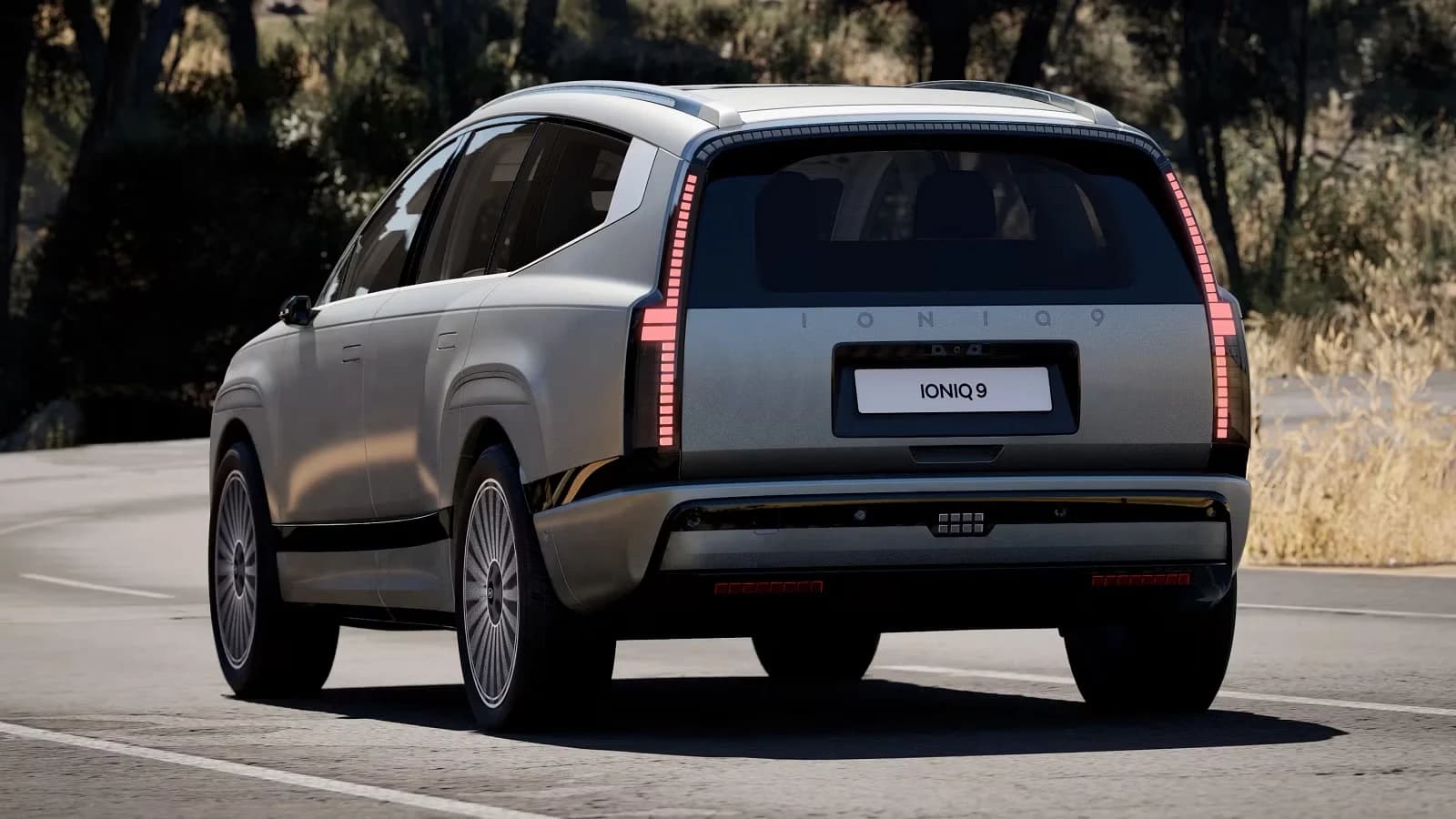
Image credit: Hyundai Australia
Safety
ANCAP has not published a star rating for the Ioniq 9 yet, so we won't put a number on it. Hyundai fits the full SmartSense bundle: forward AEB with pedestrian, cyclist and junction detection, lane-keep assist, lane-follow assist, highway driving assist 2, blind-spot collision avoidance, rear cross-traffic avoidance, safe exit assist, driver attention monitoring and intelligent speed limit assist. Ten airbags including a front-centre bag are standard. Once ANCAP issues a rating we'll update this article, per our ANCAP wording rules.
Why V2G Matters for the Rest of the Hyundai Range
Hyundai used the announcement to flag that the same software pathway is being lined up for the Ioniq 5 and Ioniq 6, plus the next generation of Ioniq models. That's significant for the two cheaper cars. A new Ioniq 5 RWD now lands from around $68,200 before on-roads after Hyundai's EOFY 2026 list-price cut, and the Ioniq 6 sits in the high-$60k bracket. Both are built on the same E-GMP electrical bones as the Ioniq 9, both have V2L already, and now both have a known V2G certification path ahead of them.
Hyundai also extended its ICCU warranty to 15 years or 300,000km earlier this year, which lines up neatly with V2G. If you're going to cycle a car's onboard charger every night to back-feed your house, you want a long warranty on the part that does the cycling. Hyundai now has both pieces.
How It Compares
Mitsubishi got to bidirectional first in Australia. Its Outlander PHEV (listed at $58,990 for the entry AWD grade) demonstrated CHAdeMO-based V2G in Adelaide back in early 2024 using Wallbox Quasar hardware, and the company has been lobbying to cut the certification red tape ever since. That work helped open the door, but it used an older communication protocol that locks future buyers out of multi-vendor CCS hardware. Hyundai's win is the move to ISO 15118-20 and the CCS2 plug Australian fast chargers actually use, which means the same charger box can theoretically serve a future Kia EV6, an Ioniq 5, a BYD Sealion or a Zeekr without separate adaptors.
Tesla, easily the country's biggest EV brand, still doesn't offer customer V2G on the Model Y or Model 3. The recently announced Model Y L six-seater brought V2L for the first time but nothing further. Hyundai pushing past that gives Korean buyers a story Tesla can't match today.
The CarSorted Angle
Run the maths from a buyer's seat rather than an engineer's. On CarSorted, the cheapest Ioniq 5 (the new RWD Standard Range from $68,200) sits in a three-way fight with the Kia EV6 Air at $72,660 and the Tesla Model Y RWD at $65,900. Up until now the rational reason to pay the Hyundai premium over a Tesla was 800V charging speed and a more conventional cabin. After the V2G announcement, there's a second one: an Ioniq 5 plus a future certified bidirectional wallbox can quietly become a 77.4kWh home battery, something the cheaper Tesla still can't do. We've set up a side-by-side here so you can play with the trade-off yourself: Hyundai Ioniq 5 vs Tesla Model Y. For three-row shoppers chasing the Ioniq 9, the natural cross-shop in our database is the Kia EV9, which sits about $20,000 below the Ioniq 9 in entry-grade form but doesn't yet have a V2G announcement of its own.
What This Means for Buyers
Three groups should pay attention. First, anyone seriously considering an Ioniq 9 this winter. The $119,750 price tag is steep next to a Kia EV9 from around the high $90s, but it's now the only car in Australia with a publicly demonstrated, standards-compliant V2G pathway. If you also need home backup and live somewhere prone to summer outages, a single car plus a future bidirectional wallbox can replace a $15,000 home battery install. Suddenly the $20,000 to $25,000 premium over the EV9 doesn't look as wild.
Second, anyone who already owns or is about to buy an Ioniq 5 or Ioniq 6. You don't have V2G yet, but the engineering case for the protocol that does land on your car has just been demonstrated. Don't pay a markup for a third-party CHAdeMO adapter or rush into a one-off retrofit. The native path is coming.
Third, anyone evaluating a Tesla Model Y, BYD Sealion 7 or Zeekr X today. All three are on AGL's 2026 V2G trial shortlist on paper, but none of them have a publicly approved end-to-end stack on Australian soil yet. If V2G is a deal-breaker for you rather than a nice-to-have, Hyundai just became the safest bet. Cross-shop on running cost and warranty using our EV directory first, then decide.
Best Electric SUVs 2026 | EV Charging Explained | Ioniq 5 vs Model Y
Disclaimer: Specifications and pricing are sourced from Hyundai Motor Company Australia. Pricing is before on-road costs unless stated. V2G availability for retail customers depends on bidirectional charger certification, energy retailer programs and state-level connection approvals, and is not yet a customer-purchasable feature. ANCAP rating: not yet rated. Battery warranty figure reflects current Hyundai Australia policy at time of writing.
Frequently Asked Questions
What did Hyundai actually announce on 18 June 2026?
Can I do V2G with my Ioniq 5 or Ioniq 6 right now?
What charger was used and is it available?
How much does the Ioniq 9 cost in Australia?
Does this make the Ioniq 9 a smarter buy than a regular home battery?
Is the Ioniq 9 ANCAP rated?
New cars, real prices, straight to your inbox
Join the CarSorted mailing list for new-model launches, price drops and drive-away deals, honest reviews, and founding-member pricing on the upcoming CarSorted Pro Report.
- New-model launches
- Price drops & deals
- Honest reviews
No spam, unsubscribe anytime. By subscribing you agree to receive marketing emails.
Disclaimer: All information in this article was believed to be correct at the time of publishing (20 June 2026). Prices are manufacturer recommended retail prices (RRP) and may vary by state, dealer, and options. Specifications, government incentives, and rebates can change without notice. Always verify details with the manufacturer or relevant authority before making a purchase decision. Running cost estimates are based on average Australian driving conditions at 15,000 km/year. CarSorted does not accept payment for recommendations or rankings.
Written by Uzzi, CarSorted Editorial Team · 20 June 2026 · how we research
Comments (0)
Sign in to join the conversation
No comments yet. Be the first!