Key Takeaways
- Staria Lounge Hybrid $73,740, Load Hybrid $53,490, Load Premium Hybrid $61,240, all before on-roads
- First hybrid Staria in Australia. New 1.6L turbo-petrol hybrid, 180kW/366Nm combined, front-wheel drive, six-speed auto
- Petrol V6 and 2.2L turbo-diesel stay on the passenger and Load menu; a 160kW Load EV is due later in 2026
- Model range simplified. Elite and Highlander dropped, new Lounge replaces the Highlander at the top with seven seats and Nappa captain chairs
- 2,500kg braked tow, up to eight seats, refreshed grille, new 18-inch alloys, 12.3-inch ccNc infotainment with OTA updates
- Carries a 5-star ANCAP rating for now, ANCAP retest under way. 5yr unlimited km warranty
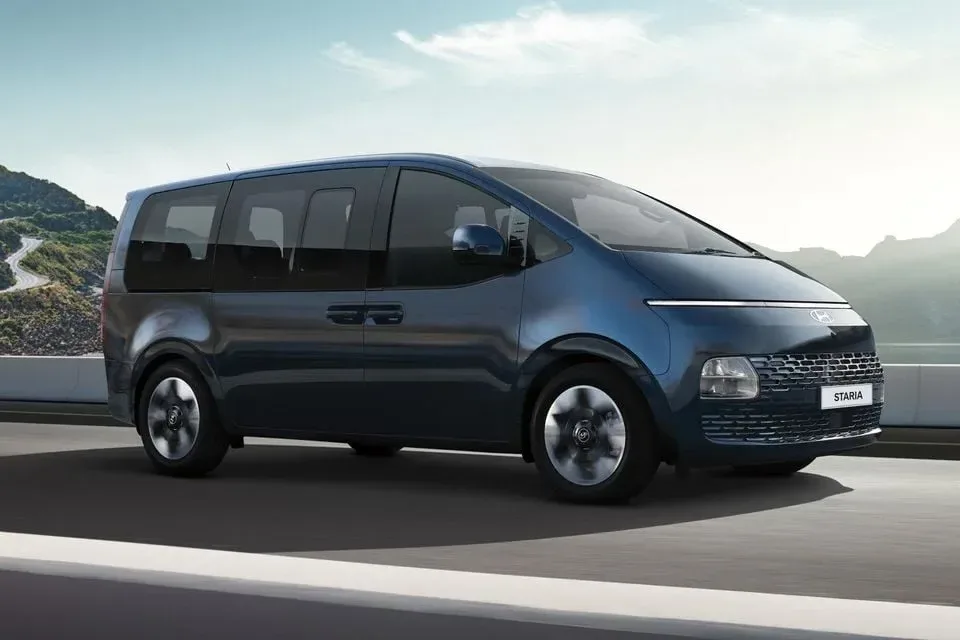
Image credit: Hyundai Australia
The Staria has always been the spaceship of the school-run car park, but the sums did not always add up next to a Kia Carnival. That changes for MY26. Hyundai has given the people mover and its Load van sibling a mid-life refresh, dropped in a full hybrid drivetrain for the first time, and reset the passenger range around a new flagship called Lounge. The Staria Lounge Hybrid opens at $73,740 before on-roads, the Staria Load Hybrid at $53,490, and the Load Premium Hybrid at $61,240. Order books are open at Hyundai dealers, with hybrid stock arriving off the boat from June and passenger V6 and Load diesel cars available now.
The buyer angle is the Lounge Hybrid, and it is aimed straight at families cross-shopping the Kia Carnival and larger seven-seat hybrid SUVs like the Mazda CX-80. For tradies, the story is the Load Hybrid van coming in $3,500 above the diesel with an extra 25kW on tap and much lower running costs on short-run urban work. There is also a fully electric Staria Load due later in 2026 with 160kW, which will give the Ford E-Transit Custom and the incoming Kia PV5 Cargo real competition.
Pricing: Where Every Variant Lands
Hyundai has tidied the range up as part of the update. The passenger Staria drops the mid-spec Elite and re-badges the flagship. Lounge is the new top grade, hybrid-only, with captain chairs and Nappa trim. Below it, the entry Staria continues in petrol V6 and turbo-diesel, both at the same list price. The Load van gets three trims split across diesel and hybrid, with the EV to follow. All prices are before on-road costs.
| Variant | Powertrain | Price (before on-roads) |
|---|---|---|
| Staria (base) Petrol | 3.5L V6 petrol, 8-spd auto, RWD | $54,300 |
| Staria (base) Diesel | 2.2L turbo-diesel, 8-spd auto, AWD | $54,300 |
| Staria Lounge Hybrid | 1.6L turbo hybrid, 6-spd auto, FWD | $73,740 |
| Staria Load Diesel | 2.2L turbo-diesel, 8-spd auto, AWD | $49,990 |
| Staria Load Hybrid | 1.6L turbo hybrid, 6-spd auto, FWD | $53,490 |
| Staria Load Premium Hybrid | 1.6L turbo hybrid, 6-spd auto, FWD | $61,240 |
| Staria Load EV (coming) | 160kW electric, single motor, FWD | TBC |
The hybrid step from a Staria Load Diesel is $3,500 for the entry Load and up to $19,440 for the Lounge over the outgoing Highlander petrol V6, so it is not a like-for-like swap. Nappa leather, captain chairs and the drivetrain sit inside that gap.
The 1.6 Turbo Hybrid Drivetrain
The hybrid unit is Hyundai Motor Group's evolved 1.6-litre turbo-petrol paired with a permanent-magnet electric motor and a small traction battery. Combined outputs are quoted at 180kW and 366Nm, with drive going to the front wheels through a six-speed torque converter automatic rather than the CVT you get in a Toyota Camry Hybrid. Hyundai has not published a WLTP fuel figure on the local site yet, however the same drivetrain in the Kia Carnival Hybrid is quoted at 5.8 L/100km combined on the local ADR test, and the Staria is heavier so expect a small penalty on top of that.
Two things stand out. The Staria hybrid is front-wheel drive only, whereas the turbo-diesel keeps its part-time AWD, so tradies who genuinely leave the seal need to weigh that up against the fuel savings. And the hybrid loses 20kW of peak power against the retained 3.5L V6 (200kW), which stays available on the passenger Staria base grade for buyers who want maximum push and prefer a naturally aspirated V6 to a turbo four with an electric assist.
| Spec | Lounge Hybrid | Load Hybrid |
|---|---|---|
| Engine | 1.6L turbo petrol | 1.6L turbo petrol |
| Combined power / torque | 180 kW / 366 Nm | 180 kW / 366 Nm |
| Transmission | 6-spd auto | 6-spd auto |
| Drive | FWD | FWD |
| Seats | 7 (captain chairs row 2) | 3 (front row only) |
| Overall length | 5,253 mm | 5,253 mm |
| Braked tow rating | 2,500 kg | 2,500 kg |
| Unbraked tow rating | 750 kg | 750 kg |
| Warranty | 5 yr / unlimited km | 5 yr / unlimited km |
What Is New On the Outside and Inside
The Staria has always split opinion on styling, and Hyundai has not touched the slab-side profile or the greenhouse. What has changed is at the corners. A revised grille, mildly reworked bumper and new 18-inch alloys sit under the same signature full-width front lightbar. The Load van keeps the taller stance and the sliding side doors, with steel wheels standard on the entry diesel.
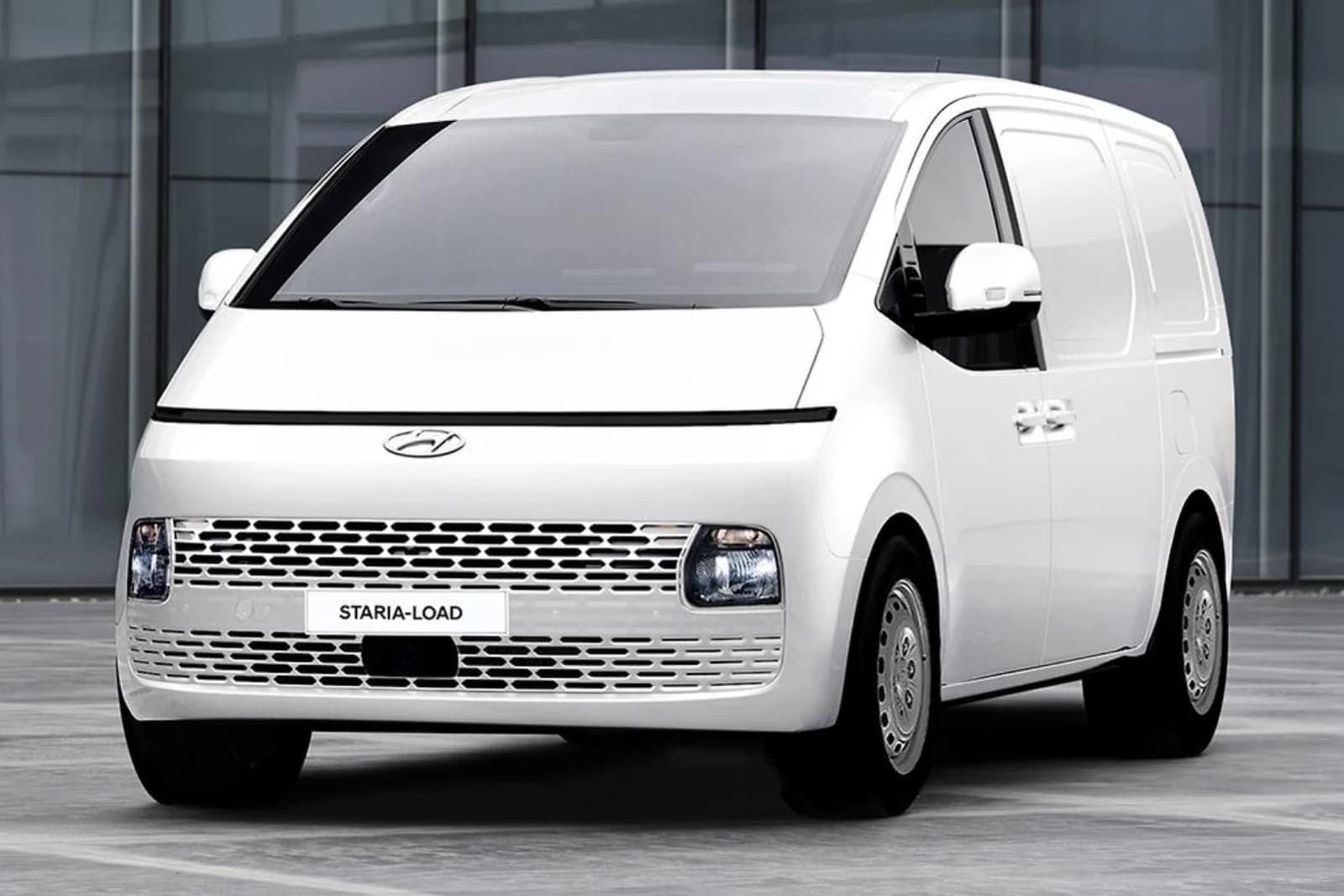
Image credit: Hyundai Australia
Inside the cabin gets the bigger update. A pair of 12.3-inch screens take over the dash, running Hyundai's newer ccNc infotainment stack with over-the-air updates, connected services and a redesigned home menu. Wireless Apple CarPlay and wireless Android Auto are standard, as is a Qi wireless charging pad up front. Voice control has been reworked. The Lounge grade adds the Nappa leather trim on the captain chairs, powered second-row footrests, dual-pane rear side windows with power blinds, and an extra USB-C bank in the third row. The Load Premium hybrid picks up the same screen setup with a heavier-duty rubber floor and cargo tie-down configuration built for parcel work.
Safety and ANCAP
The Staria currently holds a 5-star ANCAP rating, however the sting in the tail is that the current rating is nearing its published expiry, so ANCAP is running a retest against the updated 2026 to 2028 protocol. Read that as: rating valid today, subject to reassessment. Buyers on a fleet spec that requires a current 5-star for procurement should confirm the certificate date before ordering. Standard safety kit across the range includes autonomous emergency braking with pedestrian, cyclist and junction detection, blind-spot collision avoidance, rear cross-traffic braking, lane-keep and lane-following assist, smart adaptive cruise, safe exit warning and driver attention monitoring. Load hybrid grades pick up a bulkhead-mounted rear camera the diesel does without on entry spec.
How It Compares
For the family-hauler use case, the Lounge Hybrid sits in a lonely spot. There is no seven-seat Kia Carnival Hybrid on sale here yet, so its natural cross-shop is the diesel and V6 Carnival on one side and larger seven-seat hybrid SUVs on the other. On the Load van side the diesel LDV Deliver 7, the Ford Transit Custom PHEV and the coming Kia PV5 are the closest points of reference.
| Car | Price (before on-roads) | Powertrain | Seats | Braked tow |
|---|---|---|---|---|
| Hyundai Staria Lounge Hybrid | $73,740 | 1.6T hybrid, 180kW | 7 | 2,500 kg |
| Kia Carnival Platinum | from ~$72,690 | 3.5L V6 petrol, 216kW | 8 | 2,000 kg |
| Mazda CX-80 Azami PHEV | from ~$83,240 | 2.5L PHEV, 241kW | 6-7 | 2,500 kg |
| Toyota Granvia (used market) | n/a | 2.8L turbo-diesel | 6-8 | 1,500 kg |
The Lounge Hybrid opens up a specific gap in the market that CarSorted buyers have been asking about for months: a legitimately efficient full-hybrid people mover with a proper 2,500kg tow rating and van-like packaging. The Carnival is still the volume king on price and third-row usability, but its 3.5-litre V6 will drink like a V6, and it tops out at 2,000kg braked. The CX-80 Azami PHEV is more premium and more expensive, and it is technically a large SUV rather than a purpose-built people mover.
The CarSorted Angle: What Our Data Says
We ran the numbers using CarSorted's own database. The Staria Lounge Hybrid at $73,740 sits about $1,050 above a top-spec Kia Carnival Platinum V6 at roughly $72,690, so on sticker they are almost dead level. Where the sums diverge is fuel. A Carnival Platinum V6 on our directory carries an ADR combined figure around 9.6 L/100km. Assume the Lounge Hybrid comes in at 6.5 L/100km once real-world overhead is factored in, and a family running 20,000km a year saves roughly 620 litres a year, about $1,240 at $2.00 per litre unleaded. Break-even on the extra sticker takes under a year.
Against the Mazda CX-80 Azami PHEV at $83,240, the Lounge is $9,500 cheaper, but you lose plug-in electric range. The CX-80 PHEV can do a 60km commute on the battery, which the Staria hybrid cannot. That is the choice: pay less, get more space and a bigger tow rating, or pay more and get plug-in commuting. See a full cross-shop on our Staria vs Carnival comparison and dig into segment options in our Best 7-Seater Hybrid Cars 2026 guide.
Warranty and Servicing
Hyundai backs the whole Staria range with a 5-year unlimited-km warranty and roadside assist for the length of the service program. The hybrid drive battery is covered for 8 years or 160,000km, which is the same coverage a Kona Hybrid gets. Service intervals are set at 12 months or 15,000km, whichever comes first, and capped-price servicing runs to five years. That is a shorter warranty than Chery's seven or MG's ten, however Hyundai's dealer network and parts logistics are markedly more established.
What This Means For Buyers
If you are shopping a family car in the low $70,000s and you need a genuine third row plus tow capacity for a caravan or a big trailer, the Lounge Hybrid is the first hybrid people mover on the market that ticks all three at once. Someone cross-shopping a Kia Carnival Platinum at roughly $72,690 and a Mazda CX-80 Azami PHEV at $83,240 now has a hybrid alternative between them at $73,740. If you plug in nightly and your commute is short, the CX-80 PHEV still wins on real-world running costs. If you tow a caravan, do country miles, and want the biggest usable third row, the Staria Lounge Hybrid is the pick.
For tradies and delivery operators, the Load Hybrid at $53,490 is a harder call. The petrol-electric drivetrain is FWD only, so mud sites and towing over 2,500kg are off the table. But for last-mile parcel work, food delivery, HVAC and trade fitouts around Sydney, Melbourne or Brisbane, the fuel savings against a Ford Transit Custom diesel or LDV Deliver 7 could pay back the price step in around 18 months. The wildcard is the 160kW Staria Load EV coming later in 2026, which will decide whether to sign now or wait a quarter.
Hyundai Staria in the directory | Compare Staria vs Carnival | Best 7-Seater Hybrid Cars 2026
Disclaimer: Prices sourced from Hyundai Australia and are recommended retail prices before on-road costs. On-road costs vary by state and postcode. Fuel-economy figures are manufacturer claims where quoted, or estimates flagged as such. ANCAP rating current at time of writing and subject to reassessment. Specifications may change without notice. Confirm the final drive-away price and current spec with an authorised Hyundai dealer before ordering.