Key Takeaways
- Hunter Pro PHEV opens from under $50,000 plus on-roads, Hunter X about $3,000 above
- Combined 360kW from a 2.0L turbo-petrol and dual electric motors, the most powerful PHEV ute confirmed for Australia
- 31.2kWh LFP battery, claimed 1,005km combined range and 1.6 L/100km on NEDC
- Full 3,500kg braked towing, 915kg payload, V2L on board
- Hunter X adds front and rear locking diffs plus a panoramic roof, a combo only found on six-figure 4WDs until now
- 7-year unlimited km warranty, first 1,000 reservations score a free home charger or a $500 voucher
- ANCAP not yet rated, deliveries Q3 2026
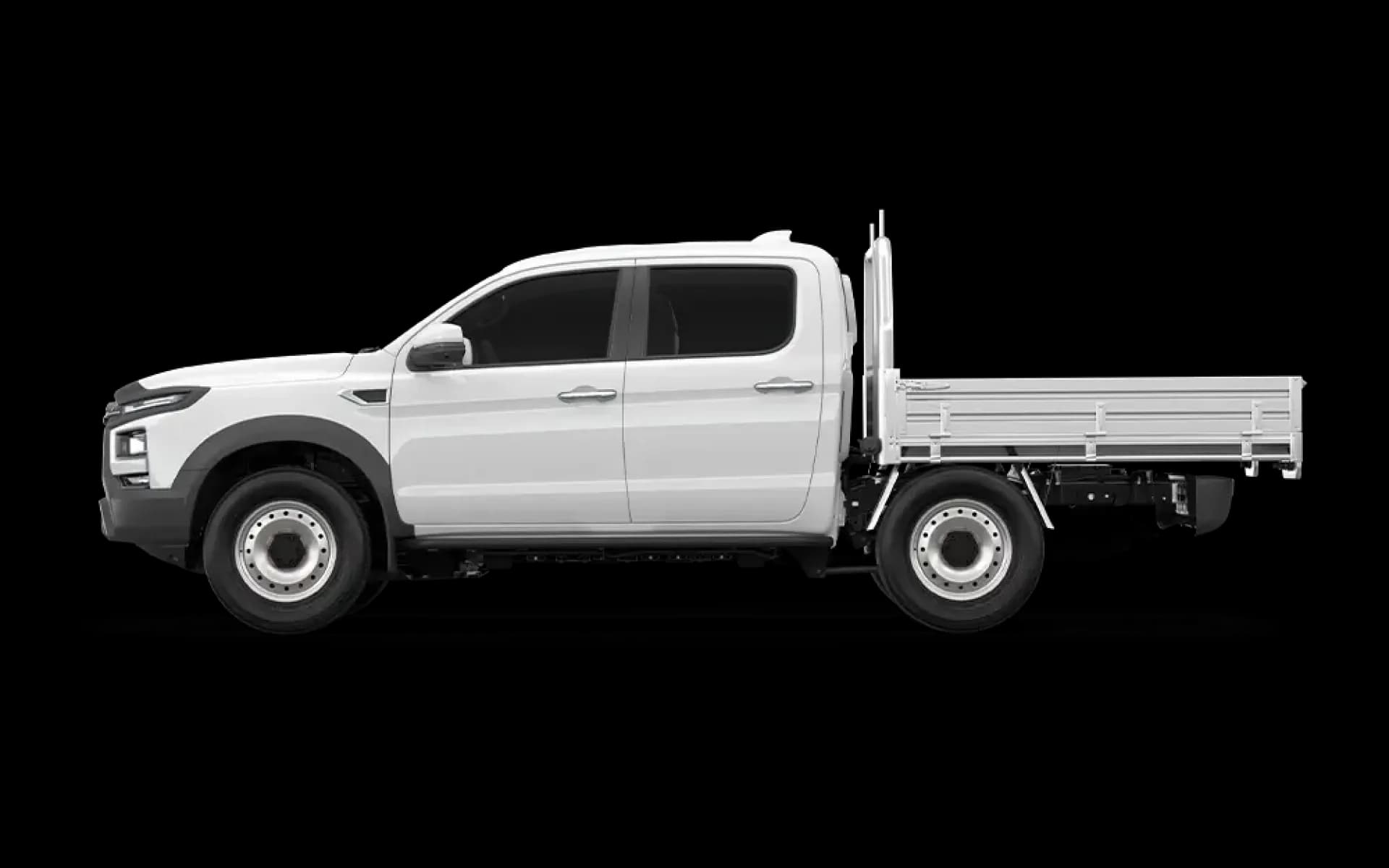
Image credit: JAC Australia
Plug-in hybrid utes have stopped being a curiosity and started behaving like a real category. The BYD Shark 6 kicked the door in, the GWM Cannon Alpha PHEV followed, and the Ford Ranger PHEV brought the legacy badge along. Now JAC is going for the bottom of the price ladder and the top of the spec sheet at the same time. The Hunter PHEV opens from under $50,000 plus on-roads, claims more grunt than any of its rivals on paper, and still tows the full 3,500kg. We have run the cross-shop on CarSorted so you can see where it lands against the cars you are actually weighing up, not just the brochure.
The angle that matters here is not the launch noise, it is the buyer math. A sub-$50k entry price plus the legal-max tow rating plus a 7-year warranty rewrites the worksheet for tradies, weekend tow buyers and small-fleet owners who had filed PHEV utes under "nice idea, too expensive." If JAC can land the exact RRP where it is currently signalling, the Hunter Pro will undercut the cheapest BYD Shark 6 dual-cab by roughly $8,000 and the entry GWM Cannon Alpha Lux PHEV by close to $3,000. The flagship Hunter X then adds something neither competitor currently offers at this money, which is a front diff lock alongside the rear one.
Full Australian Pricing
JAC has not published exact RRP figures yet. What it has confirmed is the entry point ("from under $50,000 plus on-roads"), the X-over-Pro premium (about $3,000), and the fact that order books are live now through participating dealers. We have left the table at JAC's signalled positioning rather than guess a sharper number.
| Variant | Price (before on-roads) | Status |
|---|---|---|
| Hunter Pro PHEV | From under $50,000 | Reservations open, Q3 2026 delivery |
| Hunter X PHEV | ≈ Pro + $3,000 | Reservations open, Q3 2026 delivery |
Current price on CarSorted: JAC Hunter PHEV Pro PHEV $49,988 RRP, as at 5 Oct 2026; BYD Shark 6 Premium $57,900 RRP, as at 14 Oct 2026; BYD Shark 6 Performance $62,900 RRP, as at 4 Oct 2026.
Reservations sit at $500 fully refundable. The first 1,000 reservation holders who take delivery before 31 December 2026 get either a hardware-only home EV charger or a $500 JAC genuine accessories voucher. Choose carefully, because the home charger is the more valuable of the two if you do not already have one installed.
Powertrain and Performance
The Hunter PHEV runs JAC's parallel hybrid architecture with a turbocharged 2.0-litre four-cylinder petrol engine driving the front axle through a single-speed reduction unit, plus a separate electric motor sitting on the rear axle where a tailshaft would normally be. Combined output is quoted at 360kW. JAC originally signalled 350kW in its pre-reveal material before bumping the figure to 360kW for the open-orders announcement, which lines up with the calibration changes seen on pre-production prototypes shown to Australian media earlier this year.
| Spec | Hunter Pro PHEV | Hunter X PHEV |
|---|---|---|
| Engine | 2.0L turbo-petrol I4 | 2.0L turbo-petrol I4 |
| Electric motors | Front + rear (dual) | Front + rear (dual) |
| Combined output | 360 kW | 360 kW |
| Battery | 31.2 kWh LFP | 31.2 kWh LFP |
| Combined range (NEDC) | 1,005 km | 1,005 km |
| Combined fuel use (NEDC) | 1.6 L/100km | 1.6 L/100km |
| Drive | 4WD, electric rear | 4WD, electric rear |
| Differential locks | Rear electronic locker | Front + rear electronic lockers |
| Braked towing | 3,500 kg | 3,500 kg |
| Payload | 915 kg | 915 kg |
| V2L | 3.3 kW | 3.3 kW |
| Seats / doors | 5 / 4 | 5 / 4 |
| Fuel tank | 65 L | 65 L |
Separated electric-only range has not been confirmed by JAC Australia yet, and we are not going to guess one. For context the 31.2kWh battery is comfortably larger than the BYD Shark 6's 29.6kWh pack and the Cannon Alpha PHEV's 37.1kWh unit. NEDC numbers run optimistic against WLTP and against the way Australians actually drive, so plan for less than 1,005km combined once the cycle is converted and the tray is loaded.
Equipment and Cabin
Hunter Pro lands with synthetic leather, a 12.8-inch landscape touchscreen, a 10.25-inch digital cluster, wireless Apple CarPlay and Android Auto, a wireless phone charger, six-speaker audio, a powered driver's seat with memory, dual-zone climate, keyless entry and a heated steering wheel. Outside there are 18-inch alloys with full-size off-road spare, side steps, LED everything, a tub liner and the V2L socket in the bed.
Stepping up to Hunter X adds a panoramic glass roof, ventilated front seats, heated rear outer seats, upgraded synthetic leather, 360-degree camera with a transparent-bonnet view for off-road work, and the second locking diff at the front. The X is the configuration to chase if you actually use the off-road kit. The combination of a front locker on a body-on-frame PHEV at this price point is, frankly, unusual. The closest direct comparable, the Cannon Alpha Ultra PHEV with rear locker only, runs at $66,990 plus on-roads.
Safety
The JAC Hunter PHEV is not yet rated by ANCAP. JAC Australia has flagged the rating as a launch priority but no result has been published, and the existing 5-star score on the diesel JAC T9 does not carry over because the Hunter is a separate platform.
Standard driver-assistance kit covers AEB with vehicle, pedestrian and cyclist detection, adaptive cruise with stop-and-go, lane-keep assist, lane-departure warning, blind-spot monitoring, rear cross-traffic alert and braking, driver attention monitoring, traffic-sign recognition, a tyre-pressure monitor, front and rear parking sensors and the reversing camera. Seven airbags, including a front centre bag, are listed across both grades.
How It Compares
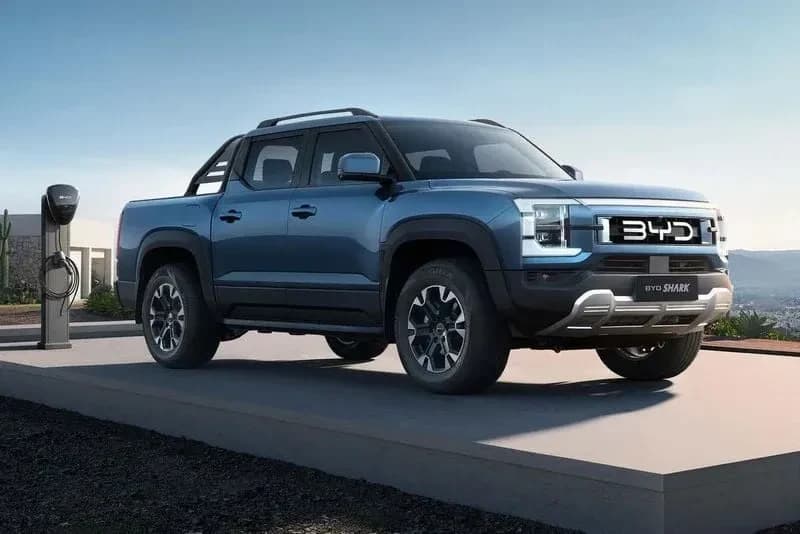
Image credit: BYD Australia
The plug-in dual-cab segment was effectively three cars 12 months ago. It is now five with the Hunter and the cab-chassis Shark 6 added, and a sixth is on the way once the Chery KP31 diesel PHEV hits showrooms. JAC's signalled pricing puts the Hunter Pro at the floor of the segment and the Hunter X close to the floor of the GWM Cannon Alpha PHEV range. Here is how the four established and signalled prices stack up on the headlines that actually drive the decision.
| Model | Price from | Power | Battery | Braked tow |
|---|---|---|---|---|
| JAC Hunter Pro PHEV | Under $50,000 | 360 kW | 31.2 kWh | 3,500 kg |
| GWM Cannon Alpha Lux PHEV | $52,990 | 300 kW | 37.1 kWh | 3,500 kg |
| BYD Shark 6 Premium | $57,900 | 321 kW | 29.6 kWh | 2,500 kg |
| BYD Shark 6 Performance | $62,900 | 321 kW | 29.6 kWh | 3,500 kg |
| Ford Ranger PHEV Stormtrak | $86,990 | 207 kW | 11.8 kWh | 3,500 kg |
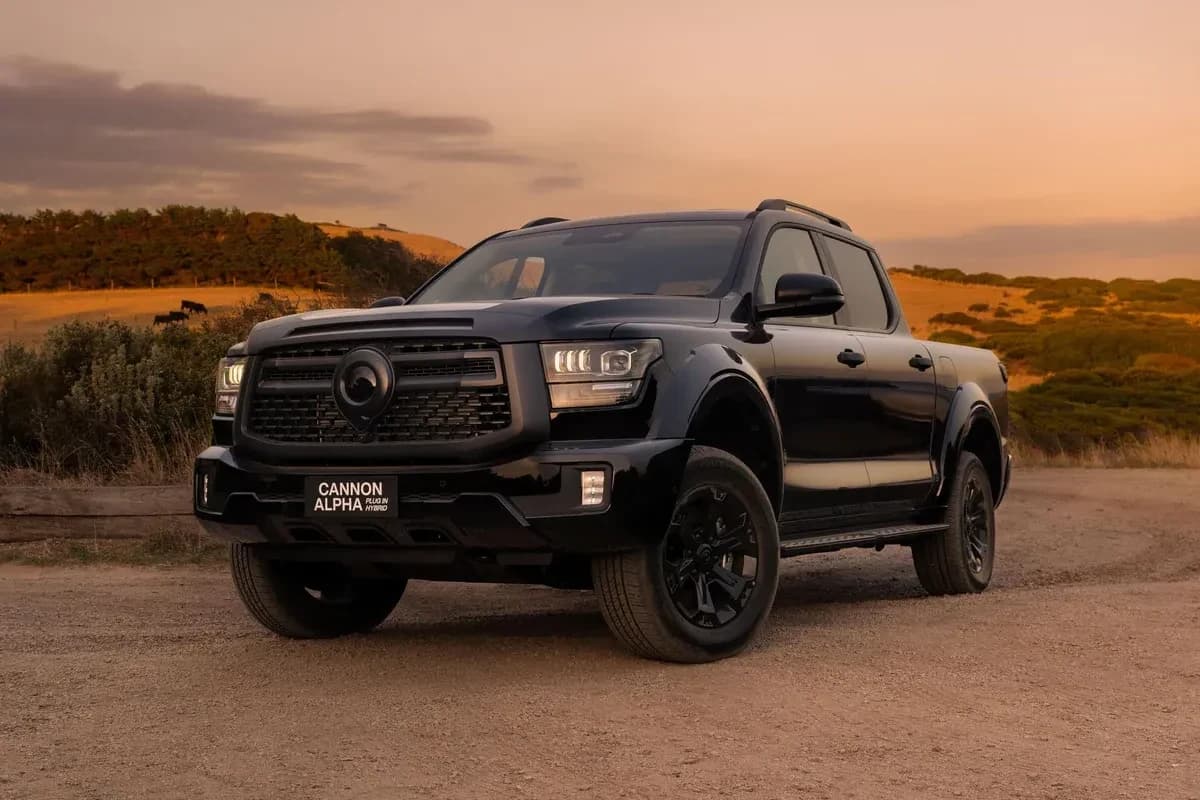
Image credit: GWM Australia
Plot those numbers and the Hunter Pro is the only sub-$50k 3.5T-tow PHEV ute on the table. It also walks the BYD Shark 6 Premium on the towing line, which gets stuck at 2,500kg until you step up to the $62,900 Performance. Against the Ford Ranger PHEV, the Hunter has substantially more power and a more useful battery for around half the price, but loses on dealer footprint, parts maturity and resale credibility. Against the Cannon Alpha PHEV, the X variant pulls ahead on locking diffs and price while the Cannon Alpha keeps the win on battery size, dealer count and the comfort of a year of Australian sales history.
Want the structured side-by-side? Start with our BYD Shark 6 vs GWM Cannon Alpha PHEV comparison and our in-depth Shark 6 vs Cannon Alpha breakdown, then layer the Hunter Pro on top. On price-per-kW the Hunter sits at roughly $139, the cheapest in the segment by a comfortable margin.
Warranty and Servicing
JAC Australia covers the Hunter with a 7-year unlimited km vehicle warranty, an 8-year battery warranty, and 7 years of complimentary roadside assist when you service inside the JAC dealer network. That matches the warranty on the existing JAC T9 and beats BYD (6 years vehicle, 8 years battery), Toyota (5 years vehicle, 8 years battery), and Ford (5 years vehicle, 8 years battery). Capped-price servicing has been confirmed but the dollar figures are pending.
The CarSorted Angle
On CarSorted, the BYD Shark 6 Premium is listed at $57,900 with 321kW, a 29.6kWh battery and 2,500kg of braked towing. The GWM Cannon Alpha Lux PHEV sits at $52,990 with 300kW, 37.1kWh and 3,500kg. The flagship BYD Shark 6 Performance at $62,900 finally matches the 3,500kg tow but only at a $13,000-plus premium over JAC's signalled entry. Drop the JAC Hunter Pro PHEV into that grid and you have the cheapest PHEV dual-cab with full legal-max towing in the country, plus the segment's highest combined power. On a five-year private running cost basis at 15,000km a year, our calculator pencils the Hunter Pro at roughly $4,200 a year in energy and fuel for a 60-40 home-charge driver, against $4,700 for the Shark 6 Premium and $5,400 for the Ford Ranger PHEV. Build your own side-by-side from the CarSorted compare tool, or browse the full plug-in ute set in our PHEV ute directory.
What This Means for Buyers
If you are cross-shopping the BYD Shark 6 Premium at $57,900, the GWM Cannon Alpha Lux PHEV at $52,990 or the Ford Ranger PHEV at $86,990, the Hunter Pro pulls the conversation in two directions at once. It clears the towing ceiling that has frustrated Shark 6 Premium buyers, it undercuts the Cannon Alpha PHEV by roughly $3,000 on signalled pricing, and it does the lot for less than two-thirds of a Ranger PHEV. The catch is reputation. JAC has only been selling utes in Australia in volume since the T9 landed, the Hunter dealer network is still being expanded for PHEV service, and ANCAP has not yet weighed in.
Our buyer rule of thumb. If you are a tradie or weekend tow buyer who can plug in at home overnight and you want the lowest dollar-per-kW number with the full 3.5T tow rating, put the Hunter Pro on the test-drive list. If you also want a locking front diff for genuine remote work, the Hunter X is the only sub-$60k way to get one with petrol-electric grunt attached. If you place a high value on a settled dealer network and a proven ANCAP score, the Cannon Alpha PHEV and the Shark 6 are the safer picks today and the Hunter becomes a wait-and-see, with a re-look once the first ANCAP result and first set of long-term owner reports land in the second half of 2026.
Either way, the next 12 months of PHEV ute pricing in Australia just got a lot more interesting. The diesel Hilux and Ranger no longer get to set the price ceiling unchallenged, the BYD-vs-GWM duel has a third combatant, and buyers finally have a sub-$50k path to a plug-in dual-cab that actually tows.
Best Utes Australia 2026 | Best Electric Utes Australia 2026 | Build your own ute comparison
Disclaimer: Specifications and pricing intent are sourced from JAC Australia. Pricing is signalled "from under $50,000 plus on-road costs" and is not a final RRP. Range and fuel consumption figures are claimed by the manufacturer on the NEDC cycle and will differ from real-world driving, particularly when the vehicle is loaded or towing. ANCAP rating is not yet published. Running-cost figures are CarSorted estimates and depend on energy prices, household charging mix and driving conditions.