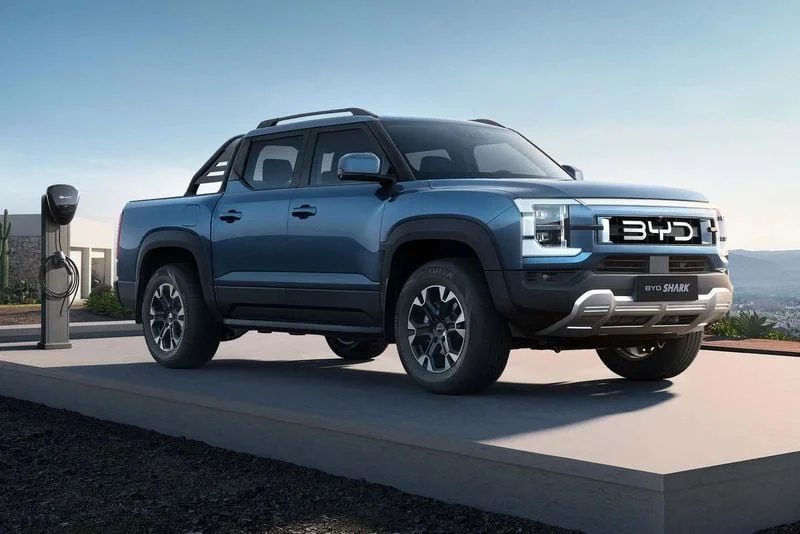
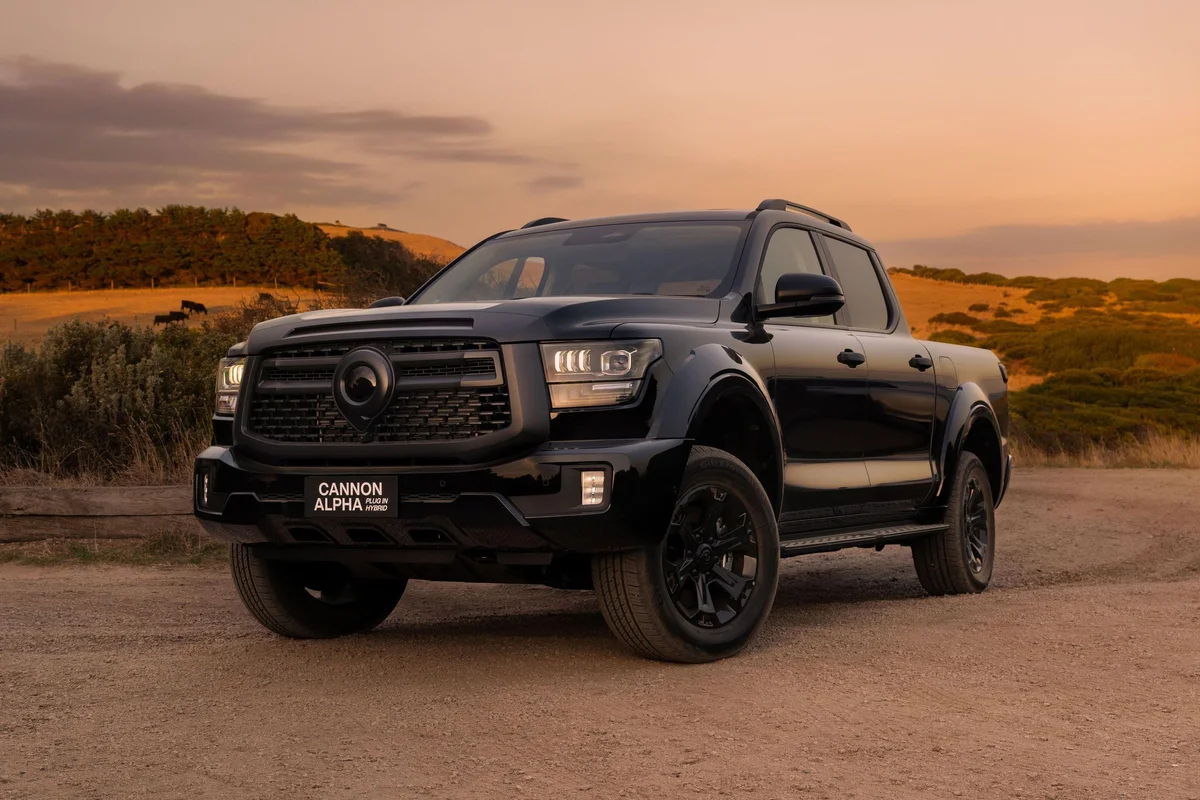
BYD Shark 6 vs GWM Cannon Alpha PHEV
The fast one against the one that actually tows 3,500kg. Which plug-in hybrid ute wins?
Data checked: specs 22 Aug 2026, price 4 Oct 2026
Comparison snapshot
Prices, scores and edges below update from our car data.
21kW more power
Lighter on fuel by 0.3 L/100km, tows 1,000kg more
Written 23 May 2026. The snapshot, tables, scores and verdict on this page update from our car data; figures quoted in the text are as at that date.
Price
Both are plug-in hybrid dual-cabs that promise cheap electric running with a petrol back-up, and the pricing here is easy to get wrong. The figure you will often see attached to the GWM Cannon Alpha, $52,990, is the diesel Lux. The plug-in Lux PHEV is $59,990, which puts it $2,090 above the BYD Shark 6 Premium rather than below it.
| Variant | Powertrain | RRP |
|---|---|---|
| GWM Cannon Alpha Lux | Diesel | $52,990 |
| BYD Shark 6 Dynamic Cab-Chassis | PHEV | $55,900 |
| GWM Cannon Alpha Ultra | Diesel | $56,990 |
| BYD Shark 6 Premium | PHEV | $57,900 |
| GWM Cannon Alpha Lux PHEV | PHEV | $59,990 |
| BYD Shark 6 Performance | PHEV | $62,900 |
| GWM Cannon Alpha Ultra HEV | Hybrid | $64,490 |
| GWM Cannon Alpha Ultra PHEV | PHEV | $66,990 |
Read down that list and the plug-in BYD is the cheaper of the two plug-in utes at every equivalent step. If your budget is the deciding factor and you do not need 3,500kg of towing, the Shark 6 Premium is the value pick of the plug-in pair. If you do need the full tow rating, the Cannon Alpha Lux PHEV at $59,990 is the cheapest way to get it in a plug-in ute, since the Shark 6 Performance that matches it is $62,900.
Safety
Both utes carry a five-star ANCAP rating with the full active-safety suite listed as standard. Neither should put you off on safety grounds.
Features
Both are loaded for the money with big screens, synthetic leather, heated seats and vehicle-to-load to run tools or a campsite off the battery. The Shark 6 feels the more modern and car-like inside; the Cannon Alpha feels the bigger, more rugged truck. It comes down to whether you want a refined daily or a proper workhorse.
Drivetrain
This is the split. The Shark 6 is dramatically quicker on paper, 321kW and a claimed 5.7 seconds to 100km/h, which is genuinely rapid for a ute. The Cannon Alpha is 300kW but carries more torque at 750Nm and, crucially, tows the full 3,500kg where the Shark 6 Premium maxes out at 2,500kg. It also has a bigger 37.1kWh battery and proper 4WD with low range. Both claim around 100km of NEDC electric range, so plan on meaningfully less in practice. For towing and off-road hardware the GWM is the more capable tool; for outright pace the BYD, and it is now the cheaper of the two as well.
Space and comfort
Both seat five with roomy cabins and competitive trays. The Cannon Alpha is the physically larger vehicle with a more commercial feel, while the Shark 6 leans into car-like comfort and tech. If you spend all day in it for work, the GWM's size and towing matter more; if it doubles as the family car, the Shark 6's polish wins.
Cost to own
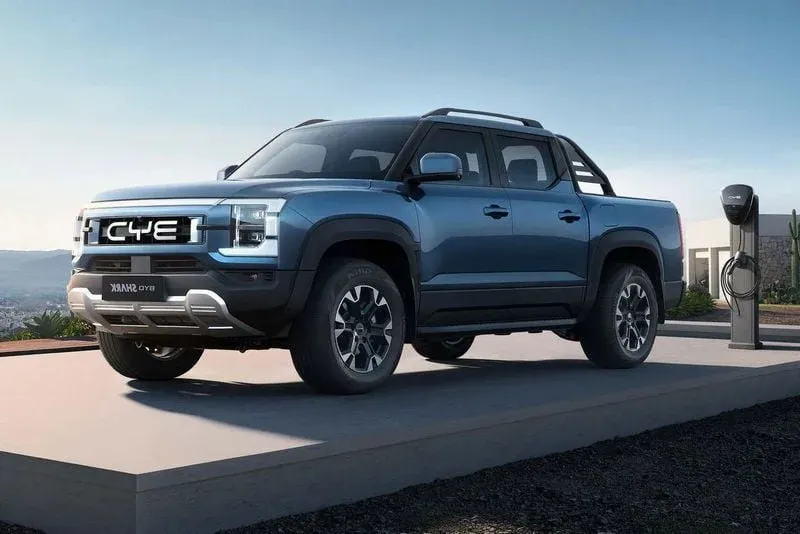
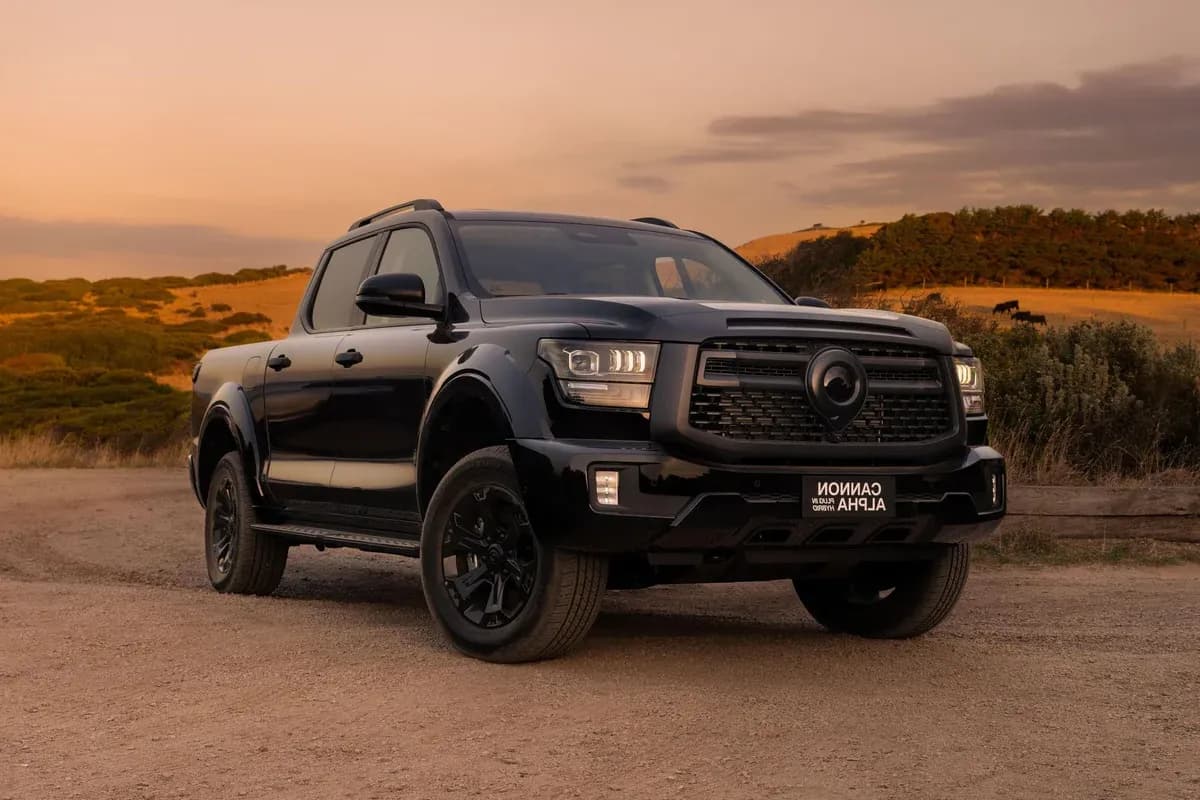
GWM's seven-year warranty edges BYD's six, though the Cannon Alpha PHEV no longer has the lower entry price to go with it. Both are cheap to run if you charge at home and do mostly short trips, and both get much thirstier on the highway with the battery depleted, as all plug-in hybrids do. Treat the sub-2.0L/100km combined claims as lab figures, not fuel bills. Resale for both is still establishing itself against the diesel establishment.
The plug-in hybrid ute went from non-existent to one of Australia's hottest segments almost overnight, and these are its two biggest names. The BYD Shark 6 created the category and sells in huge numbers; the GWM Cannon Alpha PHEV answers with more towing, more torque and a bigger battery, though no longer a lower price.
We have matched the value PHEV grade of each. You can also stack them on every spec in our tool, read the full BYD Shark 6 review, or browse the best electric and PHEV utes guide.
Key details
A tick marks the better figure only where both cars have one and the gap is meaningful (3% or more; a whole star or year).
| Detail | BYD Shark 6 | GWM Cannon Alpha |
|---|---|---|
| Price | From $53,900 RRP | From $57,490 drive-away |
| Drive-away estimate | $57,900 drive away (VIC, advertised) | $57,490 drive away (VIC, advertised) |
| Body | Ute | Ute |
| Powertrain | Plug-in hybrid, 1.5L 4-cyl | Plug-in hybrid, 2L 4-cyl turbo |
| Power / torque | 321kW / 650Nm | 300kW / 750Nm |
| Fuel use | 2 L/100km (7.9 L/100km as a hybrid) | 1.7 L/100km (7.9 L/100km as a hybrid) |
| 0-100km/h | 5.7s | 6.9s |
| Boot | No data | No data |
| Towing (braked) | 2,500kg | 3,500kg |
| ANCAP | 5 stars (2025) | 5 stars (2024) |
| Warranty | 6yr / 150,000 km | 7yr / unlimited km |
At a glance
- Seats
- 5
- Boot
- No data
- Length x width x height
- 5,457 x 1,971 x 1,925mm
- Wheelbase
- 3,260mm
- Engine
- 1.5L 4-cyl
- Power
- 321kW
- Torque
- 650Nm
- Drive
- AWD
- Transmission
- Auto
- Power-to-weight
- 118 kW/tonne
- Kerb weight
- 2,710kg
- Spare wheel
- Full-Size
- Payload
- No data
- Towing braked / unbraked
- 2,500kg / 750kg
- Turning circle
- 13.5m
- Seats
- 5
- Boot
- No data
- Length x width x height
- 5,445 x 1,991 x 1,924mm
- Wheelbase
- 3,350mm
- Engine
- 2L 4-cyl turbo
- Power
- 300kW
- Torque
- 750Nm
- Drive
- 4WD
- Transmission
- 9-Speed Hybrid Automatic
- Power-to-weight
- 107 kW/tonne
- Kerb weight
- 2,810kg
- Spare wheel
- Full-size
- Payload
- 685kg
- Towing braked / unbraked
- 3,500kg / 750kg
- Turning circle
- 13m
CarSorted Score breakdown
The CarSorted Score is algorithmic: it is calculated from each car's data, not from a road test. How it works.
Safety
Fuel Economy
Value
Practicality
Technology
Performance
Reliability
The verdict
GWM Cannon Alpha comes out ahead on the CarSorted Score (76 vs 74)
The deciding gaps
- Fuel Economy:BYD Shark 6 45, GWM Cannon Alpha 100, GWM Cannon Alpha ahead by 55
- Technology:BYD Shark 6 87, GWM Cannon Alpha 59, BYD Shark 6 ahead by 28
- Value:BYD Shark 6 90, GWM Cannon Alpha 77, BYD Shark 6 ahead by 13
Same scorer as the live comparison of these two exact cars.
Our take (written 23 May 2026)
One correction up front, because it flips half the old argument: the Cannon Alpha Lux PHEV is $59,990, not the $52,990 often quoted. That $52,990 is the Lux Diesel. So the GWM does not undercut the BYD any more, it costs $2,090 more than the $57,900 Shark 6 Premium. What the extra money still buys is the thing that matters most to a lot of ute buyers: the full 3,500kg braked tow rating the Shark 6 Premium cannot match at 2,500kg, plus 100Nm more torque, a bigger 37.1kWh battery, low-range 4WD and a seven-year warranty against BYD's six. The Shark 6 answers with pace that is in another category, 321kW and a claimed 5.7 seconds to 100km/h against about 10.5, and a more car-like package for $2,090 less. Pick the Cannon Alpha to tow, the Shark 6 for everything else.
Prices on this page move. Want the next verdict?
One short email when prices shift or a new comparison lands. No spam, unsubscribe anytime.
Questions buyers ask
Which tows more, the Shark 6 or Cannon Alpha?
Braked towing capacity: the GWM Cannon Alpha at 3,500kg, against 2,500kg for the BYD Shark 6.
Which is faster?
Peak power: the BYD Shark 6 at 321kW, against 300kW for the GWM Cannon Alpha. The BYD Shark 6 is quicker to 100km/h (5.7s vs 6.9s).
Which is cheaper?
The BYD Shark 6 Premium is from $53,900 RRP; the GWM Cannon Alpha Lux PHEV is from $57,490 drive-away. The two prices are not on the same basis, so we do not set one against the other.
Which plug-in hybrid ute should I buy?
On the CarSorted Score the GWM Cannon Alpha comes out ahead (BYD Shark 6 74/100, GWM Cannon Alpha 76/100), mainly on fuel economy. The score is algorithmic; the editorial above says who each car suits.
Which is cheaper to run, the BYD Shark 6 or the GWM Cannon Alpha?
On the official combined cycle, the BYD Shark 6 uses 2 L/100km and the GWM Cannon Alpha uses 1.7 L/100km.
What are the ANCAP ratings for the BYD Shark 6 and GWM Cannon Alpha?
The BYD Shark 6 holds 5 stars (rated 2025), and the GWM Cannon Alpha holds 5 stars (rated 2024).
Which has the better warranty?
The BYD Shark 6 comes with a 6yr / 150,000 km warranty; the GWM Cannon Alpha with a 7yr / unlimited km warranty.
Related
In the news
- Chery Stockman: The Full Spec Sheet Is Finally Public, the Price and the Launch Date Are Not
- BYD Shark 6 Recall: 32,009 Plug-In Hybrid Utes Called Back in Australia Over a Spare Wheel That Can Fall Off
- MG U9 Black Edition Lands in Australia First: $57,990 Driveaway, 160kW Diesel, Front and Rear Diff Locks
- GWM Tank 500 and Cannon Alpha 3.0L Turbo-Diesel: Australian Pricing, Specs and Arrival
How to read this page. Prices, specs, ANCAP ratings, warranty, scores and the computed verdict come from our records for the two variants shown, sourced from manufacturer Australian documents, and update when those records change. RRP excludes on-road costs. Drive-away figures are estimates for the state you have selected unless marked as advertised. The editorial text was written on 23 May 2026. Always confirm price and specification with the manufacturer or dealer before you buy. CarSorted does not accept payment for recommendations.
Comments (0)
Sign in to join the conversation
No comments yet. Be the first!