2026 BYD Shark 6 Premium review
The 321kW Plug-In Ute From $55,900
Data checked: specs 22 Aug 2026, price 4 Oct 2026
Text fact-checked against our data 30 August 2026Review snapshot
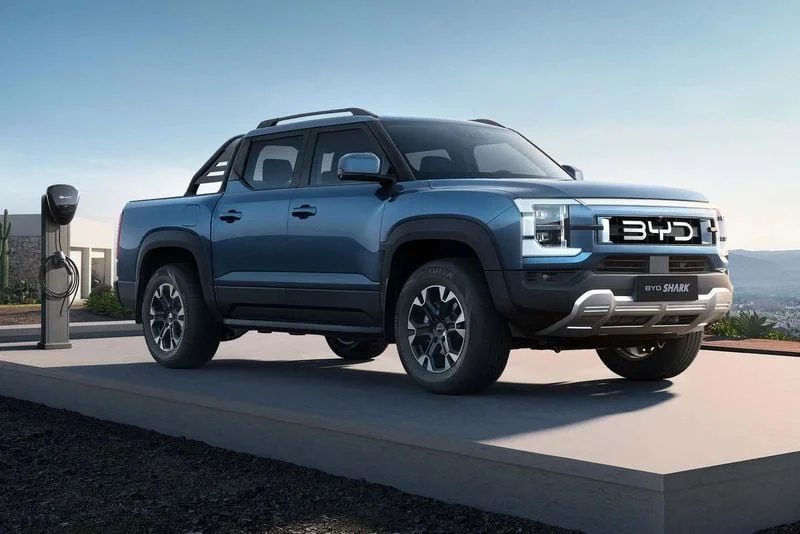
Model reviewed
BYD Shark 6 PremiumFrom $53,900 RRP
Excl. on-road costs
from $317/wk in VIC, excludes servicing and insurance (estimate)
74/100
CarSorted Score
- Towing (braked)
- 2,500kg
- Payload
- 790kg
- Electric range
- 100km
- Fuel use as a hybrid
- 7.9 L/100km
The BYD Shark 6 is an all-wheel-drive plug-in hybrid dual-cab from $55,900 RRP, with 321kW, a claimed 100km of electric range and 7.9L/100km once the battery is flat. The Premium adds a 15.6-inch screen and head-up display for $57,900, and the new Performance lifts output to 350kW and towing to 3,500kg for $62,900, at the cost of 80km of range and a 10.5L/100km battery-flat figure. Payload runs from 725kg to 900kg.
Likes
- 321kW and a claimed 5.7s 0-100km/h on the Premium
- Claimed 100km of electric range
- Performance tows 3,500kg braked
- 6.6kW vehicle-to-load and 55kW DC charging
- Full assist list and 360-degree camera on every grade
Dislikes
- 2,500kg braked towing on the Dynamic and Premium
- Performance uses 10.5L/100km with a flat battery
- Payload of 725kg to 900kg
- 13.5m turning circle
- Open spare-wheel recall (REC-006728)
Competitors
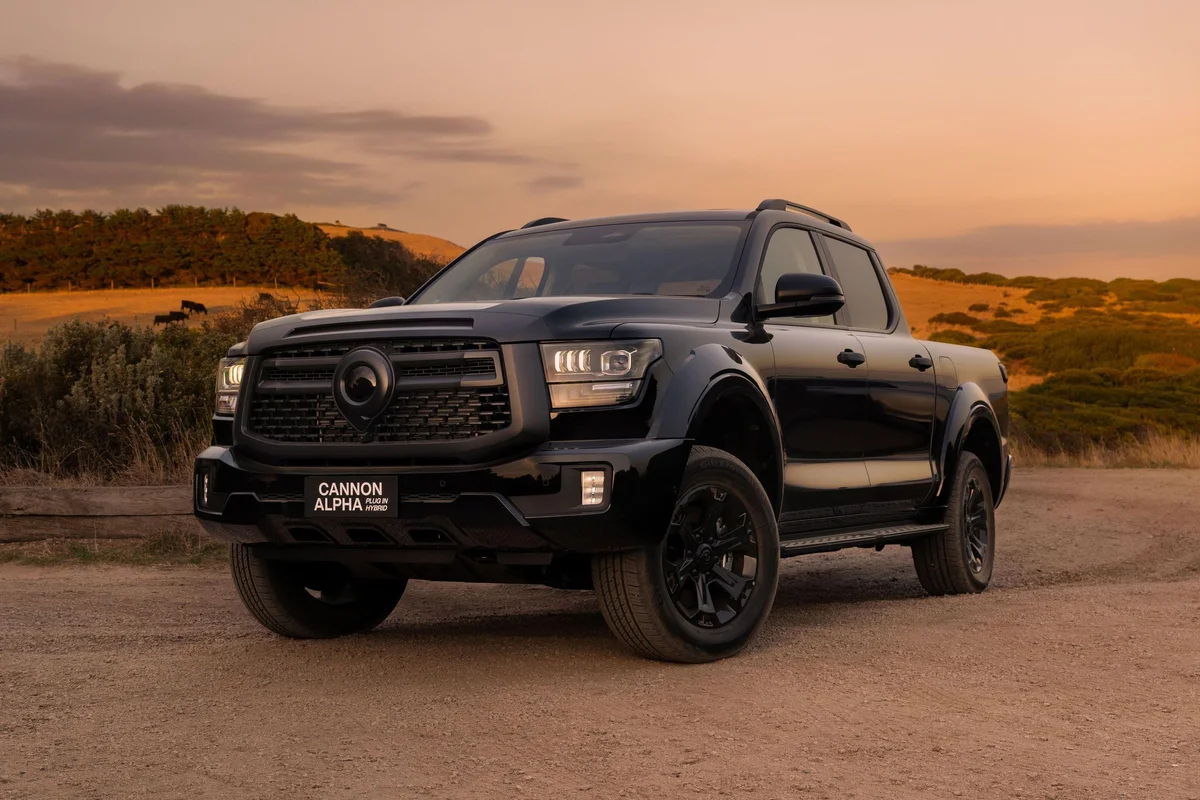
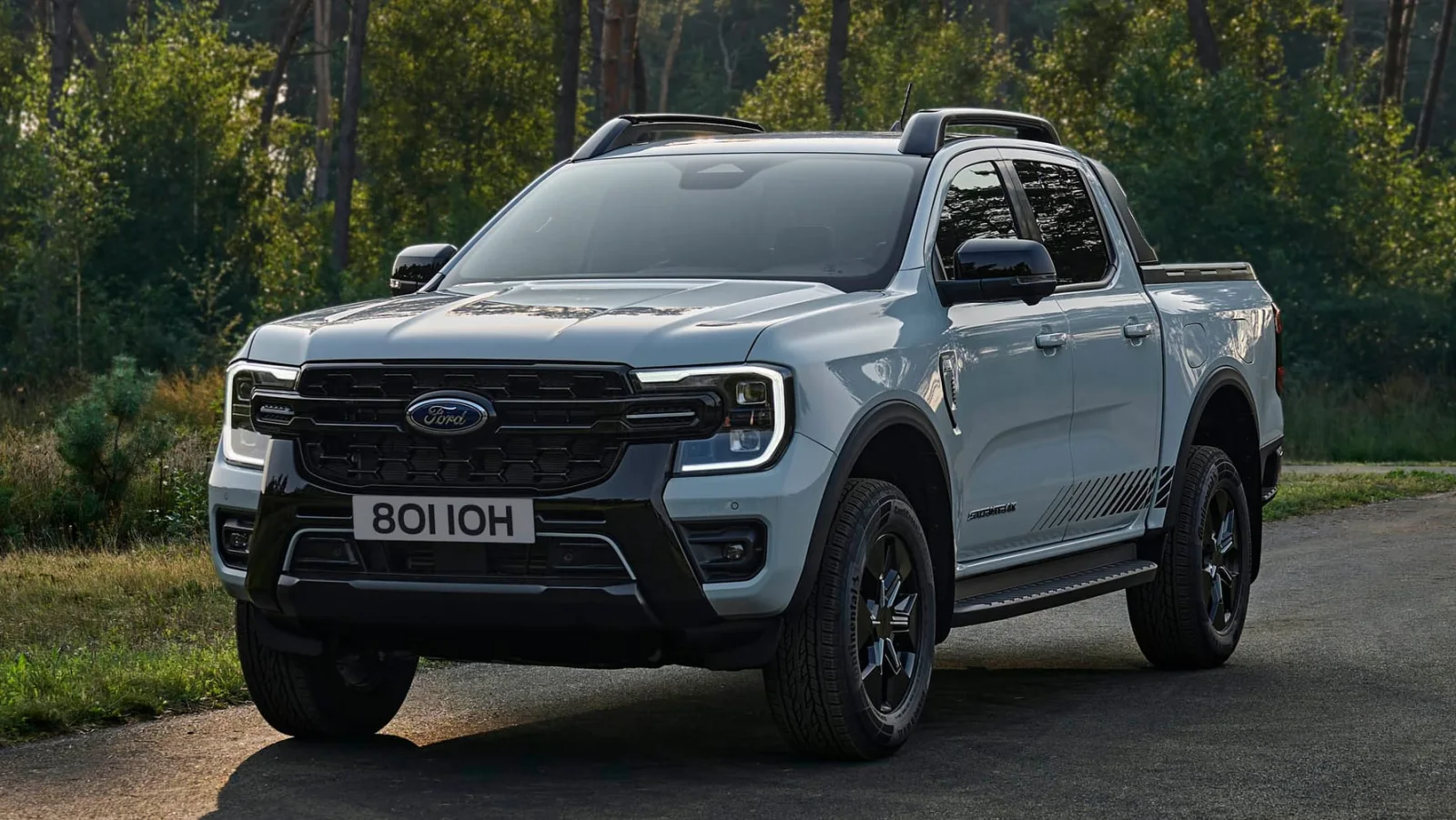
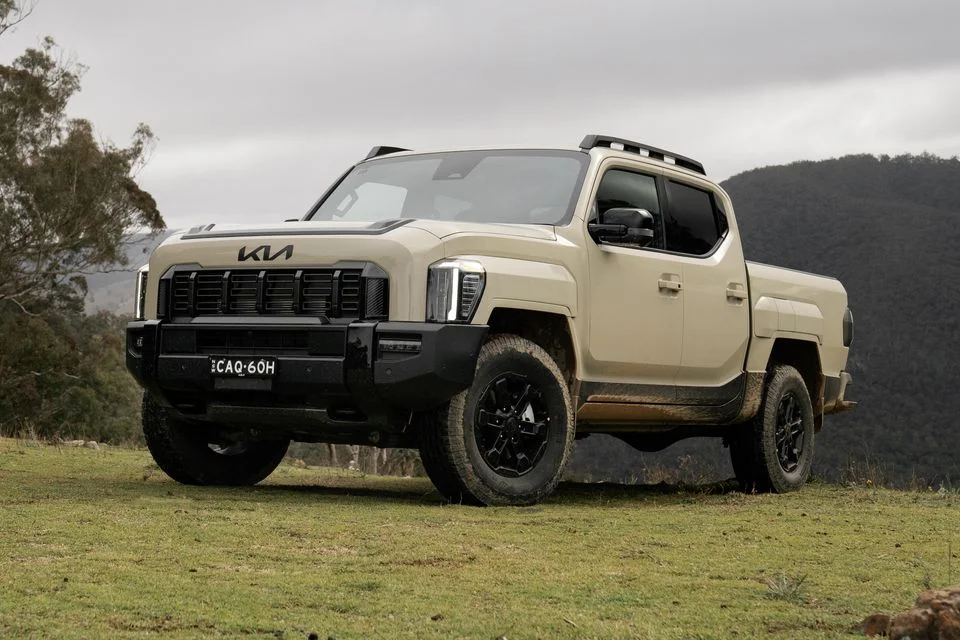
This review is built from BYD's published figures, ANCAP and our own calculators. We have not driven this car.
Written 23 May 2026. The snapshot, tables, prices and scores on this page update from our car data; figures quoted in the text are as at that date.
The BYD Shark 6 is the plug-in hybrid dual-cab that showed a ute does not have to be a diesel. On our rows it is now sold in three grades: the Dynamic Cab-Chassis, the Premium pick-up and the Performance, which brings a bigger 2.0-litre turbo engine and the 3,500kg tow rating the first Shark 6 lacked.
Every grade is all-wheel drive with a 29.6kWh LFP battery, vehicle-to-load and a full assist list. The question for a ute buyer is how those electric figures sit against payload, towing and fuel use once the battery is flat, and this review answers that grade by grade.
We have not driven the Shark 6. Everything here comes from BYD's Australian site, configurator and brochure, and our rows for each grade.
| Key details | 2026 BYD Shark 6 Premium |
|---|---|
| Engine | 1.5L 4-cyl |
| Power | 321kW |
| Torque | 650Nm |
| Drive type | AWD |
| Transmission | Auto |
| Power-to-weight ratio | 118 kW/tonne |
| Weight | 2,710kg (kerb) |
| Spare tyre type | Full-Size |
| Tow rating | 2,500kg braked750kg unbraked |
| Payload | 790kg (GVM minus kerb weight) |
| Turning circle | 13.5m |
| Fuel consumption | 2 L/100km; 7.9 L/100km as a hybrid |
| Boot | No data |
| ANCAP | 5 stars (2025) |
Key details for 2 other variants
| Key details | 2026 BYD Shark 6 Dynamic Cab-Chassis |
|---|---|
| Engine | 1.5L 4-cyl |
| Power | 321kW |
| Torque | 650Nm |
| Drive type | AWD |
| Transmission | Automatic |
| Power-to-weight ratio | 123 kW/tonne |
| Weight | 2,600kg (kerb) |
| Spare tyre type | Full size |
| Tow rating | 2,500kg braked750kg unbraked |
| Payload | 900kg (GVM minus kerb weight) |
| Turning circle | 13.5m |
| Fuel consumption | 2 L/100km; 7.9 L/100km as a hybrid |
| Boot | No data |
| ANCAP | 5 stars (2025) |
| Key details | 2026 BYD Shark 6 Performance |
|---|---|
| Engine | 2L 4-cyl turbo |
| Power | 350kW |
| Torque | 700Nm |
| Drive type | AWD |
| Transmission | Automatic |
| Power-to-weight ratio | 126 kW/tonne |
| Weight | 2,775kg (kerb) |
| Spare tyre type | Full size |
| Tow rating | 3,500kg braked750kg unbraked |
| Payload | 725kg (GVM minus kerb weight) |
| Turning circle | No data |
| Fuel consumption | 1.3 L/100km; 10.5 L/100km as a hybrid |
| Boot | No data |
| ANCAP | 5 stars (2025) |
Is it good value?
How much is the Shark 6?
- Dynamic Cab-Chassis: $55,900 RRP.
- Premium (pick-up): $57,900 RRP, also held as BYD's VIC drive-away price on our row.
- Performance: $62,900 RRP.
What each step up buys
The Dynamic Cab-Chassis is the work grade: the same 321kW drivetrain, 100km claimed range and assist list as the Premium, with a 12.8-inch touchscreen, a 10.25-inch driver display, an 11-speaker Dynaudio system, wireless phone charging and mirroring, and a full-size spare. It is 5,413mm long and ready for a tray body.
The Premium is the pick-up most buyers know. For $2,000 more it adds the factory tub, a 15.6-inch touchscreen, a head-up display and a power tailgate, and it claims 5.7 seconds to 100km/h.
The Performance costs $5,000 more than the Premium and changes the engine: a 2.0-litre turbo in place of the 1.5, for 350kW and 700Nm and a claimed 5.5 seconds. The headline is towing, up from 2,500kg to 3,500kg braked. The cost is efficiency: 80km of claimed electric range instead of 100km, and 10.5L/100km with a flat battery instead of 7.9.
What it costs on the road and per week
On its $57,900 VIC drive-away figure, the Premium works out to about $317 a week in VIC and $316 in QLD on our weekly-cost model ($5,000 deposit, five years at an assumed 7.5%, with fuel costed as if the battery is never charged, plus rego and tyres). For the Performance, our drive-away estimate is about $67,010 in VIC and $65,540 in QLD, and the weekly figure about $355 and $354. The Dynamic Cab-Chassis estimate is about $59,710 in VIC and $58,400 in QLD. None include servicing or insurance.
How it compares at the same money
The GWM Cannon Alpha Lux PHEV is $57,490 drive-away in VIC on our rows, with 300kW, a claimed 115km of electric range and 3,500kg towing, but 685kg of payload and 50kW DC charging. The Shark 6 Premium is a near match on price with more power and more payload, and less towing.
Ford's Ranger PHEV XLT is $76,000 drive-away in VIC with 207kW, a claimed 49km electric range and 3,500kg towing. Among diesels at the same money, the Kia Tasman SX 4x4 is $54,490 RRP with 3,500kg towing and 1,025kg of payload. So the Shark 6 gives you electric running and more power; the diesels give you more payload and, below the Performance, more towing.
| Key details: BYD Shark 6 Premium | |
|---|---|
| Price | From $53,900 RRPExcl. on-road costs |
| Drive-away estimate | $57,900 drive away (VIC, advertised) |
| Cost per week in VIC | from $317/wk in VIC, excludes servicing and insuranceRepayments, fuel or charging, rego and CTP, servicing, tyres and insurance where held. Estimate only, not a quote. |
| Body | Ute |
| Powertrain | Plug-in hybrid, 1.5L 4-cyl |
| Towing (braked / unbraked) | 2,500kg / 750kg |
| Payload | 790kg (GVM minus kerb weight) |
| Tray length | 1,450mm |
| Electric range | 100km |
| Fuel use as a hybrid (battery flat) | 7.9 L/100km |
| Seats | 5 |
| Warranty | 6yr / 150,000 km |
| Rivals | GWM Cannon Alpha, Ford Ranger, Kia Tasman |
| The BYD Shark 6 range on sale | Price | Powertrain | Fuel or energy use |
|---|---|---|---|
| Premium | From $53,900 RRP | Plug-in hybrid, AWD | 2 L/100km (7.9 as a hybrid) |
| Dynamic Cab-Chassis | From $55,900 RRP | Plug-in hybrid, AWD | 2 L/100km (7.9 as a hybrid) |
| Performance | From $62,900 RRP | Plug-in hybrid, AWD | 1.3 L/100km (10.5 as a hybrid) |
How far does it go, and how much fuel does it use?
On electricity
BYD claims 100km of electric range for the Dynamic and Premium and 80km for the Performance, and rates them at 212 and 277Wh/km. At the Victorian reference tariff of 27.5c/kWh, a full 29.6kWh charge costs about $8. If every one of 15,000km a year were electric, the Premium would cost about $870 a year to run on electricity.
With a flat battery
Once the battery is depleted, BYD quotes 7.9L/100km for the Dynamic and Premium. At $1.95 a litre over 15,000km that is about $2,310 a year, below the 8.9L/100km label of the Cannon Alpha's 2.4-litre diesel. The Performance quotes 10.5L/100km, about $3,070 a year on the same sums. The 2.0 and 1.3L/100km label figures assume you start with a full battery, so ignore them for a long trip or a towing holiday, where the battery-flat figure is the one you will see on the trip computer. The 60-litre tank gives a calculated 759km between fills at 7.9L/100km.
Charging and power out
Home AC charging is 7kW and DC fast charging peaks at 55kW, with BYD stating 40 minutes for a DC charge to 80% on the Premium. Vehicle-to-load is rated at 6.6kW on every grade, enough to run power tools on a job site or a camp kitchen.
| Fuel, battery and charging: BYD Shark 6 Premium | |
|---|---|
| Fuel use (combined, label) | 2 L/100km |
| Fuel use as a hybrid (battery flat) | 7.9 L/100km |
| Battery (gross / usable) | 29.6kWh / No data |
| Battery chemistry | LFP |
| Electric range | 100km |
| Peak DC charging | 55kW |
| AC charging | 7kW |
| DC charge time (stated) | 40 min (to 80%) |
| Charge port | CCS2 |
| Vehicle-to-load | Yes, 6.6kW |
| Fuel tank | 60L |
| Range on a tank (calculated) | 759kmTank divided by the battery-flat figure |
| CO2 (combined) | 46 g/km |
| Service interval | 12 months or 20,000km |
What does it cost to own?
Warranty, servicing and roadside
BYD covers the Shark 6 for six years or 150,000km, with the LFP battery covered for eight years or 160,000km. Our Premium row holds six years of roadside assistance. Services are every 12 months or 20,000km, which is longer than many diesel utes and suits high-kilometre work.
We do not hold BYD's capped-price service figures for the Shark 6, so there is no per-visit cost here; ask the dealer for the printed schedule. We hold no resale figure either.
There is an open recall to know about. Recall REC-006728, published on 21 September 2026, covers 32,009 Shark 6 utes built from 2024 to 2026: the spare wheel tray or lifter may be incorrectly positioned, which can wear the support cable and let the spare wheel detach while driving. BYD dealers fix it free. If you are buying new or used, ask for proof the work has been done. Our recall report has the details.
| Warranty and servicing: BYD Shark 6 Premium | |
|---|---|
| Warranty | 6yr / 150,000 km |
| Battery warranty | 8yr / 160,000 km |
| Roadside assistance | 6 years |
| Service interval | 12 months or 20,000km |
| Capped-price servicing | No data |
Cost per week in VIC: from $317/wk in VIC, excludes servicing and insurance
- Repayment estimate$245/wk
$5,000 deposit, 5yr loan at an assumed 7.5% p.a. on the advertised drive-away. Not an offer of credit
- Fuel$44/wk
7.9 L/100km driving as a hybrid (battery not charged) at $1.95/L ULP 91, the site default; charging at home lowers this
- Rego + CTP$18/wk
VIC typical: car, metropolitan (high risk) zone, 12-month renewal, $958.80 a year. As at July 2026, VicRoads
- ServicingNo data
No data: no servicing cost held for this car
- Tyres$10/wk
Typical tyre spend for this type of car, scaled to 15,000 km a year (not this car's tyres)
- InsuranceNo data
No data: no insurance estimate held for this car
Based on 15,000 km a year in VIC. Estimate only, not a quote.
How safe is it?
ANCAP and the assist list
The Shark 6 holds a five-star ANCAP rating from 2025: 85% adult occupant, 87% child occupant, 74% vulnerable road users and 86% safety assist, with an expiry date of 31 December 2031. Seven airbags are fitted on our Premium row.
Every grade lists autonomous emergency braking, adaptive cruise control, blind-spot monitoring, rear cross-traffic alert, lane-keep assist, speed-sign recognition, a driver attention monitor and a 360-degree camera as standard. That is the complete assist set we check, on every grade, cab-chassis included.
There are ISOFIX points on the two outer rear seats and top tethers on all three rear positions.
| ANCAP: BYD Shark 6 Premium | |
|---|---|
| ANCAP rating | 5 stars (tested 2025) |
| Adult occupant | 85% |
| Child occupant | 87% |
| Vulnerable road users | 74% |
| Safety assist | 86% |
| Airbags | 7 |
| Driver assists: BYD Shark 6 Premium | |
|---|---|
| Autonomous emergency braking | Standard |
| Adaptive cruise control | Standard |
| Blind-spot monitoring | Standard |
| Rear cross-traffic alert | Standard |
| Lane-keep assist | Standard |
| Speed sign recognition | Standard |
| Driver attention monitor | Standard |
| 360-degree camera | Standard |
Standard, Optional (with the printed price), No (the maker's document says not fitted) or No data. 8 assists checked.
What is it like inside?
Size, tub and garage fit
The Shark 6 pick-up is 5,457mm long, 1,971mm wide and 1,925mm tall on a 3,260mm wheelbase, and it needs a 13.5m turning circle. That length is longer than many suburban garages, so measure before you buy; the garage-fit tool below helps. Ground clearance is 230mm.
The tub on the Premium is 1,450mm long, 1,500mm wide and 470mm deep, with 1,100mm between the wheel arches, and BYD quotes 1,200 litres of cargo volume. At 1,100mm between the arches, a standard Australian pallet will not sit flat on the floor. The Dynamic Cab-Chassis is the grade for a custom tray.
Inside are five seats in synthetic leather and dual-zone climate, with two USB sockets in each row.
| Space and dimensions: BYD Shark 6 Premium | |
|---|---|
| Seats | 5 |
| Boot, seats up | No data |
| Boot, seats folded | No data |
| Length x width x height | 5,457 x 1,971 x 1,925mm |
| Wheelbase | 3,260mm |
| Ground clearance | 230mm |
| ISOFIX | 2 points (2L, 2R) |
| Top tethers | 3 |
| Seat trim | Synthetic leather |
| Spare wheel | Full-Size |
Does it have good tech?
Screens, phones and sound
The Dynamic has a 12.8-inch touchscreen and the Premium and Performance a 15.6-inch one, all with a 10.25-inch driver display. Wireless Apple CarPlay and Android Auto, a wireless phone charger, built-in navigation, digital radio and over-the-air updates are standard on every grade, and the head-up display is on the Premium and Performance. Audio is an 11-speaker Dynaudio system across the range.
| Screens and audio: BYD Shark 6 Premium | |
|---|---|
| Touchscreen | 15.6 inches |
| Driver display | 10.3 inches |
| Audio | Dynaudio, 11 speakers |
| USB | USB-A + USB-C |
| Connected services term | 24 months |
| Connectivity: BYD Shark 6 Premium | |
|---|---|
| Apple CarPlay | Standard |
| Android Auto | Standard |
| Wireless CarPlay / Android Auto | Standard |
| Wireless phone charging | Standard |
| Head-up display | Standard |
| Built-in navigation | Standard |
| Digital radio | Standard |
| Over-the-air updates | Standard |
| Remote climate (app) | No data |
What the figures say about driving it
The BYD Shark 6 Premium has 118 kW for every tonne of kerb weight, 650Nm of torque, a claimed 0-100km/h of 5.7s. It weighs 2,710kg and turns in 13.5m. These are the figures that shape how quickly a car gets moving and how easily it parks.
| The figures: BYD Shark 6 Premium | |
|---|---|
| Power-to-weight | 118 kW/tonne |
| Power | 321kW |
| Torque | 650Nm |
| 0-100km/h (claimed) | 5.7s |
| Kerb weight | 2,710kg |
| Turning circle | 13.5m |
| Tyres | 265/65 R18 |
| Drive | AWD |
| Transmission | Auto |
| Towing (braked) | 2,500kg |
We have not driven the BYD Shark 6; these are BYD's published figures.
Power, weight and towing
The Dynamic and Premium use a 1.5-litre engine and two electric motors for 321kW and 650Nm; the Performance has a 2.0-litre turbo for 350kW and 700Nm. Kerb weights are 2,600kg for the Dynamic, 2,710kg for the Premium and 2,775kg for the Performance. BYD quotes a 31-degree approach angle, 17-degree breakover, 19.3-degree departure on the pick-ups and 700mm wading depth (530mm on the cab-chassis).
Towing is 2,500kg braked on the Dynamic and Premium and 3,500kg braked on the Performance. The gross combination mass is 5,750kg for the 1.5-litre grades and 6,650kg for the Performance. Run the sums: a Premium at 2,710kg plus a 2,500kg trailer is 5,210kg, leaving 540kg for people and gear. A Performance at 2,775kg plus 3,500kg is 6,275kg, leaving 375kg. Load the family and the tub and you reach the limit quickly, so weigh the rig.
Payload is 900kg for the Dynamic Cab-Chassis, 790kg for the Premium and 725kg for the Performance, from a 3,500kg gross vehicle mass. That is below a diesel like the Tasman SX, so tradies carrying heavy loads should check the numbers against their work.
Best deals
Get a great deal on a brand new car today
One enquiry, up to four cars. We ask local dealers for their best drive-away price and send them back to you, so you compare real numbers instead of list prices.
Free for you to use. If you buy, the dealer may pay us a commission. Your details only go to a dealer if you say so.
Find a new car dealShould I buy it?
The verdict
The Shark 6 Premium at $57,900 suits a buyer who can charge at home, wants a dual-cab for family and weekends, and tows less than 2,500kg: 100km of claimed electric range covers most commutes, and with a flat battery its 7.9L/100km figure is in diesel-ute territory. The Performance is for the buyer who needs 3,500kg towing and accepts 10.5L/100km on a long trip to get it.
Look elsewhere if you carry heavy loads every day (payload tops out at 900kg), if you tow over 2,500kg and do not want the Performance's fuel figure, or if you have no way to charge, where a diesel will cost less to buy. And check the spare-wheel recall has been done.
Compare every grade on the Shark 6 listing, or set it against the Cannon Alpha PHEV in the compare tool.
CarSorted Score breakdown
The CarSorted Score is algorithmic: it is calculated from this car's published data, not from a road test. How it works.
Safety
Energy Efficiency
Value
Practicality
Technology
Performance
Reliability
Questions buyers ask
How much is the BYD Shark 6 in Australia?
The BYD Shark 6 Premium is from $53,900 RRP, before on-road costs. The range table above lists every current variant.
How much can the BYD Shark 6 tow?
The BYD Shark 6 Premium is rated to tow 2,500kg braked and 750kg unbraked.
What is the Shark 6's electric range?
The BYD Shark 6 Premium has a electric range of 100km.
How much fuel does the Shark 6 use with a flat battery?
On the official combined cycle the BYD Shark 6 uses 2 L/100km. With the battery flat it uses 7.9 L/100km as a hybrid.
What is the Shark 6's payload?
The BYD Shark 6 Premium can carry 790kg (GVM minus kerb weight).
What warranty does the Shark 6 have?
The BYD Shark 6 comes with a 6yr / 150,000 km warranty.
What ANCAP rating does the Shark 6 have?
The BYD Shark 6 holds 5 ANCAP stars (rated 2025).
Is the Shark 6 under recall?
Yes. Recall REC-006728, published 21 September 2026, covers 32,009 Shark 6 utes from 2024 to 2026 whose spare wheel tray or lifter may be incorrectly positioned, which can let the spare wheel detach. BYD dealers fix it free of charge.
How to read this page. This is a review of the published figures: we have not driven this car. Prices, specifications, ANCAP ratings, warranty, equipment and the CarSorted Score come from our records for the variant shown, sourced from BYD's Australian documents, and update when those records change. RRP excludes on-road costs. Drive-away figures are estimates for the state you have selected unless marked as advertised; cost per week is an estimate, not a quote. The editorial text was written on 23 May 2026. Always confirm price and specification with the manufacturer or a dealer before you buy. CarSorted does not accept payment for recommendations.
Comments (0)
Sign in to join the conversation
No comments yet. Be the first!