2026 Toyota Yaris Cross GX Hybrid 2WD review
The Small SUV That Sips Fuel Like Nothing Else
Data checked: specs 31 Aug 2026, price 4 Oct 2026
Text fact-checked against our data 30 August 2026Review snapshot
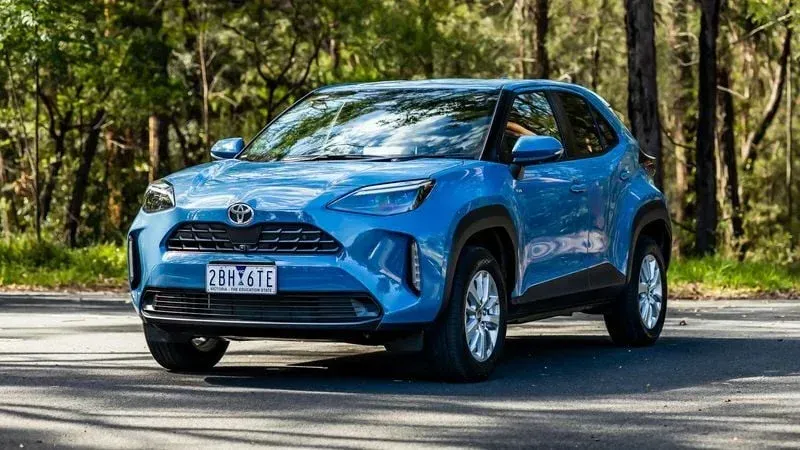
Model reviewed
Toyota Yaris Cross GX Hybrid 2WDFrom $31,790 RRP
Excl. on-road costs
from $171/wk in VIC, excludes servicing and insurance (estimate)
72/100
CarSorted Score
- Fuel use
- 3.8 L/100km
- Boot
- 390L
This review is built from Toyota's published figures, ANCAP and our own calculators. We have not driven this car.
Written 7 April 2026. The snapshot, tables, prices and scores on this page update from our car data; figures quoted in the text are as at that date.
The Quick Verdict
The Yaris Cross is the small SUV that makes accountants smile. At 3.8L/100km combined, it's among the most fuel-efficient non-plug-in SUVs sold in Australia. From $31,790, it's one of the cheapest too. The hybrid system is proven and bulletproof, the 390L boot is decent for the size, and the 5-star ANCAP rating means safety isn't compromised. The trade-offs are real though: it's not quick (85kW from a 1.5-litre hybrid), towing capacity is a negligible 400kg, and it is a small car inside. But if your priorities are low fuel bills, compact city dimensions, and Toyota reliability in a raised-up package, nothing else in this segment matches the value equation.
Design: Small but Not Invisible
The Yaris Cross doesn't look like a shrunken RAV4. It has its own design language, with chunky wheel arches, a distinctive split headlight arrangement, and a front end that's more aggressive than you'd expect from something this small. It looks like a proper little SUV rather than a hatchback on stilts, which is what a lot of the competition actually is.
At 4,180mm long, 1,765mm wide, and 1,590mm tall, it's compact enough for tight parking spaces. The raised ride height of 170mm gives you that elevated driving position that buyers in this segment specifically want. It's easier to get in and out of than a low sedan, and you sit higher in traffic.
The Urban variant adds a contrasting roof colour (black or white depending on the body colour), unique 18-inch alloys, and dark-chrome exterior accents. It looks genuinely stylish in a way that small crossovers rarely manage. The two-tone paint scheme works particularly well in the red-and-black and blue-and-black combinations.
| Key details | 2026 Toyota Yaris Cross GX Hybrid 2WD |
|---|---|
| Engine | 1.5L 3-cyl |
| Power | 85kW |
| Torque | 120Nm |
| Drive type | FWD |
| Transmission | CVT |
| Power-to-weight ratio | 69 kW/tonne |
| Weight | 1,235kg (kerb) |
| Spare tyre type | Temporary spare |
| Tow rating | 400kg braked400kg unbraked |
| Turning circle | 9.8m |
| Fuel consumption | 3.8 L/100km |
| Boot | 390L seats up |
| ANCAP | 5 stars (2021) |
Key details for 3 other variants
| Key details | 2026 Toyota Yaris Cross GXL Hybrid 2WD |
|---|---|
| Engine | 1.5L 3-cyl |
| Power | 85kW |
| Torque | 120Nm |
| Drive type | FWD |
| Transmission | CVT |
| Power-to-weight ratio | 69 kW/tonne |
| Weight | 1,235kg (kerb) |
| Spare tyre type | Temporary spare |
| Tow rating | 400kg braked400kg unbraked |
| Turning circle | 9.8m |
| Fuel consumption | 3.8 L/100km |
| Boot | 390L seats up |
| ANCAP | 5 stars (2021) |
| Key details | 2026 Toyota Yaris Cross GX Hybrid AWD |
|---|---|
| Engine | 1.5L 3-cyl |
| Power | 85kW |
| Torque | 120Nm |
| Drive type | AWD |
| Transmission | CVT |
| Power-to-weight ratio | 65 kW/tonne |
| Weight | 1,305kg (kerb) |
| Spare tyre type | Tyre repair kit |
| Tow rating | 400kg braked400kg unbraked |
| Turning circle | 9.8m |
| Fuel consumption | 4 L/100km |
| Boot | 314L seats up |
| ANCAP | 5 stars (2021) |
| Key details | 2026 Toyota Yaris Cross Urban Hybrid 2WD |
|---|---|
| Engine | 1.5L 3-cyl |
| Power | 85kW |
| Torque | 120Nm |
| Drive type | FWD |
| Transmission | CVT |
| Power-to-weight ratio | 69 kW/tonne |
| Weight | 1,235kg (kerb) |
| Spare tyre type | Temporary spare |
| Tow rating | 400kg braked400kg unbraked |
| Turning circle | 9.8m |
| Fuel consumption | 3.8 L/100km |
| Boot | 390L seats up |
| ANCAP | 5 stars (2021) |
Is it good value?
What Does the Yaris Cross Cost in Australia?
Toyota keeps the Yaris Cross range simple. Three variants, all hybrid, all front-wheel drive. Here's how the lineup stacks up:
Driveaway, the GXL sweet-spot lands around $36,200-$37,700 depending on your state. The $2,200 step from GX to GXL is a no-brainer. You get bigger wheels, better seat materials, and privacy glass for the cost of a decent weekend away. The Urban adds cosmetic flair with the two-tone roof and unique design touches, but it's style over substance for that $2,940 premium over the GXL.
For context, the base Yaris Cross GX at $31,790 is one of the cheapest new cars with hybrid power you can buy in Australia. The only cheaper hybrid is the regular Yaris hatchback. If entry price matters and you want proven hybrid efficiency, this is where the value bar is set. For more affordable options, check our best small cars guide.
Running Costs: Penny-Pincher's Dream
This is where the Yaris Cross genuinely shines. At 15,000km per year and its claimed 3.8L/100km on regular 91-octane unleaded at $1.95/litre, the annual fuel bill works out to roughly $1,111. A comparable petrol-only small SUV claiming 7.0L/100km costs $2,048 on the same maths. Neither car will match its claim exactly, but that's a gap of well over $900 a year, or close to $4,700 across five years.
Toyota's capped-price servicing for the Yaris Cross runs between $200 and $340 per service, every 12 months or 15,000km. Over five years, total servicing costs are around $1,300-1,600. The hybrid system means less brake wear and reduced engine stress, keeping consumable costs low.
Tyres are 16-inch on the GX and 18-inch on the GXL and Urban. The smaller 16-inch rubber costs $120-180 each. The 18-inch tyres are $160-240. Either way, tyre costs are minimal compared to heavier, more powerful SUVs. Insurance is favourable too. The Yaris Cross sits in a low insurance group thanks to its light weight, modest power, and low repair costs. Expect comprehensive cover around $1,000-1,500 per year for most drivers.
Add it all up and the Yaris Cross is genuinely one of the cheapest new cars to own and run in Australia. Our cheapest cars to run analysis has the full annual cost breakdown across segments.
Rivals: What Else Should You Cross-Shop?
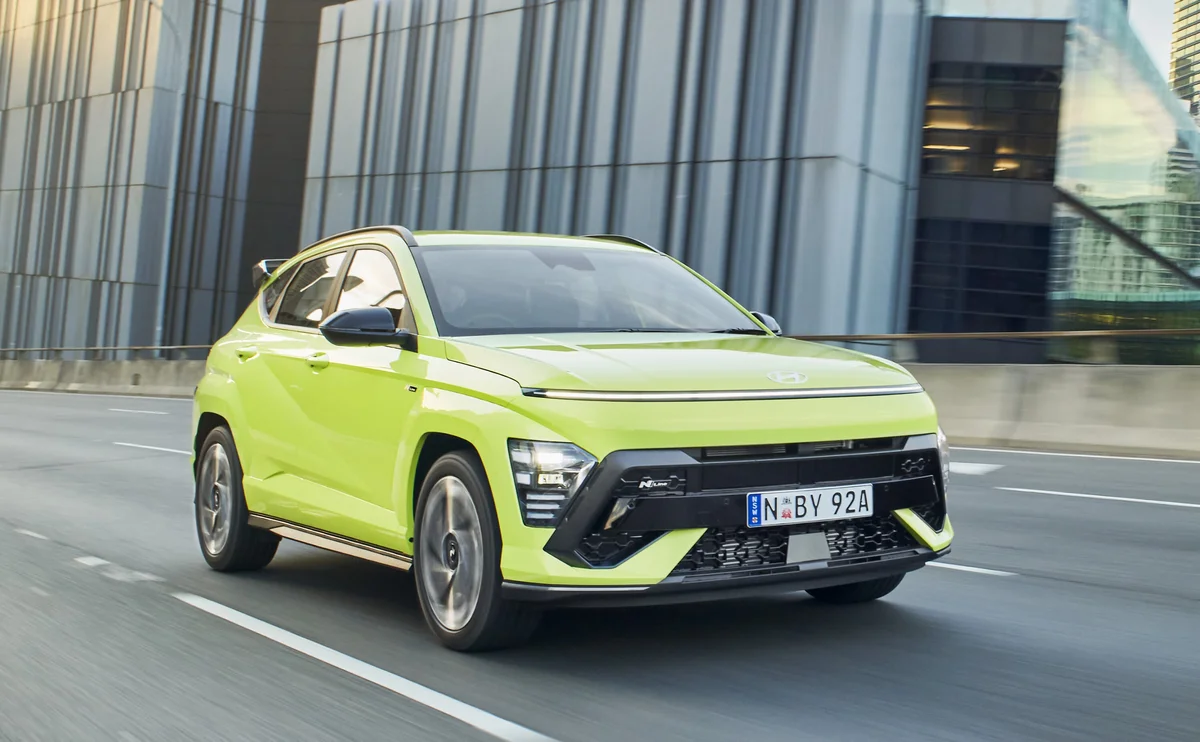
Hyundai Kona (from $32,500)
The Kona is larger, more powerful (110kW), has better towing capacity (1,300kg), and a more modern interior design. It's a more capable all-round vehicle. But it drinks significantly more fuel (6.6L/100km), which adds up quickly over years of ownership. The Kona also weighs 100kg more and costs slightly more at the base level. If you need towing or more rear seat space, the Kona wins. If fuel efficiency and purchase price are your priorities, the Yaris Cross is hard to beat. Full breakdown at Yaris Cross vs Kona.
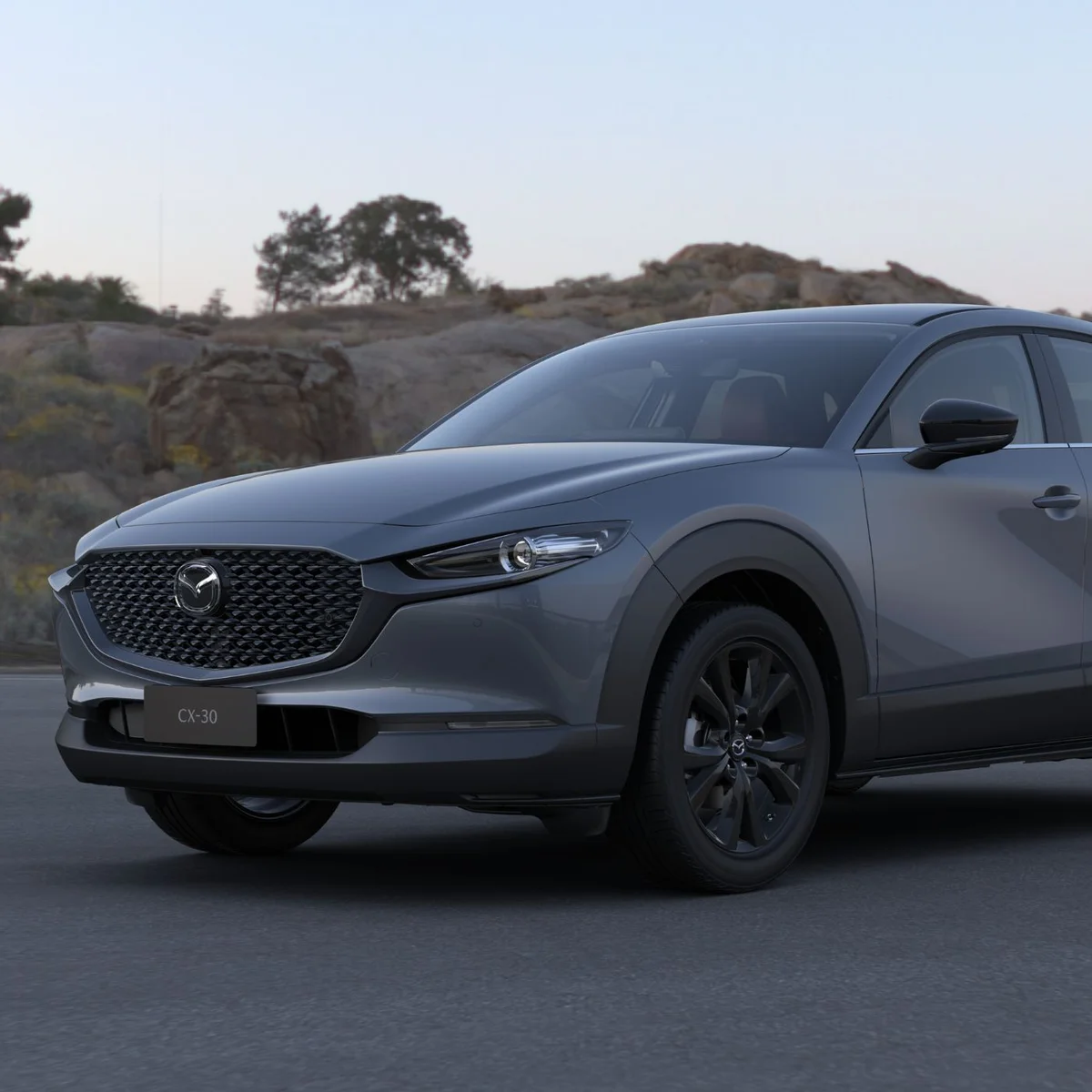
Mazda CX-30 (from $33,890)
The CX-30 is the premium play in this segment, leaning on cabin materials and design. Fuel economy is 6.3L/100km on the base Skyactiv-G engine, which can't touch the Yaris Cross hybrid. A deeper look at the two is in our CX-3 vs Yaris Cross comparison.
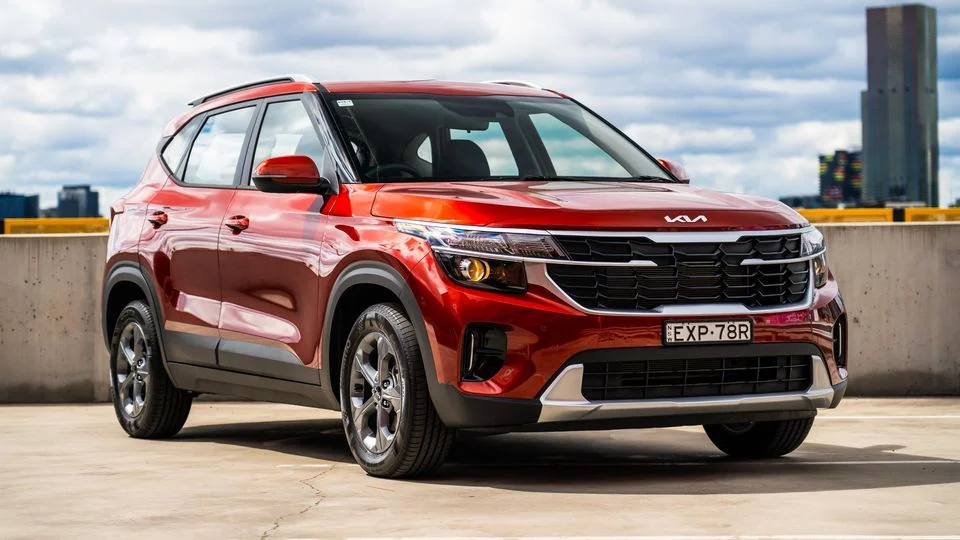
Kia Seltos (from $33,590)
The Seltos is the space champion. It's bigger than the Yaris Cross in every dimension, with more boot space (498L), more rear legroom, and a higher towing capacity (1,500kg). It also gets Kia's 7-year warranty, which is the best in the segment. The trade-off is higher fuel consumption (7.0L/100km), no hybrid option, and a slightly higher price. If you need the space, the Seltos is the logical choice.
The Yaris Cross wins on fuel economy and weight. The Kona wins on power and towing. The CX-30 wins on cabin materials. The Seltos wins on space and warranty. All four are solid small SUVs. For the full segment, see our best small cars in Australia guide.
| Key details: Toyota Yaris Cross GX Hybrid 2WD | |
|---|---|
| Price | From $31,790 RRPExcl. on-road costs |
| Drive-away estimate | Calculating... |
| Cost per week in VIC | from $171/wk in VIC, excludes servicing and insuranceRepayments, fuel or charging, rego and CTP, servicing, tyres and insurance where held. Estimate only, not a quote. |
| Body | SUV |
| Powertrain | Hybrid, 1.5L 3-cyl |
| Towing (braked / unbraked) | 400kg / 400kg |
| Seats | 5 |
| Warranty | 5yr / unlimited km |
| Rivals | Hyundai Kona, Mazda CX-30, Kia Seltos |
| The Toyota Yaris Cross range on sale | Price | Powertrain | Fuel or energy use |
|---|---|---|---|
| GX Hybrid 2WD | From $31,790 RRP | Hybrid, FWD | 3.8 L/100km |
| GXL Hybrid 2WD | From $33,990 RRP | Hybrid, FWD | 3.8 L/100km |
| GX Hybrid AWD | From $34,790 RRP | Hybrid, AWD | 4 L/100km |
| Urban Hybrid 2WD | From $36,930 RRP | Hybrid, FWD | 3.8 L/100km |
| GXL Hybrid AWD | From $36,990 RRP | Hybrid, AWD | 4 L/100km |
| GR Sport Hybrid 2WD | From $36,990 RRP | Hybrid, FWD | 3.8 L/100km |
| Urban Hybrid AWD | From $39,930 RRP | Hybrid, AWD | 4 L/100km |
How much fuel does it use?
Efficiency: The Headline Act
Toyota claims 3.8L/100km on the combined ADR test cycle, which makes the Yaris Cross one of the most fuel-efficient non-plug-in SUVs on sale in Australia.
That claim comes from a lab, but it is a claim this particular car is well set up to chase. The test cycle spends a lot of its time at low speed, and a light hybrid with an 85kW system is happiest there: the electric motor can do the pulling away, the three-cylinder engine shuts down at the lights, and braking puts charge back in the battery. Town driving is not the thirsty part in a car like this. What works against it is sustained speed. Sit on 110km/h and the petrol engine is running continuously with nothing to recover under braking, and the hybrid's advantage narrows to almost nothing. The other variable is load, because there is not much engine here: a full car up a long hill has the little triple working hard.
The 36-litre fuel tank is the one practical downside of all that efficiency. On the claimed figure that is roughly 950km, so it is still a long way between fills for a small SUV, but the tank size means more frequent visits to the servo than a Camry Hybrid with its 50-litre tank. Filling up costs under $72 at current prices. You'll struggle to find a cheaper new-car fill-up in Australia.
For comparison, the Hyundai Kona petrol does 6.6L/100km. Over five years and 75,000km, the fuel cost difference is roughly $4,100 in the Yaris Cross's favour. That's meaningful money. For a full comparison of which small SUV saves you the most, check our Yaris Cross vs Kona analysis.
| Fuel: Toyota Yaris Cross GX Hybrid 2WD | |
|---|---|
| Fuel use (combined) | 3.8 L/100km |
| Fuel type | Hybrid |
| Minimum fuel grade | 91 RON |
| Urban / extra-urban | 3.3 L/100km / 4.2 L/100km |
| Fuel tank | 36L |
| Range on a tank (calculated) | 947kmTank divided by the combined figure |
| CO2 (combined) | 86 g/km |
| Measured fuel use (AAA, on the road) | 4.3 L/100km13% above the maker's ADR 81/02 claim of 3.8 L/100km. AAA test: the 2021 Toyota Yaris Cross GXL, same engine, drivetrain and gearbox, a different grade, 15 January 2024. Source: Australian Automobile Association Real-World Testing Program (realworld.org.au). |
| Service interval | 12 months or 10,000km |
What does it cost to own?
| Warranty and servicing: Toyota Yaris Cross GX Hybrid 2WD | |
|---|---|
| Warranty | 5yr / unlimited km |
| Battery warranty | 10yr / 999,999 km |
| Roadside assistance | 3 years (renewed with dealer servicing) |
| Service interval | 12 months or 10,000km |
| Capped-price servicing | No data |
Cost per week in VIC: from $171/wk in VIC, excludes servicing and insurance
- Repayment estimate$124/wk
$5,000 deposit, 5yr loan at an assumed 7.5% p.a. on the RRP. Not an offer of credit
- Fuel$21/wk
3.8 L/100km combined at $1.95/L ULP 91, the site default
- Rego + CTP$18/wk
VIC typical: car, metropolitan (high risk) zone, 12-month renewal, $958.80 a year. As at July 2026, VicRoads
- ServicingNo data
No data: no servicing cost held for this car
- Tyres$8/wk
Typical tyre spend for this type of car, scaled to 15,000 km a year (not this car's tyres)
- InsuranceNo data
No data: no insurance estimate held for this car
Based on 15,000 km a year in VIC. Estimate only, not a quote.
How safe is it?
Safety: Five Stars, Full Coverage
The Yaris Cross holds a 5-star ANCAP safety rating. Toyota's Safety Sense suite is standard across all variants and includes:
- Pre-Collision Safety System with pedestrian and cyclist detection
- Lane Tracing Assist for highway lane centring
- Lane Departure Alert with steering assist
- Adaptive Cruise Control with stop-and-go (all speeds)
- Road Sign Assist
- Automatic High Beam
- Rear Cross Traffic Alert (GXL and above)
- Blind Spot Monitor (GXL and above)
Seven airbags are standard across the range. The TNGA-B platform provides solid structural rigidity for the class, and the Yaris Cross scored well across all Euro NCAP testing categories. For a vehicle at this price point, the safety specification is comprehensive. You're not missing out on anything critical even on the base GX grade.
One note: the GX misses out on Blind Spot Monitor and Rear Cross Traffic Alert. Those are genuinely useful features, especially in busy urban environments. It's another reason the $1,500 step up to the GXL is worth the money.
| ANCAP: Toyota Yaris Cross GX Hybrid 2WD | |
|---|---|
| ANCAP rating | 5 stars (tested 2021) |
| Adult occupant | 86% |
| Child occupant | 86% |
| Vulnerable road users | 78% |
| Safety assist | 82% |
| Airbags | 8 |
| Driver assists: Toyota Yaris Cross GX Hybrid 2WD | |
|---|---|
| Autonomous emergency braking | Standard |
| Adaptive cruise control | Standard |
| Blind-spot monitoring | Standard |
| Rear cross-traffic alert | Standard |
| Lane-keep assist | Standard |
| Speed sign recognition | Standard |
| Driver attention monitor | No data |
| 360-degree camera | No data |
Standard, Optional (with the printed price), No (the maker's document says not fitted) or No data. 8 assists checked.
What is it like inside?
Interior: Does the Job, Nothing More
Let's set expectations. This is a $31,000-$34,000 vehicle. The interior reflects the price point. The GXL gets an 8-inch touchscreen with wireless Apple CarPlay and Android Auto, a 7-inch digital instrument cluster, dual-zone climate control, and fabric-and-leather-accented seats.
The top of the dashboard is soft-touch, while the centre sections and door trims are harder plastic. The Mazda CX-30 leans harder on cabin materials.
Storage is adequate but not generous. The centre console has a small covered bin, there are two cup holders ahead of the gear lever, narrow door pockets, a wireless charging pad on GXL and above, and USB-C ports. It's enough for phones, keys, a wallet, and a water bottle. Don't expect to stash much more than that up front.
The instrument cluster is simple. a 7-inch digital display with basic trip information and an energy flow diagram for the hybrid system. The steering wheel has audio, phone, and cruise control buttons.
Practicality: Good for the Size, With Caveats
The 390-litre boot is competitive in this class. It's larger than the regular Yaris hatch (270L), close to the Kona (361L without the subfloor), and only slightly behind the CX-30 (430L). The boot floor is flat and there's a useful two-level arrangement that lets you create extra under-floor storage or a completely flat load area.
The rear seats fold in a 60/40 split, extending the cargo area to 1,097 litres. It's not completely flat when folded, but it's flat enough for a flat-pack bookshelf or a set of golf clubs. The boot opening is a reasonable size, though the loading lip is a touch high.
Rear seat space is where the Yaris Cross shows its compact 4,180mm length; it suits children better than tall adults.
ISOFIX anchor points are fitted to the outer rear seats, with top-tether anchors across the back. The raised floor height means less bending than in a low sedan.
Towing capacity is 400kg braked. That's barely enough for a light box trailer with a few bags of mulch. If towing is any part of your buying criteria, look elsewhere. The Yaris Cross vs Kona comparison highlights this difference. The Kona tows 1,300kg, which opens up a completely different set of possibilities.
| Space and dimensions: Toyota Yaris Cross GX Hybrid 2WD | |
|---|---|
| Seats | 5 |
| Boot, seats up | 390L |
| Boot, seats folded | No data |
| Length x width x height | 4,180 x 1,765 x 1,590mm |
| Wheelbase | 2,560mm |
| Ground clearance | 120mm |
| ISOFIX | 2 points (2L, 2R) |
| Top tethers | 3 |
| Seat trim | Cloth |
| Spare wheel | Temporary spare |
Does it have good tech?
| Screens and audio: Toyota Yaris Cross GX Hybrid 2WD | |
|---|---|
| Touchscreen | 8 inches |
| Driver display | 7 inches |
| Audio | 6 speakers |
| USB | USB-C |
| Connected services term | 12 months |
| Connectivity: Toyota Yaris Cross GX Hybrid 2WD | |
|---|---|
| Apple CarPlay | Standard |
| Android Auto | Standard |
| Wireless CarPlay / Android Auto | Standard |
| Wireless phone charging | No data |
| Head-up display | No |
| Built-in navigation | No |
| Digital radio | Standard |
| Over-the-air updates | No data |
| Remote climate (app) | No data |
What the figures say about driving it
The Toyota Yaris Cross GX Hybrid 2WD has 69 kW for every tonne of kerb weight, 120Nm of torque, a claimed 0-100km/h of 9.8s. It weighs 1,235kg and turns in 9.8m. These are the figures that shape how quickly a car gets moving and how easily it parks.
| The figures: Toyota Yaris Cross GX Hybrid 2WD | |
|---|---|
| Power-to-weight | 69 kW/tonne |
| Power | 85kW |
| Torque | 120Nm |
| 0-100km/h (claimed) | 9.8s |
| Kerb weight | 1,235kg |
| Turning circle | 9.8m |
| Tyres | 205/65R16 |
| Drive | FWD |
| Transmission | CVT |
| Towing (braked) | 400kg |
We have not driven the Toyota Yaris Cross; these are Toyota's published figures.
Best deals
Get a great deal on a brand new car today
One enquiry, up to four cars. We ask local dealers for their best drive-away price and send them back to you, so you compare real numbers instead of list prices.
Free for you to use. If you buy, the dealer may pay us a commission. Your details only go to a dealer if you say so.
Find a new car dealShould I buy it?
Should You Buy the Toyota Yaris Cross?
Yes, if:
- Fuel efficiency is your top priority. nothing in the small SUV segment matches 3.8L/100km
- You primarily drive in urban and suburban areas where the hybrid system is at its most efficient
- You want the lowest possible running costs from a new SUV (fuel, servicing, insurance, tyres)
- You value Toyota reliability and a broad dealer and service network
- You need something compact enough for easy city parking with a higher seating position than a hatchback
- You're a first-car buyer or downsizer who doesn't need a lot of space
Maybe not, if:
- You need to tow anything meaningful. 400kg is essentially useless for towing
- You regularly carry tall adults in the back. it is a small car
- You want strong acceleration. 85kW is modest by any measure
- Cabin materials matter to you. the CX-30 leans much harder on them
- You need more boot space. 390L is fine but the Seltos gives you 498L for similar money
- You do lots of highway driving. the efficiency advantage shrinks at sustained high speeds
The Yaris Cross at $31,790-$36,930 fills a very specific niche. It's one of the cheapest, most efficient, most affordable-to-run small SUVs in Australia. It's not the most spacious, the most powerful, or the most premium. But for the buyer whose priority list puts running costs and reliability at the top, the Yaris Cross is almost impossible to argue against. The GXL at $33,990 is the pick. You get the better wheels, the nicer seats, and the critical blind spot monitor without paying the style premium of the Urban.
If you're still deciding, compare it directly against the Kona in our Yaris Cross vs Kona head-to-head, or against the CX-30 in our CX-3 vs Yaris Cross comparison. For the full small car and SUV lineup, check our best small cars in Australia guide.
→ Compare all Toyota Yaris Cross variants on CarSorted (200+ specs)
CarSorted Score breakdown
The CarSorted Score is algorithmic: it is calculated from this car's published data, not from a road test. How it works.
Safety
Fuel Economy
Value
Practicality
Technology
Performance
Reliability
Questions buyers ask
How much does a Toyota Yaris Cross cost in Australia?
The Toyota Yaris Cross GX Hybrid 2WD is from $31,790 RRP, before on-road costs. The range table above lists every current variant.
What fuel economy does the Toyota Yaris Cross get?
On the official combined cycle the Toyota Yaris Cross uses 3.8 L/100km.
Can the Toyota Yaris Cross tow?
The Toyota Yaris Cross GX Hybrid 2WD is rated to tow 400kg braked and 400kg unbraked.
Is the Toyota Yaris Cross safe?
The Toyota Yaris Cross holds 5 ANCAP stars (rated 2021).
What warranty does the Toyota Yaris Cross have?
The Toyota Yaris Cross comes with a 5yr / unlimited km warranty.
How big is the Toyota Yaris Cross's boot?
The Toyota Yaris Cross has 390L of boot space with the seats up.
How powerful is the Toyota Yaris Cross?
The Toyota Yaris Cross GX Hybrid 2WD makes 85kW and 120Nm, with a claimed 0-100km/h of 9.8s.
How to read this page. This is a review of the published figures: we have not driven this car. Prices, specifications, ANCAP ratings, warranty, equipment and the CarSorted Score come from our records for the variant shown, sourced from Toyota's Australian documents, and update when those records change. RRP excludes on-road costs. Drive-away figures are estimates for the state you have selected unless marked as advertised; cost per week is an estimate, not a quote. The editorial text was written on 7 April 2026. Always confirm price and specification with the manufacturer or a dealer before you buy. CarSorted does not accept payment for recommendations.
Comments (0)
Sign in to join the conversation
No comments yet. Be the first!