Key Takeaways
- Rear Motor $116,700, Dual Motor $131,100, Performance $146,700 (before on-roads)
- Rear Motor drops $1,720 vs the variant it replaces, Plus Pack now standard ($9,000 value)
- New 800-volt architecture, peak DC charging up to 350kW on dual-motor cars, 10 to 80 per cent in about 22 minutes
- WLTP range up to 635km (Dual Motor), 604km (Rear Motor), 593km (Performance)
- New rear motor on every variant, automatic front-motor disconnect on AWD for efficiency
- NVIDIA DRIVE AGX Orin processor, retuned anti-roll bars and steering software
- 5-star ANCAP (2024 protocol) carries over
- Orders open now, customer deliveries from July 2026
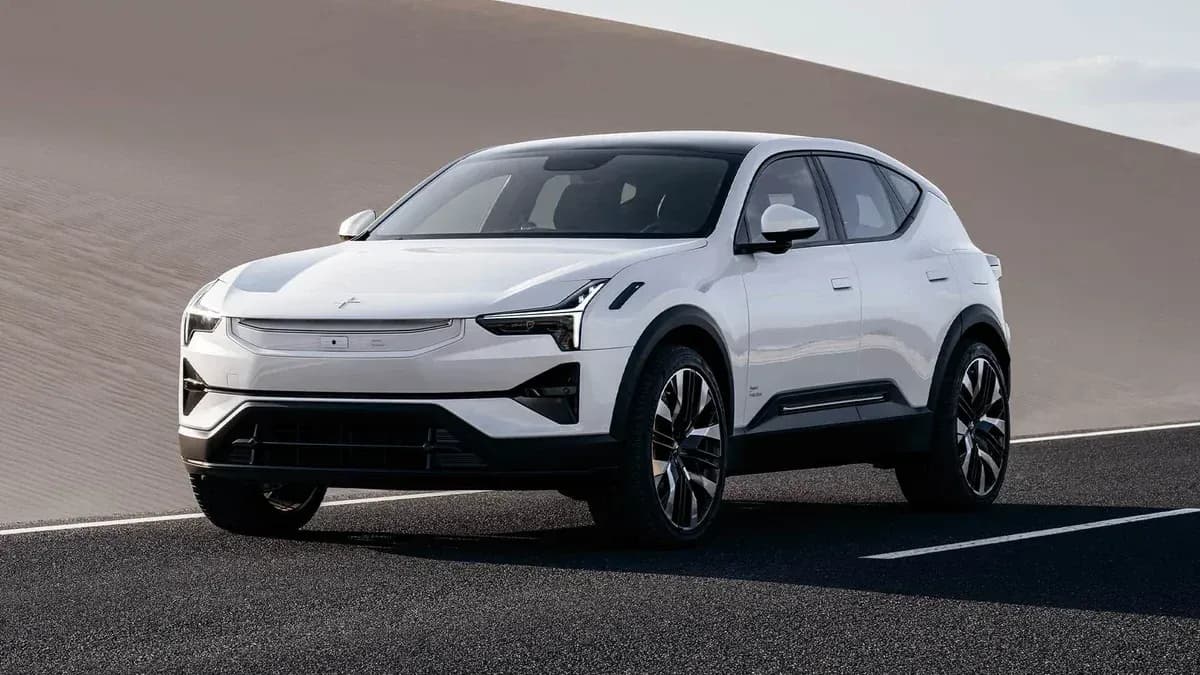
Image credit: Polestar Australia
If you have been waiting for the Polestar 3 to grow up technically, this is the update that does it. Polestar Australia has locked in pricing and specs for the upgraded MY26 car ahead of customer deliveries from July. The big news is not the lower opening price, it is the switch from 400-volt to 800-volt electrical architecture, the new rear motor across the entire line, and a Plus Pack that used to cost $9,000 now being thrown in for free. That combination changes how the Polestar 3 sits next to the BMW iX, the Audi Q6 e-tron and the Volvo EX90 for anyone shopping a $115,000 to $150,000 electric SUV right now.
Pricing
Three variants again, all priced before on-road costs. Polestar still sells direct, so the figure on the configurator is the figure you sign for, with state stamp duty and rego stacked on top.
| Variant | Price (before on-roads) | Change |
|---|---|---|
| Polestar 3 Rear Motor | $116,700 | Down $1,720 |
| Polestar 3 Dual Motor | $131,100 | Plus Pack now standard |
| Polestar 3 Performance | $146,700 | Plus Pack now standard |
Current price on CarSorted: Polestar 3 Rear Motor $116,700 RRP, as at 1 Jul 2026; Audi Q6 e-tron SUV $97,935 RRP, as at 24 Jun 2026.
The Rear Motor lands $25,039 above the new $91,661 fuel-efficient luxury car tax threshold for 2026-27, so it still attracts LCT and is not FBT-exempt under the current rules. There is a possible change on the horizon: a $120,000 zero-emissions threshold is proposed under the Australia-EU FTA for 1 July 2027, subject to ratification and enabling legislation. If it becomes law, the Rear Motor would slip under it.
800-Volt Architecture Is the Real Headline
The 2026 Polestar 3 moves to an 800V electrical platform, sharing the philosophy already used by the Hyundai E-GMP cars, the Porsche Taycan, the Audi Q6 e-tron and the Kia EV6. Peak DC fast charging climbs to 350kW on the Dual Motor and Performance variants, and Polestar claims a 10 to 80 per cent top-up takes about 22 minutes when the charger and battery cooperate. The Rear Motor sticks with a smaller pack and a lower charging peak, but it is still meaningfully quicker on a hot DC stand than the outgoing 250kW car.
Polestar has also pulled out the previous Nvidia Xavier compute module and dropped in the more recent NVIDIA DRIVE AGX Orin processor. That is the same chip family BMW and Mercedes are using for their next-gen ADAS stacks, and it gives the Polestar 3 the headroom to run more advanced driver assistance and over-the-air updates without bumping up against a hardware ceiling.
Specs by Variant
| Spec | Rear Motor | Dual Motor | Performance |
|---|---|---|---|
| Drive | RWD | AWD | AWD |
| Combined power | 250 kW | 400 kW | 500 kW |
| Battery (usable) | 92 kWh | 106 kWh | 106 kWh |
| WLTP range | 604 km | 635 km | 593 km |
| Peak DC charging | 310 kW | 350 kW | 350 kW |
| 10-80% DC time | ~25 min | ~22 min | ~22 min |
| AC charging | 11 kW three-phase | ||
| 0-100 km/h | 6.5 sec | 4.5 sec | 3.9 sec |
| Top speed | 180 km/h | 210 km/h | 210 km/h |
| Boot (rear) | 484 L (1,411 L seats folded) | ||
| Frunk | 32 L | ||
| Length / wheelbase | 4,900 mm / 2,985 mm | ||
| Braked towing | 2,200 kg | ||
The new rear motor is a 250kW/480Nm unit fitted to every variant. On the AWD cars it pairs with a front motor that automatically disconnects when you are cruising, freeing the front axle to spin without dragging the inverter. That is the same trick Hyundai uses on the Ioniq 5 N and it shows up at the pump (or the charger): Polestar reckons it claws back a useful chunk of efficiency at motorway speeds.
Equipment: Plus Pack Goes Standard
Polestar Australia has rolled the previously optional Plus Pack into the base build sheet. That is a $9,000 walkaway saving on the old configurator and it adds the 25-speaker Bowers and Wilkins 1,610W audio system, head-up display, 360-degree camera, illuminated vanity mirrors, soft-close doors, heated rear seats, heated steering wheel, heat pump, and a 360-degree surround view. Pixel LED headlights and ambient lighting also come along for the ride.
Two new paint colours arrive: Storm (a deep grey metallic that replaces Thunder) and Krypton (a fresh green metallic that will look very Scandinavian on a winter day). Wheel choices run from 20-inch on the Rear Motor up to 22-inch on the Performance, with 21s as the middle ground on the Dual Motor.
Safety
The Polestar 3 carries a current 5-star ANCAP rating under the 2024 test protocol. The Child Occupant Protection score of 94 per cent is the second-highest figure ever recorded under the protocols in force, with Euro NCAP separately calling it the safest car they have tested for children in nine years. The 2026 update does not change the body shell, restraint system or active safety hardware, so that rating carries through to the new cars.
Standard kit includes Pilot Assist adaptive cruise with lane centring, autonomous emergency braking with junction and oncoming detection, blind-spot intervention, rear cross-traffic alert with auto brake, driver attention monitoring, traffic sign recognition, and the upgraded surround-view camera from the now-standard Plus Pack. The Orin processor unlocks the runway for further OTA improvements as Polestar tunes them.
How It Stacks Up Against the Field
At $116,700 for the entry Rear Motor and $131,100 for the Dual Motor, the updated Polestar 3 sits inside a tight cluster of premium electric SUVs.
| Car | From (before on-roads) | WLTP range | Peak DC | ANCAP |
|---|---|---|---|---|
| Polestar 3 Rear Motor | $116,700 | 604 km | 310 kW | 5★ (2024) |
| Audi Q6 e-tron | $97,935 | 531 km | 270 kW | 5★ (2024) |
| BMW iX xDrive45 | $142,900 | 602 km | 195 kW | 5★ (2022) |
| Volvo EX90 | $124,990 | 619 km | 250 kW | 5★ (2024) |
Current price on CarSorted: Polestar 3 Rear Motor $116,700 RRP, as at 1 Jul 2026; Audi Q6 e-tron SUV $97,935 RRP, as at 24 Jun 2026.
Two things jump out. The Audi Q6 e-tron is roughly $19,000 cheaper than the Polestar 3 Rear Motor and runs the same 800V philosophy, but it gives up around 70km of WLTP range and 40kW of charging peak. The BMW iX xDrive45 costs $26,200 more, charges noticeably slower at peak, and still does not offer a meaningfully longer range. For pure tech and charging speed at the price, the Polestar 3 update looks sharp, and the Audi is the natural cross-shop if you want to save the cash.
Warranty and Servicing
Polestar Australia continues with a 5-year/unlimited-kilometre new-car warranty, an 8-year/160,000km high-voltage battery warranty, and a 12-year corrosion warranty. Polestar also covers the high-voltage battery if it falls below 70 per cent state-of-health within that 8-year window. Servicing is condition-based rather than time-based, with the first scheduled visit at 2 years or 30,000km.
The CarSorted Angle
On the CarSorted directory the current Polestar 3 Long Range Dual Motor still lists at $99,900, where the updated Polestar 3 Dual Motor lifts to $131,100. That looks like a $31,200 jump, but you are paying for 800V charging, the standard Plus Pack ($9,000), the new rear motor and processor, and roughly 25 per cent less time on a DC stand. If you stretch out a five-year ownership window on a 20,000km-a-year commute, a 22-minute fast-charge stop versus 30 means you claw back about 12 hours of your life over the life of the car. That is a real number even before you talk about battery temperature and longevity.
For a side-by-side at the actual price you would pay today, the CarSorted compare tool lets you put the updated Polestar 3 against the Audi Q6 e-tron, the BMW iX and the Volvo EX90 on the same screen, with charging speed and range converted to dollars per kilometre. The directory also flags which of those four currently slip under the $91,661 fuel-efficient LCT cap (only the Q6 e-tron does) and which will move under the new $120,000 zero-emissions cap from 1 July 2027 (the Polestar 3 Rear Motor and Dual Motor will, the Performance and the iX will not).
What This Means for Buyers
If you have been holding a deposit on the outgoing 400V Polestar 3 because you wanted faster charging, the wait is essentially over. From July you can sign for an updated Dual Motor at $131,100 with a 22-minute 10 to 80 per cent fast charge and a Plus Pack that used to cost nine grand. If your budget tops out closer to $100,000, the Audi Q6 e-tron is the smarter buy on price-per-spec, even with a shorter range, and it remains the only car in this cluster that sits under the fuel-efficient LCT cap right now.
If towing matters, the Polestar 3 keeps its 2,200kg braked rating, which puts it slightly behind the EX90 (2,200kg as well but with a more obviously family-shaped third row) and well clear of the iX xDrive45 (2,500kg but at a much higher price). For seven seats you still have to look at the Volvo.
And if you are on a novated lease right now, the Polestar 3 still does not qualify for the FBT exemption, because every variant sits above the $91,661 fuel-efficient LCT cap. That changes from 1 July 2027 when the new $120,000 zero-emissions threshold takes effect under the Australia-EU FTA: at that point both the Rear Motor and Dual Motor become FBT-exempt and the lease maths shifts dramatically. If you are happy waiting six to twelve months for delivery and you can defer to a second-half-of-2027 settlement, you could save tens of thousands.
Want to keep cross-shopping? Start with our Best Electric Luxury SUVs Australia 2026 guide, then build your own side-by-side on the Polestar 3 page with whichever rival you are weighing.
Disclaimer: Prices and specifications are sourced from Polestar Australia and are correct at the time of writing. Pricing is before on-road costs. WLTP range figures are claimed by the manufacturer under WLTP test conditions and will vary in real-world driving. ANCAP rating reflects the published 2024 protocol result for the Polestar 3 nameplate, which carries over to the 2026 update. Always confirm the current configuration and final drive-away price with Polestar Australia before purchase.