2017 Mercedes-Benz GLC: every variant sold in Australia
4 variants of the Mercedes-Benz GLC carry the 2017 model year in our catalogue — the X253 generation, sold new 2015–2022. Specs, safety, economy and standard equipment for every grade, side by side.
The 2017 Mercedes-Benz GLC is no longer sold new in Australia. A price is shown only where we hold Mercedes-Benz's own printed price for that variant: what it cost new, not a current offer or a used value. Specifications are kept for used-buyer research. See the current Mercedes-Benz GLC.
The 2017 Mercedes-Benz GLC in plain English
The 2017 Mercedes-Benz GLC is an SUV with all-wheel drive. The four grades we hold for 2017 are GLC 250 d, Mercedes-AMG GLC 43, GLC 220 d and GLC 250. The ladder splits two diesel and two petrol grades.
No price is on record for the 2017 Mercedes-Benz GLC: a figure is printed only where we hold Mercedes-Benz’s own published price.
Mercedes-Benz’s combined consumption figures run 5.6 to 8.8 L/100km. At 15,000 km a year that is about $1,600 to $2,770 of fuel or energy, before servicing, rego, tyres and insurance.
We hold no ANCAP rating for any grade on this page, so none is shown. We never carry a rating across from another variant or model year.
Every 2017 Mercedes-Benz GLC variant
| Variant | Drivetrain | Power | Economy / range | Seats | Full specifications |
|---|---|---|---|---|---|
| GLC 250 dSUV | Diesel · 9G-TRONIC 9-speed automatic · AWD | 150 kW | 5.7 L/100km | No data | Full specs → |
| Mercedes-AMG GLC 43SUV | Petrol · 9G-TRONIC 9-speed automatic · AWD | 270 kW | 8.8 L/100km | No data | Full specs → |
| GLC 220 dSUV | Diesel · 9G-TRONIC 9-speed automatic · AWD | 125 kW | 5.6 L/100km | No data | Full specs → |
| GLC 250SUV | Petrol · 9G-TRONIC 9-speed automatic · AWD | 155 kW | 7.2 L/100km | No data | Full specs → |
Equipment across the 2017 range
Four states, never three. Standard means the document prints it as standard on that grade. Optional means it is a factory extra, at the price the document prints. No means the document confirms it is not available. No data means we have not read it off a Mercedes-Benz document yet, which is not the same as saying the car does not have it.
| Variant | AEB | Adaptive cruise | Blind-spot monitor | Reversing camera |
|---|---|---|---|---|
| GLC 250 d | Standard | Standard | Standard | Standard |
| Mercedes-AMG GLC 43 | Standard | Standard | Standard | Standard |
| GLC 220 d | Standard | No data | Standard | Standard |
| GLC 250 | Standard | Standard | Standard | Standard |
Not yet read off a Mercedes-Benz document for any 2017 variant: Apple CarPlay, Android Auto. Left out of the table rather than shown as a column of “No data”; it is not a “No”.
What changed from the 2016 GLC
Measured row by row against the 2016 variants we hold, matching each grade on its name, body, gearbox and drive (3 variants match across both years). A grade listed below as in one year’s rows only may be a grade we have not added yet rather than one Mercedes-Benz added or dropped; the variant table above is what we hold for 2017.
In our 2017 rows, not our 2016 rows: Mercedes-AMG GLC 43.
What changed after the 2017 GLC
Measured against the 2018 rows we hold, matching each grade on its name, body, gearbox and drive (4 variants match across both years).
In our 2018 rows, not our 2017 rows: GLC 350 d, Mercedes-AMG GLC 63 S.
2017 Mercedes-Benz GLC: size, weights, towing and servicing
2017 Mercedes-Benz GLC: size, weights, towing and servicing
| Figure | Across the grades | Grades holding it |
|---|---|---|
| Size | ||
| Length | 4,656 mm | 3 of 4 |
| Width | 1,890 mm | 3 of 4 |
| Height | 1,639 mm | 3 of 4 |
| Wheelbase | 2,873 mm | 3 of 4 |
| Turning circle | 11.8 m | 3 of 4 |
| What it carries | ||
| Fuel tank | 66 L | 4 of 4 |
How we read these figures, and the 18 figures Mercedes-Benz does not print(show)
Nothing in this table is ranked. A figure the manufacturer prints on a different basis (a maximum kerb weight, a width including the mirrors, a length with a tow bar fitted) carries that basis beside it, because it is a different measurement and not a bigger number.
Not yet read off a Mercedes-Benz document for any grade on this page: ground clearance, boot space, seats up, boot space, rear seats down, kerb weight, tare mass, payload, gross vehicle mass (gvm), roof load, tray length, tray width, braked towing capacity, unbraked towing capacity, tow ball download, gross combination mass (gcm), wading depth, service interval (months), service interval (distance), warranty term. Those read “No data” rather than a guessed figure.
Recalls on the 2017 Mercedes-Benz GLC
Due to a software issue, the automatic network search of the emergency call system (eCall) communication module may be deactivated.
Published 2022-04-06. Year range on the notice: 2018 - 2020. Matched to 1 of the 4 variants on this page. REC-005401 on the government register
If the eCall system is deactivated, in the event of an emergency it would not be possible for the vehicle occupants to connect with emergency services, either manually or automatically. As a consequence, emergency vehicles may not be directed to the affected vehicle or may be delayed. This could increase the risk of death if a serious injury has occurred.
Due to a software issue, the automatic network search of the emergency call system (eCall) communication module may be deactivated.
Published 2021-10-21. Year range on the notice: 2018 - 2020. Matched to 1 of the 4 variants on this page. REC-004979 on the government register
If the eCall system is deactivated, in the event of an emergency it would not be possible for the vehicle occupants to connect with emergency services, either manually or automatically. As a consequence, emergency vehicles may not be directed to the affected vehicle or may be delayed. This could increase the risk of death if a serious injury has occurred.
The connection of the gas lines of the inertisation system (designed to decrease the probability of a fire) of your vehicle might not meet manufacturing specifications, increasing the risk of fire in an event of an accident.
Published 2021-07-23. Year range on the notice: 2016. Matched to 1 of the 4 variants on this page. REC-001651 on the government register
A vehicle fire may increase the risk of injury or death of vehicle occupants and/or bystanders, as well as property damage.
The front seat belt buckle housings may not have been correctly manufactured.
Published 2020-07-28. Year range on the notice: 2018 - 2019. Matched to 4 of the 4 variants on this page. REC-000952 on the government register
If the front seat belts do not operate properly, occupants wearing the seat belts may not be properly restrained. This could result in serious injury or death to vehicle occupants in the event of an accident.
The engine crankshaft may have surface damage due to a manufacturing error.
Published 2019-08-06. Matched to 1 of the 4 variants on this page. REC-003890 on the government register
The crankshaft may fail, resulting in sudden engine damage causing the engine to stop functioning. This may increase the risk of an accident and injury to vehicle occupants, and other road users.
A sensor for the electric power steering on the vehicle may have been manufactured outside of the specification.
Published 2019-05-26. Matched to 4 of the 4 variants on this page. REC-003876 on the government register
If the sensor fails, the power steering assistance may be disabled. This increases the risk of an accident.
On affected vehicles, the airbag gas generator housing may eject metal parts if the airbags are deployed.
Published 2018-09-23. Year range on the notice: 2018. Matched to 4 of the 4 variants on this page. REC-000915 on the government register
Deployment of the airbags may result in small metal parts becoming dislodged from the airbag gas generator housing, which could injure the occupants of the vehicle.
The connector pins to the airbag control unit may have been manufactured incorrectly.
Published 2018-05-27. Matched to 4 of the 4 variants on this page. REC-003838 on the government register
This may result in the deactivation of the passenger side frontal airbag. The restraint function for the front passenger seat occupant may also be reduced in an accident where the airbags are triggered, posing a greater risk of injury.
The propellant mix of certain front seat belt tensioner squibs may not meet the specifications.
Published 2018-02-20. Year range on the notice: 2016 - 2017. Matched to 4 of the 4 variants on this page. REC-000910 on the government register
The front seat belt tensioners may not deploy. If the vehicle is involved in an accident, the front occupants of the vehicle may be at increased risk of injury.
The propellant mixing ratio of certain front right (driver) seat belt tensioner squibs may not meet the specifications.
Published 2017-10-10. Matched to 4 of the 4 variants on this page. REC-003808 on the government register
The front right (driver's) seat belt tensioner may not deploy. This may increase the risk of injury to the driver if the vehicle is involved in an accident.
The propellant mixing ratio of certain passenger seat belt tensioner squibs may not meet the specifications.
Published 2017-10-05. Matched to 4 of the 4 variants on this page. REC-003805 on the government register
The front passenger seat belt tensioner may not deploy. This may increase the risk of injury to the passenger if the vehicle is involved in an accident.
Where a figure has not been read off a source document it reads “No data” rather than a zero or a dash, and an equipment column reads “No” only where a document confirms the feature is not available. Full specs, the source for each variant and a side-by-side configurator for every Mercedes-Benz GLC variant, including other model years, are on the model page.
Related reading
News and buying guides that cover the Mercedes-Benz GLC.
News and guides about this car
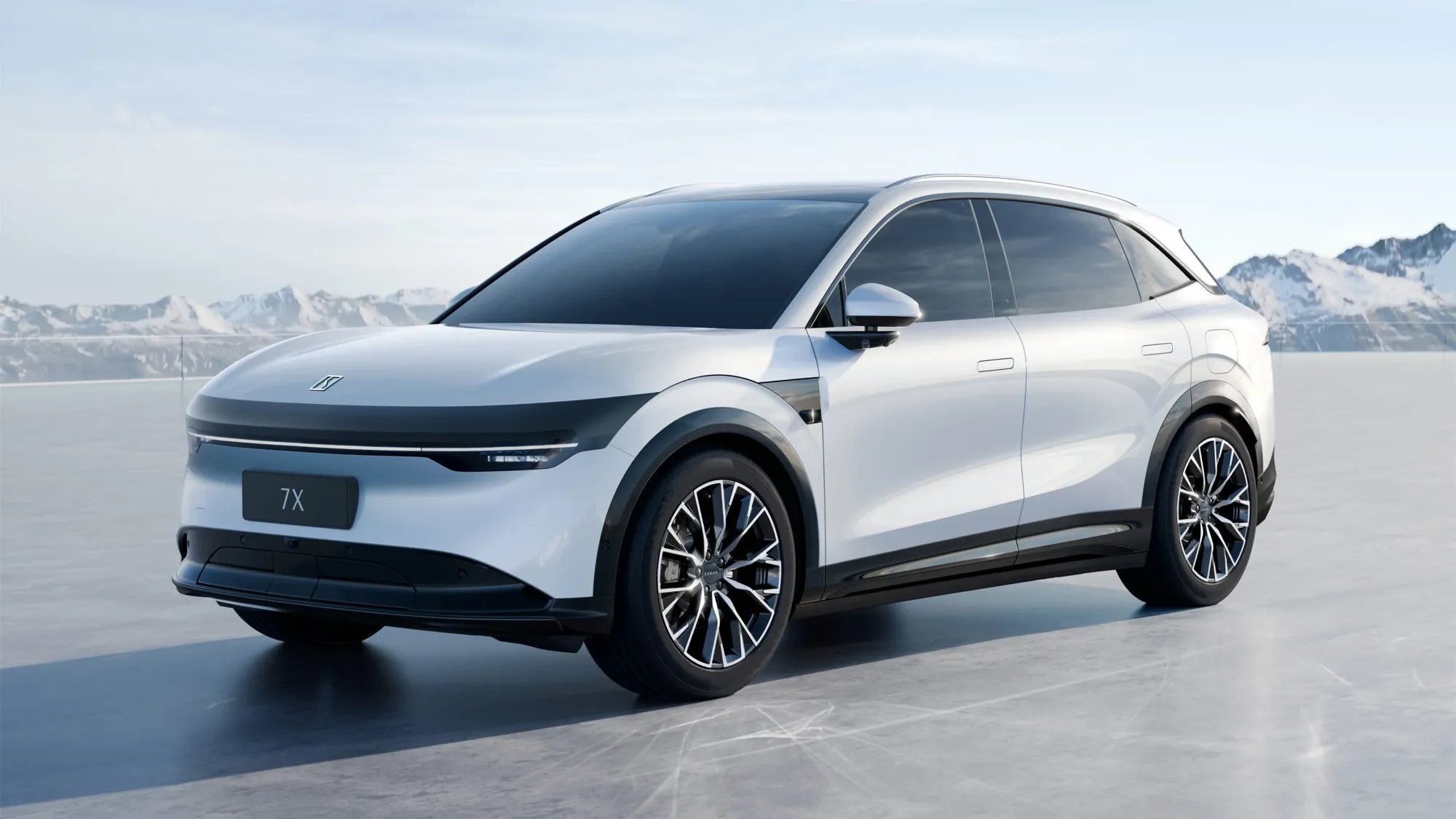
Zeekr's Record July: 2,115 Sales, 7X Enters The Top 10 and Now Beats Every Premium SUV Under $75k
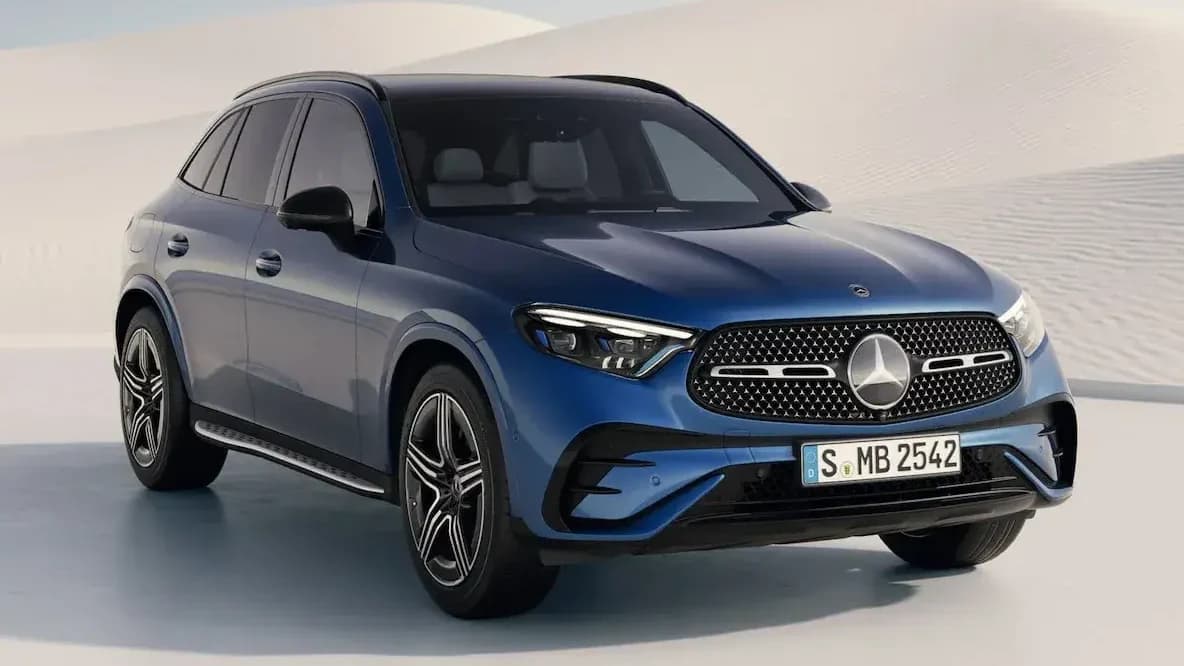
2026 Mercedes-Benz GLC 400 4MATIC Electric Priced for Australia: $112,200 Before On-Roads, 630km WLTP and 330kW DC on 800V, October Deliveries
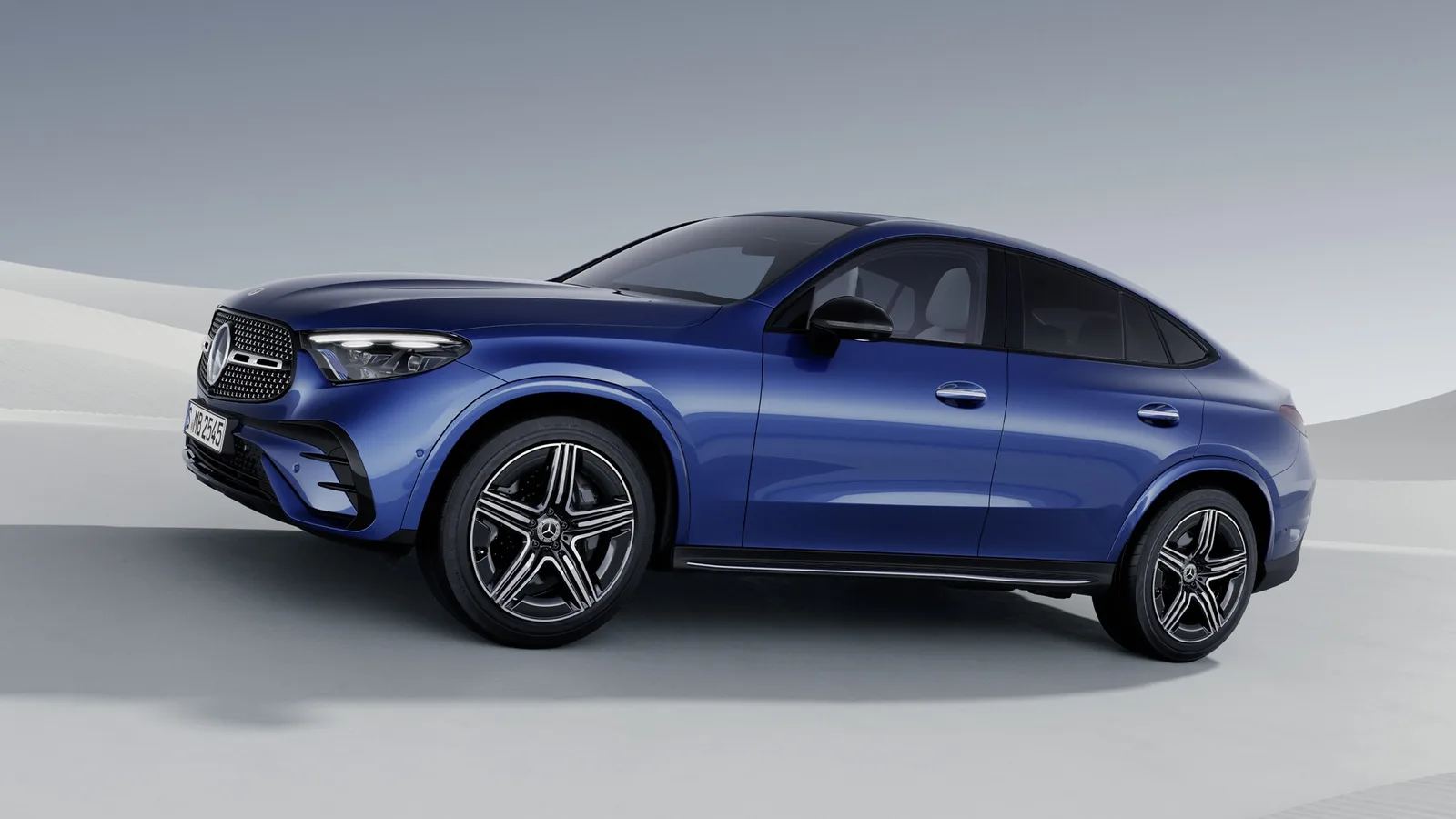
2026 Mercedes-AMG GLC 53 Priced for Australia: Straight-Six Returns, SUV $140,600, Coupe $151,300
Browse all 15,380+ cars · All Mercedes-Benz models · All SUVs