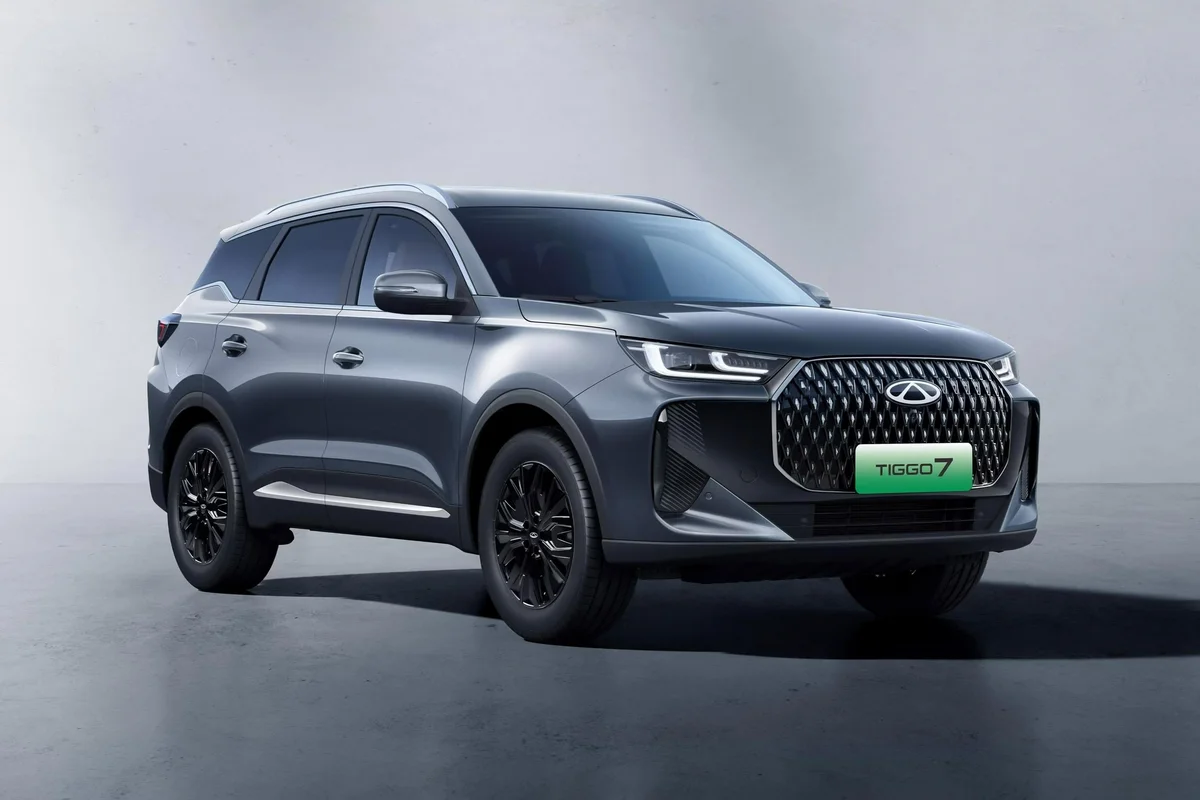
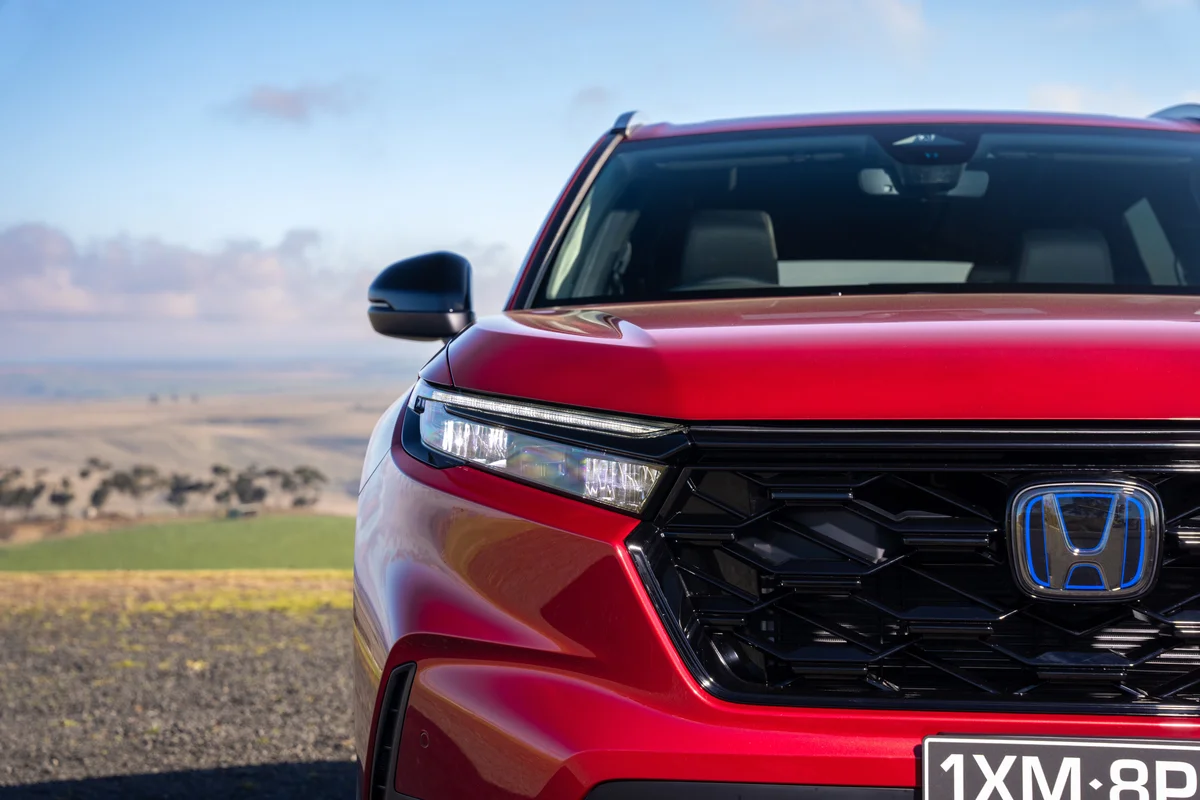
Chery Tiggo 7 Super Hybrid vs Honda CR-V e:HEV RS
Australia's cheapest plug-in hybrid SUV takes on a proven Honda hybrid. Is the CR-V worth $15,300 more?
Data checked: specs 31 Aug 2026, price 23 Sep 2026
Comparison snapshot
Prices, scores and edges below update from our car data.
From about $36,100 est. RRP
Estimated RRP: this brand lists drive-away prices only.
Cheaper by $15,300, lighter on fuel by 4.1 L/100km
From about $51,400 est. RRP
Estimated RRP: this brand lists drive-away prices only.
106L more boot
Written 23 May 2026. The snapshot, tables, scores and verdict on this page update from our car data; figures quoted in the text are as at that date.
Price
Both of these are five-seat mid-size SUVs wearing their respective brand's most advanced hybrid tech and their longest equipment lists. The gap is the price.
Chery Tiggo 7 (drive-away):
| Variant | Powertrain | Drive-away |
|---|---|---|
| Urban | Petrol | $27,500 |
| Ultimate | Petrol | $31,300 |
| Super Hybrid Urban | Plug-in hybrid | $32,300 |
| Super Hybrid Ultimate | Plug-in hybrid | $36,100 |
Honda CR-V:
| Variant | Powertrain | Price |
|---|---|---|
| VTi L AWD | Petrol | $40,850 drive-away |
| VTi X+ 2WD | Petrol | $41,800 RRP |
| VTi L7 (7 seats) | Petrol | $42,750 drive-away |
| VTi LX AWD | Petrol | $44,650 drive-away |
| VTi X7 (7 seats) | Petrol | $46,600 RRP |
| e:HEV RS | Hybrid | $51,400 drive-away |
Honda quotes some CR-V grades drive-away and others as recommended retail before on-road costs, so read the right-hand column carefully. The two cars we are comparing are both drive-away figures, which makes this a clean like-for-like.
We are pitting the flagship of each range against the other, because that is the only way into the best hybrid system each brand sells. The Tiggo 7 Super Hybrid Ultimate is $36,100 drive-away. The CR-V e:HEV RS is $51,400 drive-away. That is a $15,300 gap, and the rest of this comparison is really one question: does the Honda earn it?
Worth noting the cheaper plug-in too. The Tiggo 7 Super Hybrid Urban at $32,300 drive-away uses the same 180kW plug-in drivetrain and the same 93km of electric range for $3,800 less than the Ultimate.
Safety
This section needs correcting if you have read an older version of it. Neither car holds a five-star ANCAP rating. The Honda CR-V was rated four stars in 2024 under the current protocols. The Chery Tiggo 7 Super Hybrid has no ANCAP rating on record at all, so we will not quote a star count for it in either direction.
On equipment both come with eight airbags including a front-centre airbag and a driver's knee airbag, plus ISOFIX points and top tethers on the outboard rear seats. The Tiggo 7 is the newer design and lists extras the Honda does not, including a door-opening warning and rear-occupant detection. Honda Sensing is the longer-established suite.
The honest summary: on published crash-test credentials the Honda is the only one of the two with a rating you can look up, and it is four stars rather than five. If that is a dealbreaker, look at a RAV4, a Sportage or a Tucson instead.
Features
Both are generously equipped. Shared kit includes 18-inch alloys, LED lighting, keyless entry, a power tailgate, synthetic leather, heated front seats, a panoramic sunroof, dual-zone climate with rear vents, wireless charging and a wireless-capable phone connection.
The Chery counters the price gap with hardware: ventilated front seats on top of the heating, and twin 12.3-inch screens that dwarf the Honda's 10.2-inch cluster and 9.0-inch infotainment display. On paper the Tiggo wins the spec sheet.
Screen size is not the whole story, though. The Honda keeps physical climate dials and a volume knob; the Chery puts climate behind a haptic panel. Both run eight-speaker Bose audio, and the CR-V adds active noise cancelling that the Tiggo does not list. Which layout suits you is worth checking in person, because the specification sheet flatters the Chery more than the ergonomics might.
Drivetrain
This is the heart of the difference. The Tiggo 7 Super Hybrid is a genuine plug-in hybrid: a 1.5-litre turbo-petrol four paired with an electric motor and an 18.3kWh LFP battery, for a combined 180kW and a claimed 93km of EV-only range on WLTP. The CR-V e:HEV RS is a series hybrid with a 2.0-litre naturally-aspirated four, two motors and a small battery you never plug in, for a combined 135kW and 335Nm.
Chery's 1.4L/100km claim is technically true and practically meaningless, because plug-in hybrids are measured starting from a full battery. What matters is how you use it. With 93km of claimed electric range, a nightly charge covers more than the average Australian daily commute, and you could go a long time between servo visits.
Leave it to fend for itself and never plug in, and the petrol engine does the work, especially on the highway. Chery does not publish a charge-sustaining figure, but a depleted plug-in hybrid carrying an 18.3kWh battery is not going to beat a purpose-built series hybrid rated at 5.5L/100km. So the Chery's efficiency advantage is real, but only if you commit to plugging it in.
On outright pace the Chery is the more powerful car at 180kW combined against 135kW, but the Honda is the quicker one on the claimed figures: 8.2 seconds to 100km/h against 9.5.
Space and comfort
Both get the family-SUV fundamentals right: room for five, comfortable and supportive front seats, good visibility, rear air vents, USB ports and a fold-down centre armrest.
The CR-V is the larger car on a longer wheelbase, and it shows in two ways: a bit more rear-seat space and a much bigger boot, 581L against 475L. It is also the only one of the two with a towing rating, at 750kg braked, where the Tiggo 7 Super Hybrid is not rated to tow at all. If you pull even a small box trailer, that is the end of the conversation.
The Chery hits back with clever touches: extra storage under the console big enough for a small bag, and a built-in glass hammer and seatbelt cutter, which is a genuinely useful thing to have. Dimensions are close, but the Honda's extra length translates into the more usable family space.
Cost to own
On the surface the Chery looks like the cheaper car to own: a seven-year, unlimited-kilometre warranty against Honda's five years, plus longer 15,000km service intervals versus the CR-V's 10,000km.
Dig in and it evens out. The Tiggo's roadside assistance only runs for the first 12 months, then re-activates each year only if you keep servicing within Chery's network. And the more complex plug-in hybrid powertrain costs more to maintain: roughly $453 a year against the CR-V's $199, which is about $3,174 versus $995 over seven years. Honda also offers up to three bonus warranty years (taking it to eight) if you service on schedule within its network.
The bigger ownership number is depreciation. RedBook expects the CR-V to hold about 58.5% of its value after three years; the Tiggo around 38%. On the current drive-away prices that is roughly $30,000 for the Honda against about $13,700 for the Chery after three years, so the Honda hands back around $16,300 more. That is more than the entire $15,300 purchase gap, which is the single most important thing to weigh if you do not keep cars forever.
Buying a family SUV in Australia in 2026 means wading through one of the most crowded segments on the market. There are more than 70 mid-size SUVs on sale and hundreds of variants once you break the ranges down, so it is genuinely hard to know where to start.
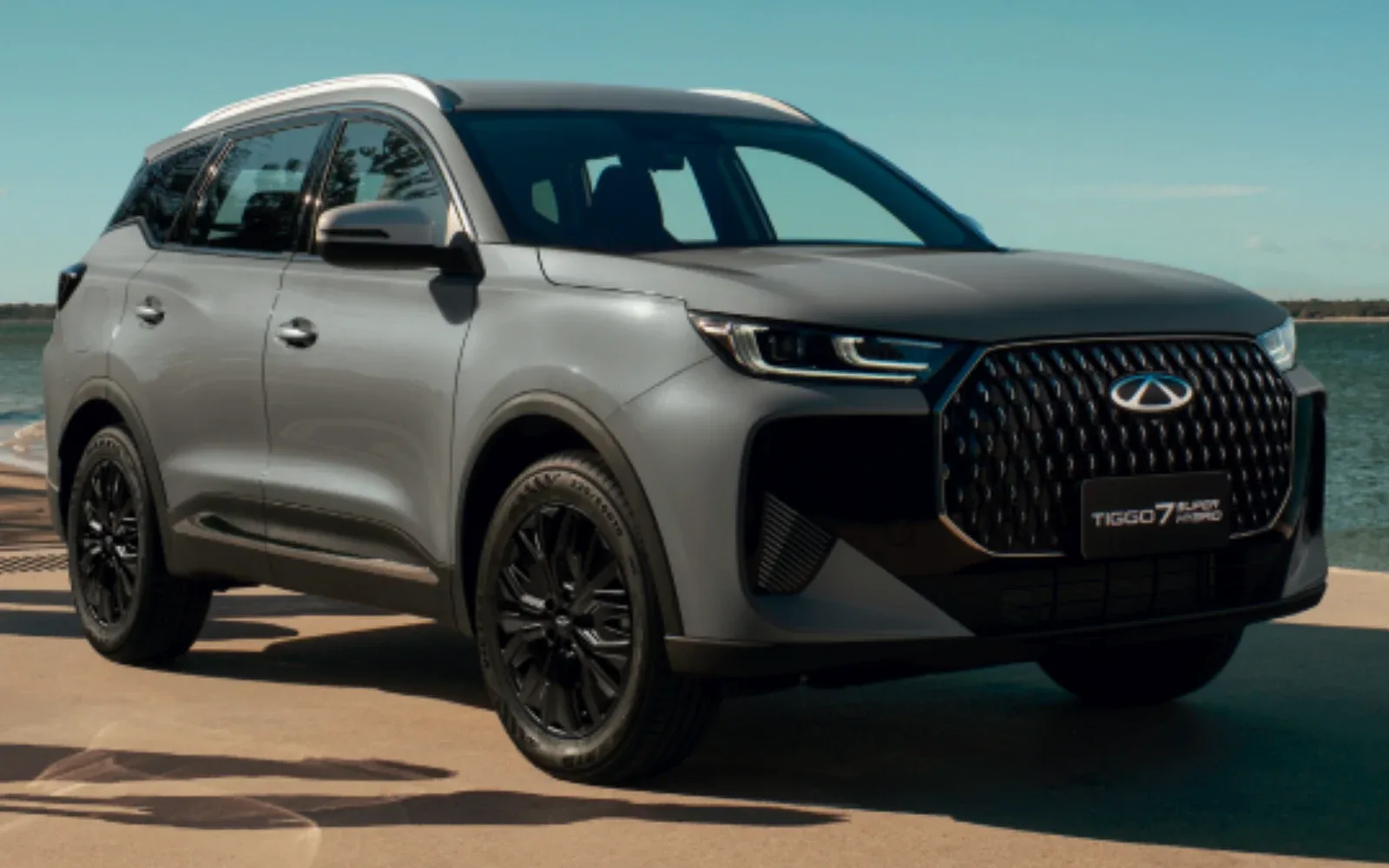
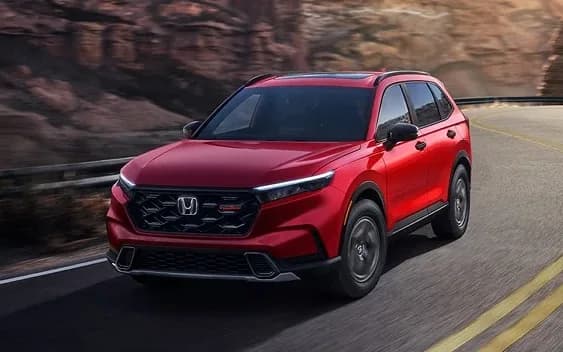
One of the sharpest decisions is this: do you spend up on an established name like Honda and its CR-V, one of the cars that built this segment, or take the value play with Chery and its Tiggo 7 Super Hybrid? We have lined up the flagship of each, the Tiggo 7 Super Hybrid Ultimate and the CR-V e:HEV RS, because that is the only way to get the best hybrid tech each brand offers.
The headline is a $15,300 drive-away price difference and two very different hybrid philosophies: a plug-in you charge for cheap electric running, against a self-charging hybrid that just works. Below we break down price, safety, features, the powertrains, interior space and the long-term costs, then call it. You can also stack both side by side on every spec in our comparison tool.
*Chery's 1.4L/100km figure is the official plug-in hybrid lab number, measured starting with a full battery. It is not a prediction of your fuel bill, and Chery does not publish a charge-sustaining figure for a depleted battery. See our methodology for how we treat manufacturer claims.
Key details
A tick marks the better figure only where both cars have one and the gap is meaningful (3% or more; a whole star or year).
| Detail | Chery Tiggo 7 Super Hybrid | Honda CR-V |
|---|---|---|
| Price | From about $36,100 est. RRP | From about $51,400 est. RRP |
| Drive-away estimate | $38,990 drive away (VIC, advertised) | $56,900 drive away (VIC, advertised) |
| Body | SUV | SUV |
| Powertrain | Plug-in hybrid, 1.5L 4-cyl turbo | Hybrid, 2L 4-cyl |
| Power / torque | 180kW / 310Nm | 135kW / 335Nm |
| Fuel use | 1.4 L/100km | 5.5 L/100km |
| 0-100km/h | 9.5s | No data |
| Boot | 475L seats up | 581L seats up |
| Towing (braked) | No data | 750kg |
| ANCAP | 5 stars (2025) | 4 stars (2024) |
| Warranty | 7yr | 5yr / unlimited km |
At a glance
- Seats
- 5
- Boot
- 475L seats up
- Length x width x height
- 4,535 x 1,864 x 1,702mm
- Wheelbase
- 2,653mm
- Engine
- 1.5L 4-cyl turbo
- Power
- 180kW combined (engine 150kW)
- Torque
- 310Nm
- Drive
- FWD
- Transmission
- 1-Speed Dedicated Hybrid Transmission (DHT)
- Power-to-weight
- 101 kW/tonne
- Kerb weight
- 1,788kg
- Spare wheel
- None
- Payload
- 522kg
- Towing braked / unbraked
- No data / 750kg
- Turning circle
- 11.2m
- Seats
- 5
- Boot
- 581L seats up
- Length x width x height
- 4,704 x 1,866 x 1,681mm
- Wheelbase
- 2,701mm
- Engine
- 2L 4-cyl
- Power
- 135kW
- Torque
- 335Nm
- Drive
- FWD
- Transmission
- E-CVT
- Power-to-weight
- 76 kW/tonne
- Kerb weight
- 1,771kg
- Spare wheel
- Space saver
- Payload
- 579kg
- Towing braked / unbraked
- 750kg / 600kg
- Turning circle
- 12m
CarSorted Score breakdown
The CarSorted Score is algorithmic: it is calculated from each car's data, not from a road test. How it works.
Safety
Fuel Economy
Value
Practicality
Technology
Performance
Reliability
The verdict
Honda CR-V comes out ahead on the CarSorted Score (74 vs 74)
The deciding gaps
- Technology:Chery Tiggo 7 Super Hybrid 79, Honda CR-V 61, Chery Tiggo 7 Super Hybrid ahead by 18
- Value:Chery Tiggo 7 Super Hybrid 96, Honda CR-V 81, Chery Tiggo 7 Super Hybrid ahead by 15
- Practicality:Chery Tiggo 7 Super Hybrid 50, Honda CR-V 61, Honda CR-V ahead by 11
The Honda CR-V wins on the score; the Chery Tiggo 7 Super Hybrid is the cheaper of the two, and price is already part of the Value axis.
Same scorer as the live comparison of these two exact cars.
Our take (written 23 May 2026)
Two corrections before the verdict, because both matter. These cars are $15,300 apart on drive-away pricing, $36,100 for the Tiggo 7 Super Hybrid Ultimate against $51,400 for the CR-V e:HEV RS, not the $16,000 in older versions of this page. And they do not share a five-star ANCAP rating: the CR-V holds four stars from 2024, and the Tiggo 7 Super Hybrid has no ANCAP rating on record at all. If a published rating is part of your decision, neither gives you five. With that on the table, this still splits down the middle. The Honda is the better-resolved car with far stronger resale, a 581-litre boot against 475, cheaper servicing and a quicker 8.2-second 0-100 against 9.5. The Chery answers with 180kW of combined output, a genuine 93km of plug-in electric range, a seven-year unlimited-kilometre warranty and $15,300 back. Charge it nightly and it is dramatically cheaper to run. Do not charge it and you are hauling an 18.3kWh battery for nothing.
Prices on this page move. Want the next verdict?
One short email when prices shift or a new comparison lands. No spam, unsubscribe anytime.
Questions buyers ask
Which is cheaper to run, the Tiggo 7 Super Hybrid or the CR-V?
On the official combined cycle, the Chery Tiggo 7 Super Hybrid uses 1.4 L/100km and the Honda CR-V uses 5.5 L/100km.
Which has the bigger boot?
Boot space with the seats up: the Honda CR-V at 581L, against 475L for the Chery Tiggo 7 Super Hybrid.
Is the Honda CR-V worth $15,300 more than the Chery?
The Chery Tiggo 7 Super Hybrid Ultimate is from about $36,100 est. RRP; the Honda CR-V e:HEV RS is from about $51,400 est. RRP. That makes the Chery Tiggo 7 Super Hybrid $15,300 cheaper.
Are both cars five-star ANCAP?
The Chery Tiggo 7 Super Hybrid holds 5 stars (rated 2025), and the Honda CR-V holds 4 stars (rated 2024).
Which has the better warranty?
The Chery Tiggo 7 Super Hybrid comes with a 7yr warranty; the Honda CR-V with a 5yr / unlimited km warranty.
Which comes out ahead overall?
On the CarSorted Score the Honda CR-V comes out ahead (Chery Tiggo 7 Super Hybrid 74/100, Honda CR-V 74/100), mainly on practicality. The score is algorithmic; the editorial above says who each car suits.
Related
The cars
In the news
- BYD Atto 2 DM-i Cleared for Australia: The Cheapest PHEV Yet, With Up to 90km of Electric Range
- Chery Stockman: The Full Spec Sheet Is Finally Public, the Price and the Launch Date Are Not
- Everything Electric Sydney 2026: iCaur's V25 Lands, Chery Debuts Lepas, and the Zeekr 7GT Finally Breaks Cover
- Honda Recalls 554 Civic, Accord and ZR-V in Australia Over a Seatback Frame Edge That Fails ADR 3/04
How to read this page. Prices, specs, ANCAP ratings, warranty, scores and the computed verdict come from our records for the two variants shown, sourced from manufacturer Australian documents, and update when those records change. RRP excludes on-road costs. Drive-away figures are estimates for the state you have selected unless marked as advertised. The editorial text was written on 23 May 2026. Always confirm price and specification with the manufacturer or dealer before you buy. CarSorted does not accept payment for recommendations.
Comments (0)
Sign in to join the conversation
No comments yet. Be the first!