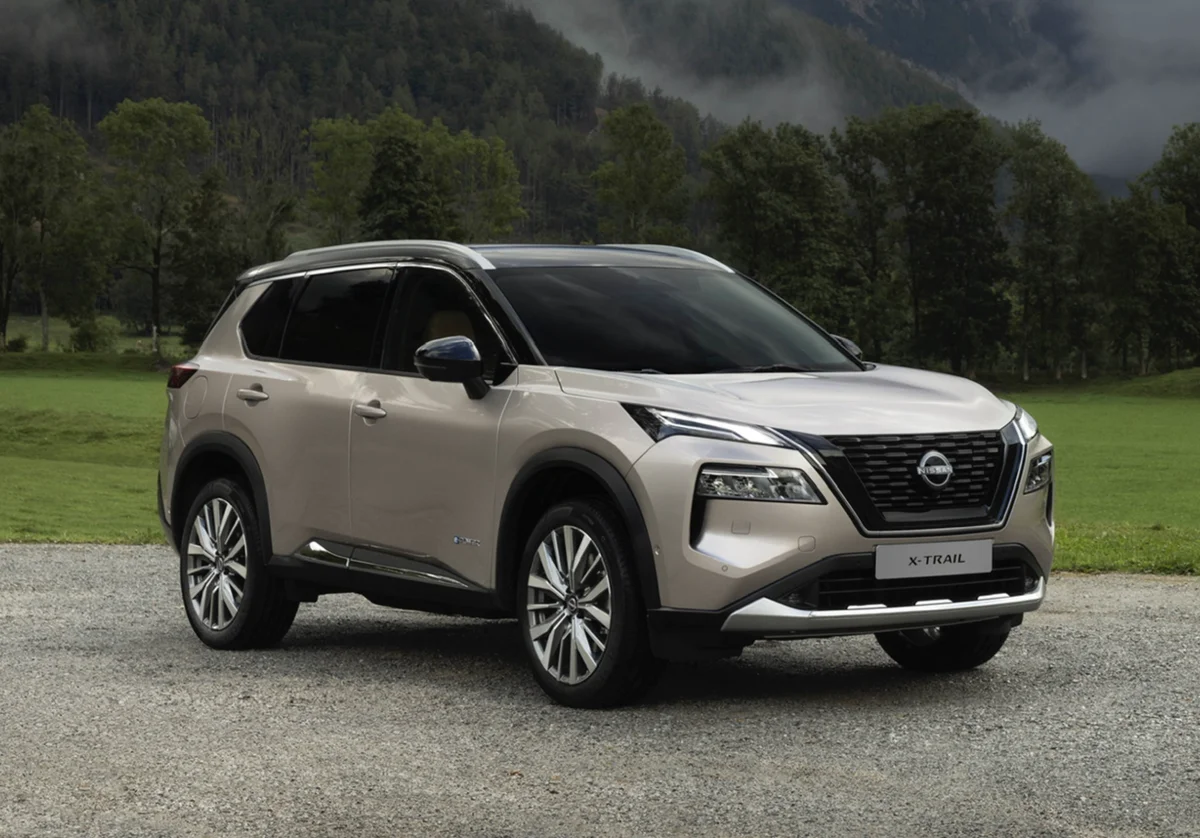
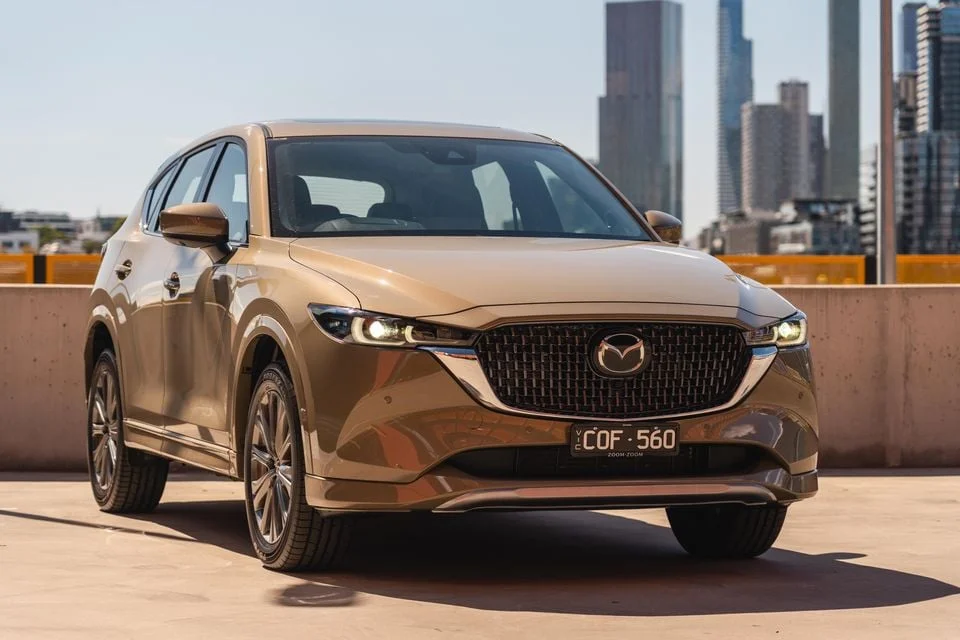
Nissan X-Trail vs Mazda CX-5
$37,750 vs $39,990. $2,240 apart. Two completely different approaches to the mid-size SUV.
Data checked: specs 28 Aug 2026, price 1 Oct 2026
Comparison snapshot
Prices, scores and edges below update from our car data.
Cheaper by $1,685, 119L more boot
No clear edge on the headline figures
Written 7 April 2026. The snapshot, tables, scores and verdict on this page update from our car data; figures quoted in the text are as at that date.
Price
Just $240 separates these two, which makes this one of the closest price matchups in the entire mid-size SUV segment. That is genuinely remarkable when you consider how different these vehicles are underneath.
The X-Trail ST 2WD starts at $37,750 before on-road costs. Driveaway in most states you are looking at roughly $41,000 to $42,000 depending on stamp duty and CTP. The CX-5 G25 Pure AWD at $39,990 lands about $2,240 higher before on-roads, and roughly $2,500 higher driveaway.
Where the maths gets interesting is over time, though not on fuel any more. Both now claim 7.4L/100km, so there is nothing in it. At current unleaded prices (around $1.90/L) and 15,000km a year, the CX-5 saves you about $143 annually on fuel. Over five years that is roughly $715 in your pocket.
But the X-Trail counters with something massive: a 5-year unlimited-kilometre warranty, extendable to 10 years and 300,000km when servicing at Nissan dealers. That service-activated warranty means you could be covered for twice as long as the CX-5's 5-year warranty. If you plan to keep the car long-term, that is a genuine financial safety net. Servicing costs are comparable between the two, with both sitting around $300 to $400 per standard service through capped-price programs.
Resale is worth mentioning. The CX-5 has historically been one of the strongest resale performers in the segment. Mazda SUVs typically retain 52-55% of their value after five years. The X-Trail sits slightly behind at 48-52%, though that 10-year warranty could help close the gap for future models.
Safety
The X-Trail wears a 5-star ANCAP rating. ANCAP has not rated the new-generation CX-5, so there is no published score for it, and we will not carry the superseded model's across. Both come comprehensively equipped with active safety tech at these base trim levels, which is exactly what you want to hear.
The X-Trail ST gets autonomous emergency braking (AEB) with pedestrian and cyclist detection, lane departure warning, lane keep assist, blind spot monitoring, rear cross-traffic alert, and intelligent adaptive cruise control. Nissan also includes their Intelligent Around View Monitor with moving object detection, which gives you a bird's-eye camera view when parking. That is a genuinely useful feature on a vehicle this size.
The CX-5 G25 Pure AWD matches most of that with AEB, lane keep assist, blind spot monitoring, rear cross-traffic alert, and radar cruise control. It misses out on the surround-view camera at this trim level, but adds driver attention monitoring and smart brake support in reverse.
Both have ISOFIX anchor points on the outer rear seats with top tether points across the back row. For families with young kids, installation is straightforward in both. The X-Trail has the added benefit of third-row ISOFIX points on higher trims, but the ST base model only offers the second-row anchors.
On passive safety, both get a full suite of airbags including curtain airbags. The X-Trail's larger body gives it a slight structural advantage in offset crash tests, though both scored well in ANCAP testing.
Features
This is where the personality differences really show. These two SUVs approach in-car tech and comfort from completely different angles.
The X-Trail ST comes standard with a 12.3-inch touchscreen infotainment system paired with a 12.3-inch digital instrument cluster. That is a lot of screen real estate for a base model, and it runs Nissan's latest NissanConnect system with wireless Apple CarPlay and Android Auto. You also get a push-button start, dual-zone climate control, auto LED headlights, and auto-dimming rearview mirror.
The CX-5 G25 Pure AWD takes a different approach. Mazda has always prioritised driving engagement, and the interior reflects that. You get a 15.6-inch centre display controlled by Mazda's rotary commander dial (not a touchscreen while driving), a 7-inch digital instrument display, wireless Apple CarPlay and Android Auto, push-button start, and dual-zone climate. The materials feel a step above what you would expect at this price. Mazda uses soft-touch plastics and tighter panel gaps that give the cabin a premium feel.
The X-Trail's party trick is its third row of seats. Yes, it is tight back there and realistically only suitable for kids or very short trips, but having seven seats available when you need them is a genuine differentiator. No version of the CX-5 offers this. The trade-off is brutal though: with the third row in use, boot space drops to just 205 litres. That is barely enough for a weekly shop.
With the third row folded, the X-Trail offers around 585 litres, which is comfortably ahead of the CX-5's 438L but still means you are carrying around the weight and packaging compromises of seats you might rarely use.
Drivetrain
The powertrain story here is straightforward but worth unpacking properly because the numbers tell you a lot about how these two drive.
The X-Trail ST 2WD runs a 1.5-litre three-cylinder turbo petrol making 135kW and 244Nm, paired with a CVT and front-wheel drive. On paper those numbers look solid for a mid-size SUV, and in practice the turbo three-pot delivers decent low-end punch. The CVT does its thing, which Nissan has gotten better at tuning in recent years. It no longer drones as badly under acceleration as older Nissan CVTs did.
The CX-5 G25 Pure AWD uses a 2.5-litre naturally aspirated four-cylinder making 132kW and 242Nm through a conventional torque-converter automatic and all-wheel drive. These numbers are now line-ball with the X-Trail: 3kW and 2Nm apart. In the real world the CX-5 no longer feels short of breath the way the old 2.0-litre G20 did, though a naturally aspirated engine still asks for more revs than the Nissan's turbo when fully loaded.
Power is now line-ball: 135kW plays 132kW, torque 244Nm plays 242Nm. The X-Trail's three-cylinder turbo makes its outputs lower in the rev range, but the CX-5's conventional automatic is a nicer gearbox to live with day-to-day than the CVT. Shifts are smooth and predictable, and Mazda's steering and chassis tuning give it a more connected, driver-focused feel. The X-Trail rides softer and more comfortably but does not engage the driver in the same way.
Fuel economy is a tie at 7.4L/100km combined for both, which is reasonable for this class given the Mazda is driving all four wheels. Neither is a hybrid, so do not expect anything close to RAV4 Hybrid territory.
Cost to own
Over a five-year ownership period, the running cost picture between these two is remarkably close, with one major exception: warranty.
The X-Trail's up-to-10-year warranty (with dealer servicing) is among the longest in the mainstream SUV segment. That is double the CX-5's 5-year coverage and longer than even Kia's 7-year warranty. If something goes wrong in years 6 through 10, Nissan has you covered. For peace of mind, that is hard to beat.
Servicing costs are similar. Both offer capped-price servicing programs. The X-Trail runs on 12-month or 15,000km service intervals while the CX-5 uses 12-month or 10,000km intervals. Mazda's shorter service interval means you might visit the dealer slightly more often, but individual service costs are comparable.
Insurance tends to be slightly cheaper on the CX-5 due to its lower power output and strong safety record. Expect to pay around $1,200 to $1,800 per year for comprehensive cover on either, depending on your age, location, and driving history.
Tyre costs are similar, with both running common sizes available at any decent tyre shop. Neither requires expensive run-flats or specialist rubber.
The big-picture ownership cost over five years, including depreciation, fuel, insurance, servicing, and registration, is very close. The CX-5 edges it slightly on fuel and resale. The X-Trail wins on warranty length. Call it a draw on total cost of ownership.
Who Should Buy Which?
Buy the X-Trail ST if: you need seven seats, even occasionally. The third row gives you flexibility that the CX-5 simply cannot match. The 10-year warranty is also unbeatable for long-term owners, and although power is now line-ball (135kW vs 132kW) the turbo's low-down torque makes it feel confident with passengers on board. Families with two young kids and a third on the way should look here first.
Buy the CX-5 G25 Pure AWD if: you prioritise boot space over seat count, want all-wheel drive as standard and a more engaging drive, and value towing capacity. The 438L boot versus the X-Trail's 205L (with all seats up) is a massive practical advantage for everyday use. If you never need a third row, the CX-5 is the more liveable daily driver. It also tows 500kg more, which matters if you are pulling a trailer or small boat.
At $2,240 apart, this genuinely comes down to your lifestyle. Both are well-sorted mid-size SUVs, though only the X-Trail carries a current ANCAP rating. The X-Trail is the family flexibility play. The CX-5 is the practical daily driver.
Compare both side by side on CarSorted. If you are also considering the RAV4 vs CX-5, X-Trail vs Tucson, or CR-V vs CX-5, we have those covered too.
Key details
A tick marks the better figure only where both cars have one and the gap is meaningful (3% or more; a whole star or year).
| Detail | Nissan X-Trail | Mazda CX-5 |
|---|---|---|
| Price | From $38,305 RRP | From $39,990 RRP |
| Drive-away estimate | Calculating... | Calculating... |
| Body | SUV | SUV |
| Powertrain | Petrol, 2.5L 4-cyl | Petrol, 2.5L 4-cyl |
| Power / torque | 135kW / 244Nm | 132kW / 242Nm |
| Fuel use | 7.4 L/100km | 7.4 L/100km |
| 0-100km/h | 8s | 8.7s |
| Boot | 585L seats up · 782L seats folded | 466L seats up · 1,594L seats folded |
| Towing (braked) | 2,000kg | 1,800kg |
| ANCAP | 5 stars (2021) | 5 stars (2025) |
| Warranty | 5yr / unlimited km | 5yr / unlimited km |
At a glance
- Seats
- 5
- Boot
- 585L seats up · 782L seats folded
- Length x width x height
- 4,680 x 1,840 x 1,725mm
- Wheelbase
- 2,705mm
- Engine
- 2.5L 4-cyl
- Power
- 135kW
- Torque
- 244Nm
- Drive
- FWD
- Transmission
- Automatic
- Power-to-weight
- 88 kW/tonne
- Kerb weight
- 1,540kg
- Spare wheel
- Space saver
- Payload
- 500kg
- Towing braked / unbraked
- 2,000kg / 750kg
- Turning circle
- 11.1m
- Seats
- 5
- Boot
- 466L seats up · 1,594L seats folded
- Length x width x height
- 4,690 x 1,860 x 1,695mm
- Wheelbase
- 2,815mm
- Engine
- 2.5L 4-cyl
- Power
- 132kW
- Torque
- 242Nm
- Drive
- AWD
- Transmission
- Automatic
- Power-to-weight
- 77 kW/tonne
- Kerb weight
- 1,720kg
- Spare wheel
- T155/80R17 temporary
- Payload
- 517kg
- Towing braked / unbraked
- 1,800kg / 750kg
- Turning circle
- 11.2m
CarSorted Score breakdown
The CarSorted Score is algorithmic: it is calculated from each car's data, not from a road test. How it works.
Safety
Fuel Economy
Value
Practicality
Technology
Performance
Reliability
The verdict
Mazda CX-5 comes out ahead on the CarSorted Score (67 vs 66)
The deciding gaps
- Technology:Nissan X-Trail 27, Mazda CX-5 43, Mazda CX-5 ahead by 16
- Practicality:Nissan X-Trail 70, Mazda CX-5 64, Nissan X-Trail ahead by 6
- Reliability:Nissan X-Trail 60, Mazda CX-5 65, Mazda CX-5 ahead by 5
The Mazda CX-5 wins on the score; the Nissan X-Trail is the cheaper of the two, and price is already part of the Value axis.
Same scorer as the live comparison of these two exact cars.
Our take (written 7 April 2026)
This is genuinely close. The X-Trail wins on warranty (10 years vs 5) and has 7 seats, with power and torque now a dead heat. The CX-5 answers with standard all-wheel drive, 300kg more towing and boot space (438L vs 205L with the third row up), fuel economy (6.9 vs 7.4L/100km), and towing (2,000kg vs 1,500kg). If you need seven seats and a decade of warranty coverage, the X-Trail is the pick. If you want a better everyday cargo hauler that tows more and sips less fuel, the CX-5 is the smarter buy.
Prices on this page move. Want the next verdict?
One short email when prices shift or a new comparison lands. No spam, unsubscribe anytime.
Questions buyers ask
Is the Nissan X-Trail bigger than the Mazda CX-5?
Overall length: the Mazda CX-5 at 4,690mm, against 4,680mm for the Nissan X-Trail.
Does the X-Trail ST come with 7 seats?
Seating: both are listed at 5 seats.
Which is more fuel efficient, the X-Trail or CX-5?
On the official combined cycle, the Nissan X-Trail uses 7.4 L/100km and the Mazda CX-5 uses 7.4 L/100km.
Which has the better warranty?
The Nissan X-Trail comes with a 5yr / unlimited km warranty; the Mazda CX-5 with a 5yr / unlimited km warranty.
Which tows more, the X-Trail or CX-5?
Braked towing capacity: the Nissan X-Trail at 2,000kg, against 1,800kg for the Mazda CX-5.
Is the CX-5 G25 underpowered?
Peak power: the Nissan X-Trail at 135kW, against 132kW for the Mazda CX-5. The Nissan X-Trail is quicker to 100km/h (8s vs 8.7s).
Which is cheaper, the Nissan X-Trail or the Mazda CX-5?
The Nissan X-Trail ST 2WD 5-seat is from $38,305 RRP; the Mazda CX-5 G25 Pure AWD is from $39,990 RRP. That makes the Nissan X-Trail $1,685 cheaper.
What are the ANCAP ratings for the Nissan X-Trail and Mazda CX-5?
The Nissan X-Trail holds 5 stars (rated 2021), and the Mazda CX-5 holds 5 stars (rated 2025).
Which has the bigger boot?
Boot space with the seats up: the Nissan X-Trail at 585L, against 466L for the Mazda CX-5.
Which comes out ahead overall?
On the CarSorted Score the Mazda CX-5 comes out ahead (Nissan X-Trail 66/100, Mazda CX-5 67/100), mainly on technology, reliability. The score is algorithmic; the editorial above says who each car suits.
Related
In the news
- VFACTS August 2026: EVs Outsell Petrol, Diesel and Hybrid for the First Time in Australian History
- Nissan X-Trail Rock Creek and Cheaper 2WD e-POWER Priced for Australia: 13 Variants, First Deliveries September 2026
- Avatr Previews the T09: a Patrol-Sized PHEV Flagship From a Brand Planning an Australian Launch
- Mazda CX-5, BMW X3, MG S6 EV and Cupra Formentor All Score Five Stars With ANCAP
How to read this page. Prices, specs, ANCAP ratings, warranty, scores and the computed verdict come from our records for the two variants shown, sourced from manufacturer Australian documents, and update when those records change. RRP excludes on-road costs. Drive-away figures are estimates for the state you have selected unless marked as advertised. The editorial text was written on 7 April 2026. Always confirm price and specification with the manufacturer or dealer before you buy. CarSorted does not accept payment for recommendations.
Comments (0)
Sign in to join the conversation
No comments yet. Be the first!