Image credit: BYD
Key Takeaways
- 5-star ANCAP for both Seal 6 Sedan and Seal 6 Touring, assessed under the 2023-2025 protocol
- 92% Adult / 90% Child / 84% VRU / 84% Safety Assist: leads the recent ANCAP cohort on Adult Occupant
- Beats Toyota Camry on Child Occupant (90 vs 87) and Safety Assist (84 vs 81); loses only on Adult (92 vs 95). Same protocol generation.
- Applies to vehicles built from April 2026, sold from May 2026. Rating expires December 2031
- Centre airbag, direct child presence detection, direct driver monitoring all standard
- Now eligible for fleet and rideshare procurement that requires 5-star safety
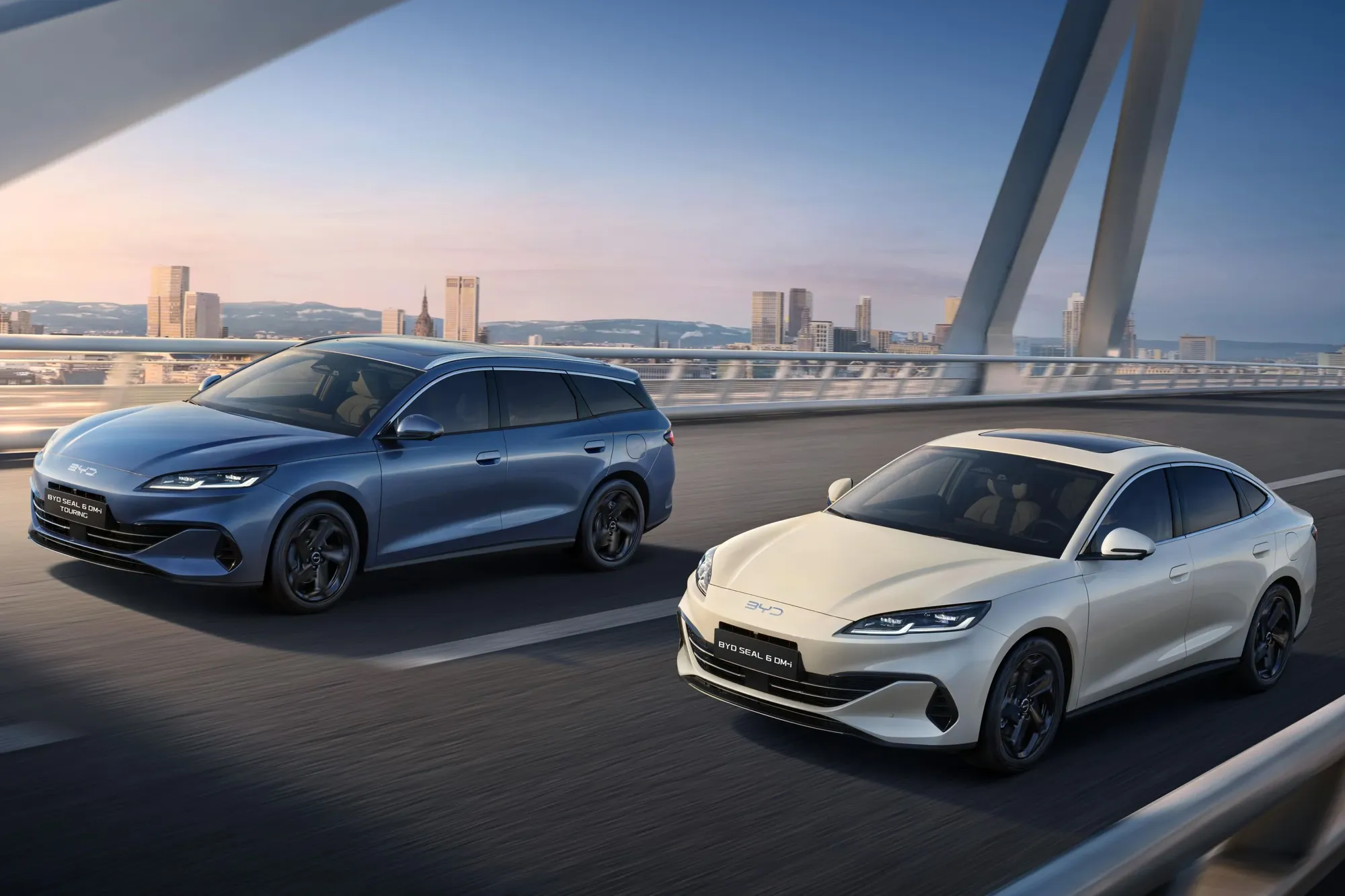
ANCAP has awarded the BYD Seal 6 a full 5-star safety rating in Australia and New Zealand, covering both the sedan and the Touring wagon. The rating was assessed under the current 2023-2025 protocol, the same protocol generation the Toyota Camry was tested against last year, and immediately makes the Seal 6 eligible for fleet and rideshare procurement that historically locks out non-5-star cars.
That parity with the Camry on the ANCAP scoresheet matters more than the headline 5 stars. Many Australian fleet operators, novated lease providers and rideshare platforms have hard 5-star ANCAP requirements written into their procurement policies. Until this rating dropped, the Seal 6 was off those lists. As of May 2026 it is on them, with a starting price of $34,990 RRP against the Camry Ascent Hybrid's $39,990 RRP.
The scoresheet vs current rivals
| Model | Adult | Child | VRU | Safety Assist | Year |
|---|---|---|---|---|---|
| BYD Seal 6 | 92% | 90% | 84% | 84% | 2025 |
| Toyota Camry | 95% | 87% | 84% | 81% | 2024 |
| Tesla Model Y L | 91% | 84% | 86% | 92% | 2025 |
| MG4 EV Urban | 87% | 86% | 85% | 82% | 2025 |
| Skoda Octavia | 85% | 81% | 81% | 82% | 2025 |
The Seal 6 leads the cohort on Adult Occupant Protection. The Tesla Model Y L tops Safety Assist (92%, outstanding). The Camry holds the front-crash crown but loses to the Seal 6 on three of four sub-scores once you account for the difference between the 2024 and 2025 protocol generations.
What the test results actually showed
ANCAP's detailed report on the Seal 6 highlights several specific strengths. The passenger compartment remained stable in the frontal offset crash, with good protection for all critical body areas of the front passenger. The Seal 6 scored maximum points in the full-width frontal, side impact and oblique pole tests. The side impact result is particularly notable because the centre airbag fitted as standard provided good head protection for both front occupants in side-impact scenarios.
ANCAP also noted a moderate risk to occupants of an oncoming vehicle in the frontal offset compatibility assessment. That doesn't affect the Seal 6's own occupants but reflects how it might fare for the people in the other car in a head-on collision.
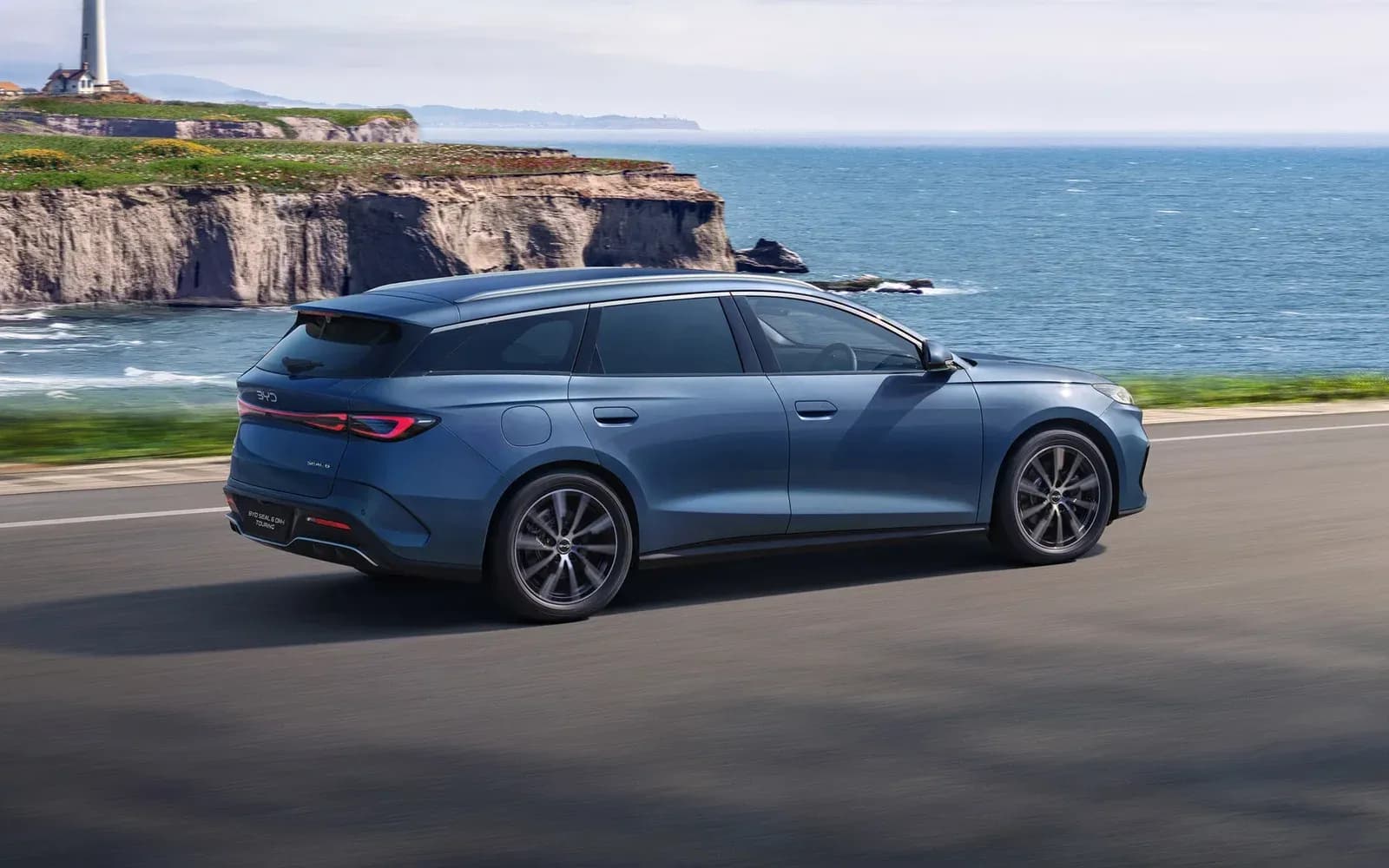
Image credit: BYD
Child occupant: the Seal 6's strongest area vs Camry
The Seal 6 scored maximum points in dynamic tests using six-year-old and ten-year-old child dummies. ISOFIX anchorages are fitted on the rear outboard seats, with top tether anchorages for all three rear seating positions. ANCAP confirmed most typical child restraints could be accommodated in most rear seats, although one selected booster seat could not be installed correctly in the centre rear position.
Importantly, a direct child presence detection system is standard for all rear passenger seats. This is the system that detects an unattended child left in the car after the driver has departed and triggers an alert, an increasingly common factory fitment that ANCAP weights heavily under the 2023-2025 protocol.
Pedestrian and cyclist safety
The Seal 6 scored 84% on Vulnerable Road User Protection, tied with the Camry. ANCAP reported generally good or adequate pedestrian head protection across most of the bonnet and windscreen area, with weaker results at some stiffer points (typically near the windscreen pillars and around the bonnet hinge area).
The autonomous emergency braking system is rated good for pedestrians, cyclists and motorcyclists in forward-direction tests. Where the Seal 6 lost points is on reverse AEB Backover performance (rated marginal, the system detecting and braking for a pedestrian directly behind the car when reversing) and AEB Head-On (also rated marginal, preventing head-on collisions with another vehicle). Both of these are common weak points across the segment, so the Seal 6 isn't an outlier.
Standard safety kit
Every Seal 6 variant ships with the following standard:
- Autonomous emergency braking (pedestrian, cyclist and motorcyclist detection)
- Lane keep assist + emergency lane keeping
- Blind spot monitoring
- Speed sign recognition
- Intelligent adaptive cruise control
- Centre airbag (driver-passenger separator)
- Direct child presence detection on all rear seats
- Direct driver monitoring system for drowsiness and distraction
ANCAP rated car-to-car AEB as good, with crashes avoided or reduced in rear-end, junction and most crossing scenarios. Lane support systems were rated mostly good.
What ANCAP's CEO said
ANCAP CEO Carla Hoorweg said the recent results show clear strengths across these models: the BYD Seal 6 leading on Adult Occupant Protection, the Tesla Model Y L topping Safety Assist, and the MG4 EV Urban holding its own as a small electric car against both larger rivals.
ANCAP noted that the Tesla Model Y L rating (which covers the new 6-seat long-wheelbase variant) is based on testing of the related five-seat Model Y, with additional assessment confirming the longer-wheelbase, six-seat configuration. ANCAP also flagged child restraint installation difficulties in some second-row and third-row positions on the Model Y L, worth a fitting test at the dealer if you're using rear-row child seats.
What this means for buyers
For private buyers, the takeaway is straightforward: the Seal 6 is now demonstrably as safe as a Toyota Camry on the relevant ANCAP scoresheet, at $5,000 less RRP for the entry-level sedan ($34,990 vs $39,990). Read our existing BYD Seal 6 price and specs piece for the full lineup and equipment breakdown.
For fleet and rideshare buyers, this rating is the more material change. Procurement policies that wouldn't have approved the Seal 6 last week will approve it this week. Combined with the federal NVES (New Vehicle Efficiency Standard) and FBT exemption rules favouring plug-in hybrids and EVs, the Seal 6 PHEV moves into a strong fleet-acquisition position alongside the Camry Hybrid and Tesla Model Y.
Compare the Seal 6 directly against the Camry or Model Y on our live comparison tool. See related: Best Hybrid Cars 2026 | Best Family Cars 2026 | ANCAP Safety Ratings Explained.
Disclaimer: ANCAP scores and protocol-year information are sourced from ANCAP's published rating release at the time of publishing. The 5-star rating applies to vehicles built from April 2026 and sold from May 2026, with rating expiry December 2031. Pricing for all referenced vehicles is RRP from manufacturer Australian websites and excludes on-road costs. Read our methodology for how we source and verify safety data. Always confirm current rating status and applicability with ANCAP before relying on it for fleet procurement.
Compare these picks side by side
Stack 6 of them on 200+ specs, price, safety and running cost in one view.
Compare all 6 nowFrequently Asked Questions
Is the BYD Seal 6 a 5-star ANCAP car?
What were the Seal 6's individual ANCAP scores?
How does the BYD Seal 6 ANCAP rating compare to the Toyota Camry?
Why does this rating matter for fleet and rideshare buyers?
What safety equipment is standard on the BYD Seal 6?
Were there any weak points in the Seal 6's ANCAP testing?
What other cars got 5-star ANCAP in this round?
New cars, real prices, straight to your inbox
Join the CarSorted mailing list for new-model launches, price drops and drive-away deals, honest reviews, and founding-member pricing on the upcoming CarSorted Pro Report.
- New-model launches
- Price drops & deals
- Honest reviews
No spam, unsubscribe anytime. By subscribing you agree to receive marketing emails.
Disclaimer: All information in this article was believed to be correct at the time of publishing (10 May 2026). Prices are manufacturer recommended retail prices (RRP) and may vary by state, dealer, and options. Specifications, government incentives, and rebates can change without notice. Always verify details with the manufacturer or relevant authority before making a purchase decision. Running cost estimates are based on average Australian driving conditions at 15,000 km/year. CarSorted does not accept payment for recommendations or rankings.
Written by Uzzi, CarSorted Editorial Team · 10 May 2026 · how we research
Comments (0)
Sign in to join the conversation
No comments yet. Be the first!