Key Takeaways
- Style from $37,888, Design from $40,888 before on-road costs
- Range extender, not a regular PHEV. The 1.5L petrol engine only generates electricity, the rear motor does all the driving
- 84km WLTP electric range from a 18.8kWh LFP battery, 900km combined with the 50L tank
- 160kW / 240Nm rear-wheel drive, 0-100km/h in 7.5 seconds
- 6.6kW AC and up to 46kW DC charging, 30 to 80% in roughly 20 minutes
- 6yr/150,000km vehicle warranty, 8yr/160,000km battery warranty. ANCAP rating pending for the hybrid variant
- First 500 orders pick up 3 years of capped-price servicing, a 7kW home charger, premium paint and a V2L cable
- On sale in Australia from 9 June 2026
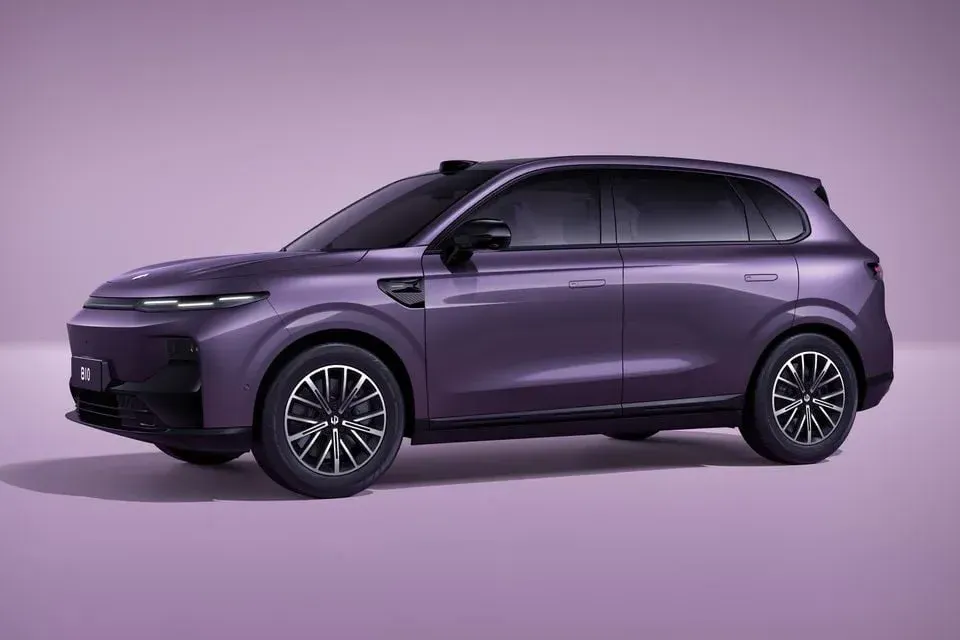
Image credit: Leapmotor Australia
Australian small-SUV shoppers picked up a new option this week. The Leapmotor B10 Hybrid EV opened for delivery on 9 June with the same body, the same cabin and the same equipment levels as the battery-only B10, but with a 1.5-litre petrol generator and a 50-litre fuel tank bolted on so you never have to think about charging if you cannot be bothered. The clever bit, and the reason it might land on your shortlist, is that Leapmotor is charging the same money for the hybrid as it does for the equivalent pure-electric B10. There is no petrol-engine tax to access the longer combined range, which is rare in this segment.
Pricing
Two variants, both before on-road costs. Style is the value entry and Design adds the bigger screens, the leatherette upholstery, the panoramic roof and the driver-assist hardware that lifts the B10 from cheap-and-cheerful to genuinely well kitted.
| Variant | Price (before on-roads) |
|---|---|
| B10 Hybrid EV Style | $37,888 |
| B10 Hybrid EV Design | $40,888 |
Current price on CarSorted: Leapmotor B10 Style BEV $37,888 RRP, as at 24 Jun 2026; Leapmotor B10 Design LR BEV $40,888 RRP, as at 24 Jun 2026; BYD Atto 2 Premium $35,990 RRP, as at 4 Oct 2026; Geely EX5 Complete $41,990 RRP, as at 19 Sep 2026.
For context, the equivalent battery-only B10 Style sits at $38,990 plus on-roads and the Design Long Range at $41,990, so the hybrid lineup actually undercuts the pure EV by around $1,100 per variant. Range extender for less money than the EV is a fairly unusual sales pitch in 2026.
A range extender, not a plug-in hybrid
It is worth being precise about what this drivetrain actually is. The B10 Hybrid EV is an extended-range electric vehicle, the same architecture as the larger Leapmotor C10 Hybrid EV. The 1.5-litre four-cylinder petrol engine in the nose never sends torque to the wheels. It is purely a generator that spins to keep the battery topped up when the charge runs low. The rear axle is permanently driven by a single electric motor, so it behaves exactly like an EV from behind the wheel.
The buyer-side implications matter. You can run the B10 Hybrid EV as a pure EV for the daily commute, plug it in at night, and never visit a servo. When you need to drive interstate, you fill the tank and the petrol generator quietly keeps the lights on while the electric motor still pushes you down the road. Regen feel and throttle response stay EV-like the whole time, which is a different experience to most plug-in hybrids where the engine actually clutches in to the wheels at speed.
Powertrain and Performance
| Spec | B10 Hybrid EV (Style and Design) |
|---|---|
| Layout | Rear-wheel drive, single rear motor |
| Combined power / torque | 160kW / 240Nm |
| Petrol generator | 1.5L 4-cyl (generator only, no wheel drive) |
| Battery | 18.8kWh LFP |
| Electric range (WLTP) | 84 km |
| Combined range (WLTP) | 900 km |
| Fuel consumption (claimed) | 0.9 L/100km |
| Fuel tank | 50 L |
| 0-100 km/h | 7.5 seconds |
| Top speed | 170 km/h |
| Max AC charge | 6.6 kW |
| Max DC charge | 46 kW (30-80% in roughly 20 min) |
| Length / Width / Height | 4,515 / 1,885 / 1,665 mm |
| Wheelbase | 2,735 mm |
The 84km WLTP electric range is the figure that decides how this car feels day to day. The ABS Travel Survey numbers say the average Australian driver covers 36km a day, so a single overnight charge from a standard 10A socket is enough to keep the petrol engine asleep for the entire working week. The 50-litre tank is your weekend or your road-trip insurance policy. Combined, Leapmotor quotes 900km between fuelling and charging stops, which is reasonable for a car this size.
Performance numbers are middle of the road and that is the right call. 160kW and 240Nm through the rear wheels, 0 to 100 in a flat 7.5 seconds. Quicker than a Toyota Corolla Cross Hybrid, slower than a single-motor BYD Atto 2, totally fine for what this is.
Inside and Equipment
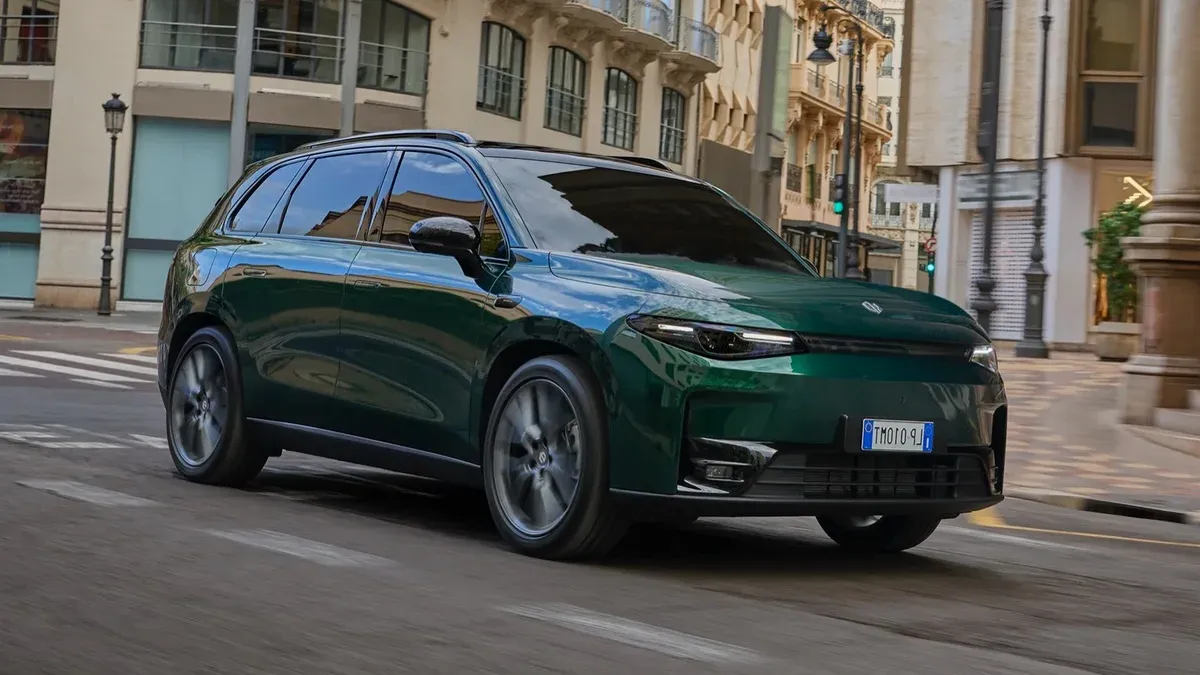
Image credit: Leapmotor Australia. C10 cabin shown, B10 layout is closely related.
Both grades sit on 18-inch alloys, pop-out flush door handles and Leapmotor's Gravity Field face with the split headlights and the three-strip daytime running lights. Inside, the centrepiece is a 14.6-inch landscape touchscreen running most of the functions, paired with a small driver display behind the wheel. There is very little in the way of physical buttons, which is the modern Chinese-EV norm, so be prepared to do most things through the screen.
Step up to the Design and you add features that genuinely change the cabin feel: a panoramic glass roof, a power tailgate, ventilated front seats, an upgraded sound system, a wider colour palette and the bigger combo of driver-assist sensors. The Style is no penalty box though. AC charging at 6.6kW, vehicle-to-load output for tools and camp lights, the same 18.8kWh battery, the same 84km WLTP electric range and the same 14.6-inch screen all carry across.
Safety
The battery-electric Leapmotor B10 was tested by ANCAP in 2025 and walked away with a maximum five-star rating, including 93% for adult occupant protection and 95% for child occupant protection. That is one of the better small-EV scores on the local market and a big reason Leapmotor pushes the safety angle hard.
The Hybrid EV variant has not yet been separately assessed by ANCAP, so until that score lands we would call it rating pending. The hardware is essentially identical: dual frontal airbags, side chest and head airbags, a centre airbag for the front pair, autonomous emergency braking that recognises cars, pedestrians, cyclists and junction conflicts, lane-keep assist, emergency lane keeping, and an intelligent speed assist system. The body, the airbag count and the active safety package all carry over, so a similar result would be the rational expectation.
How It Compares On CarSorted
At $37,888 the B10 Hybrid EV Style lands in one of the busiest price brackets in the country. Pull the data from the CarSorted directory and a few alternatives stand out for cross-shopping.
| Model | Price (before on-roads) | Powertrain | EV range |
|---|---|---|---|
| Leapmotor B10 Style Hybrid EV | $37,888 | EREV, 160kW RWD | 84 km WLTP |
| BYD Atto 2 Dynamic | $31,990 driveaway | Pure EV, 130kW FWD | 345 km WLTP |
| Chery Tiggo 7 Super Hybrid | $34,990 d/a (offer to 30 Sep) | PHEV, 1.5L+motor | 95 km NEDC |
| Toyota Corolla Cross Hybrid GX | $33,490 | Series hybrid, no plug | 0 km (HEV) |
| Geely EX5 Complete | $40,990 | Pure EV, 160kW FWD | 430 km WLTP |
Current price on CarSorted: Leapmotor B10 Style BEV $37,888 RRP, as at 24 Jun 2026; BYD Atto 2 Premium $35,990 RRP, as at 4 Oct 2026; Toyota Corolla Cross GX FWD $37,440 RRP, as at 6 Sep 2026.
Two patterns jump out. First, against the pure-EV options at this money, the B10 Hybrid EV gives up a lot of WLTP electric range (84km vs 345 to 430km), but it solves the road-trip anxiety problem with a petrol generator. Second, against the conventional Chery Tiggo 7 Super Hybrid PHEV, the comparison swings on timing: the Chery's offer price of $34,990 drive-away (to 30 September) undercuts the B10, while its standing $39,990 is about $2,100 dearer. The B10's EREV layout arguably feels closer to a real EV in daily use either way.
If you want the full electric-vs-hybrid running-cost picture, our EV vs hybrid cost comparison shows the breakeven points based on Australian electricity and petrol prices.
Warranty and Launch Offer
Leapmotor backs the B10 Hybrid EV with a 6-year/150,000km vehicle warranty and an 8-year/160,000km warranty on the high-voltage battery. That puts it on par with most of the established Chinese rivals, behind MG and Chery on warranty length but with the Stellantis distribution partnership behind the local sales arm.
The launch incentive is genuinely useful for the first 500 buyers. You get three years of capped-price scheduled servicing, premium paint (otherwise $990), a 7kW wallbox home charger (around $800 without installation) and a V2L adapter cable. That bundle is worth a real-world $2,000-plus before you factor in the servicing.
The CarSorted Angle
Range extenders are a genuinely interesting halfway house, and the Australian buying decision usually comes down to one question: where do you actually drive? Pull up the CarSorted directory data and the B10 Hybrid EV Style at $37,888 lines up most closely against the BYD Atto 2 Dynamic at $31,990 driveaway and the Chery Tiggo 7 Super Hybrid Urban at $34,990 drive-away on its current offer ($39,990 standing). We ran a quick 15,000km-a-year sum across all three.
On a 36km daily commute with overnight charging, the B10 Hybrid EV is effectively a pure EV. At 17c/kWh off-peak, you are looking at roughly $560 a year in electricity costs and zero petrol. The Atto 2 Dynamic does the same job for around $440 a year because it does not have the petrol generator weight, but if you take it interstate the missing fuel tank turns into a charging stop every 250-300km. The Tiggo 7 Super Hybrid sits in between: similar EV range, but its engine actually drives the wheels when the battery is flat, which costs around 6L/100km on petrol at highway speeds. Side by side, the B10 Hybrid EV nets out roughly $200 a year cheaper to run than the Tiggo 7 if you plug in every night, and around $1,100 a year more expensive than the Atto 2 because you are paying for petrol on long trips.
Want a head-to-head with the pure-EV option at this money? Stack them up on our Leapmotor B10 vs BYD Atto 2 compare page for the side-by-side, or jump straight to the B10 Style spec sheet in the directory.
What This Means for Buyers
If your driving is all city and your house has a power point, a pure EV like the BYD Atto 2 or the Geely EX5 is cheaper to run and gives you more WLTP range to play with. The B10 Hybrid EV is not aimed at you.
If you drive 50-60km a day during the week and want to take the family from Sydney to Byron, or Melbourne to the Murray, without doing the charging-stop maths, this is where the range extender earns its keep. Plug in nightly, use 84km of electric range during the week, then hop in and drive 900km on a Friday without a single charging stop. There is no EV out there at this price that gives you that combination.
The one thing to wait for is the ANCAP confirmation. The battery-electric B10 holds a five-star rating and the Hybrid EV uses the same body and the same active-safety hardware, so we expect a similar result. If you would rather not buy on faith, the equivalent battery-electric B10 Style at $38,990 already has the score in hand.
Cross-shop the segment in the CarSorted directory or open a side-by-side on the compare tool.
Disclaimer: Pricing and specifications were sourced from Leapmotor Australia and were correct at the time of publication on 10 June 2026. Prices are before on-road costs unless stated. Fuel and electricity figures are claimed by the manufacturer on the WLTP test cycle and assume the high-voltage battery is being topped up regularly. Actual fuel and electricity use will vary depending on driving conditions, climate, payload and how often you plug in. ANCAP rating coverage for the Hybrid EV variant is pending as at publication.