Key Takeaways
- Range opens at $54,490 for the Countryman C, tops out at $75,490 for the JCW (before on-roads)
- Petrol C and S ALL4 add a 48V mild hybrid, both pick up 10kW and 50Nm
- Countryman E WLTP range jumps from 422km to 501km on the same body
- Dual-motor Countryman SE ALL4 now 467km WLTP, 130kW DC peak charging
- Slightly larger 65.2kWh battery, new silicon carbide inverter, friction-reduced bearings
- 5-star ANCAP retained, on sale now from March 2026 production
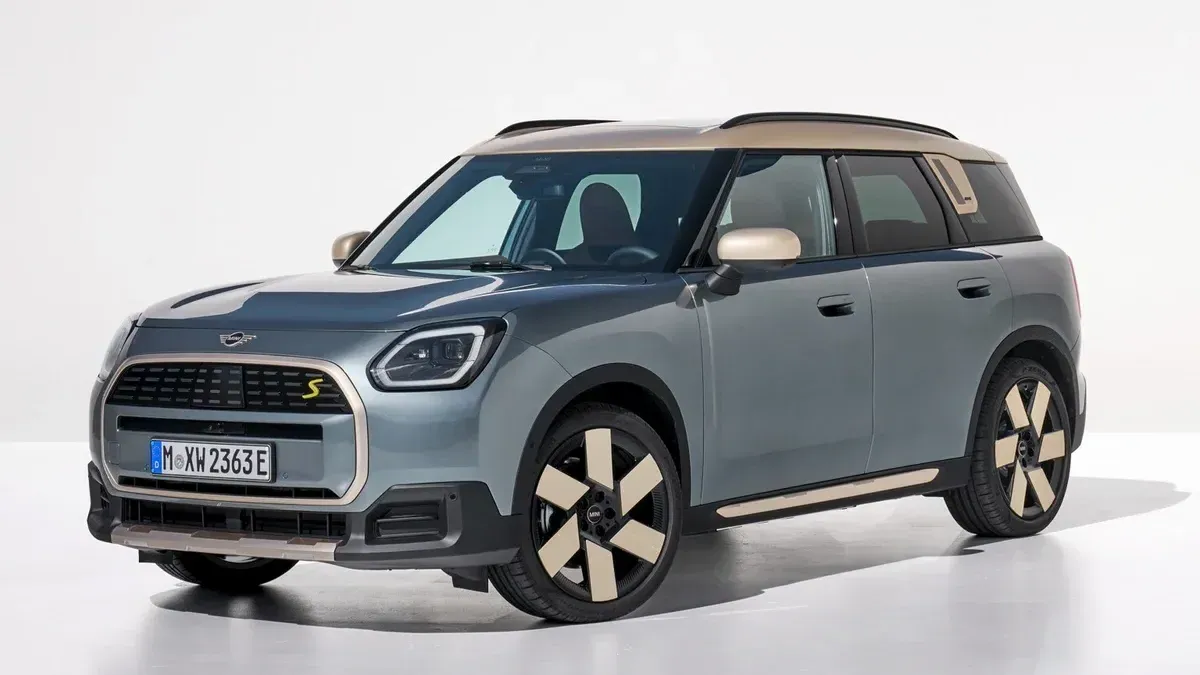
Image credit: Mini Australia
If you have been holding off on a small premium SUV because the petrol options felt thirsty and the electric ones came up short on range, the MY26 Countryman quietly fixes both gripes. Mini Australia has rolled the same technical update Munich announced for Europe in March into local showrooms, which means a 48-volt mild hybrid bolted onto the Countryman C and S ALL4, plus a meaningful range bump for the electric pair. The base Countryman C is now $54,490 before on-roads, and the electric Countryman E lands at $68,990 with a fresh WLTP figure of 501km.
Prices have crept up by between $500 and $4,000 depending on the grade, which is hardly trivial, but the kit picked up at the same time is more substantial than the usual mid-cycle nudge. For a buyer cross-shopping a BMW iX1, Volvo EX30 or Kia EV3 right now, the Countryman E suddenly looks a lot more competitive on the only spec that matters to most weekend trips, namely how far it actually goes on a charge.
Pricing
Five variants stay in the lineup. The petrol Countryman C and S ALL4 are the mild hybrid pair. The JCW Countryman ALL4 keeps its more aggressive 2.0L turbo without electrification. The Countryman E and SE ALL4 are the two pure electric grades.
| Variant | Powertrain | Price (before on-roads) |
|---|---|---|
| Countryman C | 1.5L 3-cyl turbo + 48V MHEV, FWD | $54,490 |
| Countryman S ALL4 | 2.0L 4-cyl turbo + 48V MHEV, AWD | $60,490 |
| JCW Countryman ALL4 | 2.0L 4-cyl turbo petrol, AWD | $75,490 |
| Countryman E | Single motor RWD electric | $68,990 |
| Countryman SE ALL4 | Dual motor AWD electric | $73,990 |
Petrols Pick Up 48V Mild Hybrid
The headline change for the petrol cars is the move to a 48-volt mild hybrid setup on both the Countryman C and the Countryman S ALL4. It is not a full hybrid and it cannot drive on electrons alone, but it does spin a small belt-driven electric motor that fills in low-rev torque, smooths the start-stop transitions and trims a bit of fuel use under load. The bigger effect on paper is the power and torque bump.
The front-drive Countryman C now produces 125kW and 280Nm, up by 10kW and 50Nm. That trims the 0 to 100km/h sprint to 8.3 seconds, which is 0.7 seconds quicker than before. The all-wheel-drive Countryman S ALL4 climbs to 160kW and 360Nm, with 0 to 100km/h now claimed at 7.1 seconds. The JCW Countryman ALL4 sits above both as the petrol flagship, still a 2.0L turbo without electrification, still pulling 233kW and 400Nm and still your option if you actually want a Mini-fast SUV. All three petrols run a seven-speed dual-clutch.
Electric Countryman Cracks 500km
Image credit: Mini Australia
The electric story is the more interesting one. Mini has fitted a slightly larger 65.2kWh battery, up from 64.6kWh, but the real lift comes from a new silicon carbide inverter that converts and pushes power more efficiently, plus low-friction front wheel bearings. The combined effect is a Countryman E that now claims 501km WLTP from a 150kW/250Nm single rear motor, against 422km on the outgoing car. The dual-motor Countryman SE ALL4 stretches to 467km WLTP, up from 396km, with combined outputs of 230kW and 494Nm.
DC fast charging on both is rated at up to 130kW, with Mini quoting a 10 to 80 percent stop of around 29 to 30 minutes when the column is warm and the battery is in the right window. AC charging tops out at 11kW three-phase. Drag coefficient is 0.26, which helps the freeway range hold up better than the WLTP-vs-real-world tax some EVs cop. There is no battery swap and there is no 800-volt architecture here, so the Countryman E sits behind the Kia EV3 and Renault Megane E-Tech on outright charging speed, but the gap is narrower than it was on the outgoing model.
Specs at a Glance
| Spec | C | S ALL4 | JCW ALL4 | E | SE ALL4 |
|---|---|---|---|---|---|
| Power | 125kW | 160kW | 233kW | 150kW | 230kW |
| Torque | 280Nm | 360Nm | 400Nm | 250Nm | 494Nm |
| 0 to 100km/h | 8.3s | 7.1s | 5.4s | 8.6s | 5.6s |
| Drive | FWD | AWD | AWD | RWD | AWD |
| Battery (net) | - | - | - | 65.2kWh | 65.2kWh |
| WLTP range | - | - | - | 501km | 467km |
| DC charging | - | - | - | 130kW | 130kW |
| Transmission | 7DCT | 7DCT | 7DCT | Single-speed | Single-speed |
Equipment
The cabin layout carries over, which is no bad thing because the round OLED centre screen is still the standout in the segment. Standard kit across the range includes the same 9.4-inch circular display, wireless Apple CarPlay and Android Auto, a head-up display, two-zone climate, heated front seats and the augmented-reality navigation that overlays turn arrows on a live camera feed in the screen. Materials are the recycled-look knitted dash trim that Mini calls Vescin, with no leather offered at any price.
The Favoured trim package on the SE ALL4 brings the panoramic glass roof, premium Harman Kardon audio, 20-inch alloy wheels, the JCW Sport Pro pack and a power tailgate. The JCW Countryman ALL4 adds JCW-specific bumpers, a sports exhaust note (electronically managed inside), red and chequered-flag detailing, and JCW Sports seats. Boot space is 460 litres with the rear seats up across the lineup, expanding to 1,450 litres folded. The electric variants do not lose any boot space to the battery.
Safety
The Countryman holds a five-star ANCAP rating awarded in 2024 under the 2023 to 2025 protocol, and the MY26 update is a hardware spec change that carries the rating over rather than triggering a fresh assessment. Standard active safety equipment across all five variants includes autonomous emergency braking with vulnerable road user detection, adaptive cruise control with stop and go, lane keeping assist, lane change warning, rear cross traffic alert, blind spot monitoring, a 360-degree camera, front and rear parking sensors with self-park assist, intelligent speed limit assist and driver attention monitoring. There are nine airbags in total, including a centre airbag between the front seats.
How It Compares
On the petrol side, the Countryman C at $54,490 lines up closely with the Audi Q3 35 TFSI at a similar price point, although the Q3 is a fresher third-gen body and the Countryman is the better drive. The Volkswagen Tiguan 110TSI is cheaper at around $48,000, and the BMW X1 sDrive18i shares the Countryman's UKL2 platform but lists from about $62,900, so the Mini undercuts its in-house cousin by roughly $8,400 with the same drivetrain underneath.
The electric Countryman E at $68,990 has a tougher fight on its hands. The BMW iX1 eDrive20 is mechanically related and sits around $84,900 before on-roads, so the Mini holds a meaningful $15,000 advantage with similar real-world range. The Volvo EX30 Single Motor Extended Range is much cheaper at around $59,990, but loses the round screen experience and gives up a chunk of practicality. The Kia EV3 GT-Line Long Range gets you 600km of WLTP range from $63,990 and adds 800-volt-adjacent fast charging.
Warranty and Servicing
Mini Australia continues to back the Countryman with a five-year, unlimited-kilometre warranty and an eight-year, 160,000km battery warranty on the electric variants. Condition-based servicing is the default, with capped-price service packages available at point of sale and roadside assistance included for the duration of the warranty.
The CarSorted Angle
On the CarSorted directory, the Countryman has more cross-shop competition than people realise. Our compact premium SUV cluster pulls together the Audi Q3, BMW X1, Volvo XC40 and the Cupra Formentor as the four most common alternatives shoppers run against the Mini, and a few less expected names like the BYD Sealion 7 and Cupra Formentor vs Mini Countryman appear frequently in side-by-side comparison sessions. The MY26 update meaningfully changes those comparison outcomes. The petrol Countryman C jumping to 125kW puts it level with the Q3 35 TFSI on power for the first time since the current generation launched, and the Countryman E's 501km figure now sits within 5 percent of the EX30 Extended Range without giving up the Mini's lower running costs per km.
For a 15,000km a year commuter charging at home overnight on a 9c/kWh off-peak tariff, the Countryman E's 14.6kWh/100km efficiency works out to around $197 a year in electricity to cover all its driving, against the petrol Countryman C burning roughly $2,250 a year at 6.6L/100km and $1.85 per litre. That's $2,000 a year saved on fuel alone. The $14,500 premium for the electric variant pays back inside seven years on running costs, which is well inside the typical five-to-seven year ownership window that most premium SUV buyers actually keep a car for. If you have a novated lease structure that captures the FBT exemption, the maths gets dramatically better because the electric Countryman sits under the LCT fuel-efficient threshold.
Run the full comparison yourself in our comparison directory, or jump straight to the Countryman variant breakdown via our vehicle directory.
What This Means for Buyers
If you were planning to buy a Countryman before this update, there is no reason to wait. The cars in showrooms now from March 2026 production already have the new gear. If you were planning to skip it because the previous Countryman E's 422km range was a deal-breaker on weekend trips, the 501km figure is the difference between needing a charging stop on a Sydney-to-Canberra run and not needing one at all. That is a genuine lifestyle change, not a marketing one.
The petrol C and S ALL4 are now harder to argue against if you are not yet ready to plug in, simply because the same fuel use figure now comes with quicker performance. The JCW Countryman ALL4 at $75,490 is the variant that has not changed mechanically, and it is the only one that asks you to pay full hot-hatch money without picking up the new tech, which makes it the hardest sell of the five. The Countryman SE ALL4 is the sweet spot for buyers who actually want all-wheel drive electrons, with 230kW and 467km of range for $5,000 above the rear-drive E. For most buyers though, the rear-drive Countryman E at $68,990 is the pick of the lineup, and the one I would be putting a deposit on this week if I was in the market.
Compare the Countryman against rivals | Best Electric SUVs Australia 2026 | FBT-Exempt Cars Australia
Disclaimer: Specifications and pricing are sourced from Mini Australia and the BMW Group press release for the MY26 Countryman update (March 2026). Prices are list prices before on-road costs and exclude any prestige paint or option packs. WLTP range, charging speeds and fuel economy figures are manufacturer claims. Real-world numbers will vary depending on driving conditions, ambient temperature and battery state of charge.
Frequently Asked Questions
How much is the 2026 Mini Countryman in Australia?
What is new about the petrol Mini Countryman C and S ALL4?
What is the electric range of the new Mini Countryman E?
Does the Mini Countryman have an ANCAP rating?
How fast can the Mini Countryman SE ALL4 charge?
When does the updated Mini Countryman go on sale in Australia?
New cars, real prices, straight to your inbox
Join the CarSorted mailing list for new-model launches, price drops and drive-away deals, honest reviews, and founding-member pricing on the upcoming CarSorted Pro Report.
- New-model launches
- Price drops & deals
- Honest reviews
No spam, unsubscribe anytime. By subscribing you agree to receive marketing emails.
Disclaimer: All information in this article was believed to be correct at the time of publishing (15 June 2026). Prices are manufacturer recommended retail prices (RRP) and may vary by state, dealer, and options. Specifications, government incentives, and rebates can change without notice. Always verify details with the manufacturer or relevant authority before making a purchase decision. Running cost estimates are based on average Australian driving conditions at 15,000 km/year. CarSorted does not accept payment for recommendations or rankings.
Written by Uzzi, CarSorted Editorial Team · 15 June 2026 · how we research
Comments (0)
Sign in to join the conversation
No comments yet. Be the first!