Key Takeaways
- Techno MHEV $36,990, Techno HEV $42,990, Esprit Alpine HEV $45,990 before on-roads
- First Renault full hybrid sold in Australia, 116kW combined, claimed 4.7 L/100km
- Up to 1,000km claimed combined range from the 48-litre tank
- 563-litre boot, sliding rear bench, 4,412mm long
- Five-star Euro NCAP carried over from Europe, ANCAP not yet rated
- July 2026 showroom date, orders open before end of June
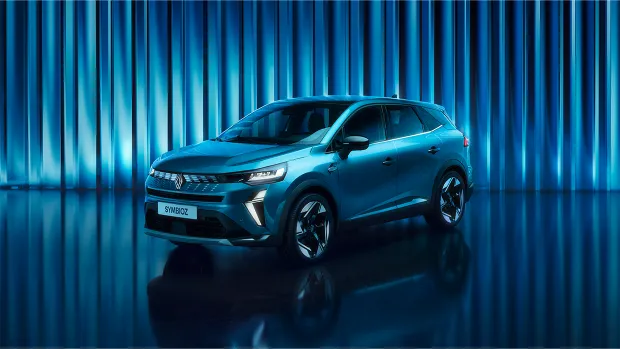
Image credit: Renault Australia
Renault Australia has finally bolted prices onto its small SUV play. The 2026 Symbioz opens at $36,990 before on-roads for the Techno mild hybrid and runs to $45,990 for the Esprit Alpine full hybrid, with the order book opening before the end of June and first cars landing in dealers in July. For buyers shortlisting a Toyota Corolla Cross Hybrid, a Hyundai Kona Hybrid or a Mazda CX-30, this is the first time Renault has had a credible small SUV hybrid contender to put on the same drive list.
It is also the first full hybrid Renault has ever sold here. Renault Australia has spent the last few years selling Captur and Arkana as turbo petrols and Megane E-Tech as an EV, with no series-parallel hybrid in the middle. The Symbioz patches that hole, and at a list price about $4,000 below an entry Toyota Corolla Cross Hybrid GX it does so without giving up on the European interior trim Renault buyers expect.
Pricing
| Variant | Powertrain | Price (before on-roads) |
|---|---|---|
| Techno | 1.3L turbo mild hybrid | $36,990 |
| Techno | 1.8L full hybrid E-Tech | $42,990 |
| Esprit Alpine | 1.8L full hybrid E-Tech | $45,990 |
Final driveaway numbers will land closer to showroom date and will vary state to state with stamp duty and rego. As a rough guide, expect the Techno MHEV to land around $40,000 driveaway in NSW once on-road costs are added.
Two Powertrains, One Body
The Symbioz is sold as a single body style with two very different drivetrains under the bonnet. The Techno MHEV uses a 1.3-litre turbo petrol four with 12-volt mild hybrid assistance, a 7-speed dual-clutch automatic and a 6.4 L/100km claim. The two HEV grades step up to a 1.8-litre four with a series-parallel electric drive system, a single-speed planetary gearset, a 1.4kWh lithium-ion battery and the claim that matters: 4.7 L/100km combined.
| Spec | Techno MHEV | Techno / Esprit Alpine HEV |
|---|---|---|
| Engine | 1.3L turbo 4-cyl, 12V MHEV | 1.8L 4-cyl + e-motor + HSG |
| Combined output | 104kW / 245Nm | 116kW / 265Nm |
| Battery | Small 12V pack | 1.4kWh Li-ion |
| Gearbox | 7-speed DCT | Multi-mode auto (clutchless) |
| Driven wheels | FWD | FWD |
| Combined fuel use (claim) | 6.4 L/100km | 4.7 L/100km |
| Fuel tank | 50 L | 48 L |
| Claimed range (combined) | ~780 km | Up to 1,000 km |
| Fuel grade | 95 RON premium unleaded | |
Renault claims the full hybrid runs as a pure electric vehicle for up to 80 per cent of city kilometres, with the engine off at low speeds and during stop-start traffic. There is no plug. It is a closed-loop self-charging hybrid that fills its tiny battery from regen and engine load, much like a Toyota Corolla Cross or a Honda HR-V e:HEV.
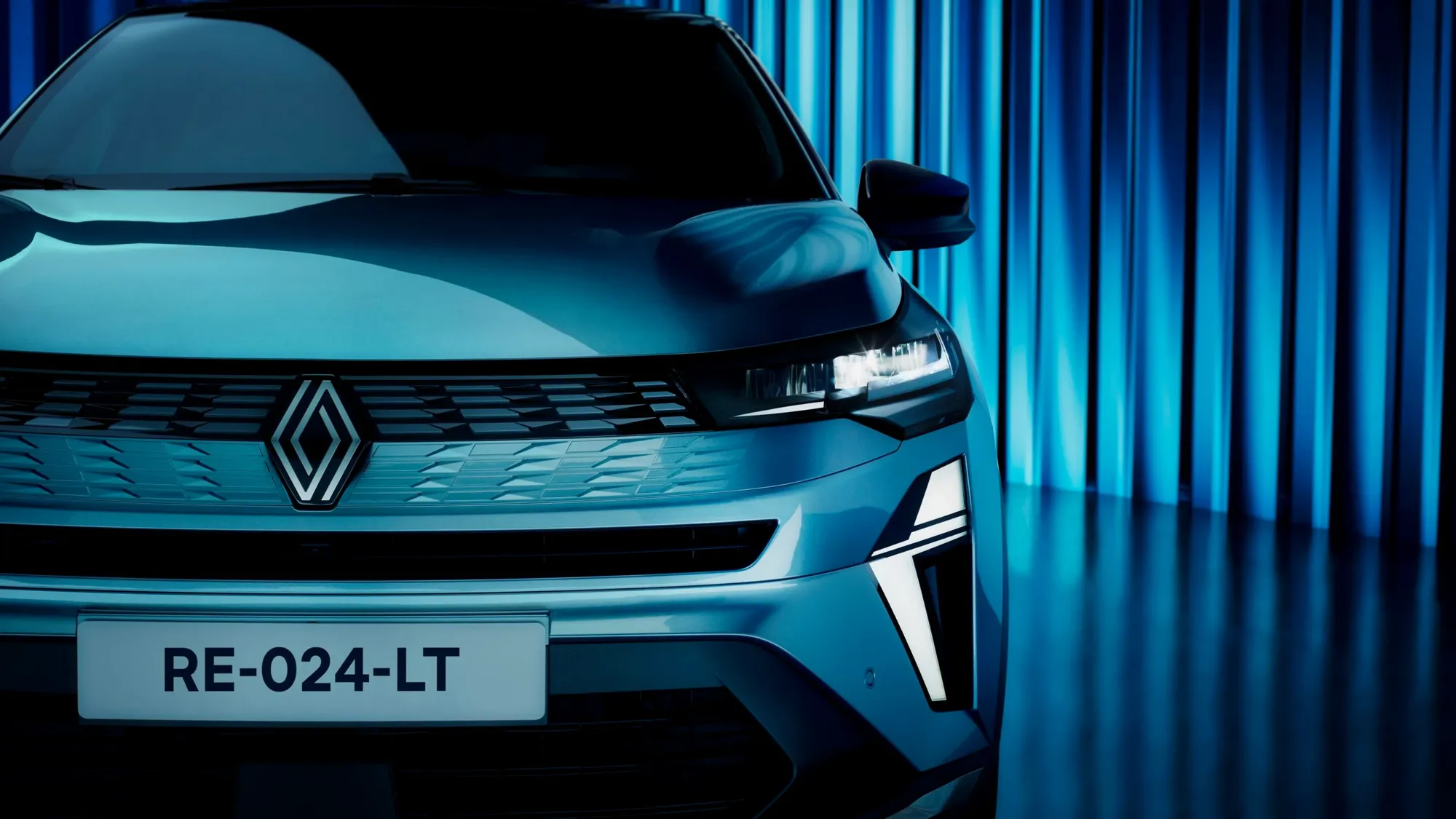
Image credit: Renault Australia
Size and Packaging
The Symbioz is one of the biggest cars in the small SUV class. At 4,412mm long, 1,797mm wide and 1,567mm tall on a 2,639mm wheelbase, it is only 13mm shorter than a Nissan Qashqai and noticeably bigger than a Toyota Yaris Cross. Boot space is the headline number, with 563 litres behind the rear seats on the standard configuration, well clear of a Captur on 484 litres and a Hyundai Kona on 407 litres.
The rear bench slides 160mm fore and aft. Slid all the way forward, boot space pushes well past 600 litres at the cost of rear knee room. Slid back, you free up actual adult legroom in a class where that is normally a stretch. Folded flat, the load bay extends to about 1,580 litres. There is a 27-litre underfloor cubby for cables and the parcel shelf.
What You Get for the Money
Techno is the volume grade and is loaded for a small SUV at this price. Standard kit includes 19-inch alloys, full LED matrix headlights, automatic high beam, a 10.25-inch digital driver cluster and a 10.4-inch portrait centre touchscreen running Renault's OpenR Link system with Google built-in. Wireless Apple CarPlay and Android Auto are included along with wireless phone charging, six speakers, dual-zone climate control, rain-sensing wipers, keyless entry with push-button start, fabric and synthetic leather trim and heated front seats with electric lumbar adjustment.
Step up to the Esprit Alpine and you get Alpine-branded sports seats in recycled fabric and Alcantara-look material, blue stitching throughout, the Solarbay electrochromic glass roof that switches between clear and opaque in four segments at the press of a button, an Arkamys 9-speaker sound system, a hands-free power tailgate, 19-inch Alpine alloys, an Alpine steering wheel with paddles and a satin chrome interior trim package.
Safety
The Symbioz is not yet rated by ANCAP. The European Symbioz earned a five-star result from Euro NCAP in 2024 under the 2023 to 2025 protocol, with strong scores in adult and child occupant protection, and that result is expected to carry over for Renault Australia at local launch once an ANCAP assessment lands. We will update once that hits.
Standard active safety includes AEB with car, pedestrian, cyclist and motorcycle detection, lane keep assist, lane departure warning, blind-spot monitoring, rear cross-traffic alert, emergency lane keep, driver attention monitoring, intelligent speed assist (with a one-touch override), adaptive cruise control with stop and go on the HEV and traffic sign recognition. The Symbioz also gets seven airbags including a centre airbag between the front occupants, front and rear parking sensors, a reversing camera and a 360-degree camera on Esprit Alpine.
How It Compares
Below is the small SUV hybrid landscape the Symbioz is dropping into. All prices are before on-road costs for the entry hybrid grade.
| Model | Entry hybrid price | Combined kW | Claimed L/100km |
|---|---|---|---|
| Renault Symbioz Techno HEV | $42,990 | 116 | 4.7 |
| Toyota Corolla Cross GX Hybrid | $37,440 | 144 | 4.3 |
| Hyundai Kona Hybrid Standard Range | $36,500 | 104 | 3.9 |
| Honda HR-V e:HEV X | $39,900 d/a | 96 | 4.3 |
| Nissan Qashqai e-Power | $47,890 | 140 | 5.2 |
On price alone the Symbioz HEV is $5,500 above a Corolla Cross GX Hybrid and $6,500 above a Hyundai Kona Hybrid. But the Renault is the biggest car of the bunch by interior volume and the only one that offers a sliding rear bench, so for buyers who use the back seat regularly the value sum looks different on the test drive than it does on the price list. The deeper boot also closes the practicality gap to a mid-size SUV in a way the Corolla Cross does not.
Use our side-by-side compare tool to line the Symbioz HEV up next to a Corolla Cross GR Sport or a Kona Premium Hybrid before you walk into a dealer. The hybrid figures, warranty, boot capacity and ground clearance numbers sit alongside each other so you can see the trade rather than rely on a salesperson's memory.
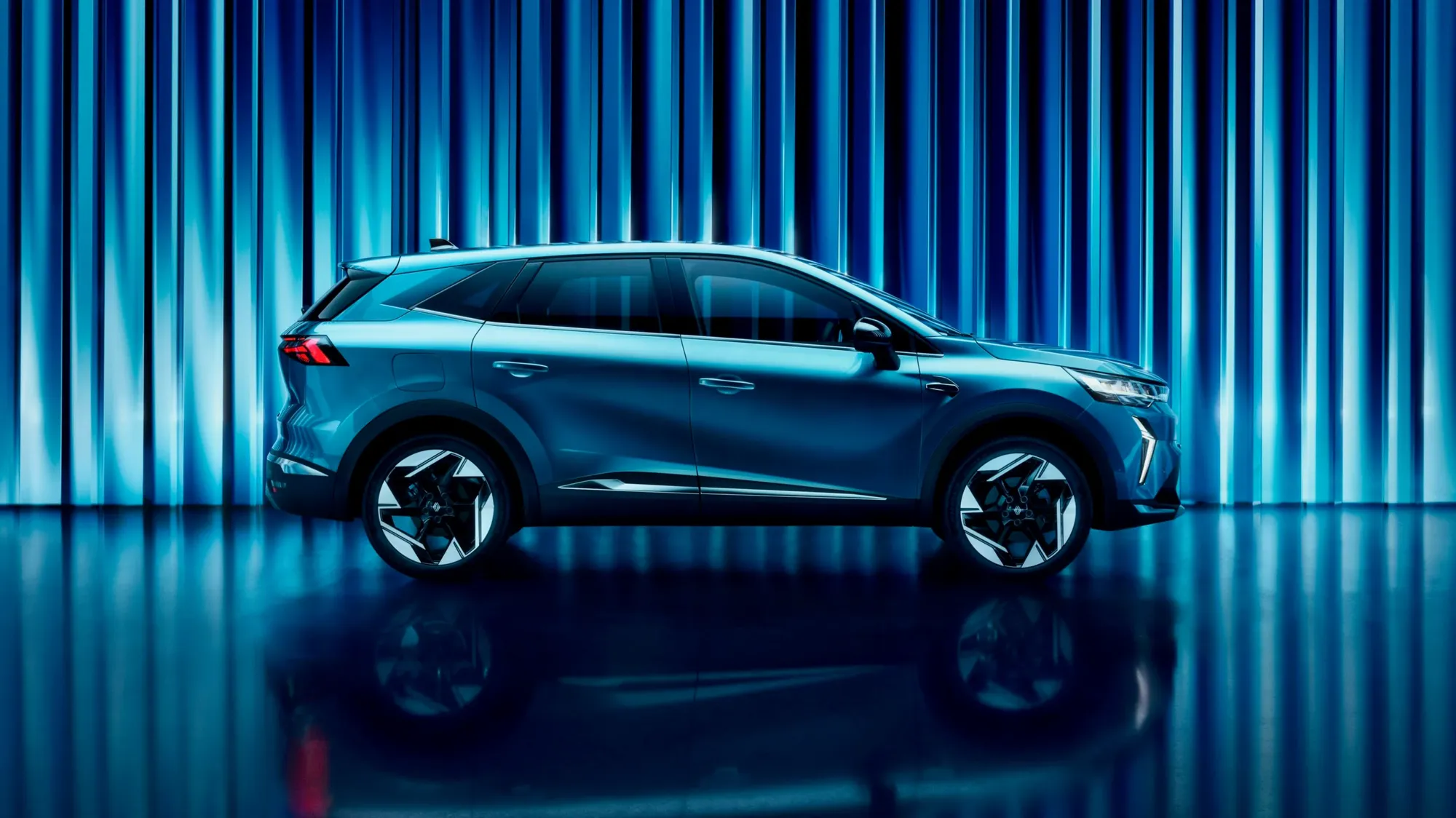
Image credit: Renault Australia
Warranty, Servicing and Battery Cover
Renault Australia covers the Symbioz with a 5-year unlimited-km vehicle warranty and capped-price servicing for the first five visits. The high-voltage battery on the HEV gets 8 years or 160,000km cover, in line with what Toyota offers for its hybrid batteries. Service intervals are 12 months or 15,000km, whichever lands first. Pricing for the capped services has not been published as we go to press.
The CarSorted Angle
Here is where the Symbioz actually earns its $42,990 sticker. On CarSorted, the comparable Toyota Corolla Cross GR Sport AWD Hybrid is listed at $50,990 before on-roads with a 144kW combined output and a 425-litre boot. The Symbioz Esprit Alpine slides under that by $5,000, gives up 28kW, but offers 138 more litres of boot space and the sliding rear bench. For a buyer who runs a long-weekend lifestyle but still wants a single hybrid car under five metres long, that swap actually reads.
Run the fuel maths and the gap to its mild hybrid sibling narrows fast. The Symbioz MHEV claims 6.4 L/100km, the HEV claims 4.7. At a Sydney pump price of about $2.05 a litre for 95 RON and a typical 14,000km a year, that 1.7 L/100km gap is about $487 a year. Over a 5-year ownership stretch the HEV claws back $2,435 of its $6,000 price premium in fuel alone, before any boost from longer service intervals or higher resale, which Toyota hybrids have historically enjoyed. If you live somewhere with stop-start traffic and you do the inner-city kilometres, the HEV is the smarter buy.
Cross-shopping a Symbioz against the rest of the small SUV hybrid pack? Start with our CarSorted directory and filter for small SUV plus hybrid powertrain. The directory lists the in-stock comparables with the same fuel and tow numbers in one place. The Symbioz won't be listed until showroom day in July, so for now use the Captur entry as a sense-check on Renault Australia's warranty and finance offer.
What This Means for Buyers
If you have been waiting on a Corolla Cross GR Sport because the regular GX feels too plain inside, the Esprit Alpine at $45,990 is the cross-shop. You give up 28kW of system power, but you pick up the Solarbay roof, the Arkamys speakers and Alpine sports seats Toyota does not offer at all. You also get a bigger boot, which is the bit that matters once school pick-ups and pram-and-scooter routines start.
If you are at the entry end of the segment and your budget is $37,000 plus on-roads, the Symbioz Techno MHEV is fighting a tougher fight. The Kona Hybrid Standard Range at $36,500 returns 3.9 L/100km against the Renault's 6.4. Over five years and 14,000km a year that single number adds up to about $3,580 in extra fuel. The Renault gives you more interior space and the OpenR Link tech in return, but the buyer who picks the Techno MHEV is buying it for the badge and the cabin, not the fuel saving.
For fleet, novated lease and FBT-aware buyers, the Symbioz HEV qualifies as fuel-efficient at the ATO's 4.7 L/100km claim, comfortably inside the 7.0 L/100km threshold. It does not qualify for the FBT exemption, which only applies to BEVs and PHEVs, so do not let a leasing rep tell you otherwise. If you want the FBT exemption with a Renault badge, the Megane E-Tech EV is still the answer.
Orders open before the end of June 2026 at participating Renault dealers, with first customer cars in July. If you intend to claim under the EOFY tax break and need the asset on the books by 30 June, you will not make it with a Symbioz, talk to your accountant about pre-paying a deposit instead.
Cross-shopping right now? Drop the Symbioz against a Corolla Cross or Kona on our side-by-side comparison page, then check out the small SUV hybrid buying guide for the wider context.
Disclaimer: Pricing is before on-road costs and is current as at the date of publication. Specifications are sourced from Renault Australia's press release dated 1 June 2026. Claimed fuel consumption and range figures are manufacturer claims under WLTP test conditions and real-world use will vary with traffic, climate control settings and driving style. ANCAP rating is pending at time of publication.
Frequently Asked Questions
How much is the 2026 Renault Symbioz in Australia?
When does the Renault Symbioz arrive in Australian showrooms?
What is the Symbioz's electric range?
How far can the Symbioz drive on a tank?
Does the Symbioz have an ANCAP rating?
What warranty does the Renault Symbioz come with?
New cars, real prices, straight to your inbox
Join the CarSorted mailing list for new-model launches, price drops and drive-away deals, honest reviews, and founding-member pricing on the upcoming CarSorted Pro Report.
- New-model launches
- Price drops & deals
- Honest reviews
No spam, unsubscribe anytime. By subscribing you agree to receive marketing emails.
Disclaimer: All information in this article was believed to be correct at the time of publishing (19 June 2026). Prices are manufacturer recommended retail prices (RRP) and may vary by state, dealer, and options. Specifications, government incentives, and rebates can change without notice. Always verify details with the manufacturer or relevant authority before making a purchase decision. Running cost estimates are based on average Australian driving conditions at 15,000 km/year. CarSorted does not accept payment for recommendations or rankings.
Written by Uzzi, CarSorted Editorial Team · 19 June 2026 · how we research
Comments (0)
Sign in to join the conversation
No comments yet. Be the first!