Key Takeaways
- Tesla started pushing FSD Supervised V14.3.3 (build 2026.16.6) to Australian cars on Friday 19 June 2026
- Subscription only at AUD $149 per month, the lifetime buy option closed on 31 March 2026
- Eligible cars: Hardware 4 Model 3 and Model Y only, HW3 build still to come
- New for V14: Speed Profiles, Arrival Options, Autopilot naming update, Brake Confirm default off
- Tesla claims about 20 per cent faster reaction time from a re-trained neural network encoder
- Australia gets Chill, Standard and Hurry; Sloth and Mad Max are not switched on
- Tesla Model Y RWD on CarSorted from $65,900 before on-roads
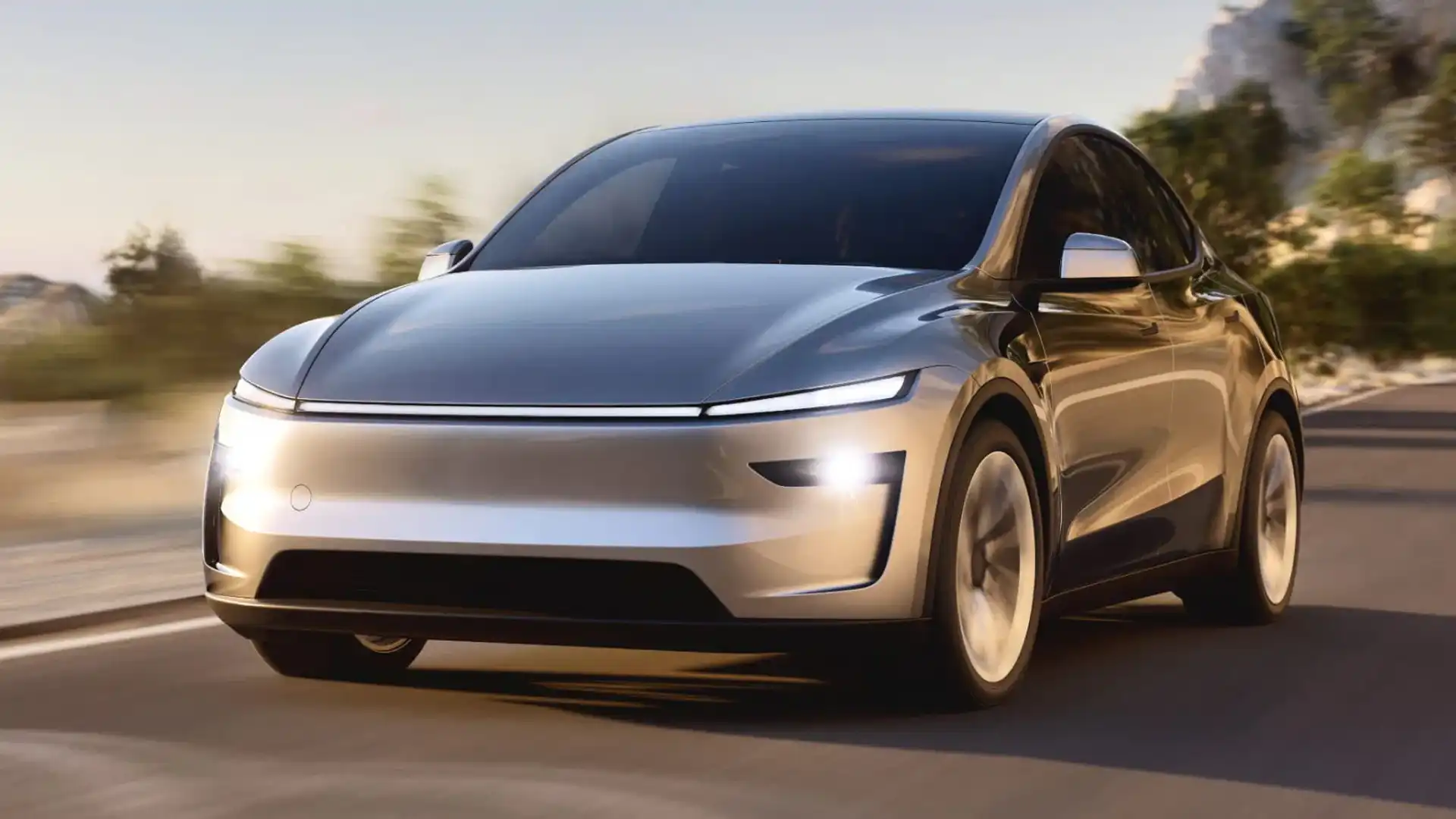
Image credit: Tesla Australia
If you have been waiting to decide whether to subscribe to Tesla's Full Self-Driving Supervised system in Australia, this week is the week the maths changed. From Friday 19 June 2026, Tesla started pushing FSD V14.3.3 to local Hardware 4 Model Y and Model 3 owners, bundled inside the 2026.16.6 software build. This is the first V14 release to land here, V13 has been the local stack since September 2025, and it arrives now that the lifetime buy-out option is gone and the only way in is a monthly $149 charge. For anyone cross-shopping a Model Y against an Ioniq 5, EV6 or Mazda 6e this winter, the upgrade quietly resets what your money is buying.
What V14.3.3 Actually Does
The headline change sits under the bonnet of the software, not in any new screen. Tesla has retrained the perception encoder that turns camera frames into the world model the car drives against, and run another pass of reinforcement learning over the planning side. The brand quotes roughly 20 per cent faster neural-network reaction time on the back of that, with cleaner behaviour on complex intersections, roadworks, emergency vehicles and small animals. Owners in patchy weather should see fewer phantom braking events and steadier lane-keeping than V13 was managing in heavy rain.
Nothing in that list is a marketing flourish you can ignore on Australian roads. We do not have the kind of consistent lane markings or signage the US Interstate network gives Tesla as training data. Roundabouts, school zones, vehicle-activated speed signs and shared zones in the inner suburbs have all been failure modes for the local FSD beta to date. A 20 per cent reaction-time gain in city traffic, if it survives a few weeks of real-world owner footage, is the kind of upgrade you actually notice as a passenger.
Speed Profiles and Arrival Options Explained
Two new menus open up inside the Self-Driving visualisation on the centre screen. The first is Speed Profiles. Australian cars get three of the five Tesla offers globally: Chill, Standard and Hurry. Pick Chill and the car favours gentler accelerations and a tighter buffer to the speed limit. Pick Hurry and it leans on a slightly more assertive cruise behaviour and lane-change cadence. The two more aggressive presets in the US, Sloth and Mad Max, have not been enabled locally and would not pass our keep-left rules without changes anyway.
The second menu is Arrival Options. When you set a destination, FSD now asks how you want the drive to end: Carpark, Indoor Carpark, Street, Driveway or Pull Over. The car remembers your preference per destination, so the daily school run can default to a kerbside pull-over while the supermarket trip defaults to a carpark space. It is a small thing on paper. In practice it is the first time FSD has tried to handle the very last 100 metres of an Australian trip in a way that matches how people actually arrive.
Two smaller changes round out the build. The Autopilot menu has been renamed and re-organised so Basic Autopilot, Enhanced Autopilot features and FSD Supervised are easier to find, and the Brake Confirm step that used to gate engaging Self-Driving is now defaulted off. That last one is a quality-of-life tweak more than a safety change. The driver still has to be attentive, the cabin camera still monitors gaze.
Pricing
| Item | Australia |
|---|---|
| FSD Supervised subscription | $149 / month |
| FSD lifetime (outright purchase) | closed 31 March 2026 |
| 12-month cost (if you keep it on) | $1,788 |
| 5-year cost (if you keep it on) | $8,940 |
| Hardware fee to access V14 | none if HW4 fitted |
That $149 figure is the same number Tesla locked in when it pulled the lifetime option at the end of March. Subscription is month to month, so there is no minimum term. Subscribe, drive a big road trip, cancel, and you can do it again next holiday. The trade-off is that the running cost is now part of the conversation about whether a Tesla is the right car for you.
Which Australian Teslas Get V14.3.3
| Car | Hardware | V14.3.3 eligible |
|---|---|---|
| Model 3 (Highland, Sept 2023 onwards) | HW4 | Yes |
| Model Y (late January 2024 onwards) | HW4 | Yes |
| Model 3 (pre-Highland) | HW3 | No (HW3 build TBC) |
| Model Y (pre-January 2024) | HW3 | No (HW3 build TBC) |
| Model Y L (six-seat, on sale now) | HW4 | Yes |
If you bought a Model 3 or Model Y before those changeover months and you paid for FSD already, the upgrade path is software only on HW3 and Tesla is still characterising what that will look like. Anyone buying a Model Y or Model 3 in showrooms today is on HW4 by default.
Equipment Changes Inside the Cabin
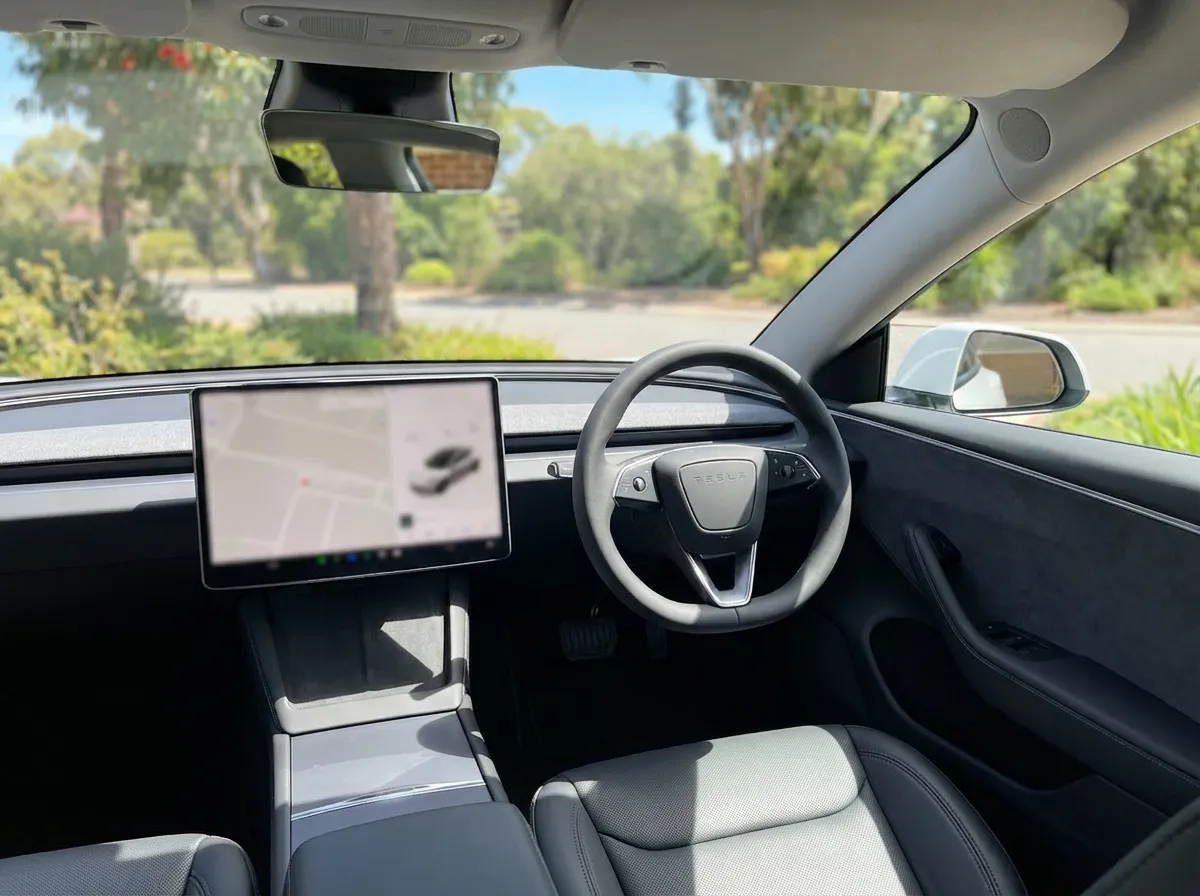
Image credit: Tesla Australia
Nothing physical changes when V14.3.3 lands. The release is an over-the-air push, so the screen layout, button shortcuts and instrument cluster art update in the driveway. The Self-Driving visualisation now shows the route, the lane the car has chosen, the lane-change reasoning when one is coming up, the Speed Profile in use and the chosen Arrival Option. You can change any of them on the fly from that view, rather than diving into Settings, which is the small but real reason this build feels more polished than the V13 stack it replaces.
Safety and Legal Status
FSD Supervised is a Level 2 driver-assistance system. The human driver remains responsible at all times, hands on the wheel, eyes on the road, with cabin camera attention monitoring active. It is not autonomous driving, it is not certified under any state automated-vehicle program, and Tesla's own labelling now puts "Supervised" on the same screen as the engagement button. None of that changes with V14.3.3.
ANCAP does not publish a star rating for software features, but its Safety Assist sub-score and the new ADAS Comparison program are increasingly the place where this kind of system gets benchmarked. The Model Y already holds a 5-star ANCAP rating on the underlying car, and that does not change with the software push.
How It Compares to Hyundai, Kia and BYD
The honest version: nothing else sold in Australia today does what FSD Supervised does end to end. Hyundai's Highway Driving Assist 2, fitted to the Ioniq 5, Ioniq 6 and Ioniq 9, will hold a lane, follow the car in front, change lanes when you indicate, and brake for traffic, but it only operates on mapped highways. The same system in the Kia EV6 tops out at the same envelope. BYD's God's Eye platform on the Sealion 7 is closer in ambition but the local rollout has been cautious and city driving has not been switched on for retail cars. Polestar Pilot Assist 2 in the Polestar 3 is solid adaptive cruise plus lane-centring, no more.
That leaves Tesla as the only mass-market brand here offering supervised end-to-end driving on suburban streets, including unprotected right turns, roundabouts and traffic-light intersections. V14.3.3 widens that gap rather than closing it. The fact that you have to rent it monthly rather than buy it is what stops it from being a clean win.
The CarSorted Angle
Treat the subscription as a running cost and the picture changes. On CarSorted, the Tesla Model Y RWD sits at $65,900 before on-roads. The Hyundai Ioniq 5 RWD after Hyundai's EOFY 2026 price cut lands at $71,990 driveaway, and the Kia EV6 Air at $72,660 before on-roads. The Model Y looks the cheapest car in the trio on the sticker. Add FSD at $149 per month for the five years most novated leases run and you are stacking another $8,940 on top. Suddenly the cost gap to a Hyundai or Kia closes to a few hundred dollars, and you have to ask whether the FSD experience is worth that on your actual commute.
If your week is mostly highway, the answer is probably no. Highway Driving Assist 2 on the Ioniq 5 or EV6 does 80 per cent of what FSD does between Sydney and Newcastle for zero extra dollars per month, and a Mazda CX-6e GT at $59,106 throws a cheaper sticker on top of that. If your week is mostly stop-start city driving in Melbourne, Brisbane or Sydney's inner ring, the supervised end-to-end behaviour is the bit no other car does, and $149 a month is roughly what you would spend on a single Uber a week to skip the worst part of an after-work commute. The honest answer depends on your week, not Tesla's marketing.
Run the comparison yourself: Hyundai Ioniq 5 vs Tesla Model Y on CarSorted has both cars side by side, with the FSD subscription cost lined up against the Hyundai's included HDA2.
Warranty and Servicing
Tesla covers the Model Y and Model 3 with a 4-year, 80,000km new vehicle warranty and an 8-year, 192,000km battery and drive unit warranty on the standard range cars (160,000km on long range and performance variants). FSD as a feature is not separately warranted beyond the standard car cover. If you stop paying the subscription the feature switches off, the car still drives normally on Autopilot.
What This Means for Buyers
Three groups should care. First, anyone with an existing HW4 Tesla and a paid-out FSD bundle from before April. You are getting a real upgrade for nothing. Plug the car in at home, wait for build 2026.16.6 to land in your update queue, and the new Speed Profiles and Arrival Options will be in the next drive.
Second, anyone about to buy a Model Y or Model 3. Treat the $149 monthly subscription as a separate decision from the car. Cross-shop the Model Y at $65,900 against the Ioniq 5, EV6 and Mazda CX-6e GT first. Decide on the car. Then add FSD as a 30-day trial when you take delivery, see whether the upgrade earns its place on your week, and cancel if it does not. That is what monthly billing actually exists for.
Third, anyone driving a pre-Highland Model 3 or pre-2024 Model Y on HW3. You do not have V14.3.3 today and Tesla has not committed to a date for a lighter HW3 build. If you bought FSD outright back in 2021 or 2022 thinking it would scale with the software, the gap to the HW4 fleet just widened again. Trade-in maths on the CarSorted directory is the next sensible step.
Best Electric Cars 2026 | Ioniq 5 vs Model Y | EV Charging Guide
Disclaimer: Software version, build number, subscription pricing and hardware requirements sourced from Tesla Australia. Vehicle pricing is before on-road costs unless stated as driveaway. FSD Supervised is a Level 2 driver assistance system, the driver is responsible for the vehicle at all times, and use is subject to Tesla's end-user terms. Australian road rules apply.
Compare these picks side by side
Stack 4 of them on 200+ specs, price, safety and running cost in one view.
Compare all 4 nowFrequently Asked Questions
When did Tesla FSD V14.3.3 start rolling out in Australia?
How much is FSD Supervised in Australia?
Which Tesla models in Australia can run V14.3.3?
What is actually new in V14.3.3 over V13?
Did Australia get the Mad Max Speed Profile?
Is FSD Supervised legal to use on Australian roads?
New cars, real prices, straight to your inbox
Join the CarSorted mailing list for new-model launches, price drops and drive-away deals, honest reviews, and founding-member pricing on the upcoming CarSorted Pro Report.
- New-model launches
- Price drops & deals
- Honest reviews
No spam, unsubscribe anytime. By subscribing you agree to receive marketing emails.
Disclaimer: All information in this article was believed to be correct at the time of publishing (23 June 2026). Prices are manufacturer recommended retail prices (RRP) and may vary by state, dealer, and options. Specifications, government incentives, and rebates can change without notice. Always verify details with the manufacturer or relevant authority before making a purchase decision. Running cost estimates are based on average Australian driving conditions at 15,000 km/year. CarSorted does not accept payment for recommendations or rankings.
Written by Uzzi, CarSorted Editorial Team · 23 June 2026 · how we research
Comments (0)
Sign in to join the conversation
No comments yet. Be the first!