Key Takeaways
- Chery Q (sold as QQ3 in China) confirmed for Australia in 2027
- Compact electric hatch sized between the BYD Atto 1 and BYD Dolphin
- Rear-wheel drive, 90 kW / 115 Nm single motor, 42 kWh battery
- Estimated 350 km WLTP range (420 km CLTC in China)
- 374-litre boot plus a 70-litre frunk, bigger than a Toyota Corolla hatch
- Top trim available with a 15.6-inch screen, heated and ventilated front seats, power tailgate, 360-degree camera
- Pricing TBC but expected high-$20,000s, sitting between Atto 1 Essential and Atto 1 Premium
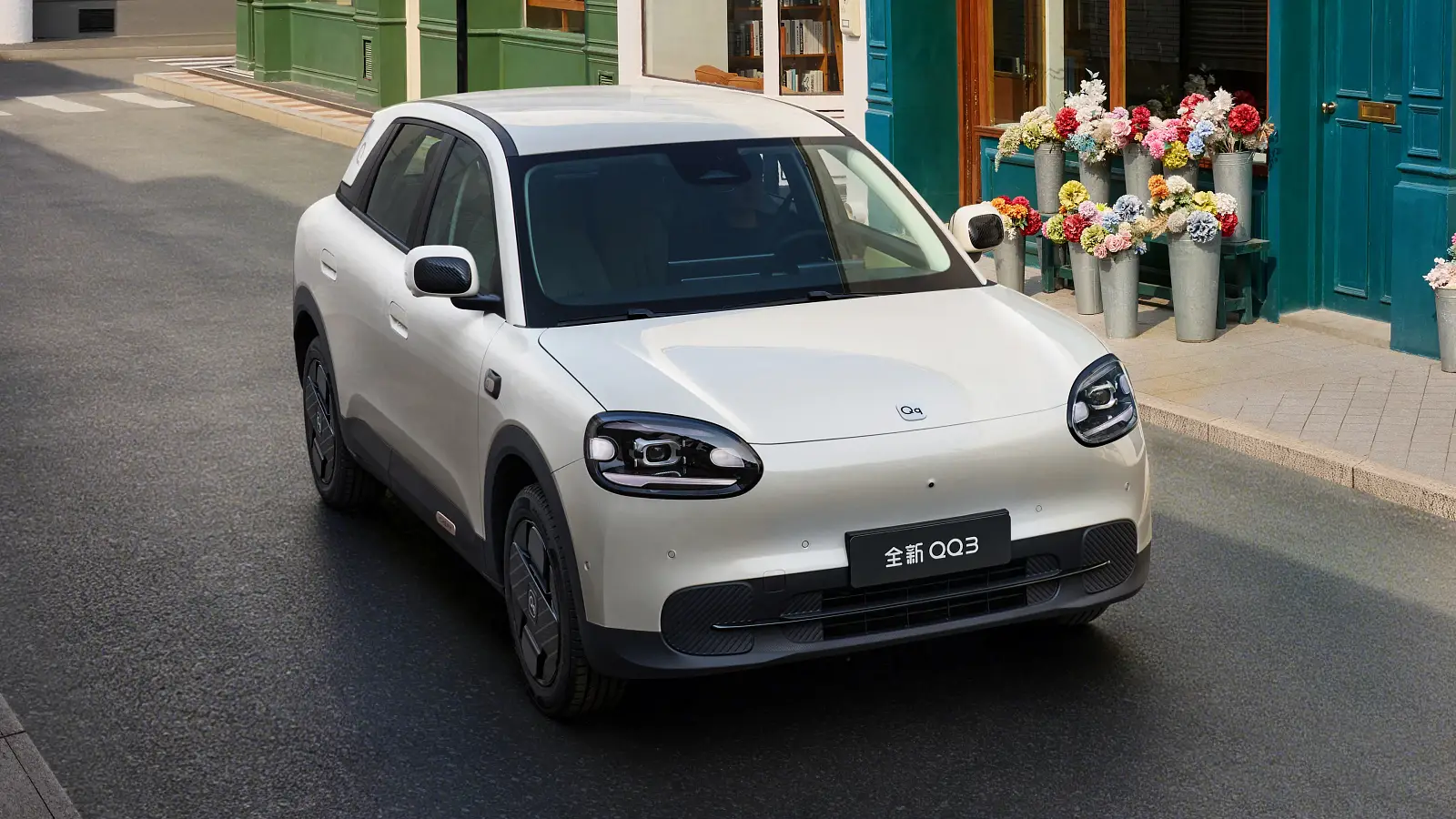
Image credit: Chery
Chery Australia has confirmed its second electric model for local showrooms. The Chery Q, sold in China as the QQ3, will land here in 2027 as a compact hatch-styled small SUV, slotting in below the brand's existing E5 mid-size electric SUV. It will be Chery's first all-new EV in Australia in roughly three years.
On dimensions and equipment the Q is closer to a BYD Dolphin than the smaller Atto 1, but Chery seems to be positioning it directly against the cheap-EV pack rather than going hunting for the absolute bottom of the segment. Chery has been pretty open that it does not intend to race to the floor on price the way the Atto 1 has, so don't expect a sub-$25,000 RRP when local pricing finally drops.
How it stacks up against the cheap-EV pack
The Chery Q lands in the most competitive part of the Australian EV market: the sub-$35k bracket where the BYD Atto 1, MG4 EV Urban and BYD Dolphin already fight for buyer attention. Here is how the Q compares on the specs we know.
| Model | Drive | Battery | Power | Range | From RRP |
|---|---|---|---|---|---|
| Chery Q (2027) | RWD | 42 kWh | 90 kW | ~350 km | TBC |
| BYD Atto 1 Essential | FWD | 30 kWh | 55 kW | 220 km | $23,990 |
| BYD Atto 1 Premium | FWD | 43 kWh | 75 kW | 310 km | $27,990 |
| MG4 EV Urban | FWD | 43 kWh | 125 kW | 316 km | $31,990 |
| BYD Dolphin Essential | FWD | 45 kWh | 70 kW | 340 km | $29,990 |
On paper the Q is the biggest battery in the bracket, the only one with rear-wheel drive (the upcoming Geely EX2 will match that layout) and the only one with a properly usable boot plus a frunk. The price is the wildcard. China pricing for the QQ3 starts at 78,900 yuan (about AU$16,000), almost identical to the BYD Seagull (the Atto 1's Chinese twin), but the gap between Chinese and Australian RRP for both Chery and BYD has historically run between $7,000 and $12,000 once compliance, freight, dealer margin and a full ANCAP-spec safety package are added.
RWD layout and the powertrain story
The Q runs a single rear-mounted permanent-magnet motor producing 90 kW and 115 Nm. That is more than the Atto 1 Essential (55 kW) and the Atto 1 Premium (75 kW), about on par with the BYD Dolphin (70 kW) and below the MG4 EV Urban (125 kW). The numbers suggest 0-100 km/h in the high 9-second range, which is the standard for cheap EVs unless you go up to a performance-trimmed MG4.
The interesting bit is the layout. RWD on a sub-$35,000 EV is unusual. The bigger BYD Sealion 7 and the Tesla Model Y are the closest reference points. Pushing power to the rear wheels lets the front axle focus on steering and gives slightly better dynamics on twisty roads, at the cost of marginally worse traction in wet conditions. On a small urban hatch it is a nice-to-have rather than a must-have, but it does help differentiate the Q from the FWD-only Atto 1, MG4 Urban and Dolphin.
Battery, range and charging
Australian-spec is expected to use the 42 kWh battery pack. Chinese WLTP-equivalent figures are not officially published, but the 420 km CLTC quote on Chinese 41.3 kWh versions converts to roughly 350 km on the WLTP cycle Australians actually use as a benchmark. That puts the Q ahead of every variant on the table above on real-world range.
DC fast-charging speeds match the Atto 1 / Dolphin band rather than the Tesla / Hyundai Ioniq pack. Chinese spec sheets quote a 30 to 80 percent recharge in 16.5 minutes on a sufficiently powerful DC charger. AC charging tops out at 6.6 kW single-phase, so a full 0 to 100 percent home charge on a 7 kW wall box takes around 7 hours. The car also supports vehicle-to-load output at 6.6 kW for running camp gear or power tools at the back of the car.
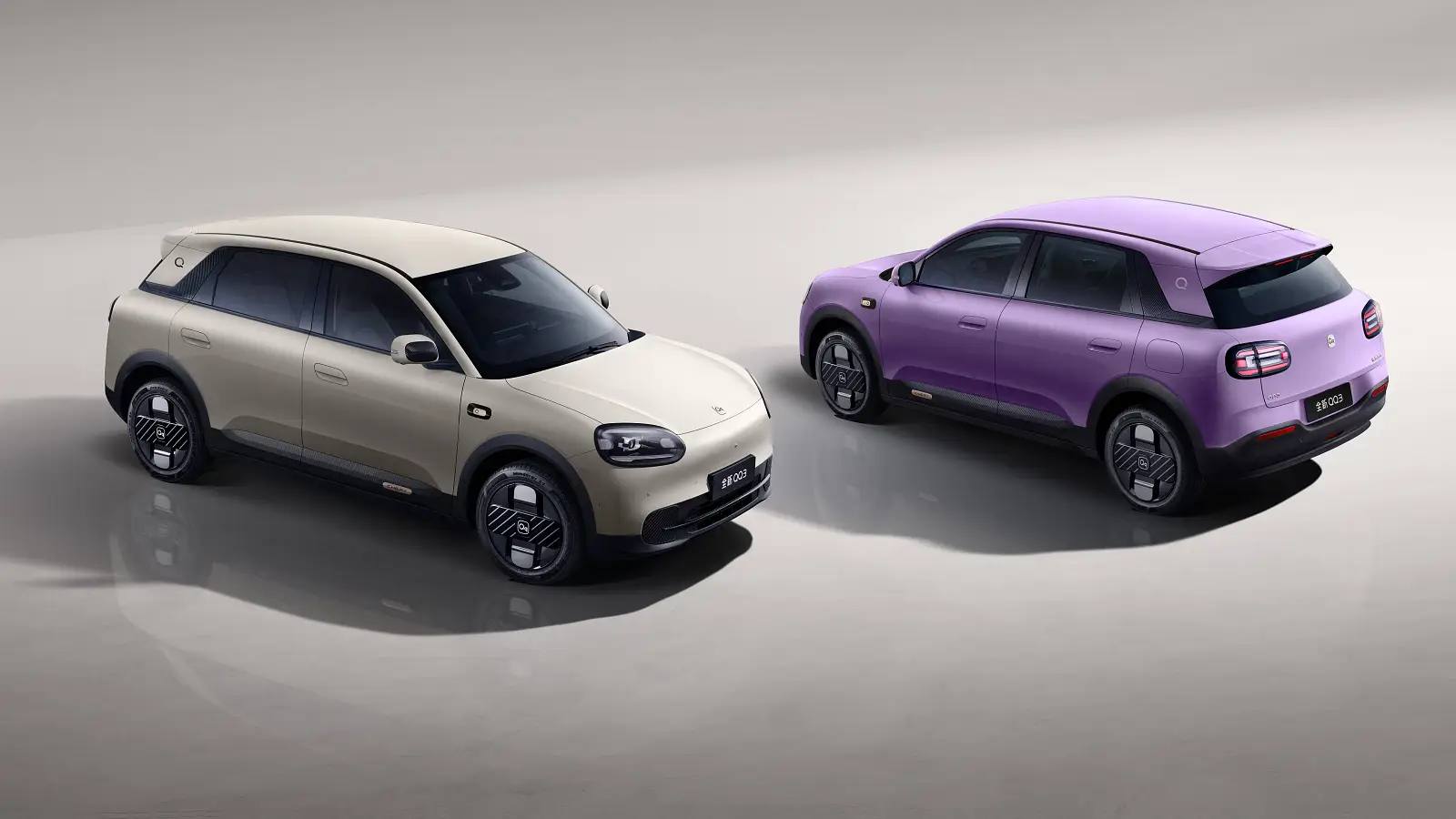
Image credit: Chery
Practicality: the boot is the headline
At 4,195 mm long, 1,811 mm wide and 1,574 mm tall on a 2,700 mm wheelbase, the Q is closer to a Toyota Corolla hatch in footprint than to the smaller Atto 1. The boot is where it really lands a punch though. 374 litres behind the rear seats is bigger than a Mazda 3 (295L), Toyota Corolla hatch (217L) and almost identical to a Volkswagen Golf (380L). Add a 70-litre frunk with a drain plug (handy for storing wet swimmers or the charging cable) and the Q has more useable space than its compact exterior suggests.
Equipment: surprisingly premium
Top-spec Chinese versions get a 15.6-inch infotainment touchscreen, heated and ventilated front seats with power adjustment, a power tailgate, a 50 W wireless phone charger, dual-zone climate control, ambient cabin lighting and a 360-degree camera. Whether all of that survives the trip to Australian showrooms depends on local pricing strategy, but Chery has form for keeping the kit list generous on the E5 and Tiggo lineup, so a well-equipped flagship is likely.
The catch is safety. Active safety like AEB, adaptive cruise, lane keep assist and blind-spot monitoring is optional in China, but will almost certainly need to be standard in Australia for the Q to score 5-star ANCAP. That is the single biggest cost line item driving the Australian RRP higher than the Chinese starting price.
Where it fits in the lineup
The Q joins Chery's E5 SUV as the brand's second EV in Australia. The E5 sits in mid-size SUV territory at $37,990 RRP with a 61 kWh battery and 430 km range, so the smaller and cheaper Q gives Chery proper coverage of the segment that has been most active in 2026: compact urban EVs from $25,000 to $35,000 driveaway.
For buyers, the Q is one to file under "watch this space". If Chery prices it sharp (under $30,000 RRP) and lands the safety package at 5-star ANCAP, it could pull buyers away from the Atto 1 Premium on size and battery alone. If pricing ends up closer to $32,000-$35,000, it is a tougher sell against the MG4 Urban which has 125 kW and a 10-year warranty. Worth waiting on the actual launch numbers before getting too excited.
Our take
Chery has built genuine momentum in Australia with the Tiggo 7 and Tiggo 8 SUVs, and the E5 has been quietly competitive in mid-size electric SUV territory. Adding a small RWD electric hatch with a usable boot and a generous equipment list addresses the obvious gap in the brand's local lineup.
The Q is not going to be the cheapest EV in Australia. The Atto 1 Essential still holds that crown at $23,990. But on paper the Q has more battery, more boot, more equipment and a more interesting drivetrain than either Atto 1 variant, which is the right list of differentiators if you are not willing to chase the absolute floor on price. We will update this story as soon as Chery Australia confirms local pricing.
For more: Cheapest Electric Cars in Australia (2026) | Best Electric Cars Under $50K (2026) | 9 New Chinese Brands Coming to Australia
Disclaimer: Specifications and Chinese pricing are sourced from Chery's domestic launch information at the time of publishing. Australian range, equipment, ANCAP rating and pricing are not yet confirmed. WLTP range estimates are approximate conversions from CLTC figures and may vary once Chery Australia publishes local-market data. Always confirm specs and pricing with your local dealer ahead of purchase.
Compare these picks side by side
Stack 5 of them on 200+ specs, price, safety and running cost in one view.
Compare all 5 nowFrequently Asked Questions
When does the Chery Q arrive in Australia?
How much will the Chery Q cost in Australia?
Is the Chery Q the cheapest electric car in Australia?
What's the range of the Chery Q?
Is the Chery Q rear-wheel drive?
How does the Chery Q compare to the BYD Atto 1?
New cars, real prices, straight to your inbox
Join the CarSorted mailing list for new-model launches, price drops and drive-away deals, honest reviews, and founding-member pricing on the upcoming CarSorted Pro Report.
- New-model launches
- Price drops & deals
- Honest reviews
No spam, unsubscribe anytime. By subscribing you agree to receive marketing emails.
Disclaimer: All information in this article was believed to be correct at the time of publishing (5 May 2026). Prices are manufacturer recommended retail prices (RRP) and may vary by state, dealer, and options. Specifications, government incentives, and rebates can change without notice. Always verify details with the manufacturer or relevant authority before making a purchase decision. Running cost estimates are based on average Australian driving conditions at 15,000 km/year. CarSorted does not accept payment for recommendations or rankings.
Written by Uzzi, CarSorted Editorial Team · 5 May 2026 · how we research
Comments (0)
Sign in to join the conversation
No comments yet. Be the first!