CarSorted Verdict
The Polestar 3 is a genuinely good large electric SUV that finally gets the 800V hardware to back up its price tag. The MY27 update makes the Plus pack standard across the range, so even the entry Rear motor at $116,700 feels loaded, and the 350kW DC charging on the twin-motor cars is a real point of difference. It is heavy at roughly 2.5 tonnes and the 484L boot is modest for something this size, but for range, charging and cabin quality it earns its money. The Dual motor is the one we would buy.
What we like
- + 800V architecture, DC charging up to 350kW on the twin-motor cars
- + Long range, up to 647km WLTP on the Dual motor
- + Plus pack now standard: Bowers & Wilkins audio, head-up display, panoramic roof
- + Performance flagship hits 100km/h in 3.9 seconds
- + 800V charging and a genuinely long range for the size
What could be better
- - Heavy at roughly 2.3 to 2.5 tonnes depending on variant
- - 484L boot to the seatbacks is modest for a 4,900mm SUV
- - Small 23.8L frunk and no dedicated cable storage
- - No air suspension option at all on the Rear motor
- - Only gross battery capacity is published, not a usable figure
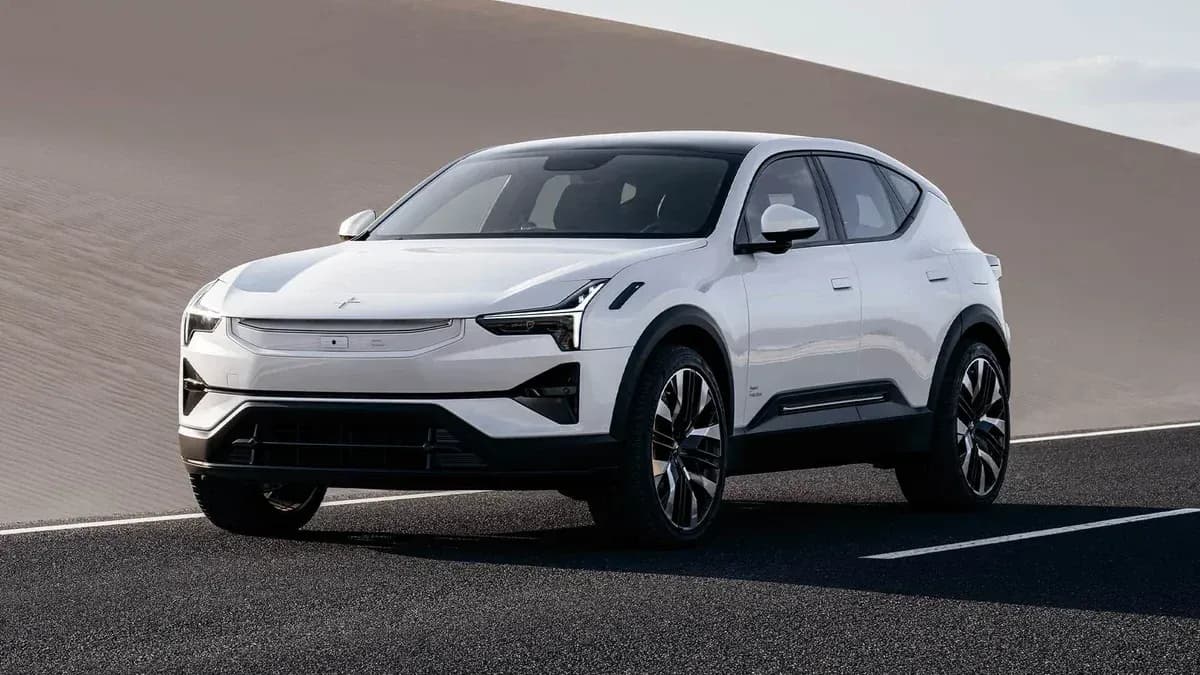
Image credit: Polestar Australia
Cost: Three Variants, Priced Cleanly
There are three variants and they step up in a clear line. The Rear motor RWD opens the range at $116,700 RRP. You get 245kW/480Nm, 603km WLTP range, 20-inch wheels and passive suspension. It is the efficiency pick at 17.6kWh/100km, and it is the only one you cannot option with air suspension.
The Dual motor AWD is $131,100 and steps up to 400kW/740Nm, 647km WLTP (among the longest ranges in the lineup) and a 106kWh battery. Air suspension is optional here. This is the sweet spot.
The Performance AWD tops it out at $146,700 with 500kW/870Nm, 0-100km/h in 3.9 seconds, 22-inch wheels and dual-chamber active air suspension as standard. Range drops to 601km on the bigger wheels.
On running costs, energy use is where the savings come from. At 15,000km a year the Rear motor uses roughly 2,640kWh, the Dual motor about 2,865kWh and the Performance about 3,090kWh. What that costs depends entirely on your tariff, but charging at home overnight lands well under what a comparable petrol large SUV burns in fuel over the same distance. Servicing is light, with intervals at 2 years or 30,000km. Every variant sits above the fuel-efficient luxury car tax threshold, so the FBT exemption for electric cars does not reach this one; check our FBT-exempt cars guide before you budget for it. Warranty is 5 years and unlimited kilometres, the battery is covered for 8 years or 160,000km, and roadside runs 5 years.
Design: Clean and Scandinavian
The Polestar 3 looks like a Polestar, which is to say clean and a bit Scandinavian without trying too hard. It is 4,900mm long, 1,968mm wide and sits on a 2,985mm wheelbase, so it has proper large-SUV presence. Height is 1,622mm, or 1,614mm on the Performance thanks to its suspension. The panoramic glass roof is standard across the range and does a lot for how open the cabin feels. Wheel sizes tell you which variant you are looking at, 20-inch on the Rear and Dual motor, 22-inch on the Performance.
Interior: Google Built In, and It Shows
Inside you get a 14.5-inch central touchscreen running Android Automotive with Google built in, plus a 9-inch driver display. Because the Plus pack is now standard, the Bowers & Wilkins sound system, head-up display and 360-degree camera are all fitted from the base car up. It is a five-seater, and the material quality and tech layout are consistently the thing published reviewers single out as a highlight. The Google-native software means native maps, assistant and app support rather than mirroring off your phone.
Practicality: The Honest Part
The boot is 484L to the seatbacks, 597L loaded to the roof, and 1,411L with the rear seats folded. For a car this size, 484L is modest, and a rival like the seven-seat Kia EV9 will swallow more. Up front there is a 23.8L frunk, which is small, and there is no dedicated cable storage, so your charging leads tend to live in the boot and eat into that 484L.
Rear seat space is fine for the class given the near-3-metre wheelbase. Towing is a strong point on the twin-motor cars: the Rear motor is rated to 1,500kg braked, while both the Dual motor and Performance pull 2,200kg. The turning circle is 11.8m.
Driving: Quick on Paper, Heavy in the Specs
We have not driven this car, so this is from the specs and what published reviewers report. On paper the range is quick. The Rear motor does 0-100km/h in 6.5 seconds, the Dual motor in 4.7, and the Performance in a genuinely rapid 3.9 seconds with 500kW and 870Nm on tap. Top speeds run 210km/h for the RWD car and 230km/h for both AWDs.
The catch is weight, roughly 2,315kg for the Rear motor, 2,490kg for the Dual motor and 2,525kg for the Performance. Reviewers consistently note that the air suspension (optional on the Dual motor, standard and dual-chamber active on the Performance) does a lot to disguise that mass and keep the body controlled, which is why we would tick that box if you can. The passive-only Rear motor is the one to test drive before you commit.
Efficiency and Charging: The Strongest Card
This is the Polestar 3's strongest card. The whole range now uses an 800V architecture, and the twin-motor cars charge at up to 350kW DC (the Rear motor peaks at 310kW), which means a 10 to 80 per cent top-up in about 22 minutes. AC charging is 11kW. Batteries are big, 92kWh on the Rear motor and 106kWh on both AWD variants, which is where the 603km, 647km and 601km WLTP figures come from.
Efficiency runs from 17.6kWh/100km on the RWD to 20.6kWh/100km on the 22-inch Performance. One caveat worth knowing: Polestar only quotes gross capacity, not a usable figure, so exact energy-per-kilometre maths is approximate.
Safety: Five Stars, Tested 2025
The Polestar 3 has a 5-star ANCAP rating, tested in 2025, so it is current. A 360-degree camera is standard across the range, and as with the rest of the equipment, the driver-assist and camera systems come fitted from the base car thanks to the standard Plus pack.
Rivals: The Premium Electric SUV Fight
The obvious one is the Volvo EX90, which is Polestar's sister brand and shares the underlying platform. The EX90 Plus Twin Motor is $124,990 (330kW, 5.5s, 580km) and the Ultra Twin Motor Performance is $134,990 (500kW, 4.2s, 570km). If you are cross-shopping those two, our Polestar 3 vs Volvo EX90 comparison lays it out side by side. The Polestar generally has the longer range and the sharper design, the Volvo the seven-seat option and a more understated look.
The BMW iX is the established German alternative. The entry eDrive20 is cheaper at $78,900, but the variants that genuinely line up with the Polestar 3 sit from around $105,000 and up. The Kia EV9 is the value and practicality play, a larger seven-seater from $97,000 up to $121,000 for the GT-Line AWD. If space matters more than badge or outright pace, it is worth a look. The Lexus RZ 450e at $123,000 (230kW, 5.3s, 440km) is in the price ballpark, but its range is notably shorter, which is a real gap for a large EV.
Mercedes EQE SUV, Audi Q8 e-tron and Tesla Model X also play in this space, but we do not currently list Australian pricing for them.
Should You Buy It?
Yes, with a variant in mind. The value pick is the Dual motor AWD at $131,100. It has the longest range in the Polestar 3 lineup at 647km, the full 350kW charging, 2,200kg towing, 4.7-second pace that is more than enough, and air suspension available as an option.
The Rear motor is the efficiency and price leader, but you cannot get air suspension at all. The Performance is fabulously quick at 3.9 seconds, but you pay $15,600 more for it and lose some range to the 22-inch wheels. Unless you specifically want the flagship, the Dual motor is the smart money.