Toyota bZ4X vs Zeekr 7X
$55,990 vs $57,900. The safest badge in the country against a brand that arrived last September and out-specs it on nearly every line. One of these charges three times faster than the other.
Specifications and pricing correct at time of publishing. Prices are RRP before on-road costs unless stated otherwise. Always confirm with the manufacturer or dealer before purchasing.
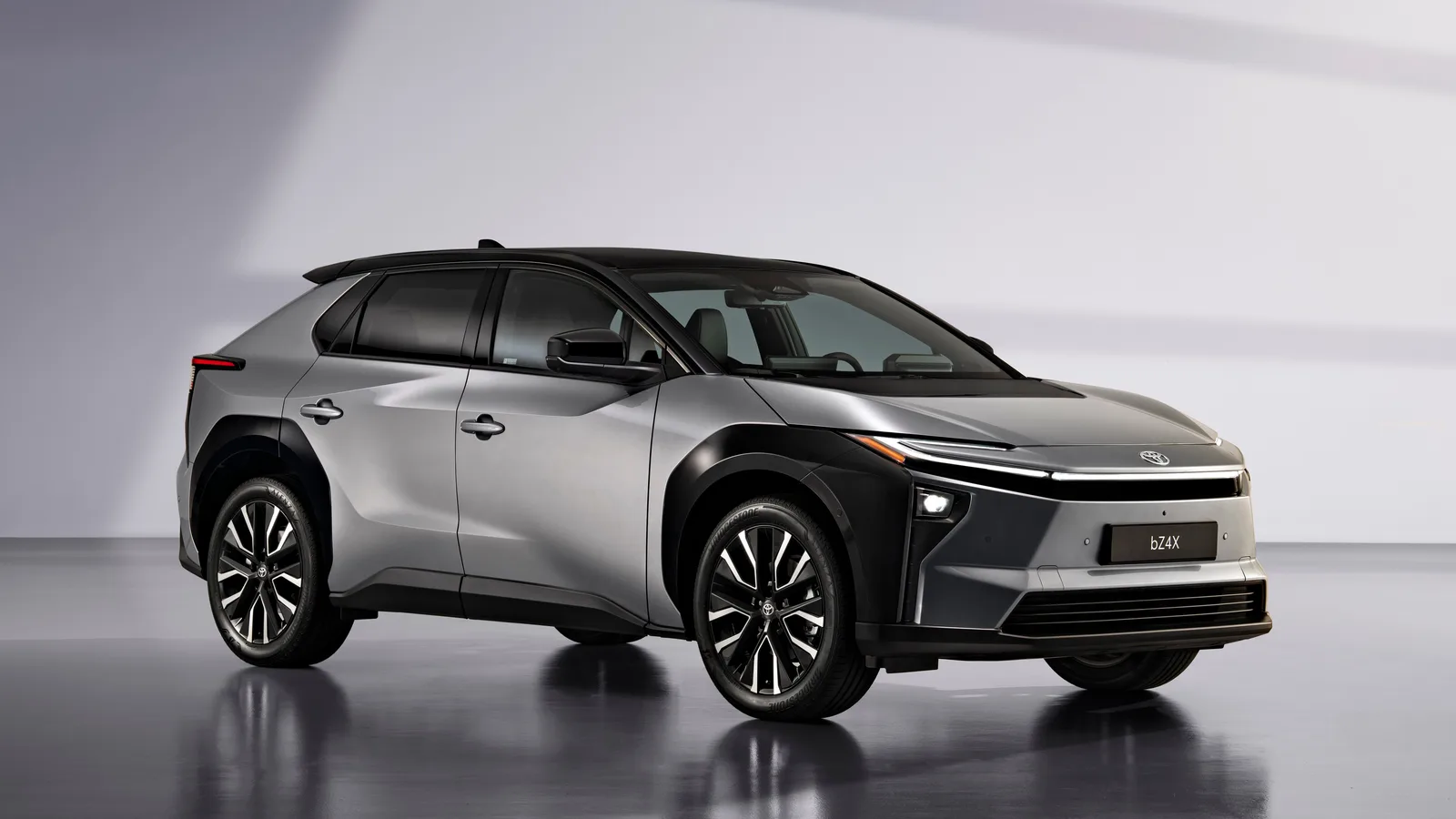
Toyota bZ4X 2WD
From $55,990
Small Electric SUV
Single Motor (FWD)
167kW
591km WLTP
5★ ANCAP (2025)
452L
Zeekr 7X RWD
From $57,900
Medium Electric SUV
Single Motor (RWD)
310kW
480km WLTP
5★ ANCAP (2025)
539L
Price Breakdown
Toyota lists the bZ4X 2WD at $55,990 and the AWD at $67,990, both before on-road costs, and both confirmed against Toyota Australia's own pricing announcement. That is a plain RRP. Toyota is not a drive-away brand, so the number you see is the number before stamp duty, registration, CTP and plates go on top.
Zeekr is the awkward half of this comparison, and it is worth being straight about why. Zeekr Australia does not print a price for the 7X anywhere on its website. Not on the model page, not in the Australian brochure, not on the homepage. The only dollar figure published anywhere on the Australian site is a banner offering the Zeekr X from $48,900 drive-away, which is a different car. To get a 7X price you have to go into the configurator, which means the figures below are our recorded list prices rather than something you can check in ten seconds against Zeekr's own page. Treat them as the right ballpark and get the real number, on a drive-away basis, before you sign anything.
Toyota bZ4X (single-speed, 400V)
| Variant | Drive | Price (RRP) | WLTP range |
|---|---|---|---|
| bZ4X 2WD | FWD | $55,990 | 591km |
| bZ4X AWD | AWD | $67,990 | 517km |
Zeekr 7X (single-speed, 800V)
| Variant | Battery | Price (list) | WLTP range |
|---|---|---|---|
| 7X RWD | 75kWh LFP | $57,900 | 480km |
| 7X Long Range RWD | 100kWh NCM | $63,900 | 615km |
| 7X Performance AWD | 100kWh NCM | $72,900 | 543km |
Two thousand dollars separates the entry cars, which is nothing across a five-year loan, so forget the price gap and look at what each side does with the money. The more interesting collision is one rung up, and we come back to it at the bottom of the page.
Safety Rundown
Here is where the easy story falls apart. Both cars hold a five-star ANCAP rating awarded in 2025 and both run to December 2031. And the newcomer scores higher where it counts most.
| ANCAP (2025) | bZ4X | Zeekr 7X |
|---|---|---|
| Adult occupant | 88% | 91% |
| Child occupant | 86% | 87% |
| Vulnerable road user | 80% | 78% |
| Safety assist | 82% | 78% |
The Zeekr takes adult and child occupant protection, the Toyota takes vulnerable road user and safety assist. Two each, and the widest single gap is four points. If you came to this page assuming the Toyota would be meaningfully safer because it is a Toyota, ANCAP disagrees with you, and ANCAP is the only body in this country that actually crashes the cars.
Airbag counts do split. Toyota fits eight SRS airbags to both bZ4X grades, including a driver knee bag and a front centre bag. Zeekr fits seven, including a front centre bag but no knee airbag. Both cars get autonomous emergency braking covering car-to-car, vulnerable road users, junction turns and backover, plus lane keep assist, lane departure warning, emergency lane keeping and a speed assist system, all standard across the range on both.
One scoping detail that matters if you are shopping used or pre-facelift. The bZ4X rating on this page applies to cars built from October 2025 onwards, which is the updated model Toyota sells now, and it also covers the bZ4X Touring. A bZ4X built before October 2025 carries a separate, earlier ANCAP rating. The Zeekr rating covers all 7X variants with no such split, because the car has only existed here since September 2025.
Feature Showdown
This is the section where the price gap stops making sense, because two grand does not normally buy you this much extra hardware.
The 7X runs a 16-inch 3.5K Mini-LED centre screen and a 13.02-inch driver cluster on a Qualcomm 8295 platform, and from the Long Range grade up it adds a 36.21-inch augmented-reality head-up display. Even the base RWD gets frameless doors, hidden handles, a panoramic glass roof with a powered sunshade, a 360-degree camera, sentry mode, tri-zone climate, dual 50W wireless chargers, a UWB key fob with an NFC card, heated front and rear seats, front seat memory and a 14-way powered driver's seat. Move up to the Long Range and you add ventilated and massaging front seats, a 21-speaker Zeekr Sound Pro system with 7.1.4 surround, rear privacy glass and a powered steering column.
The bZ4X runs a 14-inch multimedia screen with embedded navigation and a 7-inch driver display. That 7-inch strip is the number that dates this car. What Toyota does do is give you the good stuff on the cheap grade rather than holding it back: the $55,990 2WD gets heated front seats, a heated steering wheel, an eight-way powered driver and passenger seat, two wireless chargers, wireless CarPlay and Android Auto, a panoramic view monitor, a power tailgate with a kick sensor and a 220V/1500W vehicle-to-load inverter. Step to the AWD and you add ventilated seats, a nine-speaker JBL system, a fixed panoramic roof, a digital rear-view mirror, intelligent parking assist, memory mirrors and three off-road X-Mode settings.
Both cars can power your fridge at a campsite. Toyota's V2L inverter is rated at 1500W and Zeekr's at 3.3kW, so the Zeekr will run more at once. It is a small thing that tells you the whole story of this comparison: same idea, newer hardware, bigger number.
Drivetrain
The bZ4X 2WD has a single front motor rated by Toyota Australia at 167kW and 268.6Nm, good for 7.4 seconds to 100km/h and a 160km/h top speed. The 7X RWD has a single rear motor at 310kW and 440Nm, 6.0 seconds to 100; Zeekr publishes no top speed. That is 143kW and 171Nm more from the car that costs $1,910 more, and it drives the rear wheels, which is the layout most people prefer once they have tried both.
Range flips it, and not by a little. Toyota gets 591km WLTP out of a 74.7kWh battery. Zeekr gets 480km out of 75kWh. Same energy, 111km apart. Toyota publishes a consumption figure of 138Wh/km for the 2WD and 160Wh/km for the AWD; Zeekr does not publish one at all for the Australian market. Work it back from the brochure figures and the bZ4X returns about 7.9km per kilowatt-hour to the 7X's 6.4. That is the single most impressive thing about the Toyota, and it is the reason the cheaper, slower car goes further.
Then charging arrives and flattens everything, with one honest caveat. The 7X is a full 800V system and Zeekr quotes 450kW DC on the 75kWh car, with 10 to 80 percent in 13 minutes. Zeekr's own footnote says that figure was set on its V3 liquid-cooled supercharger at room temperature, and no public Australian charger delivers 450kW today, so treat 13 minutes as the ceiling, not the servo experience. Even on Australia's 350kW units, though, the 800V car will comfortably out-charge the bZ4X, which is 400V, peaks at 150kW, and takes approximately 45 minutes for the same window. Both take 22kW on AC, so overnight at home is a wash. On a long drive the Zeekr should still roughly halve your total charging stops' standing time, and if you drive interstate more than twice a year that gap should weigh heavily.
Worth knowing before you trust either range figure: WLTP is a laboratory number and neither car will see it at 110km/h with the air conditioning on. Our range estimator works from the battery and the conditions rather than the brochure.
Space & Comfort
ANCAP files the bZ4X as a Small SUV and the 7X as a Medium SUV. That is the regulator, not us, and it is a fair call.
| Dimension | bZ4X | Zeekr 7X | Difference |
|---|---|---|---|
| Length | 4,690mm | 4,787mm | 97mm |
| Width | 1,860mm | 1,930mm | 70mm |
| Height | 1,650mm | 1,650mm | Identical |
| Wheelbase | 2,850mm | 2,900mm | 50mm |
| Boot, seats up | 452L | 539L | 87L |
| Boot, seats folded | No data | 1,978L | Not comparable |
| Braked towing | 750kg (max) | Not published | Not comparable |
The 7X is bigger in every direction that matters and it uses the space well. Rear seats recline by ten degrees under power on every grade, the back seats are heated across the range, and the boot goes from 539 litres to 1,978 with the seats down. The bZ4X's 452 litres is fine for a small SUV and Toyota publishes no seats-folded figure, so we will not invent one.
Towing is the one place this comparison cannot be made, and you should know that going in. Toyota prints its ratings plainly: 750kg maximum on the 2WD and 1,500kg braked on the AWD, with a note that fitting a towbar deactivates the kick-sensor tailgate. Zeekr's Australian brochure prints no towing capacity at all. Our records hold 2,000kg braked for the 7X, and we could not confirm it against anything Zeekr Australia publishes, so we are not putting it in a table you might load a trailer against. If you tow, get that figure in writing from Zeekr before you buy.
One number in the Toyota's favour on a tight street: it is 70mm narrower and 97mm shorter, and 70mm is roughly the difference between comfortable and careful in an older shopping centre car park. Zeekr quotes an 11.6m kerb-to-kerb turning circle for the 7X, which is tidy for a car this size, though it is not directly comparable to Toyota's figure because Toyota publishes a turning radius rather than a circle.
True Cost to Own
The warranties are closer than the brand gap suggests. Toyota covers the bZ4X for five years and unlimited kilometres. Zeekr covers a privately owned 7X for five years and unlimited kilometres too, with a 200,000km cap that applies only to commercial use like rideshare, rental and courier work. If you are a private buyer, they are the same.
Battery cover is also the same on paper: eight years or 160,000km on both, and both use the same 70 percent state-of-health threshold before a claim is payable. Toyota then adds something Zeekr does not. Do an annual traction battery health check at a Toyota dealer alongside your logbook servicing and Toyota will extend that battery capacity cover to up to ten years, and keeping your servicing at a Toyota dealer also adds two extra years of engine and driveline cover. Zeekr answers with five years of complimentary roadside assistance included with every new car.
Servicing is the honest gap. Toyota runs the bZ4X on a published logbook schedule through a dealer network you can reach in almost any town you can name, and that schedule is what unlocks the extended cover above. Zeekr's Australian site does not publish a maintenance schedule or a service price at all; it refers you to the Service and Warranty Booklet and to an authorised partner. It will not tell you how many dealers it has either. You type in a location and it shows you what is near you, which is a fine answer in Sydney and a worse one in Dubbo.
Resale is the part nobody can settle today, and pretending otherwise would be dishonest. The bZ4X has been on sale in Australia since February 2024. The 7X arrived in September 2025. There is no four-year-old Zeekr in this market because there cannot be one yet, so there is no used-price data to reason from. That is not evidence against the car, it is an absence of evidence, and how much that absence bothers you depends entirely on how long you plan to keep it. If you are leasing or trading at three years, the unknown is the risk. If you are keeping it to 200,000km, it barely matters. Our depreciation calculator lets you put your own retained-value assumption against both and see what it actually costs you.
CarSorted Data Insight
Line both ranges up and the two brands are answering different questions. Toyota sells the bZ4X in one battery with two drivetrains, $55,990 to $67,990, plus the separate bZ4X Touring flagship at $69,990. Zeekr sells the 7X in two batteries across three grades, $57,900 to $72,900. They overlap for about ten thousand dollars in the middle, and inside that overlap there is one pairing that makes the Toyota look genuinely awkward.
The bZ4X AWD costs $67,990 and claims 517km. The 7X Long Range RWD costs $63,900 and claims 615km. The Zeekr is $4,090 cheaper, goes 98km further, charges 10 to 80 percent in 16 minutes rather than 45, and adds a 21-speaker system and the augmented-reality head-up display. The Toyota answers with dual-motor traction and a 1,500kg braked towing rating, which matters if you tow and does not if you do not.
So the value pick in this comparison is not either of the two cars at the top of the page. If your budget stretches past sixty grand, the Long Range RWD is the one that beats everything here on range and charging at once, and it undercuts Toyota's all-wheel-drive car while doing it.
The Verdict
Buy the Toyota bZ4X if: you want the longest range per dollar in a 400V car, you tow, you live somewhere a Toyota dealer is a ten-minute drive and the nearest Zeekr partner is three hours, or you plan to trade out in three or four years and want a resale number you can actually predict.
Buy the Zeekr 7X if: you road trip, you want a bigger and much better-equipped car for about the same money, you are comfortable charging at home most of the time, and you are keeping it long enough that an unknown resale curve is somebody else's problem. Look hard at the Long Range RWD rather than the base car.
The framing everyone brings to this comparison is legacy safety versus Chinese risk, and the data does not support it. ANCAP has crashed both and the newcomer protects occupants slightly better. The warranties are identical. What Toyota is actually selling here is not a safer car, it is a more predictable ownership tail: a service network you already know exists, a battery cover you can stretch to ten years, and a resale figure with history behind it. That is worth real money to some buyers and almost nothing to others. Work out which one you are, then pick.
Compare both on CarSorted. See also: Zeekr 7X vs Model Y | Sealion 7 vs Zeekr 7X | Zeekr 7X vs EV5. More from Toyota and Zeekr.
The Verdict
On the spec sheet this is not close. The Zeekr 7X has nearly double the power, a bigger body, a far better cabin, 800V charging that Zeekr rates at 13 minutes for 10 to 80 percent on its own 450kW-class charger against Toyota's 45 on common 150kW hardware, and it costs about two thousand dollars more. It even beats the Toyota on ANCAP's adult and child occupant scores. What the bZ4X answers with is 591km of WLTP range out of the same size battery, which is a genuinely remarkable efficiency result, plus a dealer network and a used-market record that Zeekr simply cannot have yet because it has been selling cars here for twelve months. So the honest split is this: if you keep cars a long time and charge at home, the Zeekr is the better car and the extra equipment is not close. If you turn cars over every three or four years, resale is the single biggest line in your cost of ownership and nobody can tell you what a 2026 Zeekr is worth in 2030. That is not a knock on the car. It is just an unknown, and the bZ4X is the one with the boring, known answer.
Prices on this page move. Want the next verdict?
One short email when prices shift or a new comparison lands. No spam, unsubscribe anytime.
Disclaimer: All information in this comparison was believed to be correct at the time of publishing (20 September 2026). Prices are manufacturer recommended retail prices (RRP) and may vary by state, dealer, and options. Driveaway costs include estimated on-road costs for Victoria. Fuel economy figures are WLTP/ADR combined cycle. Specifications can change without notice. Always verify with the manufacturer before making a purchase decision. CarSorted does not accept payment for recommendations.
Published by CarSorted Editorial Team · 20 September 2026
Comments (0)
Sign in to join the conversation
No comments yet. Be the first!