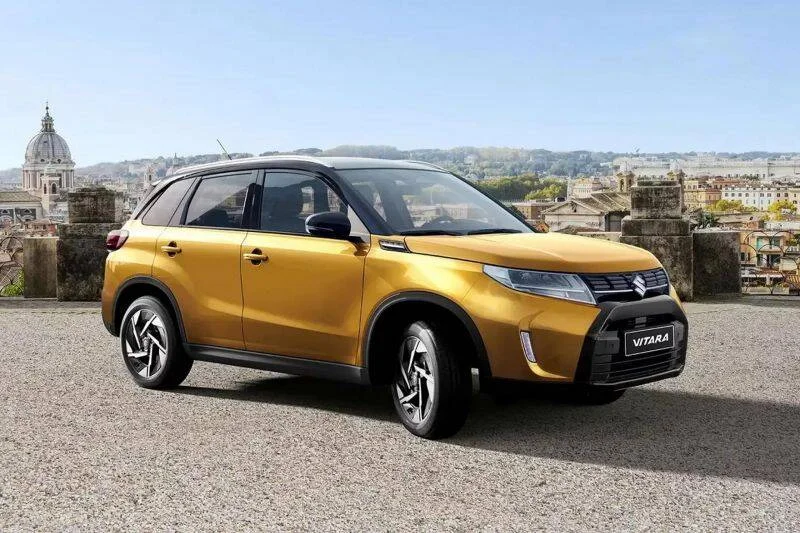
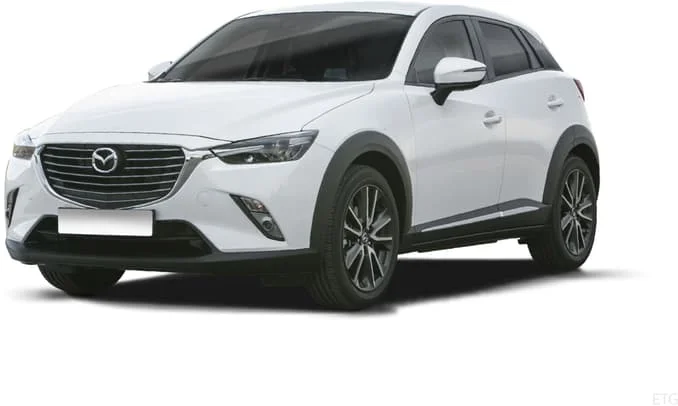
Suzuki Vitara vs Mazda CX-3
$36,350 drive-away vs $27,800 before on-roads. Once you level those up the gap is about $5,550, not the $10,690 everyone quotes.
Data checked: specs 12 Sep 2026, price 23 Sep 2026
Comparison snapshot
Prices, scores and edges below update from our car data.
From about $36,350 est. RRP
Estimated RRP: this brand lists drive-away prices only.
Lighter on fuel by 0.5 L/100km, 98L more boot
Cheaper by $8,550, 29kW more power
Written 7 April 2026. The snapshot, tables, scores and verdict on this page update from our car data; figures quoted in the text are as at that date.
Price
Start by getting the comparison honest, because the two brands quote differently. Suzuki advertises the Vitara GLX Turbo at $36,350 drive-away, with rego, stamp duty and CTP included. Mazda advertises the CX-3 G20 Pure at $27,800 recommended retail before on-road costs, which lands somewhere near $30,800 registered in most states.
So the real gap is about $5,550, not the $10,690 you get from comparing a drive-away figure with a list price. Still a meaningful amount of money in this segment, but roughly half what it looks like on paper.
Running costs narrow it further. The Vitara uses 5.8L/100km against 6.3 for the CX-3. At 15,000km a year and $2.00 a litre that is roughly $1,740 a year for the Vitara and $1,890 for the CX-3, a saving of about $150 a year or $750 over five years. Add the Suzuki's shorter warranty back the other way and the ownership picture is closer than the sticker suggests.
Insurance tends to be slightly cheaper on the CX-3 thanks to its lower purchase price. Servicing costs are comparable, though Mazda's capped-price servicing program gives you better cost certainty. The Vitara's three-year warranty means you may face out-of-pocket repair costs in years four and five where the CX-3 is still fully covered. Factor that in and the real-world ownership cost difference is even wider than the sticker price suggests.
For buyers stretching their budget, the CX-3 still means lower finance repayments and stamp duty. Drive-away you are looking at roughly $30,800 for the CX-3 against the Vitara's quoted $36,350. That difference is real, it is just not the five-figure chasm the list prices suggest.
Safety
Neither of these cars has a current ANCAP rating on record, so we will not put a star count on either one. If a published rating is a hard requirement, this pair is not where to find it. On equipment both list autonomous emergency braking, lane keep assist and adaptive cruise control as standard, which are the essentials that matter day to day.
The CX-3 gets Mazda's i-Activsense suite, which includes blind spot monitoring and rear cross-traffic alert. Mazda tends to be generous with safety kit even on entry-level variants, and the G20 Pure is no exception. You also get a reversing camera and front and rear parking sensors.
The Vitara GLX Turbo, being the top-spec variant, comes well loaded too. You get a 360-degree camera system, which is genuinely useful for tight car parks, plus all the expected active safety gear. The Vitara also benefits from a relatively light kerb weight of 1,125kg, which generally helps with stopping distances.
On equipment neither has a meaningful edge. On documented crash performance we simply do not have a result for either. Check our ANCAP safety ratings guide for what a rating actually covers, and why the absence of one is not the same as a bad one.
Features
As the top-spec model, the Vitara GLX Turbo punches above its weight on features. You get a panoramic sunroof, leather-accented seats, heated front seats, a 9-inch touchscreen with wireless Apple CarPlay and Android Auto, and that 360-degree camera. It feels properly kitted out for a car at this price.
The CX-3 G20 Pure is the entry point of the range, so expectations need managing. You still get a 7-inch touchscreen, wired Apple CarPlay and Android Auto, air conditioning and a reversing camera. It is not bare-bones, but it is clearly a step down from the Vitara's equipment list, and the gap that buys is about $5,550 registered rather than $11,000.
Interior quality is where Mazda traditionally shines, and even the G20 Pure has that premium Mazda feel. The materials, the switchgear, the way everything fits together. It punches well above its price point. The Vitara's cabin is functional and well laid out, but it does not quite have that same tactile quality.
Both cars get a decent infotainment setup for their respective price points. If wireless connectivity and a sunroof matter to you, the Vitara delivers. If you would rather pocket the savings and live with wired CarPlay, the CX-3 is perfectly liveable day to day.
Drivetrain
Here is where it gets interesting. The Vitara runs a 1.4-litre turbocharged four-cylinder making 95kW and 220Nm. The CX-3 uses a naturally aspirated 2.0-litre four-cylinder producing 110kW and 195Nm. On paper, the CX-3 has more outright power, but the Vitara has more torque, and that torque arrives much lower in the rev range thanks to the turbo.
Turbo engines make their torque lower in the rev range, so the Vitara has more pull available at everyday speeds while the CX-3 needs more revs to reach its peak, which is typical of naturally aspirated engines. Neither is fast: the claimed 0-100 figures are 10.2 seconds for the Vitara and 10.9 for the CX-3.
Both use six-speed automatic transmissions and front-wheel drive. The Vitara weighs significantly less at 1,125kg versus 1,294kg for the CX-3. That 169kg difference is meaningful. It helps the Vitara feel lighter on its feet despite the lower power figure, and it contributes to the better fuel economy number.
The fuel economy advantage is real. At 5.8L/100km, the Vitara is genuinely frugal for a small SUV. The CX-3 at 6.3L is perfectly acceptable but cannot match it. If you do a lot of highway driving, the Vitara's turbo engine is particularly efficient at cruising speeds. For more on fuel efficiency in this segment, check our most fuel-efficient SUVs guide.
Space and comfort
Boot space goes to the Vitara, and by a lot more than we previously said: 362 litres against 264. That is 98 litres, which in this class is the difference between fitting the pram and the shopping or choosing one. The CX-3's 264-litre boot is one of the smallest in the small-SUV segment and is its biggest practical weakness.
Rear seat space is adequate in both but not generous. These are small SUVs, after all. Taller passengers will feel the squeeze in either car on longer trips. The Vitara has a slight edge in headroom thanks to its slightly taller roofline, while the CX-3 has marginally more rear legroom. Neither is a standout for rear-seat comfort.
Up front, both cars are comfortable for daily driving. The Vitara's driving position is slightly higher, giving you that SUV vantage point that many buyers want. The CX-3 sits a touch lower and feels more car-like to drive, which some people actually prefer.
Towing is a meaningful differentiator. The Vitara can pull 1,200kg braked, which covers small camper trailers, jet skis, and box trailers loaded up for a tip run. The CX-3 tops out at 1,000kg, which is still useful but limits your options. If towing matters even occasionally, have a read of our towing capacity guide to understand what those numbers mean in practice.
Cost to own
The warranty difference is significant and should not be overlooked. The CX-3 gets Mazda's five-year, unlimited-kilometre warranty. The Vitara gets three years and 100,000 kilometres. That is a two-year gap in coverage, and it matters. Modern cars are reliable, but when something does go wrong, repair bills can be steep. The CX-3 gives you peace of mind for longer.
Resale value is another factor worth considering. Mazda consistently holds its value well in the Australian market. The CX-3 benefits from strong brand recognition and a loyal buyer base. Suzuki has improved its resale numbers in recent years, but the Vitara still depreciates faster in percentage terms. After five years, you are likely to recover a higher proportion of your purchase price with the CX-3.
Servicing costs are comparable. Both brands offer capped-price servicing, so you know what you are up for at each interval. Suzuki services tend to be slightly cheaper per visit, but the difference is marginal.
Parts availability is worth a mention too. Mazda is one of the top-selling brands in Australia, which means parts are everywhere and independent mechanics know these cars inside out. Suzuki is smaller in market share, so parts can occasionally take a bit longer to source, though it is rarely a genuine problem in metro areas. If you are in regional Australia, Mazda's broader dealer network could be an advantage.
The Verdict
This comparison comes down to one question: is the Vitara's extra capability worth about $5,550 registered? For a lot of buyers the answer is still no. The CX-3 G20 Pure delivers a willing 110kW engine, Mazda build quality and a five-year unlimited-kilometre warranty for $27,800 before on-roads. But it is a closer call than the list prices suggest, and the CX-3's 264-litre boot is a real limitation.
Buy the Vitara GLX Turbo if: you need the boot. 362 litres against 264 is the biggest single difference between these two. Add 200kg more towing (1,200kg vs 1,000kg), better fuel economy, 169kg less weight and the sunroof and 360-degree camera, and it is the better road-trip car by some margin.
Buy the CX-3 G20 Pure if: price is the priority, you want the extra 15kW, and the five-year unlimited-kilometre warranty matters to you against Suzuki's three years and 100,000km. You save around $5,550 registered and get a car that costs less to insure and finance and holds its value better.
For most Australians shopping in this segment the CX-3 is still the pick, but check the boot before you sign. If 264 litres will not do the job, the Vitara is worth the difference.
Compare both side by side on CarSorted. Also worth reading: CX-3 vs Yaris Cross, Venue vs Ignis, and our best small cars in Australia guide.
Key details
A tick marks the better figure only where both cars have one and the gap is meaningful (3% or more; a whole star or year).
| Detail | Suzuki Vitara | Mazda CX-3 |
|---|---|---|
| Price | From about $36,350 est. RRP | From $27,800 RRP |
| Drive-away estimate | $39,990 drive away (VIC, advertised) | Calculating... |
| Body | SUV | SUV |
| Powertrain | Hybrid, 1.4L 4-cyl turbo | Petrol, 2L 4-cyl |
| Power / torque | 80.9kW / 235Nm | 110kW / 195Nm |
| Fuel use | 5.8 L/100km | 6.3 L/100km |
| 0-100km/h | 10.2s | 10.9s |
| Boot | 362L seats up · 642L seats folded | 264L seats up · 1,174L seats folded |
| Towing (braked) | 1,200kg | 1,200kg |
| ANCAP | No data | No data |
| Warranty | 3yr / 100,000 km | 5yr / unlimited km |
At a glance
- Seats
- 5
- Boot
- 362L seats up · 642L seats folded
- Length x width x height
- 4,185 x 1,775 x 1,600mm
- Wheelbase
- 2,500mm
- Engine
- 1.4L 4-cyl turbo
- Power
- 80.9kW
- Torque
- 235Nm
- Drive
- FWD
- Transmission
- Automatic
- Power-to-weight
- No data
- Kerb weight
- No data
- Spare wheel
- Temporary spare
- Payload
- 445kg
- Towing braked / unbraked
- 1,200kg / 600kg
- Turning circle
- 10.2m
- Seats
- 5
- Boot
- 264L seats up · 1,174L seats folded
- Length x width x height
- 4,275 x 1,765 x 1,535mm
- Wheelbase
- 2,570mm
- Engine
- 2L 4-cyl
- Power
- 110kW
- Torque
- 195Nm
- Drive
- FWD
- Transmission
- 6-speed Automatic (Skyactiv-Drive)
- Power-to-weight
- 85 kW/tonne
- Kerb weight
- 1,294kg
- Spare wheel
- Temporary (Steel)
- Payload
- 436kg
- Towing braked / unbraked
- 1,200kg / 655kg
- Turning circle
- 10.6m
CarSorted Score breakdown
The CarSorted Score is algorithmic: it is calculated from each car's data, not from a road test. How it works.
Safety
Fuel Economy
Value
Practicality
Technology
Performance
Reliability
The verdict
Mazda CX-3 comes out ahead on the CarSorted Score (62 vs 61)
The deciding gaps
- Reliability:Suzuki Vitara 53, Mazda CX-3 65, Mazda CX-3 ahead by 12
- Technology:Suzuki Vitara 53, Mazda CX-3 43, Suzuki Vitara ahead by 10
- Value:Suzuki Vitara 75, Mazda CX-3 84, Mazda CX-3 ahead by 9
The Mazda CX-3 is also the cheaper of the two.
Same scorer as the live comparison of these two exact cars.
Our take (written 7 April 2026)
Two things have moved since we first ran this. Suzuki now quotes the Vitara GLX Turbo at $36,350 drive-away, while Mazda quotes the CX-3 G20 Pure at $27,800 before on-road costs, so the honest registered gap is around $5,550 rather than the $10,690 the list prices imply. And the boot result is the other way around: the Vitara holds 362 litres against the CX-3's 264, a 98-litre advantage, not the 25 previously stated. Neither car has a current ANCAP rating on record, so we are not quoting star counts for either. The CX-3 still takes it, on the strength of being roughly $5,550 cheaper registered, 15kW more powerful, and covered for five years and unlimited kilometres against Suzuki's three years and 100,000km. But the Vitara's case is much stronger than it looked: better fuel economy, 98 litres more boot, 200kg more towing, 169kg less weight and a quicker 0-100. If you carry gear or tow, it is worth the $5,550.
Prices on this page move. Want the next verdict?
One short email when prices shift or a new comparison lands. No spam, unsubscribe anytime.
Questions buyers ask
Which is more fuel efficient, the Vitara or CX-3?
On the official combined cycle, the Suzuki Vitara uses 5.8 L/100km and the Mazda CX-3 uses 6.3 L/100km.
Which is more powerful?
Peak power: the Mazda CX-3 at 110kW, against 81kW for the Suzuki Vitara. The Suzuki Vitara is quicker to 100km/h (10.2s vs 10.9s).
Which has the bigger boot?
Boot space with the seats up: the Suzuki Vitara at 362L, against 264L for the Mazda CX-3.
Which has the better warranty?
The Suzuki Vitara comes with a 3yr / 100,000 km warranty; the Mazda CX-3 with a 5yr / unlimited km warranty.
Can both tow a trailer?
Braked towing capacity: both are listed at 1,200kg.
Which small SUV is better value in 2026?
The Suzuki Vitara GLX Turbo is from about $36,350 est. RRP; the Mazda CX-3 G20 Pure is from $27,800 RRP. That makes the Mazda CX-3 $8,550 cheaper.
Which holds its value better?
The Suzuki Vitara GLX Turbo is from about $36,350 est. RRP; the Mazda CX-3 G20 Pure is from $27,800 RRP. That makes the Mazda CX-3 $8,550 cheaper.
What are the ANCAP ratings for the Suzuki Vitara and Mazda CX-3?
We have no ANCAP rating on record for the Suzuki Vitara, and we have no ANCAP rating on record for the Mazda CX-3.
Which comes out ahead overall?
On the CarSorted Score the Mazda CX-3 comes out ahead (Suzuki Vitara 61/100, Mazda CX-3 62/100), mainly on reliability, value. The score is algorithmic; the editorial above says who each car suits.
Related
In the news
- 2026 Suzuki e Vitara: Brand's First EV From $46,990 Driveaway
- Suzuki Jimny Rhino Confirmed for Australia: $44,990 RRP, 250 Units, Deliveries Now
- Suzuki Jimny Rhino Special Edition Confirmed for Australia: Five-Door XL Gets a Yellow Coat
- VFACTS August 2026: EVs Outsell Petrol, Diesel and Hybrid for the First Time in Australian History
How to read this page. Prices, specs, ANCAP ratings, warranty, scores and the computed verdict come from our records for the two variants shown, sourced from manufacturer Australian documents, and update when those records change. RRP excludes on-road costs. Drive-away figures are estimates for the state you have selected unless marked as advertised. The editorial text was written on 7 April 2026. Always confirm price and specification with the manufacturer or dealer before you buy. CarSorted does not accept payment for recommendations.
Comments (0)
Sign in to join the conversation
No comments yet. Be the first!