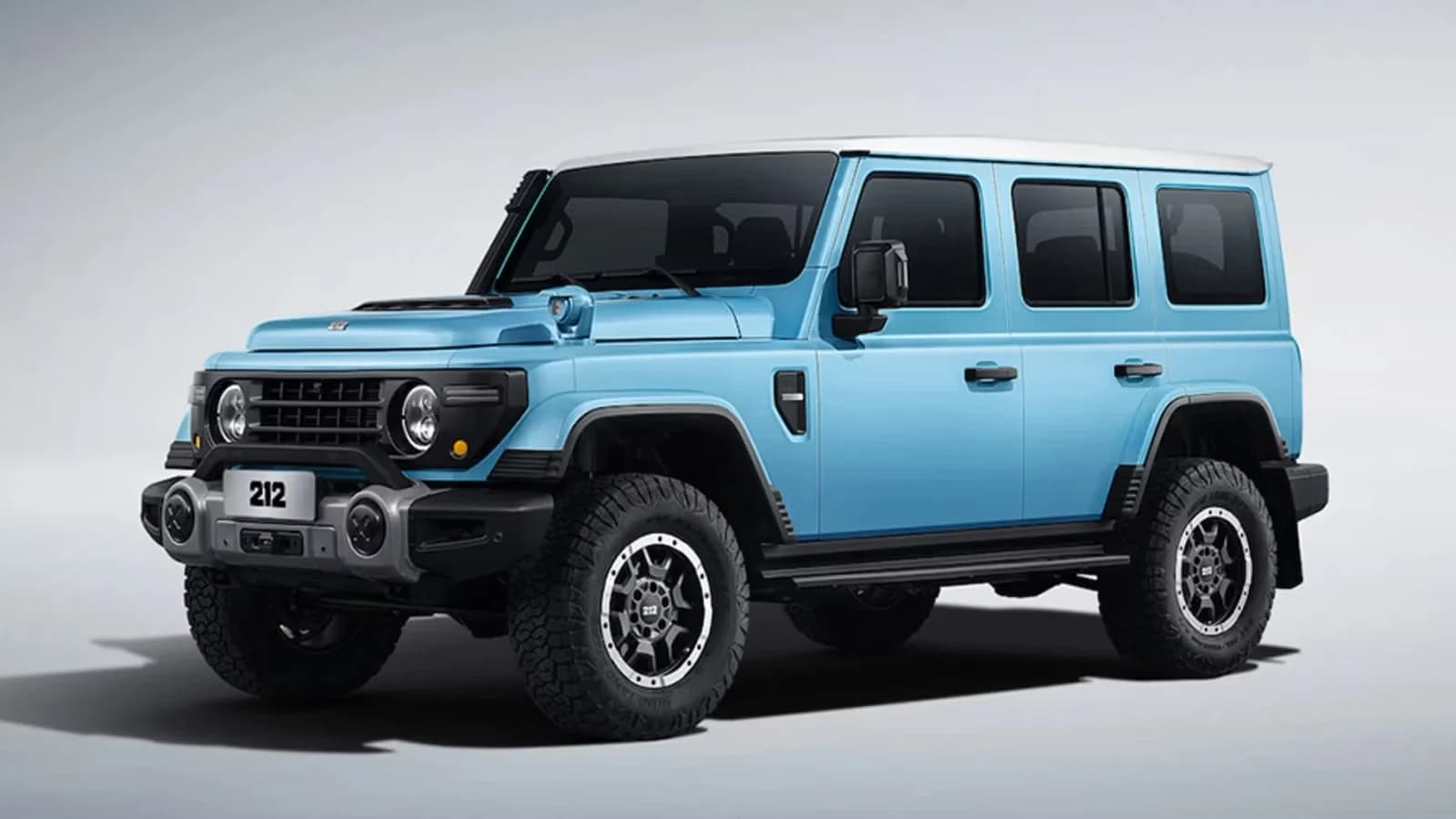
Image credit: 212 / BAW
Key Takeaways
- Brand background: 212 is built on BAW's BJ212 military off-roader (1965 onward), the same way Jeep evolved from the wartime Willys
- 2026 update: Reprofiled bonnet, wider front panel, chunkier bumper with faux nudge bar, body-coloured wheel arch extensions
- Hardware (China): Ladder-frame chassis, solid front and rear axles, coil springs, turbo 4-cyl petrol or diesel
- Inside: Carry-over cabin, digital cluster, 12.3-inch infotainment
- Australia: Confirmed for 2027 launch, but spec will differ from the Chinese T01. Distributor not announced.
- Target: Jeep Wrangler (from $81,990) and Ineos Grenadier
You probably have not heard of 212. The Chinese off-road brand has a military backstory similar to Jeep's, a slow-cooked sixty-year platform behind it, and a styling brief that sits uncomfortably close to the Wrangler from the A-pillar back. It is also coming to Australia.
At the 2026 Beijing motor show, 212 pulled the cover off an updated version of its T01 SUV. The cars in the press images will not be sold here as-is, but the changes give us a good preview of what an Australian-spec version is likely to look like when it lands in 2027.
From BJ212 to civilian off-roader
212 is the retail brand born from the BJ212, a military 4WD that Beijing Automobile Works has been building in some form since 1965. The platform is one of the longest continuously produced ladder-frame off-roaders in the world. You can draw a direct line from the BJ212 to today's T01 the same way you can trace a current Jeep Wrangler back to the wartime Willys MB.
That military heritage matters because it explains the styling. The T01 is a five-door, ladder-frame SUV with strong shoulders, flat surfaces, and a lot of glass. From the A-pillar back, it looks very Wrangler-like. The 2026 update is partly a styling refresh and partly an exercise in giving the T01 enough of its own face to keep Jeep's lawyers off the brand's lawn.
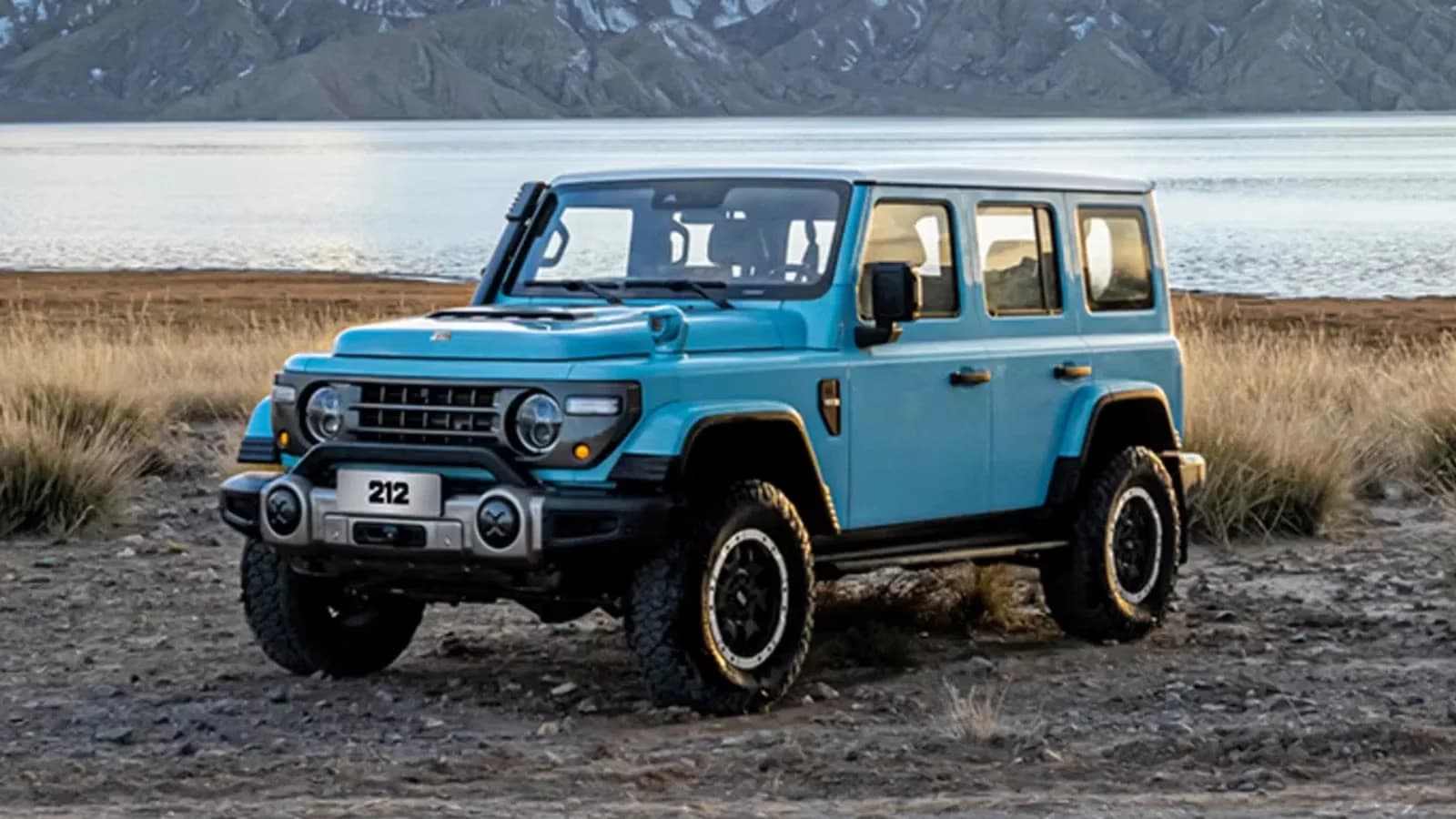
Pre-update T01 (2024 launch). Note the older front-end design and black wheel arches. Image credit: 212 / BAW
What's actually new for 2026
The 2026 update concentrates on the front end. The bonnet is reprofiled and now wears a faux air scoop. The front panel has been widened so that the headlights, indicators and grille all live inside a single horizontal piece. The front bumper picks up a chunkier look with a faux nudge bar moulded into the lower section and a pseudo underbody plate.
Around the side, the wheel arch extensions move from Wrangler-style black plastic to body colour, with just the outer lip left unpainted. Combined with the pale blue paint and contrasting white roof in the press shots, the effect pulls the T01 closer to the Ineos Grenadier than to the Wrangler. BAW's stand also included mono-coloured cars to dial back the Grenadier resemblance, which suggests the brand is still figuring out exactly which off-road icon it wants to remind buyers of.
Inside, the changes are minimal. The dashboard architecture, digital instrument cluster and 12.3-inch infotainment screen all carry over from the pre-update car. The dash itself still draws fairly openly on the Wrangler for inspiration, with the differences mostly in switch positions and air vent shapes.
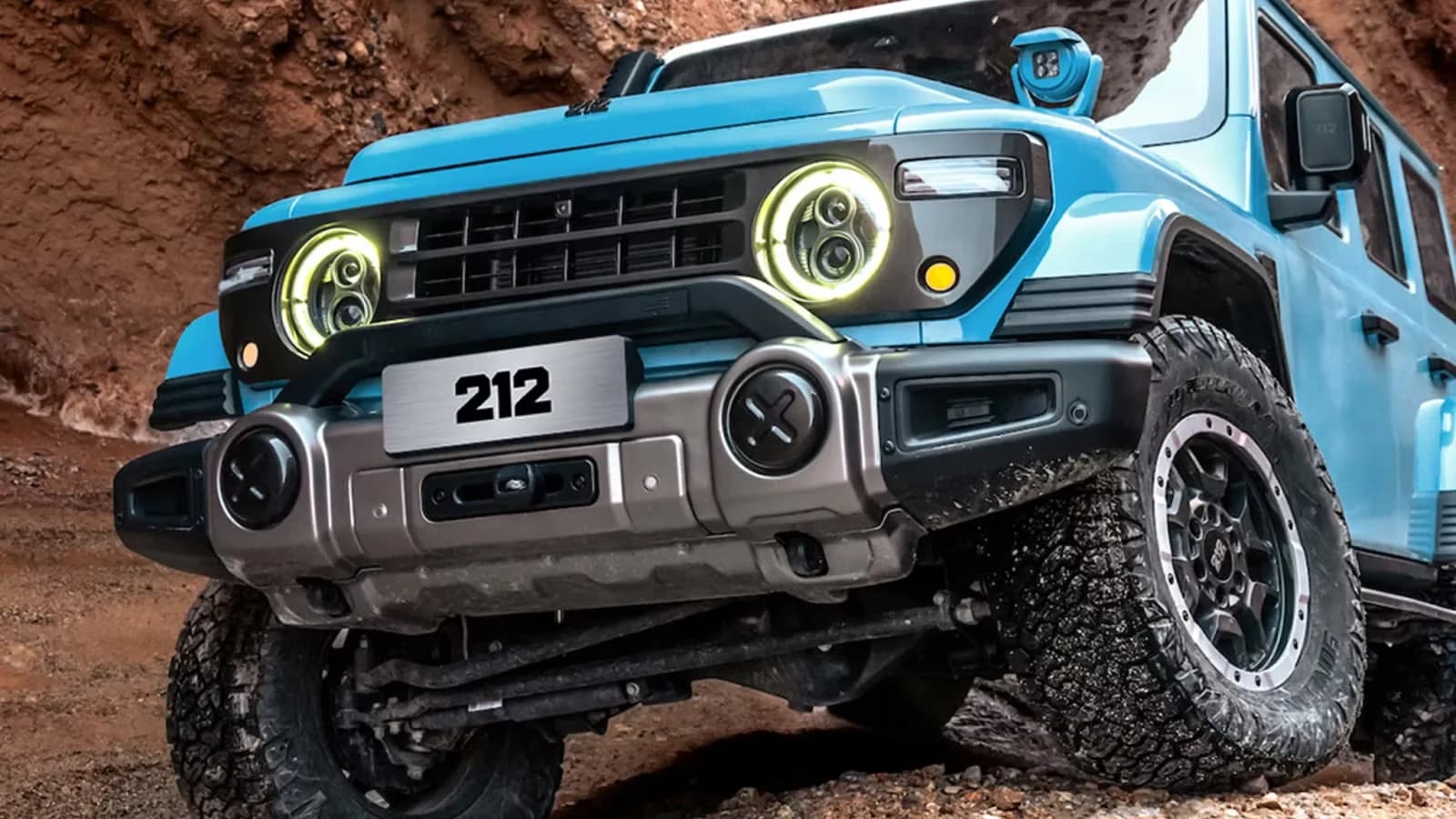
Updated front end is the main visual change for 2026. Image credit: 212 / BAW
What's underneath
Mechanically, the Chinese-market T01 is genuine off-road hardware: a ladder-frame chassis, solid front and rear axles, coil springs, and a choice of turbocharged 2.0-litre four-cylinder petrol or diesel power. That is closer to the recipe under a Grenadier or a Jeep Wrangler Rubicon than to the independent-front-suspension setups that most modern dual-purpose SUVs run.
212 has told Drive that the Australian-bound vehicles will differ from the T01 sold in China. The brand has not detailed exactly how, but the most likely changes are tweaks to suspension tune, gearing, and emissions plumbing to meet Australian Design Rules. The off-road hardware itself, particularly the solid-axle architecture, is most of the brand's reason for existing, so it would be a strange decision to dilute it.
Where it could slot in on Australian pricing
No Australian RRP has been announced. The Wrangler is the obvious benchmark, and it currently opens at $81,990 plus on-road costs for a 3-door Rubicon in Australia. Here is how the rest of the body-on-frame off-road segment looks today:
| Vehicle | Starting RRP (AUD) | Notes |
|---|---|---|
| 212 T01 (Australia 2027) | TBC | Expect a meaningful undercut to Wrangler |
| Suzuki Jimny GLX | $36,990 | Smaller segment, ladder-frame |
| GWM Tank 300 Lux | $49,990 | Body-on-frame, AT8 |
| GWM Tank 500 Lux | $59,990 | Larger Tank, V6 hybrid available |
| Jeep Wrangler Rubicon 2-Door | $81,990 | 3.6L Pentastar V6, Rock-Trac 4x4 |
For 212 to make sense in Australia, it needs to land somewhere in the gap between Tank 500 and Wrangler. Something in the $60,000 to $75,000 driveaway band would put the T01 directly into the white space where Australian buyers currently pick a Wrangler partly because there is nothing else with proper solid axles and coils. If pricing creeps closer to Wrangler money, the brand has to fight harder on warranty, dealer network, and resale value, all of which are unknowns for a brand-new entrant.
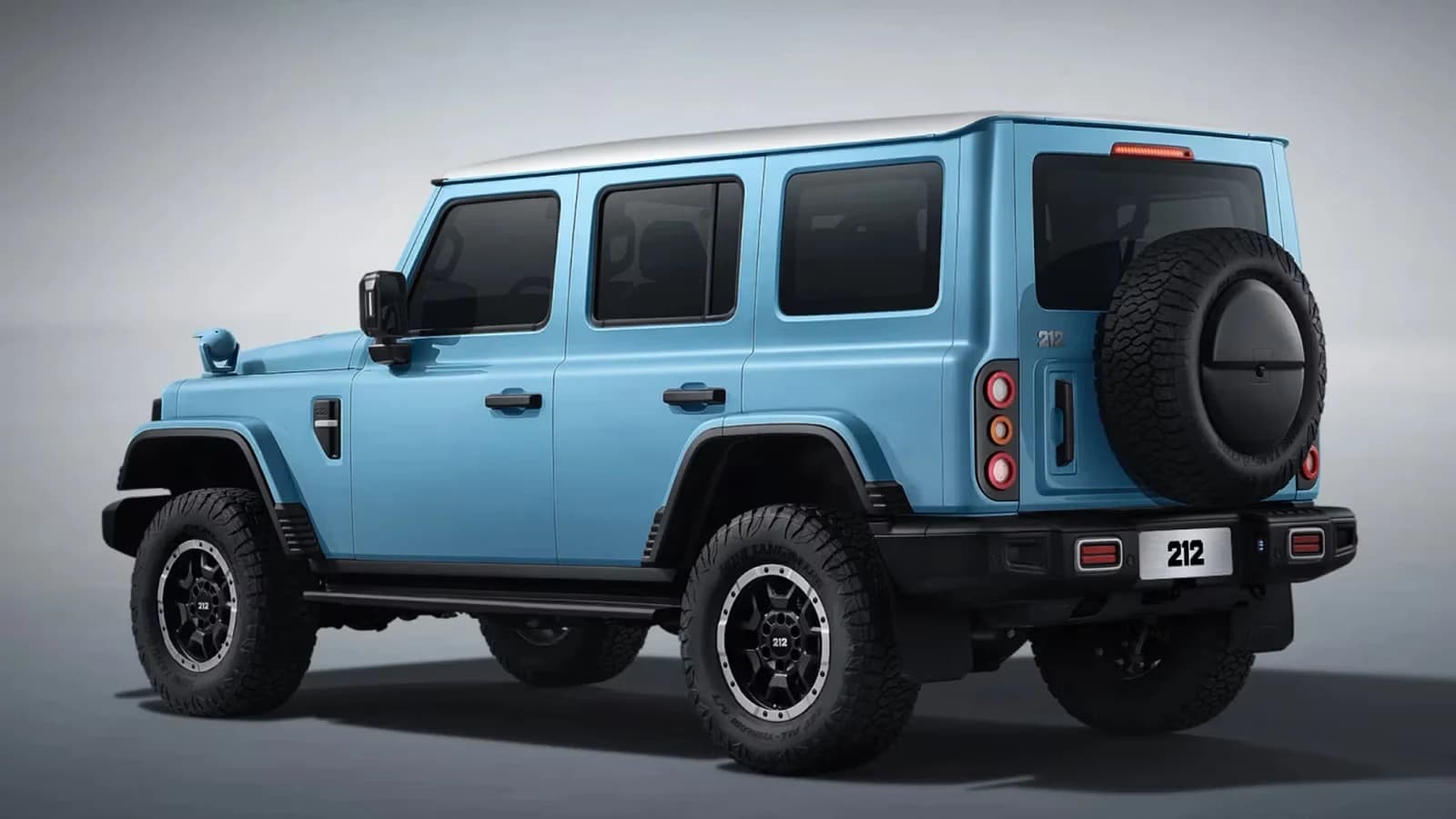
Rear view shows the boxy Wrangler / Grenadier silhouette and external full-size spare. Image credit: 212 / BAW
The 212 brand question
The bigger unknown is the brand itself. 212 has no Australian sales footprint, no announced distributor, no service network and no spare-parts plan. For an off-road purpose-built SUV that competes with the Jeep Wrangler, that matters a lot. Off-road buyers tend to be heavier-than-average warranty users (think roof racks, towing, sand work, river crossings) and tend to keep cars longer. A brand without aftersales infrastructure has to address that gap before the first cars land.
We listed 212 among the nine new Chinese brands coming to Australia in 2026 and 2027, but it remains the most question-mark-heavy of the lot. The styling is the easy part. The serious work is who sells it, who fixes it, and how the suspension behaves on real Australian gravel.
Why this matters for Australian buyers
- Solid-axle off-roader competition is finally building. Wrangler has had the segment largely to itself outside of Grenadier and Jimny. Adding a 212 alongside GWM Tank gives buyers genuine alternatives.
- Pricing pressure on Wrangler. If 212 lands at $65k to $75k driveaway with genuine off-road hardware, Jeep has a problem.
- The brand risk is real. First-Chinese-brand purchases come with service-network and resale-value unknowns. That gets weighted heavily in off-road buying decisions.
- 2027 is the planning year. Anyone seriously cross-shopping Wrangler or Grenadier in 2026 should plan to wait if the 212 is interesting, but factor in the brand's launch-year risk before committing.
Compare the established options on the directory: Jeep Wrangler Rubicon 2-Door, Wrangler Rubicon 4-Door, GWM Tank 300, Tank 500, and the smaller Suzuki Jimny GLX. See also: 9 New Chinese Brands Coming to Australia.
Disclaimer: Information sourced from the 2026 Beijing motor show and Drive reporting on the 212 brand. Australian launch timing (2027), distributor, specifications and pricing are all subject to change before the official on-sale announcement. RRPs cited for the Jeep Wrangler, GWM Tank 300 / 500 and Suzuki Jimny are manufacturer prices excluding on-road costs at the time of publishing. Read our methodology for how we source and verify data.