Key Takeaways
- 5,350mm long on a 3,500mm wheelbase, with Cargo, Passenger and Chassis Cab bodies and 23 variants planned
- 71.5kWh and 96.2kWh NMC batteries, 200kW and 420Nm, front-wheel drive at launch with AWD to follow
- A claimed circa-460km, which Kia itself flags as an internal measurement with homologation still outstanding
- 1,200kg payload on the standard body, 1,165kg on the long one, 6.1 to 8.0 cubic metres depending on roof height
- Kia's own release says Europe and Korea in the second half of 2027. The Q4 2027 Australian date is reported locally, not published by Kia Australia
- Australia already has 18 electric vans on sale, and the PV7 would land in the thick of them
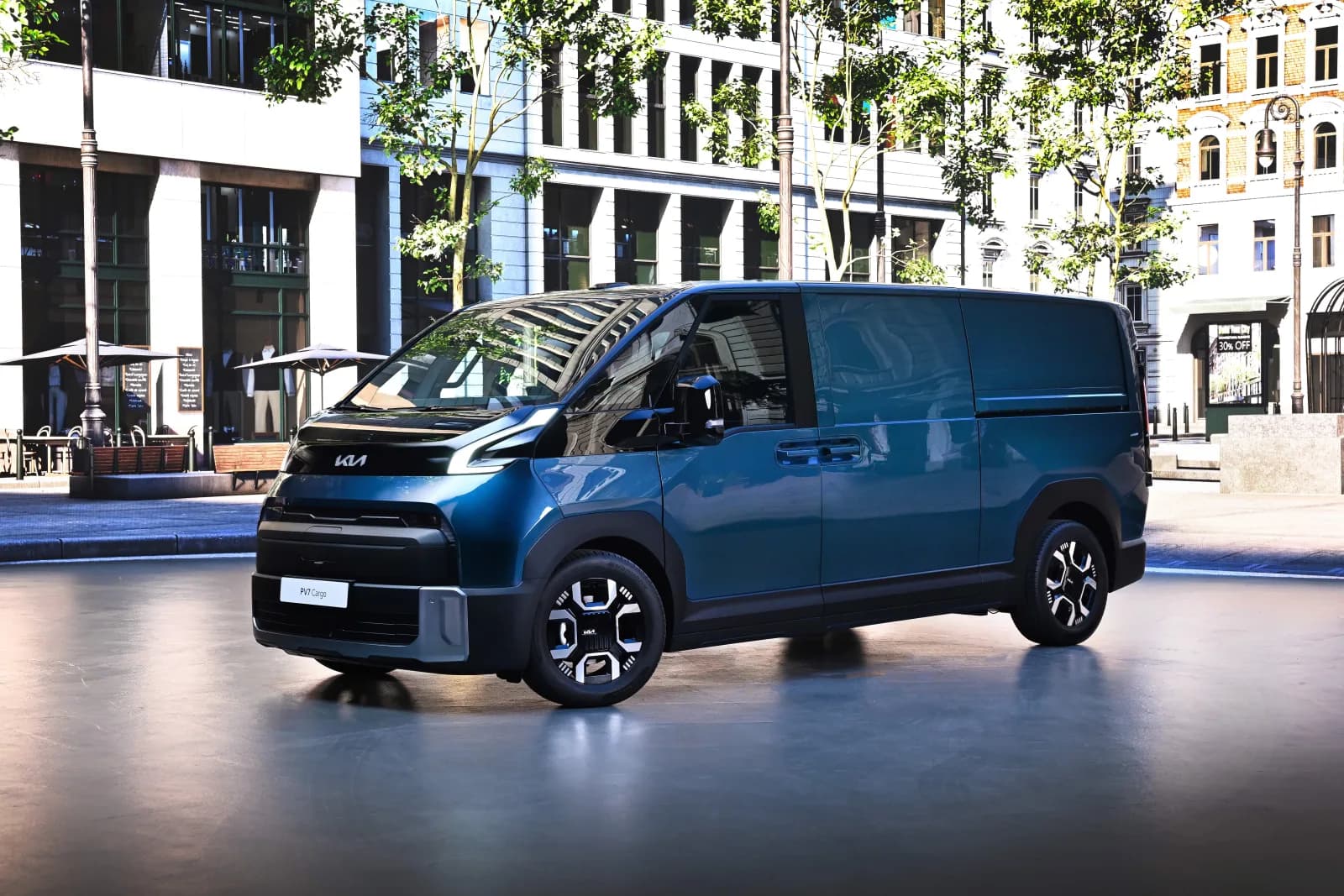
Image credit: Kia
Kia has pulled the covers off the PV7, the big one in its Platform Beyond Vehicle range, and it is a far more serious piece of commercial gear than the PV5 that arrived here earlier this year. Think 5,350mm of van, up to 96.2kWh of battery, and a load bay that swallows three Euro pallets.
Australia is said to be getting it in the final quarter of 2027. We want to be careful with that sentence, and we will explain why further down, because it is the one part of this story that Kia has not actually put in writing.
What Kia Has Published
These come from Kia's own launch release. Two things to hold onto: every figure is labelled preliminary by Kia, and they were published for Europe. No Australian specification exists, so do not read this as the van we will get.
| Item | Kia's preliminary figure (Europe) |
|---|---|
| Batteries | 71.5kWh and 96.2kWh, NMC |
| Power and torque | 200kW / 420Nm, market and configuration dependent |
| Drive | Front-wheel drive, AWD to follow later |
| Range | Up to around 460km (Kia-internal to WLTP criteria, not homologated) |
| Charging | 800V, 10 to 80 per cent in about 25 min on a 350kW charger |
| Payload | 1,200kg standard body / 1,165kg long body |
| Cargo volume | 6.1m³ long body normal roof / 8.0m³ high roof |
| Dimensions | 5,350 x 1,995 x 1,990mm, 3,500mm wheelbase, 550mm load lip |
| Seating | 2 and 3-seat Cargo, up to 9-seat Passenger (11 in Korea) |
| Launch | Europe and Korea, second half of 2027 |
All figures published by Kia for the European market and described by Kia as preliminary. No Australian specification has been announced.
Two details are worth pulling out because they tend to get flattened in the retelling. The payload pairing runs the opposite way to what you would assume: the standard body carries 1,200kg and the long body carries 1,165kg, so the bigger van carries slightly less. And the 6.1 to 8.0 cubic metre span is not a body-length range, it is a roof-height difference, with 8.0 belonging to the high-roof Cargo.
Credit where it is due on the range number. Kia published "up to around 460km" and then said in its own release that the figure is an internal measurement against WLTP criteria with homologation still outstanding. That is a manufacturer telling you its headline number is not certified yet, which is rarer than it should be, and it is why we are writing it as a claim rather than as a WLTP figure.
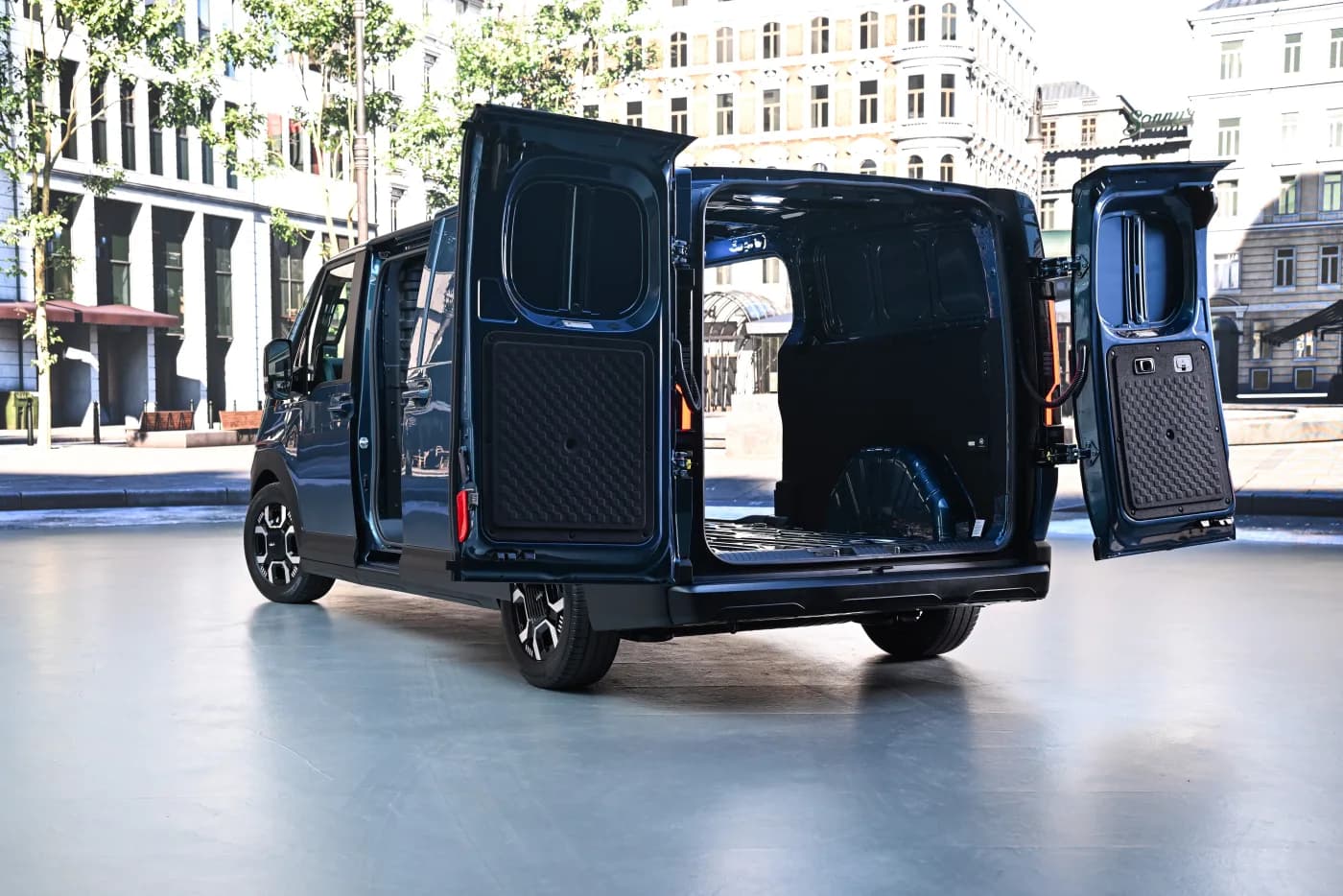
Image credit: Kia
Where It Would Land Here: We Already Have 18 Electric Vans
This is the bit that gets lost when a new electric van is announced. The Australian electric van market is not a future thing any more. We currently hold 18 electric van variants on sale in this country, from a 45kWh Kangoo to a 113kWh eSprinter. Here is where the PV7's reported payload would slot in.
| Electric van on sale in Australia | Battery | Range | Payload | Price |
|---|---|---|---|---|
| Ford e-Transit Van 420L | 68kWh | 307km | 1,611kg | $104,990 |
| LDV eDeliver 9 LWB Mid Roof | 88.6kWh | 280km | 1,410kg | $118,836 |
| Kia PV7 Cargo (Kia preliminary, Europe) | 71.5 / 96.2kWh | ~460km claimed | 1,165 to 1,200kg | Not announced |
| Renault Master E-Tech | 87kWh | 409km | 1,164kg | $77,990 |
| VW ID. Buzz Cargo SWB | 79kWh | 431km | 774kg | $66,350 |
| Kia PV5 Cargo S Long Range | 71.2kWh | 416km | No data | $55,990 |
Australian figures from the CarSorted database, prices before on-road costs. PV7 figures are Kia's preliminary European numbers and are not an Australian specification.
The interesting result: on payload the PV7 would sit just above the Renault Master E-Tech and a long way short of the e-Transit, but it would do it with roughly 50 per cent more usable range than either of the two vans above it in the table. Nobody currently sells a van here that combines 1,100kg-plus of payload with a genuine 400km-plus of range. That gap is exactly the one the PV7 is aimed at.
Worth noting the PV7's small battery, at 71.5kWh, is almost identical to the 71.2kWh pack in the PV5 Cargo we already stock. Kia is putting its existing small pack into a much larger van and adding a 96.2kWh option on top. If Australia only gets the big battery, the price conversation changes a lot. If we get the small one in a 5.35m van, the range conversation does.
If you are working out whether a van of these proportions actually suits your loads, our pallet-fit planner will do the geometry, and the tradie vehicle guide covers the rest of the field.
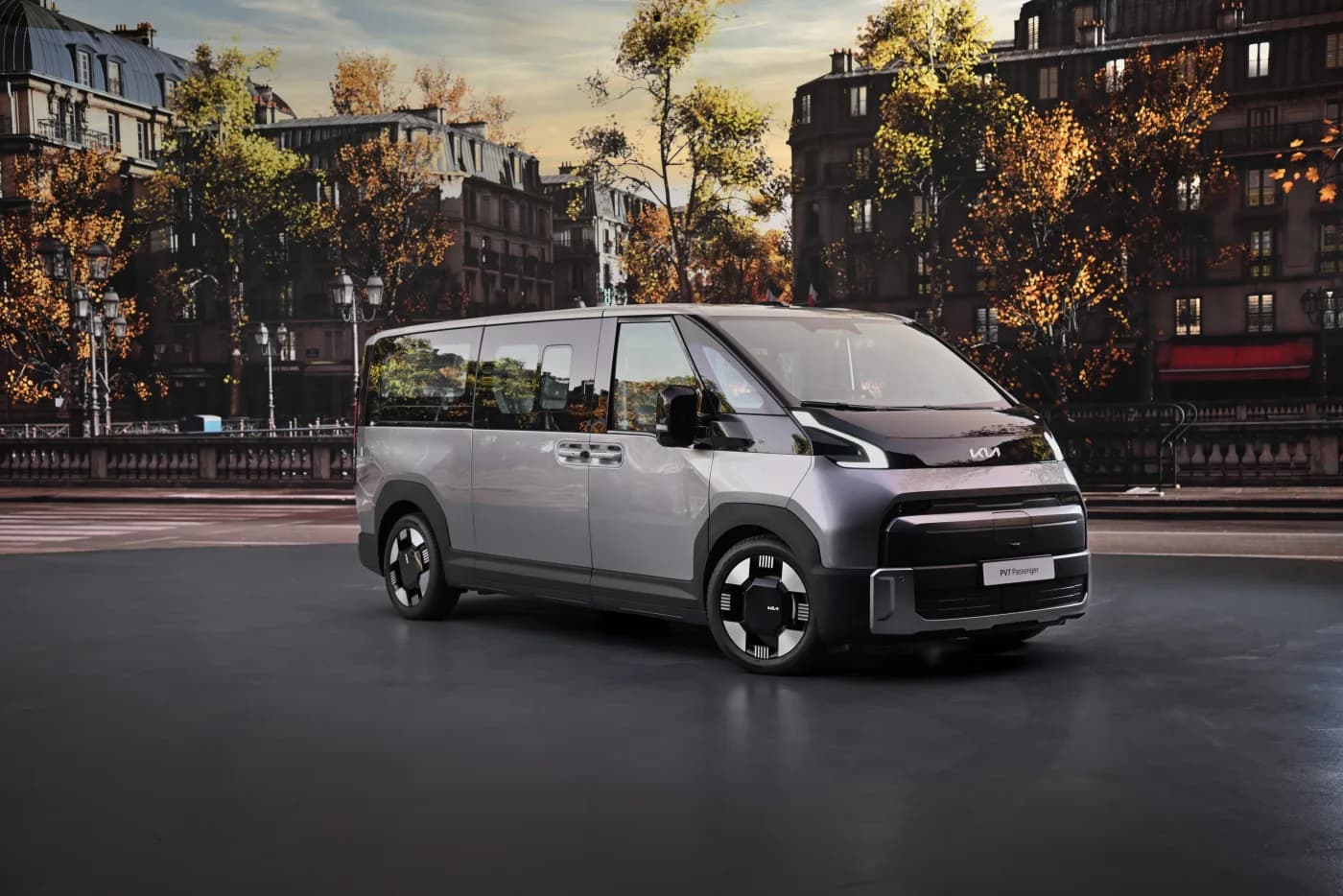
Image credit: Kia
About That Australian Date
Kia's launch release gives Europe and Korea in the second half of 2027, then says further markets, derivatives and conversions will follow. It does not mention Australia.
The fourth-quarter 2027 Australian arrival, and the line about the PV7 going through Kia's local ride and handling program, come from Australian media reporting rather than from anything Kia Australia has published. We went looking: there is no PV7 page on Kia's Australian site, no PV7 entry in its sitemap, and no Australian press release. So we are reporting the local timing as exactly what it is, which is a statement to media that has not been put on the record with a name attached to it.
None of which means it is wrong. Kia Australia has been quick with the PBV range so far and the PV5 got here inside a year of its European launch. It just means late 2027 is a plan rather than a commitment, and plans for vans that are still 12 months from their first market launch move around.
On Safety, Do Not Let the PV5 Grading Wander Across
There is no ANCAP record for the PV7, which is what you would expect for a van that does not go on sale anywhere until late next year. It shows no data with us until that changes.
The PV5 Cargo does carry an ANCAP result, and it is worth understanding what it is. ANCAP graded it Platinum with a 91 per cent score in its Commercial Van Safety Comparison, and ANCAP is explicit that this assessment is separate from its star-rating program. It is not a five-star ANCAP rating, it belongs to a different vehicle, and it tells you nothing about the PV7.
Our Take: the Van Nobody Is Building Yet
Look at our own table again. The vans with real payload here have mediocre range, and the vans with real range are small. The PV7 is the first credible attempt at both in one vehicle, and Kia is building it on a dedicated commercial platform rather than stretching a passenger one, which is the right way around.
The honest caveats are large, though. Nothing is homologated. No price exists in any market. Australia is not named in Kia's release. The 23-variant line-up is a post-launch plan, not a launch range, and we have no idea which slice of it we would get. What is real is the vehicle itself and a second-half-2027 launch in two markets, and that is enough to make it the most interesting thing happening in a segment that has quietly gone from novelty to eighteen models on sale.
We will add the PV7 to the database when Kia Australia publishes an Australian specification, and not before. Until then the PV5 Cargo at $55,990 remains the Kia electric van you can actually buy, and the rest of the Kia range is where to look next.
Compare these picks side by side
Stack 5 of them on 200+ specs, price, safety and running cost in one view.
Compare all 5 nowFrequently Asked Questions
When is the Kia PV7 coming to Australia?
How far can the Kia PV7 go on a charge?
How much can the Kia PV7 carry?
How big is the Kia PV7?
Does the Kia PV7 have all-wheel drive?
Does the Kia PV7 have an ANCAP rating?
Is the Kia PV5 already on sale in Australia?
New cars, real prices, straight to your inbox
Join the CarSorted mailing list for new-model launches, price drops and drive-away deals, honest reviews, and founding-member pricing on the upcoming CarSorted Pro Report.
- New-model launches
- Price drops & deals
- Honest reviews
No spam, unsubscribe anytime. By subscribing you agree to receive marketing emails.
Disclaimer: All information in this article was believed to be correct at the time of publishing (16 September 2026). Prices are manufacturer recommended retail prices (RRP) and may vary by state, dealer, and options. Specifications, government incentives, and rebates can change without notice. Always verify details with the manufacturer or relevant authority before making a purchase decision. Running cost estimates are based on average Australian driving conditions at 15,000 km/year. CarSorted does not accept payment for recommendations or rankings.
Written by Uzzi, CarSorted Editorial Team · 16 September 2026 · how we research
Comments (0)
Sign in to join the conversation
No comments yet. Be the first!