Key Takeaways
- Four grades, before on-roads: ES $58,990, Aspire (7-seat) $66,709, Exceed $71,640, Exceed Tourer $74,490
- New 22.7kWh lithium-ion battery, 86km WLTP electric-only range (103km NEDC)
- Combined system power up to 221kW, about 40kW more than the 2025 car
- NEDC combined fuel use drops to 1.2 L/100km, AWD across the range
- Australia-tuned dampers, anti-roll bar and steering, new Bridgestone tyres, steel bonnet and front guards
- Five-star ANCAP retained under 2022 protocol, 10-year warranty with 10 years of capped-price servicing
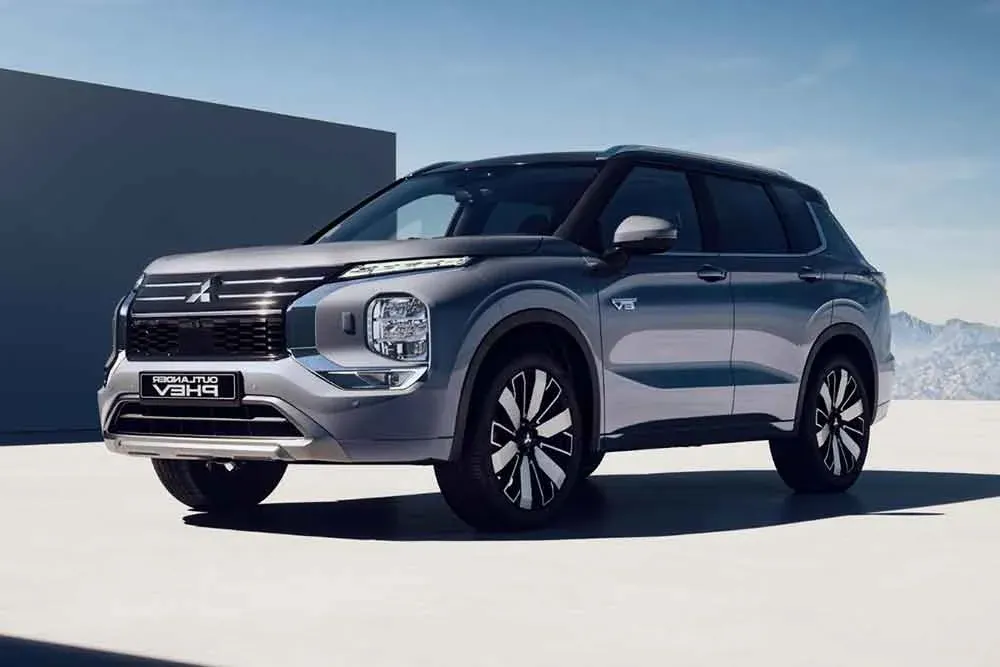
Image credit: Mitsubishi Australia
The updated Mitsubishi Outlander PHEV has reached Australian dealers, and the headline shift is not just the bigger battery and the extra 40kW. It is what those changes do to the cross-shop. The entry ES at $58,990 before on-road costs sits within $150 of the front-wheel-drive Toyota RAV4 XSE PHEV 2WD we wrote about a week ago, except this one comes with AWD as standard and the option of a seven-seat Aspire body for under $67k. That is a real choice rather than a niche play, and we will walk through exactly when it stacks up below.
The car itself is a mid-cycle refresh on the same ZM-generation platform, so the cabin layout, the seating geometry and the towing rating all carry through. What you are paying the extra for is a new 22.7kWh gross battery (up from the old 20kWh pack), front and rear electric motors that together combine with the 2.4-litre Atkinson petrol for 221kW of system power, a longer 86km of WLTP electric driving, and a chassis tune Mitsubishi Motors Australia developed on local roads. Pricing is up between $1,700 and $3,000 per grade.
Pricing
Four grades carry into the 2026 line-up, all running the same plug-in hybrid powertrain. Prices below are before on-road costs and reflect the changes from the 2025 list.
| Grade | Seats | Price (before on-roads) | Change vs 2025 |
|---|---|---|---|
| ES AWD | 5 | $58,990 | +$1,700 |
| Aspire AWD | 7 | $66,709 | +$3,000 |
| Exceed AWD | 5 | $71,640 | +$2,350 |
| Exceed Tourer AWD | 5 | $74,490 | +$2,700 |
Current price on CarSorted: Mitsubishi Outlander ES 2WD $39,990 RRP, as at 25 Jun 2026; Toyota RAV4 XSE PHEV AWD $63,340 RRP, as at 6 Sep 2026; Toyota RAV4 GR Sport PHEV AWD $66,340 RRP, as at 6 Sep 2026.
Aspire is still the only seven-seat grade. ES, Exceed and Exceed Tourer are five-seaters. AWD with a permanent rear electric motor is standard on every grade because the rear motor is the powertrain, not an option box.
The Powertrain Changes
Mitsubishi has not gone radical here. The 2.4-litre 4B12 Atkinson-cycle petrol four stays, the dual-motor layout stays, and the basic philosophy stays: drive on the battery whenever you can, switch the engine on when you cannot, and let it serve as a generator under heavy load. What has changed is the size of the pack and the muscle behind the motors.
| Spec | 2026 Outlander PHEV | Previous 2025 model |
|---|---|---|
| Petrol engine | 2.4L Atkinson 4-cyl | 2.4L Atkinson 4-cyl |
| Combined system power | 221 kW | ~185 kW |
| Battery (gross) | 22.7 kWh | 20.0 kWh |
| Electric range (WLTP) | 86 km | 84 km |
| Electric range (NEDC) | 103 km | ~84 km |
| Combined fuel use (NEDC) | 1.2 L/100km | 1.5 L/100km |
| Drive | Twin-motor AWD | Twin-motor AWD |
| Fuel tank | 56 L | 56 L |
| DC fast charge | 50 kW (CHAdeMO) | 50 kW (CHAdeMO) |
| Braked towing | 1,600 kg | 1,600 kg |
The CHAdeMO port is the one thing about the Outlander PHEV that has not aged well. Most public DC fast chargers in Australia are now CCS2, and CHAdeMO sockets are getting scarce outside the older Chargefox and Evie sites. In practice it matters less than it sounds, because 86km of WLTP range is a single overnight AC top-up for most owners, and the petrol side is there for the long trip. But it is worth knowing if you were planning to lean on highway fast-charging.
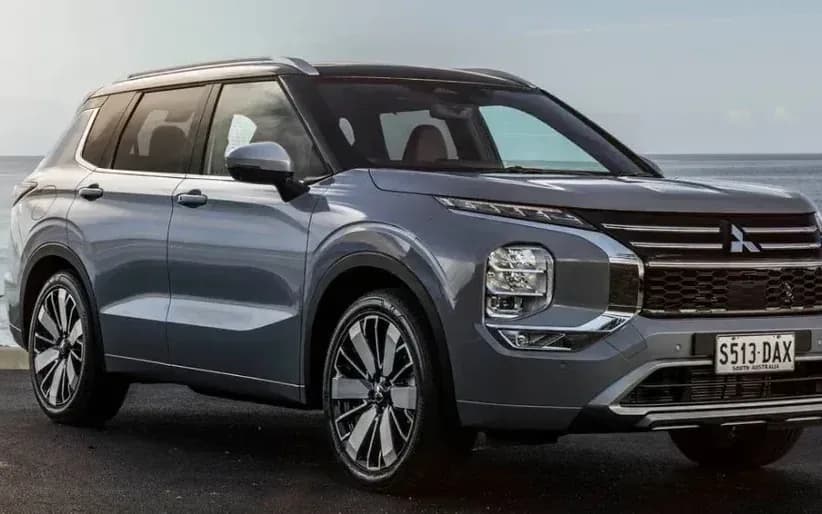
Image credit: Mitsubishi Australia
Australian Suspension and Steering Tune
Mitsubishi Motors Australia put real work into the chassis this time around. The front and rear dampers have been re-valved, the front anti-roll bar has been reduced in diameter to free up a little more compliance, and the electric power steering has been re-mapped for an Australian feel. The bonnet and front guards have been swapped from plastic composite to steel to cut cabin noise and high-frequency vibration. The factory tyre choice is now Bridgestone-supplied across the range.
On paper that reads like cosmetic detail. On a country road it is usually the difference between a car that follows ruts and one that does not, and it is the bit owners notice every day. Whether the tune lands will depend on a proper drive on Australian B-roads, but Mitsubishi has more skin in this market than most, and the local engineering team has form on the petrol Outlander.
Interior and Equipment
Every grade now gets a 12.3-inch infotainment display with wireless Apple CarPlay and Android Auto, a 360-degree camera and Mitsubishi's Connected Car Service for remote charging status and pre-conditioning. The centre console has been redesigned with repositioned cupholders, a reshaped wireless phone pad and about 45 per cent more storage under the armrest.
Aspire is still the family pick. You get the seven-seat layout, leather-style trim, heated front seats and the larger digital cluster. Exceed adds 20-inch alloys, a head-up display, panoramic sunroof, powered tailgate and a heated steering wheel. Exceed Tourer puts a Yamaha Dynamic Sound system in, two-tone semi-aniline leather and an interior trim upgrade over the Exceed.
Safety
The Outlander range retains its five-star ANCAP rating under the 2022 protocol, and the rating has been re-affirmed for PHEV variants built from July 2025. ANCAP's scoring on the original test was 83 per cent for adult occupant protection, 92 per cent for child occupant protection, 81 per cent for vulnerable road user protection and 83 per cent for safety assist.
Mitsubishi has also rolled in upgrades to the restraints and centre airbag, added a direct driver monitoring system and broadened the autonomous emergency braking to cover turning manoeuvres and motorcycles. Lane support has been expanded too. Standard safety kit includes adaptive cruise, blind-spot monitoring, rear cross-traffic alert, AEB front and rear, lane-keep assist and a reversing camera, with the 360-degree camera now across the range.
How It Compares
The PHEV mid-size SUV bracket has filled out fast over the last twelve months, and the Outlander's competition reads very differently in mid-2026 than it did even a year ago.
| Car | From (before on-roads) | EV range | Combined kW | Seats |
|---|---|---|---|---|
| Outlander PHEV ES (AWD) | $58,990 | 86 km WLTP | 221 | 5 |
| Outlander PHEV Aspire (AWD, 7-seat) | $66,709 | 86 km WLTP | 221 | 7 |
| Toyota RAV4 XSE PHEV 2WD | $58,840 | 100 km WLTP | 200 | 5 |
| Toyota RAV4 XSE PHEV AWD | $63,340 | 100 km WLTP | 227 | 5 |
| BYD Sealion 6 Premium AWD | ~$58,990 | 81 km WLTP | 238 | 5 |
| GWM Haval H6GT Hi4 PHEV | $52,990 d/a | 183 km NEDC | 321 | 5 |
| Chery Tiggo 9 Super Hybrid (7-seat) | $59,990 | ~140 km NEDC | ~440 | 7 |
Read across that table and the picture is clear. On EV range alone, Toyota wins among the mainstream Japanese pair and the Chinese contenders run further still. On combined power, both Toyota AWD and the Chinese PHEVs outgun the Outlander. Where Mitsubishi holds the line is the combination of AWD-as-default, a Japanese badge with a 10-year warranty, the only seven-seat option in the segment for under $67k, and a chassis tune developed for our roads. That is a specific buyer, but it is not a niche one. We have plotted the head-to-head in detail at Sealion 6 vs Outlander PHEV, and the cross-shop logic is sharper than the price gap suggests.
Warranty and Servicing
Mitsubishi's 10-year/200,000km vehicle warranty carries through, conditional on you servicing the car with a Mitsubishi dealer. Sit outside the dealer network and the warranty defaults to five years. There is 10 years of capped-price servicing alongside the warranty, plus the dedicated Drive Battery Capacity Care Program that covers the traction battery for eight years or 160,000km. The 10-year vehicle warranty is still the longest of any mainstream new car sold in Australia, and the warranty story is one of the reasons the Outlander has held its ground while Chinese PHEV competition piled in. For context across the rest of the segment, see our car warranty comparison.
What This Means for Buyers
On CarSorted the previous Outlander PHEV Aspire is listed against the Toyota RAV4 GXL Hybrid AWD at $51,990 and the Mazda CX-5 Touring AWD at $46,490. The new pricing puts the entry ES PHEV roughly $7,000 above either of those conventional petrol-hybrid alternatives, and the Aspire seven-seat about $15,000 above a Kluger GXL Hybrid AWD. That is a meaningful gap, but the maths shifts once you actually plug in.
Using the running-cost model in our cheapest PHEV cars in Australia 2026 guide, a commuter doing 40km a day on the battery and one 600km road trip a month will spend around $720 a year on electricity and roughly $480 a year on petrol with the Outlander PHEV. The equivalent driver in a RAV4 Hybrid AWD doing the same trips on petrol alone is closer to $1,950. That is a $750 a year fuel saving versus the petrol hybrid, and around $1,500 a year versus a 2.5L petrol-only Outlander.
Where the Outlander makes the strongest case is the buyer who needs seven seats and AWD, can plug in at home most nights, and wants Japanese ownership economics rather than Chinese ones. The Aspire AWD at $66,709 is the only seven-seat PHEV under $70k that gives you 86km of WLTP electric driving, a five-star ANCAP rating from a 2022 test, a 10-year warranty and a CCS-free home charging setup. Where it loses is to the front-wheel-drive Toyota RAV4 XSE PHEV 2WD on EV range, and to the Chery Tiggo 9 Super Hybrid on combined power and electric distance.
If you cross-shopping the segment, run the two head-to-heads that matter at Sealion 6 vs Outlander PHEV and at Outlander vs RAV4, then build your own list from the seven-seat PHEV shortlist in the directory.
Mitsubishi Outlander PHEV in the directory | Compare RAV4 PHEV vs Outlander PHEV | Best PHEV SUVs Australia 2026
Disclaimer: Specifications, pricing and equipment are sourced from Mitsubishi Motors Australia. Prices quoted are before on-road costs unless noted otherwise. WLTP and NEDC electric range and fuel-use figures are manufacturer-claimed and will vary with driving style, climate and battery state-of-charge. ANCAP rating refers to the 2022 protocol applicable to Outlander variants built from July 2025 onwards. Mitsubishi Australia did not pay for or review this article.