Key Takeaways
- New Inspire Extended Range grade at $41,490 before on-roads, $1,500 over the standard Inspire
- 29.8kWh LFP battery (up from 18.4kWh), 136km WLTP electric range (up from 83km)
- Up to 996km combined with 1.4 to 1.5 L/100km claimed under WLTP
- DC charging doubled to 60kW, 30 to 80 per cent in about 16 minutes
- Same 160kW electric drive motor plus 1.5L petrol generator, around 193kW combined system
- Five-star ANCAP, 7yr unlimited km warranty, 8yr battery warranty
- Dealer arrivals from late May 2026, Complete ($37,490) and Inspire ($39,990) continue alongside
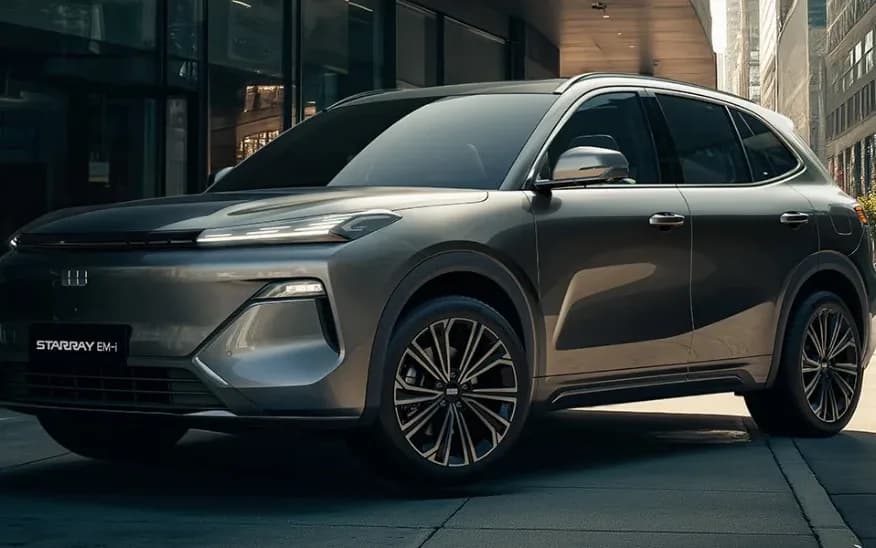
Image credit: Geely Australia
For anyone who has been shopping a mid-size plug-in hybrid SUV in Australia, the maths just shifted again. Geely Australia has confirmed pricing on the Starray EM-i Inspire Extended Range at $41,490 before on-road costs, and the headline figure that matters for daily life is 136 kilometres of WLTP electric driving on a single charge. That is more battery range than the entry Toyota RAV4 PHEV, more than the BYD Sealion 6 in any current grade, and more than the new Mitsubishi Outlander PHEV update from earlier this week, for between sixteen and seventeen grand less list price than any of them.
Geely is keeping the existing Complete and Inspire grades on sale at $37,490 and $39,990 respectively, so this is an additional flagship variant rather than a model-wide overhaul. The Extended Range badge is doing the heavy lifting here. Underneath, the 29.8kWh LFP battery is roughly 62 per cent larger than the 18.4kWh pack in the rest of the range, which is what unlocks the longer plug-in commute, a slightly lower combined fuel figure under WLTP, and a DC fast-charge speed that finally feels useful for an in-town top-up.
Pricing across the line-up
All three grades wear the same EM-i Super Hybrid badge and share the 160kW front-drive layout. The Extended Range simply trades the smaller battery and slower charger for the larger pack. Pricing below is before on-road costs.
| Grade | Battery | WLTP EV range | Price (RRP) |
|---|---|---|---|
| Complete | 18.4 kWh | 83 km | $37,490 |
| Inspire | 18.4 kWh | 83 km | $39,990 |
| Inspire Extended Range | 29.8 kWh | 136 km | $41,490 |
Current price on CarSorted: Geely Starray EM-i Inspire Extended Range $41,490 RRP, as at 4 Oct 2026; Geely Starray EM-i Complete $37,490 RRP, as at 4 Oct 2026; BYD Sealion 6 Essential $42,990 RRP, as at 23 Sep 2026.
The step from Inspire to Inspire Extended Range is the cheapest battery upgrade in the segment right now. Buyers are paying $1,500 for an extra 11.4kWh of usable storage and roughly 53km of WLTP electric driving, which is one of the better dollar-per-kilometre swaps we have seen in a plug-in hybrid since BYD priced the Sealion 6.
Powertrain and charging in detail
Geely has not changed the way the EM-i drivetrain delivers power. A 1.5-litre naturally aspirated four-cylinder petrol engine sits up front and acts as a generator most of the time, sending energy to the front-mounted 160kW electric drive motor. Geely quotes 73kW and 125Nm from the engine itself, 262Nm of torque from the drive motor, and a combined system output of around 193kW on full song. The 0 to 100km/h dash is in the eights, with the heavier Extended Range pack taking the time to roughly 8.2 seconds.
| Spec | Inspire (standard) | Inspire Extended Range |
|---|---|---|
| Petrol engine | 1.5L NA (73kW/125Nm) | 1.5L NA (73kW/125Nm) |
| Drive motor | 160 kW / 262 Nm | 160 kW / 262 Nm |
| Combined system output | ~193 kW | ~193 kW |
| Battery (LFP) | 18.4 kWh | 29.8 kWh |
| WLTP EV range | 83 km | 136 km |
| WLTP combined range | 943 km | 996 km |
| WLTP combined fuel | 2.4 L/100km | 1.4 to 1.5 L/100km |
| 0 to 100 km/h | ~8.0 sec | ~8.2 sec |
| AC charging | 6.6 kW | 6.6 kW |
| DC charging (peak) | 30 kW | 60 kW |
| DC 30 to 80 per cent | about 25 min | about 16 min |
| Fuel tank | 51 L | 51 L |
| Drive | FWD | FWD |
Geely is sticking with a Lithium Iron Phosphate chemistry for the Extended Range. LFP cells run cooler, last longer in deep cycle use and are more tolerant of being charged to 100 per cent, all of which suits a PHEV that is going to be plugged in night after night. The trade-off is energy density, so the bigger pack adds roughly 40 to 60kg of mass over the standard 18.4kWh version.
What 136km of electric range means in real life
The Australian Bureau of Statistics puts average passenger-vehicle use at roughly 12,100 kilometres a year, which works out to about 33 kilometres a day. A WLTP figure of 136km is a generous safety margin on top of that, so a metro driver with a home wall socket could realistically run weeks at a time without burning a litre of fuel. Even if you discount WLTP by 25 per cent to allow for highway speeds and winter losses, you are still looking at around 100km of usable electric driving each day.
The 60kW DC peak finally gives the Starray a workable public-charging story. On the 18.4kWh car, a 30kW cap meant a top-up at a shopping centre was just slow enough to be a chore. Doubling the peak rate, plus the bigger pack absorbing more energy per minute, turns a quick coffee stop into a useful range injection if you forgot to plug in at home. The 6.6kW AC charging is unchanged, so a wallbox will fill the larger pack overnight on standard tariffs.
Equipment and cabin
Inside, the Extended Range is essentially an Inspire with a bigger battery, so it brings a 15.4-inch central touchscreen with wireless Apple CarPlay and Android Auto, a 10.2-inch digital instrument cluster, a 13.4-inch head-up display, ventilated and heated front seats with a memory driver, a panoramic power sunroof, power tailgate, leatherette upholstery, 19-inch alloys and vehicle-to-load with up to 3.3kW of output. There is also an Infinity-branded audio system and ambient lighting in the cabin.
The Complete grade still gives you the same screens, wireless smartphone mirroring, heated front seats, V2L, 18-inch alloys and the full safety pack. Buyers who genuinely do most of their driving on the highway and rarely plug in could still make a strong case for it at $37,490.
Practicality and dimensions
The Starray is a five-seat medium SUV at 4,740mm long, 1,905mm wide and 1,685mm tall on a 2,755mm wheelbase. Boot space is quoted at 528 litres behind the rear seats including 100 litres of underfloor storage, expanding to 2,065 litres with the rear bench folded. Ground clearance is 172mm. The Extended Range keeps the same shell, so cabin and boot dimensions are unchanged from the rest of the line-up.
Safety
Geely confirms the Starray EM-i carries a five-star ANCAP rating under the 2023 to 2025 protocol, applying across Complete, Inspire and Inspire Extended Range. Component scores break down to 90 per cent adult occupant protection, 87 per cent child occupant, 86 per cent vulnerable road user and 82 per cent safety assist. Seven airbags are standard, including a centre airbag, alongside autonomous emergency braking with pedestrian and cyclist detection, lane keep assist, blind-spot monitoring, rear cross-traffic alert, adaptive cruise control and a 360-degree camera on the Inspire and Inspire Extended Range.
How it compares
Three plug-in hybrid SUVs sit closest to the Extended Range on price and intent. We pulled the equivalent grades from the CarSorted directory so you can see them side by side.
| Car | RRP | WLTP EV range | Combined power |
|---|---|---|---|
| Geely Starray EM-i Inspire Extended Range | $41,490 | 136 km | 193 kW |
| BYD Sealion 6 Essential | $42,990 | 92 km (NEDC) | 160 kW |
| Chery Tiggo 7 Super Hybrid | $34,990 d/a (offer to 30 Sep) | 95 km (NEDC) | 265 kW |
| Mitsubishi Outlander PHEV ES | $58,990 | 86 km | 221 kW |
Current price on CarSorted: Geely Starray EM-i Inspire Extended Range $41,490 RRP, as at 4 Oct 2026; BYD Sealion 6 Essential $42,990 RRP, as at 23 Sep 2026; Mitsubishi Outlander ES 2WD $39,990 RRP, as at 25 Jun 2026.
The Starray Extended Range is the only car in this group with a WLTP electric-range figure north of 100km, and it does it for less money than two of its three rivals. The Chery undercuts it by $1,500 but quotes range on the older NEDC cycle, which usually flatters numbers compared with WLTP. The Outlander wins on AWD, seven seats and a 10-year warranty, but you are paying a $17,500 premium for that. For a deeper segment cross-shop, see our cheapest PHEVs in Australia 2026 guide and the best PHEV SUVs guide.
Warranty and servicing
Geely Australia backs the Starray with a seven-year, unlimited-kilometre vehicle warranty, an eight-year high-voltage battery warranty, and up to seven years of complimentary roadside assistance when the car is serviced within the Geely network. Service intervals are 12 months or 15,000km, whichever comes first, and Geely runs an Assured Service Pricing program so the per-visit cost is published up front.
The CarSorted angle: what this looks like on running cost
On the CarSorted directory the standard Inspire is logged at $39,990 with 83km of WLTP electric range. Step up to the Inspire Extended Range at $41,490 and the WLTP figure jumps to 136km, the combined fuel claim drops to 1.4 to 1.5 L/100km, and DC charging speed doubles to 60kW. We modelled three realistic Australian use cases to see how those numbers translate into dollars.
Use the average passenger-vehicle figure of about 12,100km a year, a residential electricity price of 30c per kWh and a pump price of $2.00 per litre of 95 RON petrol. A driver who can plug in every night and stays inside the 136km daily envelope only ever burns petrol on weekend trips, costing roughly $400 to $500 a year in electricity for 90 per cent of the kilometres. The same driver in the 83km Inspire will need the petrol engine more often, lifting fuel spend to around $600 to $800 a year depending on commute length. Against a comparable petrol-only mid-size SUV averaging 8.0 L/100km, total energy cost falls from about $1,940 a year to under $600.
At a $1,500 price difference between the two Inspire grades, the Extended Range pays back the upgrade inside two to three years for a typical metro driver who plugs in at home. If you commute 50km a day each way, it is more like 14 to 18 months. For a side-by-side, run the Starray EM-i vs Sealion 6 comparison, or open the full medium PHEV SUV shortlist in our directory.
What this means for buyers
If you are cross-shopping under $45,000 for a medium SUV and you can plug in at home, the Inspire Extended Range is the new value benchmark on electric range and DC charging speed. You are paying $1,500 over the standard Inspire and getting more daily electric driving than the Sealion 6, the standard Outlander PHEV or the entry RAV4 PHEV deliver, while keeping the same seven-year warranty, 5-star ANCAP rating and full equipment list.
The standard Inspire is still the right buy if you live without easy charging or you regularly hitch a small trailer, because the lighter pack feels marginally sharper and the savings are real. Skip the Extended Range and step to the Outlander PHEV if you genuinely need AWD or seven seats. Step to the Sealion 6 if BYD's larger dealer footprint and brand momentum matter more to you than the headline range figure.
Compare in the CarSorted database: Starray EM-i Extended Range | Starray EM-i vs Outlander PHEV | Cheapest PHEV cars in Australia 2026
Disclaimer: Specifications and pricing are sourced from Geely Australia and current as at 11 June 2026. RRP is before on-road costs. WLTP electric range, combined range and fuel consumption figures are manufacturer claims and will vary with driving conditions, climate, battery state of charge and load. Confirm final drive-away pricing with your local Geely dealer.