GWM Tank 500 Review (2026): A Seven-Seat 4WD for Base-Prado Money
Written by Uzzi · 20 June 2026
CarSorted Verdict
The GWM Tank 500 gives you a genuine seven-seat ladder-frame 4WD with a plush cabin and a 255kW hybrid drivetrain from $59,990, roughly what a base Toyota Prado costs with far less kit. There is also a 300kW Hi4-T plug-in hybrid with 120km of EV range at the top. The tow rating is 3,000kg rather than 3,500kg and it is a big, heavy thing, but as serious off-road family transport for the money, very little gets close.
What we like
- + Genuine seven-seat ladder-frame 4WD for base-Prado money
- + 255kW hybrid is strong and reasonably frugal for the size
- + Hi4-T PHEV adds 300kW and 120km of EV range
- + Plush, well-equipped cabin and proper low-range 4WD
- + 7-year, unlimited-kilometre warranty
What could be better
- - 3,000kg tow limit, below a dual-cab's 3,500kg
- - The PHEV drops to five seats
- - Heavy (2.6 tonnes) and thirsty if you ignore the hybrid
- - Large 5,078mm length to park and manoeuvre
- - Younger brand, resale still establishing
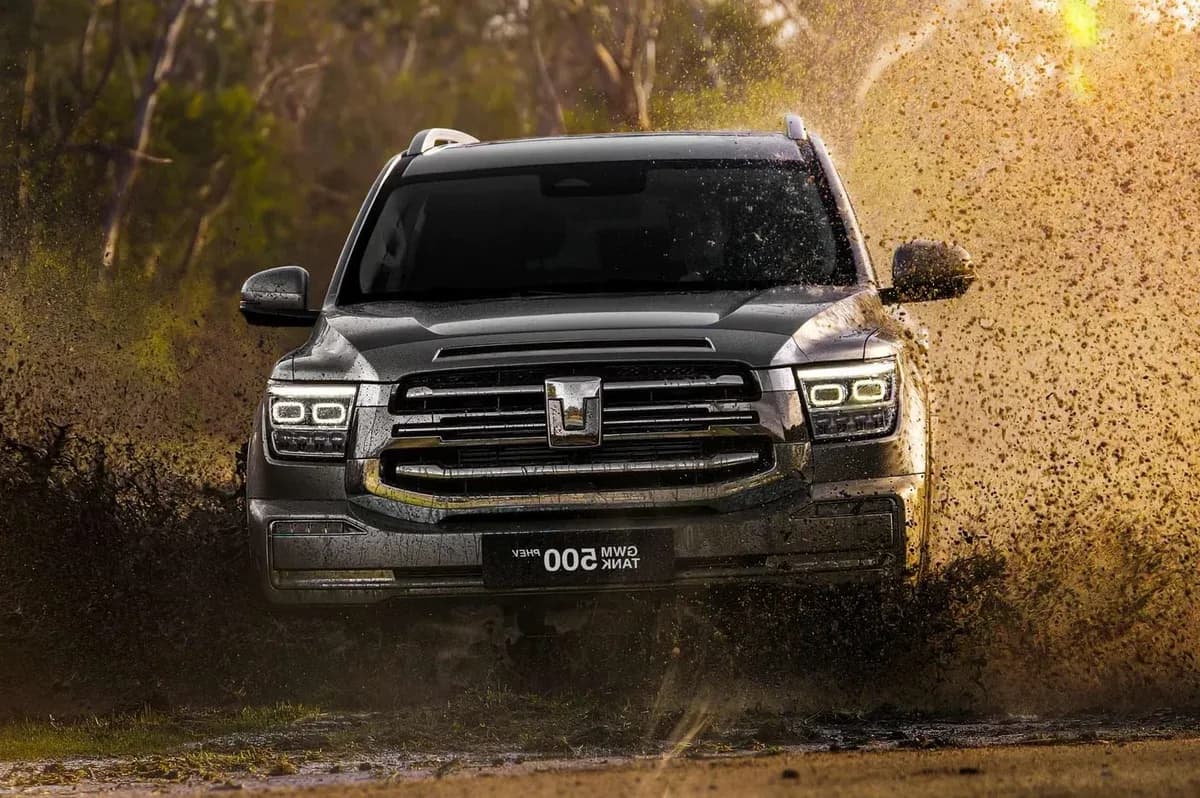
The GWM Tank 500 is the big brother to the boxy Tank 300, and it targets one of the most expensive corners of the market: the seven-seat, ladder-frame, go-anywhere 4WD wagon. Cars like the Toyota Prado and Ford Everest own that space, and they are not cheap. The Tank 500 undercuts them with more standard equipment and a hybrid drivetrain. Here is the data-led take.
How much is the GWM Tank 500?
Four grades: three seven-seat hybrids and a five-seat plug-in hybrid. All prices are before on-road costs.
| Variant | Powertrain | Power | Seats | RRP |
|---|---|---|---|---|
| Tank 500 Lux | Hybrid | 255kW / 648Nm | 7 | $59,990 |
| Tank 500 Ultra | Hybrid | 255kW / 648Nm | 7 | $65,990 |
| Tank 500 Vanta | Hybrid | 255kW / 648Nm | 7 | $68,990 |
| Tank 500 Ultra Hi4-T | Plug-in Hybrid | 300kW / 750Nm | 5 | $72,490 |
That $59,990 entry price is the story. A base Toyota Prado is line-ball on price but arrives far more sparsely equipped, while the Tank 500 Lux comes loaded. The Hi4-T plug-in hybrid at $72,490 is the niche pick for buyers who want the EV running costs and do not need seven seats.
Hybrid or plug-in hybrid?
The hybrid grades are the heart of the range. A turbo-petrol V6 paired with an electric motor makes a strong 255kW/648Nm, drives all four wheels through a 9-speed auto, and claims 8.5L/100km, which is genuinely reasonable for a 2.6-tonne ladder-frame 4WD. These are the seven-seaters and the ones most families will buy.
The Hi4-T plug-in hybrid adds a plug-in battery for a claimed 120km of electric range and lifts output to 300kW/750Nm. It is the choice if you can charge at home and want to do your daily driving on electricity. The catch is that the battery packaging costs you the third row, so the Hi4-T is a five-seater. It is the one to get only if EV running costs matter more to you than seven seats.
Off-road ability, towing and dimensions
This is a serious off-roader, not a soft-roader. It rides on a ladder-frame chassis with full-time 4WD, low range and lockable differentials on the higher grades, and offers 224mm of ground clearance on the hybrid (213mm on the PHEV). That hardware, plus the 2,850mm wheelbase, makes it genuinely capable on tracks and sand.
Towing is rated at 3,000kg braked. That is plenty for most boats and camper trailers, but it is below the 3,500kg of a dual-cab ute or a Prado, so heavy caravan owners should check their loaded weight carefully. The Tank 500 is also large: 5,078mm long and 1,934mm wide, with an 80-litre fuel tank on the hybrid for long touring range.
Inside and practicality
The cabin is where the Tank 500 makes its value case loudest. It is plush and heavily equipped, with a big touchscreen, leather, heated and ventilated seats and a long features list even on the entry Lux. The seven-seat hybrids give you a usable third row for occasional passengers, and the boot is generous with the rear seats folded. It feels far more expensive inside than the price suggests, which is the whole pitch.
Running costs
At a claimed 8.5L/100km, the hybrid costs roughly $2,550 a year in fuel over 15,000km at $2.00/L, impressive for a vehicle this big and heavy, and well under what a non-hybrid ladder-frame 4WD would drink. The Hi4-T plug-in hybrid claims 2.1L/100km on the combined cycle, but that figure assumes a charged battery; once the battery is depleted it reverts to roughly hybrid economy. If you charge at home and keep most trips inside the 120km EV range, the Hi4-T can be much cheaper to run day to day, but the real saving depends entirely on how often you plug in.
Safety and ownership
The Tank 500 hybrid grades hold a 5-star ANCAP rating dated 2024, with the usual active-safety suite standard. At the time of writing the newer Hi4-T plug-in hybrid was not separately ANCAP-rated in our data, so confirm its current rating before you buy if that matters to you. GWM backs the range with a 7-year, unlimited-kilometre warranty. Resale on the Tank range is still establishing itself, the main trade-off against the established Japanese names.
How it compares
The Tank 500's natural targets are the Toyota Prado and Ford Everest, which it undercuts on price and out-guns on standard equipment and hybrid efficiency, though both Toyota and Ford hold their value better and have deeper dealer and aftermarket support. Within GWM's own range, the smaller Tank 300 is the cheaper, more compact off-roader, and the Cannon Alpha is the ute that shares much of the Tank 500's plug-in hybrid hardware if you want a tray instead of seven seats.
Cross-shopping the big family 4WDs? See our best large SUVs and 7-seaters guide and the best cars for camping.
The verdict
The GWM Tank 500 delivers something that used to cost a lot more: a genuine seven-seat ladder-frame 4WD with proper off-road hardware, a plush cabin and a frugal-for-its-size hybrid drivetrain, all from $59,990. The 3,000kg tow limit and the PHEV's drop to five seats are the catches, and it is a big, heavy vehicle from a brand still building its resale story. But for families who want real off-road ability and space without spending Land Cruiser money, the hybrid Lux is the value sweet spot and an easy recommendation.
Compare these picks side by side
Stack 4 of them on 200+ specs, price, safety and running cost in one view.
Compare all 4 nowFrequently Asked Questions
How much is the GWM Tank 500 in Australia?
Is the GWM Tank 500 a seven-seater?
What is the Tank 500's fuel economy?
How far does the Tank 500 Hi4-T go on electric?
How much can the GWM Tank 500 tow?
Is the GWM Tank 500 good off-road?
Is the GWM Tank 500 safe?
Is the GWM Tank 500 worth buying in 2026?
New cars, real prices, straight to your inbox
Join the CarSorted mailing list for new-model launches, price drops and drive-away deals, honest reviews, and founding-member pricing on the upcoming CarSorted Pro Report.
- New-model launches
- Price drops & deals
- Honest reviews
No spam, unsubscribe anytime. By subscribing you agree to receive marketing emails.
Disclaimer: All information in this article was believed to be correct at the time of publishing (20 June 2026). Prices are manufacturer recommended retail prices (RRP) and may vary by state, dealer, and options. Specifications, government incentives, and rebates can change without notice. Always verify details with the manufacturer or relevant authority before making a purchase decision. Running cost estimates are based on average Australian driving conditions at 15,000 km/year. CarSorted does not accept payment for recommendations or rankings.
Written by Uzzi, CarSorted Editorial Team · 20 June 2026 · how we research
Comments (0)
Sign in to join the conversation
No comments yet. Be the first!