A few years ago, buying a Chinese car in Australia was a leap of faith. In 2026 it is mainstream. Chinese brands now account for nearly a fifth of all new vehicles sold here. Four sit inside the top 10 best-selling brands. And they are winning buyers on technology, equipment and warranty cover, not just sticker price. The growth this year alone has been staggering: Geely, Zeekr and Leapmotor have all posted triple-digit sales jumps, BYD has overtaken several legacy nameplates outright, and Chery's Super Hybrid range has rewritten what a $40k PHEV looks like.
The flip side is choice overload. There are now over 20 Chinese brands selling cars in Australia, many of them sub-brands of the same parent, and the badges are genuinely confusing. BYD owns Denza. Geely owns Zeekr, Polestar, Volvo and Lotus. SAIC owns MG, LDV/Maxus and IM Motors. Chery owns Jaecoo, Omoda, Jetour and the incoming Lepas. Stellantis quietly distributes Leapmotor. This guide ranks the best Chinese cars by category, decodes every brand and badge, and answers the question everyone actually asks: are they worth it?
Which Chinese car brands are sold in Australia?
Eighteen Chinese brands currently sell new cars in Australia, between them offering 88 models. Ranked by how many models each has on sale right now:
- MG (14 models, from $20,990) and LDV (13) are both SAIC-owned and have been here longest.
- BYD (11 models, from $23,990), GWM (10, from $30,900) and Chery (10, from $21,750) are the three-way fight for the value bracket.
- Jaecoo (4) and Omoda (1) are Chery's separate-showroom brands, and Lepas (1) is its newest.
- GAC (4), Geely (3), Leapmotor (3), XPeng (2), Deepal (2) and Forthing (1) are the recent arrivals.
- Zeekr (3) and Denza (3) are the premium plays, from Geely and BYD respectively.
- JAC (2) and Foton (1) are ute and commercial specialists.
Three more brands are Chinese-owned but do not sell as Chinese nameplates, so buyers rarely count them: Polestar, Volvo and Lotus are all Geely-owned, as is smart through a joint venture with Mercedes-Benz. Counting those, Geely alone has a hand in seven brands on Australian sale. Every brand we cover has its own hub page with the full model list and pricing.
Brand and model counts are of vehicles listed as on sale new in Australia in our database as at 16 September 2026. The list moves quickly: four of these brands were not selling here two years ago.
The state of Chinese cars in Australia, 2026
Five years ago, the Chinese auto industry's reputation in Australia rested on the original MG hatch, an LDV van that nobody wanted, and the occasional Great Wall ute. Today it leads electrification, dominates the value bracket of every segment, and is steadily working its way into premium territory. By the numbers:
- BYD is on track to break into the top 5 brands by 2026 volume, ahead of Mitsubishi and Subaru.
- MG has consistently sat in the top 10 since 2023 and now outsells Volkswagen, Honda and Nissan.
- GWM sells more utes than Volkswagen and more SUVs than Renault, Skoda and Peugeot combined.
- Chery has gone from a curiosity in 2023 to a top-15 brand in 2026, with the Tiggo 4 alone outselling several legacy small SUVs.
- Zeekr doubled its sales between Q4 2025 and Q1 2026 and the 7X is a finalist for Drive Car of the Year.
- Leapmotor, distributed through Stellantis dealers, has gone from launch to 1,000+ deliveries in under six months.
- Chinese brands lead the plug-in range table. The GWM Haval H6GT Ultra PHEV's 180 km of electric-only range is among the longest of any plug-in hybrid on sale in Australia, ahead of the Chery Tiggo 9 SH Ultimate (170 km), Omoda 9 SHS (169 km) and BYD Sealion 8 AWD (152 km).
A note on how to read the numbers in this guide, because it matters more here than in most segments. Every price, range, battery, power and warranty figure below describes the exact variant named and linked, checked against our live database rather than carried over from a launch press release. Where a maker publishes no figure we write "not published" rather than derive one. Where a figure differs between grades wearing the same badge, which in Chinese ranges is most of the time, we say which grade. And for plug-in hybrids, the range quoted is electric-only range before the engine starts, not total driving range, and the fuel figure is a combined-cycle number measured from a full battery.
The pace of new arrivals is what makes this guide hard to write and necessary to keep updated, and the last few months have moved four things out of the "coming soon" column and into showrooms. Denza has landed, but not with the car everyone expected: the B5 off-road PHEV ($74,990), the B8 seven-seater ($91,000) and the D9 electric people mover ($85,990) are all on sale now, while the Z9GT wagon is still to come. MG's premium IM brand has launched both its models, the IM5 sedan and IM6 SUV, from $60,990 drive-away, not just the IM6 and not in late 2026. XPeng's X9 people mover is on sale at $89,900; the G9 is not yet. And Omoda 9 SHS arrived with 169 km of plug-in range, which is more than any BYD or Chery PHEV sold here. NIO's small-EV brand Firefly is not yet on sale in Australia despite widespread reporting to the contrary, so we have moved it back to the watch list. Deepal is expanding the S07 and E07. JAC has a Wrangler-style off-roader (the T9 / "212") on the way. The state of the lineup at the time of writing changes every month.
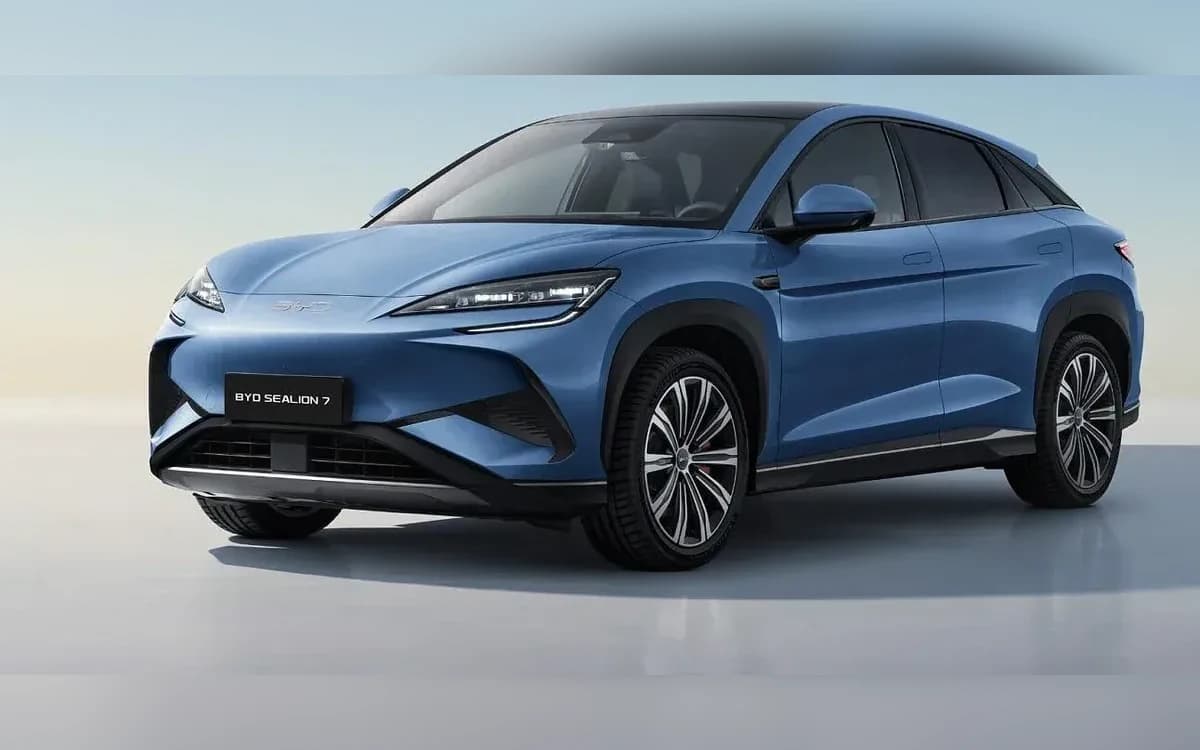
Best Chinese car overall: BYD Sealion 7
The BYD Sealion 7 Premium is the car that best sums up why Chinese brands are winning. It is a mid-size electric SUV with 482 km of WLTP range, a long equipment list and a five-star ANCAP rating (2025), from $54,990 before on-road costs. The dual-motor Performance at $63,990 does 0–100 in 4.5 seconds and 390 kW, and trades range for it: 456 km, not more. That entry price is $10,910 less than the Tesla Model Y RWD ($65,900) it directly targets, and it undercuts the Korean pair it is usually cross-shopped against by more again: the Kia EV6 Air RWD is $72,590 and the Hyundai IONIQ 5 Dynamiq RWD is $76,200. Those two are not "the same money", which is worth saying plainly, though both do more range for it (541 km and 433 km respectively). Standard kit includes 19-inch alloys, a 15.6-inch rotating touchscreen, panoramic glass roof, ventilated and heated front seats, vegan leather upholstery and Level 2 driver assistance. Both variants charge at up to 150 kW DC.
It is not perfect. The cabin design is conservative compared to Hyundai's IONIQ 5, the rear seat lacks recline adjustment, and Apple CarPlay / Android Auto support arrived late through OTA update rather than at launch. But the value is hard to argue with and the long-distance refinement is genuinely surprising. Read our full BYD Sealion 7 review and the Sealion 7 vs Model Y comparison for the side-by-side.
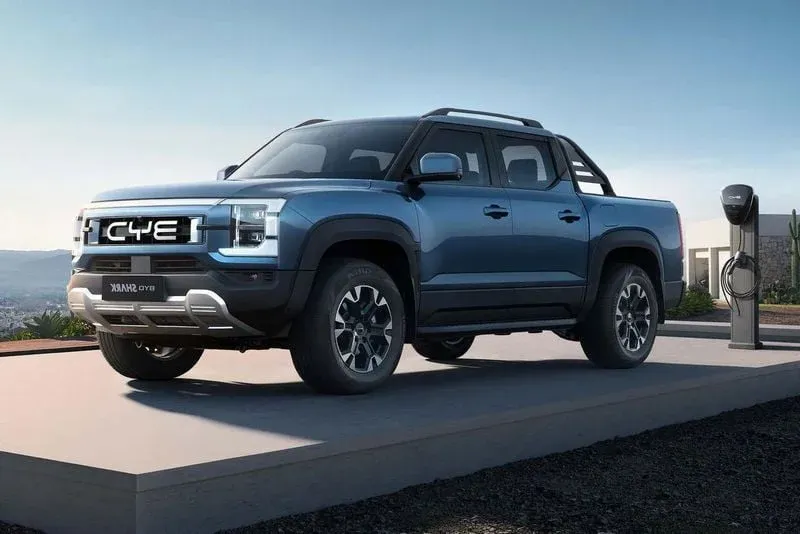
Best Chinese ute: BYD Shark 6
The BYD Shark 6 Premium single-handedly created the plug-in hybrid ute segment in Australia and promptly became one of the country's best-selling utes within months of launch. Power figures are genuinely surprising: 321kW combined from the 1.5-litre turbo four-cylinder and the dual electric motors, 650 Nm, 0–100 in 5.7 seconds, and 100 km of electric-only range from the 29.6 kWh battery. From $57,900 for the Premium spec, it undercuts a Ranger Wildtrak V6 by a significant margin and runs on electricity for most weekly commutes. Five-star ANCAP, 2025.
The honest catches: the Premium tows 2,500 kg braked versus a Ranger or HiLux's 3,500 kg. Step up to the Performance variant for the full 3,500 kg rating. Its combined-cycle fuel figure of 2.0 L/100km is measured from a full battery; BYD's own charge-sustaining figure, which is what you get once the pack is flat, is 7.9 L/100km. And here is the one worth stating plainly, because we removed it from our own database in August: BYD publishes no payload figure for the Shark 6 in its Australian spec sheet. The 790 kg quoted almost everywhere is GVM (3,500 kg) minus kerb (2,710 kg) worked out by a third party and presented as a manufacturer number. It may well be roughly right; it is not something BYD has said. Its GCM of 5,750 kg is published. The tray is also smaller than a Ranger or HiLux for pallet loading. For tradies who do mostly suburban runs and tow a 2,000–2,500 kg trailer occasionally, it makes complete sense. For high-tow operators or long-distance fleet work, the diesel options still win.
See our full BYD Shark 6 review, and compare directly with the diesels via Shark 6 vs Ford Ranger or Shark 6 vs Toyota HiLux.
Best premium Chinese car: Zeekr 7X
Zeekr has exploded in popularity, and the Zeekr 7X is why. This mid-size electric SUV undercuts the Tesla Model Y on price while beating it on standard equipment and cabin quality. The equipment list is where it makes its case: Nappa leather, real wood trim, double-layered acoustic glass, and air suspension on the options list, all at a price under the Model Y.
The range and performance figures quoted for the 7X are worth pinning to a variant, because they belong to three different cars. The entry 7X RWD at $57,900 does 480 km WLTP from a 75 kWh battery and 0–100 in 6.0 seconds. The Long Range RWD at $63,900 is the one that gets you 615 km, from a 100 kWh pack, and it is still the 6.0-second car. The Performance AWD at $72,900 is the 475 kW, 3.8-second one, and its range drops to 543 km. There is no single 7X that is both the 615 km car and the 3.8-second car.
The 7X is a Drive Car of the Year finalist in 2026 and the price-to-content ratio is what's driving the buzz. Standard equipment includes 21-inch alloys, an 800V electrical architecture, DC charging rated to 420 kW on the Long Range and Performance grades and 450 kW on the RWD, 14 speakers, ventilated and heated front and rear seats, and a panoramic glass roof. Read our full Zeekr 7X review or the Zeekr 7X vs Model Y comparison. The smaller Zeekr X covers the compact end from $49,900, the seven-seat Zeekr 009 people mover sits at $135,900 with 620 km, and the Zeekr 9X flagship is confirmed but has no published Australian price yet.
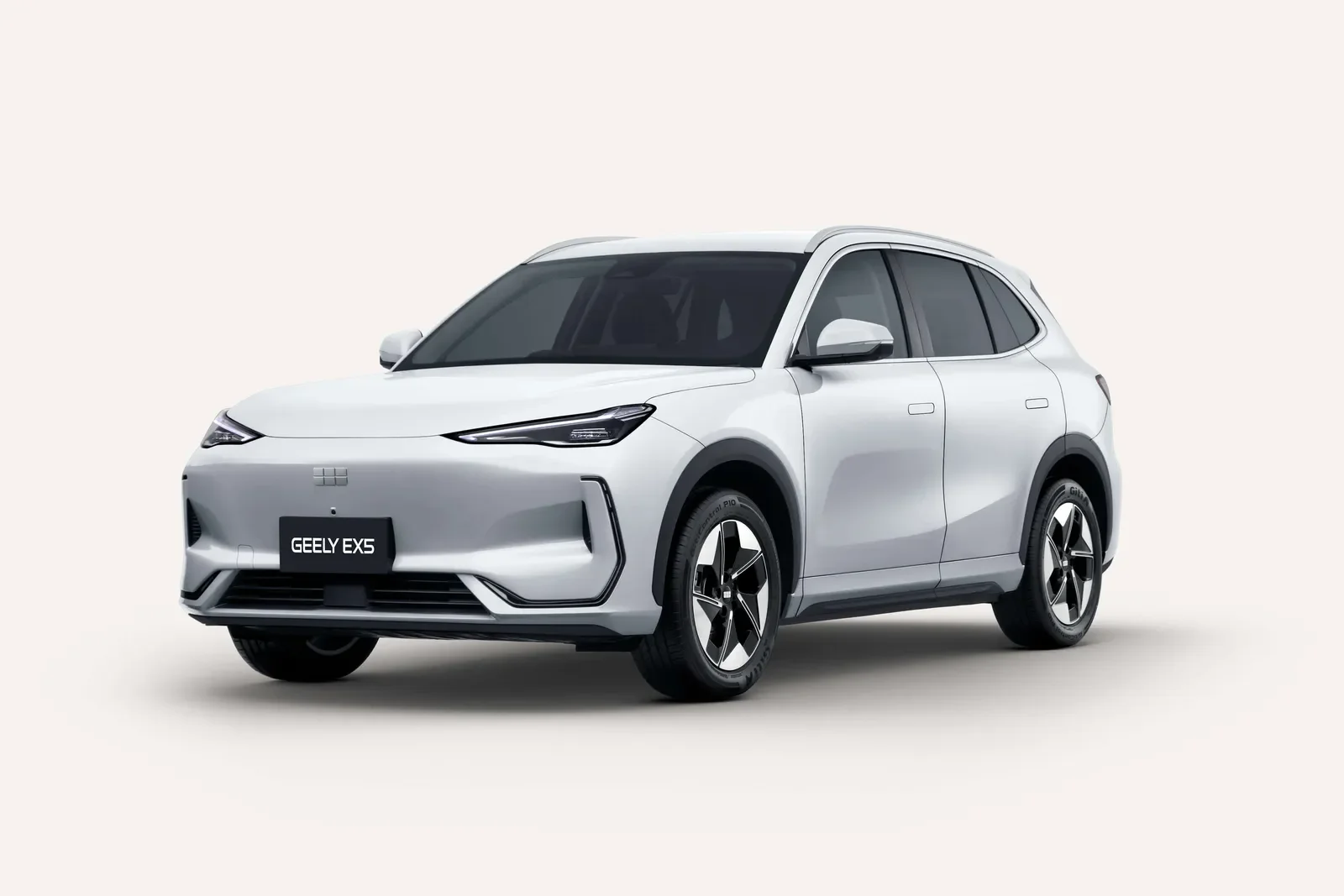
Best cheap Chinese EV: Geely EX5
For affordable electric motoring, the Geely EX5 Complete is one of the strongest value propositions on the market. At $41,990 with a 68.4 kWh battery delivering 475 km WLTP and a five-star ANCAP rating (2025), it undercuts most rivals while feeling well-resolved on the road. Curiously, the dearer Inspire grade at $45,990 does less range, 450 km, on the same battery. Geely's parent company experience (it owns Volvo and Polestar) shows in the chassis tune and refinement that's a step above some other Chinese entries. See our full Geely EX5 review.
Other strong cheap-EV contenders: the Chery E5 Ultimate at $37,990 drive-away (430 km) is one of the cheapest electric SUVs you can buy in Australia, the BYD Dolphin at $29,990 (340 km) remains the value champion among electric hatches, and the BYD Atto 2 at $31,990 (345 km) is the practical compact-SUV pick for the daily commute. Among newer entries, the GAC Aion UT is interesting at $31,990 with a 60 kWh pack (44 kWh usable) and 430 km, and the Geely EX2 Complete undercuts everything above at $26,490, though at 252 km it gives up range to do it. The Inspire grade is $30,990 for 345 km.
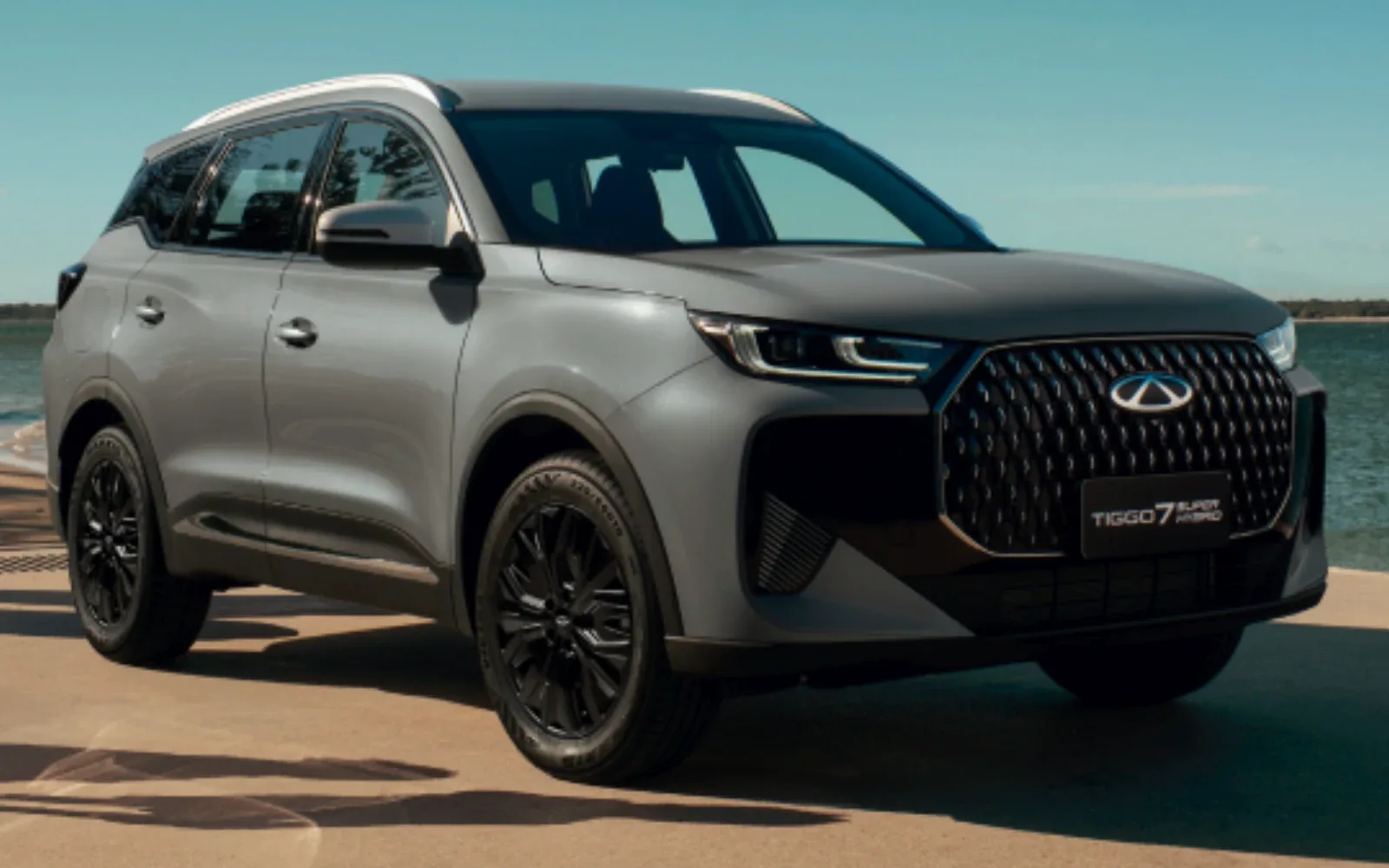
Best Chinese plug-in hybrid: BYD Sealion 6 and Chery Tiggo 7 Super Hybrid
If you aren't ready to go fully electric, China leads the plug-in hybrid market too. One thing to fix in your head before reading any of the numbers below: the electric range quoted for a PHEV is the distance it covers before the petrol engine starts, not how far the car goes. And the headline fuel figure is a combined-cycle number measured from a full battery, so it flatters any PHEV you do not plug in nightly. Where a maker publishes a charge-sustaining figure, that is the one to budget against, and we quote both.
The BYD Sealion 6 Essential is the value benchmark for a PHEV family SUV: 92 km of electric-only range from an 18.3 kWh battery, 1.1 L/100km combined from full and 4.72 L/100km once the battery is depleted. From $42,990, five-star ANCAP (2023), 1,500 kg braked towing. See the Sealion 6 review and Sealion 6 vs Outlander PHEV for the direct head-to-head with Mitsubishi's long-running benchmark.
The Chery Tiggo 7 Super Hybrid is the cheapest plug-in hybrid SUV you can buy in Australia, from $34,990 drive-away. It's slightly less refined than the BYD but extracts incredible value: 93 km of electric range, a 7-year unlimited-km vehicle warranty plus 8 years unlimited km on the high-voltage battery, and a feature list that includes ventilated seats and a panoramic roof at the entry trim. It does not yet carry an ANCAP rating in our data. Read the Tiggo 7 Super Hybrid review and our Tiggo 7 Super Hybrid vs Honda CR-V comparison for how the value stacks up against the established hybrid Honda.
The dark horses are both Chery sister brands. The Jaecoo J7 SHS at $43,990 brings 90 km of electric range, a five-star ANCAP result (2025) and SUV styling that some buyers prefer over the more conservative Tiggo. See the Jaecoo J7 review. But the one that actually leads the segment on range is the Omoda 9 SHS Virtue AWD at $61,990: a 34 kWh battery gives it 169 km of electric-only range, nearly double the Sealion 6, with 395 kW and 0–100 in 4.9 seconds. On plug-in range alone it beats every BYD on sale here and every Chery bar one, and it is missing from most guides entirely. The Chery Tiggo 9 Super Hybrid is the other long-range option, from $58,268 drive-away for the Elite (90 km) up to $65,469 for the Ultimate AWD, which uses the same 34 kWh pack for 170 km.
Best Chinese hybrid (non-PHEV): GWM Haval H6 Hybrid and Chery Tiggo 7 Hybrid
For buyers who don't want to plug in at home, conventional hybrid Chinese SUVs deliver Toyota-grade fuel economy at less money, and unlike the plug-in figures above these need no asterisk: a HEV has no battery to arrive full. The GWM Haval H6 Lux Hybrid at $39,990 lands close to a RAV4 Hybrid on combined fuel use (5.2 L/100km against 4.5) at a meaningfully lower price, with a 560 L boot and a long standard features list. The Chery Tiggo 4 Hybrid follows the same playbook lower down at $29,990 drive-away and 5.4 L/100km, making it the cheapest hybrid SUV on sale in Australia. Note that Chery's Tiggo 7 is sold here as a petrol or as the plug-in Super Hybrid, not as a conventional hybrid.
Best budget Chinese SUV: Chery Tiggo 4
The Chery Tiggo 4 Urban has become one of Australia's cheapest small SUVs and a genuine sales hit. Pricing starts at $23,990 drive-away, undercutting almost everything else with a four-cylinder, modern-safety-tech package (five-star ANCAP, 2023) that drives perfectly fine for daily use, on 7.4 L/100km. The Ultimate is $26,990 drive-away. The interior plastics aren't class-leading and the rear-seat space is tighter than a Hyundai Kona, but for the price the value is undeniable.
For an affordable small hatch the MG4 remains the benchmark on value among EV hatchbacks, from $37,990 for the Excite 51 (350 km) up to $49,990 for the Long Range 77 (530 km). The MG3 Excite Hybrid+ at $27,990 is one of the cheapest hybrids of any kind on sale in Australia, at 4.3 L/100km, though note its ANCAP result is four stars (2025) rather than five. And the GWM Haval Jolion covers the small-SUV hybrid space from $29,990 at 4.8 L/100km.
Best Chinese 7-seater: BYD Sealion 8
The BYD Sealion 8 brings plug-in hybrid power to the three-row family SUV class, and the two ends of the range are very different cars. The Dynamic FWD at $56,990 ($61,549 drive-away in Victoria) makes 205 kW with 103 km of electric-only range from a 19 kWh battery. The Dynamic AWD at $63,990 is the one that makes 359 kW, and it carries a 35.6 kWh battery for 152 km. So "approaching 400 kW and around 100 km" describes no single Sealion 8: the powerful one goes half as far again on electricity. Either way it's priced to put serious pressure on the Hyundai Santa Fe and Toyota Kluger, and it's the pick if you need 7 seats but don't want to step up to a big diesel like a Prado or Everest. Note it does not yet carry an ANCAP rating in our data.
For seven-seat duty without a plug, the GWM Tank 500 Lux at $59,990 is a hybrid V6 with real off-road hardware, and the Chery Tiggo 9 Super Hybrid is now on sale (not upcoming) from $58,268 drive-away, adding PHEV efficiency to similar packaging. The Denza B8 7S at $91,000 is the premium end of the same idea: a 425 kW plug-in hybrid seven-seater with 100 km of electric range and 3,500 kg of braked towing.
Best Chinese off-roader: GWM Tank 300 and Tank 500
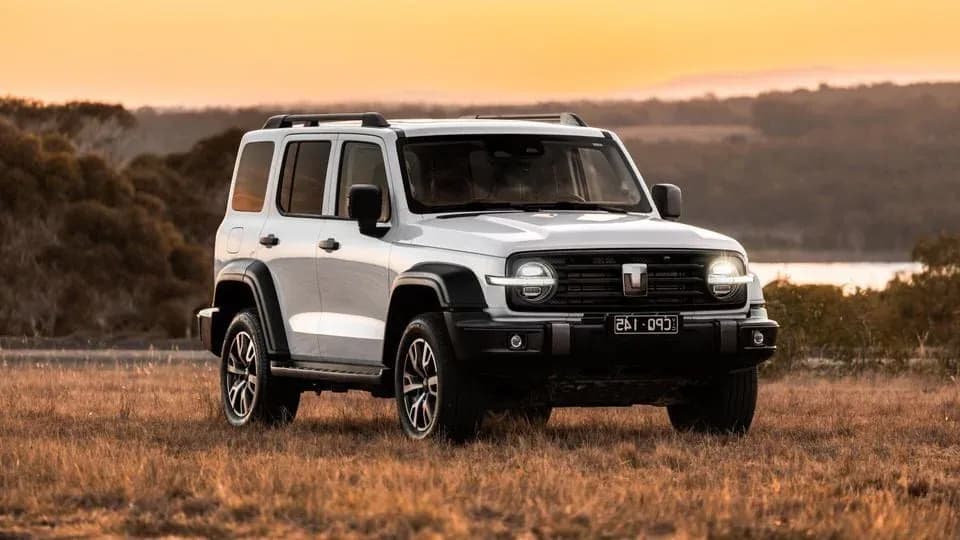
GWM has carved out a niche the other Chinese brands have not: proper off-road hardware. The GWM Tank 300 Lux is a genuinely capable, retro-styled 4WD with locking diffs, low range, and a chassis that came from someone who actually knew what off-roading was. It starts at $49,990 (the Ultra is $51,990), tows 3,000 kg braked and undercuts the established Wrangler / Prado / 70-series players. There is now a Tank 300 Hi4-T PHEV too, from $55,990, with plug-in capability on the same chassis. Read our GWM Tank 300 review.
The larger GWM Tank 500 goes after the Toyota Prado / Land Rover Defender bracket with a hybrid V6, 7 seats and serious off-road equipment from $59,990, rising to $68,990 for the Vanta and $72,490 for the five-seat Ultra Hi4-T plug-in. For the ute-based off-roader buyer, the GWM Cannon Alpha Lux Diesel at $52,990 is the heavy-duty 3,500 kg tow option that started gaining serious traction in 2025. The one to watch above all of them is the Denza B5 at $74,990: a 400 kW plug-in hybrid off-roader with 90 km of electric range and a 3,000 kg tow rating, which is a genuinely new proposition in this segment.
Best Chinese family SUV: GWM Haval H6 and BYD Atto 3
The GWM Haval H6 Lux is one of GWM's best sellers and a strong-value family SUV, available in petrol, hybrid and PHEV. At $35,990 in petrol (7.4 L/100km), it ticks all the family boxes (5-star ANCAP from 2022, modern infotainment, a 560 L boot, 7-year unlimited-km warranty) at meaningfully less money than a CR-V or Tucson. The plug-in H6 Ultra PHEV AWD at $46,990 does 100 km on electricity, and the H6GT Ultra PHEV at $53,990 does 180 km, the longest plug-in range of any car sold in Australia. See our full GWM Haval H6 review.
The BYD Atto 3 remains the breakthrough electric family SUV in Australia, with 5-star ANCAP (2022) and a continuously evolving software platform that has improved noticeably through OTA updates since launch. Be careful which one you are being quoted, because the two grades are commonly blended into one car: the Essential at $39,990 has a 49.9 kWh battery and 345 km of WLTP range, while the September EVO update replaced the old Premium: the EVO Dynamic at $41,990 keeps the familiar FWD hardware and 420 km, and the EVO Premium at $46,990 moves to rear-wheel drive, an 800V platform and 510 km. The MG HS Super Hybrid ($50,990, 120 km plug-in range) and the MG HS Vibe petrol ($33,990) are the other family-SUV-budget alternatives.
The brands, decoded
Half the confusion is the badges. Here's the 2026 map of who owns what.
BYD (Build Your Dreams), and Denza, Yangwang, Fang Cheng Bao
Australia's volume leader and the broadest range. BYD covers from the Atto 1 hatch ($23,990) through the Atto 2, Atto 3 and Dolphin EVs; the Seal sedan and Sealion 5/6/7/8 SUVs; the Shark 6 plug-in ute; and the Seal 6 Touring wagon (yes, BYD also does wagons). The differentiator is the Blade battery (LFP chemistry with a specific structural design that won't catch fire even when intentionally punctured) and BYD's vertically-integrated supply chain. Warranty is 6 years / 150,000 km on the vehicle and 8 years / 160,000 km on the battery.
BYD's premium brand Denza is already here, and not in the order most coverage predicted. On sale now: the B5 off-road PHEV from $74,990 ($81,221 drive-away in Victoria), the B8 seven-seat PHEV from $91,000, and the D9 electric people mover from $85,990 with 520 km of range. The Z9GT grand tourer is the one still to come and has no published Australian price yet. Yangwang is the ultra-luxury brand (U8 SUV, U9 supercar) and arrives only via dealer special-import in AU. Fang Cheng Bao is the off-road-focused brand and is not currently planned for Australia.
SAIC, MG, IM Motors, LDV/Maxus
SAIC is China's largest carmaker by global volume and brings three brands to Australia. MG is the affordability champion with the deepest dealer network in the country (100+ outlets thanks to the long-standing British-heritage MG sales presence). Its warranty is no longer the 7 years everyone quotes: MG Australia now covers passenger vehicles for 10 years / 250,000 km when serviced exclusively at an authorised dealer within the scheduled intervals, with light commercial models at 7 years / 200,000 km and the high-voltage battery at 7 years / 150,000 km. That is the longest vehicle warranty of any brand in this guide. The MG3 hybrid hatch, MG4 EV hatch and MG ZS small SUV are the volume sellers. The MGS5, S6 EV and Cyberster roadster round out the lineup. One correction worth making: the MG U9 ute is a 2.5-litre turbo-diesel (160 kW / 520 Nm, 7.9 L/100km, from $52,990), not an electric ute, and it is widely mislabelled as one.
IM is SAIC's premium EV brand, and it is already selling here rather than arriving late 2026. Both models are on sale through MG's network: the IM5 sedan and IM6 SUV, each from $55,450 RRP / $60,990 drive-away for the Premium 75 RWD, rising to $80,990 drive-away for the Performance 100 AWD. The IM6 Premium does 450 km WLTP from a 75 kWh battery and charges at up to 153 kW. Neither carries an ANCAP rating in our data yet. LDV / Maxus is SAIC's commercial brand: the T60 MAX ute, eT60 electric ute, eDeliver 7 and 9 vans, and the MIFA 9 luxury people mover.
Geely, Zeekr, Polestar, Volvo, Lotus
The Chinese giant that owns half the world's automotive premium brands. Geely branded models in Australia: the EX5 electric SUV ($41,990), the EX2 small EV (from $26,490) and the Starray EM-i plug-in hybrid, which is on sale now from $37,490 rather than upcoming, with 83 km of electric range or 136 km on the $41,490 Extended Range grade. Zeekr is Geely's premium EV brand: the 7X, the smaller X, the 009 people mover, and the 9X flagship still to come. Polestar is the performance-EV brand (Polestar 2, 3, 4, 5) headquartered in Sweden but built in China and 100% Geely-owned. Volvo is also Geely-owned (since 2010) and most of its EVs (EX30, EX40, EX90) come out of Chinese factories. Lotus is Geely's British-engineering sports-car brand (Emira, Eletre).
The Geely ecosystem proves the Chinese auto industry can play across every premium price point. The Zeekr 7X is the proof point that buyers don't have to pay German money to get German-spec interior quality.
Chery, Jaecoo, Omoda, Jetour, Lepas
Chery's main brand sells the Tiggo SUV range, the C5 small car and the E5 electric SUV, with a 7-year unlimited-km vehicle warranty and 8 years unlimited km on the high-voltage battery. The trick is the sister brands. Jaecoo targets the rugged-lifestyle segment (J5, J5 EV, J5 Hybrid, J7, J7 SHS, J8, J8 SHS). Omoda targets style-focused buyers: the Omoda 5 has been discontinued here, so the brand's on-sale offering is the Omoda 9 SHS flagship PHEV, with the 7 and 4 still to come. Jetour is the value-utility brand (not yet in AU). Lepas is the all-new entry-level brand confirmed for AU in 2027.
Chery's killer move in 2025–2026 was Super Hybrid: a plug-in hybrid system across the Tiggo 7, Tiggo 8 and Tiggo 9 that delivers 90–95 km of electric-only range on the smaller packs, and up to 170 km on the 34 kWh Tiggo 9 Ultimate AWD, at prices that undercut equivalent BYD models. The Super Hybrid range is what's powering Chery's top-15 brand position.
GWM (Great Wall Motors), Haval, Tank, ORA, Cannon
GWM's positioning is utes and off-roaders, executed across four sub-brands, all on a 7-year unlimited-km warranty. Haval is the family-SUV brand (Jolion, H6, H6GT, H7), and it now holds the plug-in range record for the whole Australian market with the H6GT Ultra PHEV's 180 km. Tank is the off-road specialist (Tank 300 in petrol and Hi4-T plug-in, Tank 500 in hybrid and Hi4-T plug-in). Cannon is the ute line (Cannon, Cannon Alpha, the latter now in diesel, hybrid and plug-in hybrid). ORA is the affordable-EV brand (ORA, ORA 5).
GWM has been in Australia longer than most other Chinese brands and has the second-most-developed dealer network behind MG. The Tank 300 and Cannon Alpha are the standout products. Haval H6 PHEV is the value pick for plug-in family SUVs.
Leapmotor (with Stellantis backing)
Leapmotor is the Chinese EV maker Stellantis bought a 21% stake in and uses to populate its global dealer network. In Australia that means Leapmotor sells through Jeep, Ram, Alfa Romeo, Chrysler and Fiat dealers. The Leapmotor B10 is the small-SUV BEV (from $37,888, 361 km, or $40,888 for 434 km) and the C10 comes as a BEV or as a REEV. The C10 Hybrid at $43,888 is the interesting one: a range-extended electric with a 28.4 kWh battery good for 145 km, and a petrol engine that only generates electricity and never directly drives the wheels. Warranty is 6 years / 150,000 km on the vehicle and 8 years / 160,000 km on the battery. Read our full Leapmotor B10 review.
A note on what we can and cannot tell you about Leapmotor: its Australian rows lost their kerb, tare, GVM, payload and GCM figures in our August data pass, because the Stellantis press releases they were cited to contain no mass figures at all. Rather than carry numbers we cannot point at a document for, we publish Not published until Leapmotor releases an Australian spec sheet that includes them.
Leapmotor's dealer advantage is the killer feature: Stellantis service centres are everywhere, including regional Australia. The trade-off is that Stellantis's customer-service reputation isn't BYD-grade.
XPeng
XPeng is one of China's "new energy vehicle" pure-EV brands (alongside NIO and Li Auto) that focuses on EV technology and ADAS. The G6 mid-size SUV is the volume seller in Australia, from $51,800 (435 km) or $56,800 for the Long Range (570 km). The X9 seven-seat people mover is now on sale at $89,900, with 535 km of WLTP range from a 94.8 kWh battery and DC charging rated to 537 kW, which is among the fastest-charging cars in this guide. The G9 large SUV is still to come. XPeng's killer feature is its high-end driver-assistance system, the XNGP, which is closer to Tesla's FSD beta in capability than most Chinese systems.
A caution on X9 figures floating around, because we published some of them ourselves until recently: our X9 row was sourced to a Malaysian document that turned out to describe the pre-facelift car, and 27 fields were corrected in August. Range went from 615 km to 535 km, DC charging from 215 kW to 537 kW, and GVM from 2,553 kg to 3,325 kg. If you see 615 km attached to an X9, it is the older Chinese-market car.
NIO and Firefly
NIO is the premium Chinese EV brand best known for battery-swap stations (you drive in, get a fresh battery in 3 minutes, drive out). NIO's main lineup is luxury sedans and SUVs (ET5, ET7, ES6, ES8). Firefly is NIO's small-car sub-brand. The Firefly EV is not yet on sale in Australia. We hold a launch-spec row for it (41.2 kWh, 330 km WLTP, 105 kW) but no Australian price and no on-sale flag, so treat it as a confirmed arrival rather than something you can order. This is the correction we most often see repeated as fact.
GAC and the Aion EV brand
GAC sells the M8 PHEV people mover ($76,590, 106 km electric range), the Emzoom small SUV ($25,590) and the Aion EV range: the Aion UT hatch ($31,990, 430 km) and Aion V SUV ($42,590, 510 km). The Aion UT is one of the cheapest electric hatchbacks on sale. We hold no S7 PHEV row, so we have dropped it from this list rather than assert a model we cannot point at. GAC's parent has a joint venture with Toyota and Honda in China, which gives it manufacturing scale and access to mature components.
Deepal (Changan)
Deepal is the EV / EREV brand of Changan, one of China's "Big Four" state-owned automakers. The Deepal S07 SUV ($49,990, 475 km) and E07 grand-tourer ($64,900, 550 km, or $73,900 for the 440 kW AWD Performance) are the AU models, both pure EVs here rather than range-extenders. Tech-focused with sci-fi styling that's polarizing in person.
JAC, Foton, KGM, BYD ute partnerships
JAC sells the T9 ute and the Hunter ute (with the JAC Hunter EV variant coming as a Chinese-brand alternative to the LDV eT60). The "212 T01" is a JAC-derived Jeep Wrangler rival arriving 2027. Foton sells the Tunland ute as a budget Chinese pickup. KGM is the former Ssangyong (now Korean-Chinese co-owned) selling the Musso ute and Torres SUV. Maxus T60 MAX from LDV continues to compete in the value-ute segment.
Why are Chinese cars so cheap?
Three reasons.
Vertical integration. BYD manufactures its own batteries, motors, semiconductors and infotainment hardware. It runs its own steel and aluminium plants for body panels. Most Western and Japanese brands buy these in from suppliers like Panasonic, Bosch, LG or Continental. BYD's margin advantage on a $50k EV is meaningful, and it can choose to keep or pass on that margin. So far it's been passing it on to capture market share.
Domestic scale at home. The Chinese car market sold 30+ million new vehicles in 2025 (versus 1.2 million in Australia). That scale means R&D costs amortise across a hundred-times bigger production volume. Designing a new EV platform that sells 500,000 units a year in China alone makes the per-car platform cost trivial. Toyota or Volkswagen designing a new EV platform for global volume of 200,000–300,000 units a year pays significantly more per car for the same engineering effort.
Battery cost leadership. Chinese battery makers (CATL, BYD, Gotion, EVE) supply most of the world's EV batteries and have driven cell costs down ~50% since 2020. Chinese carmakers buy these at "domestic supplier" prices that Western EV makers struggle to match without long-term offtake contracts. The result: a BYD Seal Premium at $52,990 with 570 km of WLTP range from an 82.6 kWh pack is hard to undercut. (The cheaper $46,990 Seal Dynamic that used to anchor this comparison has been discontinued, which is worth knowing if you are working from an older price list.)
The honest trade-offs
Chinese cars are great value. They are not perfect. Here is the honest list.
1. Resale value. The biggest unknown, and the one number nobody can give you honestly. We do not hold recorded used sale prices, so we will not print a retention percentage for a BYD or a Chery. What you can weigh is the mechanism: these nameplates are new here, the used market is still forming, and each new model launch tends to undercut the same car sold a year earlier. That pressure is real whether or not anyone can quantify it yet. If you keep cars 5+ years it matters less; if you trade every 2–3 years it matters a lot. See our analysis on car depreciation in Australia.
2. Driver-assistance calibration. The ADAS hardware on most Chinese cars is genuinely excellent (often more advanced than Japanese rivals). But the software calibration that decides when to brake, swerve or alert has some quirks: false-positive lane departure warnings, occasionally overly aggressive emergency braking, attention-monitoring systems that mistake reading-glasses for distraction. These get better with OTA updates and most are fine after the first 6 months on market. The Toyota / Subaru / Volvo ADAS calibration is still the calmest.
3. Infotainment quirks. Apple CarPlay and Android Auto support are now standard on most new models, but some launch with software bugs that take a year to fully resolve. Voice assistants sometimes default to Chinese language or can't understand strong Australian accents. Maps are often Chinese-made (Mapbar or Amap) without local POI density. The fix usually comes via OTA but expect to live with it for the first 12 months on newer models.
4. Service network density outside cities. BYD, MG, GWM, Chery and Geely now have decent metro presence. Zeekr, Denza, IM Motors, XPeng, Deepal and Firefly are city-focused at launch and expand outward over time. If you live more than 4 hours from a capital, confirm the nearest authorised service centre before purchase.
5. Brand confusion at trade-in. Dealers sometimes lowball Chinese trade-ins because they're less confident retailing the used cars. The fix is to use independent valuation tools and online auction platforms (Pickles, Manheim) rather than accepting dealer trade-in offers. For full picture, see our honest take on whether Chinese cars are reliable.
Warranty cover, side-by-side
Chinese cars consistently beat their Japanese / Korean rivals on warranty cover. The 2026 baseline:
- MG: 10 years / 250,000 km vehicle on passenger models, conditional on servicing exclusively at an authorised MG dealer within each interval; 7 years / 200,000 km on light commercials; 7 years / 150,000 km on the high-voltage battery. The longest vehicle cover in this guide, and a change from the 7 years widely quoted.
- Jaecoo / Omoda: 8 years unlimited km vehicle, 8 years on battery. Longer than parent-brand Chery, which is the opposite of what most people assume about a sister brand.
- Chery: 7 years unlimited km vehicle, 8 years unlimited km on the high-voltage battery
- GWM: 7 years unlimited km vehicle
- Geely: 7 years vehicle, 8 years on battery
- BYD: 6 years / 150,000 km vehicle, 8 years / 160,000 km battery
- Leapmotor: 6 years / 150,000 km vehicle, 8 years / 160,000 km battery
- Zeekr: 5 years / 200,000 km vehicle, 8 years / 160,000 km battery
- XPeng / IM: 7 years vehicle, 8 years / 160,000 km battery
- GAC: 8 years / 150,000 km vehicle, 8 years / 200,000 km battery
Two of these have moved since most guides were written. MG is no longer a 7-year brand, it is a 10-year / 250,000 km brand with a servicing condition attached, and Leapmotor is 6 years / 150,000 km rather than the 7 years / 160,000 km often quoted. For context, Toyota offers 5 years unlimited km, Hyundai 5 / unlimited, Kia 7 / unlimited, Honda 5 / unlimited, Mazda 5 / unlimited, Mitsubishi 10 / 200,000 km (conditional on annual dealer service). The Chinese brands are competitive with or better than every Japanese / Korean rival on this metric.
Already landed, and what's still coming
Five entries that sat on this watch list last time have arrived. If you have read an older version of this guide, or almost any competing one, these are the corrections that matter most:
- Denza B5, B8 and D9, on sale now from $74,990, $91,000 and $85,990. Not 2027, and not behind the Z9GT.
- MG IM5 and IM6, both on sale now from $60,990 drive-away. Not just the IM6, and not late 2026.
- XPeng X9, on sale now at $89,900 with 535 km of range.
- Geely Starray EM-i, on sale now from $37,490, a plug-in hybrid rather than the petrol SUV most coverage described.
- Omoda 9 SHS, on sale now at $61,990 with the longest plug-in range of any Chery-group car here at 169 km.
Still genuinely ahead of us over the next 12–18 months:
- Denza Z9GT, BYD's premium grand-tourer wagon. No Australian price published, so we are not going to quote one.
- Zeekr 9X, flagship range-extended SUV, 660 kW. No Australian price published.
- Zeekr 7GT, the wagon-shaped 7X, up to 655 km on the Long Range grade.
- XPeng G9, large SUV, up to 570 km.
- NIO Firefly, then the ET5 / ET7 premium sedans. Firefly is confirmed but not yet on sale here.
- Omoda 7 and Omoda 4, filling the gap the discontinued Omoda 5 left.
- JAC T9 / 212 T01, Jeep Wrangler-style off-roader, 2027.
- Chery Lepas, all-new entry-level Chery brand, 2027.
- BYD Yangwang U8 / U9, halo SUV and supercar (dealer-import only).
- LDV eT60 facelift, updated all-electric ute.
The picks by budget
Quick summary if you want to skip the brand-by-brand. Best Chinese car at each common Australian budget:
- Under $25k: BYD Atto 1 ($23,990, electric hatch) or Chery Tiggo 4 Urban ($23,990 drive-away, petrol small SUV).
- $25–35k: Geely EX2 Complete ($26,490), BYD Dolphin ($29,990), GAC Aion UT ($31,990), BYD Atto 2 ($31,990), Chery Tiggo 4 Hybrid ($29,990 drive-away), MG HS Vibe ($33,990), Chery Tiggo 7 Super Hybrid ($34,990 drive-away).
- $35–45k: BYD Atto 3 ($39,990), BYD Sealion 6 PHEV ($42,990), Geely Starray EM-i ($37,490), MG4 Essence 64 ($39,990 drive-away), Chery E5 ($37,990 drive-away), Leapmotor B10 ($37,888), Leapmotor C10 REEV ($43,888), Jaecoo J7 SHS ($43,990), Geely EX5 ($41,990).
- $45–60k: BYD Sealion 7 Premium ($54,990), Zeekr X ($49,900), BYD Shark 6 PHEV ute ($57,900), GWM Tank 300 Lux ($49,990), Deepal S07 ($49,990), MG HS Super Hybrid ($50,990), BYD Sealion 8 ($56,990), Zeekr 7X RWD ($57,900).
- $60–80k: Zeekr 7X Long Range ($63,900, 615 km), Zeekr 7X Performance AWD ($72,900), MG IM6 ($60,990 drive-away), Omoda 9 SHS ($61,990), GWM Tank 500 ($59,990), Deepal E07 ($64,900), Denza B5 ($74,990), BYD Sealion 7 Performance ($63,990).
- $80k+: Denza D9 ($85,990), Denza B8 ($91,000), XPeng X9 ($89,900), Zeekr 009 ($135,900). The Denza Z9GT and Zeekr 9X sit here too but have no published Australian price yet.
Are Chinese cars worth buying?
For most buyers in 2026, yes. The value is real: more equipment, strong safety ratings, longer warranties and competitive range or efficiency for less money. The honest trade-offs are two and a half. First, resale is still maturing, so a Chinese car will depreciate faster than a Toyota or Mazda over three to four years, which matters if you don't keep cars long. Second, driver-assist calibration on some newer models lags the established brands at launch but improves quickly with OTA updates. The half: service network density outside capitals still varies by brand, though every year the gap narrows.
If you keep cars 5 or more years, charge a PHEV or EV at home, and care more about features-per-dollar than badge prestige, a Chinese car is one of the smartest buys on the market. If you trade every 2 years, drive long-distance regional Australia regularly, or value rock-solid service network certainty, the established Japanese and Korean brands still have a meaningful edge.
For the full electric-only rundown, see our best Chinese electric cars guide. For comparisons against established rivals see Sealion 7 vs Model Y, Tiggo 7 SH vs CR-V or Shark 6 vs Ranger. To filter the full directory by price, range and body style, use our car directory.