2026 Nissan Qashqai Ti e-POWER review
Is It Worth $35k in 2026?
Data checked: specs 31 Aug 2026, price 5 Oct 2026
Review snapshot
Model reviewed
Nissan Qashqai Ti e-POWERFrom $49,640 RRP
Excl. on-road costs
from $259/wk in VIC, excludes servicing and insurance (estimate)
72/100
CarSorted Score
- Fuel use
- 4.8 L/100km
- Boot
- 404L
Competitors
This review is built from Nissan's published figures, ANCAP and our own calculators. We have not driven this car.
Written 7 April 2026. The snapshot, tables, prices and scores on this page update from our car data; figures quoted in the text are as at that date.
The Quick Verdict
The Nissan Qashqai is a sensible, well-rounded small SUV that does almost everything competently without truly excelling anywhere. It'll carry your family, claims 4.8L/100km thanks to the e-POWER hybrid drivetrain, and come with the peace of mind of a 5-year warranty (up to 10 years with dealer servicing) that virtually nobody else in this class can match. For $47,165 to $54,365, it's not the cheapest option, but the e-POWER drivetrain, where an electric motor always drives the wheels, and the total ownership proposition are genuinely strong. If you want a small SUV that just gets on with the job, it belongs on your shortlist.
Design: Conservative but Clean
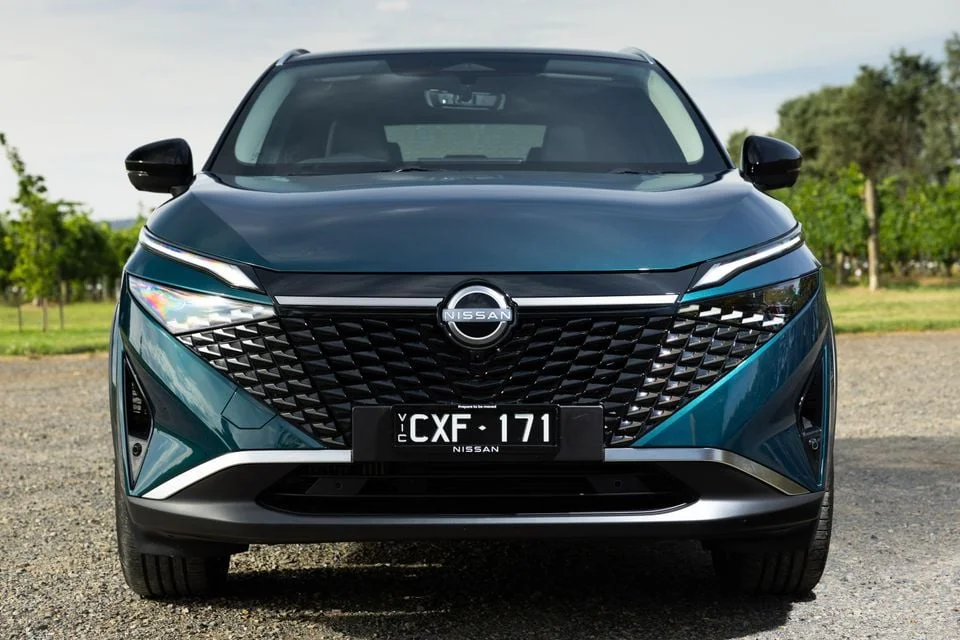
The current J12-generation Qashqai landed in Australia in 2022, and it was a massive visual leap from the old model. Gone was the slightly frumpy look, replaced by sharp V-Motion grille detailing, boomerang-shaped LED headlights, and a floating roof effect created by blacking out the C-pillar. It looks genuinely modern, even three years into its life cycle.
In profile, the Qashqai has a coupe-esque roofline that slopes gently towards the rear. It's not as aggressive as the Toyota C-HR, but it's more interesting than the Hyundai Kona or Yaris Cross. The rear end features full-width LED tail lights that look premium, especially at night. On the Ti variant, 20-inch wheels fill the arches nicely and give it genuine road presence.
Dimensions-wise, it sits at 4,425mm long, 1,835mm wide, and 1,625mm tall on a 2,665mm wheelbase. That makes it about 70mm shorter than a Hyundai Tucson and roughly the same length as a Mazda CX-30. The 10.7-metre turning circle is handy in tight shopping centre car parks. Ground clearance is 180mm, which is enough for gravel roads and grassy campsite entries, but this is not an off-roader by any means.
| Key details | 2026 Nissan Qashqai Ti e-POWER |
|---|---|
| Engine | 1.5L 3-cyl |
| Power | 140kW |
| Torque | 330Nm |
| Drive type | FWD |
| Transmission | Automatic |
| Power-to-weight ratio | 82 kW/tonne |
| Weight | 1,707kg (kerb) |
| Spare tyre type | Space saver |
| Tow rating | 750kg braked750kg unbraked |
| Turning circle | 11.1m |
| Fuel consumption | 4.8 L/100km |
| Boot | 404L seats up, 1,328L folded |
| ANCAP | 4 stars (2025) |
Key details for 2 other variants
| Key details | 2026 Nissan Qashqai ST-L e-POWER |
|---|---|
| Engine | 1.5L 3-cyl turbo |
| Power | 140kW |
| Torque | 311Nm |
| Drive type | FWD |
| Transmission | Reduction Drive (Automatic) |
| Power-to-weight ratio | 84 kW/tonne |
| Weight | 1,676kg (kerb) |
| Spare tyre type | 18" alloy wheel with 215/55 R18 tyre |
| Tow rating | 750kg braked750kg unbraked |
| Turning circle | 11.1m |
| Fuel consumption | 4.1 L/100km |
| Boot | 404L seats up, 1,328L folded |
| ANCAP | 4 stars (2025) |
| Key details | 2026 Nissan Qashqai Ti-L e-POWER |
|---|---|
| Engine | 1.5L 3-cyl |
| Power | 140kW |
| Torque | 330Nm |
| Drive type | FWD |
| Transmission | Automatic |
| Power-to-weight ratio | 82 kW/tonne |
| Weight | 1,717kg (kerb) |
| Spare tyre type | Space saver |
| Tow rating | 750kg braked750kg unbraked |
| Turning circle | 11.1m |
| Fuel consumption | 4.8 L/100km |
| Boot | 452L seats up, 1,376L folded |
| ANCAP | 4 stars (2025) |
Is it good value?
What Does the Qashqai Cost in Australia?
The current Qashqai lineup is built entirely around Nissan's e-POWER hybrid drivetrain, which uses a petrol engine solely as a generator to feed the electric motor that actually drives the wheels. Three variants, one powertrain. Here's the breakdown:
Driveaway, expect the entry Ti e-POWER to land around $50,000-$52,000 depending on your state. The Ti-L e-POWER is the sweet spot in the range at $52,365. You get the panoramic sunroof, head-up display, Bose audio, and ProPilot assist. The jump from Ti to Ti-L is around $5,200 for a lot of extra kit.
The N-Design at over $54k is getting into Hyundai Tucson and Kia Sportage hybrid territory, which are bigger cars. At that price, the Qashqai's value proposition starts to thin out a bit.
Running Costs
The Qashqai is cheap to run. The e-POWER hybrid sips 4.8L/100km on the combined cycle, and because the electric motor does the low-speed work, town driving is where it shines. At 15,000km per year and fuel at $2.00/litre, that's roughly $1,440 a year on the claim.
Servicing follows a 12-month/15,000km schedule. Nissan's capped-price servicing program keeps costs predictable at around $350-$500 per service. Over five years, you're looking at approximately $2,200 in total service costs. That's competitive.
Insurance sits in group 12-16 depending on variant, which translates to roughly $1,200-$1,800 per year for most drivers. Registration varies by state but budgeting $800-$900 covers you in most places. The total cost of ownership over five years, including fuel, servicing, insurance, registration, and depreciation, is genuinely reasonable for this segment. More on running cost comparisons in our cheapest cars to run analysis.
Rivals: What Else Should You Cross-Shop?
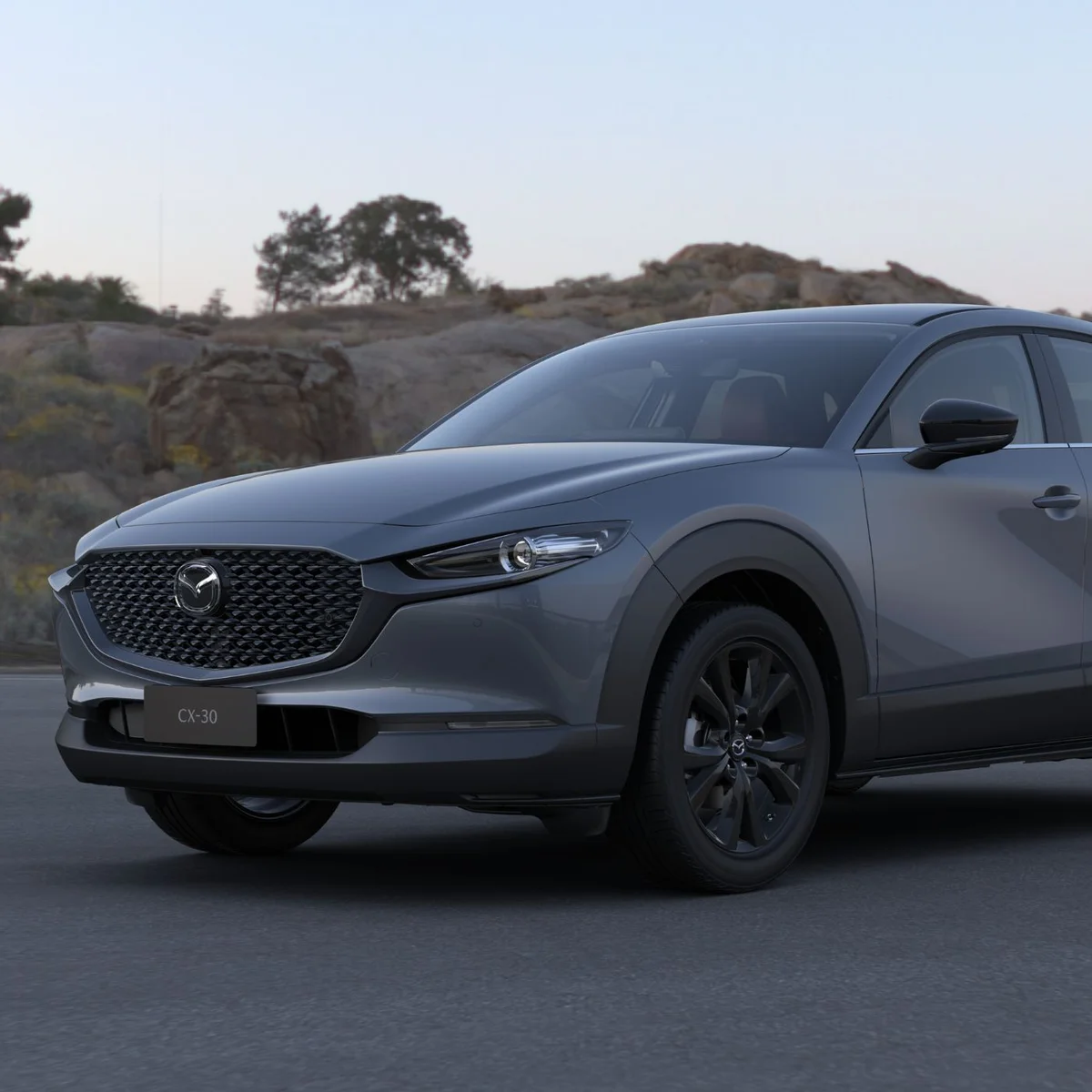
Mazda CX-30 (from $29,990)
The CX-30 leans on cabin materials and design. Where the CX-30 falls short: boot space is only 317L (the Qashqai's 452L is a big advantage), the warranty is five years, and it has no hybrid option in this class. If cabin materials matter most, buy the Mazda. If practicality and long-term warranty matter more, the Qashqai wins. Full comparison in our Qashqai vs CX-30 head-to-head.
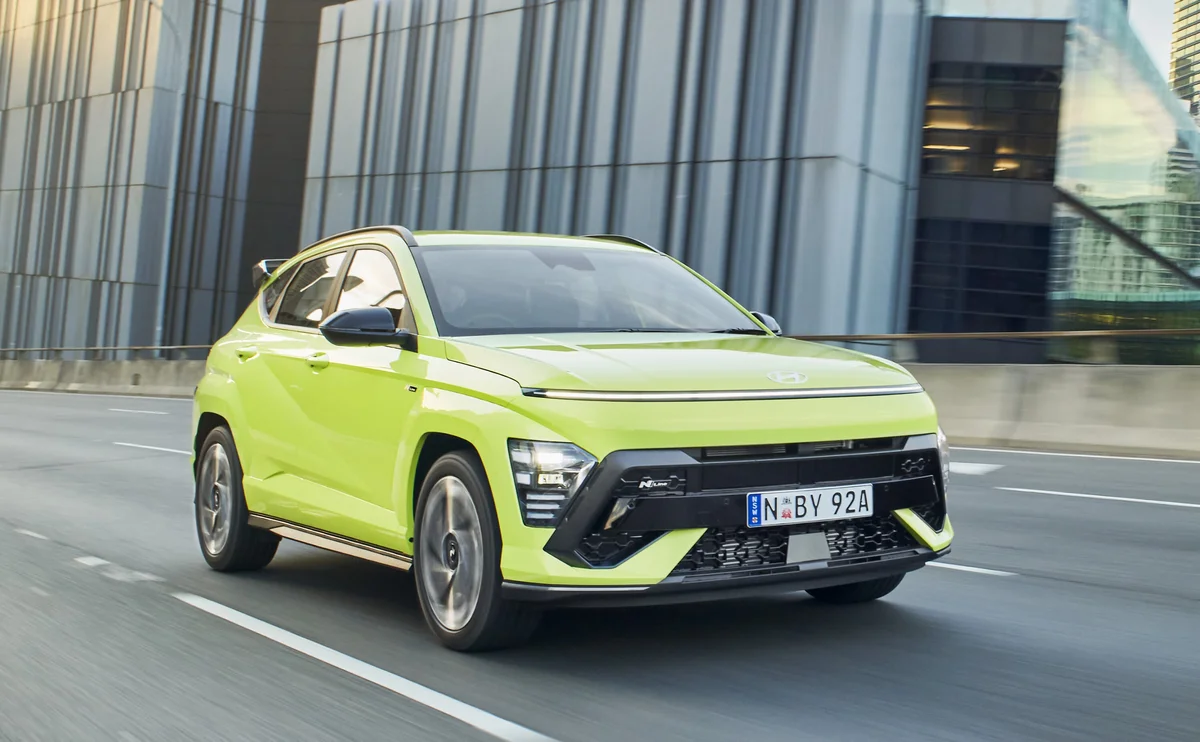
Hyundai Kona (from $32,500)
The Kona was completely redesigned for 2023 and it's a much more compelling car than the model it replaced. It's slightly cheaper than the Qashqai, has a bold design that stands out in car parks, and offers both hybrid and full electric powertrains alongside the standard petrol. Interior tech is strong, with dual 12.3-inch screens from mid-grade up. Boot space at 407L trails the Qashqai's 452L. The five-year warranty is shorter, and the naturally aspirated 2.0-litre has no electric assistance, unlike the Qashqai's e-POWER drive. The Kona Electric variant is worth considering if you're open to going fully electric.
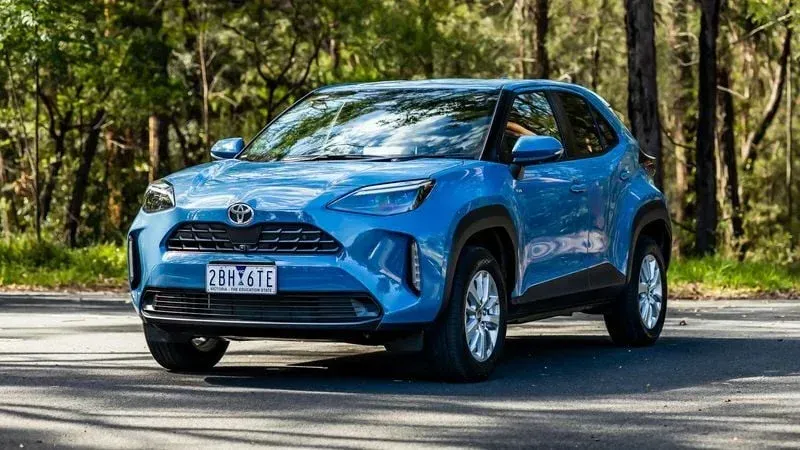
Toyota Yaris Cross (from $31,790)
The Yaris Cross is the value and efficiency champion. Starting under $29k, it's thousands cheaper than the Qashqai, and the hybrid variant claims just 3.8L/100km. Over five years, the fuel savings are substantial. The trade-off is that it's smaller in every dimension. Less boot space (332L), less rear legroom, less power (85kW for the base, 88kW for the hybrid). If you're mostly doing the daily commute and school run, the Yaris Cross is arguably the more rational choice. If you need the extra space and occasionally tow, the Qashqai has the edge.
The Qashqai leads on boot space and warranty. The CX-30 leads on cabin materials. The Yaris Cross leads on fuel efficiency and price. The Kona offers the broadest powertrain range. None of these are bad choices, but they suit different priorities. Browse them all in our best SUVs under $50k guide.
| Key details: Nissan Qashqai Ti e-POWER | |
|---|---|
| Price | From $49,640 RRPExcl. on-road costs |
| Drive-away estimate | Calculating... |
| Cost per week in VIC | from $259/wk in VIC, excludes servicing and insuranceRepayments, fuel or charging, rego and CTP, servicing, tyres and insurance where held. Estimate only, not a quote. |
| Body | SUV |
| Powertrain | Hybrid, 1.5L 3-cyl |
| Towing (braked / unbraked) | 750kg / 750kg |
| Seats | 5 |
| Warranty | 5yr / unlimited km |
| Rivals | Mazda CX-30, Hyundai Kona, Toyota Yaris Cross |
| The Nissan Qashqai range on sale | Price | Powertrain | Fuel or energy use |
|---|---|---|---|
| ST-L e-POWER | From $45,640 RRP | Hybrid, FWD | 4.1 L/100km |
| Ti e-POWER | From $49,640 RRP | Hybrid, FWD | 4.8 L/100km |
| Ti-L e-POWER | From $53,640 RRP | Hybrid, FWD | 4.8 L/100km |
How much fuel does it use?
Efficiency: Genuinely Frugal
The e-POWER Qashqai's claimed combined fuel consumption is 4.8L/100km. Because an electric motor drives the wheels and the petrol engine only runs as a generator, this is a hybrid that is at its most efficient in town, the opposite of a conventional petrol SUV. Expect it to come closest to the claim in suburban stop-start driving, and to use more on the open highway, where the petrol generator runs more often.
The 55-litre fuel tank gives a claimed combined range of well over 1,000km, which means genuinely long touring legs between fills. That's useful for road trips.
Compared to rivals: the Mazda CX-30 2.0L claims 6.5L/100km, the Hyundai Kona 2.0L claims 7.1L/100km, and the Yaris Cross hybrid claims 3.8L/100km. The Yaris Cross hybrid still leads on the sticker figure, but it's a smaller, less powerful car. The Qashqai e-POWER strikes a good balance between efficiency and usability.
Note that the e-POWER Qashqai asks for 95 RON premium unleaded, so factor a slightly higher per-litre cost into your running-cost sums.
| Fuel: Nissan Qashqai Ti e-POWER | |
|---|---|
| Fuel use (combined) | 4.8 L/100km |
| Fuel type | Hybrid |
| Minimum fuel grade | No data |
| Fuel tank | 55L |
| Range on a tank (calculated) | 1,146kmTank divided by the combined figure |
| CO2 (combined) | 112 g/km |
| Service interval | 12 months or 15,000km |
What does it cost to own?
The Warranty: This Is the Big One
Nissan offers a 5-year unlimited-kilometre warranty on the Qashqai, extendable to 10 years and 300,000km with dealer servicing. Read that again. Five years standard, unlimited kilometres. Extendable to ten years and 300,000km by servicing at Nissan dealers. In a segment where most manufacturers offer five years (Mazda, Toyota, Hyundai) or seven years (Kia, Mitsubishi), Nissan's potential decade of coverage is a genuine differentiator.
It's not a gimmick with asterisks, either. The warranty covers all mechanical and electrical components under normal use. You do need to service the car within Nissan's recommended intervals to maintain coverage, but that's standard across all warranties.
For buyers who keep cars long-term, this is enormously reassuring. It means that if the hybrid system develops an issue several years down the track, you're covered. That kind of long-term security has genuine dollar value, especially for a newer e-POWER drivetrain where some buyers might have reliability concerns. For more on warranty differences across brands, check our warranty comparison guide.
| Warranty and servicing: Nissan Qashqai Ti e-POWER | |
|---|---|
| Warranty | 5yr / unlimited km |
| Battery warranty | No data |
| Roadside assistance | 1 years (renewed with dealer servicing) |
| Service interval | 12 months or 15,000km |
| Capped-price servicing | No data |
Cost per week in VIC: from $259/wk in VIC, excludes servicing and insurance
- Repayment estimate$206/wk
$5,000 deposit, 5yr loan at an assumed 7.5% p.a. on the RRP. Not an offer of credit
- Fuel$27/wk
4.8 L/100km combined at $1.95/L ULP 91, the site default
- Rego + CTP$18/wk
VIC typical: car, metropolitan (high risk) zone, 12-month renewal, $958.80 a year. As at July 2026, VicRoads
- ServicingNo data
No data: no servicing cost held for this car
- Tyres$8/wk
Typical tyre spend for this type of car, scaled to 15,000 km a year (not this car's tyres)
- InsuranceNo data
No data: no insurance estimate held for this car
Based on 15,000 km a year in VIC. Estimate only, not a quote.
How safe is it?
Safety: Four Stars and a Long Kit List
The Qashqai holds a 4-star ANCAP safety rating from its 2025 assessment, not five. The sub-scores are 78% for adult occupant protection, 91% for child occupant protection, 68% for vulnerable road users and 62% for safety assist. Child occupant protection is the standout; it was the adult occupant and safety assist results that kept it off five stars, so the long standard kit list below is worth reading alongside the score rather than instead of it.
Standard across every variant:
- Autonomous Emergency Braking (AEB) with pedestrian and cyclist detection
- Adaptive cruise control with stop-and-go
- Lane Keep Assist and lane departure warning
- Rear cross-traffic alert
- Blind spot monitoring
- Traffic sign recognition
- Intelligent emergency call
- Six airbags (front, side, curtain)
The Ti adds ProPilot with lane centring, which is a step up from the lane keep assist on lower variants. It also gets a 360-degree camera system for tight parking.
One thing worth noting: the Qashqai's structure uses high-strength steel and aluminium body panels to keep weight down while maintaining rigidity. The bonnet is aluminium, which helps with pedestrian safety in the event of an impact. The overall structural integrity tested well in Euro NCAP's offset and full-width frontal impact tests.
| ANCAP: Nissan Qashqai Ti e-POWER | |
|---|---|
| ANCAP rating | 4 stars (tested 2025) |
| Adult occupant | 78% |
| Child occupant | 91% |
| Vulnerable road users | 68% |
| Safety assist | 62% |
| Airbags | 7 |
| Driver assists: Nissan Qashqai Ti e-POWER | |
|---|---|
| Autonomous emergency braking | Standard |
| Adaptive cruise control | Standard |
| Blind-spot monitoring | Standard |
| Rear cross-traffic alert | Standard |
| Lane-keep assist | Standard |
| Speed sign recognition | Standard |
| Driver attention monitor | Standard |
| 360-degree camera | Standard |
Standard, Optional (with the printed price), No (the maker's document says not fitted) or No data. 8 assists checked.
What is it like inside?
Interior: Two 12.3-inch Screens
The cabin is a step up from the old model's. Across the e-POWER range, the 12.3-inch infotainment screen dominates the dashboard and it's paired with a 12.3-inch digital instrument cluster. Wireless Apple CarPlay and Android Auto are standard.
The Qashqai uses harder plastics in the lower door trims and around the centre console, where Mazda's CX-30 leans harder on soft-touch materials.
Heated front seats are standard across the e-POWER range.
Where Nissan does well is storage. There's a big centre console bin, a wireless phone charging pad on upper grades, decently sized door pockets, and two cup holders. The glovebox is a reasonable size too. Small things, but they matter on daily commutes.
The Ti-L and N-Design get a Bose eight-speaker audio system; lower grades have six speakers.
Practicality: Where the Qashqai Earns Its Keep
The Qashqai's 452-litre boot is among the largest in the small SUV segment. That's 135 litres more than the Mazda CX-30 (317L) and 120 litres more than the Yaris Cross (332L). Fold the 60:40 rear seats down and you open up a big flat load space, which is enough for an IKEA run or a couple of suitcases plus camping gear.
The boot floor is flat when the seats are down, and the loading lip is at a sensible height. Wide-opening tailgate and a low load height make it easy to load bulky items. It is the kind of everyday practicality that matters when you're standing in a Bunnings car park with both arms full.
The sloping roofline trims rear headroom. Two ISOFIX anchor points are fitted to the outer rear seats.
For three teenagers across the back, a bigger Tucson or Sportage makes more sense.
Towing is rated at just 750kg braked on the e-POWER, which covers a small box trailer or a bike rack but not a camper, jet ski, or boat trailer. Towing is clearly not what this drivetrain is built for. If towing is a primary need, check our best towing vehicles guide for more capable options.
| Space and dimensions: Nissan Qashqai Ti e-POWER | |
|---|---|
| Seats | 5 |
| Boot, seats up | 404L |
| Boot, seats folded | 1,328L |
| Length x width x height | 4,425 x 1,835 x 1,625mm |
| Wheelbase | 2,665mm |
| Ground clearance | 175mm |
| ISOFIX | 2 points (2L, 2R) |
| Top tethers | 3 |
| Seat trim | Synthetic leather |
| Spare wheel | Space saver |
Does it have good tech?
| Screens and audio: Nissan Qashqai Ti e-POWER | |
|---|---|
| Touchscreen | 12.3 inches |
| Driver display | 12.3 inches |
| Audio | 6 speakers |
| USB | USB-A + USB-C |
| Connected services term | No data |
| Connectivity: Nissan Qashqai Ti e-POWER | |
|---|---|
| Apple CarPlay | Standard |
| Android Auto | Standard |
| Wireless CarPlay / Android Auto | Standard |
| Wireless phone charging | No data |
| Head-up display | Standard |
| Built-in navigation | Standard |
| Digital radio | Standard |
| Over-the-air updates | No data |
| Remote climate (app) | No data |
What the figures say about driving it
The Nissan Qashqai Ti e-POWER has 82 kW for every tonne of kerb weight, 330Nm of torque, a claimed 0-100km/h of 7.9s. It weighs 1,707kg and turns in 11.1m. These are the figures that shape how quickly a car gets moving and how easily it parks.
| The figures: Nissan Qashqai Ti e-POWER | |
|---|---|
| Power-to-weight | 82 kW/tonne |
| Power | 140kW |
| Torque | 330Nm |
| 0-100km/h (claimed) | 7.9s |
| Kerb weight | 1,707kg |
| Turning circle | 11.1m |
| Tyres | 235/50 R19 |
| Drive | FWD |
| Transmission | Automatic |
| Towing (braked) | 750kg |
We have not driven the Nissan Qashqai; these are Nissan's published figures.
Best deals
Get a great deal on a brand new car today
One enquiry, up to four cars. We ask local dealers for their best drive-away price and send them back to you, so you compare real numbers instead of list prices.
Free for you to use. If you buy, the dealer may pay us a commission. Your details only go to a dealer if you say so.
Find a new car dealShould I buy it?
Should You Buy the Nissan Qashqai?
Yes, if:
- You want a 5-year warranty (up to 10 years with dealer servicing) that gives genuine long-term peace of mind
- Boot space is a priority. 452 litres is among the best in the small SUV class
- You want strong standard safety kit without needing to option up
- You plan to keep the car for more than five years and want warranty coverage the whole time
- You want a hybrid where an electric motor drives the wheels, with strong town fuel economy
Maybe not, if:
- You want the lowest possible running costs (buy the Yaris Cross Hybrid)
- You need to tow. the e-POWER is rated at just 750kg braked
- You're working to a tight budget. the range now starts at $47k, and bigger SUVs undercut it
- Interior luxury and material quality are your top priority (the Mazda wins there)
The Nissan Qashqai is a car that makes sense on paper. It's not going to excite anyone at a dinner party, and it won't feature in anyone's dream garage, but that's not the point. The point is a 452-litre boot, 4.8L/100km e-POWER fuel economy, a 4-star ANCAP result, strong standard equipment, and a 5-year warranty (up to 10 years with dealer servicing) that says Nissan genuinely stands behind this car. For Australian families and commuters who want a fuss-free small SUV, it's one of the best all-round packages in the segment.
If you're cross-shopping, start with our Qashqai vs CX-30 comparison. Or browse the full best SUVs under $50k list to see how it stacks up against the full field.
→ Compare all Nissan Qashqai variants on CarSorted (200+ specs)
CarSorted Score breakdown
The CarSorted Score is algorithmic: it is calculated from this car's published data, not from a road test. How it works.
Safety
Fuel Economy
Value
Practicality
Technology
Performance
Reliability
Questions buyers ask
How much does a Nissan Qashqai cost in Australia?
The Nissan Qashqai Ti e-POWER is from $49,640 RRP, before on-road costs. The range table above lists every current variant.
What is the Nissan Qashqai boot space?
The Nissan Qashqai has 404L of boot space with the seats up and 1,328L folded.
Can the Nissan Qashqai tow?
The Nissan Qashqai Ti e-POWER is rated to tow 750kg braked and 750kg unbraked.
Does the Nissan Qashqai have a CVT?
No. The current e-POWER Qashqai does not use a CVT. The wheels are driven entirely by an electric motor, so there is no conventional gearbox at all, the same basic layout as an EV.
How much fuel does the Nissan Qashqai use?
On the official combined cycle the Nissan Qashqai uses 4.8 L/100km.
Is the Nissan Qashqai safe?
The Nissan Qashqai holds 4 ANCAP stars (rated 2025).
What warranty does the Nissan Qashqai have?
The Nissan Qashqai comes with a 5yr / unlimited km warranty.
How powerful is the Nissan Qashqai?
The Nissan Qashqai Ti e-POWER makes 140kW and 330Nm, with a claimed 0-100km/h of 7.9s.
How to read this page. This is a review of the published figures: we have not driven this car. Prices, specifications, ANCAP ratings, warranty, equipment and the CarSorted Score come from our records for the variant shown, sourced from Nissan's Australian documents, and update when those records change. RRP excludes on-road costs. Drive-away figures are estimates for the state you have selected unless marked as advertised; cost per week is an estimate, not a quote. The editorial text was written on 7 April 2026. Always confirm price and specification with the manufacturer or a dealer before you buy. CarSorted does not accept payment for recommendations.
Comments (0)
Sign in to join the conversation
No comments yet. Be the first!