2026 Volkswagen Tiguan 110TSI Life review
Is It Worth $53k in 2026?
Data checked: specs 29 Aug 2026, price 24 Jun 2026
Review snapshot
Model reviewed
Volkswagen Tiguan 110TSI LifeFrom $44,990 RRP
Excl. on-road costs
from $270/wk in VIC, excludes insurance (estimate)
76/100
CarSorted Score
- Fuel use
- 7.6 L/100km
- Towing (braked)
- 1,800kg
- Boot
- 652L
This review is built from Volkswagen's published figures, ANCAP and our own calculators. We have not driven this car, as at October 2026.
Written 7 April 2026. The snapshot, tables, prices and scores on this page update from our car data; figures quoted in the text are as at that date.
The Quick Verdict
The third-generation Volkswagen Tiguan has a 652-litre boot in the petrol grades, a tow rating of 1,800kg (front-drive 110TSI) to 2,300kg (150TSI and 195TSI), and LED matrix headlights on every variant. The catch? It starts at $44,990, which is $5,000-$10,000 more than the Japanese and Korean alternatives. And 7.6L/100km on the combined cycle isn't great when a 2WD RAV4 Hybrid claims 4.5L/100km. If you value boot space, towing and European design above fuel bills, the Tiguan is the one to look at. If running costs and fuel economy matter more, the RAV4 Hybrid wins on the spreadsheet.
Design: Mature and Understated
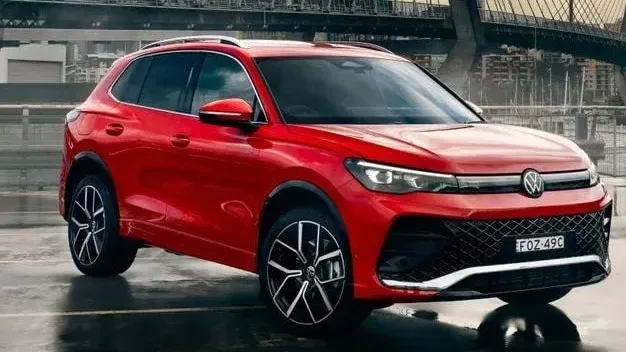
The third-generation Tiguan looks like a proper Volkswagen. Clean, restrained, and confident without trying too hard. The front end features a wider grille with an illuminated VW badge on the R-Line, slim LED matrix headlights connected by a full-width light bar, and a sculpted bumper that gives it a road presence the old model lacked.
In profile, the proportions are spot-on. The roofline is almost flat, which maximises interior headroom, and the greenhouse is upright without looking boxy. The shoulder line running from the front wheel arch to the tail light gives it a sense of purpose and forward motion. It's not as adventurous as the Tucson's polarising design or as sleek as the CX-5, but it ages better than both.
At 4,539mm long, 1,839mm wide, and 1,657mm tall on a 2,681mm wheelbase, the Tiguan is a genuine mid-size SUV. It's 90mm longer than the old model, and virtually all of that extra length went into the rear legroom and boot. Ground clearance is 200mm, which is good for a road-biased SUV and plenty for gravel roads and campsite entries.
The R-Line body kit adds more aggressive bumpers, a rear diffuser, and 20-inch wheels that fill the arches dramatically. It looks genuinely sharp. The Elegance keeps a clean, understated look with 19-inch alloys.
| Key details | 2026 Volkswagen Tiguan 110TSI Life |
|---|---|
| Engine | 1.4L 4-cyl turbo |
| Power | 110kW |
| Torque | 250Nm |
| Drive type | FWD |
| Transmission | 7-speed DSG |
| Power-to-weight ratio | No data |
| Weight | 1,574kg (tare) |
| Spare tyre type | Space-saving spare wheel |
| Tow rating | 1,800kg braked750kg unbraked |
| Turning circle | 11.7m |
| Fuel consumption | 7.6 L/100km |
| Boot | 652L seats up, 1,650L folded |
| ANCAP | 5 stars (2024) |
Key details for 3 other variants
| Key details | 2026 Volkswagen Tiguan 110TSI Elegance |
|---|---|
| Engine | 1.4L 4-cyl turbo |
| Power | 110kW |
| Torque | 250Nm |
| Drive type | FWD |
| Transmission | 7-speed DSG |
| Power-to-weight ratio | No data |
| Weight | No data |
| Spare tyre type | Space-saving spare wheel |
| Tow rating | 1,800kg braked750kg unbraked |
| Turning circle | 11.7m |
| Fuel consumption | 7.6 L/100km |
| Boot | 652L seats up, 1,650L folded |
| ANCAP | 5 stars (2024) |
| Key details | 2026 Volkswagen Tiguan 150TSI R-Line |
|---|---|
| Engine | 2L 4-cyl turbo |
| Power | 150kW |
| Torque | 320Nm |
| Drive type | AWD |
| Transmission | 7-speed DSG |
| Power-to-weight ratio | No data |
| Weight | No data |
| Spare tyre type | Space-saving spare wheel |
| Tow rating | 2,300kg braked750kg unbraked |
| Turning circle | 11.7m |
| Fuel consumption | 7.6 L/100km |
| Boot | 652L seats up, 1,650L folded |
| ANCAP | 5 stars (2024) |
| Key details | 2026 Volkswagen Tiguan 150TSI Elegance |
|---|---|
| Engine | 2L 4-cyl turbo |
| Power | 150kW |
| Torque | 320Nm |
| Drive type | AWD |
| Transmission | 7-speed DSG |
| Power-to-weight ratio | No data |
| Weight | No data |
| Spare tyre type | Space-saving spare wheel |
| Tow rating | 2,300kg braked750kg unbraked |
| Turning circle | 11.7m |
| Fuel consumption | 7.6 L/100km |
| Boot | 652L seats up, 1,650L folded |
| ANCAP | 5 stars (2024) |
Is it good value?
What Does the Tiguan Cost in Australia?
VW simplified the third-gen Tiguan range for Australia. Three main variants, all with the same 1.5-litre turbo engine:
Driveaway, the Life lands around $55,500-$58,000 depending on your state. That's not cheap. For context, a Toyota RAV4 GXL Hybrid 2WD is $48,990, and a Hyundai Tucson Elite is $44,350 (petrol) or $48,350 (hybrid). You're paying a genuine premium for the VW badge and the European engineering underneath it.
AWD (4MOTION) is available as an option on the Elegance and R-Line at approximately $3,000-$4,000 extra. For most Australian buyers, the front-wheel-drive versions are perfectly adequate. The AWD adds traction in wet conditions and on loose surfaces, but it's not a genuine off-road system. If your needs are suburban and highway driving with occasional gravel roads, save the money and go FWD.
The Life at $44,990 is the sweet spot. It comes generously equipped with everything most families need: a 12.9-inch touchscreen, 10.25-inch digital instrument cluster, wireless Apple CarPlay and Android Auto, LED matrix headlights, heated front seats, three-zone climate control, adaptive cruise control, and a power tailgate. There's not much missing from the base that would push most buyers up the range.
Running Costs
The Tiguan's 1.5-litre turbo claims 7.6L/100km on the combined ADR test cycle. At 15,000km per year and fuel at $2.00/litre, that claim works out to roughly $2,280 annually. Compare claim to claim and a 2WD RAV4 Hybrid at 4.5L/100km comes in around $1,350 and a petrol Tucson at 8.1L/100km around $2,430. Every one of those figures is a lab number and every one of those cars will use more in practice, but the ranking is the useful part, and the Tiguan sits at the thirsty end of it.
The Tiguan runs on 95 RON premium unleaded, which adds about 15-20 cents per litre compared to cars that accept 91 RON regular. Over a year, that's an extra $120-$180 at the bowser. Not a dealbreaker, but worth noting.
Servicing follows VW's 12-month/15,000km schedule. Capped-price servicing runs approximately $450-$600 per service. Over five years, total service costs sit around $2,800-$3,200. That's higher than Toyota ($2,000-$2,500) and Hyundai ($2,200-$2,800) but not dramatically so. Insurance typically sits in groups 15-20, translating to $1,500-$2,200 per year for most drivers.
The total five-year cost of ownership, including fuel, servicing, insurance, registration, and depreciation, is higher than the RAV4 Hybrid and Tucson. The Tiguan depreciates faster than the Toyota (which holds its value like nothing else in this segment) but roughly in line with the Hyundai. You're paying more to own a Tiguan. The question is whether the boot, towing and equipment justify the premium. For a broader comparison, see our most fuel-efficient SUVs analysis.
Rivals: What Else Should You Cross-Shop?
Mazda CX-5 (from $38,740)
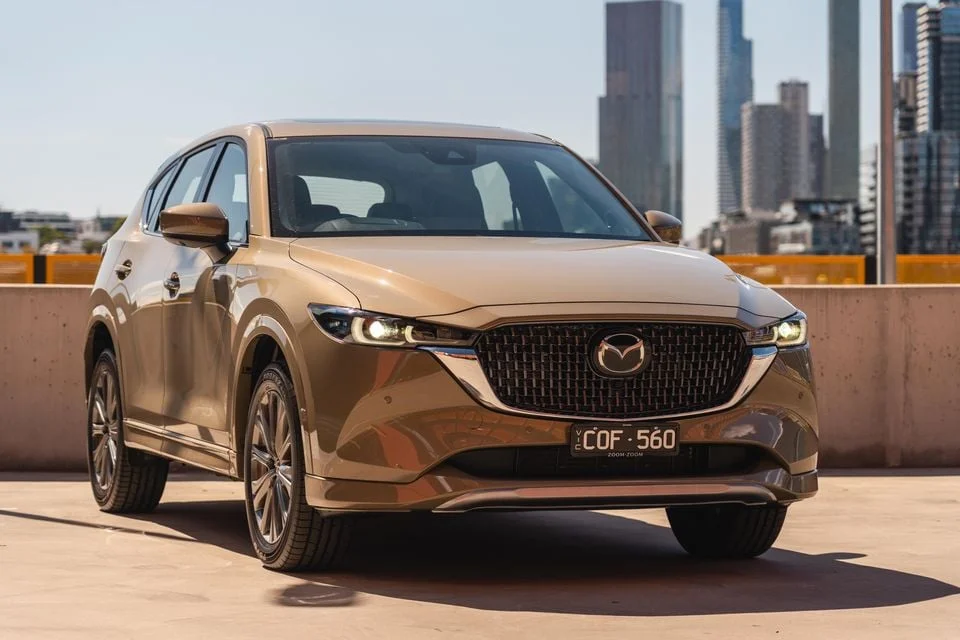
The CX-5 is cheaper and leans on cabin materials, with a 2.5-litre naturally aspirated engine and a conventional 6-speed automatic. Where it falls short: the boot is smaller (466L vs 652L), the infotainment tech is showing its age, and Mazda hasn't offered a hybrid variant. If you can live with the smaller boot and don't need the 150TSI's towing (the CX-5 is rated at 1,800kg, the same as a 110TSI, against 2,300kg), the CX-5 saves you up to $14,000. Full comparison in our Tiguan vs CX-5 head-to-head.
Toyota RAV4 (from $45,990)
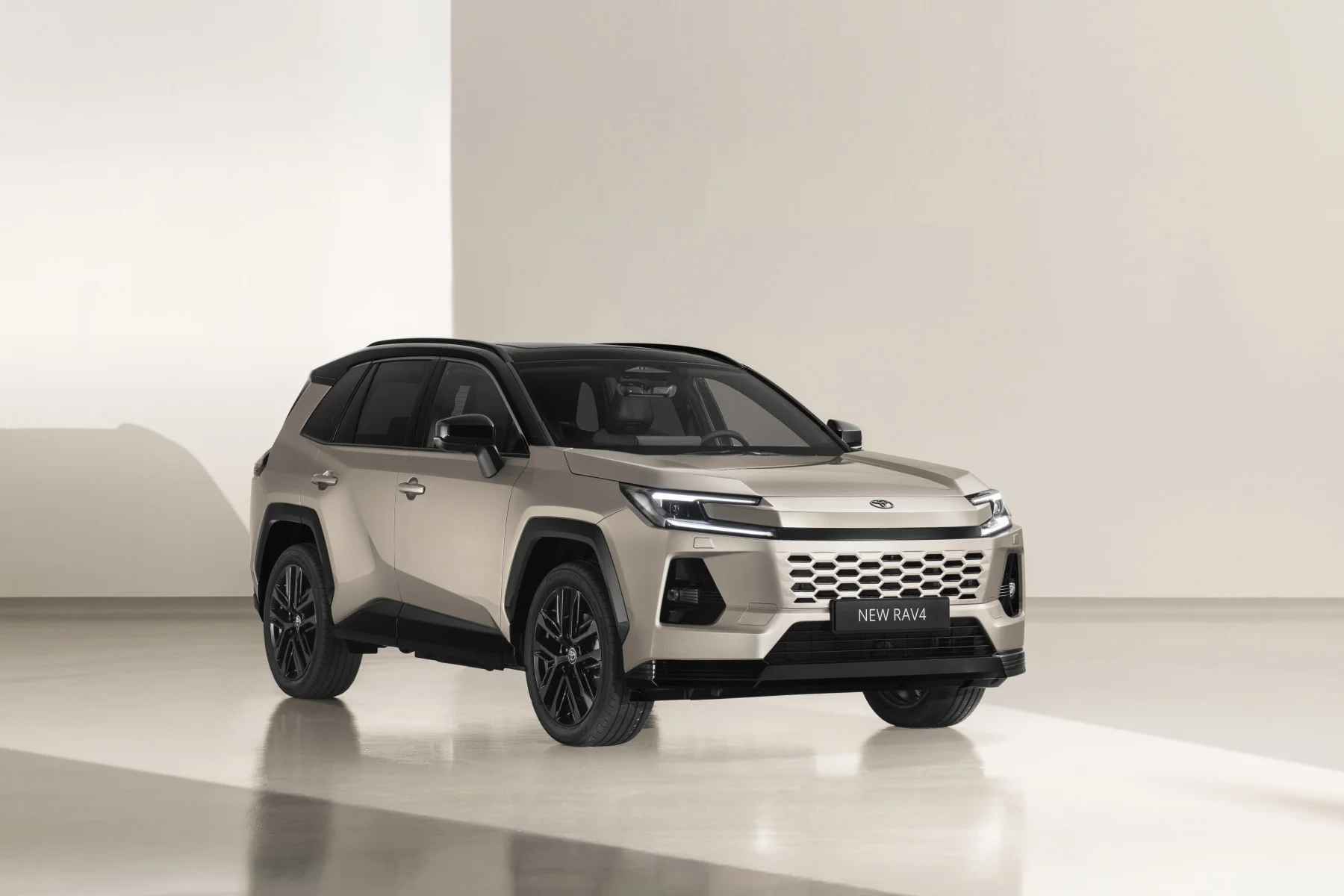
The RAV4 is the sensible choice. The Hybrid variant is the one to buy, claiming 4.5L/100km in 2WD form, which saves thousands over the Tiguan's ownership period. Toyota's reliability reputation is earned, the dealer network is the broadest in Australia, and resale values are the strongest in the class. Where the RAV4 falls short: the interior is plainer than the Tiguan's. Towing is 800kg for the 2WD grades and 1,500kg for AWD. If running costs and reliability are the top priorities, buy the RAV4. If boot space, towing and cabin design matter, buy the Tiguan. Browse both in our best SUVs under $50k guide.
Hyundai Tucson (from $39,350)
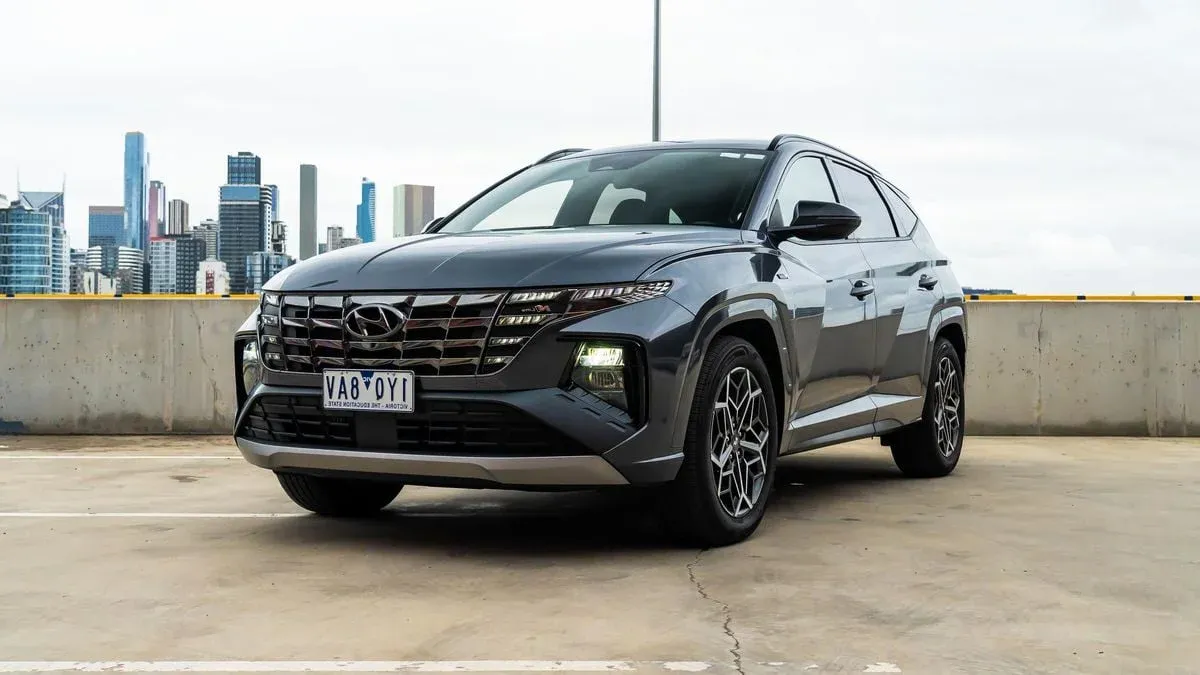
The Tucson offers an excellent balance of value, tech, and powertrain choice. Available in petrol and hybrid form, with the hybrid in front- or all-wheel drive, it covers a base the petrol Tiguan doesn't. The interior is modern and well-equipped with dual 12.3-inch screens, and the bold exterior design stands out in car parks. The Tucson Hybrid's 4.9L/100km claim (5.3L/100km with AWD) gives it a meaningful advantage over the Tiguan for cost-conscious buyers.
The Tiguan leads on boot space and towing capacity. The RAV4 leads on fuel economy by a wide margin. The CX-5 leads on value. The Tucson leads on powertrain choice and price-to-equipment ratio. All four are excellent cars. Your priorities determine the winner.
| Key details: Volkswagen Tiguan 110TSI Life | |
|---|---|
| Price | From $44,990 RRPExcl. on-road costs |
| Drive-away estimate | Calculating... |
| Cost per week in VIC | from $270/wk in VIC, excludes insuranceRepayments, fuel or charging, rego and CTP, servicing, tyres and insurance where held. Estimate only, not a quote. |
| Body | SUV |
| Powertrain | Petrol, 1.4L 4-cyl turbo |
| Towing (braked / unbraked) | 1,800kg / 750kg |
| Seats | 5 |
| Warranty | 5yr / unlimited km |
| Rivals | Mazda CX-5, Toyota RAV4, Hyundai Tucson |
| The Volkswagen Tiguan range on sale | Price | Powertrain | Fuel or energy use |
|---|---|---|---|
| 110TSI Life | From $44,990 RRP | Petrol, FWD | 7.6 L/100km |
| 110TSI Elegance | From $50,690 RRP | Petrol, FWD | 7.6 L/100km |
| 150TSI R-Line | From $55,990 RRP | Petrol, AWD | 7.6 L/100km |
| 150TSI Elegance | From $60,690 RRP | Petrol, AWD | 7.6 L/100km |
| 150TSI eHybrid Elegance | From $63,990 drive-away (VIC) | Plug-in hybrid, FWD | 1.6 L/100km |
| 195TSI R-Line | From $70,490 RRP | Petrol, AWD | 8.5 L/100km |
| 200TSI eHybrid R-Line | From $73,990 drive-away (VIC) | Plug-in hybrid, FWD | 1.7 L/100km |
How much fuel does it use?
Efficiency: The Tiguan's Achilles Heel
Here's where the Tiguan stumbles. Volkswagen claims 7.6L/100km on the combined ADR test cycle for the 1.5-litre turbo.
Small turbo petrols are the drivetrain where a lab figure and a real driving week diverge most, and the reason is the turbo itself. The claim is generated on a gentle, standardised cycle that keeps the engine off boost and lets it run lean on a small throttle opening. Drive it the way a family SUV actually gets driven, merging, overtaking, climbing a hill with five people and the boot loaded, and the turbo is doing real work, the engine runs richer to keep temperatures in check, and consumption rises quickly. Short trips compound it: a cold 1.5-litre burns noticeably more until it is up to temperature, and the school run rarely gets there. The DSG helps by holding a tall gear at a steady cruise, which is why a Tiguan does its best work on an open highway, but a 20-inch-wheeled R-Line dragging a taller, heavier body through traffic is another matter.
Against rivals on claimed figures, the Tiguan is the thirstiest car in this comparison. The 2WD RAV4 Hybrid claims 4.5L/100km, the Tucson Hybrid 4.9L/100km in front-drive form and 5.3L/100km with AWD, and the 2.0-litre petrol Tucson 8.1L/100km. Over five years of ownership, that gap adds up to thousands of dollars.
The 58-litre fuel tank works out to roughly 760km on the claimed figure, which is competitive. City-focused drivers will be visiting the bowser noticeably more often than RAV4 Hybrid owners, because town driving is exactly where this drivetrain gives the most ground away.
VW does not currently offer a hybrid or plug-in hybrid Tiguan in Australia, which is a significant omission in a market where the RAV4 Hybrid accounts for the majority of RAV4 sales. If fuel economy is a priority, the Tiguan simply cannot compete with hybridised alternatives. For a broader look at efficient SUVs, see our most fuel-efficient SUVs guide.
| Fuel: Volkswagen Tiguan 110TSI Life | |
|---|---|
| Fuel use (combined) | 7.6 L/100km |
| Fuel type | Petrol |
| Minimum fuel grade | 95 RON |
| Urban / extra-urban | 9.8 L/100km / 6.3 L/100km |
| Fuel tank | 55L |
| Range on a tank (calculated) | 724kmTank divided by the combined figure |
| CO2 (combined) | 173 g/km |
| Service interval | 12 months or 15,000km |
What does it cost to own?
| Warranty and servicing: Volkswagen Tiguan 110TSI Life | |
|---|---|
| Warranty | 5yr / unlimited km |
| Roadside assistance | 1 years (renewed with dealer servicing) |
| Service interval | 12 months or 15,000km |
| Capped-price servicing | $3,391 over 5 years |
Cost per week in VIC: from $270/wk in VIC, excludes insurance
- Repayment estimate$185/wk
$5,000 deposit, 5yr loan at an assumed 7.5% p.a. on the RRP. Not an offer of credit
- Fuel$46/wk
7.6 L/100km combined at $2.10/L premium 95, the site default
- Rego + CTP$18/wk
VIC typical: car, metropolitan (high risk) zone, 12-month renewal, $958.80 a year. As at July 2026, VicRoads
- Servicing$13/wk
The maker's capped-price servicing, $3,391 over 5 years
- Tyres$8/wk
Typical tyre spend for this type of car, scaled to 15,000 km a year (not this car's tyres)
- InsuranceNo data
No data: no insurance estimate held for this car
Based on 15,000 km a year in VIC. Estimate only, not a quote.
How safe is it?
Safety: Five Stars and European-Grade Assist Systems
The Tiguan holds a 5-star ANCAP safety rating. Euro NCAP scores are strong across all categories, and the Tiguan particularly excels in the safety assist category thanks to VW's comprehensive standard equipment.
Standard across all variants:
- Autonomous Emergency Braking (AEB) with pedestrian and cyclist detection
- Adaptive cruise control with predictive speed adjustment
- Lane Keep Assist with emergency lane-keeping intervention
- Blind spot monitoring with rear cross-traffic alert
- LED matrix headlights with automatic high-beam segmentation
- Driver fatigue detection
- Front and rear parking sensors with rear camera
- Seven airbags (front, side, curtain, centre)
The Elegance and R-Line add a 360-degree camera system, Park Assist Plus with remote parking capability (you can stand outside the car and park it via your phone), and Travel Assist, which combines adaptive cruise with lane centring for a semi-autonomous highway experience up to 210km/h.
The LED matrix headlights deserve a special mention because they're standard across the range. The system can individually control segments of the high beam to light the road without dazzling oncoming drivers or vehicles ahead, which is exactly what you want on dark rural roads.
| ANCAP: Volkswagen Tiguan 110TSI Life | |
|---|---|
| ANCAP rating | 5 stars (tested 2024) |
| Adult occupant | 83% |
| Child occupant | 88% |
| Vulnerable road users | 84% |
| Safety assist | 84% |
| Airbags | 9 |
| Driver assists: Volkswagen Tiguan 110TSI Life | |
|---|---|
| Autonomous emergency braking | Standard |
| Adaptive cruise control | Standard |
| Blind-spot monitoring | Standard |
| Rear cross-traffic alert | Standard |
| Lane-keep assist | Standard |
| Speed sign recognition | Standard |
| Driver attention monitor | No data |
| 360-degree camera | Standard |
Standard, Optional (with the printed price), No (the maker's document says not fitted) or No data. 8 assists checked.
What is it like inside?
Interior: This Is Where the Tiguan Wins
The dashboard design is clean and horizontal, with the 12.9-inch touchscreen sitting flush with the surrounding trim. The 10.25-inch digital instrument cluster is configurable. Ambient lighting stretches across the dashboard and door cards.
Below the screen, a touch-slider handles volume and temperature. Wireless Apple CarPlay and Android Auto are standard.
On the Elegance, VW's Ergo Active seats add a massage function, adjustable side bolsters and pneumatic lumbar support.
The upper dashboard is soft-touch with a fabric or leather wrap depending on variant, the door cards are padded, and there's chrome trim on the centre console.
The Elegance and R-Line add a Harman Kardon audio system.
Storage is well thought out. The centre console bin is large and has a sliding cover. Door pockets can hold a one-litre bottle. There's a wireless phone charging pad, a useful storage shelf ahead of the gear selector, and two decent cup holders. The glovebox is a reasonable size.
Practicality: Class-Leading Boot, Proper Family Space
Volkswagen quotes 652 litres for the petrol Tiguan's boot (490 litres for the plug-in hybrids). That is more than the CX-5 (466L) and the Tucson (539L petrol, 582L hybrid), and less than the 705 litres Toyota quotes for the RAV4 Hybrid.
Fold the 40:20:40 rear seats down and you open up approximately 1,655 litres of cargo space. The split is useful because you can fold just the centre section and still carry passengers on either side while running long items like skis, timber, or flat-pack furniture through the middle. The boot floor is adjustable to create a flat surface when the seats are down, and the loading lip is low and wide. A power tailgate is standard across the range with hands-free kick operation.
The longer body over the old model went largely into rear legroom, and the flat roofline is kind to rear headroom.
Two ISOFIX anchor points are fitted to the outer rear seats, plus top tether anchors for all three rear positions.
Towing is rated at 1,800kg braked for the front-drive 110TSI grades, 2,300kg for the 150TSI and 195TSI, and 1,800kg or 2,000kg for the plug-in hybrids. That means the Tiguan can handle a medium camper trailer, a decent-sized boat, a car trailer with a small car on top, or a fully loaded box trailer. The 1.5-litre turbo isn't a powerhouse, but the 250Nm of torque arrives from low in the rev range. With a heavy trailer on steep hills, that 250Nm is the number to weigh up. For a full guide to capable tow cars, see our best towing vehicles guide.
| Space and dimensions: Volkswagen Tiguan 110TSI Life | |
|---|---|
| Seats | 5 |
| Boot, seats up | 652L |
| Boot, seats folded | 1,650L |
| Length x width x height | 4,539 x 1,842 x 1,659mm |
| Wheelbase | 2,681mm |
| Ground clearance | 171mm |
| ISOFIX | 2 points (2L, 2R) |
| Top tethers | 3 |
| Seat trim | Cloth |
| Spare wheel | Space-saving spare wheel |
Does it have good tech?
| Screens and audio: Volkswagen Tiguan 110TSI Life | |
|---|---|
| Touchscreen | 12.9 inches |
| Driver display | 10.3 inches |
| Audio | 9 speakers |
| USB | USB-C |
| Connected services term | No data |
| Connectivity: Volkswagen Tiguan 110TSI Life | |
|---|---|
| Apple CarPlay | Standard |
| Android Auto | Standard |
| Wireless CarPlay / Android Auto | Standard |
| Wireless phone charging | Standard |
| Head-up display | No data |
| Built-in navigation | Standard |
| Digital radio | Standard |
| Over-the-air updates | No data |
| Remote climate (app) | No data |
What the figures say about driving it
The Volkswagen Tiguan 110TSI Life has 250Nm of torque. It turns in 11.7m. These are the figures that shape how quickly a car gets moving and how easily it parks.
| The figures: Volkswagen Tiguan 110TSI Life | |
|---|---|
| Power | 110kW |
| Torque | 250Nm |
| 0-100km/h (claimed) | No data |
| Kerb weight | No data |
| Turning circle | 11.7m |
| Tyres | 215/65 R17 |
| Drive | FWD |
| Transmission | 7-speed DSG |
| Towing (braked) | 1,800kg |
As at October 2026, we have not driven this car. These are Volkswagen's published figures for the Volkswagen Tiguan.
Best deals
Should I buy it?
Should You Buy the Volkswagen Tiguan?
Yes, if:
- Cabin design and materials matter to you
- You need a large boot. 652 litres in the petrol grades
- You tow regularly. The 150TSI and 195TSI are rated at 2,300kg
- LED matrix headlights and advanced driver assists are important for safety
Maybe not, if:
- Fuel economy is a top priority. the RAV4 Hybrid saves thousands over the ownership period
- Budget is tight. at $45k, the Tiguan is the most expensive car in this comparison by $6,000-$14,000
- You want a hybrid or plug-in hybrid. VW doesn't offer one in Australia
- Long-term reliability concerns you. Toyota's track record is harder to argue with
- Resale value is a priority. the RAV4 holds its value better than anything in this segment
- You'd rather spend the price premium on a higher-spec variant of a cheaper car
The Volkswagen Tiguan is the mid-size SUV for people who want the European package. The 652-litre boot, the towing capacity of up to 2,300kg, the LED matrix headlights, the cabin design. Individually, they're advantages; together, no RAV4, Tucson or CX-5 matches that list on paper. You pay more for it, and you use more fuel doing it. Test drive it against the alternatives and decide whether the premium is worth it to you.
Start with our Tiguan vs CX-5 comparison, or browse the full best SUVs under $50k list to see how it ranks against the full field.
→ Compare all Volkswagen Tiguan variants on CarSorted (200+ specs)
CarSorted Score breakdown
The CarSorted Score is algorithmic: it is calculated from this car's published data, not from a road test. How it works.
Safety
Fuel Economy
Value
Practicality
Technology
Performance
Reliability
Questions buyers ask
How much does a Volkswagen Tiguan cost in Australia?
The Volkswagen Tiguan 110TSI Life is from $44,990 RRP, before on-road costs. The range table above lists every current variant.
Is the Volkswagen Tiguan reliable?
The third-generation Tiguan uses VW's latest MQB Evo platform with a 1.5-litre turbo petrol engine and a 7-speed DSG dual-clutch transmission. VW's DSG gearboxes have had reliability concerns in the past, but the latest units are significantly improved. VW backs it with a 5-year unlimited-kilometre warranty.
What is the Volkswagen Tiguan boot space?
The Volkswagen Tiguan has 652L of boot space with the seats up and 1,650L folded.
Can the Volkswagen Tiguan tow?
The Volkswagen Tiguan 110TSI Life is rated to tow 1,800kg braked and 750kg unbraked.
Does the Volkswagen Tiguan come with a DSG gearbox?
Yes. All Australian-spec Tiguans use a 7-speed DSG (dual-clutch) automatic transmission. It is a dual-clutch design rather than a traditional torque converter automatic. Earlier DSG units had reliability concerns, but VW's latest generation is significantly improved.
How much fuel does the Volkswagen Tiguan use?
On the official combined cycle the Volkswagen Tiguan uses 7.6 L/100km.
Is the Volkswagen Tiguan safe?
The Volkswagen Tiguan holds 5 ANCAP stars (rated 2024).
What warranty does the Volkswagen Tiguan have?
The Volkswagen Tiguan comes with a 5yr / unlimited km warranty.
How to read this page. This is a review of the published figures. As at October 2026, we have not driven this car. Prices, specifications, ANCAP ratings, warranty, equipment and the CarSorted Score come from our records for the variant shown, sourced from Volkswagen's Australian documents, and update when those records change. RRP excludes on-road costs. Drive-away figures are estimates for the state you have selected unless marked as advertised; cost per week is an estimate, not a quote. The editorial text was written on 7 April 2026. Always confirm price and specification with the manufacturer or a dealer before you buy. As at October 2026, no car maker or dealer pays CarSorted for a ranking, score, verdict or spec value.
Comments (0)
Sign in to join the conversation
No comments yet. Be the first!