Volkswagen ID.4 vs Tesla Model Y: range or room in a BEV SUV
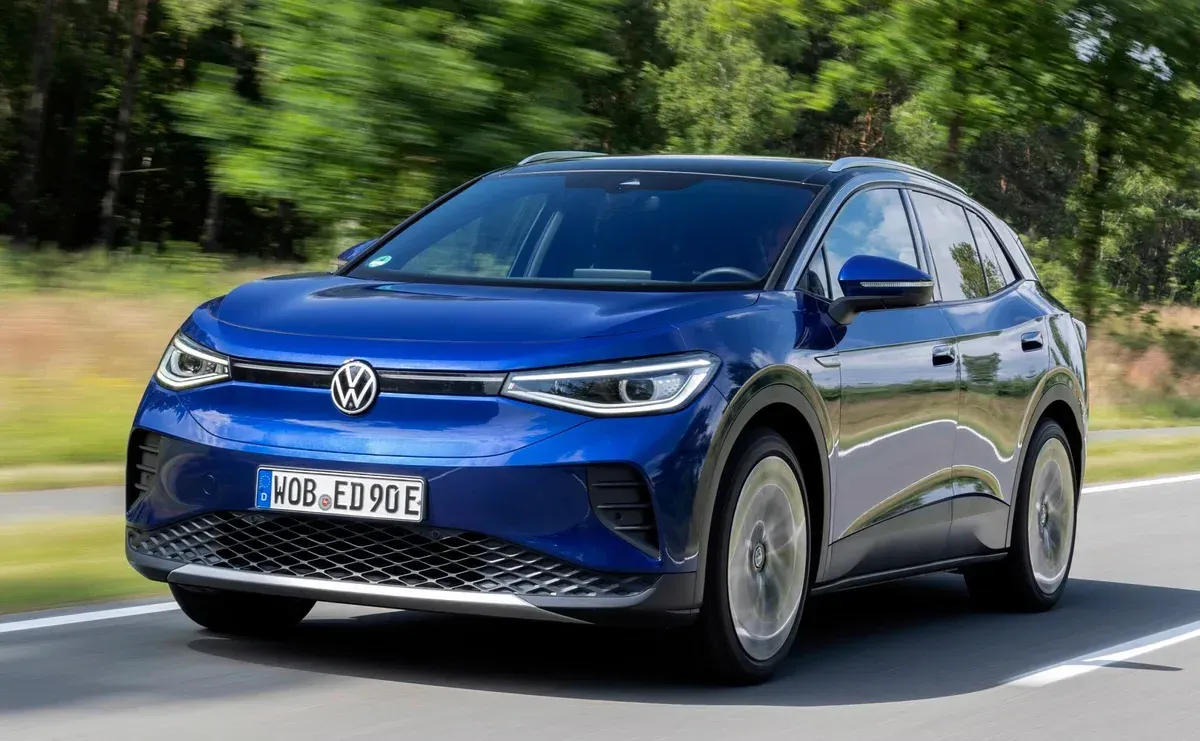
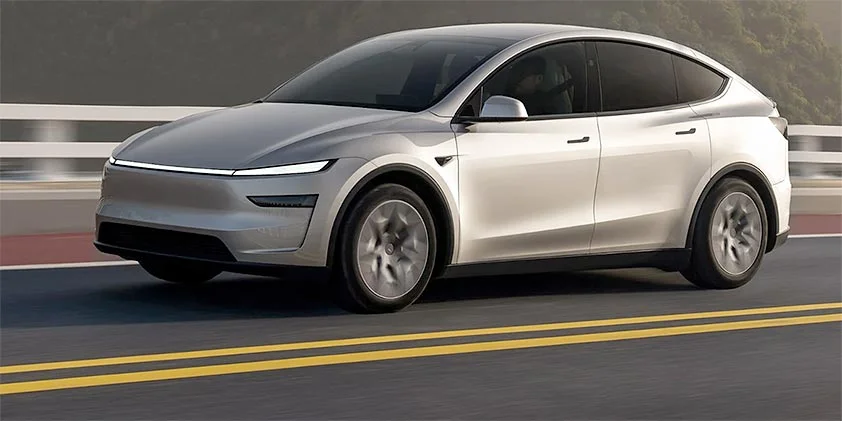
The ID.4 goes further on a charge and has published capped servicing, while the Model Y costs a little less and offers a bigger boot and a higher braked towing limit.
By Uzzi · 12 November 2026 · Every figure comes from each car's own page on CarSorted.
$59,990
RRP excl. on-roads
Price tracker
Standing price
$59,990 RRP before on-road costs
We check the manufacturer's published price regularly and record every change here.
RRP before on-road costs, as published by the manufacturer.
$58,900
RRP excl. on-roads
Price tracker
Standing price
$58,900 RRP before on-road costs
We check the manufacturer's published price regularly and record every change here.
RRP before on-road costs, as published by the manufacturer.
Who the Volkswagen ID.4 suits
The ID.4 suits a buyer who drives long distances and wants the most range from these two cars, with a 77.0kWh battery and a 544km WLTP range. It also suits someone who likes knowing servicing costs upfront, with a capped total of $1,254 (capped-price servicing total). Its 10.3m turning circle is tighter than the Tesla's, handy for city parking.
Who the Tesla Model Y suits
The Model Y suits a family that needs cargo space, with a 854L boot with the seats up, and anyone who tows, with a braked limit of 1,600kg. It is also the slightly cheaper of the two at $58,900 (RRP excl. on-roads). Its energy use of 13.9 kWh/100km is the lower of the two.
What decides it
1. Range on a charge
The ID.4 has a 77.0kWh battery and a WLTP range of 544km. The Model Y has a 60.0kWh battery and 466km of range. That gives the Volkswagen 78km more on paper. Both list a maximum DC charging speed of 175kW.
2. Boot space
The Model Y has a 854L boot with the rear seats up, against 543L in the ID.4, a gap of 311L. Fold the seats and it is 2,138L for the Tesla versus 1,575L for the Volkswagen. If you carry a lot, this one matters.
3. Price
The ID.4 lists at $59,990 (RRP excl. on-roads) and the Model Y at $58,900 (RRP excl. on-roads). That makes the Tesla about $1,090 cheaper before on-road costs. We have no drive-away figures for either car, so check with the seller.
Running costs
The Model Y uses 13.9 kWh/100km against 16.5 kWh/100km for the ID.4, so it should cost a bit less to charge per kilometre. The ID.4 has capped servicing of $1,254 (capped-price servicing total) with a 24 months interval, while we have no servicing figures for the Model Y. Both come with a 5-year, unlimited km warranty. The running-cost chart below puts the two side by side.
True Cost of Ownership (5 Years)
from $83,167
over 5 years, excludes resale value
$2,409
a year to run (parts we hold)
Excludes insurance: No data for this car.
* Cash outlay over 5 years: the deposit, the repayments and the running costs. Excludes resale value. Repayment assumes $5,000 deposit, 5 yrs at 7.5% p.a. 15,000 km a year in VIC. Fuel from the manufacturer's official consumption figure; servicing from the manufacturer's capped-price schedule where we hold it, otherwise No data; tyres are a typical figure for the type of car; insurance is No data until a disclosed reference quote exists. Estimate only, not a quote or an offer of credit.
True Cost of Ownership (5 Years)
from $80,058
over 5 years, excludes resale value
$2,052
a year to run (parts we hold)
Excludes servicing and insurance: No data for this car.
* Cash outlay over 5 years: the deposit, the repayments and the running costs. Excludes resale value. Repayment assumes $5,000 deposit, 5 yrs at 7.5% p.a. 15,000 km a year in VIC. Fuel from the manufacturer's official consumption figure; servicing from the manufacturer's capped-price schedule where we hold it, otherwise No data; tyres are a typical figure for the type of car; insurance is No data until a disclosed reference quote exists. Estimate only, not a quote or an offer of credit.
Charging
How long to charge
77kWh usablePublic DC
50kW charger · 0–80%
Ultra-rapid DC
up to 175kW · 0–80%
Estimates from usable battery size and the car's max charge rates (11kW AC, 175kW DC). Real times vary with temperature, starting charge, charger output and the charging curve.
Home charging cost
$6.27 /100km
Energy cost only, on indicative home tariffs (peak 38¢, off-peak 19¢, solar 6¢ per kWh). Your plan and public charging will differ. How we calculate.
How long to charge
57.5kWh usablePublic DC
50kW charger · 0–80%
Ultra-rapid DC
up to 175kW · 0–80%
Estimates from usable battery size and the car's max charge rates (11kW AC, 175kW DC). Real times vary with temperature, starting charge, charger output and the charging curve.
Home charging cost
$5.28 /100km
Energy cost only, on indicative home tariffs (peak 38¢, off-peak 19¢, solar 6¢ per kWh). Your plan and public charging will differ. How we calculate.
Practicality
Both are SUVs with 5 seats. The Model Y is the bigger car at 4,792mm long and 1,982mm wide, against 4,585mm and 1,852mm for the ID.4, which also has the tighter turning circle at 10.3m versus 12.1m. For towing, the Model Y is rated to 1,600kg braked and the ID.4 to 1,000kg, while both are rated to 750kg unbraked. The ID.4 has 177mm of ground clearance against 167mm for the Tesla.
Cost to tow
The real fuel/energy cost once you hitch up. Pick a trailer and trip.
Estimate only: consumption rises as range falls; real use varies with terrain, wind and load.
Will it fit in the boot?
May fitExample sizes only - measure your item before relying on this.
Volume check only (seats up)
Item box about 166L (31% of the volume). Litres don't describe shape, so this can't confirm a fit.
Volkswagen doesn't publish boot dimensions for this car, only 543 litres. Litres can prove something won't fit, but never that a rigid item will - so the best this car can score is "May fit".
Based on the manufacturer's published boot volume.
Cost to tow
The real fuel/energy cost once you hitch up. Pick a trailer and trip.
⚠ Not every limit could be checked: the manufacturer publishes no GCM for this vehicle, so this verdict rests only on the limits that are published.
Estimate only: consumption rises as range falls; real use varies with terrain, wind and load.
Will it fit in the boot?
May fitExample sizes only - measure your item before relying on this.
Volume check only (seats up)
Item box about 166L (19% of the volume). Litres don't describe shape, so this can't confirm a fit.
Tesla doesn't publish boot dimensions for this car, only 854 litres. Litres can prove something won't fit, but never that a rigid item will - so the best this car can score is "May fit".
Based on the manufacturer's published boot volume.
How quick is it?
How quick is it?
Against on-sale cars in our database
538 (47%)
are quicker
586 (51%)
are slower
Of 1,141 cars, 17 level with it.
Against on-sale SUVs
168 (35%)
are quicker
305 (63%)
are slower
Of 485 cars, 12 level with it.
0-100 times as published and held in our records. Counts cover on-sale cars with a figure and refresh daily.
How quick is it?
Against on-sale cars in our database
400 (35%)
are quicker
721 (63%)
are slower
Of 1,141 cars, 20 level with it.
Against on-sale SUVs
120 (25%)
are quicker
355 (73%)
are slower
Of 485 cars, 10 level with it.
0-100 times as published and held in our records. Counts cover on-sale cars with a figure and refresh daily.
Safety
Both cars hold a 5-star ANCAP rating. The ID.4 was rated in 2021 and the Model Y in 2025, so the Tesla's result is the more recent of the two.
The figures side by side
| Volkswagen ID.4 | Tesla Model Y | |
|---|---|---|
| Price | $59,990 (RRP excl. on-roads) | $58,900 (RRP excl. on-roads) |
| Powertrain | BEV | BEV |
| Fuel | Electric | Electric |
| Drive | RWD | RWD |
| Transmission | Auto | Automatic |
| Power | 210kW | 255kW |
| Torque | 545Nm | 340Nm |
| 0-100km/h | 6.7 seconds | 5.9 seconds |
| Energy use | 16.5 kWh/100km | 13.9 kWh/100km |
| Battery | 77.0kWh | 60.0kWh |
| Electric range (WLTP) | 544km | 466km |
| Max DC charging | 175kW | 175kW |
| Body | SUV | SUV |
| Seats | 5 seats | 5 seats |
| Boot (seats up) | 543L | 854L |
| Boot (seats folded) | 1,575L | 2,138L |
| Length | 4,585mm | 4,792mm |
| Width | 1,852mm | 1,982mm |
| Height | 1,640mm | 1,624mm |
| Wheelbase | 2,766mm | 2,890mm |
| Ground clearance | 177mm | 167mm |
| Turning circle | 10.3m | 12.1m |
| Kerb weight | 2,170kg | 1,921kg |
| Towing (braked) | 1,000kg | 1,600kg |
| Towing (unbraked) | 750kg | 750kg |
| Payload | 380kg | No data |
| ANCAP rating | 5-star (2021) | 5-star (2025) |
| Warranty | 5-year | 5-year |
| Warranty distance | unlimited km | unlimited km |
| Capped servicing, 5 years | $1,254 (capped-price servicing total) | No data |
| Service interval | 24 months | No data |
The verdict
The Model Y wins on price, boot space, towing and energy use, but the ID.4 is the pick if range and known servicing costs come first.
Pick the Volkswagen ID.4 if
you want the longer range of 544km, a tighter turning circle and capped servicing costs you can see upfront.
Pick the Tesla Model Y if
you want the bigger 854L boot, the 1,600kg braked towing limit and the slightly lower price.
Track the Volkswagen ID.4 & Tesla Model Y
Get price-drop alerts on these models plus our free weekly new-car rundown. Unsubscribe anytime.
Put them side by side yourself
Every figure, feature and running cost for both, in our live comparison table.
CarSorted CoDriverBeta
Ask about these two cars
- Volkswagen ID.4 Pro
- Tesla Model Y RWD
Tap a question or ask your own.Tap a question or ask your own. The answer starts from the cars in this comparison, with links to the rows behind them.
Questions buyers ask
Which has more range, the Volkswagen ID.4 or Tesla Model Y?
The ID.4 Pro has a WLTP range of 544km, while the Model Y RWD is listed at 466km.
Is the Tesla Model Y cheaper than the Volkswagen ID.4?
On list price, yes. The Model Y RWD is $58,900 (RRP excl. on-roads) and the ID.4 Pro is $59,990 (RRP excl. on-roads), and on-road costs are extra for both.
Which has the bigger boot?
The Model Y has a 854L boot with the seats up, against 543L for the ID.4.
How much can the ID.4 and Model Y tow?
The Model Y RWD is rated to 1,600kg braked and the ID.4 Pro to 1,000kg braked. Both are rated to 750kg unbraked.
What ANCAP rating do the ID.4 and Model Y have?
Both have a 5-star ANCAP rating. The ID.4's was issued in 2021 and the Model Y's in 2025.
More on these cars
- 2026 Volkswagen ID.4 Pro: full specs and priceEvery Volkswagen ID.4 gradeAll Volkswagen models
- 2026 Tesla Model Y RWD: full specs and priceEvery Tesla Model Y gradeAll Tesla modelsCompare Tesla Model Y vs BYD Sealion 7Compare Tesla Model Y vs Zeekr 7X
More guides with the Tesla Model Y
Toyota RAV4 vs Tesla Model Y: Hybrid SUV or Electric SUVTesla Model Y vs XPeng G6: Bigger boot or lower price in an electric SUV
Volkswagen ID.4 vs Tesla Model Y: the full side-by-side table
Related news
- 2027 Volkswagen ID.4 Update: Satellite Navigation, Three New Driver Aids and Prices From $60,990
- Tesla Model Y Performance Now Listed at $84,900, and the Rest of the Range Gets Premium Names
- Tesla's Model 3 Range Now Opens at $45,900, and the Model Y Performance Is Listed at $84,900
- 2026 Mazda CX-6e Final Pricing: GT From $53,990, Azami $56,990, Now Cheaper Than a Tesla Model Y