Kia EV3 vs Zeekr 7X
ANCAP calls one a Small SUV and the other a Medium SUV, and Australians keep putting them side by side anyway. Here is what you are actually choosing between.
Specifications and pricing correct at time of publishing. Prices are RRP before on-road costs unless stated otherwise. Always confirm with the manufacturer or dealer before purchasing.
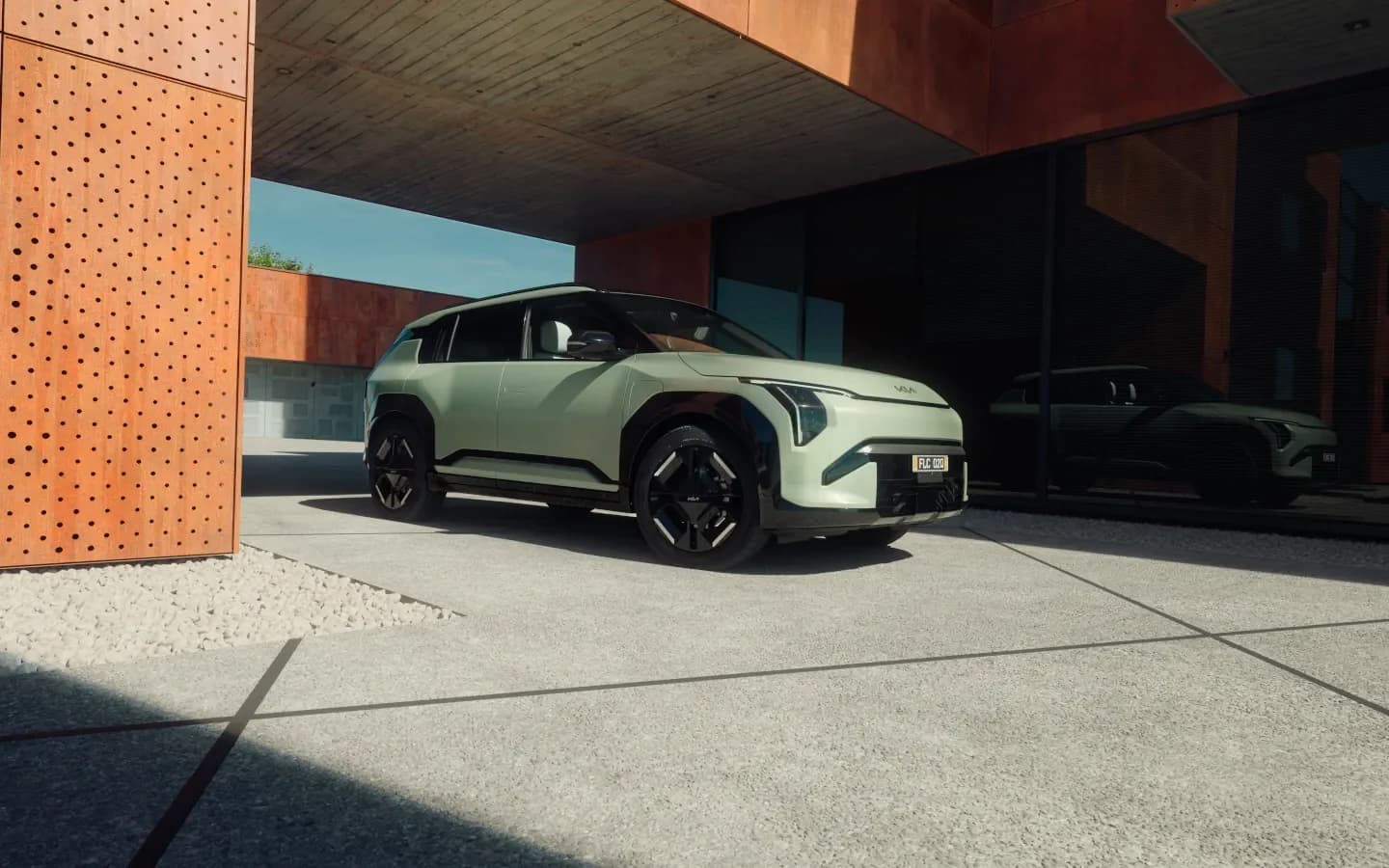
Kia EV3 Earth Long Range
From $58,600
Small Electric SUV
Single Motor (FWD)
150kW
563km WLTP
5★ ANCAP (2025)
460L (VDA)
Zeekr 7X RWD
Not published online
Medium Electric SUV
Single Motor (RWD)
310kW
480km WLTP
5★ ANCAP (2025)
539L
Price Breakdown
Start with the part nobody else will tell you plainly. Zeekr Australia does not publish a price for the 7X anywhere on its own website. Not on the model page, not on the homepage, not in the Australian brochure, not in its own news posts. The only price Zeekr prints publicly right now is a banner for a different car, the Zeekr X, at $48,900 driveaway. Everything else sits behind the Build and Price tool, which quotes you a figure after it runs its own on-road fee calculator.
That matters for two reasons. First, the basis Zeekr chooses to print is driveaway, not recommended retail, so any 7X number you see quoted as a before-on-roads price did not come from Zeekr. Second, we hold the 7X in our database from $57,900 with no manufacturer verification attached to it, and under our own rules an unverified price does not get asserted as fact on a public page. What we can say, because Zeekr says it on its own Australian news page, is that the 7X is a car Zeekr positions and has been awarded as a “Best Medium SUV under $60k”. So the entry 7X and the $58,600 EV3 Earth genuinely do meet in the same bracket. Get the actual number from Zeekr's Build and Price before you sign anything.
Kia is the opposite. It publishes recommended retail for every grade, and right now it also publishes estimated driveaway prices with a stated expiry, which is exactly what you want from a car company.
Kia EV3 (single-speed, front-wheel drive)
| Variant | Battery | Price (RRP) | Driveaway est. | WLTP range |
|---|---|---|---|---|
| Air Standard Range | 58.3kWh | $47,600 | $46,990 | 436km |
| Air Long Range | 81.4kWh | $53,315 | $52,990 | 604km |
| Earth Long Range | 81.4kWh | $58,600 | $58,990 | 563km |
| GT-Line Long Range | 81.4kWh | $63,950 | $68,490 | 563km |
Those driveaway estimates run to 30 September 2026 and include twelve months of registration, a CTP estimate for a private buyer with a clean record, stamp duty and delivery charges. Note what happens on the two Air grades: the driveaway number lands below the list price, which is what a genuine discount looks like. Kia is also running a choice of $1,000 cashback or a 1.88 percent comparison rate on in-stock EV3s through September. Both end with the month, so check they are still live.
Zeekr 7X (single-speed, 800V)
| Variant | Battery | Drive | WLTP range | 0-100km/h |
|---|---|---|---|---|
| RWD | 75kWh LFP | RWD | 480km | ~6.0s |
| Long Range RWD | 100kWh NCM | RWD | 615km | ~6.0s |
| Performance AWD | 100kWh NCM | AWD | 543km | ~3.8s |
No price column, because there is nothing to put in it that Zeekr has published. Everything else in that table comes straight off Zeekr Australia's own spec sheet.
Safety Rundown
Both cars carry a current five-star ANCAP rating awarded under the 2025 protocols, both apply to all variants, and both expire in December 2031. That is a genuinely clean comparison, and the Zeekr wins most of it.
| ANCAP (2025) | Kia EV3 | Zeekr 7X |
|---|---|---|
| Adult occupant | 83% | 91% |
| Child occupant | 86% | 87% |
| Vulnerable road user | 78% | 78% |
| Safety assist | 81% | 78% |
The 7X is eight points clear on adult occupant protection, a point clear on child occupant, level on vulnerable road user, and three points behind on safety assist. Some of the adult gap is simply mass and structure, which is what a bigger car buys you. ANCAP classifies the EV3 as a Small SUV and the 7X as a Medium SUV, and it tests them against the same scoring, so the comparison is fair rather than flattering.
Equipment is close. Both get dual frontal, side chest and side head airbags plus a front centre airbag as standard on every variant. Both get autonomous emergency braking, lane keep assist, lane departure warning, emergency lane keeping and speed sign recognition across the range. Kia's AEB adds junction, crossing and head-on scenarios; Zeekr's adds junction assist and backover. Both count seven airbags.
One practical split. Zeekr fits a 360-degree surround-view camera as standard on all three 7X grades. Kia's MY27 EV3 equipment list shows a reversing camera with dynamic parking guidelines on all four grades and does not list a surround-view camera on any of them. On a $58,600 car that parks in the same tight spaces, that is a real omission and worth noticing if you live with a narrow driveway.
Feature Showdown
This is where the two cars stop being comparable and start being different arguments about what $60,000 should buy.
The Zeekr is the showier one by a distance. Even the base RWD gets a 16-inch 3.5K Mini-LED centre screen, a 13-inch driver cluster, Qualcomm's 8295 cabin chip, wireless CarPlay and Android Auto, tri-zone climate, two 50-watt wireless chargers, frameless doors, hidden handles, a panoramic glass roof with a powered sunshade, a powered tailgate with opening-angle memory and heated front and rear seats. The rear bench powers back through ten degrees. It reads like a list from a car $20,000 dearer, and it is standard rather than optional.
What the entry 7X does not get, and this is the grade walk working exactly as designed: no head-up display, no ventilated or massaging front seats, no rear privacy glass, and the ten-speaker Zeekr Sound system rather than the 21-speaker setup. Those all arrive on Long Range RWD and Performance AWD.
The EV3 Earth is quieter about it but the useful stuff is there. You get the panoramic housing of a 12.3-inch driver display, a 5-inch climate strip and a 12.3-inch touchscreen, Kia Connect with over-the-air updates, 19-inch alloys, artificial leather, heated and ventilated front seats, a heated steering wheel, a powered driver's seat and a smart power tailgate. Kia keeps physical controls for the things you touch while moving, which plenty of people will prefer to Zeekr's screen-first approach. Head-up display, a sunroof and the eight-speaker harman/kardon system are GT-Line only.
Vehicle-to-load is standard on both, which is a genuine quality-of-life feature. Kia fits an interior socket and an exterior adaptor on every grade. Zeekr publishes a 3.3kW V2L on all three 7X grades. Either will run a fridge, a kettle or a set of power tools off the traction battery.
Drivetrain
The EV3 Earth Long Range runs a single front motor making 150kW and 283Nm, 7.9 seconds to 100km/h, 170km/h flat out. The 7X RWD runs a single rear motor making 310kW and 440Nm, about 6.0 seconds; Zeekr publishes no top speed. That is more than double the power, and rear drive instead of front. The Zeekr is a quick car in a way the Kia never pretends to be, and if the 3.8-second Performance AWD is in your budget it is quicker than almost anything else at the money.
Range flips it, and not by a little. Kia claims 563km WLTP for the Earth on 81.4kWh. Zeekr claims 480km WLTP for the RWD on 75kWh. The Kia goes 83km further on a battery only 6.4kWh bigger, because it is 477mm shorter, 80mm narrower and is not hauling a 310kW motor and an air-suspension-capable chassis around. Kia also publishes an energy figure, 162 Wh/km combined for the Earth, and Zeekr does not publish one at all. On a daily commute that difference is the electricity bill.
Charging is the Zeekr's trump card and it needs one honest caveat. The 7X runs a full 800V system, and Zeekr quotes the 75kWh pack at up to 450kW DC with a 10 to 80 percent charge in about 13 minutes. The 100kWh cars quote 420kW and 16 minutes. Kia quotes the Long Range EV3 at about 31 minutes for the same 10 to 80 percent window on a 350kW charger, or 79 minutes on a 50kW unit. So on paper the Zeekr is more than twice as fast.
The caveat is Zeekr's own. Its footnote says those minutes are measured on Zeekr's V3 liquid-cooled supercharger, and the brochure adds that “actual DC charging speed depends on charging station output power”. Zeekr Australia's charging answer here is an integration with the Evie network through the Zeekr app, not its own superchargers. You will still charge faster than the Kia on any real public charger, because 800V and a high-power pack genuinely help, but 13 minutes is a laboratory best case rather than a Tuesday at a highway stop.
AC charging goes the Zeekr's way too, and this one is unambiguous. The 7X takes 22kW on AC against the EV3's 10.5kW three-phase onboard charger. If you have three-phase at home or at work, the Zeekr fills roughly twice as fast overnight.
Brochure range figures are laboratory numbers and neither car will hit them at 110km/h in a headwind. Our range estimator works from the battery and the conditions rather than the claim.
Space & Comfort
Here is the bit the price list hides. These are not the same size of car, and it is not close.
| Dimension | Kia EV3 Earth | Zeekr 7X RWD | Difference |
|---|---|---|---|
| Length | 4,310mm | 4,787mm | 477mm |
| Width | 1,850mm | 1,930mm | 80mm |
| Height | 1,570mm | 1,650mm | 80mm |
| Wheelbase | 2,680mm | 2,900mm | 220mm |
| Boot, seats up | 460L (VDA) | 539L | 79L |
| Boot, seats folded | No data | 1,978L | Not comparable |
| Front boot | 25L (VDA) | No data | Not comparable |
| Ground clearance | 140mm | 173mm front, 172mm rear | ~33mm |
| ANCAP class | Small SUV | Medium SUV | One segment |
Nearly half a metre of length and 220mm of wheelbase is a segment, not a rounding error. The 7X seats three across the back without anyone negotiating, and its 539 litres behind the rear seats expanding to 1,978 litres with them down is a proper family load space. One honesty note on those boot figures: Kia states its 460 litres to the VDA standard and Zeekr does not print a standard alongside its 539, so treat the 79-litre gap as indicative rather than measured the same way.
The EV3 does a lot with less. The luggage floor sits at two heights so you can pick depth or a flat lip, there is a 25-litre frunk for cables, and Kia lists a retractable luggage screen and four cargo net anchors as standard. Rear seat space is fine for two adults and tight for three. If you are a family of four who go away for a week at a time, the Zeekr will swallow it and the Kia will need packing discipline.
The flip side is everything a smaller car is better at. The EV3 is 80mm narrower and 477mm shorter, which is the difference between comfortable and careful in an older shopping centre car park. Kia publishes a 10.4m minimum turning circle; Zeekr publishes 11.6m kerb to kerb. Those are not guaranteed to be measured the same way, but 1.2m in the same direction as 477mm of length tells you what you need to know. Plenty of people buy a medium SUV they do not need and then spend three years annoyed at parking it.
The Zeekr also gets you a genuinely better chassis on paper: double wishbone front and multi-link rear even on the base RWD, with continuous damping and single-chamber air suspension arriving on the Performance AWD. The EV3 runs a MacPherson strut front end and a multi-link rear, which is normal for its class.
True Cost to Own
Kia covers the EV3 with seven years and unlimited kilometres. Zeekr covers the 7X with five years and unlimited kilometres. Both are genuinely unlimited on a private car, which is the right way to write a warranty, and Kia is two years ahead. Kia notes the 150,000km cap applies only to commercial use: rentals, hire cars, taxis, couriers, driving schools, security, bus and tour work.
Battery cover goes the other way, at least as far as either brand publishes it. Zeekr states eight years or 160,000km on the traction battery, printed on the 7X model page. Kia's public warranty pages lead with the seven-year unlimited-kilometre vehicle warranty and do not state a high-voltage battery term at all on the pages we checked, so ask your dealer to put the EV3's battery cover in writing before you buy. That is not a criticism of the cover, it is a criticism of the disclosure.
Servicing is worth understanding before you assume Kia wins it on reputation. Kia's well-known seven-year capped-price servicing programme does not apply to its EVs. Instead Kia offers a prepaid Service Plan you can buy in three, five or seven year blocks at the time of purchase, which fixes your cost up front but takes the money up front too. Zeekr Australia's service page describes an authorised partner network and five years of complimentary roadside assistance, but does not publish a scheduled-service interval or a price, so you cannot budget it from the website.
Dealer coverage is the quiet one. Kia has been here since the 1990s and has a dealer in most regional centres. Zeekr arrived in 2025 and is still building out. If you live three hours from a capital city, check where your nearest authorised partner actually is before the badge appeal wins.
Both are strong novated-lease candidates and the fortnightly number will move this decision more than the windscreen price does. Our lease calculator is the fastest way to see what each one costs you per pay cycle.
CarSorted Data Insight
Line the two ranges up and the shape of the decision is obvious. Kia sells the EV3 in one power level with four equipment levels, from $47,600 to $63,950. Zeekr sells the 7X in three mechanically different cars, from a 75kWh LFP rear-driver to a 100kWh dual-motor with air suspension. Kia is asking how much kit you want; Zeekr is asking how much car you want. Kia's range opens roughly $10,000 below where our records place the 7X's entry (Zeekr publishes no price), and Kia's most expensive EV3 lands within about fifty dollars of Zeekr's middle grade on those same records.
There is a second crossing point worth knowing about. Our records put the 7X Long Range RWD within about fifty dollars of the $63,950 EV3 GT-Line, and that is a much less even fight than this one: the Zeekr at that money is a 100kWh, 615km, 310kW medium SUV with a head-up display and 21 speakers. If your budget actually stretches to the top EV3, look at the middle Zeekr before you sign. We flag that as an indicative comparison rather than a confirmed one, for the same reason as everything else on this page: Zeekr will not print the number.
And the pattern in the Kia range repeats what we found comparing the EV3 with the Model Y. The value pick is not the grade that happens to match a rival on price. The Air Long Range costs $53,315, travels 604km, and is 41km further and $5,285 cheaper than the Earth everyone compares.
The Verdict
Buy the Kia EV3 if: you want the longest real-world range per dollar, you park in tight places, you value seven years of warranty and a dealer network that already exists, and a 460-litre boot covers what you actually carry. Start with the Air Long Range at $53,315, not the Earth.
Buy the Zeekr 7X if: you need medium-SUV space, you charge on the road often enough that 800V and 22kW AC genuinely change your week, you want the safety scores and the equipment list, and you are comfortable buying from a young brand with a thin dealer footprint and no published pricing.
The honest answer is that these are not rivals, they are a well-equipped small SUV and a keenly-priced medium SUV meeting in the same $60,000 bracket from opposite directions. Work out which size you need first. Then argue about charging speed.
Compare both on CarSorted. See also: Model Y vs EV3 | Zeekr 7X vs Model Y | Zeekr 7X vs EV5 | EV3 vs EX30. More from Kia and Zeekr.
The Verdict
These two only look like rivals because they land in the same slice of the price list. ANCAP tested the EV3 as a Small SUV and the 7X as a Medium SUV, and 477mm of length says ANCAP is right. The Zeekr gives you more than twice the power, two seconds to 100km/h, a bigger boot, 22kW AC charging and an 800V system that recharges in a quarter of the time. The Kia answers with 83km more usable range on paper, a far lower energy figure, two extra years of warranty and a range that opens around ten thousand dollars below where our records place the 7X's entry, a figure Zeekr itself does not publish. The thing that should decide it is not the badge or the 0-100 time. It is whether you need a medium SUV at all, and whether you are comfortable buying from a brand that will not print a price on its own website.
Prices on this page move. Want the next verdict?
One short email when prices shift or a new comparison lands. No spam, unsubscribe anytime.
Disclaimer: All information in this comparison was believed to be correct at the time of publishing (20 September 2026). Prices are manufacturer recommended retail prices (RRP) and may vary by state, dealer, and options. Driveaway costs include estimated on-road costs for Victoria. Fuel economy figures are WLTP/ADR combined cycle. Specifications can change without notice. Always verify with the manufacturer before making a purchase decision. CarSorted does not accept payment for recommendations.
Published by CarSorted Editorial Team · 20 September 2026
Comments (0)
Sign in to join the conversation
No comments yet. Be the first!