Mitsubishi Outlander vs Subaru Forester
Both were renewed inside the last two years. One added a safety overhaul and keeps its seven seats and its plug-in; the other is all new and finally has a proper hybrid.
Specifications and pricing correct at time of publishing. Prices are RRP before on-road costs unless stated otherwise. Always confirm with the manufacturer or dealer before purchasing.
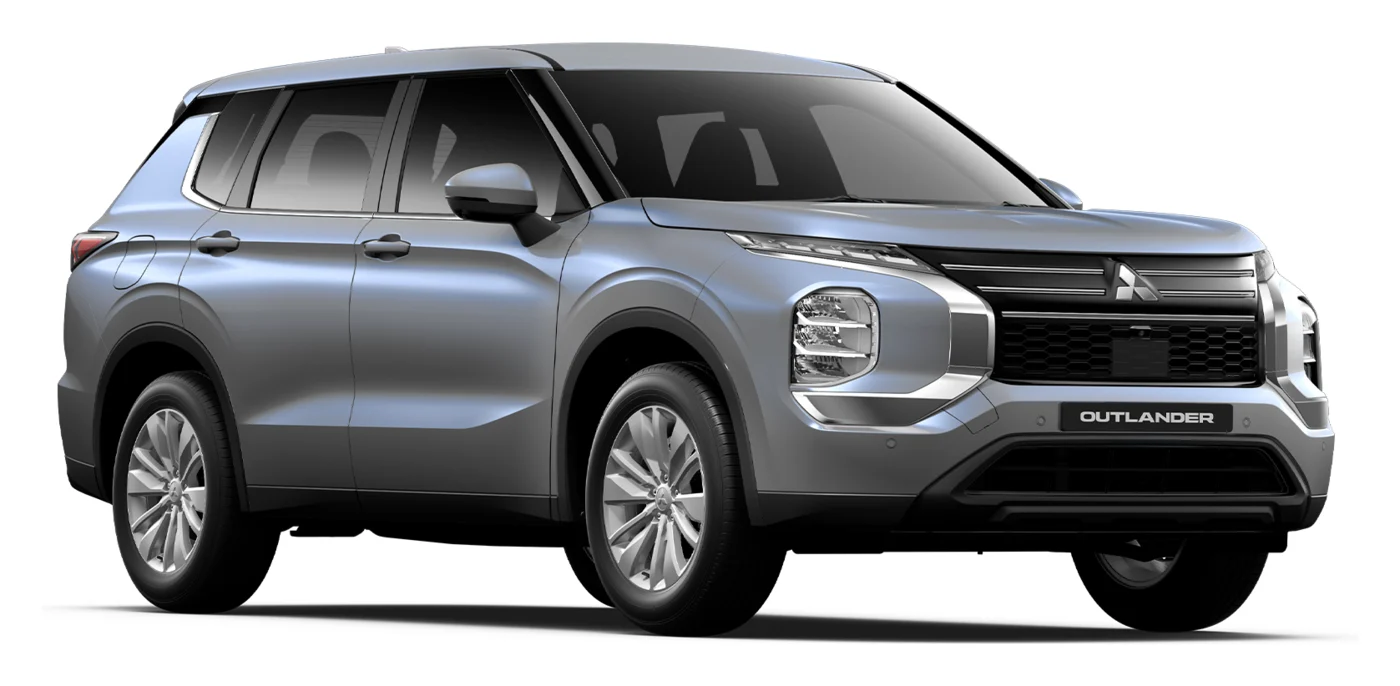
Mitsubishi Outlander ES 2WD
From $39,990 drive-away
Medium SUV
2.5L Petrol
135kW
7.5L/100km
5★ ANCAP, tested 2025
485L
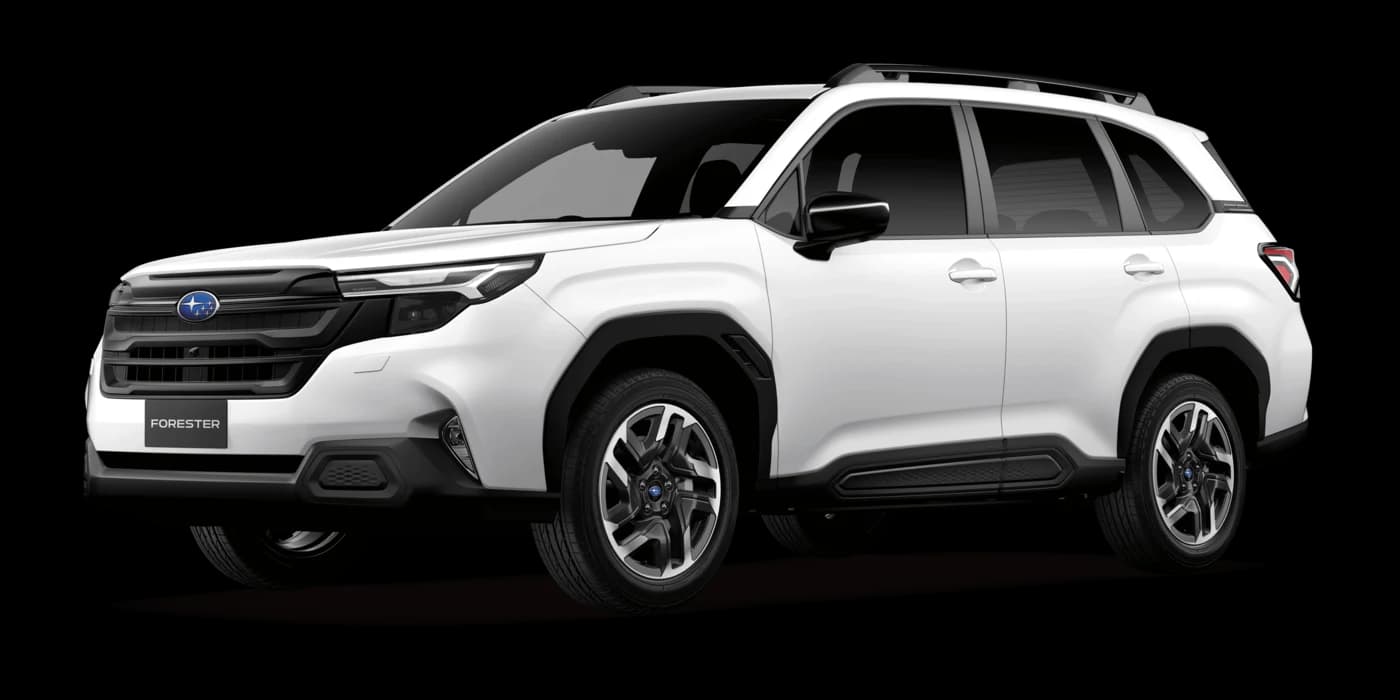
Subaru Forester AWD
From $45,990 list, plus on-roads
Medium SUV
2.5L Boxer Petrol
136kW
7.9L/100km
5★ ANCAP, tested 2024
496L
Price Breakdown
This is the part of the comparison people get wrong, and it is not their fault. The two brands do not quote prices the same way.
Mitsubishi Australia is drive-away only. There is no recommended retail price for an Outlander anywhere on its site, and its own configurator has no list-price mode at all. Every figure it publishes already includes twelve months registration, a CTP estimate, stamp duty and an estimated dealer delivery charge. Subaru does the opposite: the seven Forester prices are the manufacturer's list price with on-road costs still to come, and Subaru runs a separate postcode-based drive-away estimator alongside them.
So a $39,990 Outlander and a $45,990 Forester look $6,000 apart and are not. Add a realistic set of on-roads to the Subaru and the gap is closer to $10,000. Work that out for your own postcode before you decide the Outlander is only a little cheaper.
Mitsubishi Outlander, drive-away
| Grade | Powertrain | Drive | Seats | Price |
|---|---|---|---|---|
| ES | 2.5L petrol | 2WD | 5 | $39,990 drive-away |
| ES | 2.5L petrol | 2WD | 5+2 | Not published |
| ES | 2.5L petrol | AWD | 5 | Not published |
| Black Edition | 2.5L petrol | 2WD | 5+2 | $45,990 drive-away |
| LS | 2.5L petrol | 2WD | 5+2 | Not published |
| LS | 2.5L petrol | AWD | 5+2 | Not published |
| Aspire | 2.5L petrol | 2WD | 5+2 | Not published |
| Aspire | 2.5L petrol | AWD | 5+2 | Not published |
| Exceed | 2.5L petrol | AWD | 5 | $56,990 drive-away |
| Exceed Tourer | 2.5L petrol | AWD | 5 | $59,990 drive-away |
| ES | Plug-in hybrid | AWD | 5 | Contact dealer |
| Aspire | Plug-in hybrid | AWD | 5+2 | Contact dealer |
| Exceed | Plug-in hybrid | AWD | 5 | Contact dealer |
| Exceed Tourer | Plug-in hybrid | AWD | 5 | Contact dealer |
That is not us running out of research. Mitsubishi publishes a price for four of its ten petrol grades and for none of its four plug-in hybrids, where the site says to contact a dealership for pricing. The four petrol figures above are promotional drive-away prices for private buyers, available until 30 September 2026 while stock lasts, and they exclude government, rental and national fleet customers. Premium paint can cost extra.
Subaru Forester, manufacturer list price, before on-road costs
| Grade | Powertrain | Drive | Seats | Price |
|---|---|---|---|---|
| Forester AWD | 2.5L petrol | AWD | 5 | $45,990 |
| Forester AWD Premium | 2.5L petrol | AWD | 5 | $46,490 |
| Forester AWD Sport | 2.5L petrol | AWD | 5 | $48,490 |
| Forester AWD Touring | 2.5L petrol | AWD | 5 | $50,990 |
| Forester AWD Hybrid | 2.5L hybrid | AWD | 5 | $47,990 |
| Forester AWD Hybrid Sport | 2.5L hybrid | AWD | 5 | $54,990 |
| Forester AWD Hybrid Touring | 2.5L hybrid | AWD | 5 | $55,990 |
One live exception is worth chasing. Subaru is currently advertising the Forester AWD Hybrid at $47,990 drive-away, which is the same number as its list price, on an offer that runs to 31 October 2026. If that is still live when you buy, the hybrid effectively costs what the petrol Premium lists at before on-roads, and it is the sharpest thing in either range.
Safety Rundown
Both hold current five-star ANCAP ratings, from adjacent years, and both run to December 2031.
The Forester carries five stars with a 2024 datestamp, applying to all variants including the hybrid. Its category scores are 83 percent adult occupant protection, 91 percent child occupant, 86 percent vulnerable road user and 75 percent safety assist.
The Outlander carries five stars with a 2025 datestamp, scoring 85 percent adult occupant, 84 percent child occupant, 79 percent vulnerable road user and 70 percent safety assist. On the numbers the Forester is ahead in three of the four categories and the Outlander edges adult occupant protection.
There is an important qualifier on the Mitsubishi rating and it matters if you are looking at anything other than a brand-new one. The 2025 rating only applies to updated vehicles built from April 2025 for petrol models and July 2025 for plug-in hybrids, on sale from June 2025. ANCAP combined the original 2021 test results with fresh 2025 tests on the updated car, after Mitsubishi improved the restraints, centre airbag, whiplash performance, added a direct driver monitoring system, expanded the autonomous emergency braking to cover turning and motorcycle scenarios and broadened lane support. An Outlander built before that changeover sits under a separate, retired 2022 rating with different scores. If you are shopping a demo or a nearly new car, check the build date rather than the badge.
Feature Showdown
The single biggest structural difference is drive. Every Forester sold in Australia is all-wheel drive, using Subaru's symmetrical layout, with 220mm of ground clearance. The petrol grades use an Active Torque Split arrangement and the hybrids an electronically controlled AWD coupling. The Outlander is front-wheel drive in ES, LS, Aspire and Black Edition form, and all-wheel drive on ES AWD, LS AWD, Aspire AWD, Exceed, Exceed Tourer and every plug-in hybrid, where Mitsubishi's Super All Wheel Control is standard.
Ground clearance goes to the Subaru either way: 220mm against 205mm on the Outlander ES, LS and Black Edition, or 210mm on Aspire, Exceed and Exceed Tourer. That is not a rock-crawling difference, it is a wet gravel road and a rutted campsite entry difference, and if you actually meet those the Forester is the more relaxed thing to own.
Towing follows the same pattern. The Forester petrol is rated to 1,800kg braked with a 180kg tow ball download, on a published GVM of 2,223kg and a GCM of 4,023kg, and Subaru notes the tow ball download counts against your payload. The Outlander is rated to 1,600kg braked and 160kg on the ball across the whole range, petrol and plug-in alike. Worth knowing: the Forester Hybrid drops to 1,200kg braked with a 120kg ball, the lowest figure in either range, so the hybrid is the wrong Forester if a camper trailer is in your future. Subaru also notes that towing any Forester requires fitting the optional tow bar accessory, and that the tow ball download counts against your payload and your GVM once you are hitched up.
Neither maker publishes a payload figure for these cars. Subaru publishes GVM, gross axle laden ratings, kerb and tare and leaves it there. We hold a payload figure for some Outlander grades and none for any Forester, so on this page we are simply not going to print one for either.
Drivetrain
On the base petrol engines these two are almost comically evenly matched. The Outlander's 2.5-litre direct-injection four makes 135kW at 6,000rpm and 244Nm at 3,600rpm. The Forester's 2.5-litre horizontally opposed Boxer four makes 136kW at 5,800rpm and 247Nm at 3,700rpm. One kilowatt and three newton metres. Both drive through a CVT.
Fuel is a small win to Mitsubishi and only on the front-drive car: 7.5L/100km and 170g/km of CO2 for the ES 2WD against 7.9L/100km and 180g/km for the Forester. Move up the Outlander range and that advantage closes, then reverses. An Outlander AWD is rated at 7.8L/100km in ES trim and 8.1L/100km on LS, Aspire, Exceed and Exceed Tourer, so a like-for-like all-wheel-drive Outlander actually drinks more than the Forester. The Subaru also carries a 63-litre tank against the Mitsubishi's 55, which is roughly 130km more between fills on the combined figures.
The plug-in versus the hybrid
This is the interesting half of the comparison, and it is not a like-for-like fight.
The Outlander Plug-in Hybrid EV runs a 2.4-litre petrol engine making 98kW and 195Nm alongside an 85kW front motor and a 100kW rear motor, for a system maximum of 221kW, through a single-speed transaxle with Super All Wheel Control standard. Its 22.7kWh lithium-ion pack is good for 103km of electric-only driving on ADR 81/02, it DC fast charges in 32 minutes, and it is vehicle-to-grid and vehicle-to-home ready.
Mitsubishi's published combined fuel figure for it is 1.2L/100km with 27g/km of CO2. Understand what that number is before you budget against it. It is a lab result measured on a cycle that starts with a full battery, so most of the test happens on electricity. It is not a prediction of your fuel bill, and it is not an electric range figure either. The two things are separate: 103km is how far it goes before the engine has to start, and 1.2L/100km is a comparison number for a charged car. Mitsubishi does not publish a charge-sustaining figure, meaning what the car uses once the battery is flat and it is working as an ordinary hybrid hauling a 22.7kWh pack, so we cannot give you that number and neither can anyone else quoting Mitsubishi.
The Forester AWD Hybrid is a much simpler proposition. Its 2.5-litre e-Boxer makes 121kW and 212Nm, a 90kW and 276Nm motor sits alongside it, and Subaru publishes a 145kW combined system output. The battery is 1.1kWh, there is no plug, and the rated combined consumption is 6.2L/100km with 140g/km. That figure does not depend on you doing anything. There is no best case and no worst case, just 6.2.
So: plug the Outlander in every night and drive less than 100km a day and it will use almost no petrol at all, and nothing the Forester does gets close. Never plug it in and you are carrying a large battery for nothing while the Forester quietly returns 6.2L/100km. Put your real weekly distance and your real electricity tariff into our fuel cost calculator before you assume the plug-in is cheaper, because for a lot of households it is not.
Space & Comfort
The Outlander is the longer car, at 4,720mm against 4,655mm, on a 2,706mm wheelbase against 2,670mm. It also offers something the Forester does not offer at all: a third row. The LS, Aspire and Black Edition grades are 5+2 seven-seaters, as is the plug-in hybrid Aspire. ES AWD, Exceed and Exceed Tourer are five-seat only.
Read one thing before you buy an Outlander for the third row. ANCAP's own assessment states that top tethers are not available in the optional third row, and installation of child restraints there is therefore not recommended. That rules the back row out for anyone still in a harnessed seat, which is exactly the age group a lot of seven-seat buyers have in mind. Treat it as occasional seating for older kids.
Boot space is close behind the rear seats and then diverges sharply. The Forester holds 496 litres to the top of the rear seat back and 1,174 litres with the seats folded. A five-seat Outlander ES holds 485 litres and stretches to 1,466 litres loaded to the roof, and the Exceed and Exceed Tourer go to 1,473 litres. So they are near enough identical for a weekly shop and the Mitsubishi is substantially bigger once you fold and load properly. Put the Outlander's third row up and you are down to 163 litres, which is a pram or the groceries, not both.
The plug-in hybrid gives a little back to the battery: 472 litres in the ES, Exceed and Exceed Tourer, 468 litres in the seven-seat Aspire, and 191 litres behind the Aspire's third row.
True Cost to Own
Mitsubishi's warranty headline is the biggest in this comparison and it comes with a string attached. It is up to ten years or 200,000km, whichever comes first, only if every scheduled service is completed on time at a Mitsubishi dealership. Miss that and it reverts to five years or 100,000km. Read that as a ten-year warranty you rent from the dealer network rather than one you own outright. Roadside assistance works the same way, running twelve months at a time and renewing with each capped-price service, to a ten-year ceiling.
Subaru's is simpler: five years, unlimited kilometres, with no servicing condition on the term, dropping to five years or 150,000km if the car is used commercially. The hybrid's high-voltage battery is covered for eight years or 160,000km. Mitsubishi matches that on the plug-in hybrid's drive battery, eight years or 160,000km, and adds a capacity guarantee: if the pack falls below 66 percent of usable capacity inside that window Mitsubishi will repair, replace or otherwise treat it.
Servicing intervals are identical, twelve months or 15,000km for both. The costs are not. Subaru's capped program covers five services to 75,000km at $347.95, $520.45, $393.10, $679.30 and $358.20, a $2,299 total, with a free one-month health check up front. Mitsubishi caps ten services to 150,000km, and the first five on a 26MY petrol Outlander are $349, $379, $349, $399 and $399, a $1,875 total. That is $424 less over the same five visits, and Mitsubishi keeps capping for another five years after Subaru's program ends.
The plug-in hybrid costs more to maintain than the petrol, as you would expect: its first five capped services run $377, $449, $399, $499 and $399, or $2,123, which lands it just under the Forester. Note the sixth and eighth Mitsubishi services are the expensive ones in both powertrains, so do not read the early years as the whole picture.
CarSorted Data Insight
These two are far closer on the engineering than the badges suggest. One kilowatt and three newton metres separate the base petrol engines, both run a CVT, both service every twelve months or 15,000km, and both hold current five-star ratings from adjacent test years. Almost everything that will actually decide your purchase sits outside the engine bay: whether all-wheel drive is standard, whether a third row exists, how each brand chooses to quote a price, and what the warranty asks of you in return.
The thing neither brochure tells you
Mitsubishi has become unusually quiet about pricing. Six of its ten petrol Outlander grades carry no published price at all, and all four plug-in hybrids simply say to contact a dealership. That is not a small thing when you are trying to compare on a spreadsheet, and it means the only Outlanders you can price without walking into a showroom are the ES 2WD, the Black Edition, the Exceed and the Exceed Tourer. Subaru publishes all seven Forester prices, which makes the Forester range far easier to shop even though the figures need on-roads added to them.
The second thing worth carrying in: the Outlander's update in 2025 was a safety overhaul rather than a restyle. Mitsubishi changed the restraints, the centre airbag, the whiplash performance, added direct driver monitoring and widened the autonomous emergency braking and lane support, and that is what earned the fresh 2025 five-star result. It did not redraw the bodywork, so an updated car and a pre-update one are hard to tell apart in a used listing. The build date is the only reliable check.
Who should buy which?
Buy the Mitsubishi Outlander if: you want the lowest genuine on-road price in this pairing, you need seven seats occasionally, you want the cheapest capped servicing, or you can charge at home every night and the plug-in hybrid's 103km of electric range covers your commute. The ten-year warranty is worth having as long as you are happy to service inside the network for a decade.
Buy the Subaru Forester if: you want all-wheel drive as standard rather than as an upgrade, you meet dirt and wet gravel regularly, you tow up to 1,800kg, or you want an electrified car that needs nothing from you. At $47,990 list, and currently the same number drive-away on offer, the Forester AWD Hybrid is the sharpest single variant across both ranges.
Think twice if: you are buying the Outlander specifically for the third row and you have toddlers. No top tethers back there means no harnessed child seats, and that changes the whole reason for choosing it.
Compare both on CarSorted. See also: Forester vs RAV4 | CR-V vs Forester | Outlander vs RAV4 | Outlander vs Tucson.
The Verdict
Read the two prices on the same basis before anything else. Mitsubishi quotes drive-away and Subaru quotes a list price you still have to add registration, stamp duty, CTP and delivery to, so an Outlander ES at $39,990 and a Forester AWD at $45,990 are not $6,000 apart, they are closer to $10,000 apart once the Subaru is on the road. That is the Outlander's strongest argument and it is a big one. What you give up for it is real: the ES is front-wheel drive where every Forester is all-wheel drive, and the Subaru adds 15mm of ground clearance, 200kg of braked towing and eight litres of fuel tank. The Outlander answers with a seven-seat option the Forester does not offer at all, a plug-in hybrid with 103km of electric range, a warranty that runs to ten years if you service in the network, and about $424 less in capped servicing over five visits. Both hold current five-star ANCAP ratings, the Forester from 2024 and the Outlander from 2025. Neither is the wrong answer. Buy on whether you need a third row and a plug, or whether you need all-wheel drive and clearance.
Disclaimer: All information in this comparison was believed to be correct at the time of publishing (17 September 2026). Prices are manufacturer recommended retail prices (RRP) and may vary by state, dealer, and options. Driveaway costs include estimated on-road costs for Victoria. Fuel economy figures are WLTP/ADR combined cycle. Specifications can change without notice. Always verify with the manufacturer before making a purchase decision. CarSorted does not accept payment for recommendations.
Published by CarSorted Editorial Team · 17 September 2026
Comments (0)
Sign in to join the conversation
No comments yet. Be the first!