Zeekr X vs BYD Sealion 7
$48,900 vs $54,990, both drive-away. One is a quick small SUV that charges faster than almost anything near the money. The other is 398mm longer and goes 77km further.
Specifications and pricing correct at time of publishing. Prices are RRP before on-road costs unless stated otherwise. Always confirm with the manufacturer or dealer before purchasing.
Zeekr X RWD
From $48,900 drive-away
Small electric SUV
Single motor (RWD)
250kW
405km WLTP
5★ ANCAP (2024)
404L + 12L frunk
BYD Sealion 7 Premium
From $54,990 drive-away
Medium electric SUV
Single motor (RWD)
230kW
482km WLTP
5★ ANCAP (2025)
500L + 58L frunk
Price Breakdown
Both brands quote drive-away here, which makes this one of the rare comparisons where the two headline numbers can sit next to each other honestly. Zeekr Australia advertises the New Zeekr X starting from $48,900 drive-away. BYD lists the Sealion 7 Premium at $54,990 drive-away under its current Free On-Road Costs campaign. That is a $6,090 gap, and unlike most price comparisons in this segment it does not shrink or grow once the paperwork is done.
One thing to check before you bank on it. The BYD figure is a campaign price, not a permanent one. BYD's terms tie it to orders placed between 1 August and 30 September 2026 with delivery by 31 October 2026. If you walk in after the campaign closes, the Sealion 7 goes back to a list price plus on-road costs and the gap gets wider, not narrower. The Zeekr number is a from-price on the brand's national site rather than a dated promotion, though Zeekr was also running a launch bonus alongside it.
| Variant | Drive | Price | Basis |
|---|---|---|---|
| Zeekr X RWD | RWD | $48,900 | Drive-away, from-price |
| BYD Sealion 7 Premium | RWD | $54,990 | Drive-away, campaign (free on-road costs) |
| Zeekr X AWD | AWD | Not published | Zeekr AU lists only the from-price |
| BYD Sealion 7 Performance | AWD | $63,990 | Before on-road costs |
We have left the Zeekr X AWD price blank on purpose. Zeekr Australia publishes the range's from-price and the full AWD specification, but not a drive-away figure for the AWD itself, and we are not going to print a number we cannot point at. Ask the dealer for it in writing. The Sealion 7 Performance at $63,990 is quoted before on-road costs, so budget several thousand more than that to get it registered.
Read the two entry cars against the rest of the sub-$60,000 electric SUV field and they both look sharp. The Zeekr undercuts almost everything with this much power, and the BYD is one of the few cars under $55,000 on the road with a battery this big. What you are really choosing between is $6,090 and about 400mm of car.
Safety Rundown
Both carry a five-star ANCAP rating, and both ratings apply to every variant, so you do not have to buy up the range to get it. The dates differ and the dates matter. The Zeekr X was rated in 2024, scoring 91% adult occupant, 87% child occupant, 84% vulnerable road user and 84% safety assist. The BYD Sealion 7 was rated in 2025, scoring 87% adult occupant, 93% child occupant, 76% vulnerable road user and 78% safety assist. Both ratings run to December 2031.
Read those side by side rather than as a single score. The Zeekr is the stronger performer for adults up front and for people outside the car. The BYD is clearly better for children in the back, which is the number to weight most heavily if this is the family car. Neither result is weak.
Equipment is comparable. The Zeekr X has seven airbags including a front centre airbag, side curtains that stay inflated for six seconds, autonomous emergency braking covering car-to-car, vulnerable road users, junction assist and reversing, lane keep assist, emergency lane keeping and speed sign recognition. It quotes a 34.5m stop from 100km/h. The Sealion 7 matches the AEB coverage and adds front and rear cross-traffic alert and braking, blind spot detection, driver attention monitoring and child presence detection, on top of a full airbag set including a far-side airbag.
Feature Showdown
Neither of these is a stripped-out car and both arrive with the equipment you would have paid extra for a few years ago. The Zeekr X runs a 14.6-inch centre display on a Snapdragon 8155 chip, over-the-air updates, a 50W wireless charging pad, a 360-degree camera, sentry mode and a dash camera. The 40/60 split second row has ISOFIX on the outboard seats.
The Sealion 7 counters with a 15.6-inch rotating screen, a 10.25-inch driver display, wireless Apple CarPlay and Android Auto, keyless entry by fob, NFC card or phone, a 360-degree camera, electric hidden door handles, ventilated and heated front seats and an eight-way powered driver's seat. It also includes a two-year data subscription and over-the-air updates.
The distinction that matters day to day is heating. The Sealion 7 has an automatic dual-zone heat pump on the standard list, which meaningfully reduces the winter range hit compared with a resistive heater. Zeekr does not publish a heat pump for the X on its Australian model page, so we are not claiming one. If you live somewhere that actually gets cold, ask about it directly.
Drivetrain
Power and pace
The surprise is that the smaller, cheaper car is the quicker one. The Zeekr X RWD makes 250kW from a single rear motor and claims 5.6 seconds to 100km/h. The Sealion 7 Premium makes 230kW and 380Nm, also rear-driven, and claims 6.7 seconds. A second and a bit is a real margin, and the Zeekr is doing it while carrying a lot less weight, since the BYD tips in at 2,225kg with its big battery aboard.
Zeekr does not publish a torque figure for the RWD, so we have left that row as no data rather than guessing at it. For the AWD it does: 365kW and 573Nm, and a claimed 3.7 seconds. BYD's answer at the top of its range is the Sealion 7 Performance, which adds a 160kW front motor for 390kW and 690Nm and a claimed 4.5 seconds. So the BYD wins the raw-output war at the top and the Zeekr wins the stopwatch, mostly because of the weight difference.
Battery and range
This is where the Sealion 7 takes its money back. It runs an 82.56kWh BYD Blade pack, an LFP chemistry that is happy being charged to 100% as a matter of routine, and it is rated at 482km WLTP. The Zeekr X RWD runs a 61kWh LFP pack for 405km WLTP. That is a 77km gap on paper and a bigger one in practice, because the BYD has more usable buffer to play with on a cold morning with the heating on.
Worth knowing: the Zeekr X AWD carries a bigger 66kWh NCM pack but is rated at 415km, only 10km more than the RWD, because the second motor and the 20-inch wheels eat most of the gain. If range is what you are shopping for, the AWD is not the answer within the Zeekr range.
WLTP numbers are a lab result, not a promise, and both of these will come up short on a 110km/h highway run. If you want to sanity-check what either car would actually do on your commute, our range estimator lets you push the WLTP figure through speed, temperature and load and see what is left.
Charging
Now flip it back the other way. The Zeekr X RWD takes up to 230kW on DC. The Sealion 7 peaks at 150kW on its CCS2 port. In a segment where 150kW is the default and plenty of rivals sit at 100kW or below, 230kW on a $48,900 car is genuinely unusual, and it partly cancels out the range deficit: a smaller battery that fills faster can be a better road-trip tool than a bigger one that trickles.
Both sit at 11kW on AC, so overnight charging at home is a wash. The Zeekr X AWD steps up to 22kW AC, which only matters if you have three-phase power, and it drops to 150kW DC in the process. Both cars do vehicle-to-load, the Zeekr rated at 3.3kW and the BYD supplied with a discharge adapter, so either will run a fridge, a kettle or a set of tools off the pack.
Space & Comfort
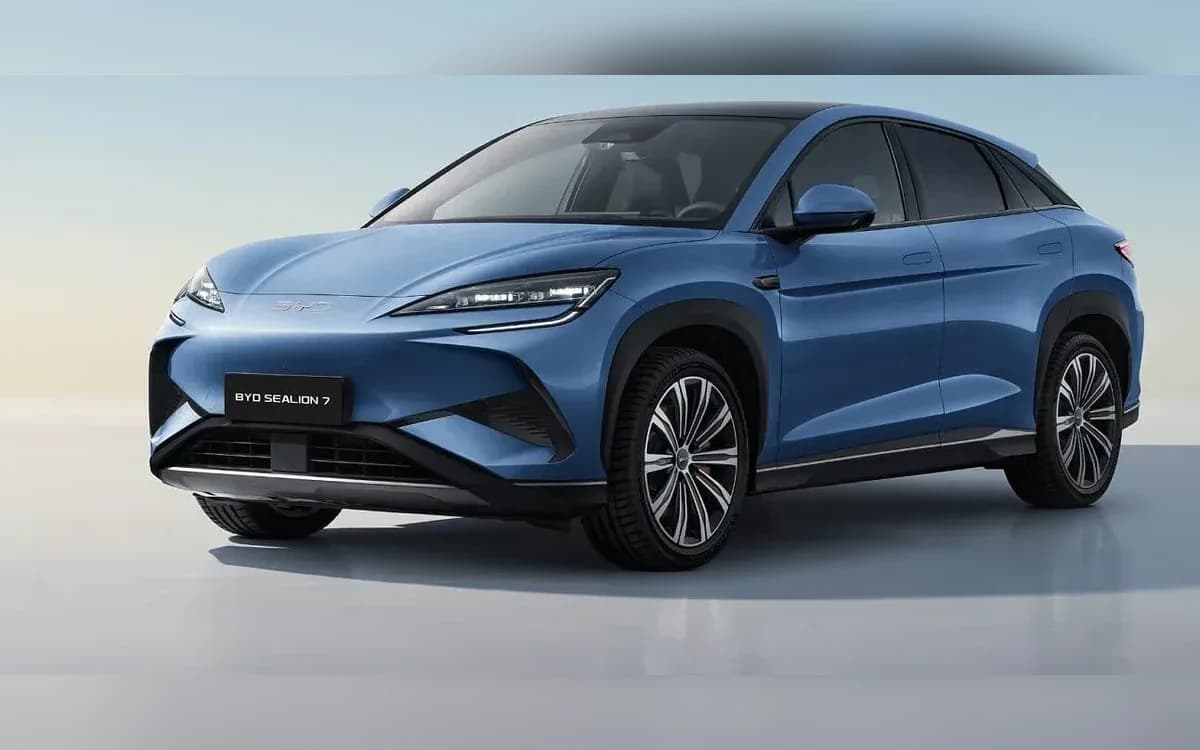
The tape measure settles a lot of this. The Sealion 7 is 4,830mm long on a 2,930mm wheelbase. The Zeekr X is 4,432mm on 2,750mm. That is 398mm of extra car, and it shows up exactly where you would expect: the BYD has 500 litres of boot plus a 58-litre frunk, the Zeekr 404 litres plus a 12-litre frunk. Call it a 142-litre swing once you count both ends.
For a couple, a dog, or one child in a seat, the Zeekr is plenty and its 4.4-metre length is a gift in a Sydney or Melbourne car park. For two kids in boosters, a pram and the weekly shop on the same trip, the Sealion 7 is the one that will not make you play luggage tetris. Both are strict five-seaters and neither offers a third row, so if you need seven you are in a different comparison.
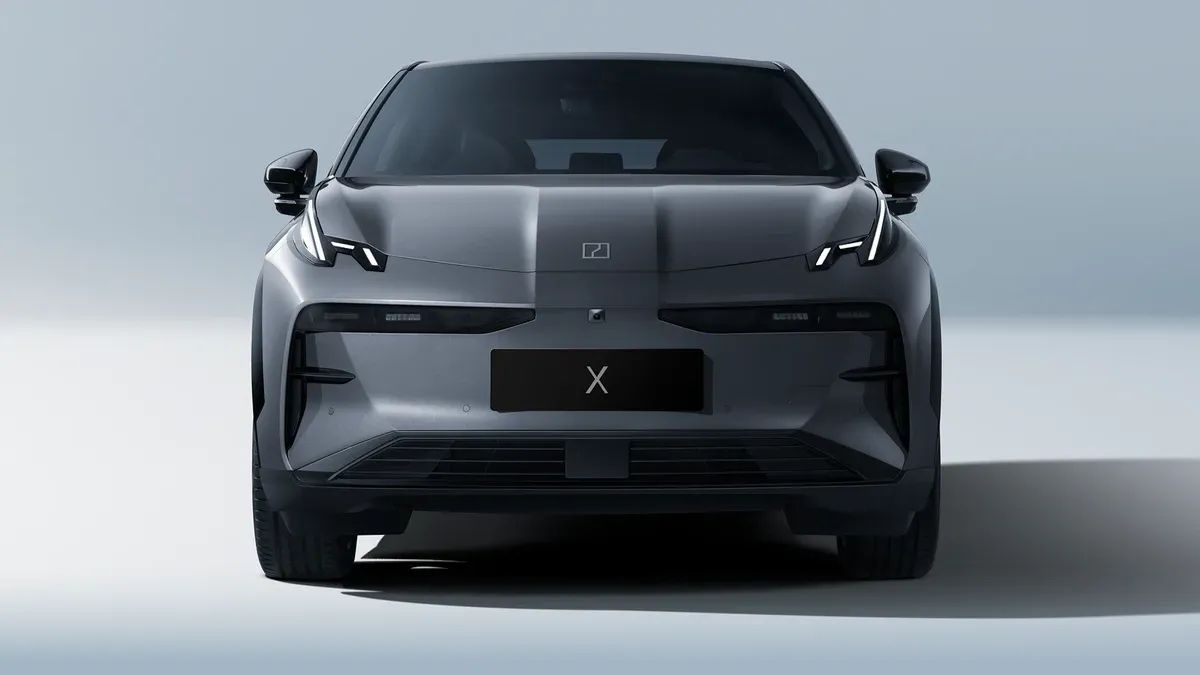
Inside, they are chasing different moods. The Zeekr leans small-and-plush: frameless powered front doors, a 1.12 square metre panoramic roof, six-way powered front seats with heating, cooling and memory as standard, and a Yamaha sound system across the range. The AWD adds massaging front seats and a temperature-controlled fridge in the console, which is either delightful or absurd depending on your view of cabin gadgets.
The Sealion 7 goes for the mainstream-premium look. Its 15.6-inch screen rotates between portrait and landscape, there is a 12-speaker DYNAUDIO system, a head-up display, a panoramic glass roof and heat-pump climate control. The second row is the more usable of the two by a clear margin thanks to that longer wheelbase. It also has a 5.85m turning circle against the Zeekr's much tighter body, so the little car still wins the multi-storey.
True Cost to Own
The warranties look close and are not really the same shape. Zeekr covers the X for 5 years or unlimited kilometres, with the battery for 8 years or 160,000km, and throws in 5 years of roadside assistance. BYD covers the Sealion 7 for 6 years or 150,000km, with the same 8 year / 160,000km battery term.
If you drive average kilometres, BYD's extra year is worth more. If you drive a lot, Zeekr's unlimited kilometres is worth more, because 150,000km arrives before six years does at anything above 25,000km a year. Work out your own annual figure before you let a headline number decide it.
Servicing is the one place where we could not get a clean answer for both. BYD publishes a service schedule for the Sealion 7 through its dealer network. Zeekr Australia's service page describes the network and the warranty but does not publish intervals or capped pricing for the X, so we have not printed a number for it. That is a question to ask at the dealer, not something to assume.
Energy is the easy part. On a typical home tariff, 15,000km a year in either car lands in the same broad band, with the Zeekr slightly ahead on the strength of being lighter and smaller. Both are eligible for novated leasing under the FBT exemption for battery electric vehicles, which for a lot of buyers changes the answer more than the sticker price does. Our lease calculator will show you what that looks like against your own salary before you sign anything.
Two cars that only look like rivals on a price list
Put the Zeekr X and the BYD Sealion 7 next to each other on a spreadsheet and they look like direct competitors: both electric, both SUVs, both rear-driven in entry form, both around the $50,000 mark on the road. Stand them next to each other in a car park and the illusion falls apart. The Sealion 7 is nearly four metres eighty of medium SUV. The Zeekr X is a genuinely small car that happens to have a lot of power in it.
That size difference is the honest headline of this comparison, and it is the thing most spec-sheet comparisons bury under a list of kilowatts. You are not choosing between two versions of the same car with different badges. You are choosing between a compact, quick, fast-charging city EV and a bigger family car with a much larger battery. The $6,090 between them is almost beside the point.
Both are also relatively new arrivals with dealer networks still being built out, so if you live somewhere regional, check where the nearest service point actually is before you get attached to either. For context on the brands themselves, see Zeekr in Australia and BYD in Australia.
A note on where these numbers come from
Every figure on this page is sourced to an Australian manufacturer page or spec sheet, or to ancap.com.au. Where we could not source something, it says no data rather than a dash or a guess. Two things worth flagging: Zeekr does not publish a torque figure for the X RWD, and it does not publish service intervals for the X on its Australian service page. Both are blank here for that reason.
The CarSorted verdict
Buy the Zeekr X if: this is mostly a one-or-two-person car, most of your driving is urban, and you would rather have the pace, the smaller footprint and the 230kW charging than the extra 77km of range. It is also the cheaper car on the road by $6,090, which is a real amount of money and not a rounding error.
Buy the BYD Sealion 7 if: it has to be the household's main car. The bigger boot, the longer wheelbase, the much larger battery and the stronger child-occupant score all point the same way, and the sixth year of warranty is a nice tiebreaker if you drive average distances.
If you are still weighing up the wider field, the Sealion 7 against the Tesla Model Y is the next comparison to read, and the Kia EV5 against the Sealion 7 covers the value angle. If the Zeekr badge is what caught your eye, its bigger sibling goes up against Tesla in Zeekr 7X vs Model Y. You can also stack either car against anything else in the database.
The Verdict
These two land within $6,090 of each other on the road and then pull in opposite directions. The Zeekr X is the cheaper, smaller, quicker car, and it charges at up to 230kW DC, which is roughly half again what the BYD manages and unusual at this price. The Sealion 7 Premium is a class bigger at 4,830mm, carries a much larger 82.56kWh Blade battery, and goes 482km WLTP against 405km. Neither is a compromised version of the other. Pick the Zeekr X if it is mostly your car, mostly around town, and you want the pace and the fast top-ups. Pick the Sealion 7 if it is the household's main car, if the boot has to swallow a pram and a weekly shop at the same time, and if you would rather stop less often on a long run.
Disclaimer: All information in this comparison was believed to be correct at the time of publishing (17 September 2026). Prices are manufacturer recommended retail prices (RRP) and may vary by state, dealer, and options. Driveaway costs include estimated on-road costs for Victoria. Fuel economy figures are WLTP/ADR combined cycle. Specifications can change without notice. Always verify with the manufacturer before making a purchase decision. CarSorted does not accept payment for recommendations.
Published by CarSorted Editorial Team · 17 September 2026
Comments (0)
Sign in to join the conversation
No comments yet. Be the first!