Key Takeaways
- Combined system output: 350kW / 800Nm, 2.5L four-cylinder turbo-diesel plus e-motor
- Electric-only range: up to 100km NEDC (no WLTP figure published)
- 3,500kg braked tow, 1,000kg payload, 247mm ground clearance
- Three locking diffs: front, centre and rear, plus crawl control and tight-turn assist
- Body: 5,450 x 2,010 x 1,890mm on a 3,250mm wheelbase, tray 1,560 x 1,560 x 500mm
- Warranty: 7 years vehicle, 8 years unlimited km on the high-voltage battery
- Chery said Q4 2026 in February, then late 2026 in August; its model page now says only "Soon". A 2.0T petrol PHEV follows in 2027, outputs not published
- ANCAP not yet rated, RRP still TBC
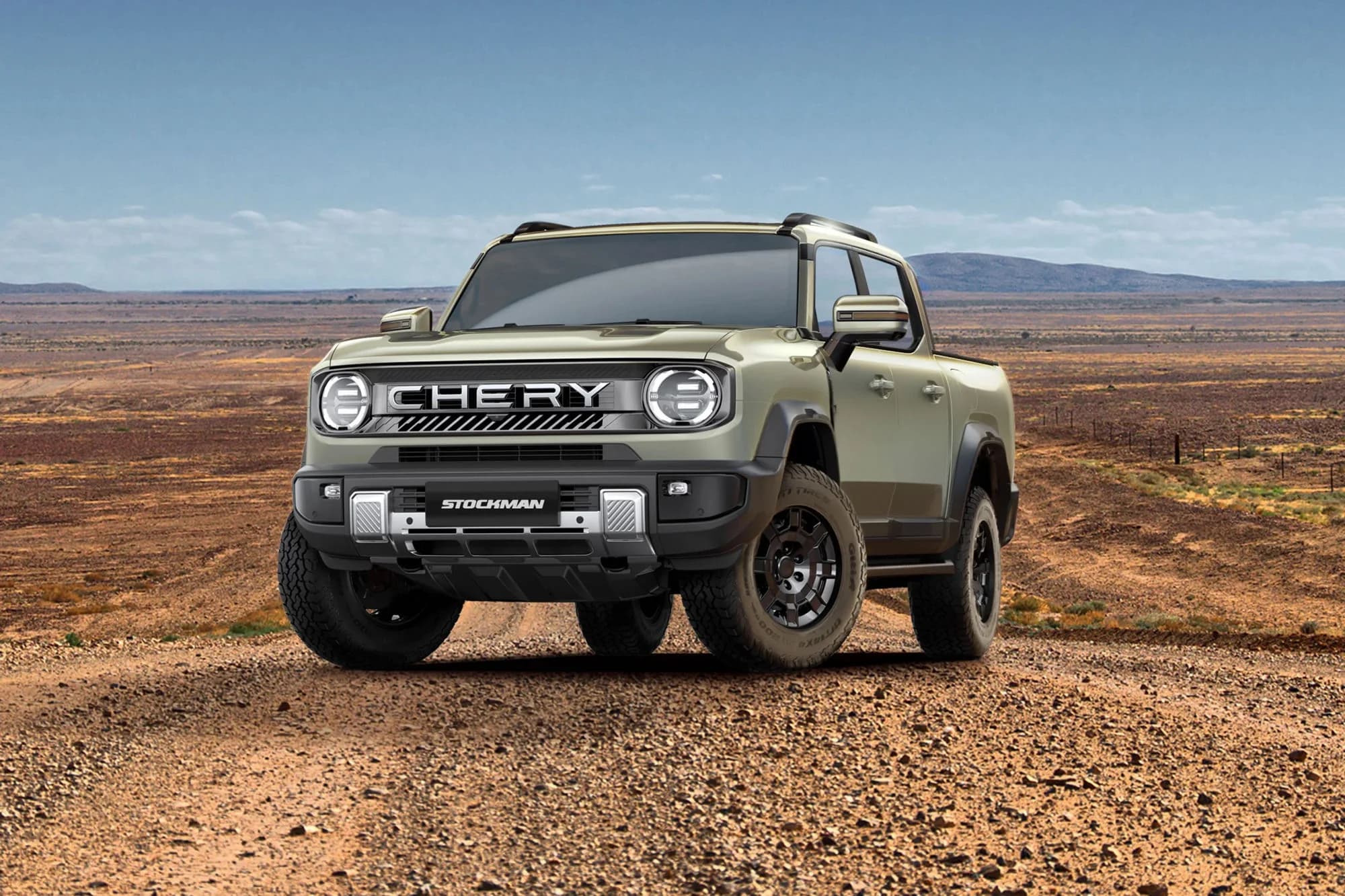
Image credit: Chery Australia
Chery Australia has switched the Stockman from teaser territory into a proper spec sheet, and the numbers are the ones dual-cab buyers actually wanted to see before writing a Q4 deposit cheque. Combined output is a monster 350kW and 800Nm, electric-only range on the manufacturer's own NEDC test is up to 100km, and the whole thing is engineered to tow the full 3,500kg braked from a body that measures 5,450mm long on a 3,250mm wheelbase. If you were treating Chery's diesel plug-in hybrid ute as a curiosity, this is where it turns into a real cross-shop against the BYD Shark 6 Performance, the JAC Hunter Pro PHEV and the incoming Kia Tasman.
What Just Landed
Chery's June announcement gave us the Stockman badge and a Victorian winner in Steve Kodikara. The Q4 2026 window came earlier, from Chery Australia's 23 February 2026 KP31 concept release. This week's follow-up fills in the technical gaps: engine size, combined power and torque, electric range, dimensions, tray, ground clearance, off-road hardware and the shape of the follow-up petrol variant coming in 2027. Chery still flags every headline number with a footnote about final homologation, so the WLTP electric range and any Australian on-road fuel-consumption claim are still subject to change, but everything below has been signed off in Chery's Aussie spec briefing.
The other new part is the petrol PHEV story. Chery Australia called the Stockman "the world's first ute to feature a Plug-in Hybrid (PHEV) diesel system" on 23 February 2026, and has since narrowed that on its model page to "Australia's first diesel PHEV ute". A 2.0-litre turbo-petrol plug-in hybrid is locked for a 2027 Australian follow-up, though Chery has not published its outputs. That version is expected to swap the diesel truck's leaf-sprung rear end for coil springs, which reads like Chery aiming at the ride-and-handling side of the market rather than the pure towing side. Two trucks, one badge, two very different buyer briefs.
Powertrain and Performance
| Spec | Stockman Diesel PHEV (late 2026) | Stockman Petrol PHEV (2027) |
|---|---|---|
| Engine | 2.5L turbo-diesel 4-cyl | 2.0L turbo-petrol 4-cyl |
| Combined power | 350 kW | No data |
| Combined torque | 800 Nm | No data |
| Battery capacity | No data | No data |
| Electric-only range | Up to 100 km NEDC | TBC |
| Drive | 4WD | 4WD |
| Front suspension | Double wishbone | Double wishbone |
| Rear suspension | Leaf spring (workhorse) | Coil spring |
A quick note on the electric-range number. The 100km figure is on the older NEDC cycle, which typically flatters real-world driving by roughly 25 to 35 per cent when compared against WLTP. Realistic on-road electric range on the Stockman diesel will probably land below the NEDC number once ADR-relevant testing is done. For reference, our database holds 49km WLTP for the Ford Ranger PHEV XLT, 80km WLTP for the BYD Shark 6 Performance and 100km NEDC for the JAC Hunter Pro PHEV. We'll update this article the second Chery quotes a WLTP number.
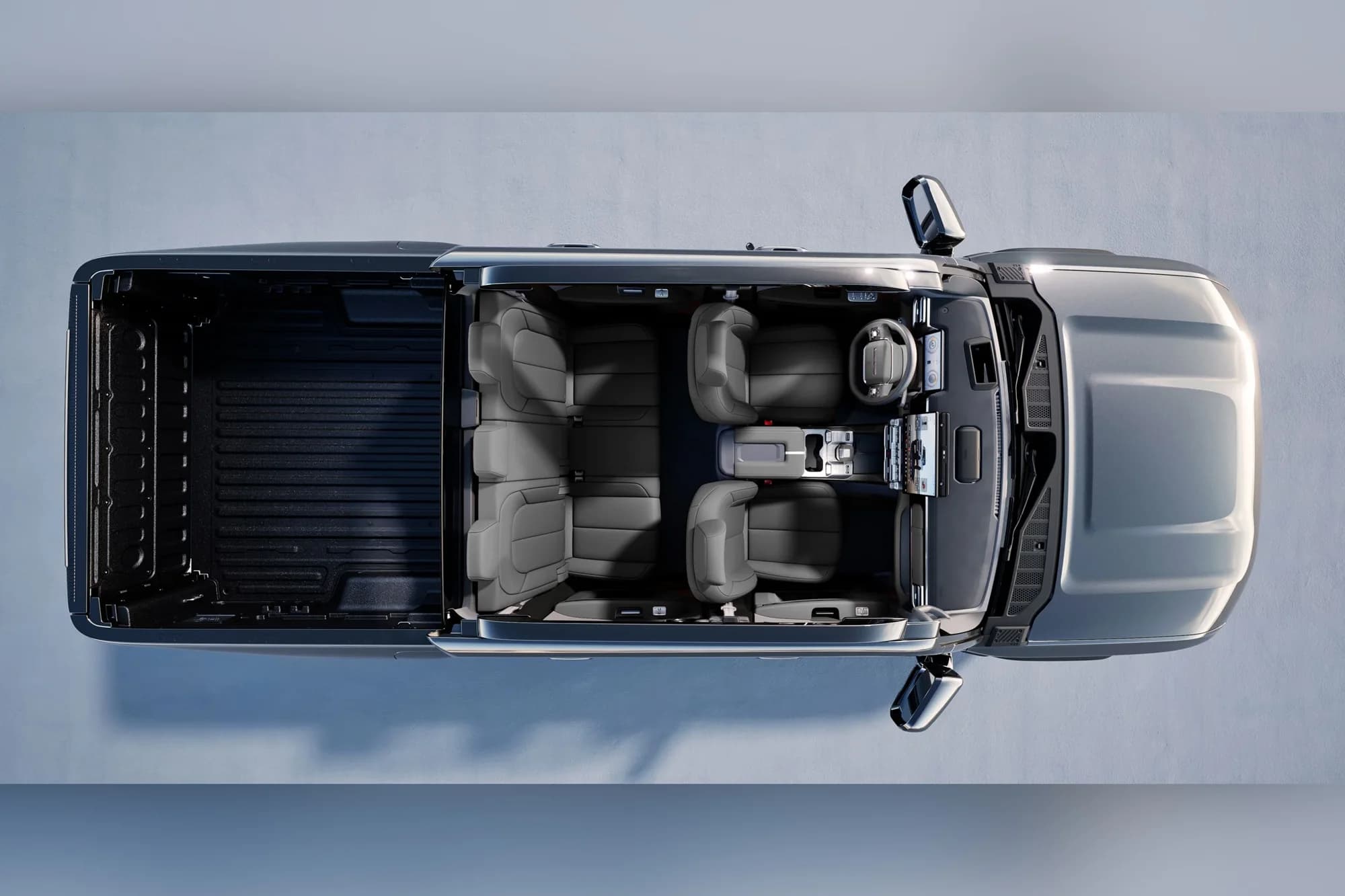
Image credit: Chery Australia
Dimensions and Tray
| Dimension | Chery Stockman |
|---|---|
| Length | 5,450 mm |
| Width | 2,010 mm |
| Height | 1,890 mm |
| Wheelbase | 3,250 mm |
| Ground clearance | 247 mm |
| Tray length | 1,560 mm |
| Tray width | 1,560 mm |
| Tray depth | 500 mm |
| Braked tow | 3,500 kg |
| Unbraked tow | 750 kg |
| Payload | 1,000 kg |
For context, and running these against our own database rather than the press kit: the Stockman's 5,450mm is 80mm longer than a Ford Ranger Wildtrak double-cab pick-up (5,370mm), 130mm longer than a HiLux SR5 double-cab (5,320mm) and 170mm longer than an Isuzu D-Max SX crew-cab ute or a Mazda BT-50 XTR (both 5,280mm). It is 7mm shorter than a BYD Shark 6 (5,457mm), and its 3,250mm wheelbase is 20mm shorter than a Ranger's and 10mm shorter than a Shark 6's. On clearance, 247mm beats every mainstream diesel dual-cab we hold (HiLux SR5 225mm, D-Max 235mm, BT-50 235mm, Ranger Wildtrak 234mm) and both plug-in rivals (Shark 6 230mm, Cannon Alpha PHEV 210mm), but it is not the segment high: our Kia Tasman X-Pro sits at 252mm and the Ranger Raptor at 272mm. Approach, departure and ramp-over angles have not been quoted yet, which is the number four-wheel drive clubs actually want, so we're holding fire on any "this out-crawls a Wrangler" claims until Chery signs those figures off.
Off-Road Hardware
This is where the Stockman quietly one-ups a lot of the competition. Chery has confirmed three individually selectable locking differentials as standard, one at each end and one on the transfer case, with dedicated physical controls on the centre console. Add in factory-fitted all-terrain tyres, low-range gearing, crawl control and a tight-turn assist function that brakes an inside wheel to sharpen radius on tracks, and the Stockman arrives with a genuinely serious off-road hardware list for a plug-in ute. We do not hold verified diff-lock counts for the Shark 6, Hunter or Cannon Alpha PHEVs, so we are not ranking the segment on lockers until we do.
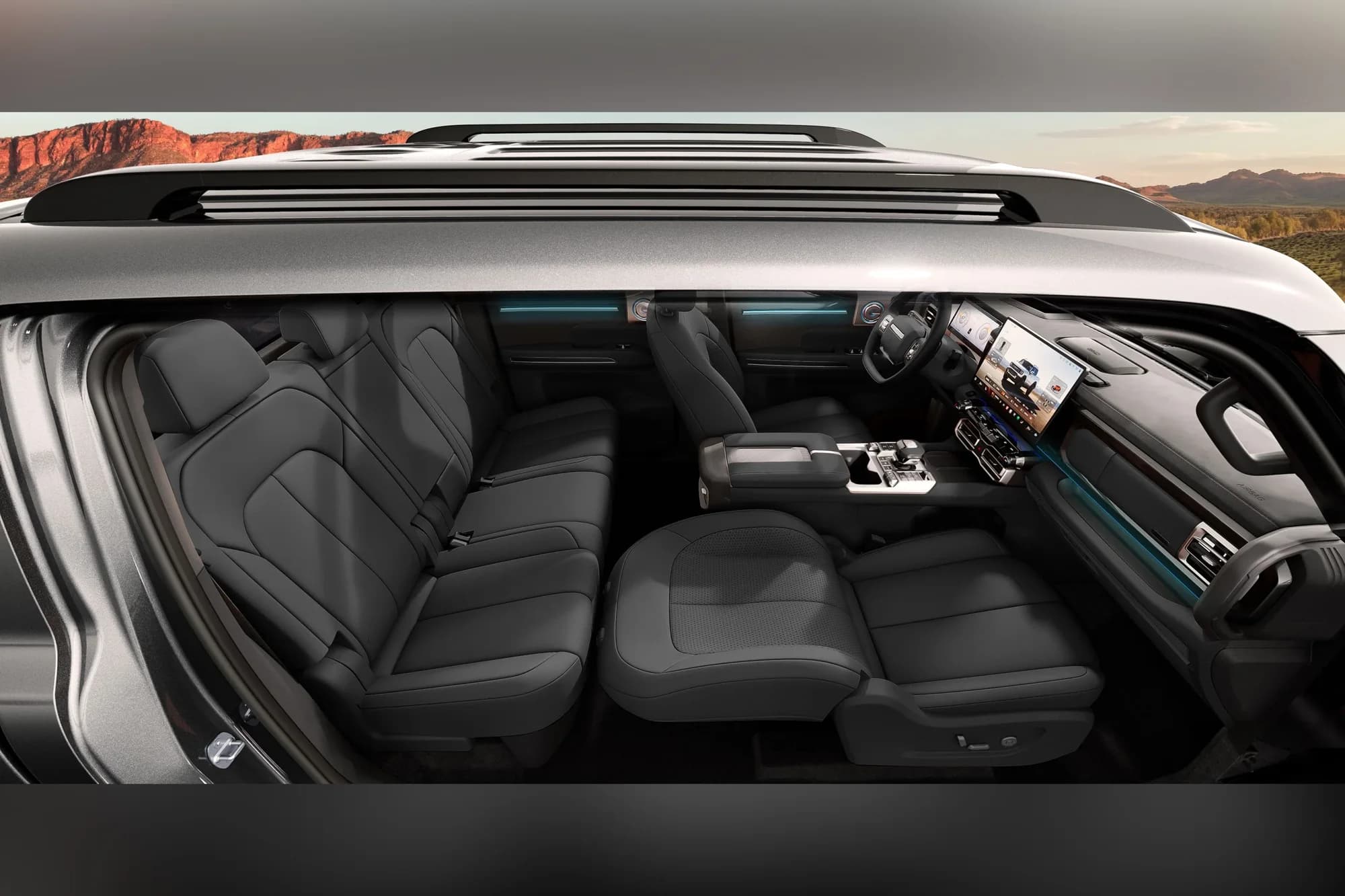
Image credit: Chery Australia
Cabin and Equipment
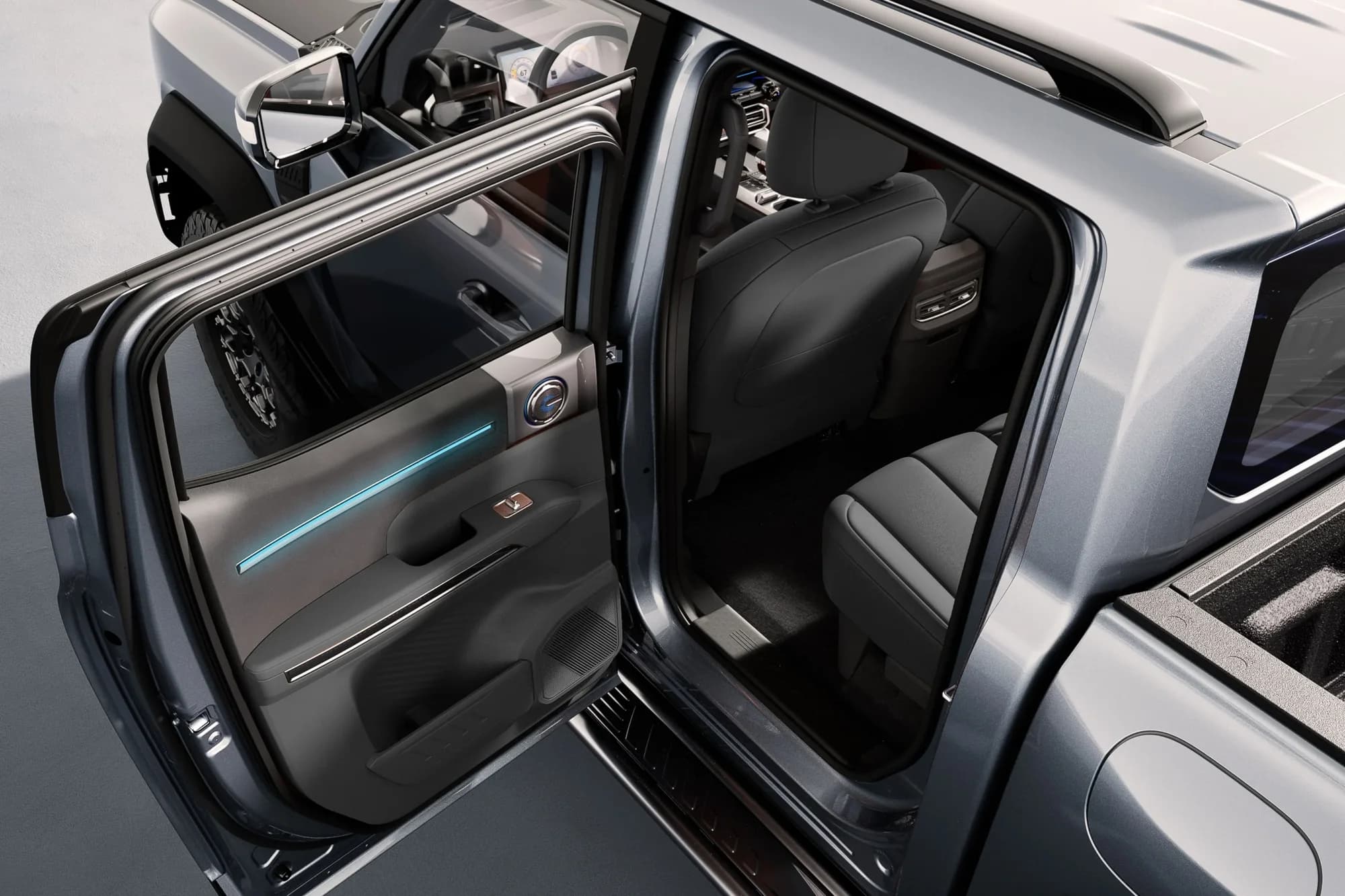
Chery has been noisy about the fact this cabin was styled to justify a $60,000-plus sticker rather than a rental-fleet vibe. Confirmed for the launch spec: suede on the dashboard, door cards and roof lining, leather on all five seats, heated and ventilated front seats, wireless phone charging and a premium sound system. Chery Australia has not published a full Australian equipment list for the Stockman, so treat anything beyond that as unconfirmed. Trim-level splits still have not been published, but a two-grade line-up looks likely, given every other Chery dual-cab hits Australia with a workhorse and a flagship variant.
What is still on the wait-list: infotainment screen sizes, the specific brand of AEB and adaptive cruise stack, V2L output in kilowatts, DC fast-charge speed for topping up the traction battery on the road, and any long-range fuel-tank option for outback runs. Chery has flagged a locally tuned suspension and steering program, mirroring what it did with the Tiggo 7 Hybrid, so expect a small delta between international launch spec and Australian delivery spec.
Ambient-lit doors and second-row access. Image credit: Chery Australia
Safety
The Stockman is not yet rated by ANCAP. Chery has confirmed the launch spec will run a full active-safety stack including AEB, adaptive cruise control, lane-keep assist, blind-spot monitoring and rear cross-traffic alert, all locally tuned. Chery's recent Australian launches (Tiggo 7 Hybrid, Tiggo 8, Omoda 9) have all landed with 5-star ratings under the outgoing 2023 to 2025 protocol, but the 2026 protocol that dual-cab utes must now clear is the toughest yet, and the Ford Ranger Wildtrak lost points on its own upgrade round. Do not assume five stars until ANCAP publishes a number.
How It Compares
Pulling the current dual-cab PHEV list out of the CarSorted database:
| Ute | Combined power | Combined torque | EV range | Braked tow |
|---|---|---|---|---|
| Chery Stockman Diesel PHEV | 350 kW | 800 Nm | 100 km NEDC | 3,500 kg |
| BYD Shark 6 Premium | 321 kW | 650 Nm | 100 km NEDC | 2,500 kg |
| BYD Shark 6 Performance | 350 kW | 700 Nm | 80 km WLTP | 3,500 kg |
| JAC Hunter Pro PHEV | 360 kW | No data | 100 km NEDC | 3,500 kg |
| GWM Cannon Alpha PHEV | 300 kW | 750 Nm | 115 km NEDC | 3,500 kg |
| Ford Ranger PHEV (Hybrid) | 207 kW | 697 Nm | 49 km WLTP | 3,500 kg |
Two things worth pulling out. First, only the Chery uses diesel in the plug-in package, so any buyer that already trusts diesel for a work ute now has a real electrified option without switching over to a petrol powertrain. Second, the raw torque figure of 800Nm is the highest of every plug-in hybrid ute in our database for which we hold a torque figure, ahead of the Shark 6 Performance (700Nm) and the Cannon Alpha PHEV (750Nm). We hold no torque figure for the JAC Hunter PHEV, so that one is genuinely open. On kilowatts the Stockman is not the leader: our Hunter Pro PHEV row carries 360kW.
For side-by-side spec cards, run the BYD Shark 6 vs JAC Hunter PHEV comparison or the Chery Stockman vs BYD Shark 6 page. Both will refresh with the finalised Stockman numbers within 24 hours of Chery publishing its Australian brochure.
Warranty and Ownership
The Stockman rolls into Chery Australia's standard seven-year vehicle warranty, and Chery has confirmed the high-voltage battery gets an eight-year unlimited-kilometre warranty over the top of that. That matches the BYD Shark 6's battery cover for time but beats it on the kilometre limit, and it comfortably clears the Ford Ranger's five-year vehicle warranty. Capped-price servicing and Chery's roadside assistance package will apply, though the actual service pricing and interval schedule has not landed yet, and neither has an official announcement on whether the battery warranty is transferable to a second owner.
CarSorted Take
Here is where the numbers turn into a buying decision, or rather where they cannot yet. Chery has not announced a Stockman price, and said on 17 June 2026 that pricing would come "closer to market introduction", so we are not going to put a number on it. What we can give you is the shelf it has to land on. From our database: the BYD Shark 6 Premium is $57,900 drive-away with a 2,500kg braked tow, the Shark 6 Performance is $62,900 before on-road costs for the full 3,500kg rating, and the GWM Cannon Alpha Lux PHEV is $57,490 drive-away. We hold no price at all for the JAC Hunter Pro PHEV. That is the band the Stockman has to answer, and the three lockers, the 3.5-tonne rating and diesel-tank confidence are what it has to answer with.
The running-cost angle is the other side of it. On the CarSorted running-cost calculator, a Shark 6 Premium plugged in nightly at typical Sydney off-peak rates comes in around $1,150 per year in home-charge electricity for the average 15,000km commuter, versus $3,900 for the same buyer in a diesel Ranger XLT. A Stockman that plugs in for most of its daily commuting and only wakes the diesel for weekend towing runs would land somewhere between those two, but with a fuel tank of diesel rather than petrol under the boot, which is the exact fuel mix outback fleets already stock and buy.
Ready to line the Stockman up against the utes you were already looking at? Start from the Stockman vs BYD Shark 6 comparison, or filter the CarSorted directory for plug-in-hybrid utes to see the full pipeline of electrified dual-cabs Australians can order this year, with running specs and our internal pricing notes.
What This Means For Buyers
If you were sitting on a late-2026 deposit deadline for a dual-cab, the Stockman is a hold-your-fire moment. Chery has said pricing and launch timing will be announced closer to market introduction, and its Stockman page still lists the Australian launch as "Soon", so there is no date to plan around yet.
For tradies who tow the full 3.5 tonnes weekly, the pitch is straightforward: real torque off idle, diesel-tank range on a 1,000km run, home-charging cost saving on Monday-to-Friday commuting and three locking diffs for the weekend track. Combine that with a 1,000kg payload and this is the first PHEV ute that reads like a genuine HiLux or Ranger alternative rather than a lifestyle vehicle pretending to tow. If you already run a diesel workshop fuel account, this switch is far more painless than a jump to a petrol PHEV.
For fleet buyers, the smart move is to lodge an early expression of interest through Chery Australia now and ask two specific questions: whether a cab-chassis variant is confirmed for launch, and whether the battery warranty is transferable. The Shark 6 added a cab-chassis in May and it is now the reason it's in half of the mining and council tenders in the country. If the Stockman launches dual-cab pickup only, it locks itself out of those channels on day one.
For private buyers who are cross-shopping the Kia Tasman, the questions are different. The Tasman is a straight diesel with no plug at all, and it has the Kia badge, the seven-year warranty and the local dealer network that Chery is still building. The Stockman answers back with the plug-in commute savings, the three lockers and a much bigger torque number. If your weekly life is 250km of city commuting plus a caravan tow every second weekend, the electrified powertrain is going to save you real money and the diesel range makes the tow trip painless. If you sit in the truck for a fly-in-fly-out remote roster with no realistic ability to plug in at either end, the Tasman probably still wins.
Best Electrified Utes Australia 2026 | Best Utes Australia 2026 | BYD Shark 6 vs Ford Ranger
Disclaimer: Specifications, dimensions and warranty terms are sourced from Chery Australia's official Stockman product page and its most recent Australian spec briefing. Chery has flagged all headline power, torque, range, towing and consumption figures as preliminary and subject to change pending final testing, certification and regulatory approval. The 100km electric-only figure is quoted on the NEDC cycle and has not yet been homologated under WLTP for Australia. Chery Australia has not published a battery capacity, a payload-independent kerb weight or an equipment list for the Australian Stockman. ANCAP has not published a rating for this model, so we report no data rather than a star count. Australian pricing has not yet been confirmed. CarSorted database pricing for cross-shopped models is current at the date of publication and is subject to change. Running-cost calculations are illustrative and use CarSorted's standard 15,000km-per-year commuter profile.