2026 BYD Dolphin Essential review
Is $30k the Sweet Spot for EVs?
Data checked: specs 30 Sep 2026, price 4 Oct 2026
Text fact-checked against our data 1 September 2026Review snapshot
Model reviewed
BYD Dolphin EssentialFrom $29,990 RRP
Excl. on-road costs
from $151/wk in VIC, excludes servicing and insurance (estimate)
64/100
CarSorted Score
- WLTP range
- 340km
- Energy use
- 15.2 kWh/100km
- Peak DC charging
- 60kW
- Boot
- 345L

This review is built from BYD's published figures, ANCAP and our own calculators. We have not driven this car.
Written 7 April 2026. The snapshot, tables, prices and scores on this page update from our car data; figures quoted in the text are as at that date.
The Quick Verdict
The BYD Dolphin is one of the cheapest ways to go electric in Australia. For $29,990, you get a genuinely likeable hatchback (up to 427km WLTP range on the Premium), a playful interior, BYD's proven Blade Battery, and 5-star ANCAP safety. It's not going to replace a family SUV. The 308-litre boot is small and it can't tow anything. But as a commuter car, a second car for the household, or a first EV for someone who doesn't want to spend $55k-plus, the Dolphin is a brilliant little thing. It proves that electric cars don't have to be expensive to be good.
Design: Cheerful and Distinctive
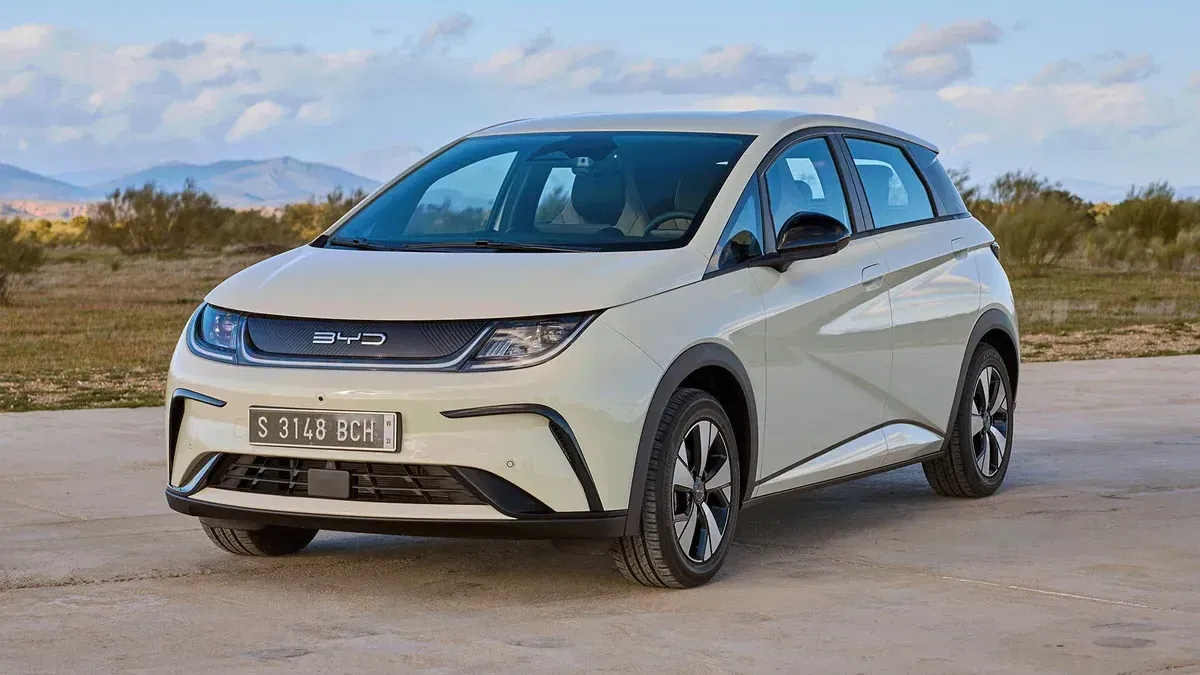
BYD's "Ocean Aesthetic" design language gives it a friendly, slightly retro face with round-ish headlights and a smooth, flowing body. It doesn't look like any other car on the road, which is refreshing in a segment full of identikit hatchbacks.
The profile is compact and well-proportioned. At 4,290mm long, 1,770mm wide, and 1,570mm tall, it's slightly shorter than a Toyota Corolla hatchback and about the same width. The wheelbase is 2,700mm, which is generous for the exterior dimensions and translates to decent interior space. Ground clearance is 150mm, which is typical for a hatchback.
The rear end is where the design gets playful. The tail lights have a wave-inspired pattern, and the overall shape has a cheerful, purposeful look that avoids the aggressive styling trends most manufacturers chase. It's a car that suits the available colour palette, which includes a standout coral orange/pink, a deep blue, and a soft green alongside the usual white, grey, and black.
The door handles are conventional rather than Tesla-style flush handles, and the Premium sits on 17-inch alloys.
| Key details | 2026 BYD Dolphin Essential |
|---|---|
| Engine | Electric motor |
| Power | 70kW |
| Torque | 180Nm |
| Drive type | FWD |
| Transmission | Auto |
| Power-to-weight ratio | 46 kW/tonne |
| Weight | 1,506kg (kerb) |
| Spare tyre type | None |
| Tow rating | No data |
| Turning circle | 10.4m |
| Energy consumption | 15.2 kWh/100km |
| Boot | 345L seats up, 1,310L folded |
| ANCAP | 5 stars (2023) |
Key details for another variant
| Key details | 2026 BYD Dolphin Premium |
|---|---|
| Engine | Electric motor |
| Power | 150kW |
| Torque | 310Nm |
| Drive type | FWD |
| Transmission | Auto |
| Power-to-weight ratio | 90 kW/tonne |
| Weight | 1,658kg (kerb) |
| Spare tyre type | None |
| Tow rating | No data |
| Turning circle | 10.4m |
| Energy consumption | 15.9 kWh/100km |
| Boot | 345L seats up, 1,310L folded |
| ANCAP | 5 stars (2023) |
Is it good value?
What Does the Dolphin Cost in Australia?
BYD positions the Dolphin as its entry-level EV, and the pricing reflects that ambition. Two variants are available:
The Essential is $29,990 before on-road costs, which is $10,000 less than the cheapest MG4 we list, the Essence 64 at $39,990.
The Essential at $29,990 is the headline-grabber, but there's a catch: it's the 70kW version with 180Nm and 340km of WLTP range. That suits short urban commutes, but 70kW is modest for a car that will also see highway work. The Premium at $36,990 more than doubles the power to 150kW and adds 87km of WLTP range (427km vs 340km). If you can stretch the budget, it's the one to buy.
Standard equipment on even the base Essential is generous: 12.8-inch rotating touchscreen, wireless Apple CarPlay and Android Auto, reverse camera, rear parking sensors, synthetic leather seats, automatic LED headlights, and the full suite of active safety features. The Premium adds a panoramic glass roof, power driver's seat, 360-degree camera, heated front seats, a larger 60.5kWh battery, and a more powerful 150kW motor.
Running Costs: This Is Where the Dolphin Shines
The Dolphin's running costs are almost comically low. At 15,000km per year charging at home on off-peak electricity (~$0.30/kWh), annual electricity costs sit around $550-$650. Compare that to a Toyota Corolla at $1,800-$2,200 in petrol, or a Mazda3 at $2,000-$2,400.
Servicing is minimal. BYD recommends annual checks at roughly $200-$300 per visit. No oil changes, no spark plugs, no drive belts. Over five years, total service costs should be under $1,200. A comparable petrol hatchback costs $2,000-$3,000 in servicing over the same period.
The total five-year running cost advantage over a comparable petrol hatchback is approximately $6,000-$9,000. That effectively lowers the Dolphin's cost of ownership to well below any new petrol hatchback on the market. For the full numbers, check our cheapest cars to run analysis.
Rivals: What Else Should You Cross-Shop?
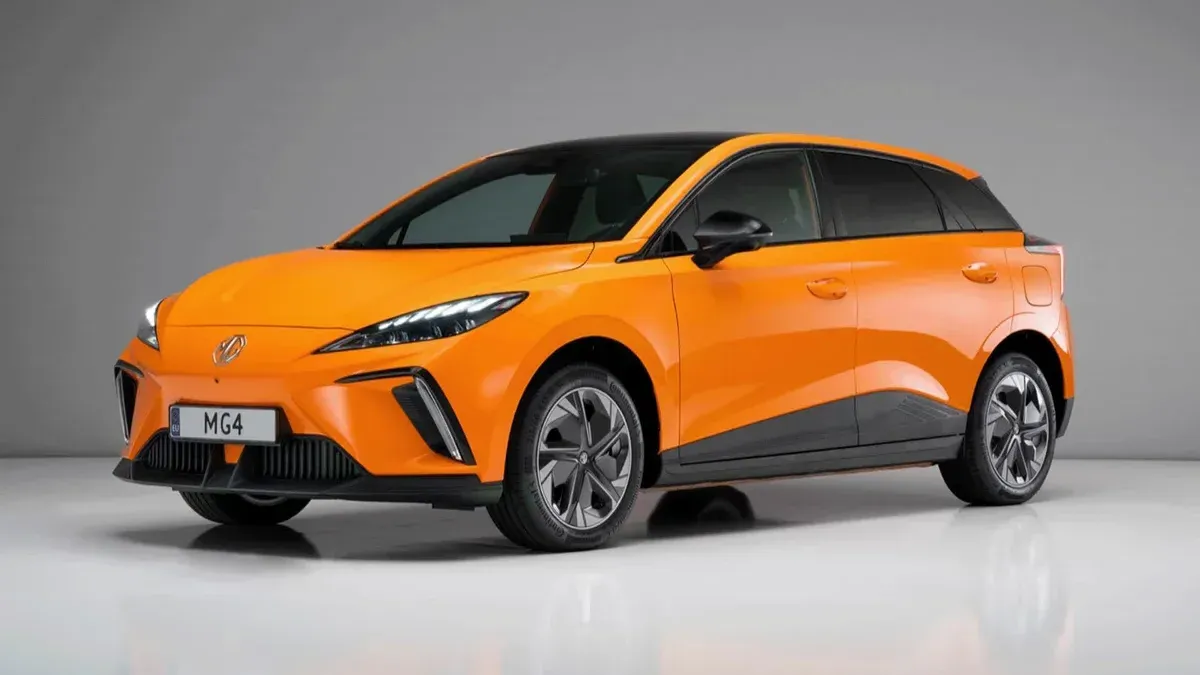
MG MG4 (from $39,990)
The MG4 is the Dolphin's most direct rival and, in many respects, the better car. It has more range (452km WLTP for the Essence 64, against 427km for the Dolphin Premium), a slightly larger boot (350L vs 345L), and a 10-year/250,000km warranty. The MG4 is the small EV that can genuinely replace a petrol car for most people without range compromises. Where the Dolphin wins: it's cheaper to get into (by $10,000 at the base level), has a more distinctive and cheerful interior, and the Blade Battery offers arguably better long-term thermal stability. Full details in our MG4 vs Dolphin comparison.
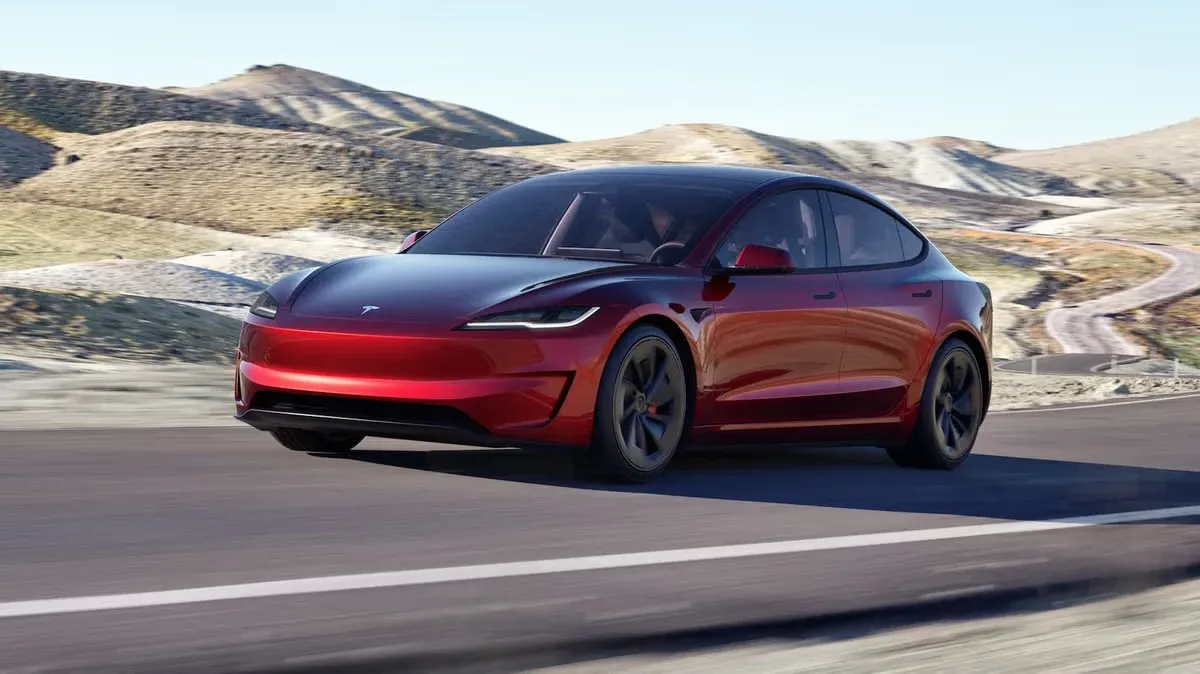
Tesla Model 3 (from $54,900)
The Model 3 is a different class of car at a very different price, but it's worth considering because the running cost savings over the life of the car partly offset the higher purchase price. The Model 3 Standard Range gets you 520km WLTP range, 250kW Supercharger access, and 682L of boot space. If you can afford the $25,000 premium and plan to keep the car for 5+ years, the Model 3's range, charging network, and resale value make a strong case. Detailed comparison in our Dolphin vs Model 3 breakdown.
Hyundai Ioniq 6 (from $74,000)
The Ioniq 6 is at the opposite end of the price spectrum, but we mention it because some buyers shopping at the Dolphin's price are also considering used or demonstrator Ioniq 6 models. The Ioniq 6 beats it on the measurable things: more range, faster charging (350kW), and 800V architecture. But at $74,000 new, it's two-and-a-half Dolphins. If you can find a low-km demonstrator, it's worth a look.
The Dolphin leads on price. The MG4 leads on range and boot space for the budget segment. The Model 3 leads on overall capability. The Ioniq 6 leads on charging speed. For the complete EV field, see our best electric cars in Australia list.
| Key details: BYD Dolphin Essential | |
|---|---|
| Price | From $29,990 RRPExcl. on-road costs |
| Drive-away estimate | $28,888 drive away (VIC, advertised) |
| Cost per week in VIC | from $151/wk in VIC, excludes servicing and insuranceRepayments, fuel or charging, rego and CTP, servicing, tyres and insurance where held. Estimate only, not a quote. |
| Body | Hatch |
| Powertrain | Electric, Electric motor |
| Range | 340km (WLTP range) |
| Seats | 5 |
| Warranty | 6yr / 150,000 km |
| Rivals | MG MG4, Tesla Model 3, Hyundai IONIQ 6 |
How far does it go?
Efficiency and Charging
BYD quotes a WLTP range of 427km for the Premium Dolphin from its 60.5kWh Blade Battery, and 340km for the base Essential with its smaller 44.9kWh pack.
WLTP is a lab cycle, so treat those as a benchmark for comparing one EV against another rather than a promise about your week. Three things move an EV away from its rating, and speed is the big one. Aerodynamic drag rises with the square of speed, so a sustained 110km/h run costs far more per kilometre than the same distance in town, and the Dolphin is a tall, upright hatch rather than a slippery one. Temperature is next: a cold battery is less willing to give up its energy and has to spend some warming itself, and cabin heating on a winter morning draws straight from the same pack, while air conditioning on a 38-degree day does the same in the other direction. Then there is the driving itself, where the news is better than for a petrol car. Stop-start traffic suits an EV, because braking puts charge back in rather than throwing it away as heat, which is why urban running is where the Dolphin gets closest to its rating.
The practical upshot for the daily commute is that either battery covers an average Australian week comfortably, so most owners are plugging in at home every several days rather than thinking about it.
DC fast charging peaks at 80kW (same limitation as the Atto 3), meaning a 10-80% charge takes approximately 40 minutes on the Premium. This is the Dolphin's biggest weakness for anyone who does occasional road trips. The MG MG4 charges at up to 144kW, and the Tesla Model 3 manages 250kW. If you mostly charge at home and rarely need public DC charging, this won't affect you. If road trips are part of your life, it's a genuine disadvantage.
At home on a 7kW wall charger, the Premium takes about 9 hours from flat to full. Overnight charging is seamless. On a standard household powerpoint (2.3kW), it takes 26+ hours, so a wall charger ($1,200-$1,800 installed) is strongly recommended. For the complete guide to charging options, see our EV charging guide.
Annual electricity costs at home off-peak rates are roughly $550-$650 for 15,000km. Combined with minimal servicing, the Dolphin's total annual running costs are under $1,200. That is less than half what a comparable petrol hatchback costs to run. For the full market picture, see our best electric cars in Australia guide.
| Energy and charging: BYD Dolphin Essential | |
|---|---|
| Energy use (combined) | 15.2 kWh/100km |
| Battery (gross / usable) | 44.9kWh / 44.9kWh |
| Battery chemistry | LFP |
| Range (WLTP) | 340km |
| Peak DC charging | 60kW |
| AC charging | 7kW |
| DC charge time (stated) | 35 min (to 80%) |
| Charge port | CCS2 |
| Vehicle-to-load | No data |
| Service interval | 12 months or 20,000km |
What does it cost to own?
| Warranty and servicing: BYD Dolphin Essential | |
|---|---|
| Warranty | 6yr / 150,000 km |
| Battery warranty | 8yr / 160,000 km |
| Roadside assistance | 6 years |
| Service interval | 12 months or 20,000km |
| Capped-price servicing | No data |
Cost per week in VIC: from $151/wk in VIC, excludes servicing and insurance
- Repayment estimate$111/wk
$5,000 deposit, 5yr loan at an assumed 7.5% p.a. on the advertised drive-away. Not an offer of credit
- Charging$12/wk
15.2 kWh/100km at 27.5c/kWh, the VIC reference price (Victorian Default Offer, Jemena flat rate (the middle of the five Victorian zones, 25.96c to 31.98c)); your tariff differs. As at July 2026, Essential Services Commission (VDO 2026-27)
- Rego + CTP$18/wk
VIC typical: car, metropolitan (high risk) zone, 12-month renewal, $958.80 a year. As at July 2026, VicRoads
- ServicingNo data
No data: no servicing cost held for this car
- Tyres$10/wk
Typical tyre spend for this type of car, scaled to 15,000 km a year (not this car's tyres)
- InsuranceNo data
No data: no insurance estimate held for this car
Based on 15,000 km a year in VIC. Estimate only, not a quote.
How safe is it?
Safety: Five Stars, No Excuses
The Dolphin holds a 5-star ANCAP safety rating. Even at sub-$30k, BYD hasn't skimped on safety. The Blade Battery's structural integrity contributes to strong crash test performance, and the standard active safety kit is comprehensive.
Standard on all variants:
- Autonomous Emergency Braking (AEB) with pedestrian detection
- Adaptive cruise control
- Lane Keep Assist and lane departure warning
- Blind spot monitoring
- Rear cross-traffic alert
- Traffic sign recognition
- Seven airbags (front, side, curtain, driver knee)
The Premium adds a 360-degree camera system, which is a useful addition for parking and low-speed manoeuvring. The base Essential gets a standard reverse camera and rear parking sensors, which is adequate but less reassuring in tight spots.
| ANCAP: BYD Dolphin Essential | |
|---|---|
| ANCAP rating | 5 stars (tested 2023) |
| Adult occupant | 89% |
| Child occupant | 86% |
| Vulnerable road users | 85% |
| Safety assist | 77% |
| Airbags | 7 |
| Driver assists: BYD Dolphin Essential | |
|---|---|
| Autonomous emergency braking | Standard |
| Adaptive cruise control | Standard |
| Blind-spot monitoring | Standard |
| Rear cross-traffic alert | No data |
| Lane-keep assist | Standard |
| Speed sign recognition | No data |
| Driver attention monitor | Standard |
| 360-degree camera | No data |
Standard, Optional (with the printed price), No (the maker's document says not fitted) or No data. 8 assists checked.
What is it like inside?
Interior: Fun, Youthful, Functional
BYD brought genuine personality to the Dolphin's interior, and it works. The dashboard has a layered design with flowing lines that reference ocean waves. Colour accents in blue or orange (depending on the exterior colour) break up the darker tones and give the cabin a vibrant, youthful feel. It's a far cry from the beige-and-grey interiors that dominate this price bracket.
The centrepiece, like the Atto 3, is the 12.8-inch touchscreen that rotates between portrait and landscape. Portrait mode suits navigation. The infotainment is the same unit as the Atto 3's, with wireless Apple CarPlay and Android Auto if you would rather run your phone.
The 5-inch digital instrument cluster behind the steering wheel is functional but small. It shows speed, range, and battery percentage clearly enough, but it lacks the visual richness of the larger clusters offered by Hyundai, Kia, or even MG.
The seats are synthetic leather, the upper dashboard is soft-touch, and the lower door trims use harder plastics, which is expected at sub-$30k.
Storage is adequate but not generous. The centre console is small, the door pockets can hold a water bottle, and there's a wireless charging pad. Two cup holders sit between the front seats. For a small car, it's fine. If you're coming from a mid-size SUV and used to cavernous centre consoles, you'll notice the downgrade.
Practicality: The Boot
BYD quotes 345 litres with the rear seats up. That is 5 litres less than the MG4 (350L) and more than the Mazda3 (295L) and the Corolla Hybrid hatch (217L) on their makers' figures. It'll hold a couple of shopping bags, a small suitcase, or a gym bag.
Fold the 60:40 rear seats down and you get approximately 1,310 litres, which is more workable for furniture runs or camping gear. The load floor is reasonably flat when folded, though there's a step up from the boot floor to the folded seat backs. Under the boot floor, there's a small storage compartment for the charging cable.
The flat floor (an EV advantage) gives the middle passenger footroom, though the centre seat is narrow.
Two ISOFIX anchor points are fitted to the outer rear seats.
There is no towing capacity. Zero. Not even an unbraked rating. If you ever need to tow anything, even a small box trailer, the Dolphin is not the car for you. This is a pure commuter car and needs to be evaluated as such.
There's no frunk either. The front compartment houses the motor and electronics with no usable storage space. Combined with the small boot, the Dolphin's total cargo capacity is the most limited of any car in our comparison group.
| Space and dimensions: BYD Dolphin Essential | |
|---|---|
| Seats | 5 |
| Boot, seats up | 345L |
| Boot, seats folded | 1,310L |
| Length x width x height | 4,290 x 1,770 x 1,570mm |
| Wheelbase | 2,700mm |
| Ground clearance | 130mm |
| ISOFIX | 2 points (2L, 2R) |
| Top tethers | 3 |
| Seat trim | Synthetic leather |
| Spare wheel | None |
Does it have good tech?
| Screens and audio: BYD Dolphin Essential | |
|---|---|
| Touchscreen | 12.8 inches |
| Driver display | 5 inches |
| Audio | 6 speakers |
| USB | USB-A and USB-C |
| Connected services term | No data |
| Connectivity: BYD Dolphin Essential | |
|---|---|
| Apple CarPlay | Standard |
| Android Auto | Standard |
| Wireless CarPlay / Android Auto | No data |
| Wireless phone charging | No data |
| Head-up display | No data |
| Built-in navigation | Standard |
| Digital radio | Standard |
| Over-the-air updates | No data |
| Remote climate (app) | No data |
What the figures say about driving it
The BYD Dolphin Essential has 46 kW for every tonne of kerb weight, 180Nm of torque, a claimed 0-100km/h of 12.3s. It weighs 1,506kg and turns in 10.4m. These are the figures that shape how quickly a car gets moving and how easily it parks.
| The figures: BYD Dolphin Essential | |
|---|---|
| Power-to-weight | 46 kW/tonne |
| Power | 70kW |
| Torque | 180Nm |
| 0-100km/h (claimed) | 12.3s |
| Kerb weight | 1,506kg |
| Turning circle | 10.4m |
| Tyres | 195/60 R16 |
| Drive | FWD |
| Transmission | Auto |
| Towing (braked) | No data |
We have not driven the BYD Dolphin; these are BYD's published figures.
Best deals
Get a great deal on a brand new car today
One enquiry, up to four cars. We ask local dealers for their best drive-away price and send them back to you, so you compare real numbers instead of list prices.
Free for you to use. If you buy, the dealer may pay us a commission. Your details only go to a dealer if you say so.
Find a new car dealShould I buy it?
Should You Buy the BYD Dolphin?
Yes, if:
- You want the cheapest way into a new EV in Australia with five-star ANCAP and a long equipment list
- Your daily commute is under 60km and you can charge at home overnight
- Low running costs are the priority. under $1,200 per year total is remarkable
- You're buying a second car for the household and don't need maximum practicality
- You appreciate a design-forward, cheerful interior in a sea of boring hatchbacks
- 5-star ANCAP safety at sub-$30k matters to you
Maybe not, if:
- You need a bigger boot. 345 litres suits daily commuting more than a pram plus luggage
- You ever need to tow anything at all. the Dolphin has zero towing capacity
- You do frequent long drives. 80kW DC charging makes road trips tedious
- Range anxiety is a concern. the MG4 Essence 64's 452km WLTP range is 25km more than the Dolphin Premium's and 112km more than the Essential's
- You're considering the base 70kW Essential for anything beyond short urban commutes (70kW is modest)
The BYD Dolphin is a significant car for the Australian market. It proves that a new EV doesn't have to cost $55k or more to be safe and well-equipped. At $29,990 for the Essential or $36,990 for the Premium, it's an accessible entry point into electric motoring for thousands of Australians who've been priced out until now. The small boot and absent towing capacity limit its versatility, and the 80kW DC charging is behind the curve, but for the core mission of affordable, efficient, safe daily transport, the Dolphin nails it.
Compare it directly with the MG4 and the Tesla Model 3, or browse the full best electric cars in Australia to see every option on the market.
→ Compare all BYD Dolphin variants on CarSorted (200+ specs)
CarSorted Score breakdown
The CarSorted Score is algorithmic: it is calculated from this car's published data, not from a road test. How it works.
Safety
Energy Efficiency
Value
Practicality
Technology
Performance
Reliability
Questions buyers ask
How much does a BYD Dolphin cost in Australia?
The BYD Dolphin Essential is from $29,990 RRP, before on-road costs. The range table above lists every current variant.
What is the range of the BYD Dolphin?
The BYD Dolphin Essential has a WLTP range of 340km.
What warranty does BYD offer on the Dolphin?
The BYD Dolphin comes with a 6yr / 150,000 km warranty.
Is the BYD Dolphin safe?
The BYD Dolphin holds 5 ANCAP stars (rated 2023).
How big is the BYD Dolphin's boot?
The BYD Dolphin has 345L of boot space with the seats up.
How powerful is the BYD Dolphin?
The BYD Dolphin Essential makes 70kW and 180Nm, with a claimed 0-100km/h of 12.3s.
How to read this page. This is a review of the published figures: we have not driven this car. Prices, specifications, ANCAP ratings, warranty, equipment and the CarSorted Score come from our records for the variant shown, sourced from BYD's Australian documents, and update when those records change. RRP excludes on-road costs. Drive-away figures are estimates for the state you have selected unless marked as advertised; cost per week is an estimate, not a quote. The editorial text was written on 7 April 2026. Always confirm price and specification with the manufacturer or a dealer before you buy. CarSorted does not accept payment for recommendations.
Comments (0)
Sign in to join the conversation
No comments yet. Be the first!