2026 BYD Seal Premium review
What $47k Gets You in an Electric Sedan
Data checked: specs 7 Sep 2026, price 4 Oct 2026
Text fact-checked against our data 16 July 2026Review snapshot
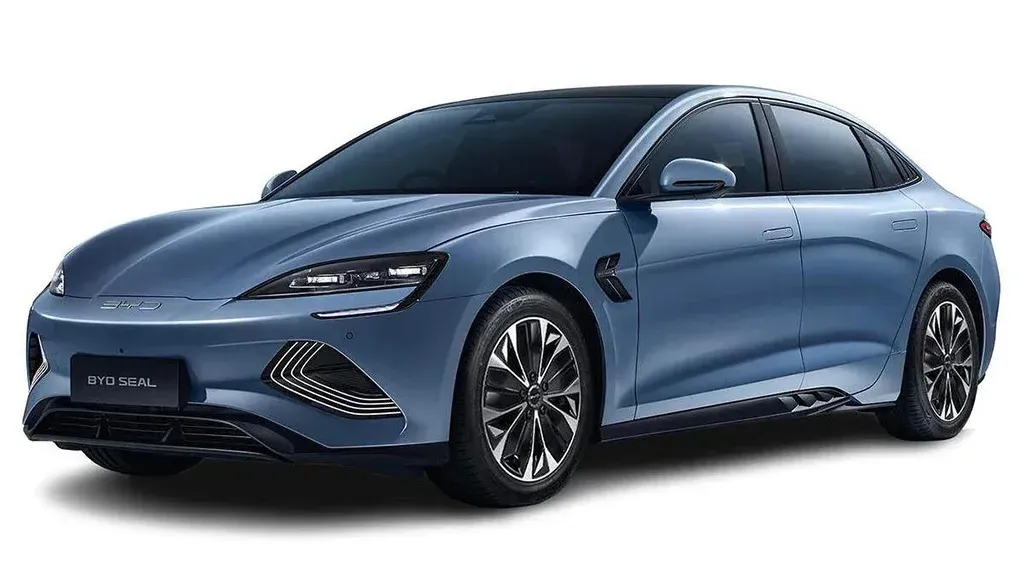
Model tested
BYD Seal PremiumFrom $52,990 RRP
Excl. on-road costs
from $268/wk in VIC, excludes insurance (estimate)
71/100
CarSorted Score
- WLTP range
- 570km
- Energy use
- 14.6 kWh/100km
- Peak DC charging
- 150kW
- Boot
- 400L
The BYD Seal is the electric sedan that finally makes the Tesla Model 3 look expensive. Starting at $46,990 with 460km of range, a genuinely good driving experience, and BYD's ultra-safe Blade battery, it's the car that proves Chinese EVs aren't just about being cheap. They're properly good. Here's the honest, data-driven take.
Likes
- One of the cheapest properly good EV sedan options in Australia ($46,990)
- LFP Blade battery can be charged to 100% daily
- Physical buttons and rotating 15.6-inch screen
- Genuine rear-drive handling, sorted chassis
- Performance variant does 0-100 in 3.8s for $61,990
Dislikes
- Dynamic DC charging only 110kW (slower than rivals)
- 400L boot is small for a sedan this size
- No spare tyre, not even a space saver
- Infotainment software still needs polish
- Warranty capped at 150,000km (not unlimited)

Uzzi drove this car; the figures are BYD's.
Written 15 June 2026. The snapshot, tables, prices and scores on this page update from our car data; figures quoted in the text are as at that date.
Design: Looks Better in Person
Photos don't do the Seal justice. In person, the proportions are genuinely striking. The roofline sweeps back in a fastback profile that gives it a sportier silhouette than the Model 3's more upright sedan shape. The front end is clean and modern. Slim LED headlights, a smooth nose without the need for a grille, and flush door handles that sit neatly against the body.
At 4,800mm long with a 2,920mm wheelbase, it's almost identical in footprint to the Model 3. The kerb weight is hefty. 1,922kg for the Dynamic and 2,055kg for the Premium. But that's par for the course with EVs. BYD's "ocean aesthetic" design language gives it curves and flowing lines where Tesla goes for minimalist flat panels. Whether you prefer one over the other is purely personal, but the Seal has genuine street presence.
| Key details | 2026 BYD Seal Premium |
|---|---|
| Engine | Electric motor |
| Power | 230kW |
| Torque | 360Nm |
| Drive type | RWD |
| Transmission | Auto |
| Power-to-weight ratio | 112 kW/tonne |
| Weight | 2,055kg (kerb) |
| Spare tyre type | None |
| Tow rating | 1,000kg braked750kg unbraked |
| Turning circle | 11.4m |
| Energy consumption | 14.6 kWh/100km |
| Boot | 400L seats up |
| ANCAP | 5 stars (2023) |
Key details for another variant
| Key details | 2026 BYD Seal Performance |
|---|---|
| Engine | Electric motor |
| Power | 390kW |
| Torque | 670Nm |
| Drive type | AWD |
| Transmission | Auto |
| Power-to-weight ratio | 178 kW/tonne |
| Weight | 2,185kg (kerb) |
| Spare tyre type | Tyre repair kit |
| Tow rating | 1,000kg brakedNo data unbraked |
| Turning circle | 11.4m |
| Energy consumption | 16.4 kWh/100km |
| Boot | 400L seats up |
| ANCAP | 5 stars (2023) |
Is it good value?
Cost: Three Variants, All Undercutting Tesla
The Seal lineup has three clear tiers. The Dynamic starts at $46,990 with the 61.44kWh Blade battery, 150kW/310Nm rear motor, 460km WLTP range, 18-inch alloys, and 0-100km/h in 7.5 seconds. DC charging tops out at 110kW. It comes with complimentary 1-year roadside assistance.
The Premium at $52,990 steps up to the larger 82.56kWh battery, 230kW/360Nm, 570km WLTP range, and 0-100 in 5.9 seconds. You also get a heads-up display, genuine leather steering wheel and seats, 19-inch alloys, and faster 150kW DC charging.
Then there's the Performance at $61,990. This one is properly quick. AWD dual motor producing 390kW and 670Nm, 0-100 in just 3.8 seconds, 520km WLTP range from the same 82.56kWh pack, Frequency Selective Dampening (FSD), Intelligence Torque Adaption Control (ITAC), and 19-inch alloys. It gets all the Premium features plus the AWD system.
Driveaway prices for VIC private registration (postcode 3000, Melbourne) work out to roughly $52,688 for the Dynamic, $57,381 for the Premium, and $66,759 for the Performance. Victoria's EV stamp duty rate is lower than petrol cars, which helps keep the on-road costs down.
Colour options are straightforward. Aurora White is included at no extra cost. Atlantis Grey and Cosmos Black are $1,500 extra on the Dynamic. The Premium and Performance also get Shark Grey as an option at $2,000 extra. The car pictured is a Dynamic in the optional Atlantis Grey.
For context, the Tesla Model 3 Standard Range starts at $54,900. That's $7,910 more than the Seal Dynamic for less range. The Hyundai Ioniq 6 kicks off around $63,900. The Seal is genuinely the cheapest way into a properly good electric sedan in Australia right now.
Running costs are where EVs really shine. At roughly 15 Wh/km real-world efficiency and $0.32/kWh home charging, you're looking at about $720 per year in electricity over 15,000km. A comparable petrol sedan burning 7L/100km at $1.90/L costs $1,995. That's $1,275 saved every year on fuel alone. Servicing is minimal. No oil changes, no spark plugs, no timing belt. BYD's capped-price servicing runs about $200 to $300 per annual visit.
Rivals: The EV Sedan Fight
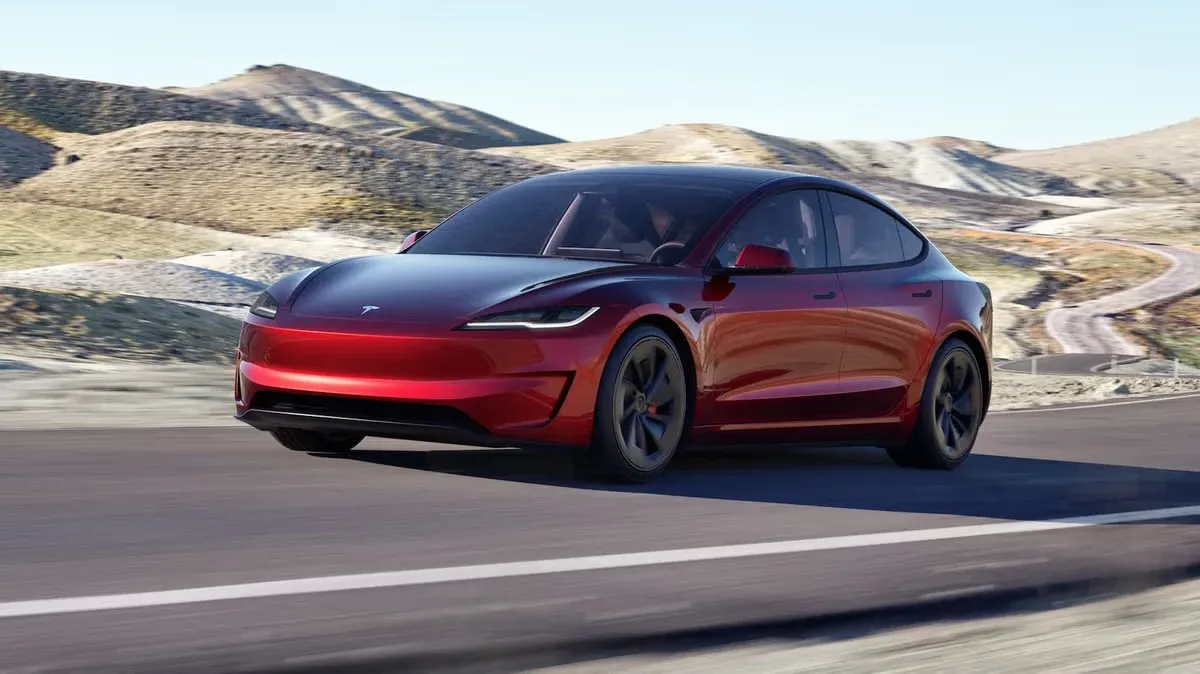
The Tesla Model 3 Standard Range ($54,900) is the obvious benchmark. Its 520km WLTP range beats the Seal Dynamic's 460km, and it charges faster at 170kW DC. The Long Range ($61,900) stretches to 750km with 250kW DC charging, plus access to the Supercharger network. But the base Model 3 costs $7,910 more than the Seal Dynamic, has a divisive all-screen interior with no physical buttons, and Tesla's local service network is still growing. If you want maximum range, the Model 3 Long Range wins. If you want more car for less money with a more conventional cabin, the Seal.
The Hyundai Ioniq 6 ($63,900) is a beautiful, aerodynamic alternative with 800V charging and a stunning interior. But it starts nearly $17,000 more than the Seal Dynamic. That is a lot of gap to justify on paper, and we have not driven the Ioniq 6 to tell you whether it earns it. The Polestar 2 is another option, but it is pricier still and has the smaller boot. The Seal occupies a sweet spot that nobody else really covers. a properly good EV sedan under $50k.
Still deciding? Line the Seal up side-by-side on price, range, charging and boot space in our BYD Seal vs Tesla Model 3 comparison, or see how it stacks up against every rival in the best electric cars under $50k guide.
| Key details: BYD Seal Premium | |
|---|---|
| Price | From $52,990 RRPExcl. on-road costs |
| Drive-away estimate | Calculating... |
| Cost per week in VIC | from $268/wk in VIC, excludes insuranceRepayments, fuel or charging, rego and CTP, servicing, tyres and insurance where held. Estimate only, not a quote. |
| Body | Sedan |
| Powertrain | Electric, Electric motor |
| Towing (braked / unbraked) | 1,000kg / 750kg |
| Range | 570km (WLTP range) |
| Seats | 5 |
| Warranty | 6yr / 150,000 km |
| Rivals | Tesla Model 3, Hyundai IONIQ 6, BYD Dolphin |
| The BYD Seal range on sale | Price | Powertrain | Fuel or energy use |
|---|---|---|---|
| Premium | From $52,990 RRP | Electric, RWD | 14.6 kWh/100km |
| Performance | From $61,990 RRP | Electric, AWD | 16.4 kWh/100km |
How far does it go?
Efficiency: Blade Battery Advantage
BYD's lithium iron phosphate (LFP) Blade battery is a genuine differentiator. Unlike the NMC chemistries used by Tesla (in Long Range models), Hyundai, and Kia, LFP can be charged to 100% daily without degradation concerns. That's a real-world advantage. You don't need to manage charge limits or worry about long-term battery health.
The Dynamic claims 460km WLTP from its 61.4kWh pack. Real-world, expect 370–400km in mixed driving. The Premium stretches to 570km WLTP from 82.6kWh. Roughly 460–500km real-world. Both figures are competitive. The Model 3 Standard Range does 520km WLTP but uses a smaller battery more efficiently.
DC fast charging peaks at 110kW on the Dynamic and 150kW on the Premium and Performance via CCS2 (the Australian standard). A 10–80% charge takes roughly 30–37 minutes depending on variant. That's slower than the Model 3 Long Range's 250kW peak, and noticeably slower than the Kia EV6's 240kW on its 800V platform. For road trips, the Seal's charging speed is adequate but not class-leading. Day-to-day on a home wall box, it's a non-issue.
Annual electricity cost at 15,000km works out to roughly $720 on home charging. Even with occasional public DC charging at $0.50–0.60/kWh, you're well under $1,000 per year. Compare that to $1,995 for a petrol sedan doing 7L/100km.
| Energy and charging: BYD Seal Premium | |
|---|---|
| Energy use (combined) | 14.6 kWh/100km |
| Battery (gross / usable) | 82.6kWh / 82.5kWh |
| Battery chemistry | LFP |
| Range (WLTP) | 570km |
| Peak DC charging | 150kW |
| AC charging | 7kW |
| DC charge time (stated) | 26 min (to 80%) |
| Charge port | CCS2 |
| Vehicle-to-load | No data |
| Service interval | 12 months or 20,000km |
What does it cost to own?
| Warranty and servicing: BYD Seal Premium | |
|---|---|
| Warranty | 6yr / 150,000 km |
| Battery warranty | 8yr / 160,000 km |
| Roadside assistance | 6 years |
| Service interval | 12 months or 20,000km |
| Capped-price servicing | $1,661 over 5 years |
Capped-price servicing, as BYD prints it
- Service 1$165
- Service 2$498
- Service 3$165
- Service 4$635
- Service 5$165
Cost per week in VIC: from $268/wk in VIC, excludes insurance
- Repayment estimate$222/wk
$5,000 deposit, 5yr loan at an assumed 7.5% p.a. on the RRP. Not an offer of credit
- Charging$12/wk
14.6 kWh/100km at 27.5c/kWh, the VIC reference price (Victorian Default Offer, Jemena flat rate (the middle of the five Victorian zones, 25.96c to 31.98c)); your tariff differs. As at July 2026, Essential Services Commission (VDO 2026-27)
- Rego + CTP$18/wk
VIC typical: car, metropolitan (high risk) zone, 12-month renewal, $958.80 a year. As at July 2026, VicRoads
- Servicing$6/wk
The maker's capped-price servicing, $1,661 over 5 years
- Tyres$10/wk
Typical tyre spend for this type of car, scaled to 15,000 km a year (not this car's tyres)
- InsuranceNo data
No data: no insurance estimate held for this car
Based on 15,000 km a year in VIC. Estimate only, not a quote.
How safe is it?
Safety: Five Stars and the Blade Advantage
The BYD Seal has a 5-star ANCAP safety rating. Standard active safety across both variants includes autonomous emergency braking (AEB) with pedestrian and cyclist detection, lane-keep assist, blind-spot monitoring, rear cross-traffic alert, adaptive cruise control, and a driver attention monitor.
The Blade battery itself is a safety story. BYD's nail penetration test. Where they literally drive a nail through a fully charged cell. Is famous in the industry. The LFP chemistry doesn't thermal runaway the way NMC batteries can. The cell-to-body construction adds structural rigidity to the passenger cell. Seven airbags are standard.
The 360-degree camera on the Premium variant is sharp and useful for parking. The Dynamic misses out on this but still gets front and rear parking sensors plus a reversing camera.
| ANCAP: BYD Seal Premium | |
|---|---|
| ANCAP rating | 5 stars (tested 2023) |
| Adult occupant | 89% |
| Child occupant | 87% |
| Vulnerable road users | 82% |
| Safety assist | 75% |
| Airbags | 7 |
| Driver assists: BYD Seal Premium | |
|---|---|
| Autonomous emergency braking | Standard |
| Adaptive cruise control | Standard |
| Blind-spot monitoring | Standard |
| Rear cross-traffic alert | Standard |
| Lane-keep assist | Standard |
| Speed sign recognition | Standard |
| Driver attention monitor | Standard |
| 360-degree camera | Standard |
Standard, Optional (with the printed price), No (the maker's document says not fitted) or No data. 8 assists checked.
What is it like inside?
Interior: This Is Where BYD Surprised Us
The interior is where the Seal really challenges your preconceptions about Chinese cars. The materials are legitimately good. Soft-touch dashboard, quality stitching, solid switchgear. It doesn't feel budget. The centrepiece is the 15.6-inch rotating touchscreen that can flip between portrait and landscape orientation. It's a party trick, sure, but it's actually useful. Landscape for navigation, portrait for scrolling through settings or music.
Unlike the Model 3, which deletes almost every physical button, the Seal keeps a proper start button, a physical gear selector, and dedicated climate controls on the screen's lower bar. The steering wheel has proper buttons that you can find without looking. If Tesla's "everything on the screen" approach frustrates you, the Seal is the antidote.
The driver's seat is comfortable with decent bolstering. Electric adjustment is standard on both variants. The driving position is good. Low-slung and sporty, which suits the car's character. The digital instrument cluster is clear and well-laid out, though the infotainment software isn't quite as polished as Tesla's. Apple CarPlay and Android Auto are wireless as standard, and honestly, you'll use those more than BYD's native apps.
Practicality: Sedan Compromises, EV Benefits
Rear seat space is genuinely good. That massive 2,920mm wheelbase translates to proper legroom. Two six-footers can sit one behind the other without complaints. Headroom is tighter due to the sloping roofline, but anyone under about 185cm will be fine. The flat floor (no transmission tunnel) means the middle seat is actually usable, which is a nice EV advantage over petrol sedans.
ISOFIX points are present for child seats in the outer rear positions. The rear doors open wide enough for easy access with a baby capsule, which matters more than you'd think until you're wrestling one in at school drop-off.
The boot is 400 litres, decent for a sedan but not class-leading. The Model 3's 682L (with the sub-trunk) absolutely smashes it. The Seal's boot opening is a traditional sedan-style lid rather than a hatchback, which limits what you can fit through the aperture. At 400 litres it holds roughly 13 shopping bags, similar to the Ioniq 6. A pram fits, but it's not as easy as dropping it into a hatch. There's also a small 50-litre front trunk (frunk) under the bonnet for charging cables or a small bag, bringing total storage to 450 litres.
One thing to note: there's no spare tyre, not even a space saver. You get a tyre repair kit instead. Worth keeping in mind if you do a lot of regional driving.
Towing is rated at 1,000kg braked, matching the Model 3. That handles a small box trailer, jet ski, or bike rack without drama. Not caravan territory, but reasonable for an EV sedan.
| Space and dimensions: BYD Seal Premium | |
|---|---|
| Seats | 5 |
| Boot, seats up | 400L |
| Boot, seats folded | No data |
| Length x width x height | 4,800 x 1,875 x 1,460mm |
| Wheelbase | 2,920mm |
| Ground clearance | 149mm |
| ISOFIX | 2 points (2L, 2R) |
| Top tethers | 3 |
| Seat trim | Leather |
| Spare wheel | None |
Does it have good tech?
| Screens and audio: BYD Seal Premium | |
|---|---|
| Touchscreen | 15.6 inches |
| Driver display | 10.3 inches |
| Audio | Dynaudio, 12 speakers |
| USB | USB-A and USB-C |
| Connected services term | No data |
| Connectivity: BYD Seal Premium | |
|---|---|
| Apple CarPlay | Standard |
| Android Auto | Standard |
| Wireless CarPlay / Android Auto | Standard |
| Wireless phone charging | No data |
| Head-up display | No data |
| Built-in navigation | Standard |
| Digital radio | Standard |
| Over-the-air updates | No data |
| Remote climate (app) | No data |
What is it like to drive?Driven by Uzzi
Driving: Properly Sorted, Not Just Quick
Here's where the Seal genuinely stands out. BYD uses what they call a "Cell-to-Body" (CTB) architecture. The Blade battery pack is structurally integrated into the floor of the car. This drops the centre of gravity ridiculously low and stiffens the body. The result? The Seal handles like a car that's been properly engineered, not just a heavy EV that masks its weight with instant torque.
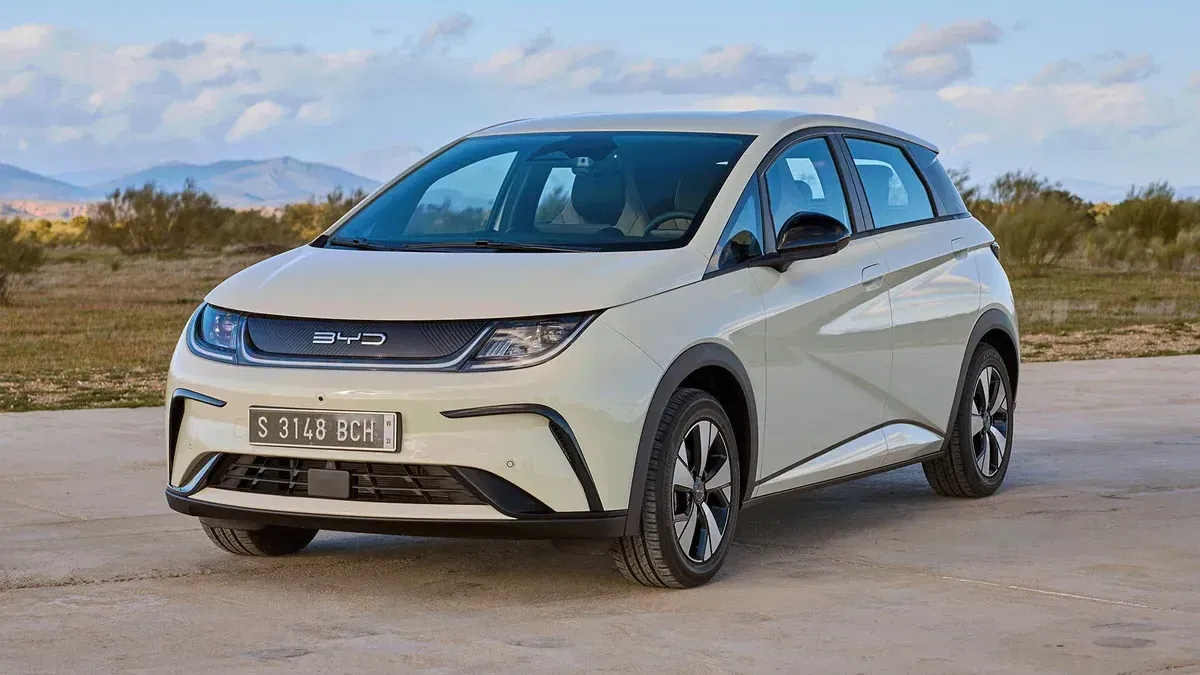
The Dynamic's 150kW/310Nm rear motor is more than enough for daily driving. It's not Tesla-quick off the line, but it's effortlessly fast in the way that matters. Merging, overtaking, pulling away from roundabouts. The Premium's 230kW/360Nm adds genuine shove. Both are rear-wheel drive, which gives the Seal a playful, balanced feel through corners that you don't get from front-drive EVs like the Dolphin.
The steering is well-weighted. Not as communicative as a Mazda, but significantly better than the Model 3's somewhat artificial feel. Ride comfort is excellent. The multi-link rear suspension deals with rough Australian roads well, and the cabin is impressively quiet at highway speeds. Wind noise around the mirrors is minimal. The regenerative braking has adjustable levels and is strong enough for genuine one-pedal driving in its most aggressive setting.
The 11.0m turning circle is reasonable for a car this size. Not as tight as you'd want in Woolies car parks, but manageable. The brakes feel natural and progressive, which isn't always the case with EVs that blend regen and friction braking.
| The figures: BYD Seal Premium | |
|---|---|
| Power-to-weight | 112 kW/tonne |
| Power | 230kW |
| Torque | 360Nm |
| 0-100km/h (claimed) | 5.9s |
| Kerb weight | 2,055kg |
| Turning circle | 11.4m |
| Tyres | 235/45 R19 |
| Drive | RWD |
| Transmission | Auto |
| Towing (braked) | 1,000kg |
Best deals
Get a great deal on a brand new car today
One enquiry, up to four cars. We ask local dealers for their best drive-away price and send them back to you, so you compare real numbers instead of list prices.
Free for you to use. If you buy, the dealer may pay us a commission. Your details only go to a dealer if you say so.
Find a new car dealShould I buy it?
Should You Buy It?
If you're cross-shopping electric sedans and the Tesla Model 3's price makes you wince, the BYD Seal deserves a serious test drive. It's not perfect. The boot is smaller than the Model 3, the charging speed is slower, and the infotainment software needs polish. But the driving experience is genuinely good, the Blade battery gives you peace of mind, the interior has proper buttons, and $46,990 is a remarkable price for what you get.
Our pick is the Premium at $52,990. The bigger battery gives you 570km of usable range, the extra 80kW of power makes overtaking effortless, and the 360-degree camera is genuinely useful. But the Dynamic at $46,990 is the value play. It does 90% of what the Premium does for $6,000 less, and the 460km range covers most people's weekly driving without thinking about it.
BYD is building something real in Australia. The Seal is the proof.
CarSorted Score breakdown
The CarSorted Score is algorithmic: it is calculated from this car's published data, not from a road test. How it works.
Safety
Energy Efficiency
Value
Practicality
Technology
Performance
Reliability
Questions buyers ask
How much is the BYD Seal in Australia?
The BYD Seal Premium is from $52,990 RRP, before on-road costs. The range table above lists every current variant.
What is the range of the BYD Seal?
The BYD Seal Premium has a WLTP range of 570km.
Can the BYD Seal tow?
The BYD Seal Premium is rated to tow 1,000kg braked and 750kg unbraked.
Is the BYD Seal better than the Tesla Model 3?
The BYD Seal scores 71/100 on the CarSorted Score, which is calculated from its published figures. The verdict above says who it suits.
How long is the BYD Seal warranty?
The BYD Seal comes with a 6yr / 150,000 km warranty.
How fast is the BYD Seal Performance 0-100?
The BYD Seal Premium makes 230kW and 360Nm, with a claimed 0-100km/h of 5.9s.
Is the BYD Seal safe?
The BYD Seal holds 5 ANCAP stars (rated 2023).
How much does the BYD Seal cost to service?
Capped-price servicing for the BYD Seal costs $1,661 over five years, with a service every 12 months or 20,000km.
How to read this page. Uzzi drove this car. Prices, specifications, ANCAP ratings, warranty, equipment and the CarSorted Score come from our records for the variant shown, sourced from BYD's Australian documents, and update when those records change. RRP excludes on-road costs. Drive-away figures are estimates for the state you have selected unless marked as advertised; cost per week is an estimate, not a quote. The editorial text was written on 15 June 2026. Always confirm price and specification with the manufacturer or a dealer before you buy. CarSorted does not accept payment for recommendations.
Comments (0)
Sign in to join the conversation
No comments yet. Be the first!