BYD Seal vs BYD Seal 6
One letter apart in the name, and nothing alike underneath. The Seal is a 570km rear-drive EV. The Seal 6 is a front-drive plug-in hybrid that costs $18,000 less.
Specifications and pricing correct at time of publishing. Prices are RRP before on-road costs unless stated otherwise. Always confirm with the manufacturer or dealer before purchasing.
BYD Seal Premium
From $52,990 plus on-roads
Electric Sedan
Single Motor (RWD)
230kW
570km WLTP electric
5★ ANCAP (2023)
400L
BYD Seal 6 Essential
From $34,990 plus on-roads
Plug-In Hybrid Sedan
1.5L Turbo Petrol Plug-In Hybrid
130kW
3.6L/100km as a hybrid
5★ ANCAP (2025)
491L
Price Breakdown
Start here, because the names do these two cars no favours. The BYD Seal is a battery-electric sedan. No engine, no fuel tank, no exhaust, an 82.6kWh battery under the floor and a motor driving the rear wheels. It launched here in 2023 and it is BYD's answer to the Tesla Model 3, aimed at buyers who have already decided they want an EV and are shopping on range, pace and price.
The BYD Seal 6 is a plug-in hybrid. It has a 1.5-litre turbo petrol four-cylinder, a much smaller 10.08kWh battery, a 65-litre fuel tank and drive going to the front wheels. It is not a longer Seal, it is not a faster Seal, and it is not the Seal's replacement. BYD aims it at the Toyota Camry buyer, the person who wants a big, cheap, frugal family sedan and either cannot plug in at home or does not want to depend on it. Same brand, same showroom, entirely different shopping decision.
On price they are not close. BYD publishes both of these as vehicle prices and calculates the drive-away figure on top, based on your state and registration type, so this is a like-for-like comparison and the gap is $18,000.
| Variant | Powertrain | Body | Price (plus on-roads) |
|---|---|---|---|
| Seal 6 Essential | Plug-in hybrid | Sedan | $34,990 |
| Seal 6 Touring Premium | Plug-in hybrid | Wagon | $39,990 |
| Seal Premium | Electric | Sedan | $52,990 |
| Seal Performance | Electric (AWD) | Sedan | $61,990 |
Read that table top to bottom and the whole BYD sedan ladder makes sense. The cheapest way into a Seal 6 is $34,990. The cheapest way into a Seal is $52,990, because the old entry-level Seal Dynamic, the 61.4kWh car with 460km of range, is no longer sold new. If you have seen a Seal advertised in the forties, that was the Dynamic, and that price is gone. You can still buy one used, but the new-car range now opens at the Premium.
One important note on BYD pricing generally: the brand runs frequent national campaigns, usually either free on-road costs (which turns the list price into a drive-away price) or a cash credit. Those campaigns rotate between models every month or two, and at the time of writing neither the Seal nor the Seal 6 was in one. Check BYD's current offers before you sign, because a free-on-roads campaign is worth roughly $4,000 on a car at this price and it can close the gap between two grades entirely.
Safety Rundown
Both hold five stars, but they are not the same five stars, and the newer car is the stronger one on paper.
The BYD Seal was rated 5 stars by ANCAP in 2023, scoring 89 per cent adult occupant protection, 87 per cent child occupant, 82 per cent vulnerable road user and 75 per cent safety assist. That rating runs to December 2031.
The BYD Seal 6 was rated 5 stars in 2025, under a newer and tougher protocol, with 92 per cent adult occupant, 90 per cent child occupant, 84 per cent vulnerable road user and 84 per cent safety assist. The rating covers both the sedan and the Touring wagon. Those are strong numbers in absolute terms and they were earned against stricter criteria than the Seal faced, so the Seal 6 is genuinely the better-performing car in ANCAP's testing, not just the more recent one.
That matters practically as well as reputationally. A current 5-star rating is a hard requirement in a lot of Australian fleet and rideshare procurement policies, and the Seal 6's 2025 result puts it on those lists alongside the Camry. Both cars carry the expected assist suite as standard: autonomous emergency braking with pedestrian and cyclist detection, lane keep assist, blind spot monitoring and adaptive cruise.
Feature Showdown
We have driven the Seal, and the thing that stayed with us is that it drives like a proper rear-drive sedan rather than an appliance with a battery in it. The steering is well weighted, not as communicative as a Mazda but significantly better than a Model 3's somewhat artificial feel, and the multi-link rear suspension deals with rough Australian roads genuinely well. It is impressively quiet at highway speeds, with minimal wind noise around the mirrors, and the adjustable regen is strong enough for real one-pedal driving in its most aggressive setting. It also keeps a physical start button, a physical gear selector and dedicated climate controls, which is a small thing that turns out to matter a lot day to day.
We have not driven the Seal 6, so we are not going to tell you how it rides. What we can tell you from the specifications is that it is a front-drive car carrying 1,650kg, roughly 400kg less than the Seal Premium, with 100kW less power and a nine-second 0-100. It is built to be efficient and roomy, not entertaining. If the way a car steers is high on your list, the Seal is the one to test drive.
The other real-world split is refuelling behaviour. The Seal wants a home wallbox and a charging habit. The Seal 6 will happily accept the same habit and reward you for it, but it does not require one, and that flexibility is the single biggest thing $18,000 less money buys you here. If you want to sanity-check whether the Seal's 570km actually covers your week, our range estimator will do the maths on your own driving pattern.
Drivetrain
The Seal Premium runs a single rear-mounted motor making 230kW and 360Nm, good for 0-100km/h in 5.9 seconds, and draws on an 82.6kWh LFP Blade battery for 570km of WLTP range. It charges at up to 150kW on DC and 11kW on AC at home. Step up to the Seal Performance and you get a second motor on the front axle, 390kW and 670Nm, a genuinely quick 3.8 seconds to 100km/h, and range drops to 520km.
The Seal 6 Essential works completely differently, and this is where most of the confusion on these two starts. Its 1.5-litre turbo petrol engine and electric motor combine for 130kW and 210Nm through the front wheels, and 0-100km/h takes 8.9 seconds. The 10.08kWh battery is good for about 55km of electric-only running on the WLTP cycle. Do your commute inside that and plug in overnight and you will barely touch petrol from one month to the next. Note that BYD's own marketing quotes the friendlier NEDC number, 70km, so if you have seen that figure this is where it comes from.
One thing about the Seal 6 sedan that is easy to miss and worth a lot at the dealership: it has no DC fast charging at all. Its only charging port is AC at a maximum of 3.3kW, which means a full recharge of that small battery takes several hours and a public fast charger is no use to it. The Touring wagon is the one that gets DC, at up to 27kW, alongside 6.6kW AC. The Touring also doubles the battery to 19kWh for roughly 100km of WLTP electric range (125km NEDC) and lifts output to 163kW and 260Nm. If you intend to top up anywhere other than at home overnight, that difference between the two Seal 6 bodies matters more than the $5,000 between them.
The fuel figure you need to read properly
BYD quotes the Seal 6 Essential at 1.1L/100km on the NEDC combined cycle. That number is real, but it is measured with the battery above 25 per cent state of charge, and it describes a car that is running mostly on electricity it was plugged in to collect. It is not what the car uses once the battery is flat. The figure that matters for that is the charge-sustaining one, and BYD publishes it right alongside: with the battery depleted the Seal 6 Essential uses 3.6L/100km, and the Touring uses 4.1L/100km.
We think 3.6L/100km is the more honest number to plan around, and it is still excellent. That is Corolla Hybrid territory from a mid-size sedan, without any obligation to own a charger. Anything better than that is a bonus you earn by plugging in. Anyone quoting you 1.1L/100km as the Seal 6's fuel economy is quoting you a best case, not an average.
Space & Comfort
The Seal 6 is the more practical car, and by a wider margin than the 40mm difference in length suggests. Its boot holds 491 litres against the Seal's 400, and if you step across to the Touring wagon you get 670 litres, expanding to 1,535 with the rear seats down. The Seal is a sleek, low four-door with a fixed rear glass and a conventional boot opening, and 400 litres is modest for a car that is 4.8 metres long.
Worth knowing on the Seal: there is no spare wheel, not even a space saver. You get a repair kit. If you do a lot of regional kilometres that is a real consideration.
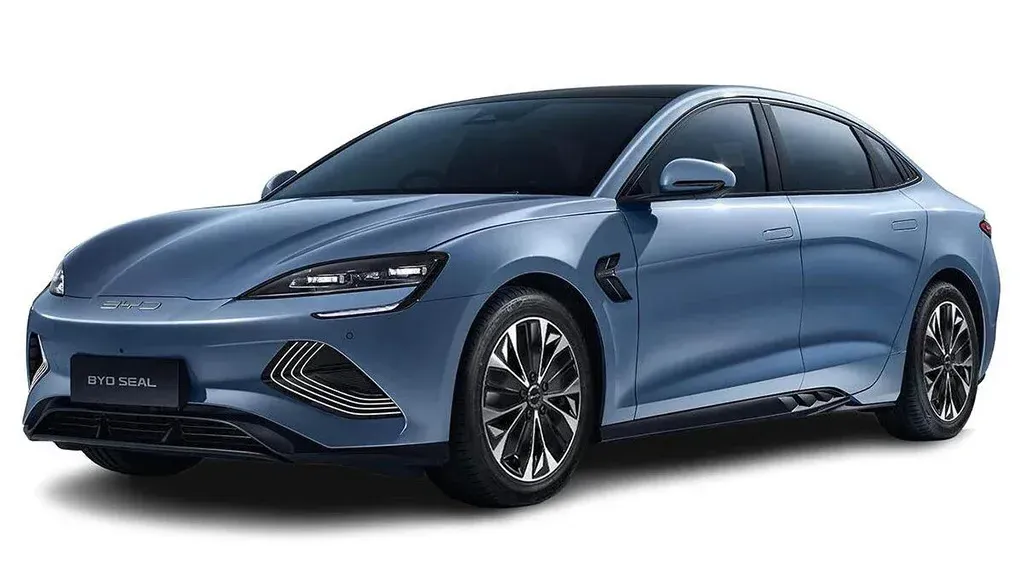
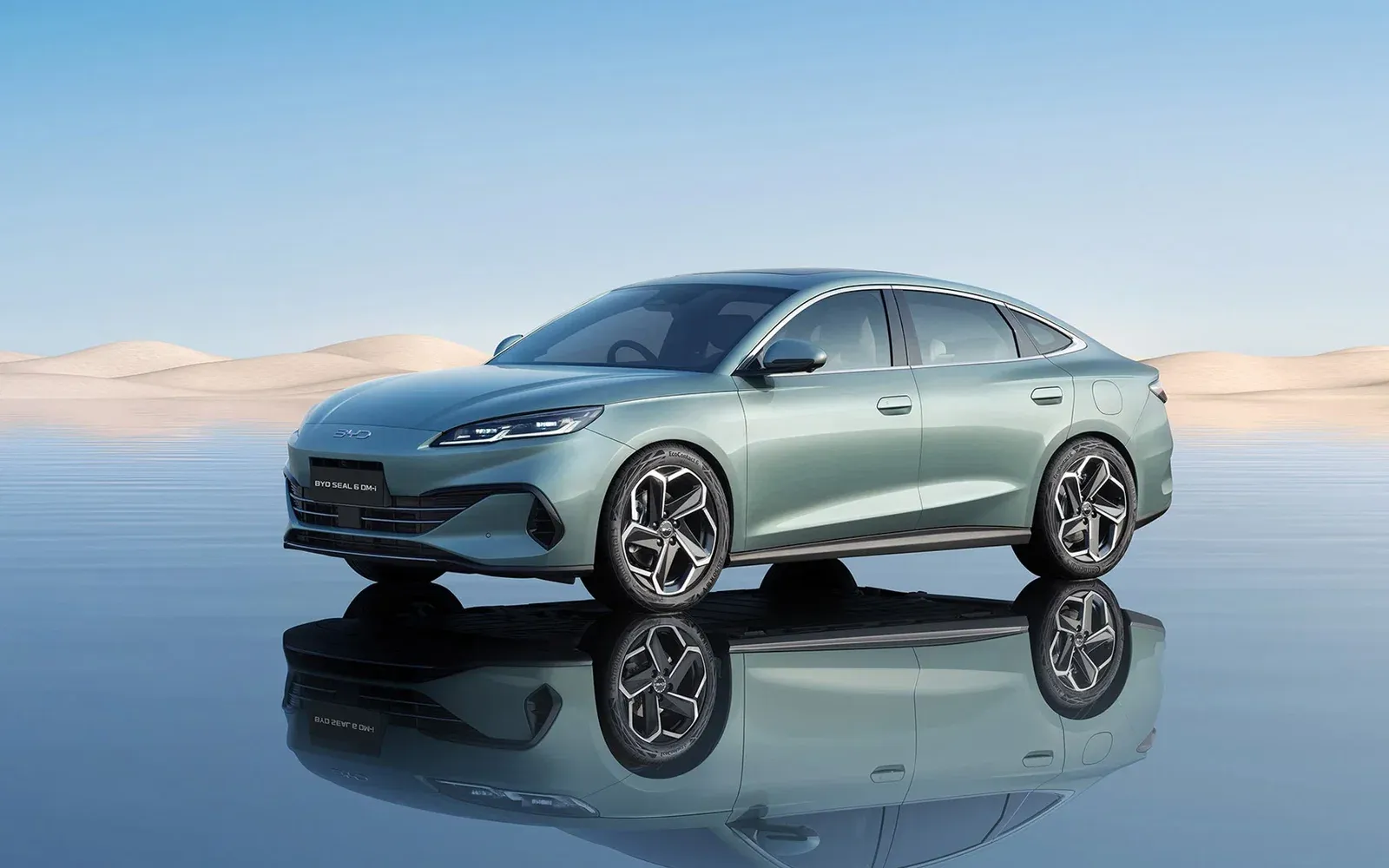
Dimensionally they are close enough that neither will feel cramped. The Seal 6 is 40mm longer at 4,840mm but rides a shorter 2,790mm wheelbase, against the Seal's 2,920mm, so rear legroom actually favours the electric car slightly. Both seat five.
The Seal feels the more expensive of the two inside, which it should at $18,000 more. It gets the 15.6-inch rotating central screen, a head-up display, 19-inch alloys and leather trim on the Premium. The Seal 6 runs a 12.8-inch screen and 17-inch wheels on the Essential, and the equipment list is sensible rather than lavish. Step up to the Touring Premium and you add a panoramic roof, heated and ventilated front seats, a powered tailgate and a surround-view camera.
True Cost to Own
Here is the comparison that actually decides this, and it swings on one question: can you charge at home?
If you can. The Seal Premium at 14.6kWh/100km over 15,000km a year costs roughly $700 a year in home electricity at around 32c/kWh. The Seal 6, charged nightly and driven mostly inside its 55km electric range, lands somewhere close to that, with the occasional tank of petrol for longer trips. The EV wins, but not by a landslide, and the Seal 6 got there for $18,000 less.
If you cannot. The Seal has to live on public fast chargers, which typically run 45c to 60c/kWh or more, and that roughly doubles its running cost while making every long trip a planning exercise. The Seal 6 with a permanently flat battery is just a very efficient petrol hybrid: 3.6L/100km over 15,000km at around $1.90 a litre is about $1,025 a year, and it never has to find a charger to do it. For an apartment dweller or a street parker, that is the whole argument.
Plug your own electricity tariff, fuel price and annual distance into our fuel cost calculator before you decide, because this comparison is unusually sensitive to what you personally pay for power.
Warranty is identical, which is unusual for two cars this far apart in price: six years or 150,000km on the vehicle, whichever comes first, and eight years or 160,000km on the high-voltage battery. Servicing is not identical. The Seal follows BYD's EV schedule at 12 months or 20,000km. The Seal 6 runs the plug-in hybrid schedule, which adds an initial service the EV does not have and brings engine oil and filter changes with it. The Seal 6 has an engine, a gearbox, oil and a fuel system to maintain, where the Seal has none of that, so over a long ownership the EV should be the cheaper car to keep on the road. That is another point in its favour if you are one of the buyers who can charge it.
CarSorted Data Insight
These two are one of the most-searched pairs in our database that nobody writes about, and the reason is obvious once you see the traffic: people are not cross-shopping them, they are trying to work out whether they are the same car. They are not. The Seal 6 is the cheapest plug-in hybrid sedan on sale in Australia. The Seal is a mid-priced long-range EV. The only thing they genuinely share is BYD's six-year warranty and its eight-year battery cover. Even the service schedules differ, because one of them has an engine.
The number that surprised us most in the data is the ANCAP split. It is not common for the cheaper car in a brand's line-up to out-score the more expensive one, and the Seal 6 does it on all four sub-scores while being tested under a harder protocol. If you are buying on safety alone, the $34,990 car is the better result.
The Verdict
Buy the BYD Seal if: you can charge at home, you want 570km of electric range, rear-drive balance and 5.9-second pace, and you are happy to build your driving around a plug.
Buy the BYD Seal 6 if: you want a big, frugal family sedan for $34,990, you cannot reliably charge at home, you want the bigger boot, or you want the newer and higher-scoring ANCAP rating.
Compare both on CarSorted. See also: Tesla Model 3 vs BYD Seal | BYD Dolphin vs BYD Atto 2 | The full BYD range.
The Verdict
These are not two grades of the same car, they are two different vehicles that happen to share four letters. The BYD Seal is a 230kW rear-drive electric sedan with 570km of range and a 5.9-second 0-100, and it only makes sense if you can charge it. The BYD Seal 6 is a front-drive plug-in hybrid at $34,990, with 55km of electric range, a 65-litre petrol tank behind it, a bigger boot and the newer, higher-scoring ANCAP result. If you have a home charger and your driving is regular and local, the Seal is the better car and the cheaper one to run. If you cannot charge at home, or you regularly drive further than an EV makes comfortable, the Seal 6 is the smarter buy and it saves you $18,000 up front.
Disclaimer: All information in this comparison was believed to be correct at the time of publishing (17 September 2026). Prices are manufacturer recommended retail prices (RRP) and may vary by state, dealer, and options. Driveaway costs include estimated on-road costs for Victoria. Fuel economy figures are WLTP/ADR combined cycle. Specifications can change without notice. Always verify with the manufacturer before making a purchase decision. CarSorted does not accept payment for recommendations.
Published by CarSorted Editorial Team · 17 September 2026
Comments (0)
Sign in to join the conversation
No comments yet. Be the first!