Key Takeaways
- Essential $24,990, Premium $29,990 (before on-road costs)
- Essential launch offer: $25,990 driveaway (order and deliver by 31 December 2026)
- Australia's cheapest plug-in hybrid, roughly $9,000 under the BYD Sealion 5 Premium
- Electric range: 39km (Essential) or 90km (Premium) WLTP
- Combined system: 122kW / 300Nm (Essential), 156kW / 300Nm (Premium), FWD
- 6yr / 150,000km vehicle warranty, 8yr / 160,000km Blade battery warranty; ANCAP not yet rated
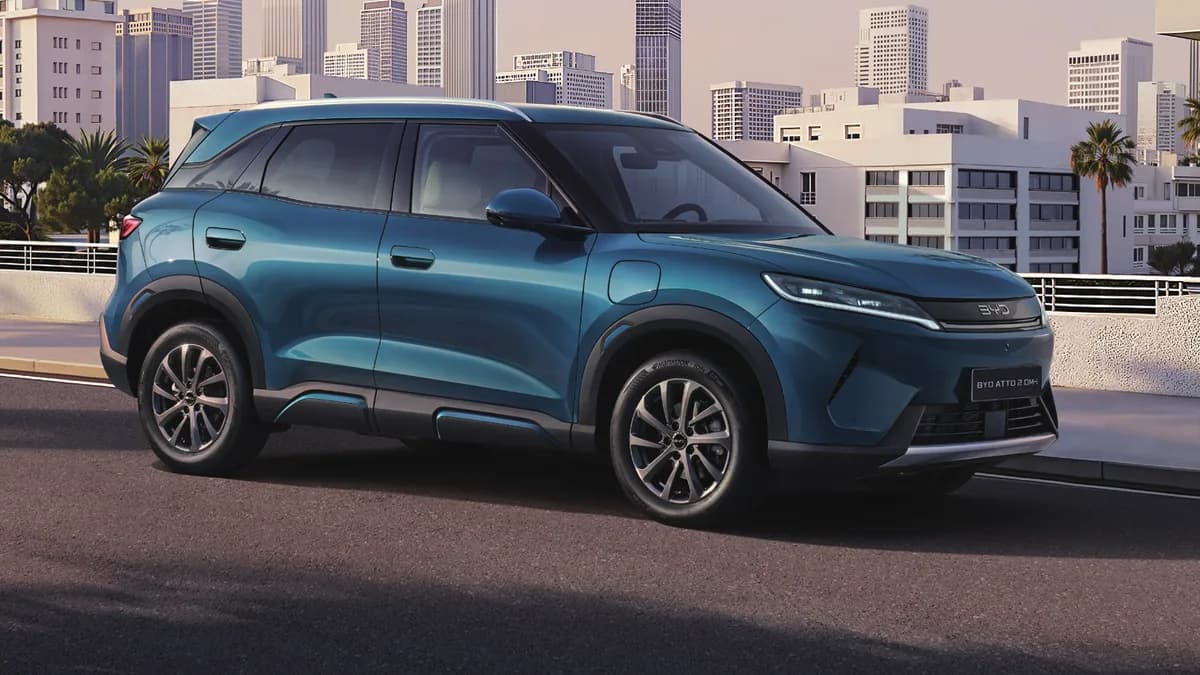
Image credit: BYD Australia
BYD has finally put a number on the plug-in Atto 2, and it is well below the industry guess. The Atto 2 DM-i Essential opens at $24,990 before on-road costs and the fully specified Premium at $29,990 before on-road costs. For retail buyers ordering in the launch window, BYD Australia is running the Essential at $25,990 driveaway, with delivery required by 31 December 2026. That is the piece of the announcement that reframes the segment: a plug-in hybrid family car for the price of a small petrol hatch, from a brand that is now Australia's second-biggest new-car seller after Toyota.
Back in August we covered the DM-i's federal type approval and flagged an expected sticker under $30,000. The actual number came in $5,000 lower. Compared with the previous cheapest plug-in hybrid on sale here, the BYD Sealion 5 Premium at $33,990 plus on-roads, the Atto 2 DM-i Essential is roughly $9,000 cheaper. Against the Chery Tiggo 7 Super Hybrid Urban at $34,990 driveaway, the gap is closer to $10,000, though the Chery is a bigger mid-size SUV. The Atto 2 is a small SUV at 4,330mm long, so treat that comparison as segment-adjacent rather than head-to-head.
Pricing
| Variant | RRP (before on-roads) | Launch driveaway |
|---|---|---|
| Atto 2 DM-i Essential | $24,990 | $25,990 |
| Atto 2 DM-i Premium | $29,990 | RRP + on-roads |
The $25,990 Essential driveaway is a fixed on-road cost offer, so what you see is what you sign for. It runs on stock built for the launch campaign and requires delivery by 31 December 2026 to qualify. The Premium keeps its RRP and adds standard on-roads on top, which will land the drive-out figure closer to $32,000 depending on your state and how insurance is priced. Neither number stacks with the 5 per cent BYD novated lease discount.
Two Batteries, One Body
Both grades run BYD's DM-i Super Hybrid system: a 1.5-litre naturally aspirated Atkinson-cycle four-cylinder petrol engine rated 72kW and 122Nm, paired with an electric drive motor rated 145kW and 300Nm, driving the front wheels through BYD's single-speed hybrid transmission. The difference between the two grades sits inside the battery pack, and that decides most of the character of the car.
| Spec | Essential | Premium |
|---|---|---|
| Petrol engine | 1.5L NA 4-cyl, 72kW / 122Nm | 1.5L NA 4-cyl, 72kW / 122Nm |
| Electric motor | 145kW / 300Nm | 145kW / 300Nm |
| Combined system | 122kW / 300Nm | 156kW / 300Nm |
| Battery | 7.85 kWh LFP Blade | 18.03 kWh LFP Blade |
| Electric range (WLTP) | 39 km | 90 km |
| Fuel use, combined WLTP | 1.8 L/100km | 0.7 L/100km |
| Fuel use, depleted battery | 5.1 L/100km | |
| 0 to 100 km/h | 9.1 sec | 7.5 sec |
| Max AC charge | 3.3 kW | 3.3 kW |
| DC fast charge | Not fitted | |
| Drive layout | Front-wheel drive | |
| V2L output | Up to 3 kW | |
The Essential's 39km of electric range covers a short suburban commute if you plug in every night, and shifts into hybrid mode once the pack is drained. The Premium's 90km is where the DM-i becomes genuinely interesting: on the Australian Bureau of Statistics figure of about 33km per driver per day, most owners could run the Premium as an EV five days a week and only wake the petrol engine for weekend trips.
Note the WLTP fuel figures on both grades are combined with battery above 25 per cent charge, which is why they read so low. The 5.1 L/100km with a fully depleted battery is the more useful number for someone who wants to buy the car and never plug it in. That still undercuts a Toyota Yaris Cross Hybrid on paper, and gives you the option of pure electric commuting whenever you can be bothered to charge.
The lack of DC fast charging is worth flagging. The Premium's 18.03kWh battery on a 3.3kW AC feed needs a full six hours to top up from empty, so this is not a car you can rapid-recharge at a highway stop. BYD's logic is that a PHEV with a working petrol engine does not need DC, and buyers who want to plug in on the go should look at the pure-electric Atto 2 Dynamic instead. Fair, but if you were hoping to do 100km of electric driving in the morning and top up over lunch, this is not that car.
Interior and Equipment
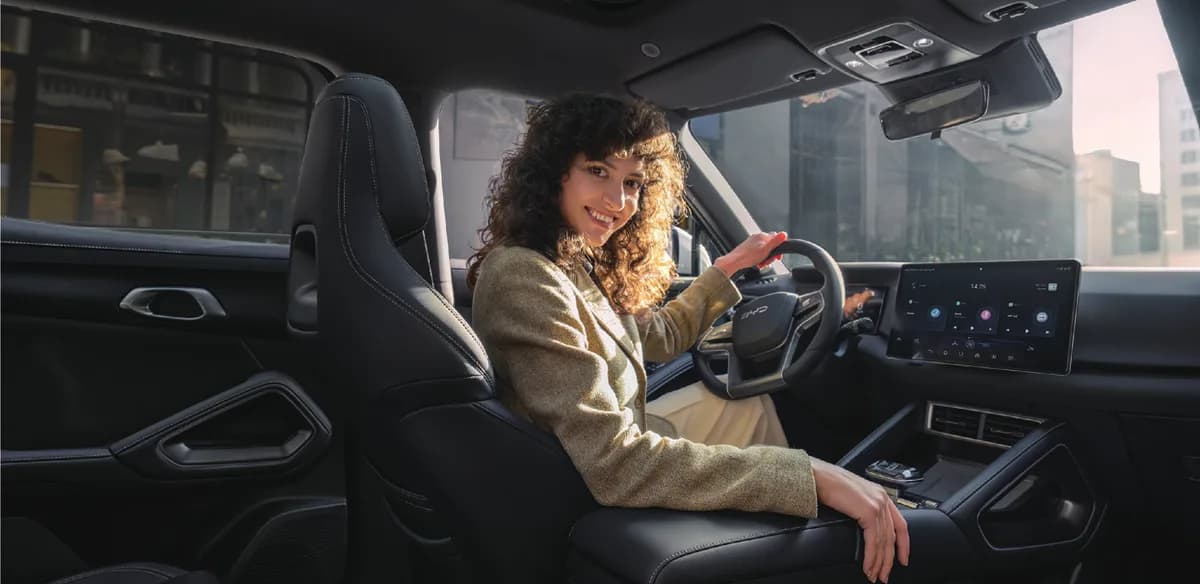
Image credit: BYD Australia
The Essential rolls in with an 8.8-inch digital driver display and a 10.1-inch central touchscreen with wireless Apple CarPlay and Android Auto, single-zone climate, six speakers, cloth and synthetic leather trim, a six-way manual driver's seat, LED head and tail lights, keyless entry with push-button start, 17-inch alloys, and BYD's full ADAS stack: adaptive cruise, autonomous emergency braking with pedestrian and cyclist detection, lane keep assist, blind spot monitor, rear cross traffic alert, driver attention monitor, and a 360-degree camera. Every Atto 2 DM-i also carries the V2L export socket rated up to 3kW, useful for a camping fridge or an outdoor kettle.
The Premium adds the larger 12.8-inch rotating touchscreen from the electric Atto 2, dual-zone climate, an eight-speaker audio setup, a power tailgate, synthetic leather with contrast stitching, a six-way power driver's seat, heated front seats, ambient lighting, panoramic sunroof, wireless phone charging, and 18-inch alloys. The step-up sits mostly in comfort kit rather than safety kit, because the safety kit is already standard on the base car. That is a genuinely useful thing at this price.
Practicality
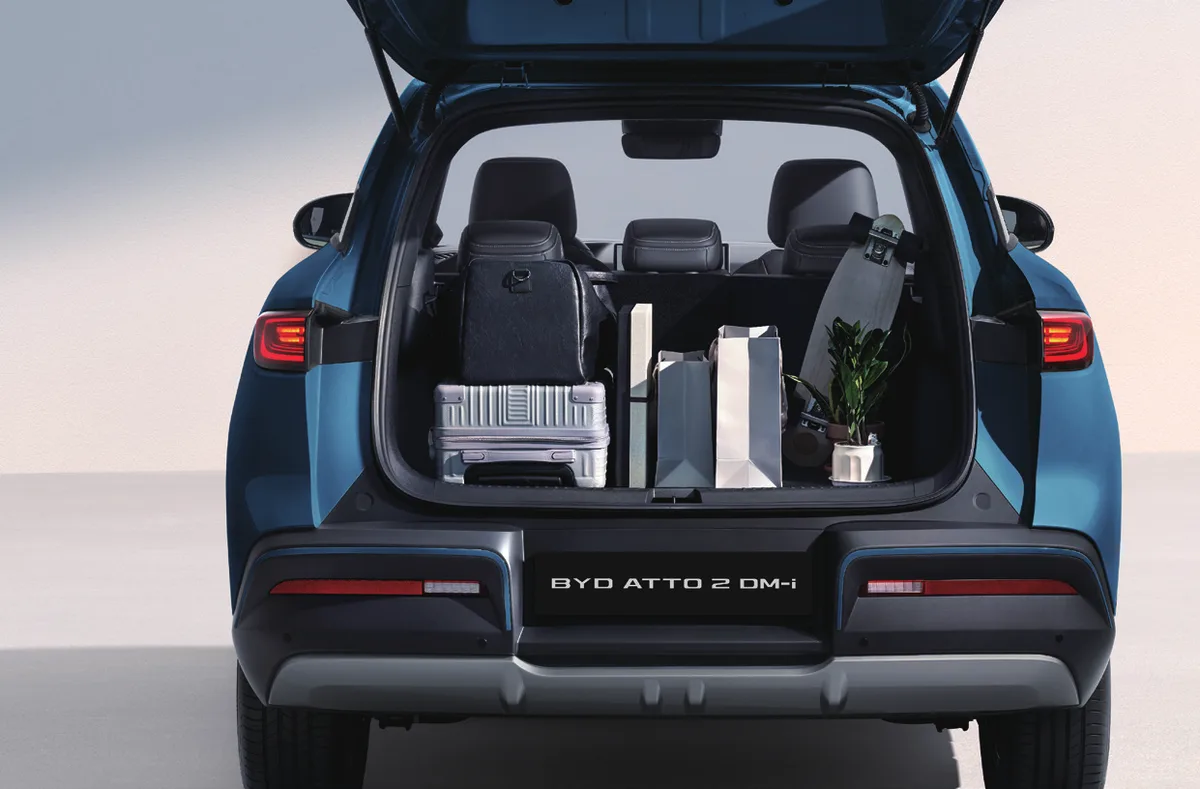
Image credit: BYD Australia
The DM-i shares its body with the electric Atto 2: 4,330mm long, 1,830mm wide, 1,675mm tall on a 2,620mm wheelbase. The boot is quoted at 425 litres with the rear seats up, expanding to 1,335 litres with the 60:40 split rear bench folded. Both figures are competitive for a small SUV and only fractionally down on the electric car despite the extra powertrain hardware. There is no spare wheel, only a puncture repair kit, which is normal for a plug-in hybrid this small.
Ground clearance is around 165mm and the car sits on 17-inch or 18-inch alloys depending on grade. Neither wheel size is aggressive enough to hurt ride comfort, and both fit the class.
Safety
The Atto 2 DM-i has not yet been assessed by ANCAP, so the local car launches unrated. The pure-electric Atto 2 wears a five-star result against the 2023 ANCAP protocols, but that rating does not automatically carry across to the plug-in hybrid because the powertrain, weight distribution and pole-strike characteristics change. If you plan to buy a launch car, expect the rating to arrive some months into deliveries.
Standard active safety on both grades: AEB with pedestrian and cyclist detection, adaptive cruise with stop-and-go, lane keep assist and lane centring, blind spot monitor, rear cross-traffic alert with automatic braking, driver attention monitor, intelligent speed assist, tyre pressure monitoring, and a 360-degree surround view camera on both grades. Airbags cover front, front-side, curtain and a driver knee airbag. There is no centre airbag between the front seats at this stage, which is a demerit ANCAP is now weighting more heavily.
How It Compares in the Australian PHEV Market
Before this week, the affordable PHEV shortlist was short. The BYD Sealion 5 Premium at $33,990 plus on-roads wore the cheapest-PHEV crown, closely followed by the Chery Tiggo 7 Super Hybrid Urban at $34,990 driveaway, and everything else, from the GWM Haval H6GT Hi4 PHEV to the Mitsubishi Outlander PHEV, opened above $40,000. The Atto 2 DM-i moves the entry bar down by more than $9,000 and puts a plug-in hybrid inside the price envelope of an ordinary small petrol SUV.
| Model | From | Battery | EV range (WLTP) | Warranty |
|---|---|---|---|---|
| BYD Atto 2 DM-i Essential | $24,990 | 7.85 kWh | 39 km | 6 yr / 150k |
| BYD Atto 2 DM-i Premium | $29,990 | 18.03 kWh | 90 km | 6 yr / 150k |
| BYD Sealion 5 Premium | $33,990 | 18.32 kWh | 80 km | 6 yr / 150k |
| Chery Tiggo 7 Super Hybrid Urban | $34,990 d/a | 18.3 kWh | 93 km | 7 yr / unlimited |
| GWM Haval H6GT Hi4 PHEV | $50,990 | 27.5 kWh | 115 km | 7 yr / unlimited |
| Mitsubishi Outlander PHEV | $59,990 | 22.7 kWh | 86 km | 10 yr / 200k |
The Chery Tiggo 7 Super Hybrid Urban still has the numerical edge on electric range and warranty, and it is a bigger car. The Outlander PHEV remains the family plug-in of choice if you need seven seats or a genuine 1,500kg braked tow rating. But if you are a household that keeps a small SUV as its daily commuter, the Atto 2 DM-i Essential is now the cheapest way into a plug-in hybrid in this country by a huge margin.
Warranty and Servicing
BYD Australia covers the Atto 2 DM-i under a 6-year, 150,000km vehicle warranty and an 8-year, 160,000km high-voltage battery warranty, both transferable to the second owner. Capped-price servicing intervals are set at 12 months or 20,000km, whichever comes first, and BYD publishes an eight-year service schedule so buyers can price out ownership before signing. That warranty is one year longer than a Toyota Yaris Cross Hybrid and identical to the electric Atto 2, though the Chery Tiggo 7 Super Hybrid's seven-year unlimited-kilometre policy still leads the segment on paper.
The CarSorted Angle: Where the DM-i Sits in Your Shortlist
On the CarSorted directory, the natural cross-shop for the Atto 2 DM-i Essential at $25,990 driveaway is not another plug-in hybrid. It is the pure-petrol small SUVs a family would otherwise buy at this money. That means the BYD Atto 2 Dynamic electric at $31,990 driveaway, a Toyota Yaris Cross Hybrid, a Mazda CX-30 G20e, a Kia Stonic GT-Line, and increasingly the GWM Haval Jolion Hybrid. Put those numbers side by side on the CarSorted comparison tool and the Atto 2 DM-i lands cheaper on driveaway, cheaper on fuel with a nightly charge, and longer on warranty than most of them.
Running-cost maths, using our own DB assumptions of 15,000km per year, 91 RON at $1.95 per litre and grid power at 33c per kWh, put the Atto 2 DM-i Premium at about $650 per year in energy costs if you plug in most nights and average 45km a day. A Yaris Cross Hybrid on the same commute burns roughly $1,150 per year in petrol. Even the pure-electric Atto 2 Dynamic only saves you another $200 per year at those assumptions, and it costs you $6,000 more on the driveaway sticker. That is the argument BYD is making, in numbers.
What This Means for Buyers
If you were about to buy a Yaris Cross Hybrid, a Kia Stonic, a Mazda CX-30 or a base MG ZS Hybrid+, the Atto 2 DM-i Essential is now a straight-line better financial choice on driveaway, fuel and warranty. The catch is trust in the badge and the absence of an ANCAP star; both are real, and both are decisions you have to make with your family in the seats. If you can charge at home overnight, the Premium at $29,990 plus on-roads gives you a genuine 90km EV commute and a petrol engine sitting behind it for the weekend. If you cannot plug in, the Essential still averages 5.1 L/100km on petrol alone, which is competitive with anything at the money.
The one buyer this does not suit is someone who tows or hauls: the Atto 2 DM-i has not been quoted with a braked tow rating and is a light small SUV. For that job, keep looking at the Mitsubishi Outlander PHEV or the Haval H6GT Hi4. For everyone else running an urban or peri-urban commute, this is the plug-in hybrid that finally makes the technology cheap enough to buy on the numbers alone.
Cross-shop the Atto 2 DM-i on the CarSorted comparison tool, or look at the wider plug-in and hybrid field in our Best Hybrid Cars 2026 guide and EV vs Hybrid running-cost breakdown.
Disclaimer: Pricing and specifications are sourced from BYD Automotive Australia and confirmed by multiple Australian motoring outlets. RRPs are before on-road costs. The $25,990 Essential driveaway is a launch campaign price available to retail customers who order eligible stock and take delivery by 31 December 2026, and cannot be combined with other BYD promotions. WLTP fuel and range figures are manufacturer claims; actual results will vary with driving style, temperature, terrain and battery state of charge. ANCAP has not yet published a safety rating for the DM-i variant.