CarSorted Verdict:
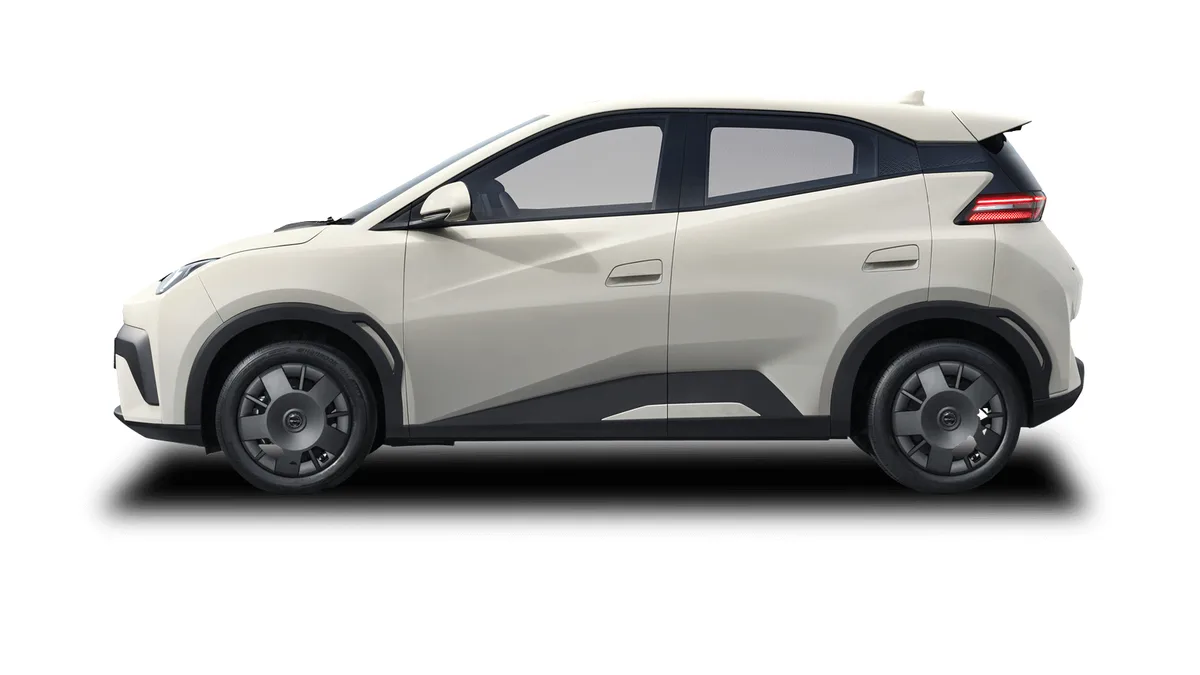
- The finding: A state motoring club's 2026 running-costs report has the Atto 1 Essential as the cheapest of 85 cars to own and run in Queensland, at $750.62 a month on a five-year loan.
- The charging line: $54.29 a month is BYD's rated energy use at an averaged home tariff of 28.02c/kWh. No wall box is costed.
- A power point copes: about 41km a day needs roughly 2 hours 45 minutes on a 10-amp socket, on our stated assumptions.
- Public-only charging: at NRMA's most common listed 69c/kWh it's about $31 a week, and the report's monthly figure rises to about $830.
- Price used: the report priced the car at $26,354.10 on the road, not the $19,990 drive-away campaign.
- Why our numbers can differ: our car and compare pages work from today's price (the drive-away deal while it runs) and leave out insurance, so the weekly figures there won't match the report's and the gap to petrol cars can look bigger. Each page lists what its figure includes.
- Battery: BYD covers it for 8 years or 160,000km. Five years at 15,000km a year is 75,000km.
A state motoring club's 2026 running-costs report landed this week with a first: an electric car at the top. The BYD Atto 1 Essential came out as the cheapest vehicle to own and run in Queensland, at about $751 a month, and only $54 of that is charging. The same day, a second motoring club's 2026 report, in WA, put the same car at the top of its small passenger car category.
The obvious questions follow. Does $54 a month assume you charge at home? Does it include a charger? Can a normal power point actually keep up with 15,000km a year? What if you live in a unit and rely on public fast chargers? And what about the battery?
These are fair questions, and the answers are in the reports' own fine print, BYD's published figures and a bit of arithmetic. We've printed the inputs, so you can rerun the sums for your own situation. You get the facts, you make the decision.
CarSorted Manufacturer offer
BYD Australia has an offer on the Atto 1 until 15 December 2026
Offer from BYD Australia, checked 5 Nov 2026
What the two reports actually found
Both motoring clubs cost the same basic scenario: a new car bought on a five-year loan, driven 15,000km a year for five years. Here's the Queensland report's breakdown for the Atto 1 against the two petrol cars nearest it on total cost.
The report's monthly costs, five years at 15,000km a year,
Queensland motoring club 2026 running-costs report, conventional finance, read 15 Nov 2026
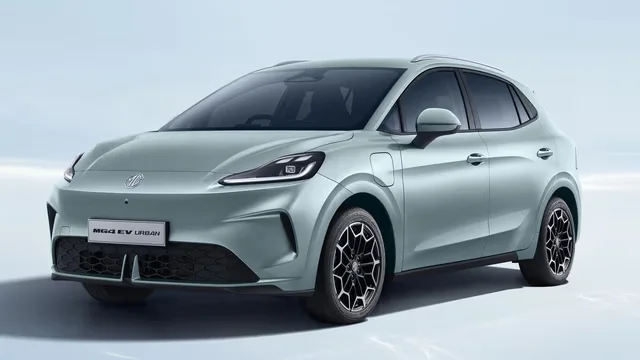
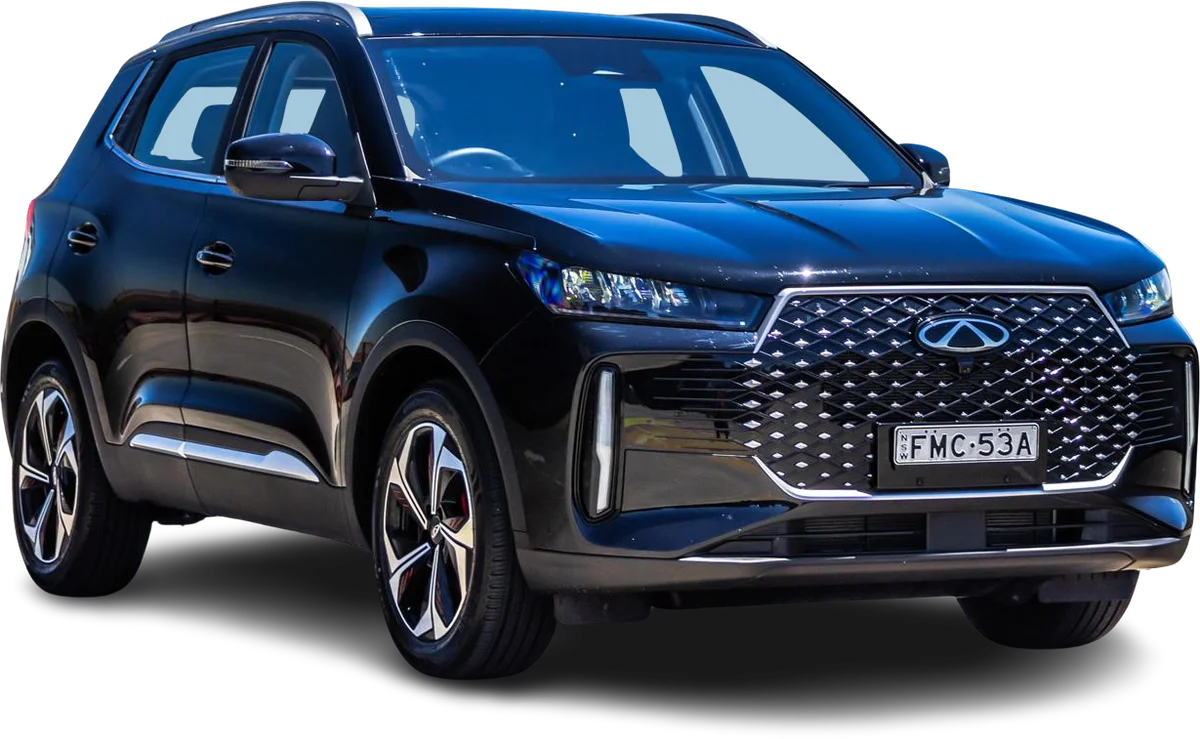
| Cost (per month) | BYD Atto 1 Essential | Chery Tiggo 4 Urban | MG ZS Vibe |
|---|---|---|---|
| Report's est. on-road price | $26,354.10 | $23,990.00 | $24,351.00 |
| Loan repayments | $497.83 | $463.50 | $470.73 |
| Registration and insurances | $165.63 | $159.64 | $174.36 |
| Fuel or electricity | $54.29 | $178.25 | $161.39 |
| Servicing | $30.38 | $28.83 | $38.23 |
| Tyres | $2.48 | $3.75 | $2.82 |
| Total per month | $750.62 | $833.97 | $847.53 |
| Five-year total | $45,036.96 | $50,038.15 | $50,851.95 |
| Report's calculated residual | $12,700.00 | $8,900.00 | $8,900.00 |
Compare these picks side by side
4 of them on 200+ specs, price, safety and running cost in one view.
Each price is that car's stored figure with its basis and check date. Driva is an independent finance provider, not part of CarSorted. We aren't paid for this link.
Current price on CarSorted: BYD Atto 1 Essential $23,990 RRP, as at 14 Nov 2026; BYD Atto 1 Premium $27,990 RRP, as at 14 Nov 2026; Chery Tiggo 4 Urban $23,990 drive-away (VIC), as at 11 Nov 2026; MG ZS Vibe $22,990 RRP, as at 5 Nov 2026.
Figures exactly as printed in the report for Queensland. Residual is the report's estimate of the car's value after five years, not a cost line.
In WA, the second club's 2026 report names the Atto 1 Essential the cheapest small passenger car to own and run, at $204.82 a week ($887.55 a month). It isn't the cheapest of all 85 cars there, though. The MG ZS Vibe tops the small SUV category at $203.31 a week, and in that report's full table the ZS Vibe ($880.99 a month) and Chery Tiggo 4 Urban ($881.06) both sit a few dollars a month under the Atto 1.
Why the gap between the two states? Mostly finance, then registration and insurance. The WA report's Atto 1 loan line is $575.85 a month against the Queensland report's $497.83, and its registration and insurance line is $214.39 against $165.63 (the WA figure includes the club's roadside assistance membership). The Queensland report applied a green car loan at a 6.29% comparison rate to eligible battery EVs and plug-in hybrids, against 7.51% for everything else. The WA report used the club's own car-loan rates of between 8.42% and 11.7%, depending on the loan amount. Its on-road price also includes average dealer delivery fees, and its electricity rate is higher.
What's included, and what isn't
Reading the Queensland report's methodology, the monthly figure is built from these lines:
- Finance: 100% of the on-road cost borrowed on a secured five-year loan, fully repaid at the end.
- Registration and insurance: Queensland registration, statutory fees and CTP as at 1 July 2026, plus a comprehensive insurance premium for a 30-year-old driver.
- Electricity: in the report's words, “an averaged domestic electricity tariff of 28.02 cents/kWh has been used and official power consumption as provided by the manufacturer.”
- Servicing: dealer servicing to the manufacturer's schedule, using capped-price programs where they exist.
- Tyres and battery: one replacement set of four tyres, and a replacement 12-volt battery for most vehicles.
Three things are worth knowing about what's not there. First, there's no line for a home charger, its purchase or its installation. Second, there's no split between home and public charging: each kilowatt-hour is priced at the 28.02-cent home tariff, even though the report notes battery EVs are “typically charged at home using slow AC charging, or public fast DC charger.” Third, depreciation isn't a cost line; the report shows it as the gap between the price and the residual value.
And the price. The report says it uses “list prices or manufacturer's national on-going drive away price offers, where applicable.” Its estimated on-road price for the Atto 1 Essential is $26,354.10. That's above BYD's list price of $23,990 RRP and well above the $19,990 drive-away campaign BYD is running on the Essential, for cars ordered by 15 December 2026 and delivered by 31 December. In other words, the promo wasn't used. If you buy on the campaign, you'd borrow about $6,364 less than the report assumed on its 100%-financed basis.
The WA report's method is similar. It priced electricity on Synergy's Home Plan (A1) tariff, printed in its criteria at 33.3 cents per kWh (a later line of its criteria prints 32.4c; its Atto 1 figure works out to 33.3c), “representing standard home charging”, and it adds that “EV charging from public stations may be more costly.” No charger cost appears there either.
Get new EV prices and running-cost changes the week they're published
One short weekly email: launches, prices and the cars that changed. Unsubscribe anytime.
The power-point maths
So can you skip the wall box and just plug into a normal socket? Here are the inputs, straight from BYD and our listings for each grade.
BYD Atto 1 charging inputs,
live from our rows; BYD Australia figures
| Input | Atto 1 Essential | Atto 1 Premium |
|---|---|---|
| List price | $23,990 RRP | $27,990 RRP |
| Battery capacity | 30kWh | 43.2kWh |
| Energy use | 15.5 kWh/100km | 16 kWh/100km |
| Range | 220km WLTP | 310km WLTP |
| Max AC charging | 11kW | 11kW |
| BYD's AC time, 0 to 100% | 3.5 h | 5 h |
| Max DC charging | 65kW | 85kW |
BYD prints battery capacity only; it doesn't publish a separate usable figure, so the maths below uses the energy-use rating, not the battery size. BYD's AC charging times don't state the charger power they assume. Its Atto 1 page lists a maximum AC charging rate of 11kW.
Now the sums. 15,000km a year is 41.1km a day on average. Our assumption for a standard 10-amp household power point is 10 amps at 230 volts, about 2.3kW. Some portable chargers draw less than that, and if yours runs at 8 amps (about 1.8kW) the times below stretch by about a quarter.
How long a power point needs, per night,
our arithmetic; 15,000km a year; 10A socket assumed at 2.3kW
| Step | Essential (15.5kWh/100km) | Premium (16kWh/100km) |
|---|---|---|
| Energy a year | 2,325kWh | 2,400kWh |
| Energy a day (41.1km) | 6.4kWh | 6.6kWh |
| 10A power point, per day | about 2h 45m | about 2h 50m |
| 10A power point, per week | about 19.5 hours | about 20 hours |
| 10A power point, battery from flat | about 13 hours | about 19 hours |
Energy use is BYD's rating. Real-world use changes with speed, weather and air-con. The from-flat line divides BYD's printed battery capacity by 2.3kW and ignores charging losses and the slower last few per cent, so treat it as a floor.
That's the answer to the power-point question. An average day of driving needs a bit under three hours on a normal socket, so plugging in overnight covers it with plenty of room. Where a power point struggles is the big day: a long drive that empties the battery needs a full night and part of the next morning to refill. If that's a regular part of your week, a faster home charger or a fast-charge stop is the practical answer.
You can see this for your own grade on the car pages. The Atto 1 Essential page and Atto 1 Premium page each carry a home charging cost widget where you can type your own tariff, and a charging time table for a power point, a caravan socket, a wall box and public DC chargers. That table assumes 2.4kW for a 10-amp socket, so its times run slightly shorter than ours.
Ways to buy
Quotes on 3 cars; the comparison covers 4.
Compare 4Finance
From ≈$88/wk(≈$381/mo)
Estimate on the BYD Atto 1 at $23,990 RRP, before on-road costs; assumes $5,000 deposit, 5 yrs at 7.5% p.a. Not a quote or an offer of credit.
Compare real car-loan ratesDriva is an independent finance provider, not part of CarSorted. We aren't paid for this link.
Novated lease
Electric, with an RRP under the $91,661 fuel-efficient LCT threshold (2026-27): under the ATO's electric cars exemption a novated lease of an eligible electric car attracts no FBT if luxury car tax was never payable on it. The benefit is still reportable.
Novated lease quoteWork out a lease on the BYD Atto 1Driva is an independent finance provider, not part of CarSorted. We aren't paid for this link. Opens apply.driva.com.au in a new tab.
What it costs per week at home
Here's the Essential's 44.7kWh a week priced at four home tariffs. Two are the clubs' own figures. The other two, 19 cents off-peak and 38 cents peak, are the indicative tariffs our car pages use; they're our stated assumptions, not anyone's published plan, so check your own bill.
Home charging cost, Atto 1 Essential,
our arithmetic; Atto 1 Essential at 15.5kWh/100km, 15,000km a year
| Tariff | Per week | Per year |
|---|---|---|
| Off-peak, 19c/kWh (our assumption) | $8.50 | $441.75 |
| Queensland report, averaged domestic, 28.02c/kWh | $12.53 | $651.47 |
| WA report, Synergy A1 at 33.3c/kWh | $14.89 | $774.23 |
| Peak, 38c/kWh (our assumption) | $16.99 | $883.50 |
2,325kWh a year multiplied by each rate. Our Queensland line works out to $54.29 a month, matching the report's own figure to the cent, so the report priced the car's entire energy use at its home tariff. The WA report prints $64.44 a month for the Atto 1 ($773.28 a year), a few cents under our 33.3c line. The Premium uses about 3% more.
The takeaway is that $54 a month is a middle-of-the-road home figure, not a low-end case. On a cheap overnight EV plan the same driving costs less; on peak power it costs more. Solar owners charging in daylight could pay less again, but that depends on what your exported power would otherwise earn.
Cars in this story
4 cars
Price shown is each car's stored figure with its basis and check date.
See all BYD modelsDo you need a home charger?
Not to match either club's figures. Neither report costs one, and on the arithmetic above a power point covers average driving. A wall box is an optional extra that buys you speed.
BYD's own Build & Price lists a BYD Home Charger, a 7kW single-phase AC unit, at $699 with installation not included (shown as out of stock on 15 November), and says a licensed electrician must fit it. Two state notes on the same listing: in Queensland, BYD says the electrician must limit it to 20 amps or below, and BYD doesn't sell this charger in South Australia. Installation costs depend on your switchboard and cable run, so get an electrician's quote before you budget for it.
Daily top-up time by charger,
our arithmetic; Atto 1 Essential, 6.4kWh a day
| Charger (power assumed) | Average day (41km) | Battery from flat |
|---|---|---|
| 10A power point (2.3kW) | about 2h 45m | about 13 hours |
| 7kW wall box held to 20A in Queensland (about 4.6kW) | about 1h 25m | about 6.5 hours |
| 7kW wall box (7kW) | about 55 min | about 4.3 hours |
From-flat times divide the Essential's 30kWh printed capacity by the charger power, ignoring losses. BYD's own 0 to 100% AC figure for the Essential is 3.5 hours; BYD lists the car's maximum AC rate as 11kW, and drawing that much at home needs a three-phase supply.
A wall box is worth more if you do long days often, share one car between two drivers, or only get the car home late. For a single commuter averaging 41km, the power point is done in under three hours of plugging in.
If you rely on public charging
This is where the numbers change a lot. Public fast-charger prices vary by network and by site. NRMA publishes its whole price list by location; Evie, for one, says its prices vary by station and plug type and shows the live rate in its app.
On NRMA's price list as listed on 15 November 2026, the most common price is $0.69 per kWh, most other sites are $0.75 or $0.79, and the dearest is $0.99 at Yulara in the NT. My NRMA Rewards members get 5c per kWh off when they pay in the My NRMA app. Here's 15,000km a year in an Essential at those prices, beside home charging.
Public fast charging against home charging,
our arithmetic; Atto 1 Essential, 2,325kWh a year; NRMA prices as listed on 15 Nov 2026
| Where you charge | Per week | Per year |
|---|---|---|
| Home, the Queensland report's 28.02c/kWh | $12.53 | $651.47 |
| NRMA Rewards member in the app at a 69c site (64c/kWh) | $28.62 | $1,488.00 |
| NRMA, most common listed price, 69c/kWh | $30.85 | $1,604.25 |
| NRMA, 79c/kWh sites | $35.32 | $1,836.75 |
| NRMA, dearest listed site, 99c/kWh | $44.26 | $2,301.75 |
Same energy use as at home (BYD's 15.5kWh/100km). Network prices change, and some sites add fees for overstaying; check the network's app before you rely on a figure.
What does that do to the Queensland ranking? Keep every line of the report and swap only the $54.29 electricity figure. At 69c per kWh, the Atto 1 Essential becomes about $830.02 a month, still a few dollars under the report's $833.97 for the Chery Tiggo 4 Urban. At 79c it's about $849.39, which is over both the Tiggo 4 Urban and the report's $847.53 for the MG ZS Vibe. So at NRMA's 69c to 79c listed prices, a buyer with no home charging lands within about $15 a month of the cheapest petrol cars in the report's light and small class; at 99c the Atto 1 would be about $888 a month, roughly $54 dearer than the Tiggo 4 Urban.
Fast charging also takes your time. BYD rates DC charging from 10 to 80% at 30 minutes for both grades, and a week of average driving in the Essential is about 45kWh, so a public-only owner is likely making at least one fast-charge stop a week. Whether that suits you depends on where the chargers are on your usual routes.
Weekly fuel cost at a glance
Put in your own kilometres and your own electricity or petrol price, and see the weekly cost of each Atto 1 grade against the Tiggo 4 Urban and ZS Vibe. Change the home tariff to a public price to see the no-driveway case.
- BYD Atto 1 Essential
$443 a year, rated 15.5 kWh/100km (stored figure)
$9 a week
Lowest - BYD Atto 1 Premium
$457 a year, rated 16 kWh/100km (stored figure)
$9 a week
- Chery Tiggo 4 Urban
$1,653 a year, rated 9.6 L/100km urban, 7.3 extra-urban, 7.4 combined (ADR 81/02)
$32 a week
- MG ZS Vibe
$1,366 a year, rated 8.5 L/100km urban, 5.7 extra-urban, 6.7 combined (ADR 81/02)
$26 a week
Assumes 20 km each way, 10 trips a week, mild weather and the official combined road mix; unleaded at $1.95/L, home charging at 27c/kWh (VIC reference price (Victorian Default Offer, Jemena flat rate (the middle of the five Victorian zones, 25.96c to 31.98c))). Plug-in hybrids are costed with the battery not charged. Fuel only.
CarSorted
Shortlisting already?
Compare any two side by side or see this month's manufacturer deals. Figures come from manufacturers' own published documents.
The battery question
BYD Australia's Atto 1 page lists the traction battery warranty as 8 years or 160,000km, whichever occurs first, and the vehicle warranty as 6 years or 150,000km. Our listing shows 8 years and 160,000km for the battery, and a vehicle warranty of 6yr / 150,000 km. BYD's 2026 warranty statement adds that the battery pack and drive unit cover comes “with a guarantee of at least 70% battery capacity retention.”
Set that against the clubs' scenario. Five years at 15,000km a year is 75,000km, inside both the time and distance limits of the battery cover. Neither report includes a traction battery replacement, and the 12-volt battery the Queensland report costs is the small conventional one, not the drive battery. We're not going to guess at what an out-of-warranty battery might cost years from now. BYD hasn't published a figure, and anything else would be a guess. Read the warranty terms and conditions, including what counts as a failure, before you buy.
Our take
The Queensland result holds up on its own terms. The charging line is a fair home-charging figure, it doesn't assume you've bought a wall box, and it doesn't lean on the drive-away promo. The two main levers are the ones that differ from person to person: where you charge, and what interest rate you get. A buyer with a driveway and a cheap overnight rate will likely do better than the report's figure on electricity. A buyer who relies entirely on public fast chargers at NRMA's common 69c to 79c prices ends up roughly level with the cheapest petrol cars in the report's light and small class.
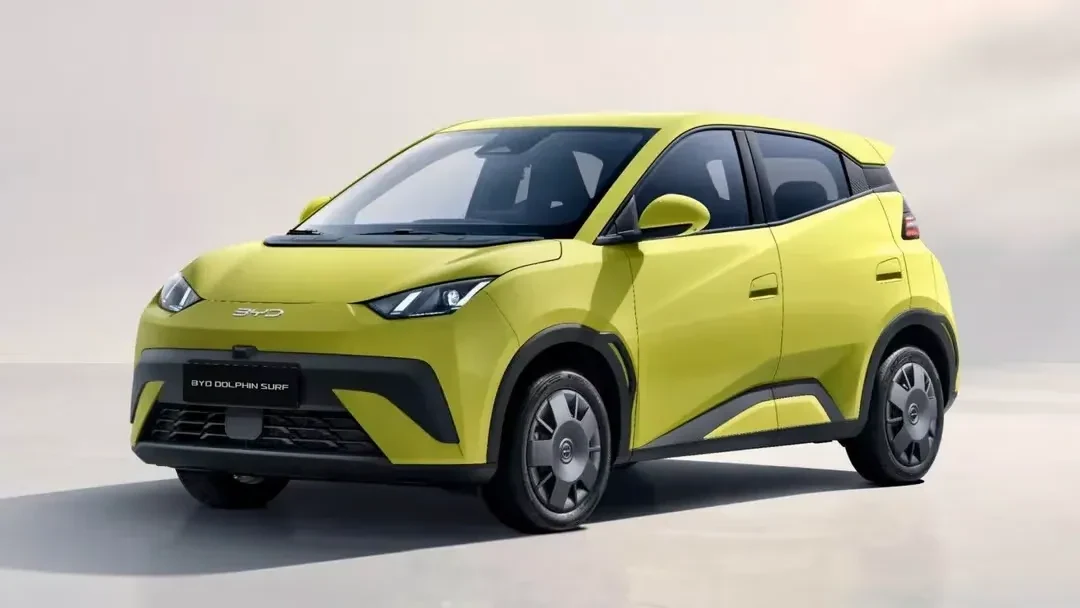
If you're weighing the Atto 1 against those petrol rivals, line them up on our Atto 1 vs Tiggo 4 compare page, and use the fuel cost calculator with your own kilometres and prices. The Atto 1 vs MG3 and Atto 1 vs Dolphin pages compare it with two other small cars.
Compare what's on sale now
Head-to-heads with the cars this story is about and their closest rivals on sale now, plus the buying guides that cover them.
- Chery Tiggo 4 vs MG ZS
- BYD Atto 1 vs BYD Dolphin
- MG ZS vs Mahindra XUV 3XO
- BYD Atto 1 vs GAC Aion UT
- MG ZS vs Mazda CX-3
- BYD Atto 1 vs GWM ORA
- Chery Tiggo 4 vs GWM Haval Jolion
- Chery Tiggo 4 vs Jaecoo J5
Buying guides
- Best Electric SUVs in Australia 2026
- Best Electric Luxury SUV Australia 2026
- Best Electric Cars Australia 2027: Buy Now or Wait?
- Best Chinese Electric Cars Australia 2027: Buy Now or Wait?
Or pick any two cars on our compare page, or browse the full car directory.
MORE:VFACTS October 2026: HiLux Tops 103,325 Sales, BYD Is the No. 2 Brand and EVs Take 23.1%
MORE:BYD Ti7 Seven-Seat Plug-In Hybrid Type-Approved for Australia, No Launch Date or Price Yet
Shopping for an EV now?
The facts, side by side. Your decision.
Free, and no obligation. We reply by email, and one dealership near you can reply too.
Disclaimer: Running-cost figures are from a Queensland motoring club's 2026 running-costs report (conventional finance) and a WA motoring club's 2026 running-costs report, both read 15 November 2026. BYD prices, the drive-away campaign, the home charger listing, charging rates and warranty terms are from BYD Australia's Atto 1 page, Build & Price, Atto 1 specification brochure and 2026 warranty statement on the same date. Public charging prices are NRMA's listed prices as at 15 November 2026. Charging times, weekly costs and the Queensland figures with the electricity line swapped are our arithmetic on the inputs printed above, including our assumptions of 2.3kW for a 10-amp power point and 19c and 38c per kWh home tariffs. They are general information, not financial advice. Confirm price, charging setup and finance terms before you buy.