Chery Tiggo 4 vs GWM Haval Jolion
Both open at $23,990 drive-away. Both put a hybrid on the road at $29,990. Both carry seven years and unlimited kilometres. So the decision comes down to the things the front page of the brochure does not mention.
Specifications and pricing correct at time of publishing. Prices are RRP before on-road costs unless stated otherwise. Always confirm with the manufacturer or dealer before purchasing.
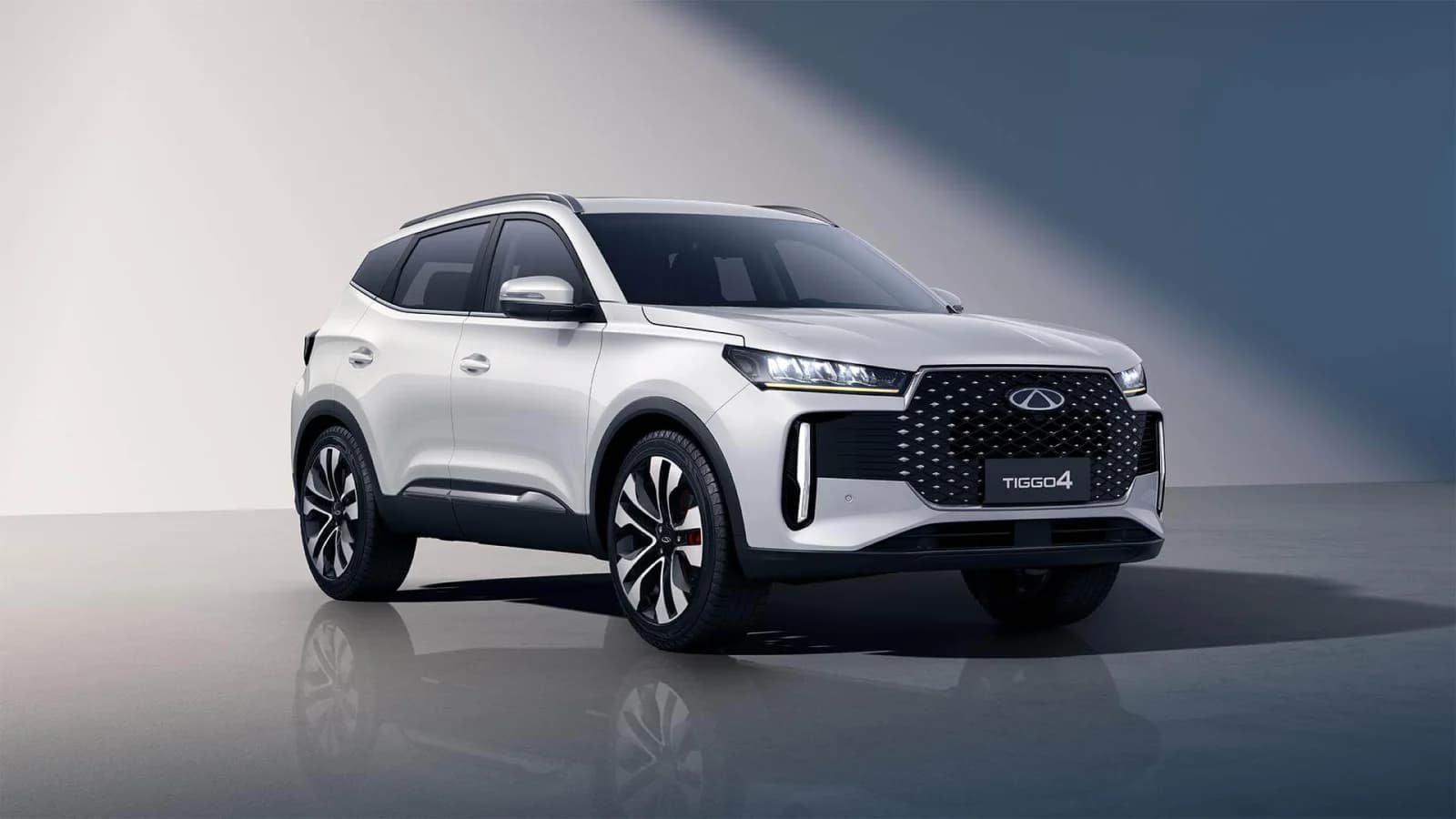
Chery Tiggo 4 Urban
From $23,990 drive-away
Small SUV
1.5L Turbo Petrol
108kW
7.4L/100km
5★ ANCAP (2023)
Not published
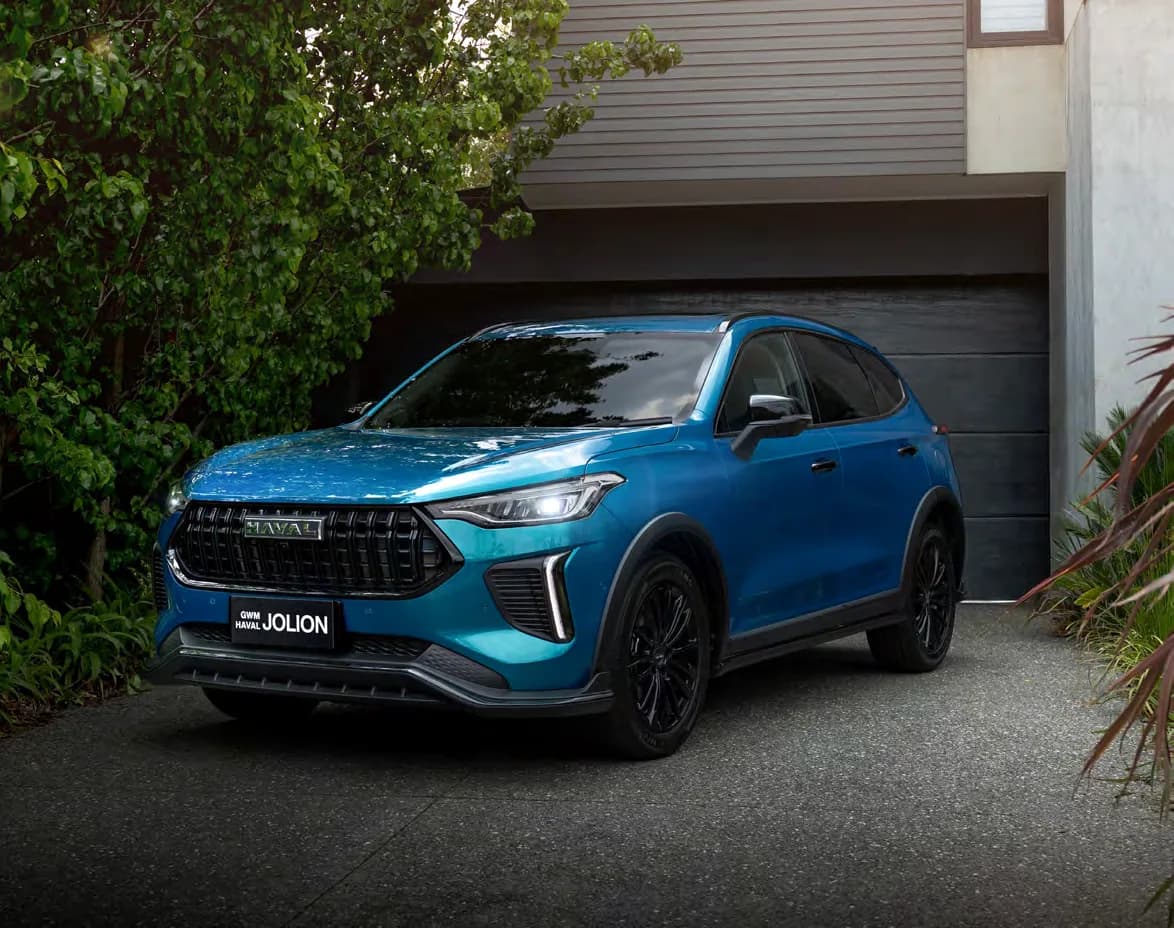
GWM Haval Jolion Premium
From $23,990 drive-away
Small SUV
1.5L Turbo Petrol
105kW
6.7L/100km
5★ ANCAP (2022)
337L
Price Breakdown
Both brands advertise drive-away, which for once makes this easy: the numbers below already include registration, stamp duty and dealer delivery, so they are directly comparable to each other. They are also campaign prices with footnotes, and the footnotes are where the differences hide.
Chery advertises all four Tiggo 4 grades as drive-away prices, and publishes no list price at all. We checked the offers page, both model pages, the warranty page and both spec sheets, and there is no MRRP, no RRP and no before-on-roads figure anywhere in Chery's Australian material. If you see a Tiggo 4 quoted as an RRP somewhere, that is somebody's estimate, not Chery's number.
The current offers run to 30 September 2026. The Urban is advertised at $23,990 drive-away, with Chery separately advertising a $1,500 factory bonus on 2025-build stock, applied at the point of sale as a reduction to the advertised drive-away price. Chery does not publish what that leaves you paying, so we are not going to do the arithmetic on its behalf. Ask the dealer for the transaction price in writing. The bonus excludes fleet, government, rental, business and not-for-profit buyers, and two further conditions apply to the hybrids specifically: the Hybrid Urban and Hybrid Ultimate offer cards state the price excludes premium paint, and Chery publishes no dollar figure for what premium paint costs.
GWM also quotes drive-away, with the savings already inside the number. The Jolion Premium is $23,990 drive-away and the Premium Hybrid is $29,990, and GWM prints that those figures already include a $3,000 saving. That is worth saying plainly because it is the most common misreading of GWM's advertising: the $3,000 is not a further discount you negotiate on top, it is the reason the advertised number is what it is. GWM's pricing is quoted for private buyers in Victoria, and its current round also ends 30 September 2026.
| Variant | Powertrain | Power | Economy | Price (drive-away) |
|---|---|---|---|---|
| Chery Tiggo 4 Urban | 1.5T petrol | 108kW / 210Nm | 7.4L/100km | $23,990 |
| GWM Haval Jolion Premium | 1.5T petrol | 105kW / 210Nm | 6.7L/100km | $23,990 |
| Chery Tiggo 4 Ultimate | 1.5T petrol | 108kW / 210Nm | 7.4L/100km | $26,990 |
| GWM Haval Jolion Lux | 1.5T petrol | 105kW / 210Nm | 6.7L/100km | $26,990 |
| Chery Tiggo 4 Hybrid Urban | 1.5L hybrid | See drivetrain | 5.4L/100km | $29,990 |
| GWM Haval Jolion Premium Hybrid | 1.5L hybrid | 140kW / 375Nm | 4.8L/100km | $29,990 |
| Chery Tiggo 4 Hybrid Ultimate | 1.5L hybrid | See drivetrain | 5.4L/100km | $32,990 |
| GWM Haval Jolion Vanta | 1.5T petrol | 130kW / 270Nm | 6.5L/100km | Not published |
| GWM Haval Jolion Lux Hybrid | 1.5L hybrid | 140kW / 375Nm | 4.8L/100km | Not published |
| GWM Haval Jolion Vanta HEV | 1.5L hybrid | 140kW / 375Nm | 4.8L/100km | Not published |
Read down the top six rows and the pattern is almost comical. The entry petrols are the same price. The mid petrols are the same price. The entry hybrids are the same price. Three identical price points in a row is not a coincidence, it is two brands watching each other's advertised drive-away campaigns and matching them.
The bottom three rows need a caveat we are not going to bury. GWM sells the Vanta, the Lux Hybrid and the Vanta HEV, but it publishes a price for none of them. Its offers page carries exactly three Jolion offers, its configurator will only build the Premium, Lux and Premium Hybrid, and its model page states a price range of $23,990 to $29,990 across three offers. Figures for the other three circulate widely and we have carried some of them ourselves, but they are not currently GWM's published numbers, so we have left them out rather than repeat them as fact. If you want a Vanta, the dealer is the only source of a real price.
Safety Rundown
Both cars hold five stars, but the coverage is not the same, and the difference matters far more than the dates do.
The GWM Haval Jolion holds a 5-star ANCAP rating dated 2022, and ANCAP is explicit that it applies to all variants, petrol and hybrid. The hybrid was not covered by the original result; ANCAP ran additional frontal offset and oblique pole tests on the Jolion Hybrid to confirm the integrity of the battery and the high-voltage system, and extended the rating on the strength of them. The datestamp stayed 2022, and the rating runs to December 2028.
The petrol Chery Tiggo 4 holds a 5-star ANCAP rating dated 2023, the newer result of the two, and it runs to December 2031. ANCAP notes that the rating is derived from testing of the Tiggo 7 Pro plus additional autonomous emergency braking and lane-support tests, and that it applies to the Tiggo 4 and the earlier Tiggo 4 Pro name. There is one condition worth knowing: the five stars apply to vehicles built from 1 November 2024, and earlier builds qualify only once recall campaign REC-006263 has been rectified.
And then the gap. ANCAP's own wording on the Tiggo 4 page is four words long and leaves no room: "Hybrid variants are unrated." So the $29,990 drive-away hybrid cross-shop is a rated car against an unrated one. Unrated is not the same as badly rated, it means there is no independent crash result for that variant, and we will not treat a fitted feature list as a substitute for one.
That has a practical edge beyond the crash performance itself. Plenty of Australian fleet and novated-lease policies require a current five-star result, and an unrated variant is simply not eligible. If you are buying a Tiggo 4 Hybrid through any of those channels, or a confirmed rating is non-negotiable for you, the Jolion Hybrid is the one that has it today. Both cars carry the expected assist suite as standard, including autonomous emergency braking, lane keep assist and adaptive cruise.
One thing we will not do is put the two cars' category percentages side by side. They were tested under different protocol years with different denominators, so the percentages are not comparable, and anyone lining them up in a table is comparing two different exams.
Feature Showdown
What we can tell you from driving the Tiggo 4
We have driven the Chery Tiggo 4, and the short version is that it is tuned for comfort and that suits the car. The ride is soft and absorbent over Australian suburban roads, the steering is light and easy for parking, and the cabin is impressively quiet at city speeds. The 108kW petrol Ultimate has enough pull for daily driving and merging, though the CVT makes itself heard if you ask for a hard overtake. It is happiest wafting along rather than being hustled, which is exactly the right brief for a car at this money.
The cabin is the part that surprised us. In Ultimate trim there is a large central touchscreen, a crisp digital driver display, a layered dashboard lifted by a strip of blue ambient lighting, leather-look seats that are comfortable and supportive, a chunky steering wheel and a rotary gear selector. The soft-touch surfaces are where it matters and the harder plastics are kept low and out of the way. It is the kind of cabin that makes you double-check the price tag. It is not flawless: the infotainment software is functional rather than slick, and the driver-assistance systems chime eagerly until you dig into the menus and dial them back.
What we can and cannot tell you about the Jolion
We have not driven the GWM Haval Jolion, so we are not going to tell you how it rides, steers or copes with a rough back road. Anyone who does tell you, without having driven it, is guessing.
What the specifications say is this. The Jolion is 165mm longer on a 90mm longer wheelbase, so it is the physically larger car, and its petrol is the lighter of the two at 1,410kg despite that. The petrol uses a seven-speed dual-clutch where the Chery uses a CVT, which is a meaningfully different transmission character and the single most worthwhile thing to feel back to back rather than read about. Dual-clutch gearboxes are crisper when moving and can be hesitant in stop-start crawl; CVTs are smooth in traffic and vocal when pushed. Which of those trade-offs you can live with is a personal answer, not a specification.
Our advice is the one we would give on any pair this close: book both test drives on the same day, at the same time of day, on roads you actually use. At a $0 price difference between the two entry cars and a $0 difference between the two hybrids, the tie-breaker is going to be how each one feels to you.
Drivetrain
The petrol engines are close to identical on paper and neither is the reason you buy either car. The Tiggo 4 runs a 1.5-litre turbo making 108kW and 210Nm through a CVT, claiming 7.4L/100km and 168g/km from a 51-litre tank. The Jolion runs a 1.5-litre turbo making 105kW and 210Nm through a seven-speed dual-clutch, claiming 6.7L/100km and 153g/km from a 55-litre tank. Three kilowatts apart, identical torque, and the GWM is the more efficient of the two by 0.7L/100km.
Above them GWM offers something Chery does not: the Vanta petrol, a 1.5-litre making 130kW and 270Nm at 6.5L/100km. If you want a petrol small SUV with genuine mid-range shove rather than a hybrid, that is the only one of these ten variants that offers it, and as noted above you will have to ask a dealer what it costs.
The hybrids, and a power figure you should not trust
Both brands put a hybrid on the road at $29,990 drive-away, which is a remarkable thing to be able to write, and both are the grades we would point most buyers at. But the two makers describe their hybrids very differently, and it matters.
GWM publishes a combined figure and labels it as one. The Jolion Hybrid's brochure prints three numbers in the same cell: combined 140kW, electric motor 115kW, petrol engine 70kW. Torque the same way: combined 375Nm, motor 250Nm, engine 125Nm. So 140kW and 375Nm is a real system output, published as such, alongside a claimed 4.8L/100km and 111g/km.
Chery does not publish a combined figure for the Tiggo 4 Hybrid at all. Its spec sheet prints the engine at 71kW and 120Nm in one block, and the electric motor at a maximum net 150kW and 310Nm in another, and stops. Chery's own model page carries the engine's 71kW as the car's headline power. There is no total.
That matters because you will see the Tiggo 4 Hybrid quoted at 150kW in a lot of places, and we have quoted it that way ourselves in the past. 150kW is the electric motor on its own, not the car. A hybrid's system output is never the simple sum of its engine and motor, and it is not the motor figure either. Until Chery prints a combined number, the honest position is that nobody outside Chery knows what this car's total output is, and we are not going to invent one to make a table look tidy. What we can say is that the claimed economy is 5.4L/100km and 123g/km, and that on the figures both makers do publish, the Jolion Hybrid is the stronger and the more efficient car.
What the hybrid actually saves you
Over 15,000km a year at $1.90 a litre, the Jolion petrol at 6.7L/100km costs roughly $1,910 and the hybrid at 4.8L/100km roughly $1,370, a saving of about $540 a year. The Tiggo 4 petrol at 7.4L/100km costs roughly $2,110 and its hybrid at 5.4L/100km roughly $1,540, a saving of about $570 a year.
Both hybrids cost $6,000 more than the petrol below them, which is a payback of somewhere around ten to eleven years on fuel alone at that distance. That maths improves sharply if you drive more than 15,000km a year, or if most of your running is urban stop-start, where a hybrid does its best work and a turbo petrol does its worst. Put your own annual distance and fuel price into our fuel cost calculator before you assume the hybrid pays for itself, because for a lot of buyers at this end of the market it does not, and the petrol is the smarter buy.
Space & Comfort
The Jolion is the longer car, at 4,472mm on a 2,700mm wheelbase against the Tiggo 4's 4,307mm and 2,610mm. That is 165mm of extra length and 90mm of extra wheelbase, which in a car this size is worth real rear legroom. The Jolion is the one we would put three teenagers in for a long drive.
The boot, and why you cannot just subtract one number from the other
This is the specification most people want settled, and it is the one the two makers make hardest to settle, because they do not measure the same way.
GWM publishes a full set: the petrol Jolion at 337 litres minimum and 1,133 litres maximum, the Vanta petrol at 291 and 952, and every hybrid Jolion at 255 litres minimum and 916 maximum. Chery publishes one number for the hybrid, 470 litres, and labels it precisely: VDA, measured up to the roof. For the petrol Tiggo 4 it publishes no boot figure at all, on the spec sheet or the model page.
A volume measured to the roof and a volume labelled only "minimum" are not the same measurement, so putting 470 next to 255 and calling it a 215-litre win would be dishonest, and we are not doing it. What we can say from each maker's own numbers is narrower and more useful: GWM's hybrid loses 82 litres to GWM's own petrol, 255 against 337, because the hybrid hardware takes a bite out of the boot floor. That is a real and measurable cost of choosing the Jolion Hybrid, stated on the same basis, and 255 litres is small for a small SUV. Chery's hybrid, by contrast, is the grade it chooses to publish a boot figure for, which tells you which way its own trade-off went.
On towing the Jolion wins outright, because it is the only one of the two with a published figure. GWM rates the petrol Jolion to 1,500kg braked and the hybrid to 1,300kg, with 750kg unbraked across the range. Chery publishes no towing capacity for the Tiggo 4 in the material we could reach. That is not the same as a zero, but it is not something to guess at either: if you have a box trailer or a small boat, the Jolion is the car with a number you can rely on, and you should ask Chery directly before assuming the Tiggo 4 will do the job.
On the Tiggo 4 we can add something from our own time with the car. Front-seat space is genuinely generous, with plenty of head and shoulder room and big door bins. The rear has enough leg and knee room for kids or two adults on the school run and around town, but three across or a long trip with tall passengers is a squeeze, which is exactly what a 2,610mm wheelbase predicts. The boot is a usefully square, flat-floored space that swallows a week's shopping, a pram or a couple of soft bags without drama, and the rear doors open wide enough to fit a capsule without a fight.
True Cost to Own
The headline warranty is the rarest thing in this segment: a genuine dead heat. Both Chery and GWM cover these cars for seven years with no kilometre limit, and both back the high-voltage hybrid battery for eight years, with the same 70 per cent state-of-health threshold for a claim. Unlimited-kilometre cover is unusual at any price and it is a large part of why both brands convert so well with high-distance buyers, who get timed out of most rivals' 100,000km and 150,000km caps long before the years run out.
The differences are all in the carve-outs, and they cut in opposite directions.
Who loses the "unlimited"
GWM drops to 7 years or 150,000km only if the car carries paying passengers, and it names them: CPV, taxi, rideshare, hire car or rental. It affirmatively confirms full cover for private, ABN, general fleet, national fleet and government use. Chery's carve-out is wider. It reduces to 7 years or 150,000km for taxi, ride sharing, hire, rental, driving school and delivery or courier use. If you run a courier round or a driving school, GWM covers you for unlimited kilometres and Chery does not.
The battery goes the other way. Chery's eight-year high-voltage battery warranty is unlimited-kilometre with no commercial carve-out printed. GWM's drops to eight years or 150,000km for any commercial application, which is a broader trigger than its own vehicle-warranty carve-out. So the tradie with an ABN gets the better vehicle warranty from GWM and the better battery warranty from Chery.
Servicing, where they genuinely diverge
This is the clearest practical difference between the two ownership packages, and it is not close.
Chery publishes everything. Seven years or 105,000km of capped-price servicing at 12-month or 15,000km intervals, with every visit priced: $289 for each of the first five petrol services and $299 for the hybrid equivalents, stepping up at the sixth and seventh. Seven years of scheduled servicing totals $2,167.33 on the petrol and $2,519.46 on the hybrid. You can price the whole ownership before you walk into the dealership.
GWM publishes a period and hides the prices. Its brochure advertises five years of capped-price servicing, two years shorter than Chery's, and its capped-price page is VIN-gated: you have to enter the vehicle identification number of a car you do not own yet to see what servicing costs. We could not confirm the Jolion's service interval from any GWM Australian source, which for a car this heavily advertised on value is a strange gap.
Roadside assistance inverts the marketing. Chery advertises seven years, but it is 12 months complimentary, renewed a year at a time only if you keep servicing at an authorised Chery dealer. GWM gives five years up front, extending to seven on a service-activated basis for vehicles sold from 1 July 2026. Both are dealer-retention mechanisms; GWM's floor is the higher one.
The cost nobody quotes you
Depreciation is the biggest single expense of owning either of these, and it is invisible on the day you buy. GWM has the longer Australian history of the two and the wider dealer footprint, which matters most if you live outside a capital city, so check what service coverage each brand actually has near you rather than assuming. Both are still establishing residual values, which is the ordinary cost of a newer badge and, frankly, the reason you can buy either for $23,990 drive-away in the first place.
A $3,000 difference in purchase price is meaningless if one car is worth $5,000 less in four years, so run both through our depreciation calculator over a realistic ownership period before you decide which one is actually cheaper. And on the Chery specifically, the $1,500 factory bonus attaches to 2025-build cars, so the sharpest price may be on a car that is a build year behind. That affects what it is worth when you sell it. Ask which build year you are being offered.
CarSorted Data Insight
We pulled every live variant of both cars for this comparison and checked each headline number against the maker's own Australian material. The pricing overlap is the most striking thing in the data, three identical price points in a row, but the more interesting finding was how differently the two brands publish.
GWM prints a labelled combined hybrid output, a full set of boot volumes, kerb weights separated from tare and towing capacities for every grade, then hides its servicing prices behind a VIN and declines to publish a price for half its Jolion range. Chery prints a complete seven-year servicing schedule with every visit costed, then publishes no list price, no towing capacity, no ground clearance and no combined power figure for its hybrid. Neither is being evasive so much as inconsistent, and the effect on a buyer is the same: you cannot build a complete picture of either car from its maker's website alone, and the gaps in one are not the gaps in the other.
The number we would most like to correct in the wider market is the Tiggo 4 Hybrid's power. It is quoted as a 150kW car almost everywhere, including in our own older writing. That figure is the electric motor's maximum net output, sitting in its own block on Chery's spec sheet next to a 71kW engine, and Chery never adds them together. Until it does, the number does not exist.
The Verdict
Buy the GWM Haval Jolion if: you tow, you need the longer car and the roomier back seat, you want the best fuel figure in either powertrain, or you want a hybrid whose ANCAP rating actually covers it.
Buy the Chery Tiggo 4 if: you want the Ultimate's cabin, which is the one thing here that genuinely feels like it belongs to a more expensive car, and you want servicing costs you can read before you buy rather than after.
Compare both on CarSorted. See also: Tiggo 4 vs Yaris Cross | Haval Jolion vs MG ZS | MG ZS vs Tiggo 4 | Our Chery Tiggo 4 review.
The Verdict
As close a comparison as we have run. Both open at $23,990 drive-away, both put a hybrid on the road at $29,990 drive-away, and both carry seven years and unlimited kilometres. The Jolion is the longer car, the more efficient one in both petrol and hybrid form, it tows 1,500kg, and its 5-star ANCAP rating explicitly covers the hybrid as well as the petrol. The Tiggo 4 answers with a slightly stronger petrol engine, a cabin in Ultimate trim that genuinely embarrasses the price, and the only published servicing costs of the two, seven years of them. If you tow, or you want a hybrid with a confirmed rating, take the Jolion. If you want the nicer cabin and you want to know what servicing costs before you buy, take the Tiggo 4.
Disclaimer: All information in this comparison was believed to be correct at the time of publishing (17 September 2026). Prices are manufacturer recommended retail prices (RRP) and may vary by state, dealer, and options. Driveaway costs include estimated on-road costs for Victoria. Fuel economy figures are WLTP/ADR combined cycle. Specifications can change without notice. Always verify with the manufacturer before making a purchase decision. CarSorted does not accept payment for recommendations.
Published by CarSorted Editorial Team · 17 September 2026
Comments (0)
Sign in to join the conversation
No comments yet. Be the first!