Kia EV3 vs Toyota bZ4X
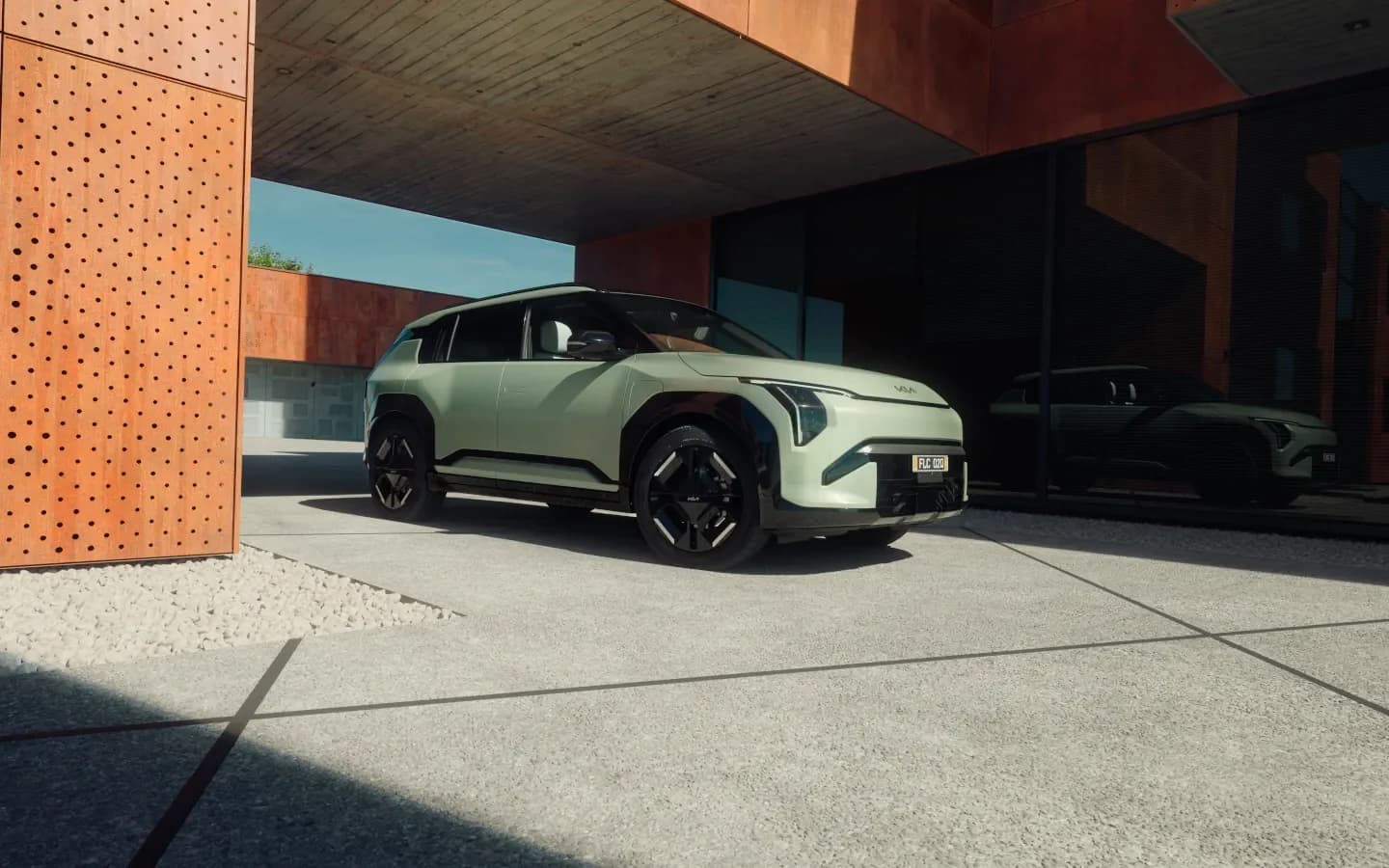
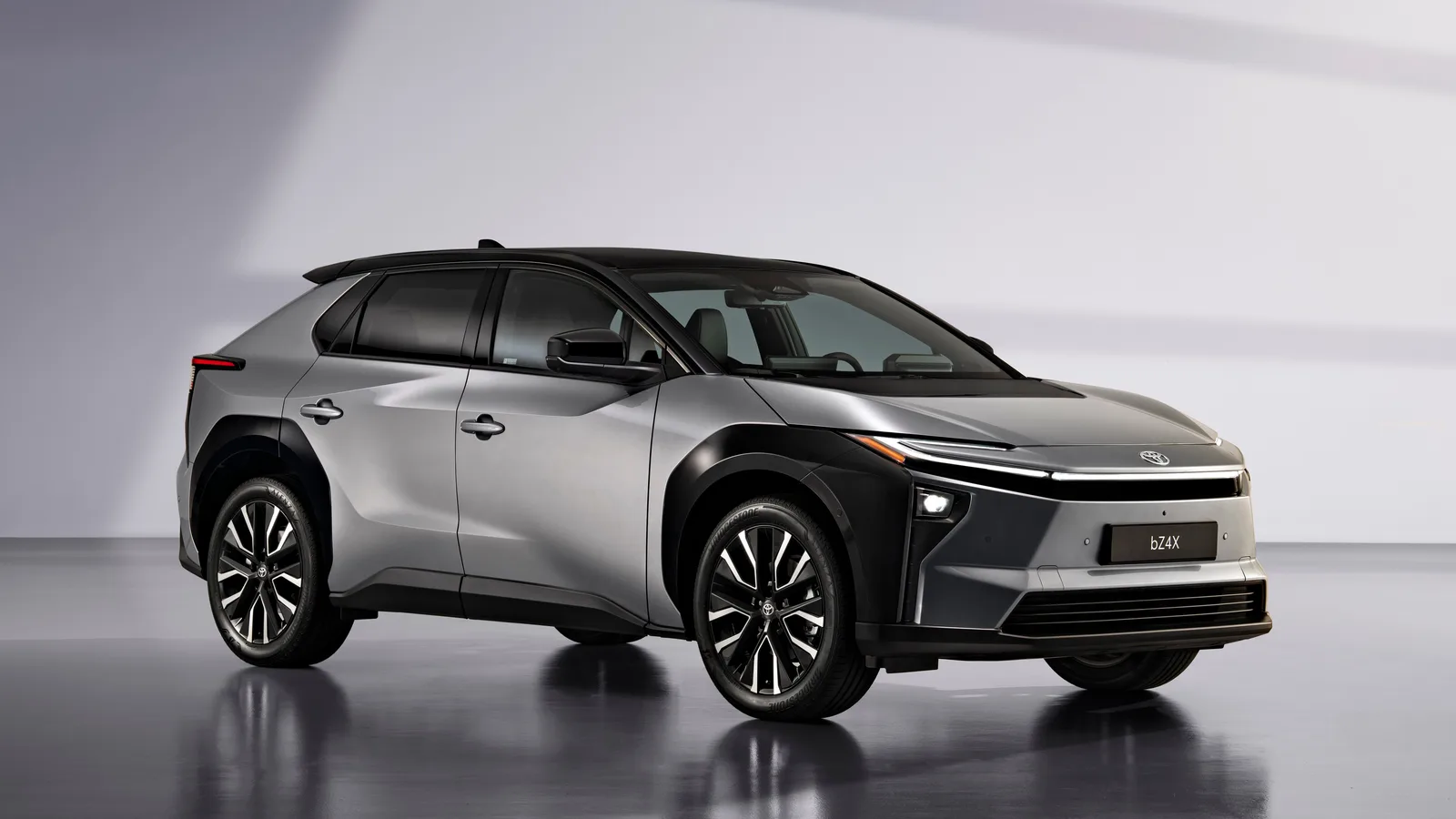
$53,315 vs $55,990. The Kia is cheaper and goes further on paper. The Toyota is a size bigger, better equipped and uses less energy. This is the badge question, and the answer is not the one most people expect.
Specifications and pricing correct at time of publishing. Prices are RRP before on-road costs unless stated otherwise. Always confirm with the manufacturer or dealer before purchasing.
Kia EV3 Air Long Range
From $53,315
Small Electric SUV
Single Motor (FWD)
150kW
604km WLTP
5★ ANCAP (2025)
460L
Toyota bZ4X 2WD
From $55,990
Mid-size Electric SUV
Single Motor (FWD)
167kW
591km WLTP
5★ ANCAP (2025)
452L
Price Breakdown
Kia lists the EV3 Air Long Range at $53,315 and Toyota lists the bZ4X 2WD at $55,990. Both are recommended retail before on-road costs, and both are quoted on the same basis, which is worth saying out loud because the two brands publish very differently. Toyota's own pricing note calls its figure a manufacturer's list price with statutory charges and on-road costs excluded. Kia's is an RRP before on-roads. Like for like, the gap is $2,675.
That is the whole reason this comparison keeps coming up. A Kia small SUV undercutting a Toyota mid-size SUV by nearly three grand, while claiming more range, looks like the badge tax made visible. Read down both price lists, though, and the picture gets more interesting.
Kia EV3 (single-speed, front-wheel drive)
| Variant | Battery | Price (RRP) | WLTP range |
|---|---|---|---|
| Air Standard Range | 58.3kWh | $47,600 | 436km |
| Air Long Range | 81.4kWh | $53,315 | 604km |
| Earth Long Range | 81.4kWh | $58,600 | 563km |
| GT-Line Long Range | 81.4kWh | $63,950 | 563km |
Toyota bZ4X (single-speed, 400V)
| Variant | Drive | Price (RRP) | WLTP range |
|---|---|---|---|
| bZ4X 2WD | FWD | $55,990 | 591km |
| bZ4X AWD | AWD | $67,990 | 517km |
| bZ4X Touring | AWD | $69,990 | 488km |
Two things jump out. The first is that the cheapest Long Range Kia is also the longest-legged one: the $53,315 Air Long Range claims 604km against 563km for the Earth and GT-Line above it, because it rides on 17-inch wheels instead of 19s. The second is that the bZ4X range now runs to three grades. The bZ4X Touring arrived in showrooms in May 2026 with 603 litres of boot, 280kW and a 4.4-second 0-100km/h time, at $69,990.
Campaign money matters here too, and it moves fast. Kia is running a choice of $1,000 cashback or a 1.88% p.a. comparison rate on in-stock new and demonstrator EV3s bought and delivered in September 2026, ending 30 September. Toyota's launch deposit bonuses on the bZ4X, $5,000 on the 2WD and $7,500 on the AWD, closed to finance applications on 30 June 2026, so do not put those in your sums. What Toyota does still offer through 2026 is a Toyota Go choice for private buyers of either a Chargefox voucher worth 12 months or 625kWh of public charging, whichever comes first, or a complimentary 7kW home charger with installation not included. A free home charger is worth roughly a thousand dollars of the gap on its own.
Paint is the other line item. Toyota charges $575 for optional paint on the 2WD. Kia marks six of the EV3's seven colours as premium in its own specification sheet without printing a price against them, so that one is a question for the dealer.
Safety Rundown
Both cars hold a current five-star ANCAP rating awarded in 2025, and both records are listed as current. The scores are not level.
| ANCAP (2025) | Kia EV3 | Toyota bZ4X |
|---|---|---|
| Adult occupant | 83% | 88% |
| Child occupant | 86% | 86% |
| Vulnerable road user | 78% | 80% |
| Safety assist | 81% | 82% |
The Toyota is ahead on adult occupant protection by five points and level or a point clear everywhere else. Both ratings cover all variants, and both run to December 2031. One thing to watch if you are shopping used or looking at an older build: the bZ4X has two ANCAP records, a 2022 rating and this 2025 one. The current rating applies to cars manufactured from October 2025 and on sale from December 2025, which is the upgraded bZ4X Toyota sells now. The EV3's rating covers cars built from December 2024 and on sale from March 2025.
On hardware, Toyota's specification table lists eight airbags on the bZ4X against seven on the EV3, though the Kia counts a front centre airbag among its seven, which is the bag that stops front occupants hitting each other in a side impact. Both cars arrive with the full modern suite as standard from the base grade: autonomous emergency braking that covers cars, pedestrians, cyclists and junction turns, blind spot collision avoidance, rear cross traffic avoidance, lane keeping, adaptive cruise, driver attention monitoring and safe exit warning.
One practical split. The bZ4X gets a Panoramic View Monitor as standard on both grades, and Intelligent Parking Assist on the AWD. Kia's MY27 EV3 feature list gives every grade a rear-view camera with front and rear parking sensors, and does not list a surround-view camera on any grade at all, including the $63,950 GT-Line. If you park in tight city spaces that is worth checking with the dealer, because on the published lists it favours the more expensive car.
Feature Showdown
Here is where the badge question gets answered, and it does not go the way the price list implies.
The $53,315 EV3 Air Long Range is a well-equipped small SUV by the standards of its own class. You get Kia's panoramic housing with a 12.3-inch driver display, a 5-inch climate strip and a 12.3-inch touchscreen, satellite navigation, over-the-air updates, Kia Connect, wired and wireless CarPlay and Android Auto, a wireless phone charger, dual-zone climate with rear vents, i-Pedal one-pedal driving, regen paddles and five drive modes. What it does not get is heated seats, a powered driver's seat, a powered tailgate or a heated wheel. The trim is cloth and the wheels are 17-inch alloys.
The $55,990 bZ4X 2WD, $2,675 dearer, arrives with heated front seats for both driver and passenger, eight-way power adjustment for both front seats, a power back door with a kick sensor, the surround-view camera, an auto-dimming mirror, two wireless phone chargers, a 14-inch multimedia screen with embedded navigation, nanoe X climate treatment, roof rails, privacy glass and 18-inch alloys. That is a longer list, on the more expensive car, but by a margin that makes the Toyota look like the value pick rather than the badge tax.
Line the Toyota up against the Kia that actually matches it on kit and the point sharpens. The EV3 grade with heated and ventilated seats, a heated wheel, a powered tailgate and synthetic leather is the Earth Long Range at $58,600, which is $2,610 more than the bZ4X, and it claims 563km instead of 604km because of the bigger wheels. So the honest framing is not "Kia undercuts Toyota". It is that the Kia range straddles the Toyota, with a cheaper, plainer, longer-range car below it and a plusher, shorter-range car above it.
Kia keeps two advantages that money cannot buy back on the Toyota. Vehicle-to-load is 3.6kW through an interior socket plus an exterior adaptor on every EV3, where the bZ4X's inverter is rated at 1,500W, so the Kia will run tools and appliances the Toyota cannot. And Kia ships over-the-air updates across the range, which matters more over seven years than it does in the showroom.
Drivetrain
Both are single front-motor, front-wheel-drive, single-speed cars, and they are closer than the badges suggest. Toyota rates the bZ4X 2WD's front motor at 167kW and 269Nm for 7.4 seconds to 100km/h. Kia rates the EV3 at 150kW and 283Nm, and quotes 7.7 seconds for the Air Long Range. Three tenths apart. Neither is quick and neither needs to be. Toyota caps the bZ4X at 160km/h and Kia caps the EV3 at 170km/h, which is academic here.
Range is the headline and the margin is thinner than the spec sheets first suggest. The EV3 Air Long Range claims 604km WLTP from 81.4kWh, the bZ4X 2WD claims 591km from 74.7kWh. Thirteen kilometres, or about two percent. What that really tells you is that the Toyota is the more efficient car: Toyota publishes 138Wh/km on the WLTP cycle against Kia's 149Wh/km, which is the bigger, taller, longer car using roughly seven percent less energy per kilometre. The Kia gets its range from carrying 6.7kWh more battery.
Charging is where the spec sheet lies to you, in the Toyota's favour and then against it. Toyota prints a maximum DC output of 150kW and Kia prints no peak figure at all for the EV3. Look at the times instead and it flips: Kia quotes approximately 31 minutes for 10 to 80 percent on a 350kW charger, or 79 minutes on a 50kW unit, while Toyota quotes approximately 45 minutes for the same window on a 150kW charger. The Kia moves more energy in less time despite the lower headline number, which is the single best argument on this page for reading down the column rather than across the brochure.
Home charging goes back to Toyota, decisively. The bZ4X takes 22kW on three-phase AC and fills from 10 to 100 percent in about three and a half hours. The EV3's on-board charger caps at 10.5kW on three phase and takes about seven and a quarter hours for the same job. On a single-phase 7kW supply, which is what most Australian houses have, that difference mostly disappears and both cars charge overnight without thinking about it. If you have three-phase, the Toyota is genuinely twice the car at the wallbox.
WLTP is a laboratory figure and neither car will see it on a 110km/h run to the coast. Our range estimator works from battery size and conditions rather than the brochure if you want a number you can plan around.
Space & Comfort
This is the strangest part of the comparison, and it is the reason the Toyota is harder to dismiss than its price suggests.
| Dimension | Kia EV3 Air LR | Toyota bZ4X 2WD | Difference |
|---|---|---|---|
| Length | 4,300mm | 4,690mm | 390mm |
| Width | 1,850mm | 1,860mm | 10mm |
| Height | 1,560mm | 1,650mm | 90mm |
| Wheelbase | 2,680mm | 2,850mm | 170mm |
| Boot, seats up | 460L | 452L | 8L to the Kia |
| Front boot | 25L | Not published | Not comparable |
| Kerb mass | 1,930kg | 1,905kg (max) | 25kg to the Toyota |
| Braked towing | 1,000kg | 750kg max | 250kg to the Kia |
The Toyota is 390mm longer, 90mm taller and rides on 170mm more wheelbase, and its boot is eight litres smaller. That is not a typo. Toyota prints 452 litres for both the 2WD and the AWD; Kia prints 460 litres for every EV3, plus a 25-litre frunk for cables that the bZ4X does not answer with a published figure of its own. Toyota clearly knows this is the weak spot, which is exactly why the new Touring grade exists: 140mm of extra length behind the rear axle and a more upright tailgate take it from 452 litres to 603.
Where the Toyota's size does show up is between the axles. A 170mm longer wheelbase is real rear legroom, and three across the back is a negotiation in the Kia and a non-event in the Toyota. Toyota also publishes a maximum kerb weight of 1,905kg against Kia's 1,930kg, so the bigger car is the lighter one, because it carries the smaller battery.
Towing goes the other way. The EV3 Long Range is rated to 1,000kg braked, the bZ4X 2WD to 750kg maximum. If you tow anything at all, the front-drive Toyota is the wrong car and you are looking at the $67,990 AWD, which is rated to 1,500kg braked.
One number not to compare directly: ground clearance. Kia publishes a minimum ground clearance of 140mm. Toyota publishes a running clearance of 212mm, which is a different measurement taken to a different reference point. The bZ4X does sit higher, but the gap is not the 72mm those two figures imply.
Around town the Kia is the easier thing to own. It turns in 10.4 metres, it is 390mm shorter into a bay, and at 4,300mm it clears a standard garage with room to walk around. Plenty of people buy the bigger SUV and then spend three years annoyed at it.
True Cost to Own
"Seven years versus five" is the line everybody quotes, and it is true, but it is doing a lot of work. Both brands publish conditions on their electric cars that differ from the headline, and the small print flips part of the result.
Kia. Seven years and unlimited kilometres on the vehicle for private use, which is the real thing and is transferable to the next owner. The electric bits are carved out separately. High-voltage components, meaning the on-board charger, the traction motor and the power control unit, are covered for seven years or 150,000km, whichever comes first, so not unlimited. The high-voltage battery is covered by a capacity warranty against dropping below 70 percent of original capacity, and the term depends on the build: seven years or 150,000km for pre-2027 model year cars, and eight years or 160,000km for model year 2027 and later. The specification sheet Kia publishes for the EV3 today is a Model Year 2027 document, so ask which model year the car in the yard actually is before you count on the longer term.
Toyota. Five years and unlimited kilometres as standard. Two more years on the engine and driveline only, taking that to seven, and only if you keep logbook servicing at a Toyota dealership. Roadside cover runs five years, extended to seven on the same condition. The traction battery is the interesting one: it is covered for five years as standard and extends a further year at a time, up to 10 years, with an annual traction battery health check at a Toyota dealer, which is how Toyota's own bZ4X announcement gets to a "10-year/unlimited km battery warranty". On top of that sits an eight-year or 160,000km warranty against battery capacity falling below 70 percent.
| Cover | Kia EV3 | Toyota bZ4X |
|---|---|---|
| Vehicle | 7yr / unlimited km | 5yr / unlimited km |
| Engine and driveline | Included above | 7yr, Toyota servicing required |
| High-voltage components (OBC, motor, PCU) | 7yr / 150,000km | 5yr / unlimited (driveline to 7yr with Toyota servicing) |
| Traction battery cover | Within the HV component term | 5yr, extendable to 10yr with annual health check |
| Battery capacity below 70% | MY27+: 8yr / 160,000km | 8yr / 160,000km |
| Roadside | 12mo, extendable to 8yr by servicing at Kia | 5yr, 7yr if serviced to the book |
Read that table and the "Kia wins on warranty" shortcut only half survives. On the body of the car it is a clean two-year Kia win with no strings. On the expensive part, the traction battery, Toyota will go to ten years where Kia stops at seven years or 150,000km, and the two brands promise exactly the same eight years and 160,000km against capacity loss for a current-model-year Kia. The catch is the same word on both sides: conditional. Toyota's extensions need Toyota-dealer servicing and an annual battery health check. Kia's capped-price program runs seven years and you can take the car to any authorised Kia dealer and get the same price, which is the friendlier arrangement if you live somewhere with one dealer and a long memory.
Servicing frequency favours Kia on the data we hold, with the EV3 on 24-month or 30,000km intervals against 12-month or 15,000km for the bZ4X. Neither brand publishes that interval in the specification documents we sourced for this comparison, so confirm it against the service book before you build a budget on it. Running costs are easier to be sure of, because both consumption figures come straight from the manufacturers: at 15,000km a year and 32 cents a kilowatt-hour, the Toyota's 138Wh/km works out at roughly $662 of electricity a year against about $715 for the Kia's 149Wh/km. That is our arithmetic on their numbers, and it is about a dollar a week.
Resale is the number nobody can hand you up front, and on a pair of electric SUVs it will move the total cost of ownership further than anything above. Our depreciation calculator is the quickest way to see what different retained-value assumptions do to each one.
CarSorted Data Insight
Pull both ranges out of our database and the shape of the decision is clearer than any single pairing. Kia sells the EV3 in one power level with four equipment levels, from $47,600 to $63,950. Toyota sells the bZ4X in three grades, from $55,990 to $69,990, and each step up adds drive and power rather than trim. The Kia range therefore contains the Toyota rather than sitting under it: the Air Long Range is $2,675 below the bZ4X 2WD and the Earth Long Range is $2,610 above it.
The other thing the data says, which no headline does, is that the more expensive car is the more efficient one. Toyota publishes 138Wh/km for a 4,690mm SUV; Kia publishes 149Wh/km for a 4,300mm one. The Kia still travels further because it carries 6.7kWh more battery, but on a like-for-like kilowatt-hour the Toyota is the better engineered car, and that shows up every month on the power bill rather than once on the windscreen.
The Verdict
Buy the Kia EV3 Air Long Range if: you want the most range for the least money, you value seven unconditional years of vehicle warranty, you stop at public fast chargers often enough that fourteen minutes a stop matters, you want 3.6kW of vehicle-to-load, or you need to tow up to a tonne. It is also the easier car to park and live with in a city.
Buy the Toyota bZ4X 2WD if: you need the rear seat space that 170mm of extra wheelbase buys, you have three-phase power at home and want a four-hour fill rather than a seven-hour one, you want heated power seats, a powered tailgate and a surround-view camera at the entry grade, or you want the traction battery covered for a decade and you are going to service it at Toyota anyway.
The badge question, then. It does not cost you here. Toyota is asking $2,675 more than the cheapest Long Range Kia and handing over a bigger, better equipped, more efficient car for it. What the badge does cost you is flexibility: Toyota's best warranty terms only exist if you keep the car in the Toyota network, and the headline five years is five years until you do. Kia's seven years asks nothing of you at all. Work out which of those two you actually care about, then argue about the boot.
Compare both on CarSorted. See also: Model Y vs EV3 | EV3 vs EX30 | EV3 vs Atto 3. More from Kia and Toyota.
The Verdict
The Kia takes it, but not for the reason the price tag suggests. The EV3 Air Long Range is $2,675 cheaper than the bZ4X 2WD, goes 13km further on the WLTP cycle, carries two more years of vehicle warranty and stops for less time at a fast charger. That is a clean win on the numbers most people shop on. What makes this genuinely close is everything underneath: the Toyota is a whole size class bigger, uses less energy per kilometre doing it, charges more than twice as fast on a three-phase home supply, and at $55,990 it arrives with heated power seats and a powered tailgate the $53,315 Kia lists as unavailable, and a surround-view camera Kia's sheet does not list on any EV3. The Kia grade that actually matches the Toyota on equipment is the Earth at $58,600, which is $2,610 more than the Toyota. So the badge premium people expect to find here runs the other way. Buy the Kia for the warranty, the charging stop and the smaller footprint. Buy the Toyota if you want the bigger car, the three-phase charging and the dealer network, and you are happy to service it where Toyota tells you to.
Prices on this page move. Want the next verdict?
One short email when prices shift or a new comparison lands. No spam, unsubscribe anytime.
Disclaimer: All information in this comparison was believed to be correct at the time of publishing (20 September 2026). Prices are manufacturer recommended retail prices (RRP) and may vary by state, dealer, and options. Driveaway costs include estimated on-road costs for Victoria. Fuel economy figures are WLTP/ADR combined cycle. Specifications can change without notice. Always verify with the manufacturer before making a purchase decision. CarSorted does not accept payment for recommendations.
Published by CarSorted Editorial Team · 20 September 2026
Comments (0)
Sign in to join the conversation
No comments yet. Be the first!