Key Takeaways
- Base Elexio from $58,990 before on-roads, $57,990 driveaway June 1 to 30, 2026
- Elite stays at $61,990 before on-roads, currently $59,990 driveaway at participating dealers
- 562km WLTP on the base car (Elite does 546km), same 88.1kWh LFP battery
- 160kW / 310Nm single front motor, 150kW peak DC, 10 to 80% in about 38 minutes
- 5-star ANCAP under 2023 to 2025 protocol, 92% Adult Occupant Protection
- Built in China by Beijing Hyundai, locally tuned, 7-year warranty, base car lands in showrooms this month
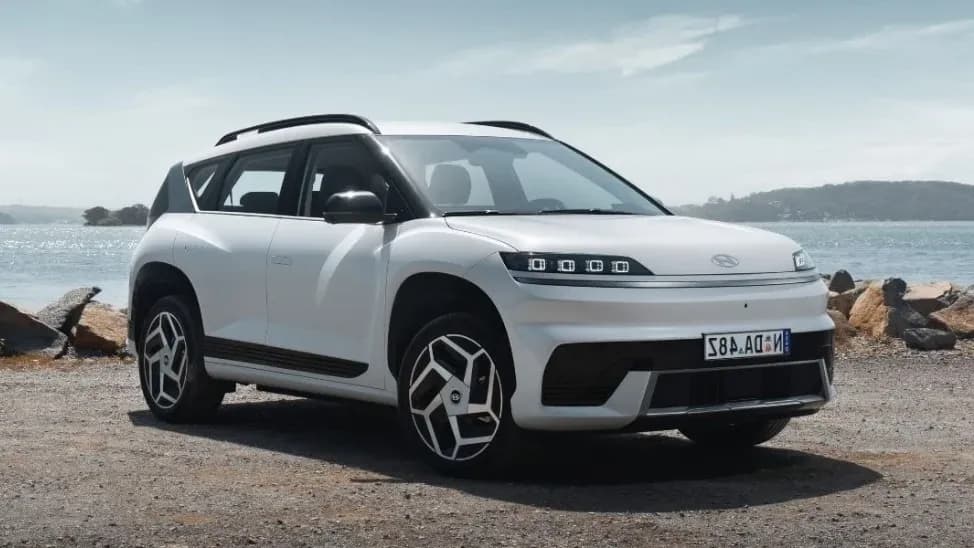
Image credit: Hyundai Australia
Hyundai has finally slotted the cheaper Elexio under the launch grade. The new base car opens at $58,990 before on-roads, $3,000 below the Elexio Elite, and lands in Hyundai showrooms across this month. Until 30 June a participating-dealer driveaway price of $57,990 sits on the base car for retail buyers, and the Elite holds a $59,990 driveaway launch carry-over on top of its $61,990 list. That is the real story for anyone cross-shopping a Tesla Model Y, a Kia EV5 Air or an XPeng G6 Long Range this month.
Two trims, one drivetrain, one battery, one set of charging numbers. The whole Elexio range now runs the same 88.1kWh LFP pack and the same 160kW front-drive motor. The base car keeps the dashboard hardware, keeps the 5-star ANCAP rating and actually pulls a few extra kilometres of WLTP range out of smaller wheels. The Elite is mostly about the trim experience.
Pricing
Hyundai Australia is running a two-grade lineup. The list pricing is before on-road costs, while the driveaway numbers in the right column are the current participating-dealer deals as of June 2026.
| Variant | Before on-roads | June 2026 driveaway |
|---|---|---|
| Elexio 160kW 88.1kWh FWD (base) | $58,990 | $57,990 |
| Elexio Elite 160kW 88.1kWh FWD | $61,990 | $59,990 |
For context, the base price of $58,990 lands the Elexio almost dead level with the Tesla Model Y RWD at $58,900 before on-roads, undercuts the Kia EV5 Air Long Range at $61,170 by about two grand, and sits a few hundred dollars under the XPeng G6 Long Range at $59,800. None of those rivals throw in 562km of WLTP range as standard at the price.
Same Battery, Same Motor, Smaller Wheels
Hyundai has resisted the temptation to gimp the cheaper Elexio with a different battery or motor. Both variants share the front-mounted 160kW/310Nm electric motor and the 88.1kWh LFP battery pack. Drive goes to the front wheels only, there is no AWD option in Australia (yet).
| Spec | Elexio (base) | Elexio Elite |
|---|---|---|
| Electric motor | 160kW / 310Nm | 160kW / 310Nm |
| Battery | 88.1kWh LFP | 88.1kWh LFP |
| Drive | FWD | FWD |
| WLTP range | 562 km | 546 km |
| Max DC charge | ~150 kW | ~150 kW |
| 10 to 80% DC | ~38 min | ~38 min |
| Max AC charge | 10 kW | 10 kW |
| Architecture | 400V (Hyundai E-GMP variant) | |
| Length | 4,615 mm | |
| Width | 1,875 mm | |
| Height | 1,673 mm | |
| Wheelbase | 2,750 mm | |
| Boot (seats up) | 506 L | |
| Boot (seats folded) | 1,540 L | |
| Wheels | 18-inch alloy | 20-inch alloy |
| Seat trim | Cloth | Leather appointed |
The 562km WLTP claim on the base car is the headline number. It is the longest mainstream WLTP range you can get under $60,000 in Australia in a brand-new electric SUV right now. The maths comes down to smaller, lighter 18-inch wheels with less drag, plus a marginally lighter trim package. Same battery, slightly less aero and rolling resistance, slightly more range.
Wheelbase is 2,750mm, which is short of the Model Y but on the money for the segment. Cabin packaging is good. Boot space is a useful 506 litres with the rear seats up and 1,540 litres folded, with a 60:40 split and a flat-ish load floor. There is no frunk because the Elexio uses a unique E-GMP variant rather than the 800-volt platform under the Ioniq 5, but Hyundai has dropped a small underfloor compartment under the boot for cables.
Inside: The Display Does the Heavy Lifting
The Elexio is the first Hyundai sold in Australia to use the brand's new Connect-C infotainment, displayed on a 27-inch ultra-thin 4K panoramic panel that spans the dash. The base car keeps that screen and most of its menu hardware, so you do not lose the visual signature of the car by saving three grand. Wireless Apple CarPlay and Android Auto are standard, as is over-the-air software updating.
Where the Elite earns its premium is mostly in the trim experience. The base car runs cloth on the seats, has a slightly simpler convenience pack and rides on 18-inch alloys. The Elite swaps to leather-appointed seats, gets the 20-inch wheels, and adds the panoramic sunroof and a few comfort items. Both have a flat floor, a sliding centre console with a deep storage bin underneath, and the same digital instrument display.
Hyundai Australia has done its own steering and damper tune on the local cars. It is the same approach the team used on the most recent Tucson and the i30 Sedan N Line, where the local product team makes the chassis feel less floaty than the global default. Worth keeping in mind if you have driven an Elexio elsewhere and felt the ride was soft.
Charging and Real-World Range
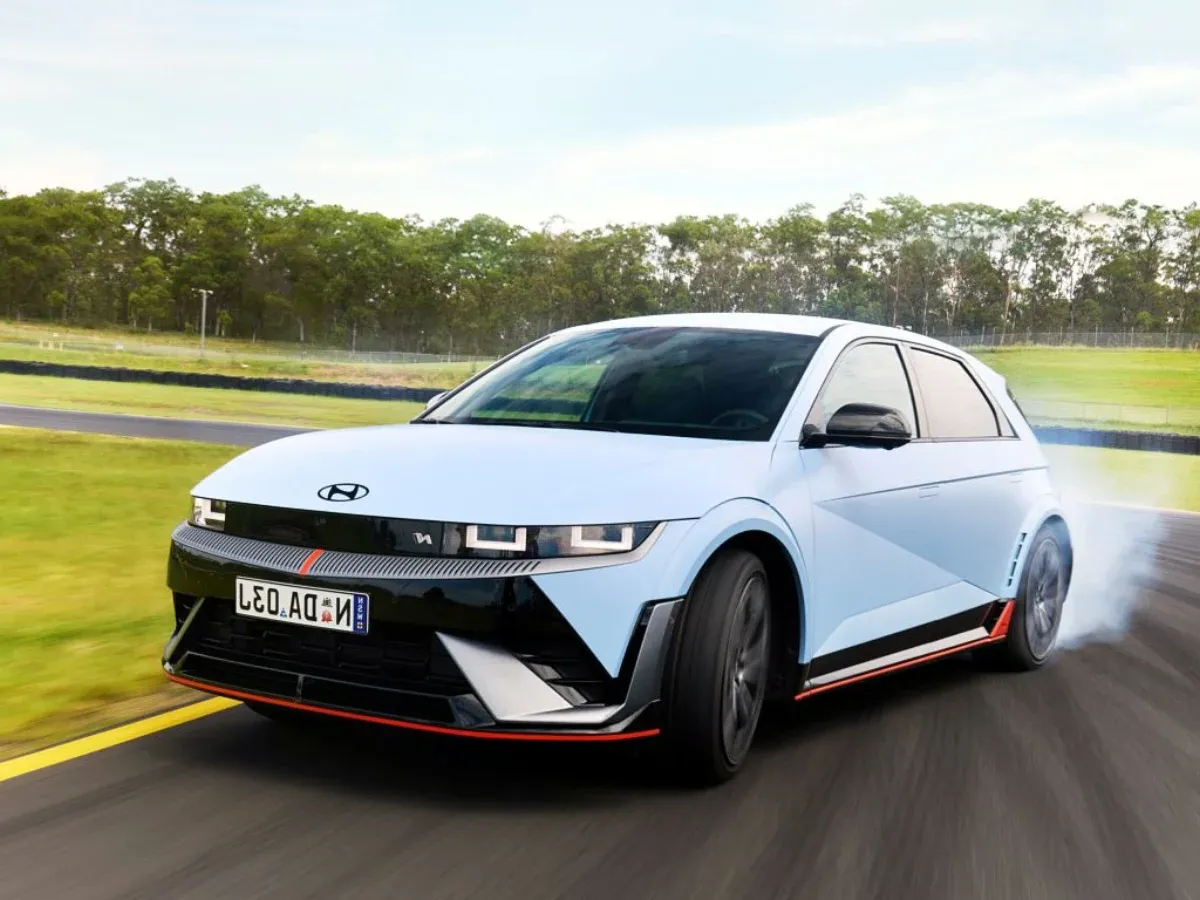
Image credit: Hyundai Australia (Ioniq 5 shown for charging cross-shop)
The Elexio runs a 400-volt variant of Hyundai's E-GMP platform, not the 800-volt architecture under the Ioniq 5. Peak DC charging tops out around 150kW, with a 10 to 80% top-up in roughly 38 minutes on a fast enough charger. That is acceptable, not class-leading. On AC it accepts up to 10kW, so a 7kW home wallbox will fill the pack overnight (a 0 to 100% home charge takes about 13 hours on a standard 7kW unit).
For perspective, an 800-volt Ioniq 5 can shove past 230kW peak and 10 to 80% in about 18 minutes if you find the right charger. The Elexio is closer to the Kia EV5 and XPeng G6 on charging, not the Ioniq 5. That fits Hyundai's positioning. The Elexio is built to share a price tier with sub-$65k Chinese EVs, not eat its own showroom mate from above.
Real-world range on the base car, based on the WLTP figure and a sensible 10 to 15% real-world haircut for highway driving, should land in the 470 to 500km zone for typical Australian commuter conditions. That is enough for a Sydney to Canberra return without a midway charge, or a Melbourne to Bendigo run on a single overnight charge at home.
Safety: 5-Star ANCAP Under the New Protocol
The Elexio carries a 5-star ANCAP rating under the latest 2023 to 2025 protocol, which is the tougher one currently in use. ANCAP scored it 92% for Adult Occupant Protection, 87% for Child Occupant Protection, 83% for Vulnerable Road Users and 85% for Safety Assist. The rating applies to all Australian-delivered Elexio cars built from October 2025, which covers every car going to customers this year.
| ANCAP sub-score | Elexio |
|---|---|
| Adult Occupant Protection | 92% |
| Child Occupant Protection | 87% |
| Vulnerable Road User Protection | 83% |
| Safety Assist | 85% |
| Protocol year | 2023 to 2025 |
Standard safety equipment across both Elexio variants includes Forward Collision-Avoidance Assist 2.0 with vehicle, pedestrian, cyclist and two-wheeler detection, Lane Keeping Assist, Lane Following Assist, Blind-Spot Collision-Avoidance Assist with braking support, Rear Cross-Traffic Collision-Avoidance Assist, adaptive cruise control with stop-and-go, intelligent speed limit assist, a driver attention warning system and a full airbag set.
How It Compares
The Elexio is parked in the middle of a brutal price bracket. Here is how it lines up against the obvious cross-shop on CarSorted, with everything quoted before on-road costs unless noted.
| Car | Price | WLTP | Drive |
|---|---|---|---|
| Hyundai Elexio (base) | $58,990 | 562 km | FWD |
| Tesla Model Y RWD | $58,900 | 466 km | RWD |
| Kia EV5 Air LR | $61,170 | 555 km | FWD |
| XPeng G6 Long Range | $59,800 | 570 km | RWD |
| Geely EX5 Inspire (MY26) | $45,990 | 475 km | FWD |
| Hyundai Ioniq 5 RWD | $68,200 | 507 km | RWD |
The base Elexio is the WLTP range leader in this bracket and the Model Y matcher on list price. The XPeng G6 Long Range claims slightly more WLTP for slightly more money, the Geely is a smaller and cheaper alternative aimed at a different buyer, and the Ioniq 5 sits a tier above on charging speed and platform but costs nine grand more. The CarSorted view: if you wanted a Tucson-sized Hyundai EV under $60k and were willing to wait, the base Elexio is the new default. Buyers who care about brand confidence over outright spec will steer toward the Korean badge over the XPeng or Geely. If you live near a 350kW HPC site and use it often, the Ioniq 5 still earns its premium thanks to the 800-volt platform and 10 to 80% in under 20 minutes.
For a deeper head-to-head against the same-platform Kia, see our Hyundai Elexio vs Kia EV5 comparison. Tesla cross-shop sits in the Elexio vs Model Y comparison.
Warranty and Aftercare
Hyundai backs the Elexio with a 7-year, unlimited-kilometre vehicle warranty when servicing is completed through the Hyundai dealer network, plus an 8-year, 160,000km high-voltage battery warranty. Service intervals are 24 months or 30,000km, whichever comes first, which is longer than most rivals at this price.
Worth noting: the Elexio is the first Hyundai EV in Australia built in China. The recent ICCU warranty extension to 15 years on the Ioniq 5, Ioniq 6 and EV6 does not flow to the Elexio because it sits on a different E-GMP variant with different onboard charger hardware. The base car comes with standard Hyundai roadside assist for up to 10 years when serviced within the dealer network.
The CarSorted Angle
Here is the maths that matters. On CarSorted's in-DB pricing right now, the base Elexio at $58,990 is $2,180 cheaper than the closest direct-rival Kia EV5 Air Long Range at $61,170, $90 dearer than a Tesla Model Y RWD at $58,900, $810 cheaper than the XPeng G6 Long Range at $59,800 and $9,210 below an entry Hyundai Ioniq 5 RWD at $68,200. The Elexio is the only car under $60k on that list with both a Korean parent badge and a confirmed 5-star ANCAP rating under the current protocol.
On running costs, the base Elexio's 562km WLTP and roughly 17.3kWh/100km energy use translates to about $4.50 of electricity per 100km on the national average tariff, and closer to $1.50 per 100km if you charge off rooftop solar during the day. Compare that to a petrol-equivalent mid-size SUV burning $14 to $16 of fuel per 100km and the Elexio claws back its $5k to $10k premium over a petrol Tucson within about 70,000km of metro driving. Add an FBT-exempt novated lease (the Elexio is comfortably under the $91,387 fuel-efficient LCT threshold), and a $58,990 list translates to a pre-tax salary impact closer to $36,000 to $42,000 over a five-year term for most middle-bracket earners.
If you want to see how the Elexio stacks up against everything else in the same money zone, run it through our Elexio vs XPeng G6 comparison or browse the full electric SUV directory under $65k.
What This Means for Buyers
If you have been holding off on a mid-size EV waiting for a Korean-badged option under $60k with a real ANCAP rating and a usable WLTP range, the base Elexio is the answer. Until 30 June 2026 the $57,990 driveaway means roughly $1,000 to $1,300 saved against the comparable on-roads figure on a list-price purchase, depending on your state. After 30 June the base car still sits at $58,990 plus on-roads, which is competitive but no longer a sharpened-pencil deal.
Three buyer profiles where the base Elexio is the easiest pick. One: families cross-shopping a Toyota Camry Hybrid or a petrol Tucson who want a serious leap on running costs without the EV price premium. Two: city commuters who want the longest single-charge range available under $60k in a Tucson-sized body. Three: novated-lease buyers chasing the FBT exemption and a sub-$91k purchase price, where the Elexio sits comfortably inside the cap with margin for accessories.
Reasons to spend up to the Elite instead. The 20-inch wheels look the part on the road, the leather upholstery feels appropriate at the $61,990 mark, and the panoramic sunroof is a nice-to-have for families. You also pay for that with 16km less WLTP range and slightly more rolling noise on coarse-chip country roads. Both cars have the same hardware where it matters.
Reasons to walk past the Elexio. If you regularly drive interstate and use 350kW high-power charging, the 400-volt architecture caps your top-up speed below what an Ioniq 5 or Kia EV6 can pull. If you need AWD, the Elexio does not offer one in Australia yet. And if you have a budget that stretches to a Tesla Model Y Long Range, the Tesla brings a bigger Supercharger network and a stronger second-hand market.
Best Electric SUVs 2026 | Elexio vs Model Y | Elexio vs Kia EV5 | Elexio vs XPeng G6
Disclaimer: Pricing and specifications sourced from Hyundai Australia and the ANCAP safety report for the Hyundai Elexio. Pricing is before on-road costs unless stated as driveaway. Driveaway offers apply at participating Hyundai dealers to private retail buyers on new stock vehicles ordered and delivered within the stated period, exclude fleet, government and rental buyers, and may not be combined with other offers. WLTP range, energy use and charging times are manufacturer claims and will vary in real-world driving.
Compare these picks side by side
Stack 6 of them on 200+ specs, price, safety and running cost in one view.
Compare all 6 nowFrequently Asked Questions
How much is the base 2026 Hyundai Elexio in Australia?
What is the WLTP range of the base Elexio?
What is the difference between the base Elexio and the Elite?
Where is the Hyundai Elexio built?
Does the Hyundai Elexio have an ANCAP rating?
What warranty does the Elexio get?
New cars, real prices, straight to your inbox
Join the CarSorted mailing list for new-model launches, price drops and drive-away deals, honest reviews, and founding-member pricing on the upcoming CarSorted Pro Report.
- New-model launches
- Price drops & deals
- Honest reviews
No spam, unsubscribe anytime. By subscribing you agree to receive marketing emails.
Disclaimer: All information in this article was believed to be correct at the time of publishing (13 June 2026). Prices are manufacturer recommended retail prices (RRP) and may vary by state, dealer, and options. Specifications, government incentives, and rebates can change without notice. Always verify details with the manufacturer or relevant authority before making a purchase decision. Running cost estimates are based on average Australian driving conditions at 15,000 km/year. CarSorted does not accept payment for recommendations or rankings.
Written by Uzzi, CarSorted Editorial Team · 13 June 2026 · how we research
Comments (0)
Sign in to join the conversation
No comments yet. Be the first!