Mitsubishi Pajero, Price, Specs & Review
Compare every Mitsubishi Pajero variant sold new in Australia. 4 variants. Side-by-side specs, ANCAP safety, fuel economy, towing capacity, warranty and running costs, pricing sourced from the Mitsubishi Australian website and updated weekly. This page also covers 56 previous-generation variants (sold new until 2021), kept for used-buyer research. Their prices are shown only where we hold Mitsubishi's own printed price, as the price when new, never a current offer.
Data checked: specs 3 Oct 2026
Every Mitsubishi Pajero variant in Australia, compared
The Mitsubishi Pajero is an SUV with seven seats and four-wheel drive. The four grades we hold are TBA, GLS 7, Exceed and GSR. All of them are diesel.
4 variants of the Mitsubishi Pajero are on sale in Australia. Tap to compare them side-by-side, then tap any variant for its full specs.
Compare all 4Hide
4 variants of the Mitsubishi Pajero are on sale in Australia. Tap to compare them side-by-side, then tap any variant for its full specs.
TBA2026Price coming soonNo dataNo data4WD7
Mitsubishi Pajero TBA
- Torque
- 480Nm
- Gearbox
- 8-speed automatic
- Drive
- 4WD
- Seats
- 7
The new Mitsubishi Pajero is a full-size, body-on-frame 4WD SUV built on the same ladder-frame platform as the current Triton ute, reviving the famous Pajero name that left Australia back in 2022. It is widely expected to launch with the Triton's 2.4-litre bi-turbo diesel paired with Super Select II four-wheel drive, with hybrid or plug-in options understood to be in development for tighter 2027 emissions rules. Mitsubishi is positioning it as a flagship above the Pajero Sport, sized to take on the Toyota Prado and Ford Everest. Treat all figures as provisional until Mitsubishi publishes official Australian specs closer to launch.
Configure the TBAGLS 72027Price coming soon150kW / 480Nm7.1L/100km4WD7
Mitsubishi Pajero GLS 7
- Power
- 150kW
- Torque
- 480Nm
- Fuel use
- 7.1L/100km
- Gearbox
- 8-speed automatic
- Drive
- 4WD
- Seats
- 7
- Towing
- 3,500kg
The Pajero GLS 7 is the seven-seat version of the entry grade of the all-new (NU) Mitsubishi Pajero, which Mitsubishi Australia says arrives in December 2026. It uses a 150 kW / 480 Nm 2.4-litre turbo-diesel with an 8-speed automatic and Super Select 4WD-II with low range and a rear diff lock, and is rated to tow 3,500 kg braked. Mitsubishi quotes 7.1 L/100km (ADR 81/02) and a 2432 kg kerb mass. Pricing has not been announced.
Configure the GLS 7Exceed2027Price coming soon150kW / 480Nm7.2L/100km4WD7
Mitsubishi Pajero Exceed
- Power
- 150kW
- Torque
- 480Nm
- Fuel use
- 7.2L/100km
- Gearbox
- 8-speed automatic
- Drive
- 4WD
- Seats
- 7
- Towing
- 3,500kg
The Pajero Exceed is the mid-range, seven-seat leather grade of the all-new (NU) Mitsubishi Pajero, which Mitsubishi Australia says arrives in December 2026. It uses a 150 kW / 480 Nm 2.4-litre turbo-diesel with an 8-speed automatic and Super Select 4WD-II with low range and a rear diff lock, and is rated to tow 3,500 kg braked. Mitsubishi quotes 7.2 L/100km (ADR 81/02) and a 2481 kg kerb mass, with leather seats, heated front and second-row seats and a 12-speaker Yamaha system. Pricing has not been announced.
Configure the ExceedGSR2027Price coming soon150kW / 480Nm7.2L/100km4WD7
Mitsubishi Pajero GSR
- Power
- 150kW
- Torque
- 480Nm
- Fuel use
- 7.2L/100km
- Gearbox
- 8-speed automatic
- Drive
- 4WD
- Seats
- 7
- Towing
- 3,500kg
The Pajero GSR is the flagship grade of the all-new (NU) Mitsubishi Pajero, which Mitsubishi Australia says arrives in December 2026. It uses a 150 kW / 480 Nm 2.4-litre turbo-diesel with an 8-speed automatic and Super Select 4WD-II with low range and a rear diff lock, and is rated to tow 3,500 kg braked. Mitsubishi quotes 7.2 L/100km (ADR 81/02) and a 2513 kg kerb mass, and the GSR adds a panoramic roof, ventilated and memory front seats, adaptive driving beam and a digital rear-view mirror. Pricing has not been announced.
Configure the GSR- No price on record for 4 of the 4 diesel grades: we show nothing rather than an estimate.
Mitsubishi Pajero: size and capacity
Size, capacity, weights and towing across the grades
Size, capacity, weights and towing across the grades
| Figure | Across the grades | Grades holding it |
|---|---|---|
| Size | ||
| Length | 4,920 mm | 4 of 4 |
| Width | 1,925 mm | 4 of 4 |
| Height | 1,910 mm | 4 of 4 |
| Wheelbase | 2,870 mm | 4 of 4 |
| Ground clearance | 228 to 230 mm | 4 of 4 |
| Turning circle | 11.6 m | 3 of 4 |
| What it carries | ||
| Boot space, seats up | 131 L | 3 of 4 |
| Fuel tank | 80 L | 3 of 4 |
| Kerb weight | 2,432 to 2,513 kg | 3 of 4 |
| Payload | 702 to 783 kg | 3 of 4 |
| Gross vehicle mass (GVM) | 3,215 kg | 3 of 4 |
| Roof load | 100 kg | 3 of 4 |
| Towing | ||
| Braked towing capacity | 3,500 kg | 3 of 4 |
| Unbraked towing capacity | 750 kg | 3 of 4 |
| Tow ball download | 350 kg | 3 of 4 |
| Gross combination mass (GCM) | 6,340 kg | 3 of 4 |
How we read these figures, and the 5 figures Mitsubishi does not print(show)
Nothing in this table is ranked. A figure the manufacturer prints on a different basis (a maximum kerb weight, a width including the mirrors, a length with a tow bar fitted) carries that basis beside it, because it is a different measurement and not a bigger number.
Not yet read off a Mitsubishi document for any grade on this page: boot space, rear seats down, tare mass, tray length, tray width, wading depth. Those read “No data” rather than a guessed figure.
Mitsubishi Pajero: ownership and safety
Mitsubishi Pajero: cover, rating and recalls
Warranty and servicing
- New-car warranty
- 10yr / 200,000 km · GLS 7, Exceed and GSR
- No data · TBA
- Up to 10yr / 200,000 km if every scheduled service is done in the Mitsubishi dealer network
- Service interval
- 12 months / 15,000 km · GLS 7, Exceed and GSR
- No data · TBA
- Capped-price servicing
- Published for 3 of 4 grades. No data for 1.
ANCAP, by exact grade
- No data
How a rating is read(show)
A rating belongs to the exact variant ANCAP tested and is never carried across to a grade or a build year it does not cover. A rating older than six years is marked expired because ANCAP’s own test has moved on.
Safety recalls
None of the recall notices we have verified is matched to the grades listed here. That is a statement about our register, not a clearance: check a specific car by VIN on the government’s Product Safety Australia recalls register before you buy.
6 more verified notices are matched to other Mitsubishi Pajero rows we hold, not to the grades above(show)
- The product was sold without the warning information that is required for products containing button/coin batteries. Year range on the notice: 2020 - 2022. REC-005634 on the government register
- Due to inadequate welding strength, the front right side suspension lower control arm may fail at one of the weld joints. Year range on the notice: 2016 - 2019. REC-001050 on the government register
- The turn signal and lighting switch connector terminals may become worn during switch operation due to insufficient rigidity. REC-001032 on the government register
- Due to inappropriate structure of the engine timing chain tensioner; abnormal noise may be generated by the lack of the tension control on the timing chain. Year range on the notice: 2006 - 2014. REC-001025 on the government register
- Due to inappropriate structure of the base for the lighting switch platform, a crack may develop in the soldering in the printed circuit board between the base and the platform caused by the repeated heating cycle of expansion and contraction. REC-001020 on the government register
- Due to inappropriate structure of the base for the lighting switch platform, a crack may develop in the soldering in the printed circuit board between the base and the platform caused by the repeated heating cycle of expansion and contraction. REC-001019 on the government register
Related reading
News and buying guides that cover the Mitsubishi Pajero.
News and guides about this car
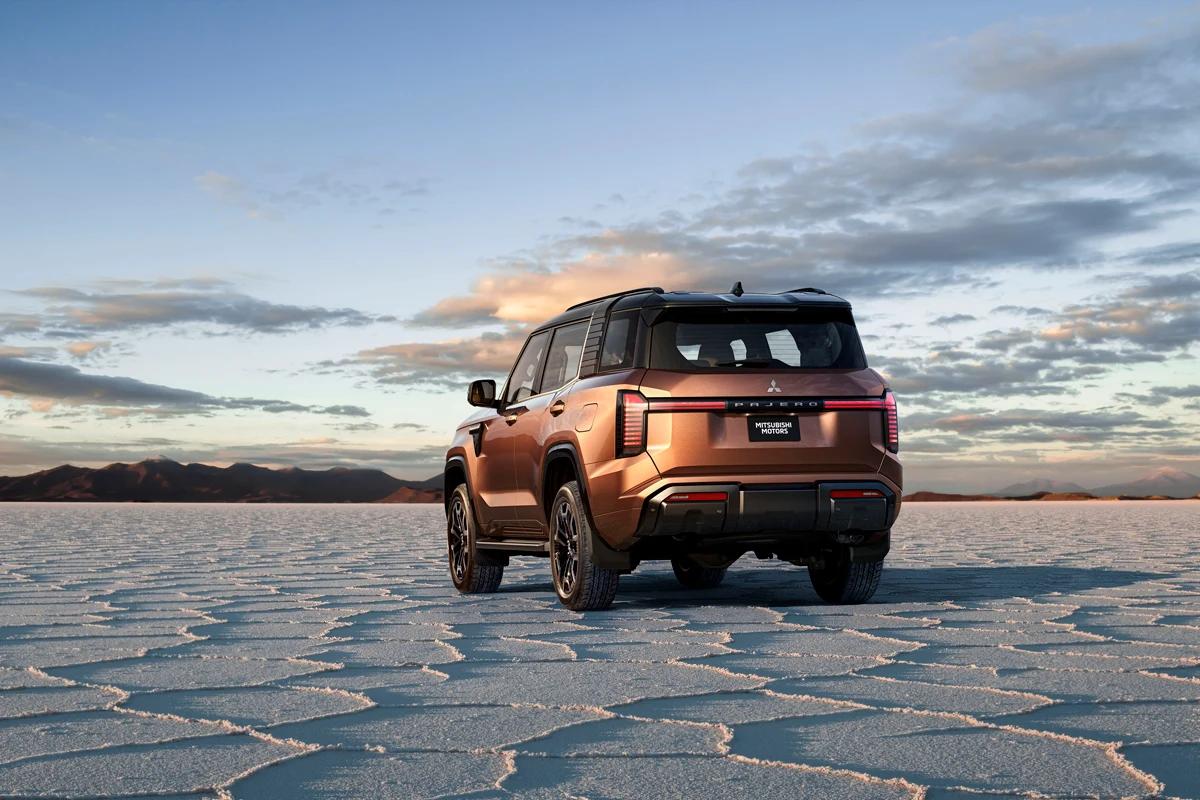
New Mitsubishi Pajero vs Toyota Prado vs Ford Everest vs Isuzu MU-X: How It Stacks Up on Paper
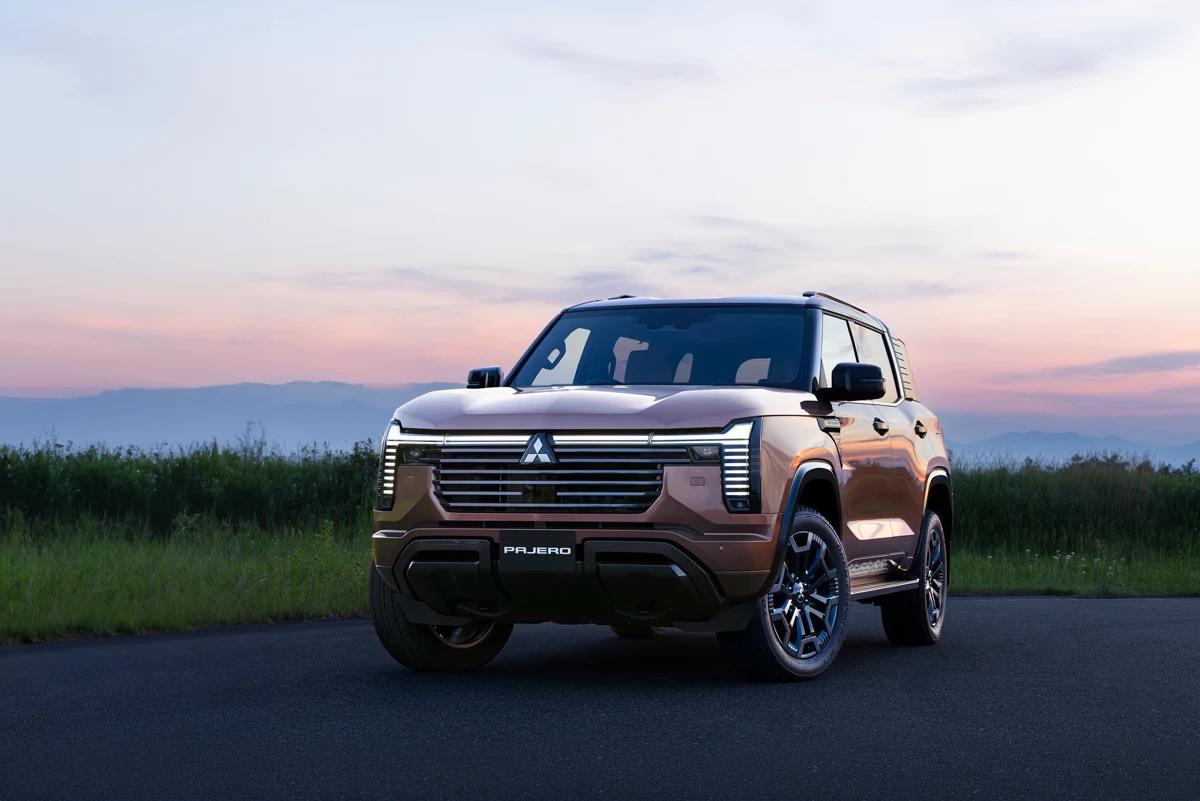
New Cars Still Coming to Australia in 2026, and the Ones That Have Slipped to 2027