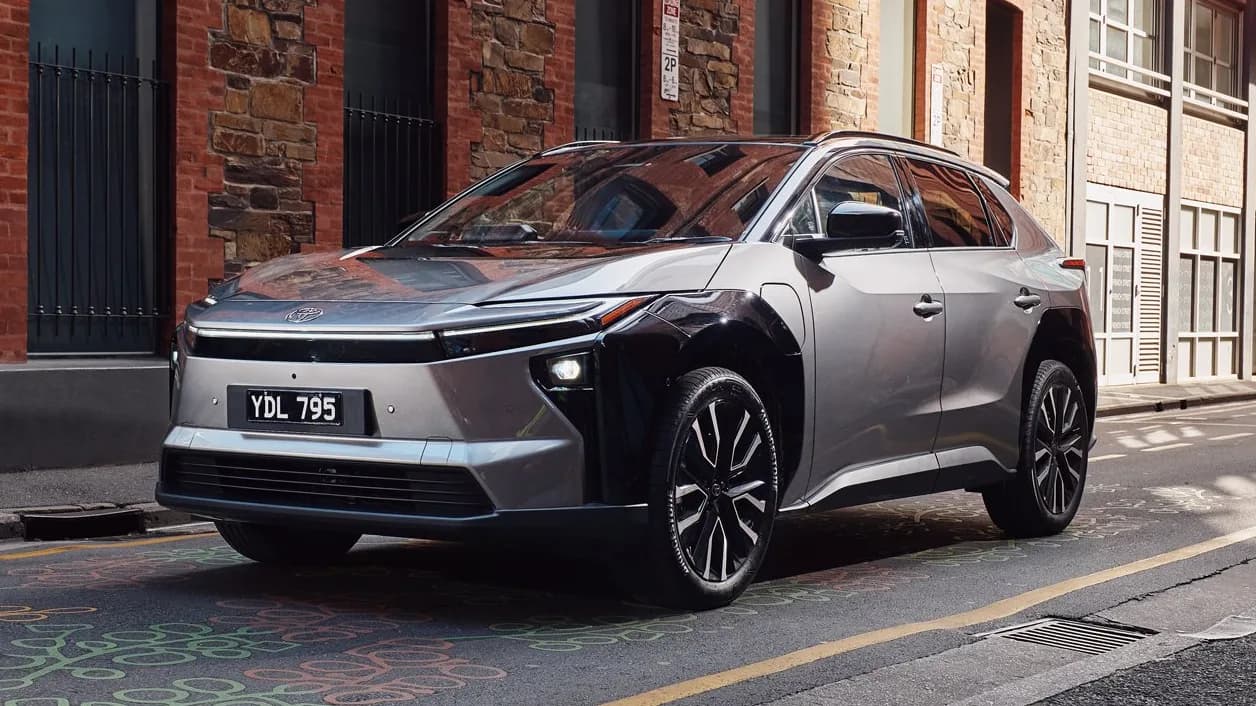
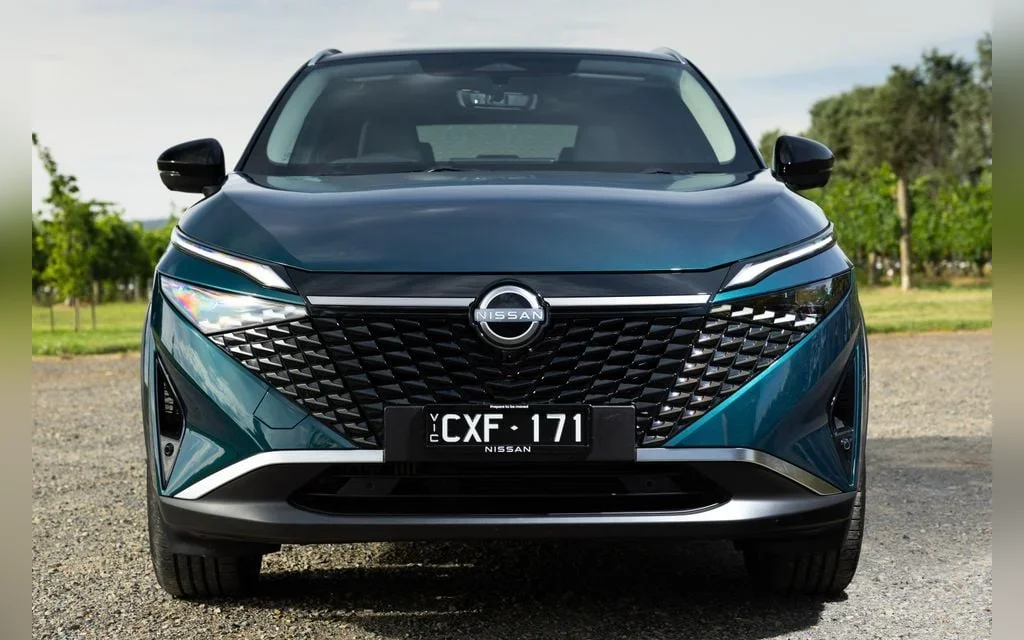
Nissan ARIYA vs Toyota Yaris Cross
A detailed look at how two of Australia's most popular SUVs compare on price, running costs, safety, and everyday livability.
Toyota Yaris Cross scores higher, 77 vs 73
Prices are RRP before on-road costs unless stated otherwise. Always confirm with the manufacturer or dealer before purchasing.
Data checked: specs 31 Aug 2026, price 15 Nov 2026
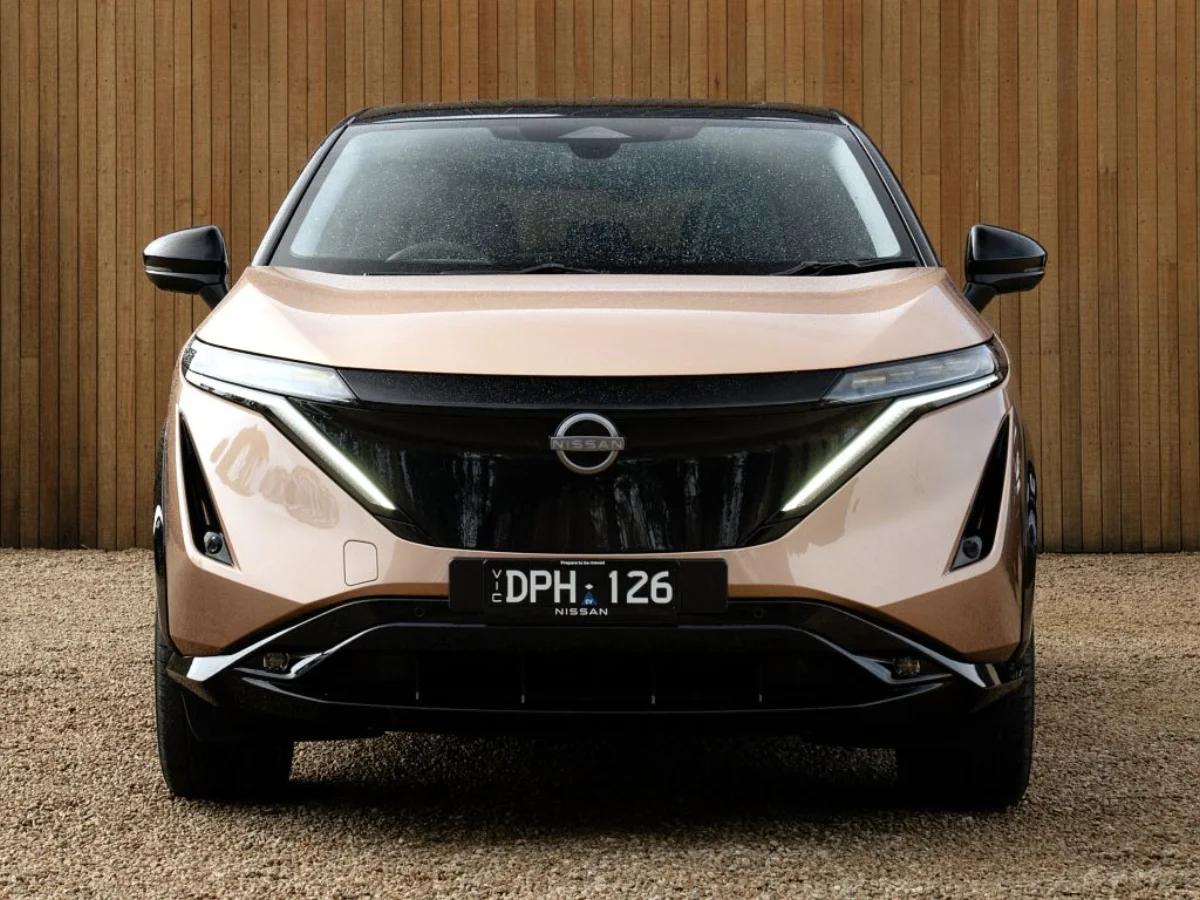
Nissan ARIYA
22 of 27 standard · no option data · 5 no dataFrom
$55,840
RRP, before on-road costs
- Body
- SUV
- Fuel type
- Electric
- Engine
- Electric
- Power
- 160kW
- Energy use
- 18.5 kWh/100km
- Safety
- ANCAP ★5 · 2022
- Boot (seats up)
- 466L
Driva is an independent finance provider, not part of CarSorted. We aren't paid for this link.
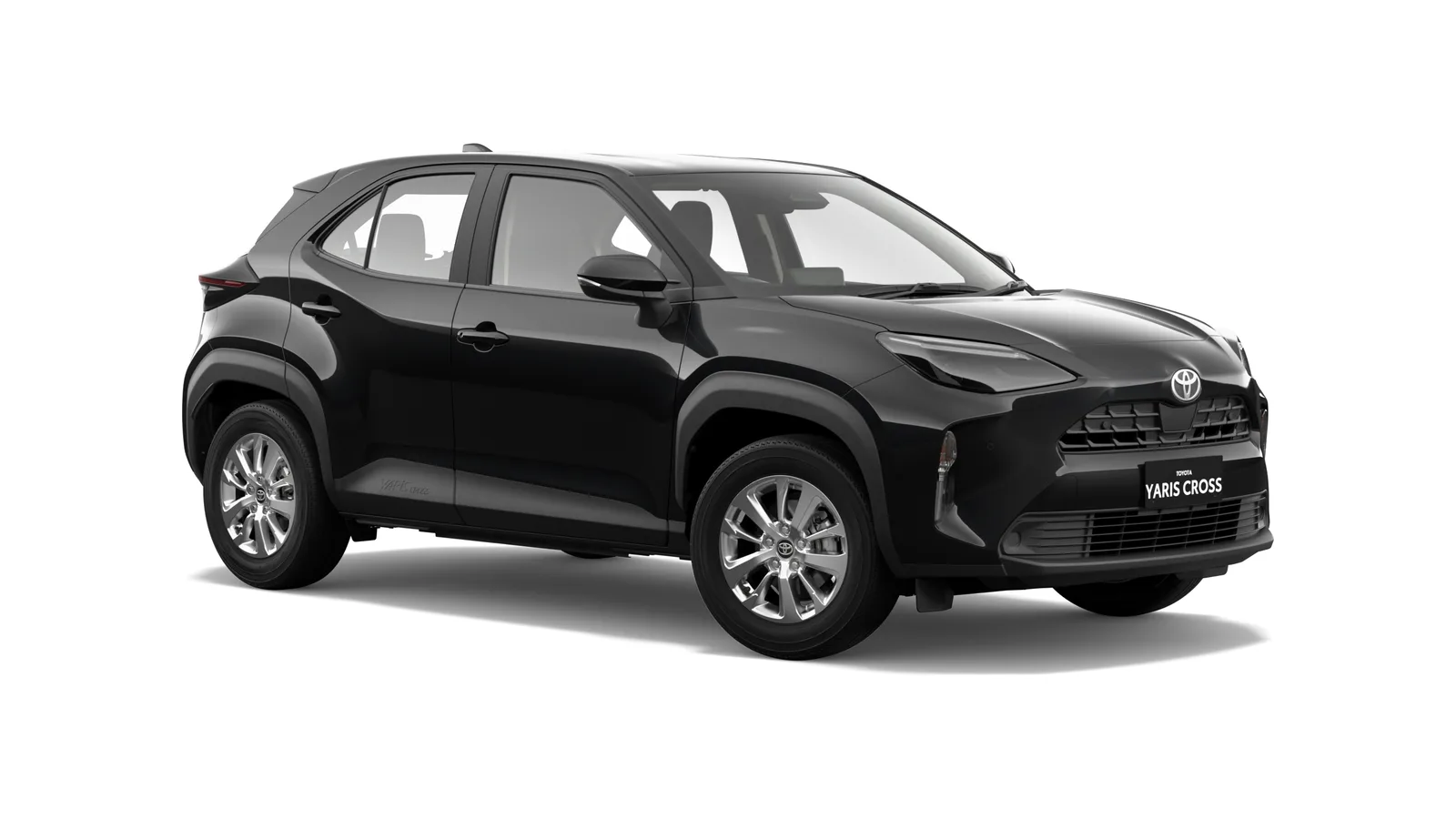
Toyota Yaris Cross
11 of 27 standard · no option data · 4 not offered · 12 no dataFrom
$31,790
RRP, before on-road costs
- Body
- SUV
- Fuel type
- Hybrid
- Engine
- 1.5L 3-cyl Hybrid
- Power
- 85kW
- Economy
- 3.8 L/100km
- Safety
- ANCAP ★5 · 2021
- Boot (seats up)
- 390L
Top CarSorted Score, 77 vs 73
Driva is an independent finance provider, not part of CarSorted. We aren't paid for this link.
$55,840RRP
- with the Toyota Yaris Cross's standard kit: $55,840 (nothing to add)
$31,790RRP
- cannot be matched: Head-Up Display, LED Headlights, Satellite Navigation and 1 more not offered
Printed option prices only. A pack is counted once and makes the figure a floor when it carries no printed price. Nothing is inferred from the other car.
Price and cost per week
Nissan ARIYA Engage 63kWh FWD
$55,840
RRP, before on-road costs. Checked 15 Nov 2026
No published drive-away price on our record.
Toyota Yaris Cross GX Hybrid 2WD
$31,790
RRP, before on-road costs. Checked 14 Nov 2026
No published drive-away price on our record.
No lowest cost is named: these totals leave out different parts (2026 Nissan ARIYA Engage 63kWh FWD excludes servicing and insurance; 2026 Toyota Yaris Cross GX Hybrid 2WD excludes insurance).
Every column on the same basis: 15,000 km a year (fixed for every comparison) in VIC, repayment assumes $5,000 deposit, 5 yrs at 7.5% p.a. Each car's fuel or charging price is in its own breakdown. Estimate only, not a quote or an offer of credit.
No lowest cost is named: these totals leave out different parts (2026 Nissan ARIYA Engage 63kWh FWD excludes servicing and insurance; 2026 Toyota Yaris Cross GX Hybrid 2WD excludes insurance).
Cash outlay over 5 years: the deposit, the repayments and the running costs. Excludes resale value. Every column on the same basis: 15,000 km a year in VIC, repayment assumes $5,000 deposit, 5 yrs at 7.5% p.a. Estimate only, not a quote or an offer of credit.
Standard features per $10,000: not ranked, too few features are known for both cars. On the rated figures, the Nissan ARIYA leads on price per kw: $349 per kW on RRP for the Nissan ARIYA; $374 per kW on RRP for the Toyota Yaris Cross. On the rated figures, the Toyota Yaris Cross leads on price per litre of boot: $120 per litre of boot on RRP for the Nissan ARIYA; $82 per litre of boot on RRP for the Toyota Yaris Cross. These ratios are not part of the CarSorted Score.
The Toyota Yaris Cross starts $24,050 lower on RRP.
The Nissan ARIYA currently qualifies for the electric-vehicle FBT exemption, which applies to novated leases. The Toyota Yaris Cross does not: only battery-electric vehicles qualify.
On-road costs (stamp duty, registration, CTP and dealer delivery) depend on your state and the dealer; ask for a written drive-away price before you sign.
CarSorted
Looking for your next car?
We help you research it, compare it and ask for a price.
Ways to buy
For the 2 cars on this page.
Finance
From ≈$124/wk(≈$537/mo)
Estimate on the Toyota Yaris Cross at $31,790 RRP, before on-road costs; assumes $5,000 deposit, 5 yrs at 7.5% p.a. Not a quote or an offer of credit.
Compare real car-loan ratesDriva is an independent finance provider, not part of CarSorted. We aren't paid for this link.
Novated lease
Electric, with an RRP under the $91,661 fuel-efficient LCT threshold (2026-27): under the ATO's electric cars exemption a novated lease of an eligible electric car attracts no FBT if luxury car tax was never payable on it. The benefit is still reportable.
Novated lease quoteWork out a lease on the Nissan ARIYADriva is an independent finance provider, not part of CarSorted. We aren't paid for this link. Opens apply.driva.com.au in a new tab.
Safety Rundown
ANCAP lists the Nissan ARIYA at 5 stars (2022) and the Toyota Yaris Cross at 5 stars (2021). ANCAP tested these in different years (2022 vs 2021). Its criteria get stricter about every three years, so the stars are not like for like. Adult occupant protection scored 86% for the Nissan ARIYA and 86% for the Toyota Yaris Cross, under different test years.
Where the two diverge is in active safety technology. We can confirm 7 of 10 key ADAS systems on the Nissan ARIYA, against 5 on the Toyota Yaris Cross.
Both include the essentials: lane keep assist, adaptive cruise control, a reversing camera. Airbag count is 7 in the Nissan ARIYA and 8 in the Toyota Yaris Cross.
Driver assistance, as the manufacturer lists it
Driver assistance, system by system. We can confirm 7 of 10 key systems on the Nissan ARIYA and 5 on the Toyota Yaris Cross.
Swipe across. Tap a feature to see what it does and each car's source.
StandardOptional: printed price, +pack or NCO (no-cost)No, not offeredNo dataCounts beside each car use the same colours; ? is no option data.
From each manufacturer's Australian equipment list. No data means that car's document does not say. The drawings are our own illustrations of how each kind of system works.
Recalls on our record
Nissan ARIYA
None open on our record
Toyota Yaris Cross
- REC-005068 · published 10 Mar 2022The vehicle's front radar sensor which supports certain driver assistance features, including the Pre-Collision System (PCS) may not have been calibrated during vehicle manufacture.Year range on the notice: 2020 - 2021
- REC-001317 · published 19 Jan 2021A sharp edge in the rear centre seat belt anchor bracket may damage the seatbelt webbing for that seat during a collision.Year range on the notice: 2020
A recall covers the builds its notice lists, not every car of a model. Check your VIN at vehiclerecalls.gov.au.
Charging and range
The rated figures side by side: electric range and fuel use with the battery depleted for a plug-in hybrid or range extender, the km each battery-electric car adds overnight on its own onboard charger, and the DC time in the window each document prints.
| 2026 Nissan ARIYA Engage 63kWh FWD | 2026 Toyota Yaris Cross GX Hybrid 2WD | |
|---|---|---|
| Powertrain | Battery electric | Hybrid |
| Added overnight, 10A power point (2.4 kW) | 130 km in 10 h | Not applicable |
| Added overnight, 7.4 kW wallbox | 400 km in 10 h | Not applicable |
| DC fast charge, as printed | 30 min, 0-80% | Not applicable |
| Charging connector | CCS2 | Not applicable |
| Portable charger supplied | No data | Not applicable |
| Type 2 cable supplied | No data | Not applicable |
| Front boot | No data | No data |
- Km added in 10 hours: the charger rate, capped by the car's own onboard charger, over its own rated energy use. A car without an onboard charger or energy figure is No data, never an assumed rate.
- DC times are printed only in the window the document gives (0-80% or 10-80%). Different windows are not one measure, so nobody leads across them.
How long each takes to charge, from a household power point to a DC fast charger, estimated from battery size and the car's own maximum charge rates.
How long to charge
87kWh usablePublic DC
50kW charger · 0–80%
Ultra-rapid DC
up to 130kW · 0–80%
Estimates from usable battery size and the car's max charge rates (7.4kW AC, 130kW DC). Real times vary with temperature, starting charge, charger output and the charging curve.
Feature Showdown
The Nissan ARIYA features a 12.3-inch touchscreen paired with a 12.3-inch digital dash, while the Toyota Yaris Cross gets a 8-inch display and 7-inch instruments. Apple CarPlay and Android Auto are standard across both.
The Nissan ARIYA stands out with head-up display, wireless charging, heated front seats and power tailgate: features our data doesn't list for the Toyota Yaris Cross. Which feature set matters more depends on your daily routine and priorities.
Interior trim differs: the Nissan ARIYA gets nappa leather upholstery while the Toyota Yaris Cross offers cloth. Climate control is 2-zone in the Nissan ARIYA and 1-zone in the Toyota Yaris Cross.
Equipment few rivals have, on either carShowHide
Drivetrain
The Nissan ARIYA uses a Electric producing 160kW and 300Nm of torque, sent through a automatic to a FWD layout. It covers the 0-100km/h sprint in 8 seconds.
The Toyota Yaris Cross responds with a 1.5L 3-cyl Hybrid making 85kW and 120Nm, paired to a cvt driving the front wheels. It gets to 100km/h in 9.8 seconds.
The Nissan ARIYA has the clear power advantage at 160kW vs 85kW. In the 0-100 sprint (manufacturer-claimed), the Nissan ARIYA is 1.8s quicker. For most buyers, the way each car feels day-to-day matters more than outright acceleration.
Space & Comfort
The Nissan ARIYA measures 4,595mm long on a 2,775mm wheelbase, 415mm longer than the Toyota Yaris Cross at 4,180mm (2,560mm wheelbase). The longer wheelbase on the Nissan ARIYA generally means more rear legroom.
Boot space is 466L in the Nissan ARIYA and 390L in the Toyota Yaris Cross, giving the Nissan ARIYA a 76L advantage.
For towing, the Nissan ARIYA leads with a 750kg braked capacity vs 400kg. That 350kg difference matters if you regularly hitch up.
Neither U-turns in one sweep on a 7 m local street (both need a three-point turn); the Toyota Yaris Cross's turning circle is 0.9 m tighter, 10.6 m against 11.5 m kerb to kerb. The street estimate is indicative, worked from the published turning circles.
Front boot (frunk)
Nissan ARIYA
No data
Toyota Yaris Cross
No data
Cost to own
At 15,000 km a year, electricity for the Nissan ARIYA costs about $833 a year (18.5 kWh/100km, at $0.30/kWh electricity) and fuel for the Toyota Yaris Cross about $1,112 a year (3.8 L/100km, at $1.95/L petrol).
The weekly and 5-year figures in the price section above add repayments, rego, servicing and tyres to this; use our Fuel Cost Calculator for your own driving.
Warranty: 5 years / unlimited km (Nissan ARIYA) and 5 years / unlimited km (Toyota Yaris Cross). Capped-price servicing: 5 years (Nissan ARIYA), no data (Toyota Yaris Cross).
- The Nissan ARIYA costs $24,050 more on RRP and $349 a year less in energy at 15,000 km a year: the gap closes only beyond 300,000 km.
Energy only. Excludes servicing, rego, insurance, finance interest and resale. Prices are compared only on one basis.
Where each one leads
The Nissan ARIYA: more power (160kW against 85kW), the bigger boot with the seats up (466L against 390L) and the higher braked towing limit (750kg against 400kg).
The Toyota Yaris Cross: the lower starting price ($31,790 against $55,840).
The Verdict
Toyota Yaris Cross scores higher, 77 vs 73
The Toyota Yaris Cross scores 77 to the Nissan ARIYA's 73 on the CarSorted Score, and leads 1 of the 6 spec rows that separate them, at the lower price. The biggest gaps: technology (Nissan ARIYA ahead by 23 points), performance (Nissan ARIYA ahead by 19 points). Boot space with the seats up: 466L in the Nissan ARIYA, 390L in the Toyota Yaris Cross.
Ways to buy
For the 2 cars on this page.
Finance
From ≈$124/wk(≈$537/mo)
Estimate on the Toyota Yaris Cross at $31,790 RRP, before on-road costs; assumes $5,000 deposit, 5 yrs at 7.5% p.a. Not a quote or an offer of credit.
Compare real car-loan ratesDriva is an independent finance provider, not part of CarSorted. We aren't paid for this link.
Novated lease
Electric, with an RRP under the $91,661 fuel-efficient LCT threshold (2026-27): under the ATO's electric cars exemption a novated lease of an eligible electric car attracts no FBT if luxury car tax was never payable on it. The benefit is still reportable.
Novated lease quoteWork out a lease on the Nissan ARIYADriva is an independent finance provider, not part of CarSorted. We aren't paid for this link. Opens apply.driva.com.au in a new tab.
Common questions
Which is cheapest, Nissan ARIYA and Toyota Yaris Cross?
The Toyota Yaris Cross is the cheapest at $31,790 before on-road costs. That undercuts the Nissan ARIYA by $24,050.
What are the ANCAP safety ratings?
Nissan ARIYA holds a 5-star ANCAP rating (tested 2022) and Toyota Yaris Cross holds a 5-star ANCAP rating (tested 2021). ANCAP tested these in different years (2022 vs 2021). Its criteria get stricter about every three years, so the stars are not like for like. Compare the active-safety features above to separate them.
Which has the most boot space?
The Nissan ARIYA has the largest boot at 466L with the seats up.
Which is the most powerful?
The Nissan ARIYA makes the most power at 160kW. The Nissan ARIYA is quickest to 100km/h in 8s.
Track the Nissan ARIYA & Toyota Yaris Cross
Get price-drop alerts on these models plus our free weekly new-car rundown. Unsubscribe anytime.
How to read this page. Prices, specifications, ANCAP ratings, warranty, the CarSorted Score and the verdict come from our records for the grades shown, sourced from the manufacturers' Australian documents, and change when those records change; the date each was last checked is printed under the headline. Prices are recommended retail prices before on-road costs unless marked drive-away. A plug-in hybrid's fuel figure is labelled with its basis: with a full battery (the certified combined figure) or as a hybrid (battery depleted). Charging and running costs are estimates on the stated assumptions. Always confirm price and specification with the manufacturer or dealer before you buy. CarSorted does not accept payment for recommendations.
Comments (0)
Sign in to join the conversation
No comments yet. Be the first!