BYD Sealion 7 vs Kia EV3
$54,990 vs $58,990 drive-away. The mid-size electric SUV is the cheaper car here, and the small one answers with 81km more range and an extra year of warranty.
Specifications and pricing correct at time of publishing. Prices are RRP before on-road costs unless stated otherwise. Always confirm with the manufacturer or dealer before purchasing.
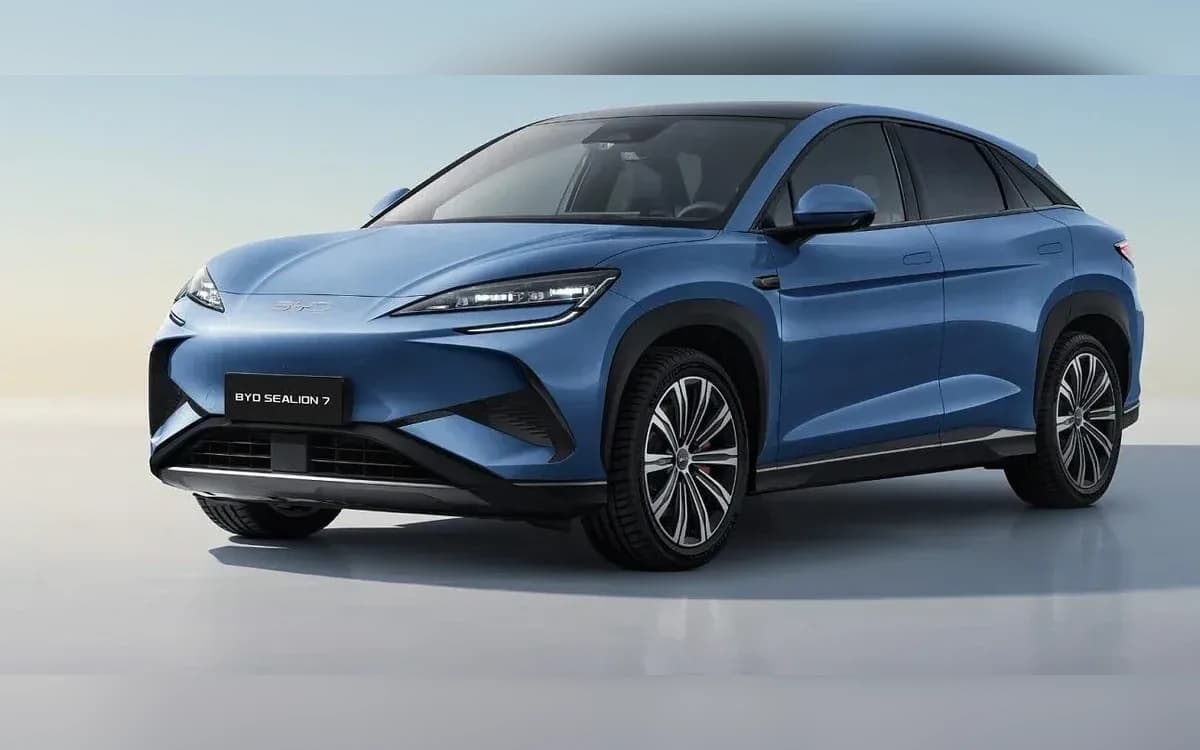
BYD Sealion 7 Premium
$54,990 drive-away
Mid-size Electric SUV
Single Motor (RWD)
230kW
482km WLTP
5★ ANCAP (2025)
500L
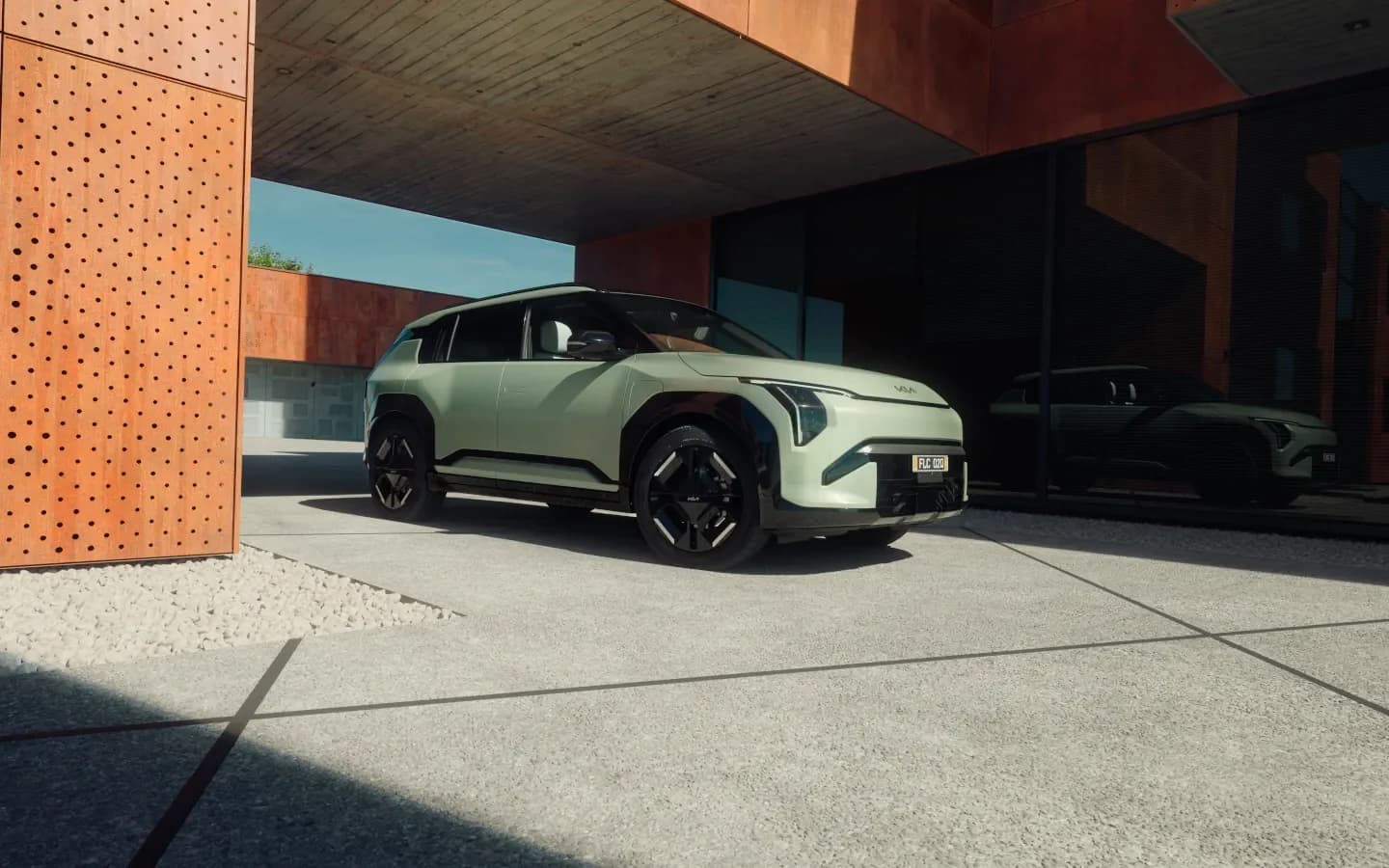
Kia EV3 Earth Long Range
$58,990 drive-away
Small Electric SUV
Single Motor (FWD)
150kW
563km WLTP
5★ ANCAP (2025)
460L
Price Breakdown
Start here, because this is the part most comparisons of these two cars get wrong. BYD and Kia do not quote the same kind of number, and if you line up their list prices you will draw the wrong conclusion.
Kia lists the EV3 Earth Long Range at $58,600 recommended retail, before on-road costs. BYD's $54,990 is not a comparable figure. It is a drive-away price, published on BYD Australia's offers page under a "Free On-Road Costs" campaign that runs for orders placed between 1 August and 30 September 2026 with delivery by 31 October. Metallic paint is extra. Comparing $58,600 with $54,990 and calling it a $3,610 gap is comparing a price that excludes rego, stamp duty and CTP with one that includes them.
The good news is that both brands publish a drive-away number right now, so you can do this properly. Kia's own EV3 offers page lists an estimated drive-away price for every grade, valid until 30 September 2026 and including twelve months' registration, a CTP estimate, stamp duty and delivery charges. On that basis the Earth is $58,990 drive-away against the Sealion 7 Premium's $54,990. The gap is $4,000, and it runs the other way from what the badges suggest.
BYD Sealion 7 (single-speed, rear- or all-wheel drive)
| Variant | Drive | Price | WLTP range |
|---|---|---|---|
| Premium | RWD | $54,990 drive-away | 482km |
| Performance | AWD | $63,990 (see note) | 456km |
That note matters. BYD Australia does not print a list price for the Sealion 7 anywhere on its own model page or spec sheet. Its Build & Price link hands you off to its retail channel, where the Performance is quoted at $63,990 including GST. We hold that figure and it lines up with what the car has been sold at all year, but it is not a number BYD publishes on its own site, and there is no drive-away campaign on the Performance. Both grades currently carry a 5 percent novated lease offer instead, for orders placed in September 2026.
Kia EV3 (single-speed, front-wheel drive)
| Variant | Battery | RRP | Drive-away estimate | WLTP range |
|---|---|---|---|---|
| Air Standard Range | 58.3kWh | $47,600 | $46,990 | 436km |
| Air Long Range | 81.4kWh | $53,315 | $52,990 | 604km |
| Earth Long Range | 81.4kWh | $58,600 | $58,990 | 563km |
| GT-Line Long Range | 81.4kWh | $63,950 | $68,490 | 563km |
Read down that last column and the EV3 range argues with itself. The Air Long Range is $6,000 cheaper drive-away than the Earth and travels 41km further, because it rides on 17-inch wheels instead of 19s and carries less equipment. Kia is also running a September offer of either $1,000 cashback or a 1.88 percent comparison rate on in-stock EV3s, which ends on 30 September. If range is the reason you are on this page, the EV3 to look at is not the one that lines up with the BYD on price.
Safety Rundown
Both cars hold a five-star ANCAP rating awarded in 2025, both cover all variants, and both expire in December 2031. The category scores split almost perfectly down the middle, which is unusual and genuinely informative.
| ANCAP (2025) | Sealion 7 | EV3 |
|---|---|---|
| Adult occupant | 87% | 83% |
| Child occupant | 93% | 86% |
| Vulnerable road user | 76% | 78% |
| Safety assist | 78% | 81% |
The BYD is clearly ahead on crash protection. Four points of adult occupant protection and seven of child occupant protection is a real margin, and some of it is simply mass: a 2,225kg car does better in a collision with a 1,930kg one than the reverse. The Sealion 7 scored full marks in the side impact, pole oblique and far-side impact tests. The Kia dropped half a point in the pole test and half in the far-side.
The Kia takes it back on the two categories about avoiding the crash in the first place. Its safety assist score is three points higher and its vulnerable road user score two points higher, which tracks with the equipment: the EV3 gets lane keeping with Lane Following Assist 2, blind spot collision avoidance with rear cross-traffic collision avoidance, safe exit warning, and an AEB system that covers cars, pedestrians, cyclists, junction turning and crossing, lane change detection and auto evasive steering, standard from the base Air. Both cars have a centre airbag between the front seats.
One equipment gap worth knowing about, because it is the sort of thing you only notice after you have bought the car: Kia's own specification sheet lists a rear-view camera and parking sensors on the EV3, and no surround-view camera on any grade, right up to the $68,490 GT-Line. The Sealion 7 has a 360-degree camera standard on both grades. If you park in tight city spaces, that is a daily difference.
Feature Showdown
On equipment the Sealion 7 Premium is close to embarrassing for the Kia, and this is the strongest single argument for the BYD.
For $54,990 drive-away, the Premium arrives with a panoramic glass roof, a windscreen head-up display, a 360-degree camera, a 15.6-inch rotating touchscreen, a 10.25-inch driver display, a 12-speaker Dynaudio sound system, genuine leather seats, an eight-way powered driver's seat with memory, four-way powered lumbar, a powered leg rest, heated and ventilated front seats, a heat pump climate system with rear vents, an electronic sunshade, adaptive cruise, and vehicle-to-load with the adapter included. Aurora White is the only no-cost paint; the other three are cost options.
The EV3 Earth answers with 19-inch alloys, artificial leather, heated and ventilated front seats, a heated steering wheel, a powered driver's seat with power lumbar, and a smart power tailgate. To get a head-up display or a sunroof out of a Kia EV3 you have to buy the GT-Line, which is $68,490 drive-away, and even then there is no surround-view camera. That is a $9,500 walk to catch equipment the BYD includes at the bottom of its range.
What the Kia gives you instead is coherence. The integrated panoramic display runs a 12.3-inch driver cluster, a 5-inch climate strip and a 12.3-inch touchscreen in one housing, it keeps physical controls for the things you use while moving, and Kia Connect brings over-the-air updates with seven years of complimentary service. Vehicle-to-load is standard inside and out on every grade. It is the more resolved cabin, and Kia has a much longer history of software that still works in year five. BYD's rotating screen is a party trick that a lot of owners stop using, and the Sealion 7 puts more functions behind it than some people will want.
Drivetrain
The Sealion 7 Premium runs a single rear-mounted permanent magnet motor making 230kW and 380Nm, good for 6.7 seconds to 100km/h. The EV3 Earth Long Range has a single front motor making 150kW and 283Nm and takes 7.9 seconds, with a 170km/h top speed. Rear drive and 80 extra kilowatts give the BYD a different character entirely. If you want more, the Sealion 7 Performance adds a 160kW induction motor on the front axle for 390kW, 690Nm and 4.5 seconds, which is supercar territory for a family SUV.
Range flips it, and by more than the battery sizes suggest. The two packs are within 1.2kWh of each other, 82.56kWh in the BYD against 81.4kWh in the Kia, and yet the EV3 Earth claims 563km WLTP to the Sealion 7 Premium's 482km. That is 81km, or about 17 percent more, from effectively the same energy on board. Physics explains it: the Kia is 295kg lighter, 520mm shorter, 75mm narrower and is not hauling a 230kW motor around. Kia publishes a combined consumption figure of 162 watt-hours per kilometre for the Earth. BYD does not publish a consumption figure for the Sealion 7 on its Australian site at all, which is a gap we would like closed.
Charging is the messiest comparison on this page, because the two brands publish different things. BYD quotes a 150kW DC peak and 11kW AC, and no 10 to 80 percent time anywhere on its Australian material. Kia quotes no peak figure and gives times instead: approximately 31 minutes from 10 to 80 percent on a 350kW charger for the Long Range cars, or 79 minutes on a 50kW unit. That 79-minute number is the one to pay attention to, because 50kW chargers are still what you find in a lot of regional towns. On AC, Kia's onboard charger is 10.5kW on three-phase and 6.9kW single-phase, giving roughly 7 hours 15 minutes for a 10 to 100 percent fill on an 11kW wallbox. Overnight home charging is a non-event for either car.
Chemistry differs too. The BYD uses its own LFP Blade pack, which is more tolerant of being charged to 100 percent every night and generally ages well. The Kia runs a conventional NMC lithium-ion pack, which is lighter and more energy dense, which is part of why it goes further. Neither is a reason to buy or avoid either car. If you want to see what these WLTP numbers mean on your actual commute rather than in a laboratory, our range estimator works from the battery and the conditions.
Space & Comfort
These are two different sizes of car and the numbers are not subtle about it.
| Dimension | Sealion 7 | EV3 Earth | Difference |
|---|---|---|---|
| Length | 4,830mm | 4,310mm | 520mm |
| Width | 1,925mm | 1,850mm | 75mm |
| Wheelbase | 2,930mm | 2,680mm | 250mm |
| Boot, seats up | 500L | 460L (VDA) | 40L |
| Front boot | 58L | 25L | 33L |
| Kerb weight | 2,225kg | 1,930kg | 295kg |
| Payload | 410kg | 425kg | 15kg to the Kia |
| Turning circle | 11.7m | 10.4m | 1.3m |
Half a metre of length and 250mm of wheelbase is a whole segment, and ANCAP classifies them that way: the Sealion 7 is a Medium SUV, the EV3 a Small SUV. Rear legroom is where you feel it. Three adults across the back of the BYD is fine. Three across the back of the EV3 is a negotiation. Neither brand publishes a seats-folded boot figure, so we are not going to invent one, but the 40-litre gap with the seats up understates the difference because the BYD's load bay is longer and deeper rather than just bigger on paper.
Two numbers in that table go the other way and both are worth a second look. The payload is the surprise: the small Kia legally carries 15kg more than the big BYD, because the Sealion 7's battery and structure eat so much of its 2,635kg gross vehicle mass. Five adults and luggage will push either car close to its limit. And the turning circle is 1.3 metres tighter in the Kia, which in a multi-storey car park is the difference between one movement and three.
Towing is the one spec where we cannot give you a straight answer on the BYD. Kia publishes 1,000kg braked and 750kg unbraked for the EV3 Long Range cars, with a 100kg towball download. BYD Australia publishes no braked towing rating for the Sealion 7 in its specification sheet at all. We hold figures internally that we could not re-confirm against BYD this week, so we are not printing them. If you tow, get it in writing from BYD before you order.
True Cost to Own
Kia covers the EV3 with seven years and unlimited kilometres for private buyers. BYD covers the Sealion 7 with six years or 150,000km, whichever comes first. One extra year and no kilometre ceiling is worth real money if you drive a lot, and it is the clearest structural win for the Kia on this page.
The battery story has changed, and this is the finding most comparisons of these two cars have not caught up with. BYD covers the Sealion 7's traction battery for eight years or 160,000km. Kia's warranty terms used to give EVs seven years or 150,000km on the high-voltage battery, and that is still the term for pre-model-year-2027 cars. But Kia's current published terms give model year 2027 and later vehicles eight years or 160,000km, and the EV3 Kia Australia is selling today is a MY27 car. So on the single most expensive component these two are now level. Kia separately covers the high-voltage components, the onboard charger, traction motor and power control units, for seven years or 150,000km.
Servicing works completely differently. BYD services its EVs every 20,000km or 12 months. Kia excludes electric cars from its seven-year capped-price servicing program entirely and sells prepaid EV service plans instead: for the EV3, three services cost $695, five cost $1,320 and seven cost $1,946. That is roughly $278 a service across seven, which is cheap, but you need to buy the plan while the car is under eleven months old and below 15,000km. BYD does not publish equivalent capped pricing, so its running costs are the less predictable of the two up front.
Energy is where the Kia grinds out a win every month. Same size battery, 81km more range, so fewer kilowatt-hours per kilometre on the same tariff over the same year. Resale is the less comfortable conversation. Kia has three decades of Australian history, a large dealer network and a used-car reputation that holds up. BYD is now a top-selling brand here but the resale data on Chinese EVs is still thin, and the drive-away campaigns that make the Sealion 7 such good buying new are exactly what erodes what a two-year-old one is worth. Both brands are running finance offers this month, and on a novated lease the fortnightly number and the tax treatment will move your answer more than the windscreen price does. Our lease calculator is the fastest way to see which one actually costs you less.
CarSorted Data Insight
Pull both ranges out of our database and one thing stands out immediately: these two brands do not publish prices the same way, and that is the single biggest source of confusion about this pair. Kia prints a recommended retail price for every grade and a drive-away estimate beside it. BYD prints a campaign drive-away figure for one grade, nothing at all for the other, and hands you to its retail channel for the rest. On the numbers each brand actually publishes, the BYD comes out $4,000 ahead, not $3,610 behind.
The second thing is the efficiency gap, and it is the whole case for the Kia. Within 1.2kWh of the same battery, the EV3 Earth travels 81km further than the Sealion 7 Premium. Go one grade down to the EV3 Air Long Range and it travels 604km, which is 122km further than the BYD for $2,000 less drive-away. Every kilometre of that is the BYD carrying 295 extra kilograms and 80 extra kilowatts. There is no free lunch in an electric car: you pay for the size and the speed in range, every single day you own it.
The Verdict
Buy the BYD Sealion 7 Premium if: you want the most car for the money and are comfortable with a newer brand. It is a segment bigger, over a second quicker, has a panoramic roof, head-up display, 360-degree camera and 12-speaker Dynaudio as standard, scores better in the crash tests, and costs $4,000 less drive-away. Order before 30 September 2026 or the free on-road costs go away.
Buy the Kia EV3 if: range, warranty and dealer confidence matter more than size. Seven years unlimited kilometres, 81km more range, a 1.3-metre tighter turning circle and a better driver-assistance score are worth paying for. Just look hard at the Air Long Range at $52,990 drive-away first. It goes 122km further than the Earth's rival BYD and costs less than either.
Our honest read is that most buyers cross-shopping these two are actually deciding whether they need a mid-size SUV at all. If the answer is yes, the BYD is the better value by a distance. If the answer is no, do not spend $58,990 on the Earth to find out.
Compare both on CarSorted. See also: EV5 vs Sealion 7 | Zeekr X vs Sealion 7 | Model Y vs EV3 | EV3 vs EX30. More from BYD and Kia.
The Verdict
Most comparisons at this money ask you to pay more for more car. This one does the opposite. The Sealion 7 Premium is half a metre longer, 80kW more powerful, over a second quicker, and it is the cheaper car on a like-for-like drive-away basis by $4,000. What the EV3 Earth sells you for that $4,000 is 81km more WLTP range out of a fractionally smaller battery, seven years of unlimited-kilometre warranty against BYD's six, a car that turns 1.3 metres tighter, and a dealer network that has been here for decades. If you want the most machine per dollar, the BYD wins and it is not particularly close. If you want the longer range, the easier parking and the longer cover, the Kia earns its premium. What you should not do is pick on the list prices, because the two brands quote on completely different bases and the list prices make the gap look like $3,610 when the real one is bigger.
Prices on this page move. Want the next verdict?
One short email when prices shift or a new comparison lands. No spam, unsubscribe anytime.
Disclaimer: All information in this comparison was believed to be correct at the time of publishing (20 September 2026). Prices are manufacturer recommended retail prices (RRP) and may vary by state, dealer, and options. Driveaway costs include estimated on-road costs for Victoria. Fuel economy figures are WLTP/ADR combined cycle. Specifications can change without notice. Always verify with the manufacturer before making a purchase decision. CarSorted does not accept payment for recommendations.
Published by CarSorted Editorial Team · 20 September 2026
Comments (0)
Sign in to join the conversation
No comments yet. Be the first!