Key Takeaways
- Three grades, orders open: HSE $317,718, Autobiography $357,718, SV $417,418 before on-road costs, as reported by Australian outlets. JLR's own site shows no price yet
- One powertrain, the EV550: 405kW, 850Nm, 118.5kWh usable battery, 600km NEDC, 0 to 100km/h in 4.5 seconds
- The HSE is priced within $100 of the V8 P530 HSE and about $33,000 above the P460e plug-in, on reported prices
- It tows 2,500kg, a tonne less than the diesel and V8, with a 125-litre smaller boot and 225kg more unladen weight than the V8
- 10 to 80 per cent in 22 minutes at 350kW, but 19 hours for a full charge on a 7kW home wallbox
- Standard wheelbase only for now, no ANCAP rating held, and deliveries reported for the first half of 2027
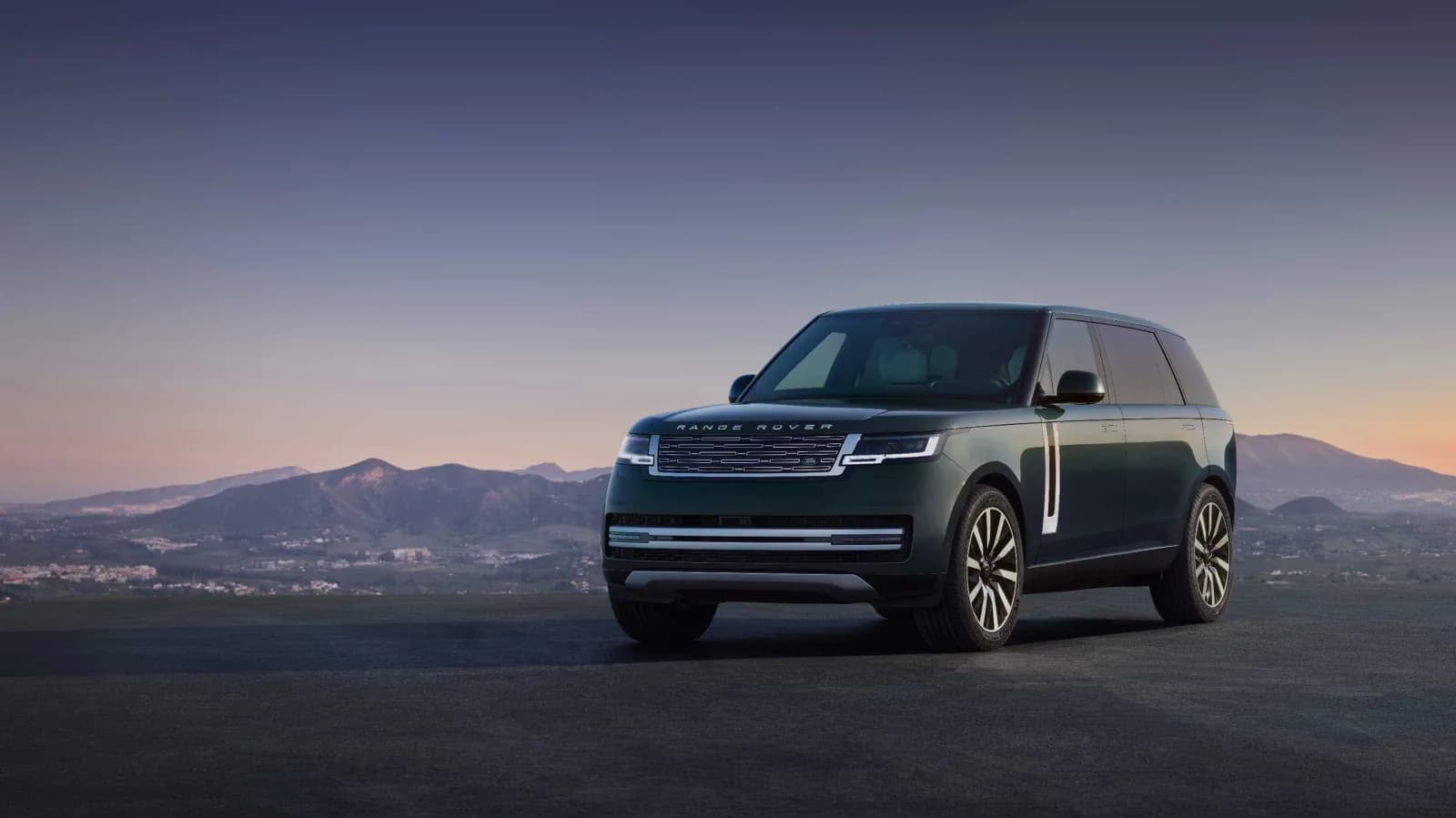
Image credit: Range Rover Australia. Overseas model shown.
The first battery-electric Range Rover is open for orders in Australia, and it arrives priced like the V8. Australian outlets report JLR Australia's pricing as $317,718 for the HSE, $357,718 for the Autobiography and $417,418 for the SV, all before on-road costs. Range Rover's Australian website lists all three grades with the electric powertrain and a Build and Order button, but no price: the site only ever shows manufacturer's recommended drive-away prices, and for this model it shows none yet.
On paper it is a lot of Range Rover: 405kW and 850Nm, a 118.5kWh battery, a 600km laboratory range and fast charging that can add 220km in ten minutes. The more useful question for anyone actually weighing one up is what it costs against the diesel, the V8 and the plug-in hybrid sitting beside it in the same showroom, and what it gives up to be electric. There are three real trade-offs, and one of them decides the purchase for a lot of Australian owners before anything else does.
Pricing
There is one electric powertrain, so the table is short. We have put the combustion and plug-in HSE beside it, because that is the comparison that matters.
| Variant | Drive | Power / torque | Price (before on-roads, reported) |
|---|---|---|---|
| Battery electric, EV550 | |||
| HSE | All-wheel drive | 405kW / 850Nm | $317,718 |
| Autobiography | All-wheel drive | 405kW / 850Nm | $357,718 |
| SV | All-wheel drive | 405kW / 850Nm | $417,418 |
| For reference: the same HSE grade with other powertrains | |||
| HSE D350 (diesel mild hybrid) | All-wheel drive | 258kW / 700Nm | $281,600 |
| HSE P460e (petrol plug-in hybrid) | All-wheel drive | 338kW / 660Nm | $284,900 |
| HSE P530 (V8 mild hybrid) | All-wheel drive | 390kW / 750Nm | $317,800 |
Every price in that table is as reported by Australian outlets, not read from JLR's site, and all are before on-road costs. Outputs are from JLR Australia's own specification for each variant. On those prices the Autobiography is a $40,000 step over the HSE, and the SV a further $59,700.
V8 Money, Not a V8 Premium
The headline in the pricing is not the $317,718 itself. It is where it lands. The electric HSE is reported at $82 less than the P530 HSE, the twin-turbo V8. JLR has priced the electric car as the other top-shelf powertrain rather than as an expensive alternative to the diesel, and it is quicker than the V8 on JLR's own numbers: 4.5 seconds to 100km/h against 4.6, with 15kW and 100Nm more. One footnote on each figure: JLR's specification gives both times with Dynamic Launch engaged, and Range Rover's Australian page says the full 850Nm is only available in Dynamic Launch and the off-road driving modes.
Against the plug-in hybrid the story changes. The P460e HSE is reported at $284,900, so the electric car costs $32,818 more. The P460e covers up to 126km on battery on the NEDC test, according to JLR Australia's specification, which is enough for most weekday driving, and it keeps a petrol engine for the long runs. If your weeks are short trips and your weekends are long ones, that is the car the electric Range Rover has to beat, and it starts with a $33,000 head start.
And against the diesel, which is still what many Range Rover owners in this country actually drive, the electric HSE is $36,118 dearer on reported prices than the D350 HSE at $281,600.
Trade-off One: Towing
This is the one that decides it for a lot of buyers. JLR Australia's specification lists the Range Rover Electric at 2,500kg braked, with a 250kg maximum towball load and a 5,980kg gross combination mass. The D350 and P530 are rated at 3,500kg with a 350kg towball load, and the P460e at 3,000kg.
| Range Rover HSE | Braked towing | Towball load | Unladen weight (EU) |
|---|---|---|---|
| Electric EV550 | 2,500kg | 250kg | 2,810kg |
| P460e plug-in hybrid | 3,000kg | 350kg | 2,810kg |
| P530 V8 | 3,500kg | 350kg | 2,585kg |
| D350 diesel | 3,500kg | 350kg | 2,504kg |
A 2.5-tonne rating still covers plenty of trailers. But a tonne is exactly the kind of margin that separates a caravan that fits the rating from one that does not, and the loaded weight is what counts, not the empty figure on the van's plate. If your trailer's loaded weight is anywhere near 2,500kg, the electric car is off the list before range even comes up. Our TowingSorted planner will work out what your rig really weighs, and our towing capacity explainer covers why the brochure number is only the start.
Range while towing is the second half of the problem. Range Rover's Australian page mentions a new towing range prediction feature, which tells you JLR knows range drops sharply under load. It has not published a towing range figure for Australia, and we are not going to guess one.
Trade-off Two: Weight and Space
The battery costs mass and a little room. JLR Australia prints an unladen weight of 2,810kg for the electric HSE, which on its definition includes a 75kg driver and full fluids. That is 225kg more than the V8 and 306kg more than the diesel. Its gross vehicle mass is 3,480kg, which leaves a 670kg gap between the two printed figures for passengers and luggage beyond that driver.
The boot is smaller too. JLR measures load space as a liquid-fill volume, and behind the second row it lists 925 litres for the electric HSE against 1,050 litres for the diesel, V8 and plug-in hybrid, a loss of 125 litres. The body outside does not change: 5,052mm long on a 2,997mm wheelbase, with the same 900mm wading depth as the combustion cars and 262mm of ride height in the off-road setting.
Trade-off Three: Charging at Home
The public fast-charging numbers are strong. JLR Australia's specification quotes 10 to 80 per cent in 22 minutes on a 350kW charger on the car's 800-volt system, with a maximum vehicle DC charging power of 325kW, and Range Rover's Australian page says ten minutes can add up to 220km. On a 150kW charger, JLR quotes 38 minutes for the same 10 to 80 per cent.
Home is where the size of the battery shows. A usable 118.5kWh takes 19 hours from empty to full on a 7kW wallbox, 13 hours on an 11kW three-phase unit, and 7 hours on 22kW, all on JLR's figures. On single-phase household power 7kW is the usual ceiling, and JLR says an hour on it adds up to 32km. Plugged into a normal power point it is 65 hours. None of that matters much if you top up overnight rather than run it flat, but it is worth knowing before you assume the car will always leave home full.
The Australian specification also lists charge times at Tesla Superchargers (32 minutes for 10 to 80 per cent on a V4 unit, 40 on V3), though Range Rover's Australian page footnotes Supercharger access as available in select markets only. Australian outlets report a 12-month Chargefox subscription capped at 500kWh for local buyers; we could not find that offer on JLR's own site, so ask the retailer to put it in writing.
Range: 600km on the Label, 535km in JLR's Own Test
JLR Australia lists up to 600km on the NEDC test for all three grades, with an energy consumption of 223Wh/km, or 22.3kWh/100km, on the same test. Range Rover's Australian page is clear that these are laboratory figures "for the purpose of comparison amongst vehicles" and that actual figures will generally differ.
JLR's global announcement, which Range Rover republishes on its Australian site, gives a real-world range of up to 535km, and says its ThermAssist heat management cuts heating energy use by 40 per cent. Treat 535km as the better planning number and assume less at 110km/h on a hot or cold day.
What Each Grade Adds
Range Rover's Australian models page lists grade equipment rather than a separate electric list, so read these as what the grade brings, confirmed for the electric car at order.
- HSE: Meridian 3D Surround Sound, semi-aniline leather, 20-way heated and ventilated front seats with power recline, heated and ventilated rear seats, a head-up display and a powered gesture tailgate. All Wheel Steering and Dynamic Air Suspension are in the standard list.
- Autobiography, $40,000 more: Digital LED headlights with image projection, a sliding panoramic roof, the Meridian Signature Sound System, 24-way heated, cooled and massaging front seats, Executive Class rear seats, four-zone climate control and the Atlas exterior pack.
- SV, $59,700 more again: SV semi-aniline leather, hot stone massage front seats, Executive Class Comfort Plus rear seats, the Body and Soul Seat, an Electronic Active Differential with torque vectoring by braking, and air suspension with Dynamic Response Pro.
Two things worth knowing. Only standard wheelbase is offered on Range Rover's Australian site for now; Australian outlets report that JLR Australia is already holding orders for a long-wheelbase version to follow. And JLR's Australian configurator data also names an SE, a First Edition and a lower-output EV450 electric powertrain, none of which appears on the public models page or has an Australian price. We would not plan around any of them.
Where It Sits Among Electric SUVs
No electric SUV we list is priced near it. Of the electric SUVs we list with a price checked against the manufacturer, the dearest is the Porsche Cayenne Turbo Electric Coupé at $272,100, so the electric Range Rover HSE is reported at $45,618 above anything else in that set. The closer comparisons are a class below on price:
- The Porsche Cayenne Electric at $167,800, $149,918 less, tows 3,500kg and has a 390kW DC charging peak in our listing. The Cayenne Turbo Electric at $259,900 is still $57,818 under the Range Rover HSE.
- The Mercedes-Benz EQS 450 4MATIC SUV, which we list with 265kW, a 108.4kWh battery and a 2,000kg tow rating.
- The BMW iX xDrive45 M Sport, which we list with 300kW and a 2,500kg tow rating, the same as the Range Rover.
None of those is really cross-shopped by a Range Rover buyer on price. The one that is, is the Range Rover Sport Electric, reported at $226,518 for the Dynamic HSE. It shares the EV550 badge, 405kW and 850Nm, and is reported at $91,200 less than the full-size car. What the extra money buys is size, cabin and the Range Rover name on the bonnet rather than "Sport" on the tailgate.
Pick two
The electric Range Rover against its showroom siblings
The electric HSE beside the plug-in, diesel and V8 Range Rovers, plus two electric SUVs we list. Tap any two.
| Spec | Range Rover Electric HSE | Range Rover HSE P460e |
|---|---|---|
| Price from | No data | No data |
| Fuel use | N/Abattery electric, no fuel figure | 1.7 L/100kmcombined cycle from a full battery |
| Driving range | 600 km | 126 km |
| Seats | 5 | 5 |
| Braked towing | 2,500 kg | No data |
| ANCAP | No data | No data |
| Warranty | 5 yrunlimited km | 5 yrunlimited km |
| Service interval | No data | No data |
We list no Range Rover prices because JLR Australia does not publish them on its site, so those cells read No data; the prices quoted in this article are as reported by Australian outlets. Electric range is the figure we hold for each car and the test standards differ, so treat range gaps as indicative. Other rows are as listed on CarSorted. Figures come from our car database, which is built from Australian manufacturer documents. A blank field reads “No data” rather than a zero or a dash.
Tax: Far Past Every Line
For the 2026-27 financial year the luxury car tax threshold for fuel-efficient vehicles, which includes electric cars, is $91,661. Every Range Rover Electric is priced more than three times over it, so luxury car tax applies and the fringe benefits tax exemption for electric cars on a novated lease does not. For a business buyer, the electric car has no tax edge over the V8 at the same reported price. This is general information, not tax advice.
What JLR Has Not Told Us Yet
- An Australian price on its own site. Every price here is as reported. JLR's configurator data has Australian prices switched off.
- A firm delivery date. Outlets report anything from the first quarter to the first half of 2027.
- An ANCAP rating. We hold none for the electric Range Rover, and ratings do not carry across powertrains.
- A towing range figure, and a WLTP range for Australia. The local specification uses NEDC.
- The long-wheelbase version, reported as coming and not yet on the Australian site.
Who It Suits, and Who It Does Not
It suits the buyer who was going to spend V8 money anyway, tows less than 2.5 tonnes or not at all, and parks at home with a wallbox. For that owner the electric car is quicker than the V8 on JLR's figures, is described by Range Rover as the quietest Range Rover yet, and on reported prices costs the same. Range Rover's Australian page quotes an eight-year or 160,000km battery warranty, which takes some of the worry out of the biggest component.
It does not suit anyone towing a large caravan or boat, anyone who lives in an apartment without a charger, or anyone who needs the extra boot space. For them the D350 is $36,118 cheaper on reported prices and tows a tonne more, and the P460e offers electric commuting for $32,818 less. If you are undecided, deliveries are months away, so there is time to wait for JLR to publish its Australian prices and an ANCAP result before you commit. We will update the Range Rover Electric listings as it does, and you can see the wider field in our best electric luxury SUVs guide.
Disclaimer: Australian prices for the Range Rover Electric and for the D350, P460e and P530 Range Rovers are as reported by Australian motoring outlets in September 2026; at the time of writing JLR's public Australian website shows no price for the electric model and only ever displays manufacturer's recommended drive-away prices. Grades, power, torque, acceleration, range, energy consumption, charging times, battery capacity, weights, towing, dimensions and load space were checked on 1 October 2026 against Range Rover's Australian website and JLR Australia's published specification for each variant. The real-world range and ThermAssist figures are from JLR's global announcement of 2 September 2026. Delivery timing, the Chargefox offer and the long-wheelbase version are as reported. Prices are before on-road costs and exclude options. The luxury car tax threshold quoted is the 2026-27 figure for fuel-efficient vehicles and changes each 1 July; this is general information, not tax advice. Rival prices are the ones listed on CarSorted at the time of writing. Confirm price, specification and availability with a Range Rover retailer before ordering.