Key Takeaways
- Announced prices: Dynamic HSE $226,518, Autobiography $249,518, both before on-road costs, with arrivals reported for March 2027
- EV550 powertrain: 405kW, 850Nm, 0 to 100km/h in 4.5 seconds with Dynamic Launch Mode, and up to 609km of range on Range Rover's Australian figures
- 800-volt battery: 10 to 80 per cent in 22 minutes on a 350kW charger, but 19 hours for a full charge on a 7kW home wallbox
- Tows 2.5 tonnes: a tonne less than the petrol and diesel Sport, and 500kg less than the P460e plug-in hybrid
- It costs $58,718 more than a Porsche Cayenne Electric, which tows a tonne more
- No ANCAP rating, and no Australian equipment list, weights or payload published yet
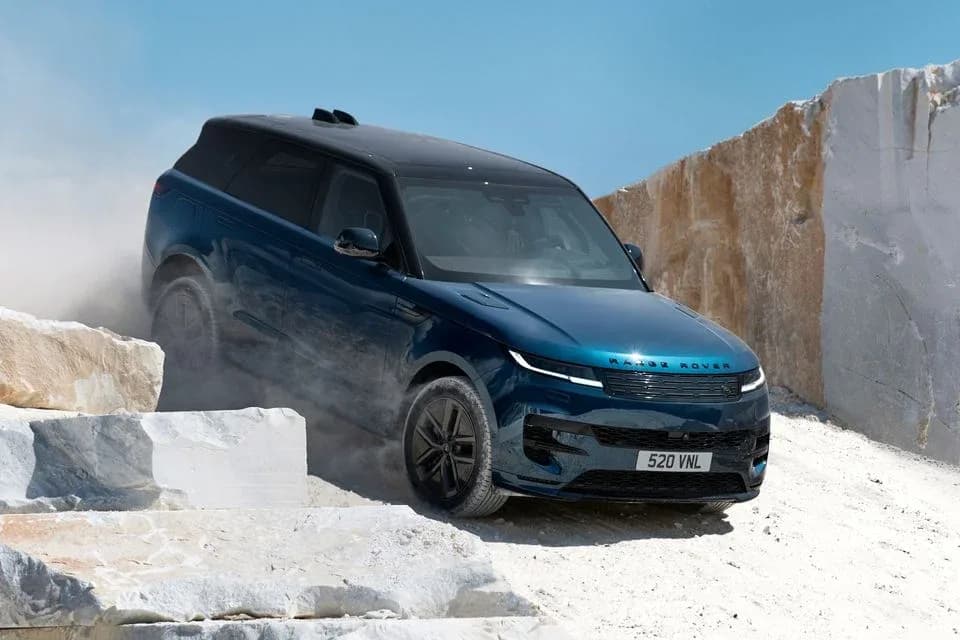
Image credit: JLR Australia. Overseas model shown.
The battery-electric Range Rover Sport is confirmed for Australia, and JLR Australia has put two prices on it. The Dynamic HSE is $226,518 and the Autobiography is $249,518, both before on-road costs, according to the announcement as reported by Australian outlets, with first cars due in March 2027. Range Rover's own Australian site already has a page for the car and a Build and order button, though no price is shown on it yet.
The numbers on that page are strong: 405kW, 850Nm, up to 609km and a 22-minute fast charge. The more useful question for anyone shopping a Range Rover Sport is what the electric one costs you against the petrol, diesel and plug-in versions that share its showroom, and the answer is mostly towing. For the traditional Sport buyer who pulls a boat or a horse float, that matters more than the range figure. Here is how it stacks up.
Pricing
Both announced grades use the EV550 powertrain, so the table is short. (JLR's global announcement also mentions a lower-output 450PS version; nothing has been said about it for Australia.) The two grades with an announced Australian price:
| Variant | Drive | Power / torque | Price (before on-roads, announced) |
|---|---|---|---|
| Battery electric (EV550) | |||
| Dynamic HSE | All-wheel drive, twin motor | 405kW / 850Nm | $226,518 |
| Autobiography | All-wheel drive, twin motor | 405kW / 850Nm | $249,518 |
That is a $23,000 step between the two. JLR has not published an Australian equipment list by grade, so we cannot yet tell you what the Autobiography adds on the electric car. One thing to watch: JLR's Australian online configurator currently lists the electric powertrain against four specifications, Dynamic SE, Dynamic HSE, Autobiography and a First Edition, matching the four JLR named in its global announcement. Only two have an announced Australian price. If a Dynamic SE does arrive here, it would be the cheaper way in, but nothing has been announced for it.
The prices are also worth reading against the full-size Range Rover Electric, which Australian outlets report is priced from $317,718 before on-roads. On JLR's own figures, the two share the EV550 badge, 405kW, 850Nm and a 118.5kWh battery. On those reported prices, the Sport is $91,200 cheaper and quotes slightly more range on Range Rover's Australian site (609km against 600km for the big car). The big car buys you more space and presence. The Sport buys you the same drivetrain for a lot less.
The Powertrain and the Chassis
Range Rover's Australian page lists the following for the EV550, and JLR's configurator and global announcement add the battery size:
| Spec | Range Rover Sport Electric (EV550) |
|---|---|
| Power / torque | 405kW / up to 850Nm |
| 0 to 100km/h (claimed) | 4.5 seconds, with Dynamic Launch Mode |
| Battery | 118.5kWh, 800-volt architecture |
| Range (up to) | 609km (lab figure, see below) |
| DC fast charge | 10 to 80% in 22 minutes on a 350kW charger |
| AC charge, 0 to 100% | 7 hours at 22kW, 19 hours at 7kW |
| Braked towing | Up to 2,500kg |
| Battery warranty | 8 years or 160,000km |
JLR calls 850Nm the most torque of any Range Rover Sport to date, and the 4.5-second claim matches the 0 to 100km/h time we list for the V8 Dynamic HSE P530. Underneath, the Australian page lists Electronic Active Roll Control, Dynamic Air Suspension, single pedal driving that will hold the car on a slope without the brake, and two options worth ticking if you want them: All-Wheel Steering and a second, illuminated AC charge port so you can plug in from either side.
JLR's global announcement makes two engineering claims that explain why this is more than a Sport with a battery bolted in: a body structure 61 per cent stiffer and a centre of gravity 73mm lower than the plug-in hybrid Sport. It also says the car is built in Solihull in the UK on the same lines as the petrol, diesel and plug-in versions. These are JLR's claims about the car, not something we have measured, and we have not driven it.
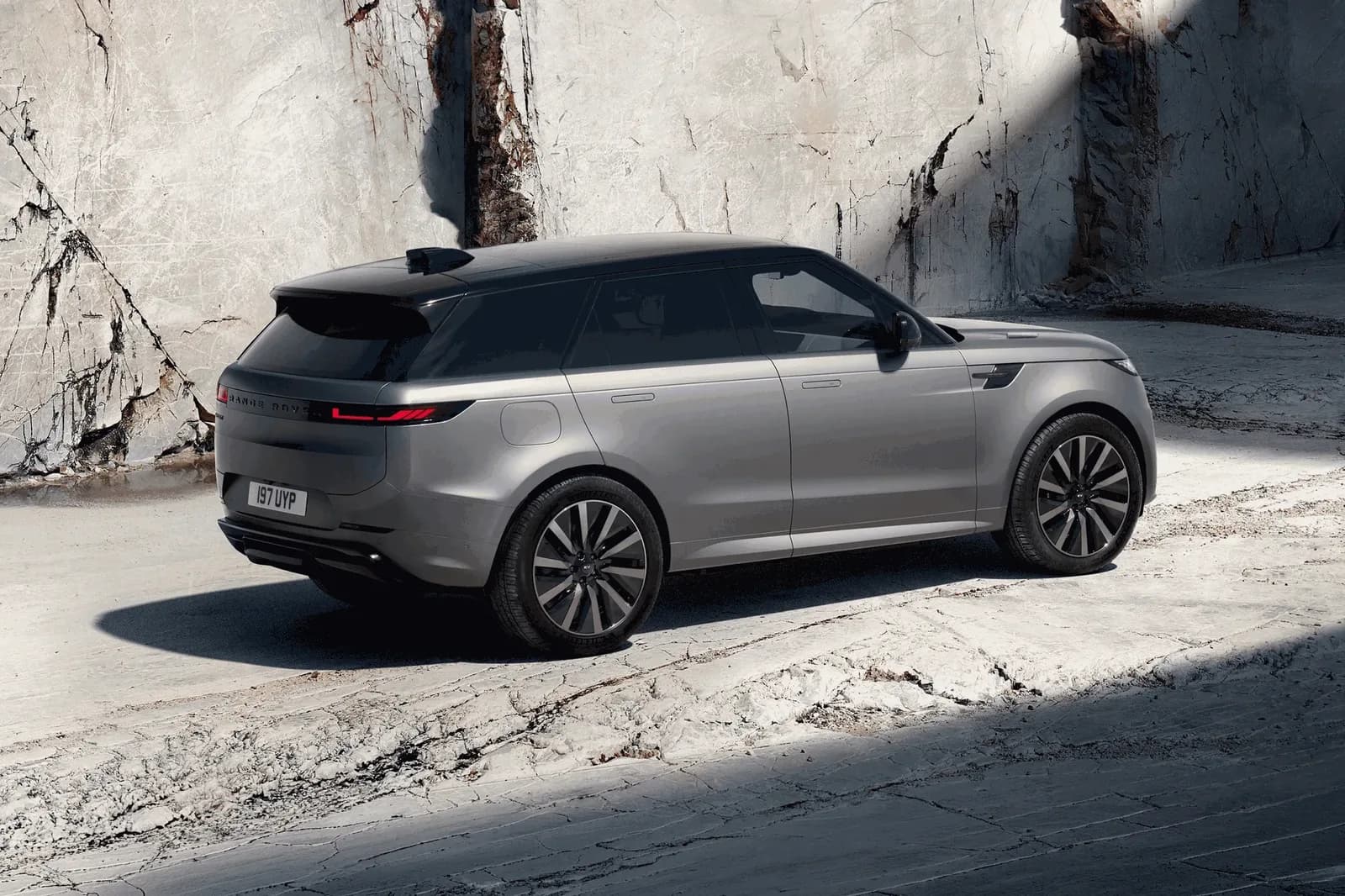
Image credit: JLR Australia. Overseas model shown.
What It Gives Up: Towing
This is the part of the story that matters most to the people who already own a Range Rover Sport. A lot of them tow, and the Sport has always been rated for it. The electric one is rated to 2,500kg. Here is where that sits in the family:
| Range Rover Sport | Power / torque | Braked towing |
|---|---|---|
| Dynamic HSE D350 (diesel) | 258kW / 700Nm | 3,500kg |
| Dynamic HSE P530 (V8 petrol) | 390kW / 750Nm | 3,500kg |
| Dynamic HSE P460e (plug-in hybrid) | 338kW / 660Nm | 3,000kg |
| Sport Electric EV550 | 405kW / 850Nm | 2,500kg |
So the most powerful car in that table, and the one JLR says has the most torque of any Range Rover Sport, has the lowest tow rating of the four. A tonne down on the diesel can be the difference between a large caravan being inside the rating and not. If your van or boat, loaded, weighs more than 2.5 tonnes, the electric Sport is off your list before you look at anything else. Our TowingSorted planner will help you work out what your rig actually weighs, and our towing capacity explainer covers why the number on the brochure is not the whole story.
The second catch is range while towing. JLR's own footnote says off-roading, towing and low-range use will substantially affect range, and it offers optional Towing Range Prediction to help plan around it. It has not published a towing range figure, and we are not going to invent one. What we can say is that a long trip with a heavy trailer means planning charging stops you would not need in the diesel D350.
What the Charging Figures Mean in Practice
The fast-charge number is good. Range Rover quotes 10 to 80 per cent in 22 minutes on a 350kW DC charger, or up to 220km added in 10 minutes. Seventy per cent of a 609km range is roughly 425km of lab-cycle range for a coffee-length stop, which on a road trip is exactly what you want. Two catches: that needs a charger that can deliver the power, and Range Rover's footnote says times vary with the battery's age, temperature and starting charge. JLR has not published the car's peak DC charging power for Australia, only the charger rating.
At home, the maths is slower. Range Rover says a full charge takes 19 hours on a 7kW wallbox, which is a typical single-phase home charger. Spread across 609km, that works out at a bit over 30km of range per hour plugged in. For a normal week that is fine: if you drive 50km a day, you are replacing it in under two hours a night. What 19 hours rules out is plugging in flat on Sunday night and leaving full on Monday morning. The 7-hour figure needs a 22kW charger, and that needs a three-phase supply, which not every home has. Ask an electrician before you assume you can have one. Our EV charging guide covers the options.
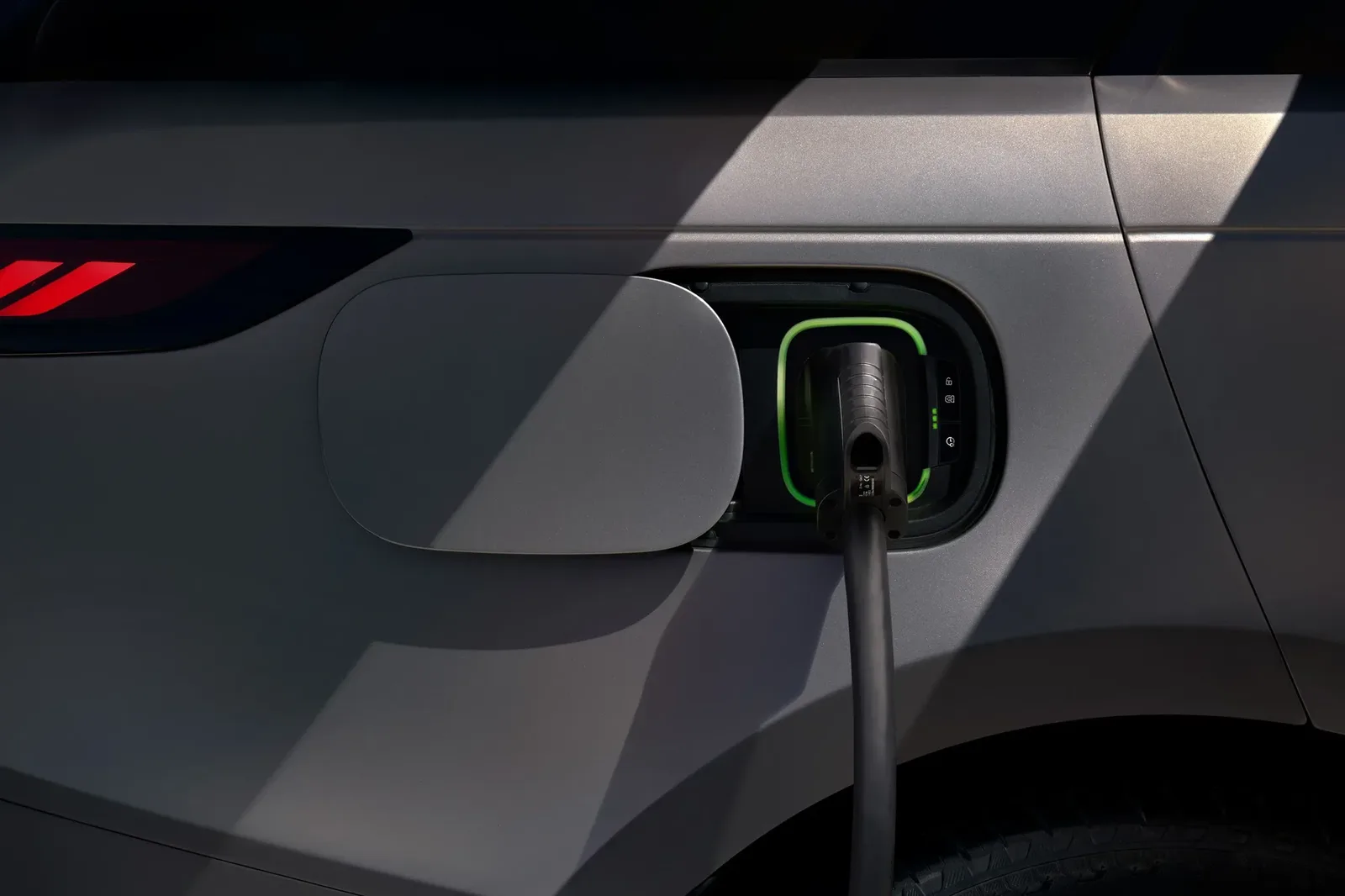
Image credit: JLR Australia. Overseas model shown.
What 609km Means at Highway Speed
Read the fine print on the 609km figure. Range Rover's Australian page footnotes it as "determined by testing under standardised laboratory conditions and to comply with ADR 81/02 and ADR 79/04", for comparison between vehicles, and says actual figures "will generally differ under real world driving conditions". A second footnote on the same page describes its figures as "NEDC calculated from official manufacturer's tests", and JLR's global announcement gives the same 609km as a WLTP number. The label varies; the point does not. It is a lab figure.
JLR's global announcement also gives its own real-world range of up to 333 miles, about 535km, measured on a production vehicle over a standardised route, and says the car's aerodynamic grille and wheel designs are worth up to 10 miles (about 16km) at motorway speeds. Australian highway driving at 110km/h, a hot day with the air-conditioning working, and big wheels will all pull the real figure down further. Use the estimator below to see how much. The Sport Electric is not in it yet, but the Cayenne Electric and Polestar 3 are, and they are the right size of car to get a feel for it.
Add cars to compare (0/4)
Search and add a car above to see the speed vs range calculator
Add up to 4 cars to compare their efficiency at different speeds
Against the Porsche Cayenne Electric
The obvious rival is the Porsche Cayenne Electric, and it is the closest rival we list with a price checked against the manufacturer. Here are the two electric Range Rover Sports next to the two Cayennes, plus two cheaper electric SUVs of similar size:
| Model | Price (before on-roads) | Power / torque | Range (up to) | Braked towing |
|---|---|---|---|---|
| Range Rover Sport Electric Dynamic HSE | $226,518 (announced) | 405kW / 850Nm | 609km (lab) | 2,500kg |
| Range Rover Sport Electric Autobiography | $249,518 (announced) | 405kW / 850Nm | 609km (lab) | 2,500kg |
| Porsche Cayenne Electric | $167,800 | 325kW / 835Nm | 542km (WLTP) | 3,500kg |
| Porsche Cayenne Electric S | $193,100 | 490kW / 1,080Nm | 571km (WLTP) | 3,500kg |
| Mercedes-Benz EQE 350 4MATIC SUV | $146,700 | 215kW / 765Nm | 574km (WLTP) | 1,800kg |
| Polestar 3 Dual Motor | $131,100 | 400kW / 740Nm | 647km (WLTP) | 2,200kg |
Line the Dynamic HSE up against the base Cayenne Electric and the Range Rover is $58,718 dearer. For that you get 80kW more, 15Nm more, a longer quoted range (on a different test label, so treat the gap as indicative), and the off-road focus of a Range Rover, with JLR quoting a 900mm wading depth in its global announcement. What you give up is a tonne of towing: the Porsche is rated to 3,500kg, the same as a diesel Sport. Even the Cayenne Electric S, with 490kW and 1,080Nm, is $33,418 cheaper than the Dynamic HSE and still tows 3,500kg. We list both Cayennes with a 390kW DC charging peak.
Put simply, on paper the Porsche gives you more for less, and the Range Rover is priced on the badge, the cabin and the go-anywhere reputation. Plenty of buyers at this level will happily pay for exactly that. Just go in knowing it. If you do not need a Range Rover and do not tow heavy, the Polestar 3 Dual Motor quotes a longer WLTP range for $95,418 less, and if you need seven seats, the Volvo EX90 Plus Single Motor has them at $106,990.
Today's Range Rover Sports and Electric Rivals, Side by Side
The Sport Electric is not on sale yet, so it is not in the comparison below. What is in it are the cars you can order today: the plug-in hybrid and diesel Range Rover Sport it will sit beside, and the electric SUVs a buyer at this money is already weighing. Pick any two.
Pick two
Today's Range Rover Sport and electric rivals, side by side
The plug-in and diesel Range Rover Sport, and four electric SUVs on sale now. The new Sport Electric is not listed yet. Tap any two.
| Spec | Range Rover Sport Dynamic HSE P460e | Range Rover Sport Dynamic HSE D350 |
|---|---|---|
| Price from | $190,545RRP, before on-roads | $176,086RRP, before on-roads |
| Fuel use | 3.0 L/100kmcombined cycle from a full battery | 7.3 L/100km |
| Electric-only range | 118 km | N/Ano plug, cannot run on battery alone |
| Seats | 5 | 5 |
| Braked towing | 3,000 kg | 3,500 kg |
| ANCAP | 5 starstested 2022 | 5 starstested 2022 |
| Warranty | 5 yrunlimited km | 5 yrunlimited km |
| Service interval | No data | No data |
Prices shown are each car's listed price and are not all on the same basis. The Range Rover Sport prices shown here are awaiting a fresh check against Land Rover Australia, so confirm them with a retailer. Electric range is the WLTP figure where the car has a plug. The Range Rover Sport Electric will be added once JLR Australia publishes its full specification. Figures come from our car database, which is built from Australian manufacturer documents. A blank field reads “No data” rather than a zero or a dash.
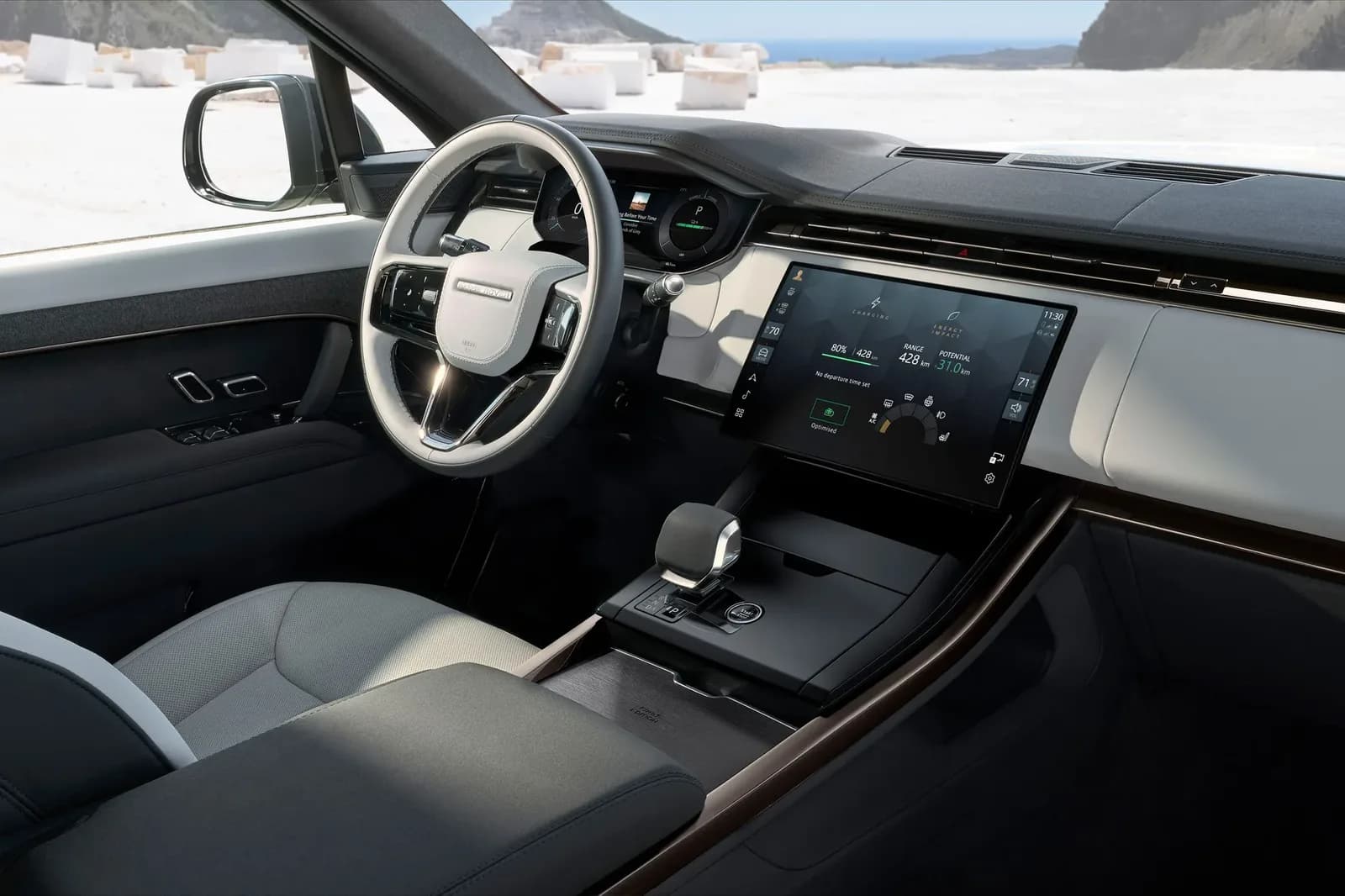
Image credit: JLR Australia. Overseas model shown.
Tax: Short Version
Both announced prices are more than double the $91,661 luxury car tax threshold for fuel-efficient vehicles in the 2026-27 financial year. Luxury car tax applies, and there is no fringe benefits tax exemption to talk about, because that exemption only covers electric cars under the threshold. The proposed $120,000 threshold for zero-emissions cars is not law, and it would not change the picture for a car at this price anyway. This is general information, not tax advice. Our 2026-27 luxury car tax explainer has the detail.
What JLR Has Not Told Us Yet
An announced price and a model page are not a specification sheet. Still missing for Australia:
- Equipment by grade. There is no Australian list of what the Dynamic HSE and Autobiography each include on the electric car, or what the options cost.
- Kerb weight, payload and towball download. None published. A heavy battery usually means less payload, which matters if you carry a family and luggage and tow as well.
- Energy consumption. JLR has not published an Australian kWh/100km figure, which is what decides running costs.
- Peak DC charging power. Only the charger rating and the 22-minute time are given.
- An ANCAP rating. There is none, and a rating for another Range Rover Sport does not carry across.
- The other two specifications. Dynamic SE and First Edition appear in JLR's configurator with no Australian price, and drive-away pricing is not yet shown.
What This Means for Buyers
If you want a Range Rover Sport and you do not tow more than 2.5 tonnes, the electric one makes a strong case on paper: more power than any Sport we list bar the SV, the most torque of any Range Rover Sport on JLR's claim, a lab range over 600km, and genuinely quick fast charging. It is also the cheaper way into Range Rover's electric drivetrain, by a wide margin, against the full-size car.
If you tow a big van or a heavy boat, keep the diesel. The D350 tows 3,500kg with none of the range planning, and even the P460e plug-in manages 3,000kg with the option of running short trips on electricity. And if you are cross-shopping on value, price the Cayenne Electric first, because it does most of the same things for a lot less and tows the full 3,500kg.
With arrivals reported for March 2027, there is time to wait for the Australian specification sheet before you put a deposit down. We will add the Sport Electric to the CarSorted directory with full specifications once JLR Australia publishes them, and you can see how it fits among its peers in our best electric luxury SUVs guide.
Disclaimer: Australian prices, grades and timing are as announced by JLR Australia and reported by Australian motoring outlets; at the time of writing they do not appear on JLR's public Australian website, and its configurator lists the electric model without prices. The full-size Range Rover Electric price is also as reported. Power, torque, acceleration, range, charging, towing and battery warranty figures were checked against Range Rover's Australian Range Rover Sport Electric page on 1 October 2026. Battery size is from JLR's Australian configurator; the body stiffness, centre of gravity, build location, real-world range and aerodynamic figures are from JLR's global announcement of 30 September 2026. Prices are before on-road costs and exclude options. The luxury car tax threshold quoted is the 2026-27 figure for fuel-efficient vehicles and changes each 1 July; this is general information, not tax advice. Rival prices are the ones listed on CarSorted at the time of writing. Confirm price, specification and availability with a Range Rover retailer before ordering.