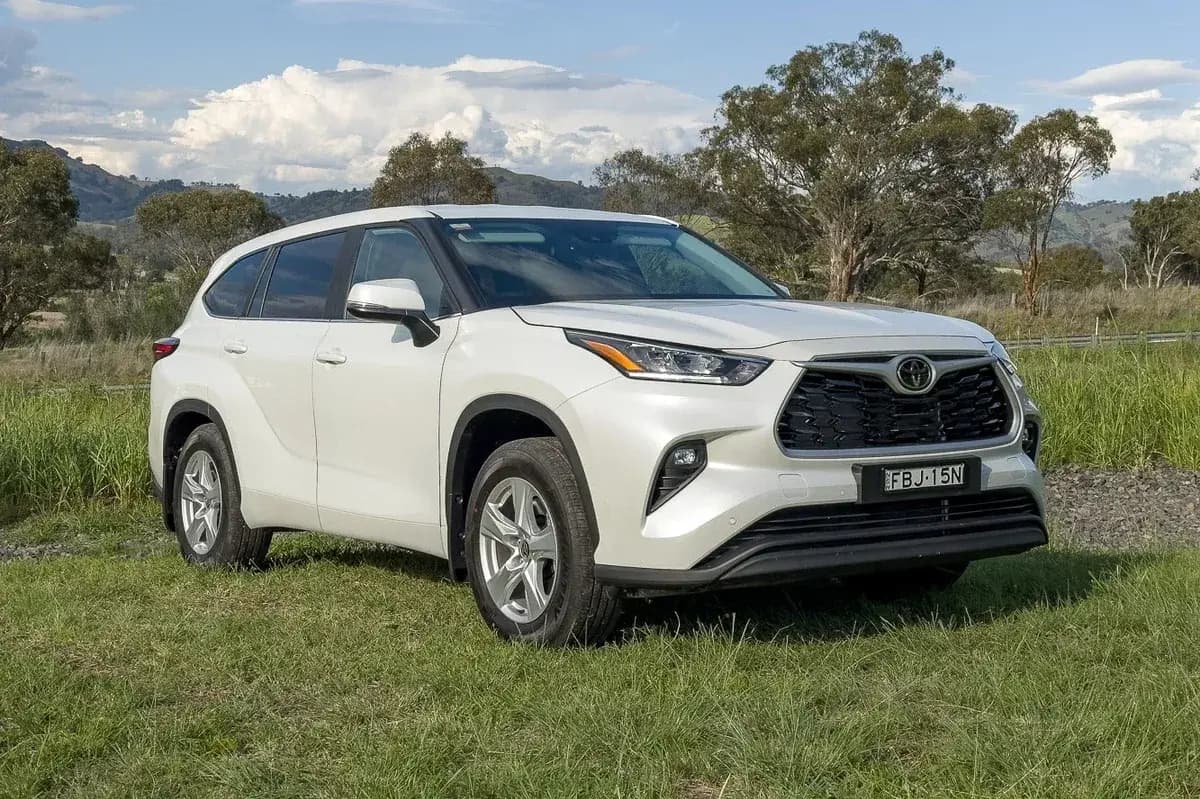
Every seven-seater looks roomy in the brochure. The test that catches families out is the school run with all seven seats in use: what still fits in the boot? On the manufacturers' own figures, the BYD Sealion 8 holds 270 litres behind its third row and the Toyota Kluger holds 241. That's a 29-litre gap. The bigger differences open up when you fold seats, and in the garage.
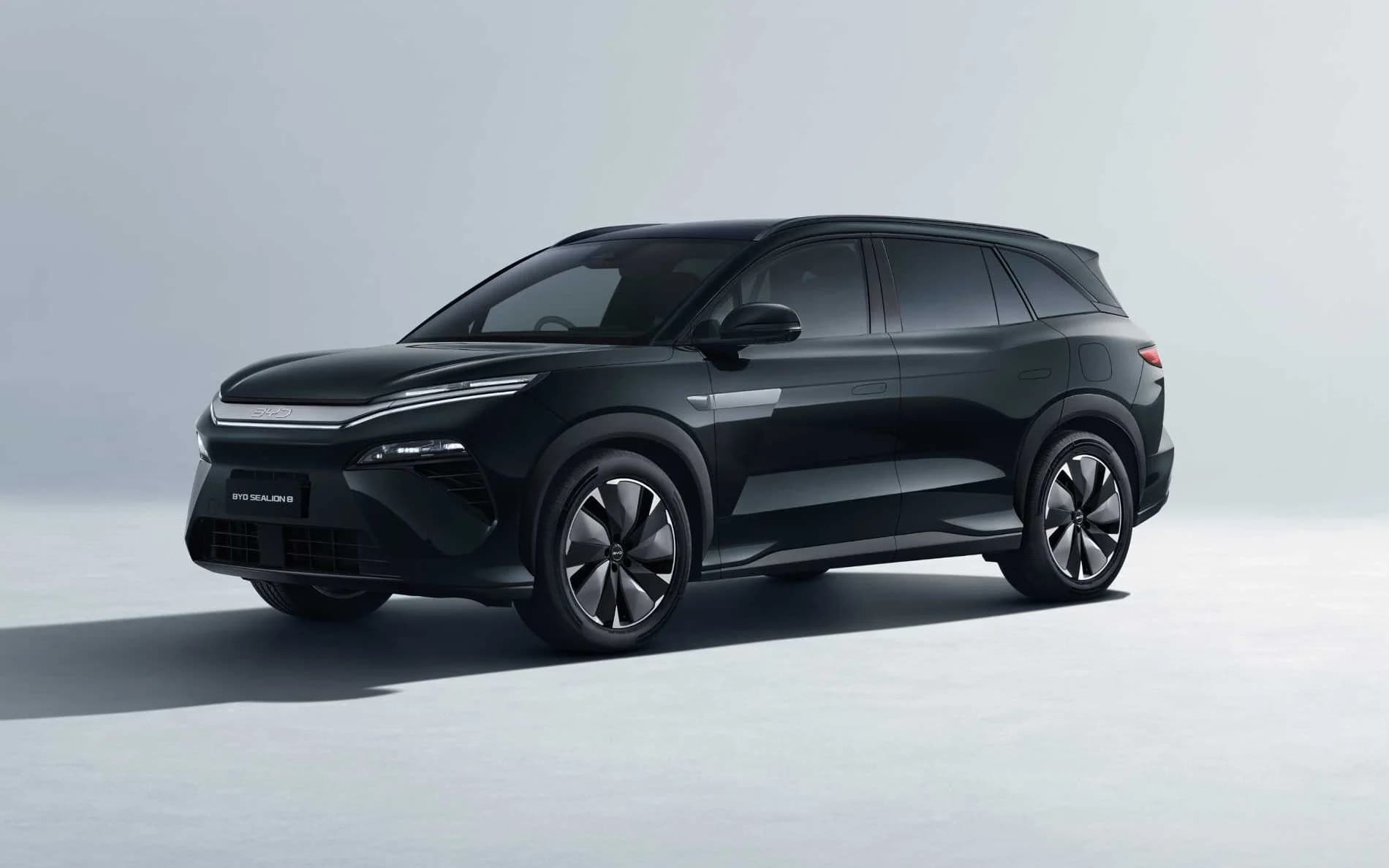
Image credit: BYD Australia
The boot, seat by seat
| Boot (litres) | BYD Sealion 8 | Toyota Kluger | Difference |
|---|---|---|---|
| All seven seats up | 270 | 241 | Sealion 8 29 more |
| Third row folded | No data | 552 | No data |
| Second and third rows folded (maximum) | 1,960 | 1,150 | Sealion 8 810 more |
A note on how these line up. Toyota labels each Kluger figure with the seats it assumes. BYD's Sealion 8 sheet prints three boot figures in a row without labels, and calls the largest, 1,960 litres, its maximum. The smallest, 270 litres, is the all-seats-up figure by elimination. Neither manufacturer says which measuring method it used, so the 29-litre gap is close enough to call a draw in practice. The 810-litre gap with everything folded is not.
What about legroom in the third row?
Neither of our rows holds a third-row legroom figure, so we can't answer it from the data, and we won't guess. The one number we can offer is the wheelbase: the Sealion 8's is 100mm longer, and wheelbase is where cabin length comes from. Sit in the third row of both before you decide.
The rest of the dimensions
| Dimension | BYD Sealion 8 | Toyota Kluger | Difference |
|---|---|---|---|
| Length (mm) | 5,040 | 4,966 | Sealion 8 74 longer |
| Width (mm) | 1,996 | 1,930 | Sealion 8 66 wider |
| Height (mm) | 1,760 | 1,755 | Sealion 8 5 taller |
| Wheelbase (mm) | 2,950 | 2,850 | Sealion 8 100 longer |
| Ground clearance (mm) | 140 | 196 | Kluger 56 more |
| Seats | 7 | 7 | Same |
| Kerb weight (kg) | 2,315 (FWD) / 2,580 (AWD) | 2,050 (GX, GXL) / 2,095 (Grande) | Sealion 8 265 (base) to 485 (top) heavier |
| Payload (kg) | 655 (FWD) / 685 (AWD) | 655 | Up to 30 more, Sealion 8 AWD |
| Braked towing (kg) | 1,800 (FWD) / 2,000 (AWD) | 2,000 | Level on AWD |
| Tow ball download (kg) | 100 | 200 | Kluger 100 more |
The Kluger sits 56mm higher off the ground, which helps on steep driveways and rough tracks. The Sealion 8 is the bigger, heavier car: 265kg heavier on the cheapest grades (Dynamic FWD against GX) and 485kg heavier on the dearest (Premium AWD against Grande). Both tow 2,000kg braked in AWD form, but the Kluger's 200kg tow ball limit gives you more room to set up a caravan properly.
Will it fit the garage?
Measured against the AS/NZS 2890.1 residential parking space of 2.4 x 5.4m, the Sealion 8 leaves 360mm of length and 202mm either side of the body. The Kluger leaves 434mm of length and 235mm either side. Those are body widths without mirrors, which neither row records, so on a 2m-wide car the door room in a single garage is something to check with the car in it.
So which one?
- You use all seven seats most days: close to a draw on boot space, 270 litres against 241. Decide on the third-row seat itself.
- You fold the seats to haul: the Sealion 8, with 810 litres more at maximum.
- Your driveway is steep or your garage is tight: the Kluger, with 56mm more clearance and a 66mm narrower body.
- You tow a caravan: both reach 2,000kg in AWD form; the Kluger's 200kg ball download is the more useful rating.
Cars in this story
5 cars
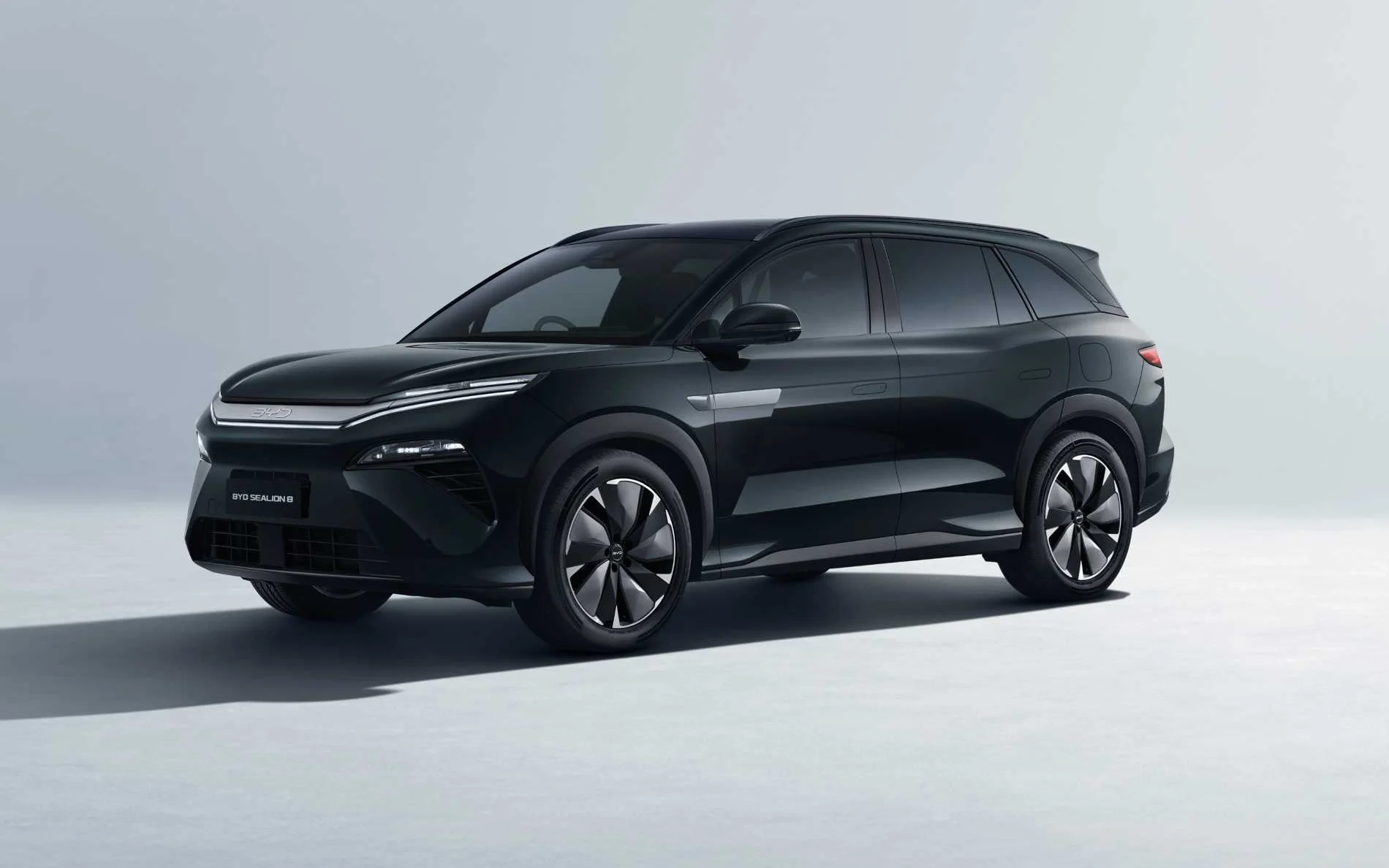
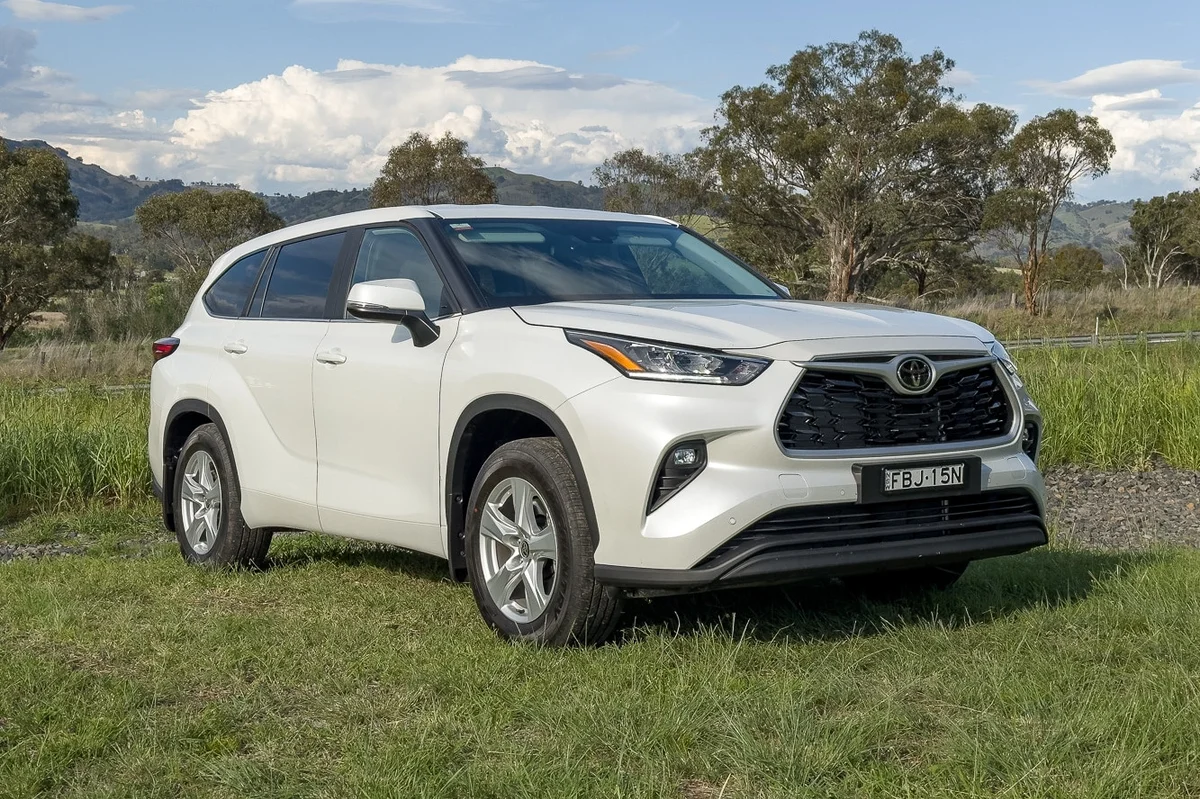
Price shown is each car's stored figure with its basis and check date. Images: BYD Australia.
See all BYD modelsCompare them yourself
- BYD Sealion 8 Dynamic FWD spec sheet
- BYD Sealion 8 Premium AWD spec sheet
- Toyota Kluger GX Hybrid AWD spec sheet
- Toyota Kluger Grande Hybrid AWD spec sheet
Sources: CarSorted car rows 652, 653 and 654 (BYD Sealion 8) and 35, 36 and 37 (Toyota Kluger), as at 8 October 2026. Boot figures match Toyota Australia's Kluger specification table and BYD Australia's Sealion 8 brochure. Parking space size: AS/NZS 2890.1, residential (User Class 1A), 2.4 x 5.4m. Individual vehicles vary; check the car you're buying.