2026 Mazda CX-5 G25 Pure AWD review
Every CX-5 grade, from the G25 Pure to the G25 Akera, pairs a 132kW 2.5-litre petrol engine with all-wheel drive.
Data checked: specs 28 Aug 2026, price 7 Oct 2026
Text fact-checked against our data 30 August 2026Review snapshot
Model reviewed
Mazda CX-5 G25 Pure AWDFrom $39,990 RRP
Excl. on-road costs
from $230/wk in VIC, excludes servicing and insurance (estimate)
67/100
CarSorted Score
- Fuel use
- 7.4 L/100km
- Towing (braked)
- 1,800kg
- Boot
- 466L
Live offer: $43,990 drive-away. Mazda CX-5 G25 Pure from $43,990 drive-away All deals
The Mazda CX-5 is the mid-size SUV that leans on design, cabin materials and towing. Starting from $39,990, it undercuts most rivals on price with a 132kW 2.5-litre and all-wheel drive across the range, and every grade is rated to tow 1,800kg. The trade-off is fuel economy: at a claimed 7.4L/100km, it uses more than the RAV4 Hybrid. If you want a premium-looking SUV that can tow properly, the CX-5 is seriously hard to beat.
Competitors
This review is built from Mazda's published figures, ANCAP and our own calculators. We have not driven this car.
Written 7 April 2026. The snapshot, tables, prices and scores on this page update from our car data; figures quoted in the text are as at that date.
The CX-5 has been a staple of Australian driveways for over a decade. While other manufacturers chase hybrid drivetrains and massive infotainment screens, Mazda has quietly focused on getting the fundamentals right: design, cabin materials and value. The result is a mid-size SUV that consistently outsells rivals that get more attention in the press.
We've pulled the specs, run the numbers, and compared it against everything in its class to figure out whether the CX-5 still deserves its spot near the top. Spoiler: it does, but not for every buyer.
Design: Exterior
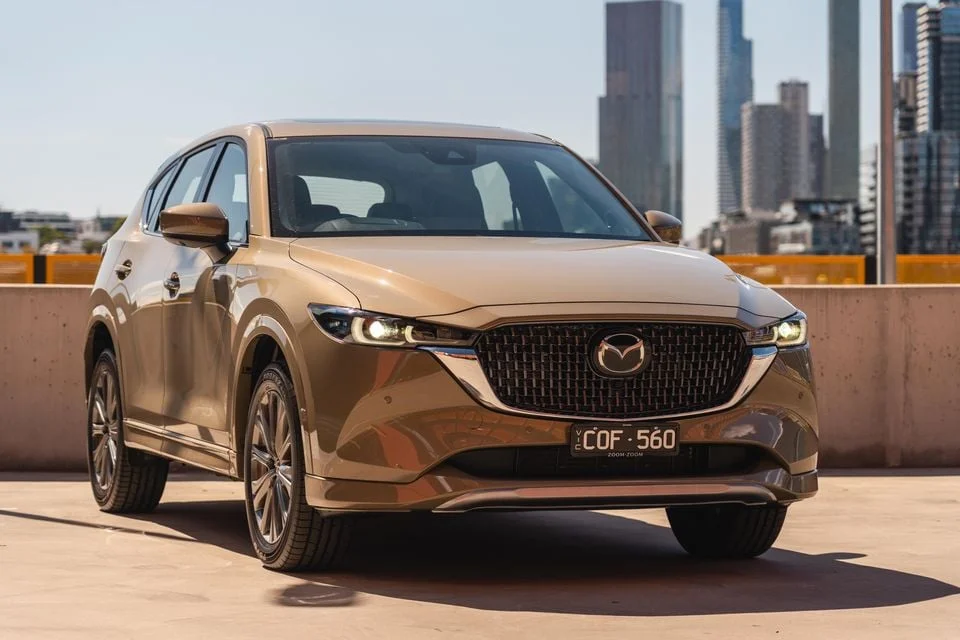
The CX-5 is a genuinely good-looking thing. Mazda's Kodo, "Soul of Motion". Design language gives it flowing lines and a sculpted body that catches light in a way most competitors simply don't. There are no awkward creases or overwrought styling details. It's clean, elegant, and looks more expensive than it is. That's become Mazda's signature trick.
The front end features Mazda's signature grille with chrome accents, slim LED headlights, and a broad bonnet that gives it a premium stance. From the side, the rising beltline and pronounced wheel arches create a sense of forward motion even when it's parked. The rear is tidy with slim tail lights that wrap around the body.
The G25 Pure rolls on 17-inch alloys, which look fine but a touch understated. The GT SP gets 19-inch wheels that fill the arches properly and give it a sportier appearance. Mazda's paint quality is also a cut above, the Soul Red Crystal and Machine Grey colours in particular are the standouts. They're premium paint options (around $500-$800 extra), but they're worth it if you care about kerb appeal.
| Key details | 2026 Mazda CX-5 G25 Pure AWD |
|---|---|
| Engine | 2.5L 4-cyl |
| Power | 132kW |
| Torque | 242Nm |
| Drive type | AWD |
| Transmission | Automatic |
| Power-to-weight ratio | 77 kW/tonne |
| Weight | 1,720kg (kerb) |
| Spare tyre type | T155/80R17 temporary |
| Tow rating | 1,800kg braked750kg unbraked |
| Turning circle | 11.2m |
| Fuel consumption | 7.4 L/100km |
| Boot | 466L seats up, 1,594L folded |
| ANCAP | 5 stars (2025) |
Key details for 3 other variants
| Key details | 2026 Mazda CX-5 G25 Evolve AWD |
|---|---|
| Engine | 2.5L 4-cyl |
| Power | 132kW |
| Torque | 242Nm |
| Drive type | AWD |
| Transmission | Automatic |
| Power-to-weight ratio | 77 kW/tonne |
| Weight | 1,720kg (kerb) |
| Spare tyre type | T155/80R17 temporary |
| Tow rating | 1,800kg braked750kg unbraked |
| Turning circle | 11.2m |
| Fuel consumption | 7.4 L/100km |
| Boot | 466L seats up, 1,594L folded |
| ANCAP | 5 stars (2025) |
| Key details | 2026 Mazda CX-5 G25 Touring AWD |
|---|---|
| Engine | 2.5L 4-cyl |
| Power | 132kW |
| Torque | 242Nm |
| Drive type | AWD |
| Transmission | Automatic |
| Power-to-weight ratio | 77 kW/tonne |
| Weight | 1,720kg (kerb) |
| Spare tyre type | T155/80R17 temporary |
| Tow rating | 1,800kg braked750kg unbraked |
| Turning circle | 11.2m |
| Fuel consumption | 7.4 L/100km |
| Boot | 466L seats up, 1,594L folded |
| ANCAP | 5 stars (2025) |
| Key details | 2026 Mazda CX-5 G25 GT SP AWD |
|---|---|
| Engine | 2.5L 4-cyl |
| Power | 132kW |
| Torque | 242Nm |
| Drive type | AWD |
| Transmission | Automatic |
| Power-to-weight ratio | 77 kW/tonne |
| Weight | 1,720kg (kerb) |
| Spare tyre type | T155/80R17 temporary |
| Tow rating | 1,800kg braked750kg unbraked |
| Turning circle | 11.2m |
| Fuel consumption | 7.4 L/100km |
| Boot | 466L seats up, 1,594L folded |
| ANCAP | 5 stars (2025) |
Is it good value?
Rivals: Three Alternatives Worth Considering
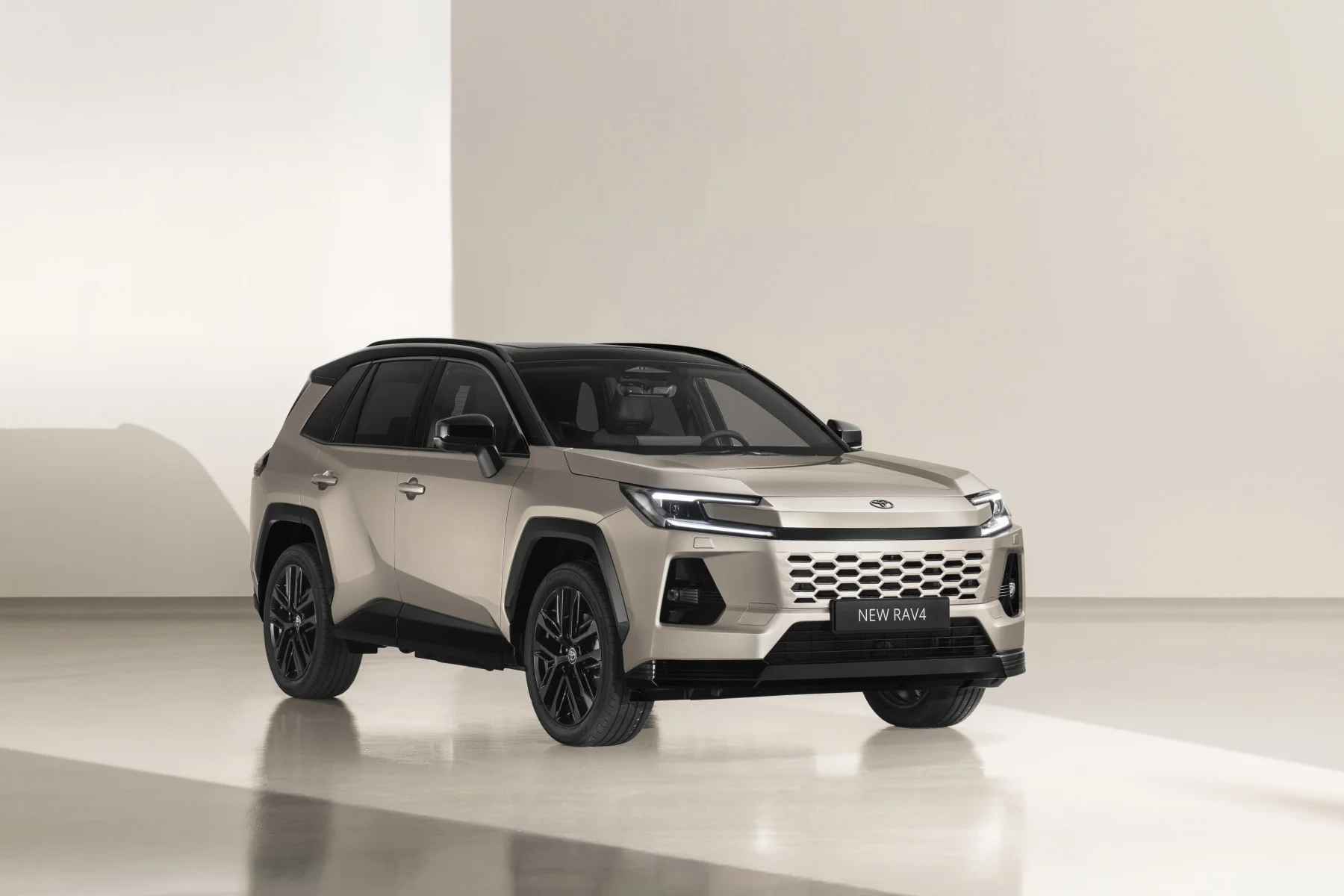
Toyota RAV4 Hybrid (from $45,990)
The 2WD RAV4 Hybrid claims 4.5L/100km, which on the claims saves roughly $830 a year at 15,000km and $1.90/L. Toyota's resale values are typically the strongest in class. But it's around $6,000 more expensive at the entry point, and the 2WD grades' 800kg tow limit (1,500kg for AWD) is restrictive. If running costs are everything, RAV4. If you want the complete package, CX-5. Full RAV4 vs CX-5 comparison.
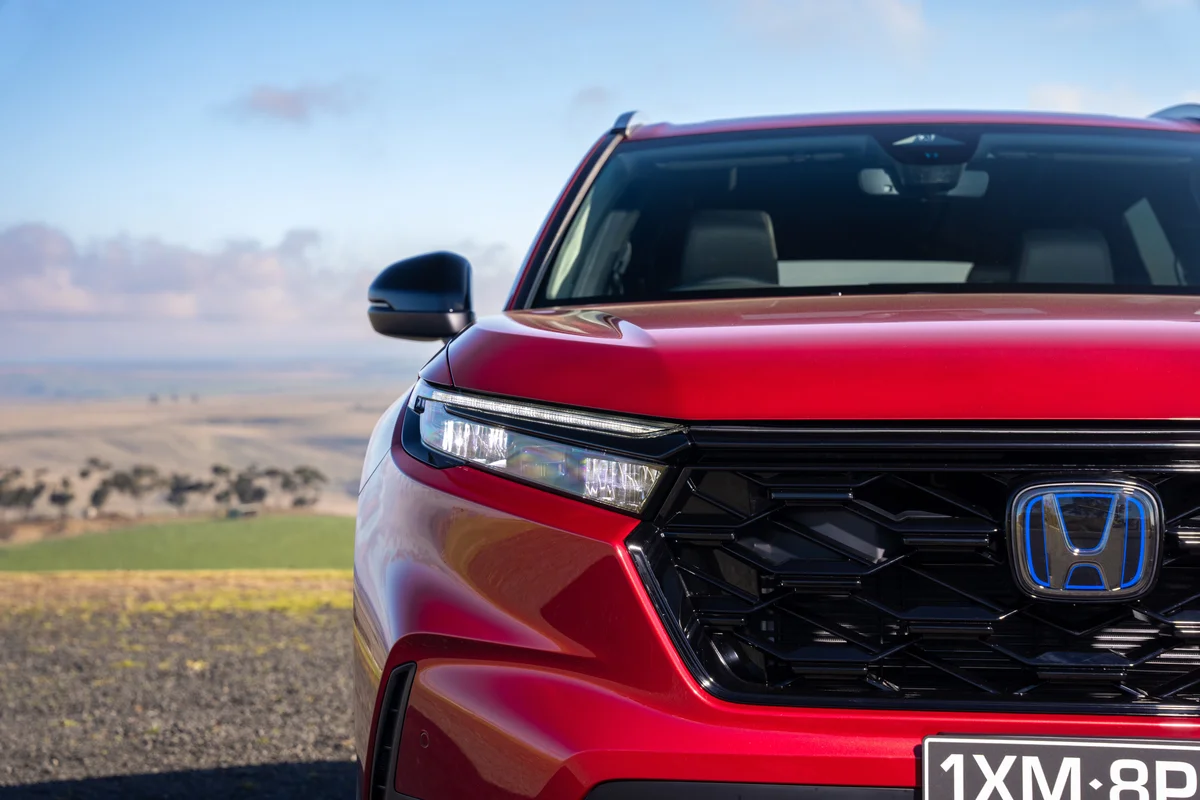
Honda CR-V (from $41,800)
Honda quotes 589L for the five-seat CR-V's boot against the CX-5's 466L, and the e:HEV RS hybrid claims 5.5L/100km. Honda's reliability record is strong. But the CR-V starts $1,810 above the CX-5, and towing tops out at 1,500kg (1,000kg for the seven-seaters, 750kg for the hybrid). Prioritise space above all else? CR-V. Full CR-V vs CX-5 comparison.
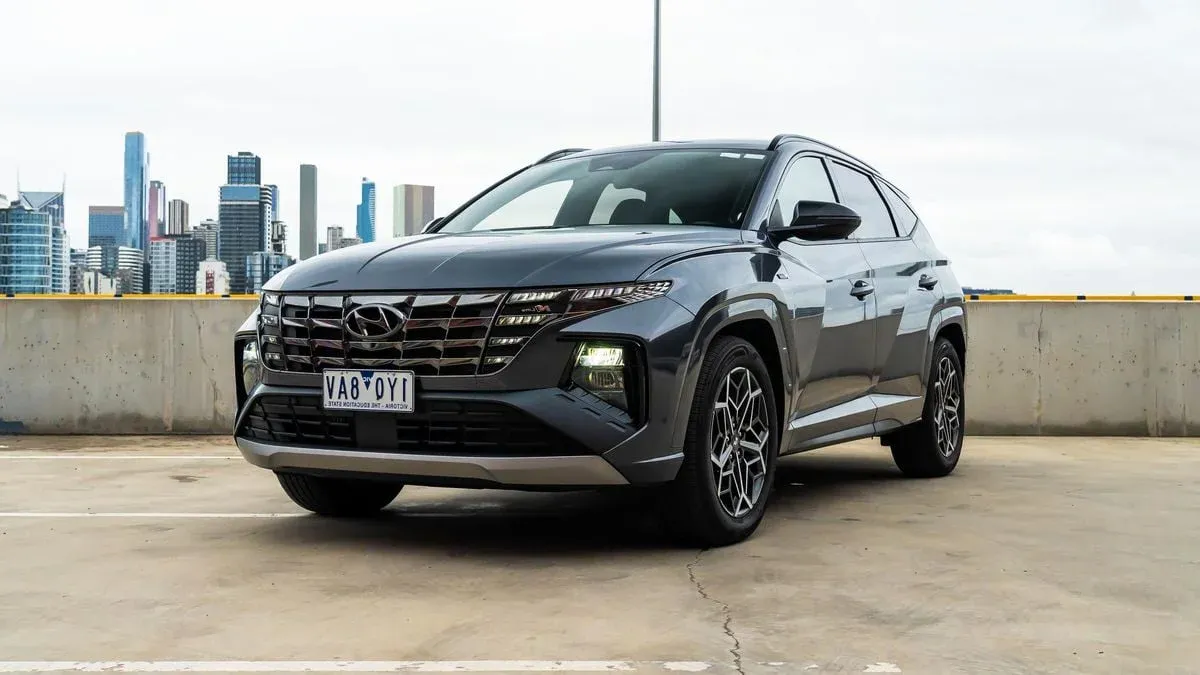
Hyundai Tucson (from $39,350)
The Tucson is closely priced to the CX-5 and packs more tech per dollar, including a larger 10.25-inch screen, more dramatic styling, and a hybrid option at 4.9L/100km (5.3L/100km with AWD). The 5-year unlimited-km warranty matches Mazda. The petrol Tucson tows 1,650kg, 150kg less than the CX-5, while the hybrid is rated at 1,900kg, 100kg more. The interior is modern and well-equipped. Full Tiguan vs CX-5 comparison | Full X-Trail vs CX-5 comparison.
| Key details: Mazda CX-5 G25 Pure AWD | |
|---|---|
| Price | From $39,990 RRPExcl. on-road costs |
| Drive-away estimate | Calculating... |
| Cost per week in VIC | from $230/wk in VIC, excludes servicing and insuranceRepayments, fuel or charging, rego and CTP, servicing, tyres and insurance where held. Estimate only, not a quote. |
| Body | SUV |
| Powertrain | Petrol, 2.5L 4-cyl |
| Towing (braked / unbraked) | 1,800kg / 750kg |
| Seats | 5 |
| Warranty | 5yr / unlimited km |
| Rivals | Toyota RAV4, Honda CR-V, Hyundai Tucson |
| The Mazda CX-5 range on sale | Price | Powertrain | Fuel or energy use |
|---|---|---|---|
| G25 Pure AWD | From $39,990 RRP | Petrol, AWD | 7.4 L/100km |
| G25 Evolve AWD | From $42,990 RRP | Petrol, AWD | 7.4 L/100km |
| G25 Touring AWD | From $47,490 RRP | Petrol, AWD | 7.4 L/100km |
| G25 GT SP AWD | From $51,990 RRP | Petrol, AWD | 7.4 L/100km |
| G25 Akera AWD | From $54,990 RRP | Petrol, AWD | 7.4 L/100km |
How much fuel does it use?
Efficiency: Fuel Economy in the Real World
Let's be upfront: the CX-5 is not a fuel miser. Mazda doesn't offer a hybrid, and that puts it at a disadvantage against the RAV4 Hybrid, Tucson Hybrid, and CR-V Hybrid on paper.
The G25 range claims 7.4L/100km combined on its 2.5-litre engine. Treat that as a lab figure: city driving with the air-con working will lift it.
At 15,000km annually and $1.90/litre, here's what the fuel bill looks like:
So the RAV4 Hybrid saves around $600-$700 a year in fuel. Over five years, that's $3,000-$3,500. But remember, the CX-5 G25 Pure is around $6,000 cheaper to buy than the RAV4. Even after five years of higher fuel costs, you're still ahead on total outlay at the entry point. The fuel economy gap only becomes meaningful if you keep the car for seven-plus years or drive significantly more than average.
The 56-litre fuel tank works out to about 775km on the claim, and less in practice. Not as impressive as the RAV4 Hybrid's 900km+, but still plenty for weekly commuting without constant trips to the servo.
| Fuel: Mazda CX-5 G25 Pure AWD | |
|---|---|
| Fuel use (combined) | 7.4 L/100km |
| Fuel type | Petrol |
| Minimum fuel grade | No data |
| Urban / extra-urban | 9.2 L/100km / 6.4 L/100km |
| Fuel tank | 58L |
| Range on a tank (calculated) | 784kmTank divided by the combined figure |
| CO2 (combined) | 173 g/km |
| Service interval | 12 months or 15,000km |
What does it cost to own?
Cost: Pricing and Running Costs
The CX-5 range starts with the G25 Pure at $39,990 before on-road costs. Every current grade runs the same 2.5-litre petrol engine (132kW and 242Nm) with an automatic and all-wheel drive. Step up through the G25 Evolve at $42,990 and G25 Touring at $47,490, then the sportier G25 GT SP at $51,990 and the flagship G25 Akera at $54,990, and you add progressively more kit rather than more engine.
Driveaway, expect to pay roughly $42,000-$59,000 depending on the variant and your state. The entry grades are genuinely competitive. The Hyundai Tucson starts at $39,350, the Toyota RAV4 Hybrid at $45,990, and the Honda CR-V at $41,800. The CX-5 Pure undercuts all three.
Fuel costs are the one area where the CX-5 can't match hybrid rivals. The G25 claims 7.4L/100km combined. At 15,000km per year and $1.90/litre, that's roughly $2,110 a year on the claim, and more in practice. A 2WD RAV4 Hybrid does the same distance for around $1,280 on its 4.5L/100km claim. Over five years, that's roughly $4,130. Meaningful, but the CX-5 counters with a lower entry price and its towing advantage.
Every grade gets the same 132kW and 242Nm. The extra spend as you move up the range buys equipment and trim rather than performance, so the value play is to buy the grade whose features you actually want.
Servicing costs are reasonable. Mazda offers capped-price servicing, with intervals at 12 months or 10,000km. Average annual service cost is around $250-$350. The 5-year unlimited-kilometre warranty matches Toyota and Hyundai, but falls short of Kia's seven-year offering.
| Warranty and servicing: Mazda CX-5 G25 Pure AWD | |
|---|---|
| Warranty | 5yr / unlimited km |
| Roadside assistance | 5 years |
| Service interval | 12 months or 15,000km |
| Capped-price servicing | No data |
Cost per week in VIC: from $230/wk in VIC, excludes servicing and insurance
- Repayment estimate$162/wk
$5,000 deposit, 5yr loan at an assumed 7.5% p.a. on the RRP. Not an offer of credit
- Fuel$42/wk
7.4 L/100km combined at $1.95/L ULP 91, the site default
- Rego + CTP$18/wk
VIC typical: car, metropolitan (high risk) zone, 12-month renewal, $958.80 a year. As at July 2026, VicRoads
- ServicingNo data
No data: no servicing cost held for this car
- Tyres$8/wk
Typical tyre spend for this type of car, scaled to 15,000 km a year (not this car's tyres)
- InsuranceNo data
No data: no insurance estimate held for this car
Based on 15,000 km a year in VIC. Estimate only, not a quote.
How safe is it?
Safety: ANCAP Rating and Features
The CX-5 carries a 5-star ANCAP safety rating. Mazda's i-Activsense safety suite is comprehensive across the range. Standard safety features on the G25 Pure include:
- Smart Brake Support (AEB) with pedestrian detection, day and night
- Radar cruise control with stop-and-go capability
- Lane-keep assist with departure warning
- Blind spot monitoring: standard even on the base model
- Rear cross-traffic alert standard
- Driver attention monitoring
- Reversing camera standard on all grades
- Six airbags
A key advantage over the RAV4: blind spot monitoring is standard on every CX-5, even the cheapest Pure. On the RAV4, you need to step up to the GXL (at $48,990) to get it. At $39,990, the CX-5 gives you this essential safety feature straight out of the box. That matters.
The Touring and above add front parking sensors, a 360-degree camera, and auto-dimming rear-view mirror.
| ANCAP: Mazda CX-5 G25 Pure AWD | |
|---|---|
| ANCAP rating | 5 stars (tested 2025) |
| Adult occupant | 90% |
| Child occupant | 91% |
| Vulnerable road users | 93% |
| Safety assist | 87% |
| Airbags | No data |
| Driver assists: Mazda CX-5 G25 Pure AWD | |
|---|---|
| Autonomous emergency braking | Standard |
| Adaptive cruise control | Standard |
| Blind-spot monitoring | Standard |
| Rear cross-traffic alert | Standard |
| Lane-keep assist | Standard |
| Speed sign recognition | No data |
| Driver attention monitor | No data |
| 360-degree camera | No data |
Standard, Optional (with the printed price), No (the maker's document says not fitted) or No data. 8 assists checked.
What is it like inside?
Interior: Tech, Materials, and Storage
The interior has a restrained, almost European look, with soft-touch materials across the dash and door tops.
The G25 Pure gets a 10.25-inch centre display that sits atop the dash (not embedded in it, which Mazda argues is safer because your eyes stay closer to the road). It's controlled via a rotary dial on the centre console, which sounds old-fashioned but is Mazda's answer to eyes-off-road time at a touchscreen. Apple CarPlay and Android Auto are standard and wireless.
The Touring and above add a head-up display, Bose sound system, and a bigger driver information display.
Storage is adequate rather than class-leading. The centre console bin is a decent size, door pockets take a 600ml bottle, and there's a small shelf ahead of the gear lever. Two USB ports up front and two in the rear. Nothing is missing, but the RAV4 and Tucson offer a bit more cubby space for the daily detritus of family life.
Practicality: Boot, Rear Seats, Child Seats, and Towing
Mazda quotes a 466-litre boot for the CX-5. Toyota quotes 705L for the RAV4 Hybrid, Hyundai 539L for the petrol Tucson and 582L for the hybrid, and Honda 589L for the five-seat CR-V. Folding the rear seats (60/40 split) opens up a flat loading floor with serious cargo space for furniture runs or camping gear.
The boot opening is wide and the loading lip is fairly low. The Touring and above get a power tailgate, which is a genuine luxury when your hands are full.
The sloping roofline trims rear headroom, and the middle seat sits over a raised floor hump.
Now for the headline number: 1,800kg braked towing capacity on every grade. The 2WD RAV4 Hybrid manages 800kg and the AWD RAV4 Hybrid 1,500kg. The petrol Tucson does 1,650kg and the Tucson Hybrid 1,900kg. The petrol Forester matches the CX-5 at 1,800kg, and the five-seat petrol CR-V is rated at 1,500kg. If you tow a camper trailer, a boat, or a tandem bike trailer on the regular, that rating is the figure to check against your trailer's loaded weight.
| Space and dimensions: Mazda CX-5 G25 Pure AWD | |
|---|---|
| Seats | 5 |
| Boot, seats up | 466L |
| Boot, seats folded | 1,594L |
| Length x width x height | 4,690 x 1,860 x 1,695mm |
| Wheelbase | 2,815mm |
| Ground clearance | 205mm |
| ISOFIX | 2 points (2L, 2R) |
| Top tethers | 3 |
| Seat trim | Cloth |
| Spare wheel | T155/80R17 temporary |
Does it have good tech?
| Screens and audio: Mazda CX-5 G25 Pure AWD | |
|---|---|
| Touchscreen | 12.9 inches |
| Driver display | 10.3 inches |
| Audio | 8 speakers |
| USB | USB-C |
| Connected services term | No data |
| Connectivity: Mazda CX-5 G25 Pure AWD | |
|---|---|
| Apple CarPlay | Standard |
| Android Auto | Standard |
| Wireless CarPlay / Android Auto | No data |
| Wireless phone charging | No data |
| Head-up display | No data |
| Built-in navigation | Standard |
| Digital radio | Standard |
| Over-the-air updates | No data |
| Remote climate (app) | No data |
What the figures say about driving it
The Mazda CX-5 G25 Pure AWD has 77 kW for every tonne of kerb weight, 242Nm of torque, a claimed 0-100km/h of 8.7s. It weighs 1,720kg and turns in 11.2m. These are the figures that shape how quickly a car gets moving and how easily it parks.
| The figures: Mazda CX-5 G25 Pure AWD | |
|---|---|
| Power-to-weight | 77 kW/tonne |
| Power | 132kW |
| Torque | 242Nm |
| 0-100km/h (claimed) | 8.7s |
| Kerb weight | 1,720kg |
| Turning circle | 11.2m |
| Tyres | 225/65 R17 |
| Drive | AWD |
| Transmission | Automatic |
| Towing (braked) | 1,800kg |
We have not driven the Mazda CX-5; these are Mazda's published figures.
Best deals
Get a great deal on a brand new car today
One enquiry, up to four cars. We ask local dealers for their best drive-away price and send them back to you, so you compare real numbers instead of list prices.
Free for you to use. If you buy, the dealer may pay us a commission. Your details only go to a dealer if you say so.
Find a new car dealShould I buy it?
Should You Buy the Mazda CX-5?
Yes, if you want a premium-looking SUV that tows 1,800kg and don't mind paying a bit more at the bowser. The CX-5 looks good, and its cabin materials are a step up for the money. The 1,800kg tow capacity is genuinely useful for active Australian families who tow trailers, boats, or campers. At $39,990 to start, it's also one of the best-value propositions in the segment.
No, if fuel economy is your number one priority. The CX-5 simply cannot match the hybrid SUVs from Toyota, Hyundai, and Honda on running costs. If you drive 20,000km+ per year, the fuel savings of a RAV4 Hybrid or Tucson Hybrid become significant over time. And if you need maximum cargo space, the 466L boot is outgunned by the CR-V (589L) and RAV4 Hybrid (705L).
The CX-5 doesn't try to be everything to everyone. It leans on design, cabin materials, towing and value. For a lot of Australian buyers, that's more than enough.
CarSorted Score breakdown
The CarSorted Score is algorithmic: it is calculated from this car's published data, not from a road test. How it works.
Safety
Fuel Economy
Value
Practicality
Technology
Performance
Reliability
Questions buyers ask
How much does the Mazda CX-5 cost in Australia?
The Mazda CX-5 G25 Pure AWD is from $39,990 RRP, before on-road costs. The range table above lists every current variant.
Can the Mazda CX-5 tow a caravan?
The Mazda CX-5 G25 Pure AWD is rated to tow 1,800kg braked and 750kg unbraked.
Is the Mazda CX-5 fuel efficient?
On the official combined cycle the Mazda CX-5 uses 7.4 L/100km.
Is the Mazda CX-5 safe?
The Mazda CX-5 holds 5 ANCAP stars (rated 2025).
What warranty does the Mazda CX-5 have?
The Mazda CX-5 comes with a 5yr / unlimited km warranty.
How big is the Mazda CX-5's boot?
The Mazda CX-5 has 466L of boot space with the seats up and 1,594L folded.
How powerful is the Mazda CX-5?
The Mazda CX-5 G25 Pure AWD makes 132kW and 242Nm, with a claimed 0-100km/h of 8.7s.
How to read this page. This is a review of the published figures: we have not driven this car. Prices, specifications, ANCAP ratings, warranty, equipment and the CarSorted Score come from our records for the variant shown, sourced from Mazda's Australian documents, and update when those records change. RRP excludes on-road costs. Drive-away figures are estimates for the state you have selected unless marked as advertised; cost per week is an estimate, not a quote. The editorial text was written on 7 April 2026. Always confirm price and specification with the manufacturer or a dealer before you buy. CarSorted does not accept payment for recommendations.
Comments (0)
Sign in to join the conversation
No comments yet. Be the first!