The short version
- BYD Sealion 6 suits buyers who want a plug-in hybrid: 92 to 140km of electric range, a petrol engine behind it, a 425-litre boot and a tow rating up to 1,500kg.
- Geely EX5 suits buyers who are ready for a pure EV: 475km WLTP in Complete, charging up to 100kW, a seven-year warranty and the EV tax treatment.
- Price: Essential $42,990 against Complete $41,990, then $46,990 against $45,990. BYD's $4,000 cashback runs to 21 December 2026.
- Safety: five stars each, Sealion 6 from 2023 and EX5 from 2025.
- Tax: the EX5 qualifies for the electric car FBT exemption under current law; the Sealion 6 does not.
These two are not the obvious pairing, and that is the point. At about $42,000 to $46,000 you can buy a plug-in hybrid SUV or a pure electric one, and the sensible question is not which spec sheet is longer. It is what each car asks of you. One asks you to plug in when it suits and carries on with petrol when it does not. The other asks you to have a plan for charging. Everything below is from maker documents, ANCAP and our own records, and we have not driven either car.
What each one costs
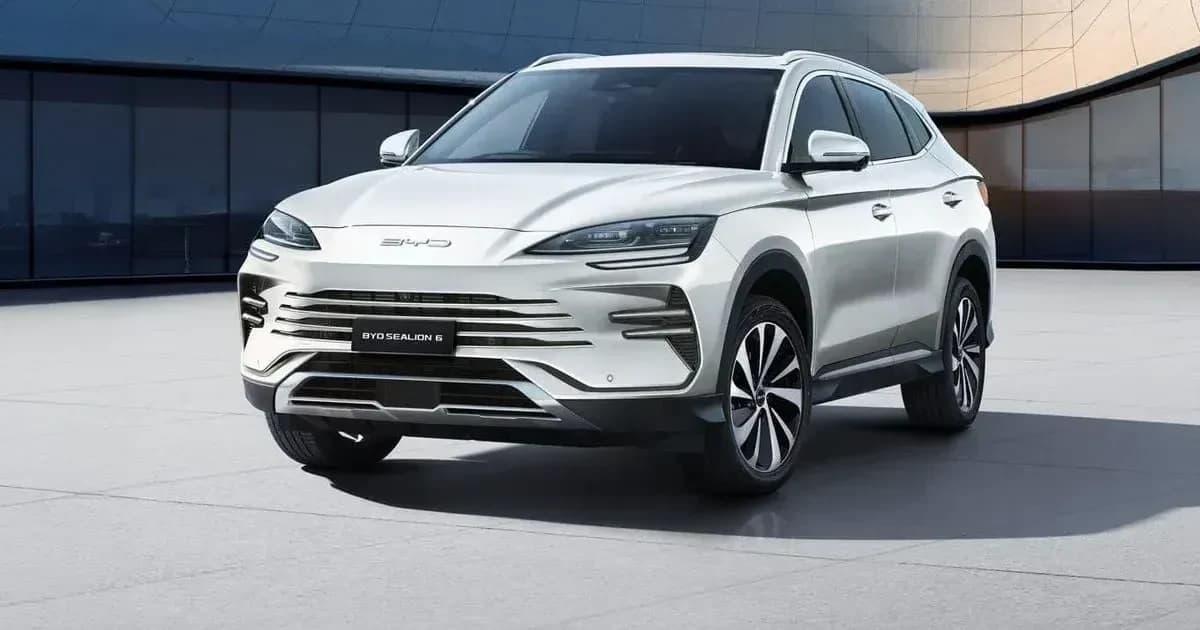
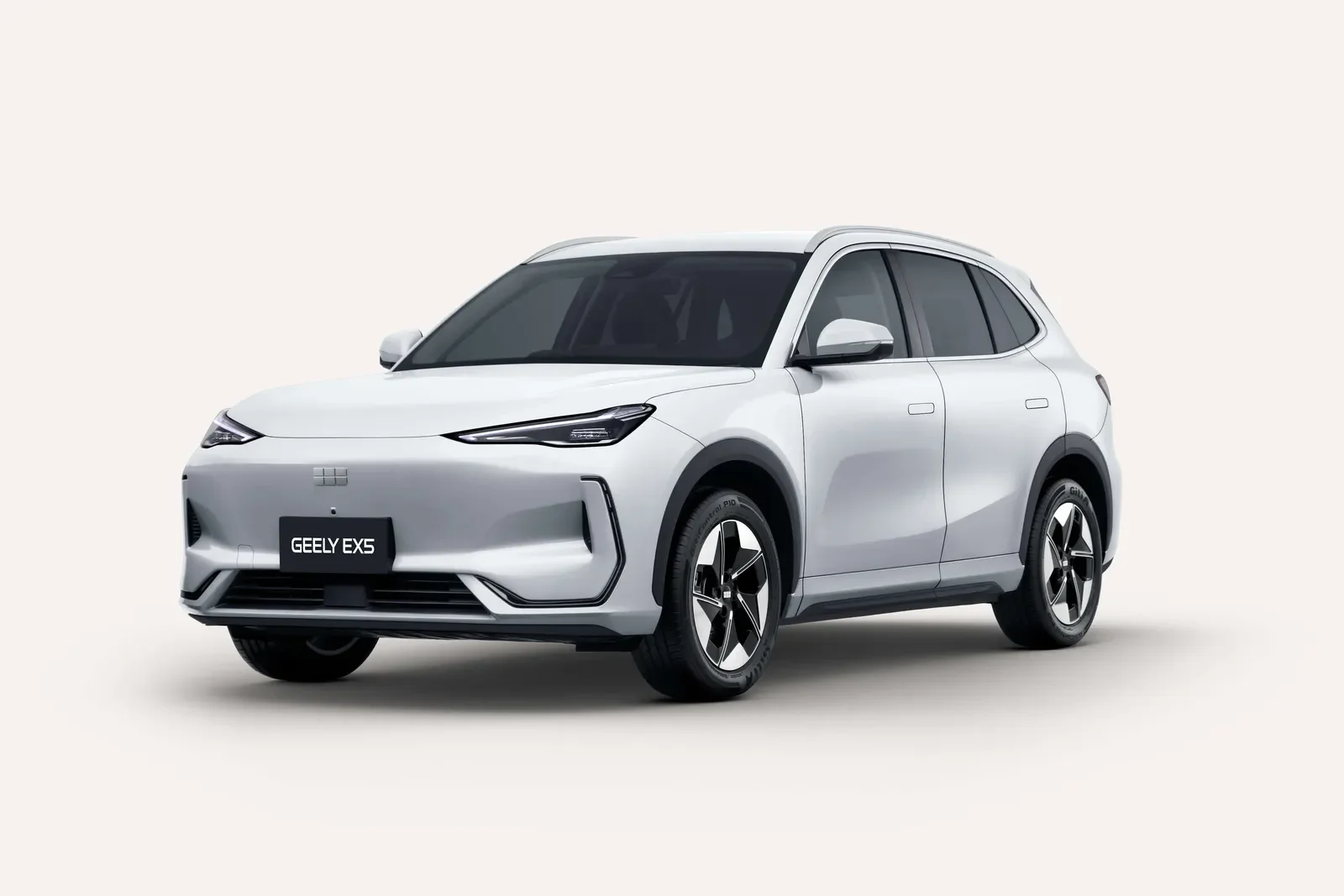
The prices line up closely. The EX5 Complete is $41,990 and the Sealion 6 Essential is $42,990. One step up, the EX5 Inspire is $45,990 and the Sealion 6 Dynamic Extended Range is $46,990. Both are list prices before on-road costs. The Sealion 6 then has a rung the EX5 does not: the Premium Extended Range, all-wheel drive, at $52,990.
BYD is also running a $4,000 cashback on all three Sealion 6 grades for orders placed from 1 October to 21 December 2026 and delivered by 31 December, or 0.99% finance instead, not both. On the list prices that works out to $38,990, $42,990 and $48,990. A cashback is an offer with an end date, not a new price, so the tables show list prices. Our news piece on the campaign has the terms.
BYD Sealion 6 (plug-in hybrid)
| Grade | Price |
|---|---|
| EssentialFWD, electric range 92km electric | $42,990 RRPas at 23 Sep 2026 |
| Dynamic Extended RangeFWD, electric range 140km electric | $46,990 RRPas at 4 Oct 2026 |
| Premium Extended RangeAWD, electric range 128km electric | $52,990 RRPas at 4 Oct 2026 |
Geely EX5 (electric)
| Grade | Price |
|---|---|
| CompleteFWD, 475km WLTP | $41,990 RRPas at 19 Sep 2026 |
| InspireFWD, 450km WLTP | $45,990 RRPas at 19 Sep 2026 |
All five prices are recommended retail before on-road costs. We hold no drive-away figure for these rows, so none is shown. The EX5 range is on the WLTP cycle; the Sealion 6 figure is the electric range as quoted, and our record does not name its cycle. The weekly line is a finance estimate on an assumed rate, not a quote.
Safety
Both cars are rated five stars by ANCAP in our records, and both fit seven airbags. The Sealion 6's result is from 2023 and the EX5's from 2025, so they were not assessed to an identical test and the percentages are a guide, not a ranking.
| ANCAP | BYD Sealion 6 | Geely EX5 |
|---|---|---|
| Rating | 5 stars (2023) | 5 stars (2025) |
| Adult occupant | 88% | 86% |
| Child occupant | 86% | 87% |
| Vulnerable road user | 83% | 83% |
| Safety assist | 75% | 85% |
| Airbags | 7 | 7 |
The EX5 is ahead on child occupant protection (87 against 86 percent) and clearly ahead on safety assist (85 against 75). The Sealion 6 is ahead on adult occupant protection (88 against 86). Vulnerable road user protection is level at 83. Autonomous emergency braking, adaptive cruise control, blind-spot monitoring, rear cross traffic alert and lane keep assist are standard on every grade of both cars in our records.
Powertrain, range and charging
The Sealion 6 pairs a 1.5-litre petrol four with an electric motor. The Essential and the Dynamic Extended Range are front-wheel drive with 160kW and 300Nm; the Premium Extended Range is all-wheel drive with 253kW and 550Nm. Electric range is 92km in the Essential (18.3kWh battery), 140km in the Dynamic Extended Range and 128km in the Premium, both with a 26.6kWh battery. Once the battery is flat, BYD's charge-sustaining fuel figure is 4.72, 4.8 and 5.5 L/100km respectively. The headline 1.1 and 0.8 L/100km combined figures assume you start every trip with a full battery, so don't budget on them.
The EX5 is one motor, front-wheel drive, 160kW and 320Nm, claiming 0 to 100km/h in 6.9 seconds, with a 68.4kWh LFP battery. It uses 16.0kWh/100km in Complete (475km WLTP) and 16.9kWh/100km in Inspire (450km). Geely also quotes a 3.3kW vehicle-to-load output on both grades. The Sealion 6 Essential is quoted at 8.5 seconds, the Dynamic Extended Range 8.9 and the Premium 5.5.
| Sealion 6 Essential | Sealion 6 Premium ER | EX5 Complete | |
|---|---|---|---|
| Power | 160kW | 253kW | 160kW |
| Torque | 300Nm | 550Nm | 320Nm |
| 0 to 100km/h | 8.5s | 5.5s | 6.9s |
| Battery | 18.3kWh | 26.6kWh | 68.4kWh |
| Range | 92km electric | 128km electric | 475km WLTP |
| Energy use | 169Wh/km | 183Wh/km | 160Wh/km |
| As a hybrid (battery flat) | 4.72 L/100km | 5.5 L/100km | Not applicable |
| AC charging | 6.6kW | 6.6kW | 11kW |
| DC charging | 18kW | 18kW | 100kW |
Charging is where the two cars part ways. The EX5 takes up to 100kW on DC and 11kW on AC. The Sealion 6 takes 18kW on DC and 6.6kW on AC. For an EV that is a big difference on a road trip; for a plug-in hybrid with a 60-litre tank it hardly matters, because the petrol engine is your fast charger. The question is how much of your driving fits inside the electric range. If most of your days are under 90km and you can plug in at home, a plug-in hybrid can run mostly on electricity. If you can't charge at home, a plug-in hybrid is a hybrid that carries a heavy battery, and the EX5 asks too much.
Here is a worked example with stated assumptions, not a forecast. An EX5 Complete uses 16.0kWh/100km, so 15,000km a year is 2,400kWh. At 32 cents a kilowatt-hour, charged at home, that is $768. A Sealion 6 Essential that is never plugged in uses about 4.72 L/100km, so 15,000km is about 708 litres, and at $2.00 a litre that is about $1,416. A Sealion 6 that is plugged in most nights sits between the two. The calculator below lets you set your own distances, tariff and fuel price.
Price the same commute in the Sealion 6 Essential, the Sealion 6 Dynamic Extended Range and the EX5 Complete. For the plug-in hybrids, tick whether they are charged at home each night, because that decides whether they are cheap to run.
Space, boot and towing
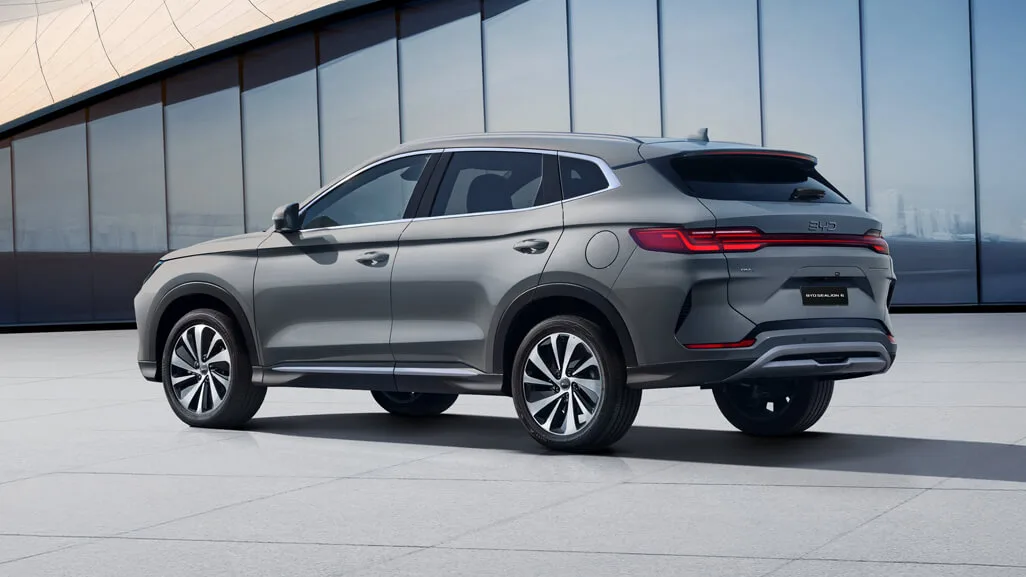
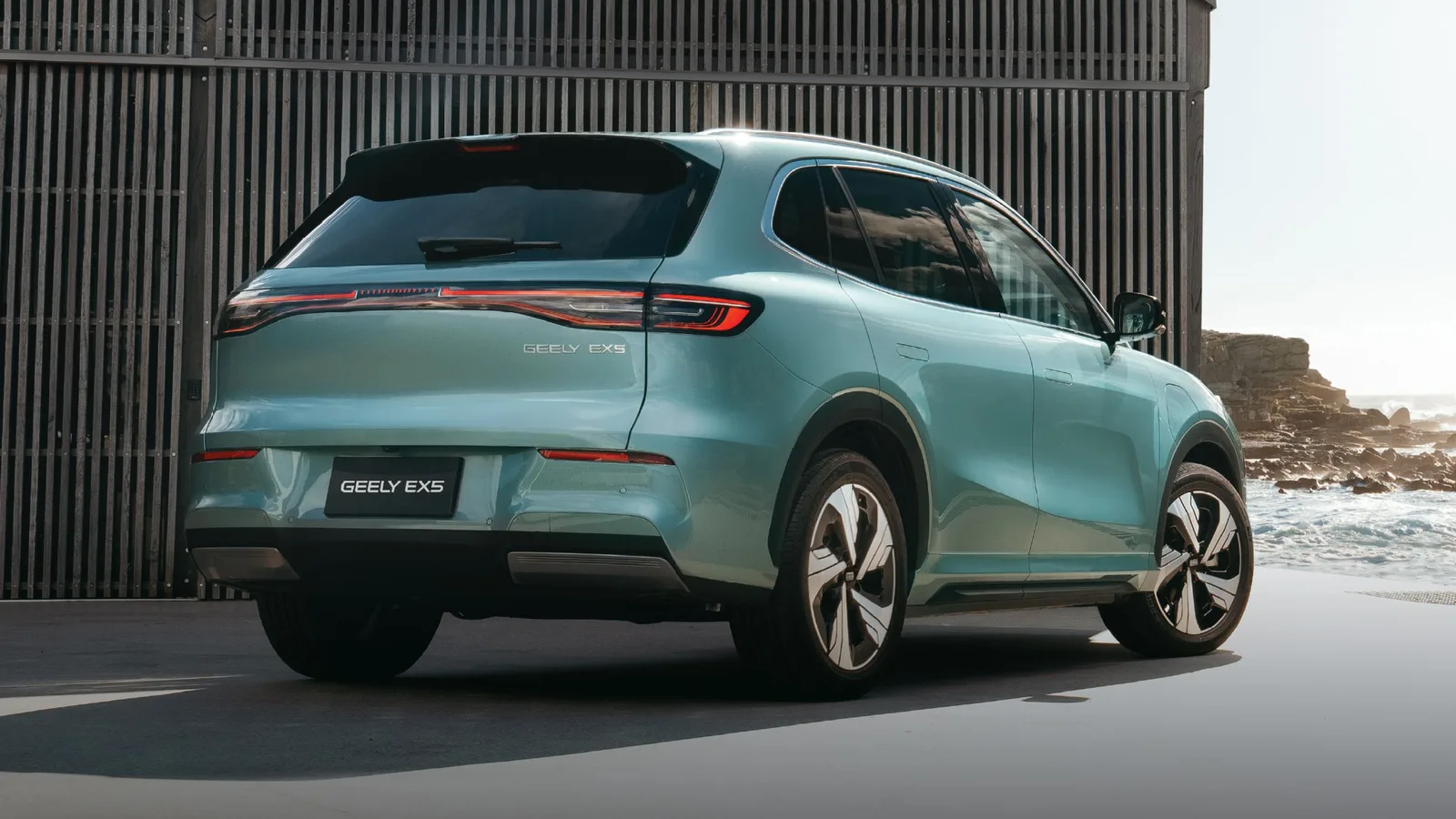
The Sealion 6 is the bigger car by 160mm in length (4,775mm against 4,615mm) and 15mm in wheelbase, but the EX5 is 11mm wider at 1,901mm and both stand 1,670mm tall. The Sealion 6 sits low with 140mm of ground clearance; the EX5 has 148mm in Complete and 168mm in Inspire. The Sealion 6 has the larger boot, 425 litres seats up against 302 in the EX5. We hold no seats-folded figure for either.
| Sealion 6 | EX5 Complete | EX5 Inspire | |
|---|---|---|---|
| Length | 4,775mm | 4,615mm | 4,615mm |
| Width | 1,890mm | 1,901mm | 1,901mm |
| Wheelbase | 2,765mm | 2,750mm | 2,750mm |
| Ground clearance | 140mm | 148mm | 168mm |
| Boot, seats up | 425L | 302L | 302L |
| Kerb weight | 1,940kg | 1,980kg | 1,980kg |
| Towing, braked | 1,500kg | no data | no data |
| Spare wheel | None | no data | no data |
Towing is a clear split. The Sealion 6 Essential is rated to 1,500kg braked, the two Extended Range grades to 1,000kg, and all three to 750kg unbraked with a 100kg tow ball download. We hold no braked towing figure for the EX5, so that is no data rather than a zero. If a trailer is part of your life, ask Geely for the number in writing before you sign.
Test a trailer against the Sealion 6's weights: pick a trailer, add passengers and gear, and see whether the totals and the tow ball load hold up.
Sitting out: the Sealion 6 Dynamic Extended Range (no gross combination mass on record) and the EX5 (no braked towing rating on record).
Will they fit your garage? Choose a garage size and see each car's clearance in length, width and height.
Equipment by grade
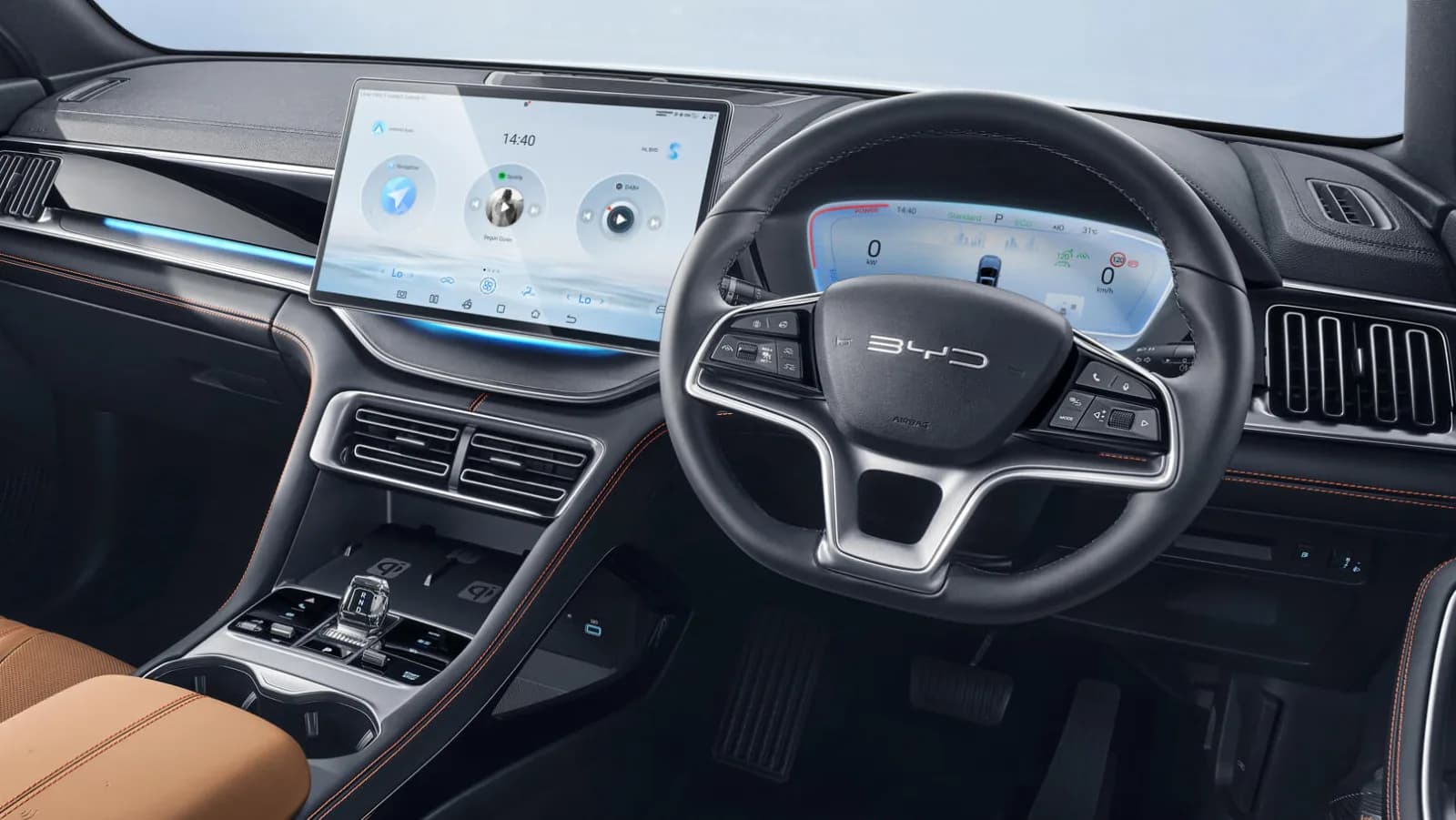
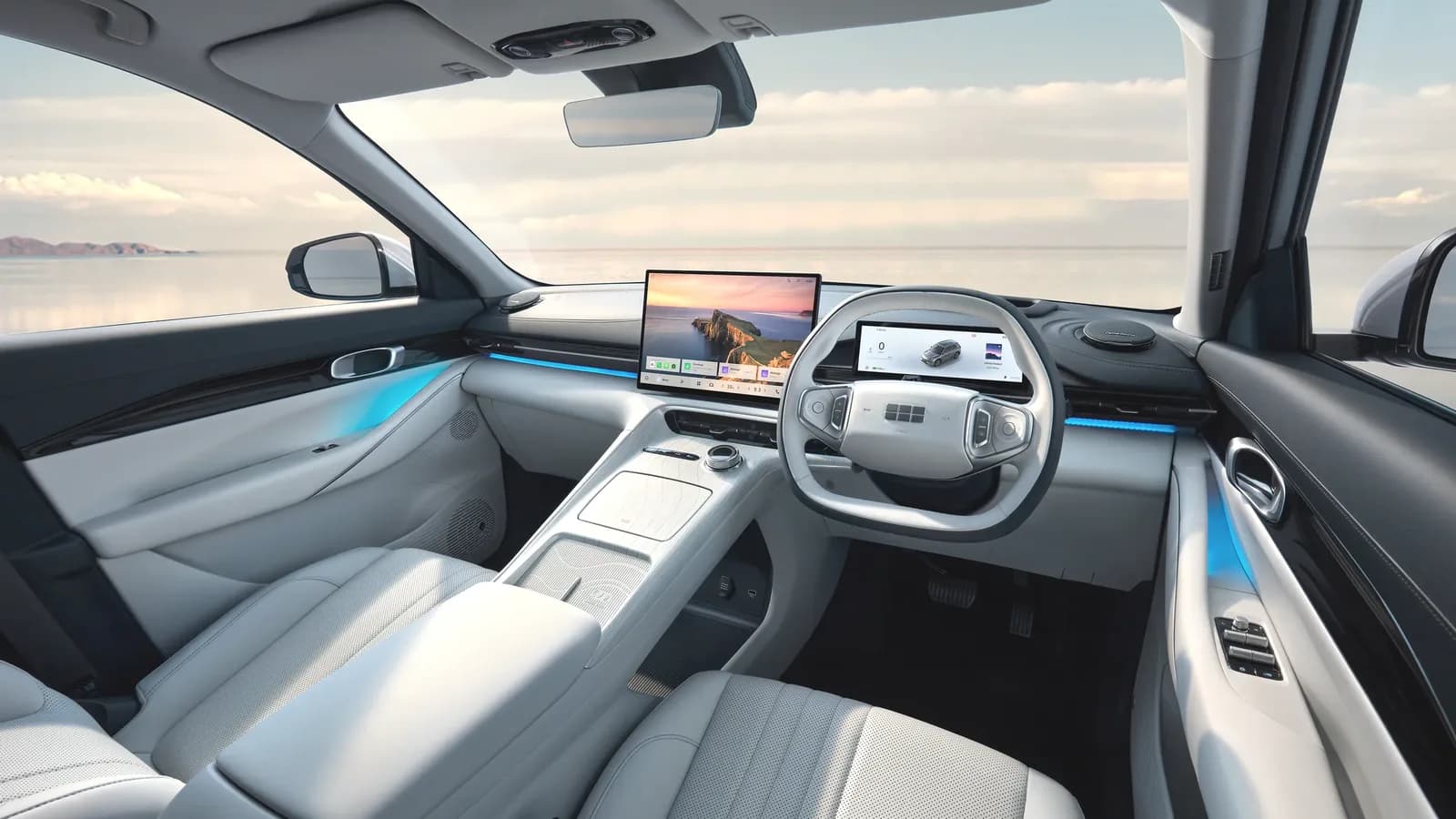
Four states, as we always show them: Standard, Optional (with a printed price), No (the document says it is not fitted) and No data. The comparable grades are the Sealion 6 Essential against the EX5 Complete, and the Dynamic Extended Range against the Inspire. On this evidence the entry EX5 is the better equipped of the two entry cars: the Complete has the 360-degree camera, wireless phone charging and heated front seats that the Sealion 6 Essential verifiably does not.
| Feature | Sealion 6 Essential | Sealion 6 Dynamic ER | Sealion 6 Premium ER | EX5 Complete | EX5 Inspire |
|---|---|---|---|---|---|
| 360-degree camera | No | Standard | Standard | Standard | Standard |
| Head-up display | No | Standard | Standard | No data | Standard |
| Wireless phone charging | No | Standard | Standard | Standard | Standard |
| Heated front seats | No | Standard | Standard | Standard | Standard |
| Ventilated front seats | No | Standard | Standard | No data | Standard |
| Power tailgate | No | Standard | Standard | No data | Standard |
| Panoramic roof | Standard | Standard | Standard | No data | Standard |
| Premium audio | No | Standard | Standard | No data | Standard |
| Memory driver seat | No data | No data | No data | No data | Standard |
| Built-in navigation | Standard | Standard | Standard | Standard | Standard |
Screens: 12.8 inches in the Sealion 6 Essential, 15.6 inches in the two Extended Range grades, and 15.4 inches in both EX5 grades. Speakers: 6 in the Essential, 10 in the other two Sealion 6 grades, 6 in the EX5 Complete and 16 in the Inspire. All grades of both cars have Apple CarPlay and Android Auto.
Warranty and servicing
BYD gives six years with a 150,000km limit on the vehicle, and eight years or 160,000km on the battery. Geely gives seven years on the EX5; we hold no kilometre limit and no battery warranty figure for it, so those cells say no data. Service intervals are the same: 12 months or 20,000km. Geely's five capped services are $171, $303, $171, $671 and $171, which is $1,487 in all. We hold no capped servicing cost for the Sealion 6.
| Sealion 6 | EX5 | |
|---|---|---|
| New vehicle warranty | 6yr / 150,000 km | 7yr |
| Battery warranty | 8 years / 160,000km | no data |
| Service interval | 20,000km | 20,000km |
| Capped servicing, 5 years | no data | $1,487 (sum of the five capped services) |
Running costs, finance and tax
The biggest running-cost lever is whether you can charge at home. After that comes tax, and here the two cars part ways in a way that is worth real money if you are buying through a novated lease.
Under the law as it stands, the electric car FBT exemption covers battery electric cars that are under the fuel-efficient luxury car tax threshold. Run the check on the EX5 Complete and it comes back exempt: Battery-electric and under the $91,661 threshold. Run it on the Sealion 6 Essential and it comes back not exempt: Plug-in hybrids lost the FBT exemption on 1 April 2025.
FBT and luxury car tax figures current as of 24 October 2026
Thresholds, rebates and rules on this page change each financial year. We check them against the ATO, but always confirm the current position with the relevant authority before you sign. The 2026-27 Budget (5 May 2026) proposes replacing the full exemption with a 25% FBT discount for electric cars valued over $75,000 from 1 April 2027 and for all eligible electric cars from 1 April 2029. This is a proposal, not law (ATO, updated 14 May 2026).
What the Sealion 6 Essential and the EX5 Complete cost a week on finance. The rate is an assumption you can change, not a quote.
And the same two on a novated lease at your income. The calculator applies the FBT rules above, so you will see the EX5's exemption in the numbers.
So which should you buy?
- You can charge at home and want to be done with petrol: the EX5. It is $1,000 cheaper at each comparable step, goes 475km WLTP in Complete and charges at up to 100kW.
- You can't reliably charge at home, or you cover long distances in regional areas: the Sealion 6. The petrol engine is the backup, and the 425-litre boot is the bigger of the two.
- You are buying through a novated lease: the EX5, because it qualifies for the FBT exemption under current law and the plug-in hybrid does not.
- You tow: the Sealion 6, rated to 1,500kg braked in Essential. We have no figure for the EX5.
- You want all-wheel drive or the most power: the Sealion 6 Premium Extended Range, at $52,990 with 253kW. There is no EX5 equivalent.
- You want the most equipment for the money: the EX5 at the entry step. At the step above the picture is closer, and several Inspire cells are still no data.
- You want the most recent safety assessment: the EX5, rated in 2025 against 2023 for the Sealion 6.
One more thing. Geely has shown a 2027 EX5 update in China with rear-wheel drive and faster charging; Australian timing is still open, so we have not compared it. Our news piece has what is known.
Want every grade side by side?
The compare tool lines the BYD Sealion 6 and the Geely EX5 up on price, safety, specs and running cost, and lets you pick the grades yourself.
Compare these twoPrices on this page move. Want the next comparison?
One short email when prices shift or a new comparison lands. No spam, unsubscribe anytime.
Keep reading
The cars: BYD Sealion 6 range and Geely EX5 range, or all BYD and Geely models. Other head-to-heads: RAV4 vs Sealion 6, Sealion 6 vs Outlander PHEV, Leapmotor C10 vs Sealion 6, EX5 vs Atto 3 and Model Y vs EX5. Background: FBT-exempt cars, the charging guide and the EX5's 475km update.