Hyundai ELEXIO vs Kia EV3
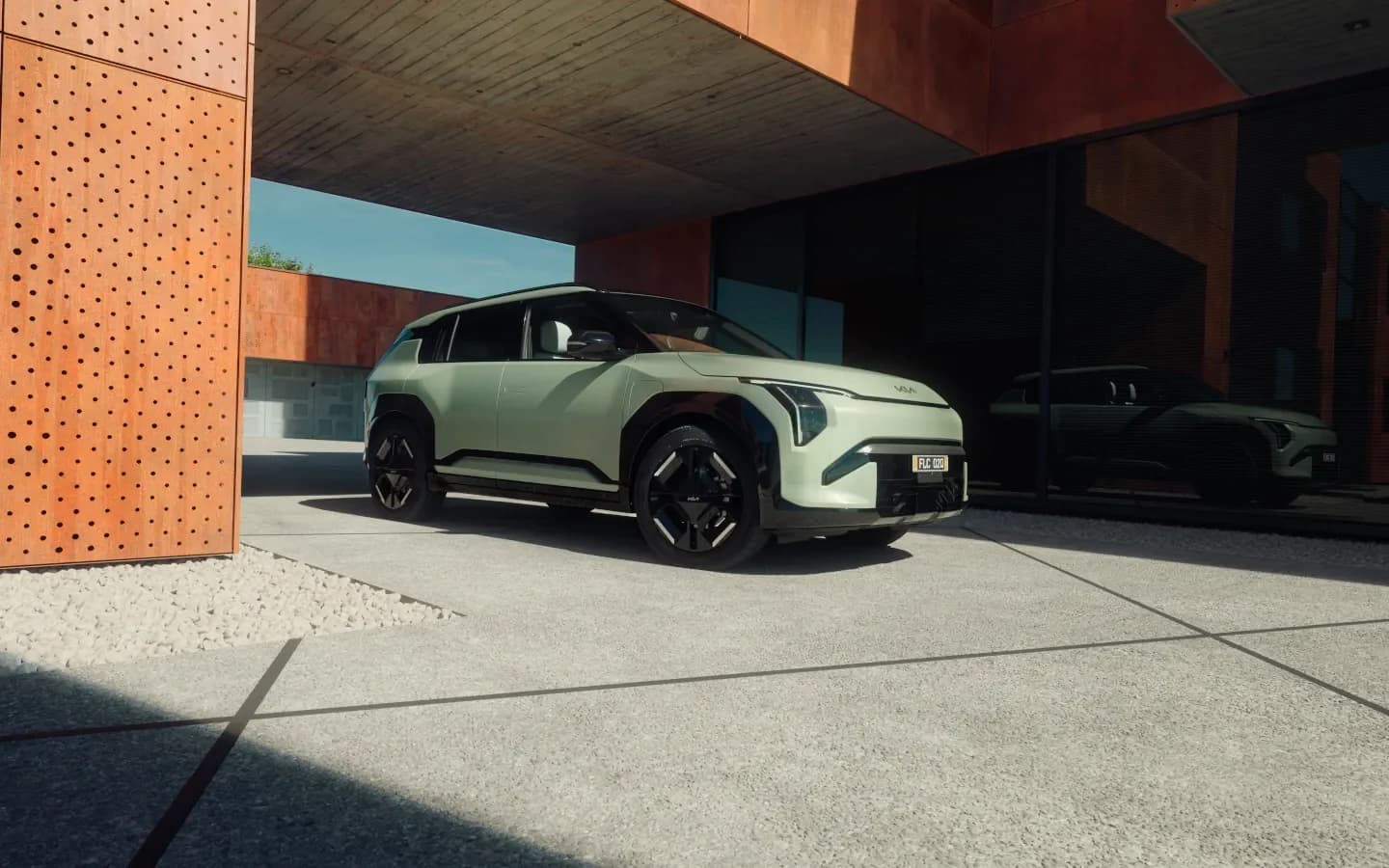
$58,990 vs $58,600, and 562km vs 563km. A mid-size Hyundai and a small Kia that land within $390 and one kilometre of each other. Same parent company, one size class apart.
Specifications and pricing correct at time of publishing. Prices are RRP before on-road costs unless stated otherwise. Always confirm with the manufacturer or dealer before purchasing.
Hyundai ELEXIO
From $58,990
Mid-size Electric SUV
Single Motor (FWD)
160kW
562km WLTP
5★ ANCAP (2024)
506L
Kia EV3 Earth Long Range
From $58,600
Small Electric SUV
Single Motor (FWD)
150kW
563km WLTP
5★ ANCAP (2025)
460L
Price Breakdown
Hyundai lists the ELEXIO at $58,990 and Kia lists the EV3 Earth Long Range at $58,600. Both are recommended retail before on-road costs, so this is a like-for-like $390 gap, and it is the only honest way to line these two up. Hyundai's figure is the Manufacturer's List Price its own car price calculator returns, not the drive-away number sitting next to it.
Both brands are running September campaigns, and both end on the same day. Hyundai is advertising $55,990 drive-away on the ELEXIO and $59,990 drive-away on the Elite, on new stock with no added options, purchased and delivered between 1 July and 30 September 2026, while stock lasts, and not available to fleet, government or rental buyers. There is a separate $2,000 novated lease bonus on the same window. Kia is offering EV3 buyers a choice of $1,000 cashback or a 1.88 percent comparison rate through Kia Finance on in-stock new or demo cars, maximum 36-month term with a 20 percent deposit, also ending 30 September. Campaign pricing moves constantly, so treat those as things to confirm rather than things to plan around.
Hyundai ELEXIO (single-speed, front-wheel drive)
| Variant | Wheels | Price (RRP) | WLTP range |
|---|---|---|---|
| ELEXIO | 18-inch | $58,990 | 562km |
| ELEXIO Elite | 20-inch | $61,990 | 546km |
Kia EV3 (single-speed, front-wheel drive)
| Variant | Battery | Price (RRP) | WLTP range |
|---|---|---|---|
| Air Standard Range | 58.3kWh | $47,600 | 436km |
| Air Long Range | 81.4kWh | $53,315 | 604km |
| Earth Long Range | 81.4kWh | $58,600 | 563km |
| GT-Line Long Range | 81.4kWh | $63,950 | 563km |
Put the two ladders side by side and the whole Hyundai range slots into the top half of the Kia one. The ELEXIO starts $390 above the EV3 Earth and the Elite finishes $1,960 below the EV3 GT-Line. Hyundai has priced a mid-size SUV directly against the third and fourth grades of a small one, which only works because the Kia is expensive for its size and the Hyundai is cheap for its size.
Safety Rundown
Both cars hold a current five-star ANCAP rating covering all variants, and both ratings run to December 2031. The ELEXIO carries a 2024 datestamp and the EV3 a 2025 one.
| ANCAP | ELEXIO (2024) | EV3 (2025) |
|---|---|---|
| Adult occupant | 88% | 83% |
| Child occupant | 86% | 86% |
| Vulnerable road user | 77% | 78% |
| Safety assist | 85% | 81% |
Here is where the family relationship stops being a talking point and becomes literal. ANCAP states that the ELEXIO's rating is based on testing of the closely-related Kia EV5, with additional active safety and pedestrian impact tests run on the Hyundai itself and technical information supplied to show the EV5 results carry across. That is why the adult and child scores match the EV5 exactly while the pedestrian and safety-assist numbers do not. So the Hyundai on this page is wearing a rating earned, in part, by a Kia.
On equipment the ELEXIO is the better armed of the two. It has nine airbags including a front centre bag, against seven in the EV3, which also has a centre bag. Both get autonomous emergency braking covering cars, vulnerable road users and junction turns, lane keeping, lane departure warning, emergency lane keeping and intelligent speed assistance as standard. The Hyundai adds a surround-view monitor, a blind-spot view monitor and remote smart parking on both grades. The EV3 has a reversing camera with guidelines and front and rear parking sensors, and no surround-view camera on any grade, which is a genuine omission on a $58,600 car.
Feature Showdown
The screens tell you most of what you need to know about how these two were briefed. The ELEXIO runs a single 27-inch integrated display across the dash and, unusually for the money, puts a head-up display on both grades. The EV3 runs the familiar Kia arrangement of a 12.3-inch driver cluster, a 5-inch climate strip and a 12.3-inch touchscreen in one curved housing, and reserves its head-up display for the $63,950 GT-Line.
Both come with satellite navigation, wireless and wired Apple CarPlay and Android Auto, digital radio, dual-zone climate and a six-speaker stereo. Both do vehicle-to-load: the Hyundai has an interior three-pin outlet rated at 250V, 16A and 4kW, and the Kia has an interior socket plus an exterior adaptor, so the EV3 will run gear off the charge port as well as from inside the cabin.
The comfort split is the interesting part, and it goes Kia's way. At $58,600 the EV3 Earth already has heated and ventilated front seats, a heated steering wheel, a 10-way power driver's seat and a smart power tailgate. The $58,990 ELEXIO has cloth seats, a 6-way power driver's seat, one wireless charging pad and no power tailgate at all. To match the Kia's seats you have to move up to the $61,990 Elite, which adds leather-appointed trim, a 14-way power driver's seat with memory, a 4-way power passenger seat, heated and ventilated front seats, a heated wheel, a second wireless pad and the smart tailgate.
So at the matched price the Kia hands you the kit you touch every morning and the Hyundai hands you the kit you look at: bigger screen, head-up display, surround-view camera, two more airbags. Neither of those is the wrong answer, but they are answers to different questions.
Drivetrain
Mechanically these two are closer than the badges suggest. Both use a single permanent-magnet motor on the front axle and a single-speed reduction gear. The ELEXIO makes 160kW and 310Nm, the EV3 makes 150kW and 283Nm. Kia quotes approximately 7.9 seconds to 100km/h for the Earth and GT-Line, 7.5 for the Air Standard Range and 7.7 for the Air Long Range. Hyundai Australia publishes no acceleration figure and no top speed for the ELEXIO, on the model page or in its 16 February 2026 specification sheet, so we are not going to invent one. On the numbers that are published, the Hyundai has 10kW and 27Nm more, and 150 to 175kg more mass to move with it.
Range is the punchline. The ELEXIO carries an 88.1kWh lithium-iron-phosphate battery and claims 562km WLTP. The EV3 Earth carries 81.4kWh and claims 563km. Hyundai has spent 6.7kWh more battery to arrive one kilometre short, because the bigger car uses 18.2kWh/100km on the combined cycle against the Kia's 16.2. Note the base EV3 Air on its 17-inch wheels gets that down to 14.9.
Charging is split, and which way it falls depends entirely on where you plug in. On a high-power DC charger the Kia is quicker: about 31 minutes from 10 to 80 percent on a 350kW unit, against 38 minutes for the Hyundai on a 150kW one. On the 50kW chargers that still make up a lot of regional Australia, it flips: the ELEXIO does 10 to 80 percent in about 72 minutes and the EV3 needs about 79, despite the smaller battery. At home the Hyundai takes up to 10kW AC and quotes roughly 13 hours for a full charge on a 7kW wallbox; the EV3's onboard charger is 6.9kW on single phase and 10.5kW on three phase.
WLTP is a laboratory number and neither car will hit it at 110km/h with the air conditioning on. Our range estimator works from battery size and real conditions instead of the brochure, which is the more useful way to think about a 562 versus 563 argument.
Space & Comfort
ANCAP files the ELEXIO as a medium SUV and the EV3 as a small one, and the tape measure agrees.
| Dimension | ELEXIO | EV3 Earth | Difference |
|---|---|---|---|
| Length | 4,615mm | 4,310mm | 305mm |
| Width | 1,875mm | 1,850mm | 25mm |
| Height | 1,695mm | 1,570mm | 125mm |
| Wheelbase | 2,750mm | 2,680mm | 70mm |
| Boot, seats up (VDA) | 506L | 460L | 46L |
| Boot, seats folded | 1,540L | Not published | Not comparable |
| Front boot | Not offered | 25L | 25L |
| Turning circle | 11.74m | 10.4m | 1.34m |
| Braked towing | 1,250kg | 1,000kg | 250kg |
Read that table properly, because the headline number is misleading. The ELEXIO is 305mm longer but only 70mm longer in the wheelbase, and only 46 litres bigger in the boot. Hyundai's own sheet puts 918mm of front overhang and 947mm of rear overhang on the car, which is where most of that extra length lives. If you are buying the bigger car expecting a dramatic jump in rear legroom or luggage space, the figures do not support it.
What the extra size does buy is real, though. It is 125mm taller, so the seating position and headroom are different in a way a spec sheet undersells, and the seats-folded figure of 1,540 litres is a proper flat-pack load space. It also tows 1,250kg braked against the EV3's 1,000kg, with a 100kg tow ball limit on both, and Hyundai requires a genuine accessory towbar fitted by a dealer for that rating to apply.
The Kia takes the practicality points nobody puts on a billboard. It has a 25-litre frunk for the charging cables, where the ELEXIO's spec sheet marks its frunk row as not available. It turns in 10.4 metres against the Hyundai's 11.74 (Hyundai prints a 5.87-metre turning radius, which is the same measurement halved), it is 125mm lower for a garage with a tight door, and at 1,930kg it is 150 to 175kg lighter, which you feel in how it changes direction and in what it costs to run.
True Cost to Own
Kia covers the EV3 with seven years and unlimited kilometres, flat, no conditions attached to where you service it. Hyundai's standard cover is five years and unlimited kilometres, extended to seven years for cars first registered from 1 June 2025 when every scheduled service is completed at an authorised Hyundai dealer. Miss one independent service and you are back to five. Same headline number, very different terms.
Battery cover needs a question at the dealer. Hyundai warrants the ELEXIO drive battery for eight years or 160,000km. Kia's battery capacity warranty, which guarantees the pack stays above 70 percent of original capacity, runs seven years or 150,000km on pre-model-year-2027 cars and eight years or 160,000km from MY2027 onward. The EV3 specification sheet Kia Australia currently publishes is the MY27 document, so ask which build the car in front of you is, because it is a year and 10,000km of difference on the most expensive component in the car.
Servicing goes to Kia on transparency. It runs a seven-year capped-price program covering the first seven scheduled services, up to seven years or 105,000km. Hyundai's Genuine Service Plan caps pricing for the life of the vehicle rather than a fixed number of visits, and battery electric Hyundais get 24 months of included premium roadside support, renewed every time you have a scheduled service done at a participating dealer.
Energy is the running cost that actually turns up monthly, and it follows the efficiency numbers. At 15,000km a year and 32 cents a kilowatt-hour, the ELEXIO's 18.2kWh/100km works out to roughly $874 a year and the EV3 Earth's 16.2 to about $778. That is our arithmetic off the published consumption figures, not a manufacturer claim, and the $96 gap is real but small. The EV3 Air, at 14.9kWh/100km, drops it to about $715.
The bigger money question on a new EV is not fuel, it is what the car is worth in four years. The ELEXIO is a brand-new nameplate in Australia with no resale history at all, and the EV3 has been on sale here since March 2025. Our depreciation calculator is the quicker way to see what that actually costs you.
CarSorted Data Insight
Pull both ranges out of our database and line them up by price and you get one of the tidiest ladders on the market: EV3 Air Standard Range $47,600, EV3 Air Long Range $53,315, EV3 Earth $58,600, ELEXIO $58,990, ELEXIO Elite $61,990, EV3 GT-Line $63,950. Two brands from the same parent company, six grades, and the entire Hyundai range fits inside the top third of the Kia one.
Divide range by price and the picture sharpens. The EV3 Air Long Range returns a kilometre of WLTP range for every $88 you spend. The ELEXIO returns one for every $105, and the EV3 Earth one for every $104, which is a dead heat. The EV3 GT-Line and the ELEXIO Elite are the worst of the six at $114, because both spend their extra money on wheels and seats and lose range doing it. If range per dollar is the only thing you care about, the entire comparison on this page is a distraction from the $53,315 car sitting below both of them.
The Verdict
Buy the Hyundai ELEXIO if: you want a genuinely bigger car for the same money, you tow anything near 1,250kg, you want nine airbags, a surround-view camera and a head-up display as standard, and a head start on adult occupant protection matters to you. Budget for the Elite at $61,990 if heated seats are non-negotiable.
Buy the Kia EV3 if: you want seven years of unconditional warranty, the lower energy bill, a frunk, a car that parks easily, and heated and ventilated seats included at the price. Start with the Air Long Range at $53,315 rather than the Earth unless you specifically want the 19-inch wheels and the comfort kit.
These two are not really fighting over the same buyer. They are fighting over the same $59,000, which is a different thing, and the first question to settle is how much car you actually need parked outside your house.
Compare both on CarSorted. See also: Model Y vs EV3 | EV3 vs EX30 | EV3 vs Atto 3 | Model Y vs EV5. More from Hyundai and Kia.
The Verdict
This is the closest matched pair we have written up. Three hundred and ninety dollars of price, one kilometre of claimed range, and then a whole size class of difference. The ELEXIO is 305mm longer, tows 250kg more, carries nine airbags to the Kia's seven, has a surround-view camera and a head-up display the EV3 cannot be optioned with at any grade, and scored higher for adult occupant protection. The EV3 Earth answers with a seven-year unlimited-kilometre warranty, 2.0kWh per 100km less energy for the same range, heated and ventilated front seats the base Hyundai makes you spend $3,000 to get, a 25-litre frunk and a car that actually fits in a tight car park. Buy the Hyundai if you want the bigger, better-armed car and the extra towing. Buy the Kia if efficiency, warranty and footprint matter more. And if range is genuinely why you are here, the answer is neither of these two: it is the $53,315 EV3 Air Long Range, which goes 42km further than the Hyundai for $5,675 less.
Prices on this page move. Want the next verdict?
One short email when prices shift or a new comparison lands. No spam, unsubscribe anytime.
Disclaimer: All information in this comparison was believed to be correct at the time of publishing (20 September 2026). Prices are manufacturer recommended retail prices (RRP) and may vary by state, dealer, and options. Driveaway costs include estimated on-road costs for Victoria. Fuel economy figures are WLTP/ADR combined cycle. Specifications can change without notice. Always verify with the manufacturer before making a purchase decision. CarSorted does not accept payment for recommendations.
Published by CarSorted Editorial Team · 20 September 2026
Comments (0)
Sign in to join the conversation
No comments yet. Be the first!