Key Takeaways
- Hybrid from under $50,000 driveaway, launch range tops around $54,000 driveaway
- All-new second-gen model, on sale mid-October 2026
- Hybrid combined 182kW/670Nm, claimed 7.0 L/100km, 0 to 100 in 7.0 seconds
- Hi4 all-wheel drive standard across hybrid and PHEV variants
- Full Australian PHEV specs and pricing due closer to launch
- Seven-seat variant to follow the initial five-seat launch
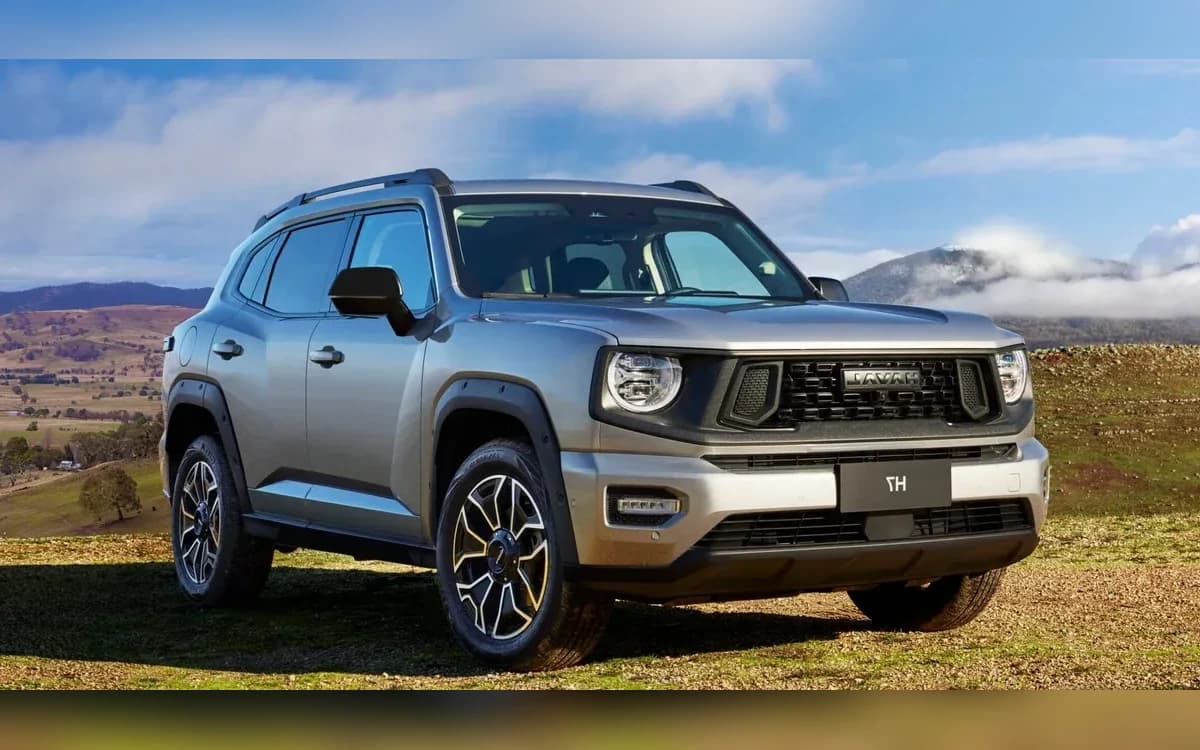
Image credit: GWM Australia
If you were waiting on the new Haval H7 before signing anything on a RAV4 Hybrid or a Tucson Hybrid, the wait is nearly over. GWM Australia has locked in a mid-October 2026 on-sale date for the second-generation H7, and the pitch is aggressive. Hybrid pricing kicks off from under $50,000 driveaway, every variant runs GWM's Hi4 all-wheel-drive system as standard, and a plug-in hybrid version joins the range in the same launch window. That is a different sort of mid-size SUV proposition to the front-drive H7 Vanta hybrid it replaces, and it lands right on top of the segment's hybrid and PHEV price war.
What is New Here
The current H7 Vanta hybrid only landed in Australia mid-2025. It rides on the same body-on-frame-adjacent architecture as the Haval Big Dog and was sold in a single front-drive grade at $46,990 driveaway. The 2027 car GWM is bringing here in October is a completely different vehicle. It is based on the Chinese-market Haval Menglong platform, it is bigger, more upright, more overtly boxy, and it swaps the front-drive layout for standard all-wheel drive.
Four launch variants are on the schedule for October. GWM has not published the individual grade walks yet, but the range starts under $50,000 driveaway and the flagship sits around $54,000 driveaway on the pre-launch guidance. Two powertrains are on the table from day one: a hybrid and a Hi4 plug-in hybrid. Both use the same 1.5-litre turbo-petrol base engine and both drive all four wheels.
Pricing (Australia)
| Powertrain | Grade guidance | Indicative driveaway |
|---|---|---|
| Hybrid Hi4 AWD | Entry grade | Under $50,000 |
| Hybrid Hi4 AWD | Higher hybrid grade | Around $50,000 to $52,000 |
| Hi4 PHEV AWD | Entry PHEV grade | $50,000 to $54,000 |
| Hi4 PHEV AWD | Range topper | Around $54,000 |
GWM is expected to publish the final grade names, colour options and standard equipment split closer to launch. Historically the Australian arm has run a driveaway campaign from day one on new Haval models, so the numbers above are the ones to lean on rather than a plus on-roads sticker.
Hybrid Specifications
| Spec | H7 Hybrid Hi4 AWD |
|---|---|
| Engine | 1.5L turbo 4-cyl petrol |
| Combined system output | 182kW / 670Nm |
| Battery | 1.53 kWh LFP |
| Drive | Hi4 AWD (standard) |
| Fuel economy (claimed) | 7.0 L/100km |
| 0 to 100 km/h (claimed) | 7.0 seconds |
| Length / width / height / wheelbase | 4,800 / 1,950 / 1,843 / 2,738 mm |
The headline figure to sit with is 670Nm. That is more torque than a base RAV4 Cruiser Hybrid (221Nm from the 2.5L Atkinson petrol) and more than the Hyundai Tucson N Line Hybrid (367Nm), because the H7 is running a turbocharged engine plus a big rear electric motor rather than an atmo Atkinson pair. The 7.0 L/100km hybrid figure sits above the class-leading RAV4 Hybrid (about 4.7 L/100km on paper) precisely because the H7 has to lug an AWD system and a heavier body around. In exchange you get real torque and real AWD, not the on-demand version.
Hi4 PHEV: What is Known and What is Not
The Hi4 plug-in hybrid uses the second generation of GWM's dedicated PHEV system, the same architecture rolled out in the Haval H6GT Hi4 PHEV. In China, that combination gives the H7 PHEV a 33.7kWh ternary lithium battery, 137km of WLTC electric range, combined outputs of 320kW and 670Nm, and a 4.9-second 0 to 100 sprint. Every one of those numbers is a Chinese-market figure and every one of them is subject to change for Australia.
GWM Australia has explicitly said the local PHEV spec sheet will be finalised closer to launch. Expect a smaller announced electric range on WLTP than the Chinese WLTC claim, expect a similar battery size, and expect combined outputs in the same ballpark. If any of those move by more than a small margin, this article will be updated with the confirmed numbers.
Design and Practicality
The second-gen H7 has grown. It is 4,800mm long, 1,950mm wide and 1,843mm tall, on a 2,738mm wheelbase. For context, the current H7 Vanta hybrid is 4,705mm long, 1,908mm wide and 1,780mm tall. The new car is 95mm longer, 42mm wider and 63mm taller. The styling is deliberately upright, with flat sides, thick pillars, a squared-off nose and heavy plastic wheel arch cladding. It is a genuine departure from the rounded-off aerodynamic look most new mid-size SUVs are going for.
Launch is a five-seat body. GWM has flagged a longer-wheelbase seven-seat H7 for a later date, though it is not landing in Australia at the October launch. Boot volume and towing capacity for the AWD hybrid have not been officially quoted for Australia yet.
Safety and Warranty
The new H7 is not yet rated by ANCAP. A rating on the current H7 does not automatically carry over to the new platform, so the second-gen car needs its own assessment. Standard active safety equipment is expected to mirror the H6GT and Tank 300 kit list, including AEB with pedestrian and cyclist detection, adaptive cruise control, lane-keep assist, blind-spot monitoring, rear cross-traffic assist and a 360-degree camera on the higher grades.
GWM Australia's standard 7-year unlimited-kilometre warranty applies. Capped-price servicing and battery cover for the PHEV variant will be announced with the final specifications.
How It Compares
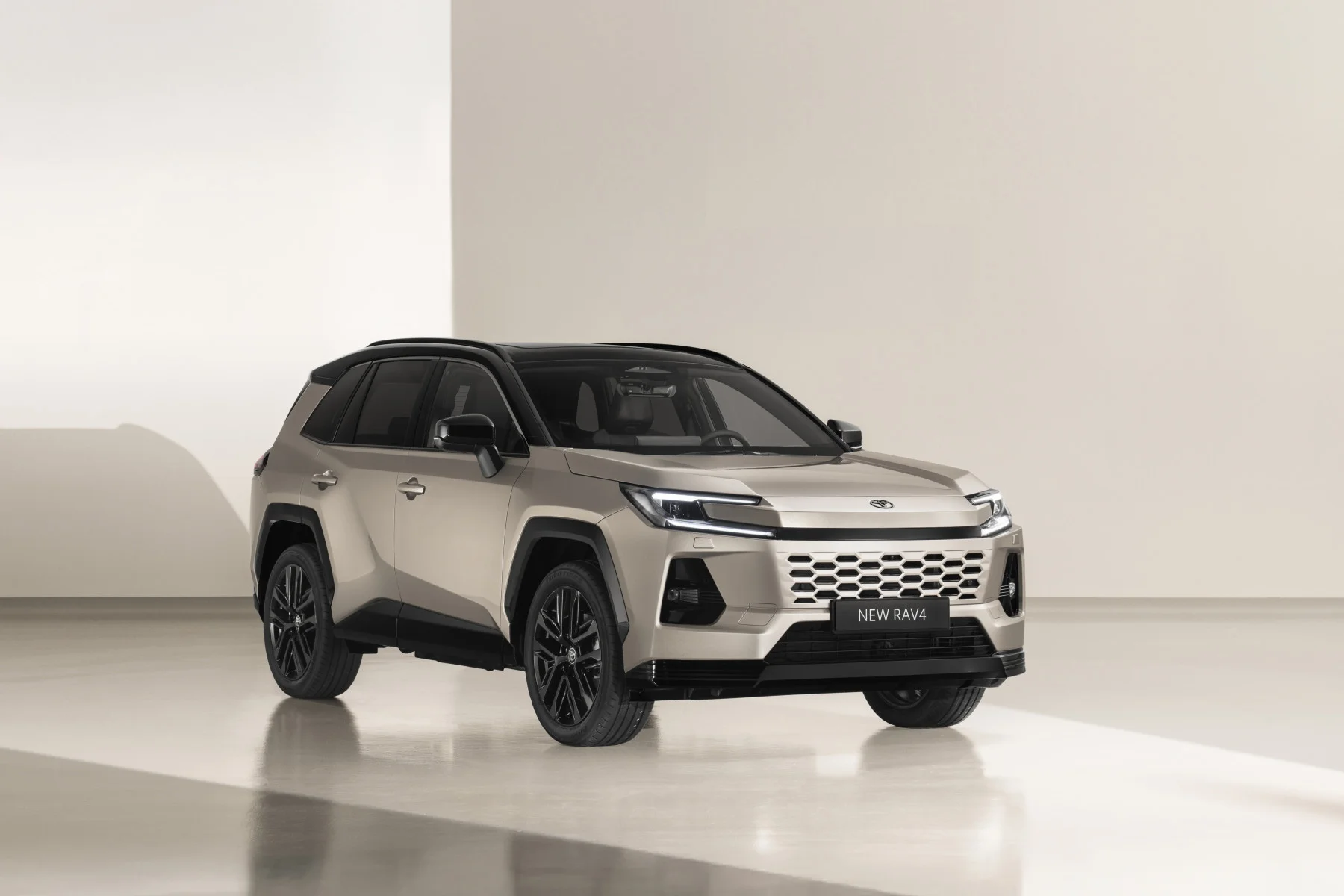
Image credit: Toyota Australia
On the hybrid side, the H7 slots directly between two very different fights. A Toyota RAV4 hybrid Cruiser AWD is around $52,410 driveaway in a metro Victorian postcode and delivers 4.7 L/100km with 163kW combined. If you actually care about fuel bills, the RAV4 wins that number every day. What the RAV4 does not have is 670Nm of torque or a proper mechanical AWD feel. The H7 is asking you to trade some pump savings for real thrust and real all-weather traction.
On the PHEV side, the obvious cross-shops on CarSorted are the Haval H6GT Hi4 PHEV at $52,990 driveaway and the Chery Tiggo 7 Super Hybrid Urban at $34,990 driveaway on its current campaign. The Tiggo 7 undercuts the H7 PHEV by a full grade, so it is not really the same class of vehicle. The H6GT PHEV is the closer fight, and the H7 PHEV effectively repeats the same Hi4 formula in a boxier five-seat body with more ride height. Whether the H7 PHEV starts higher or lower than the H6GT PHEV comes down to GWM's final grade walk. On the numbers reported so far, they sit within about $1,000 of one another.
There is also a Honda CR-V comparison worth running. The CR-V e:HEV is now $49,900 driveaway, right on top of the H7 Hybrid's entry price. Honda gives you an established badge, a five-star ANCAP rating and a smoother e:CVT drivetrain. The H7 gives you AWD, more torque, and 570mm more wheelbase to play with on rough surfaces. Different priorities, similar money.
The CarSorted Angle: How It Slots Into Our Mid-Size Rugged SUV Set
The mid-size AWD hybrid space on CarSorted has quietly filled up over 2026, and the H7 is the piece it has been missing. Our data on the H6GT Hi4 PHEV shows 105kW electric motor and 321kW combined system with an 18.7kWh battery for 118km NEDC electric range. That gives you the shape of what the H7 PHEV is likely to deliver in Australia, because it is the same Hi4 second-gen family. The H7's pitch is really about the extra ride height, the boxier body and the AWD-only positioning, not a radically different drivetrain. If you have been thinking about the H6GT Hi4 for the driveline but wanted a taller, more upright shape, the H7 PHEV is going to be the more natural buy.
For a broader cross-shop, run the Haval H6GT versus RAV4 comparison as your baseline, then swap in the H7 numbers once the final Australian PHEV spec sheet lands. You can also cross-shop the wider AWD hybrid segment live on the CarSorted directory, which now lists every mid-size hybrid and PHEV SUV on sale in Australia in one place.
What This Means for Buyers
If you were about to sign on a RAV4 Cruiser Hybrid, do the maths on the actual driveaway gap. The H7 Hybrid Hi4 sitting under $50,000 driveaway is roughly $2,500 to $3,000 cheaper than the equivalent RAV4 Cruiser Hybrid AWD once you factor state stamp duty and rego, and the H7 gives you more torque, standard 360 cameras on the top grade and a longer warranty. The trade is a claimed 7.0 L/100km against Toyota's 4.7. On 15,000km a year at $1.90 a litre, that fuel difference is worth about $655 a year, or roughly four years to close the driveaway gap on fuel alone. For metro buyers who do most of their driving suburban and short-haul, that maths works. For high-kilometre country buyers, it does not.
If you were waiting on the H7 PHEV specifically, do not sign anything until GWM Australia publishes the local electric range and grade walk. The Chinese 137km WLTC figure is enough to run most weekly commutes on plug alone, but the WLTP number will land shorter and the price walk between hybrid and PHEV will decide whether the plug is worth it in the first place. On the H6GT range, the walk from petrol to PHEV is $8,000. If the H7 walk matches that, most people plugging in every second night hit break-even inside three years on fuel savings. If it is $10,000 or more, the maths gets closer to marginal.
For anyone genuinely cross-shopping the segment, the CarSorted directory is the place to start. Compare the H6GT Hi4 PHEV, the Tiggo 7 Super Hybrid and the CR-V side by side, and revisit as soon as the H7's final Australian numbers drop.
Disclaimer: Pricing is pre-launch guidance from GWM Australia and is subject to change until the final launch announcement. Hybrid specifications are as quoted by GWM Australia. PHEV specifications where marked are Chinese-market figures and will be superseded by Australian numbers when GWM publishes them. Fuel and electric range figures are manufacturer claims. Actual consumption will vary with driving conditions.
Compare these picks side by side
Stack 4 of them on 200+ specs, price, safety and running cost in one view.
Compare all 4 nowFrequently Asked Questions
When does the new GWM Haval H7 go on sale in Australia?
How much will the 2027 Haval H7 cost in Australia?
Is the new Haval H7 all-wheel drive?
What are the new Haval H7 hybrid specs?
What about the plug-in hybrid?
Does the Haval H7 have an ANCAP rating?
New cars, real prices, straight to your inbox
Join the CarSorted mailing list for new-model launches, price drops and drive-away deals, honest reviews, and founding-member pricing on the upcoming CarSorted Pro Report.
- New-model launches
- Price drops & deals
- Honest reviews
No spam, unsubscribe anytime. By subscribing you agree to receive marketing emails.
Disclaimer: All information in this article was believed to be correct at the time of publishing (24 September 2026). Prices are manufacturer recommended retail prices (RRP) and may vary by state, dealer, and options. Specifications, government incentives, and rebates can change without notice. Always verify details with the manufacturer or relevant authority before making a purchase decision. Running cost estimates are based on average Australian driving conditions at 15,000 km/year. CarSorted does not accept payment for recommendations or rankings.
Written by Uzzi, CarSorted Editorial Team · 24 September 2026 · how we research
Comments (0)
Sign in to join the conversation
No comments yet. Be the first!